Unlock the Full Potential of Your WordPress Website with Customization

Join our Newsletter!

Featured Posts

Support Is One Click Away

Home

Unlock the Full Potential of Your WordPress Website with Customization

Benefits of a Custom WordPress

Unlock the Full Potential of Your WordPress Website with Customization

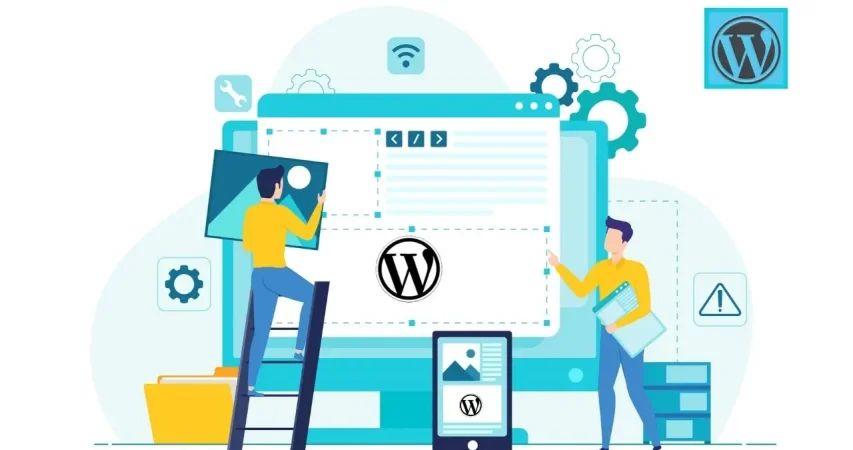
What if your website could reflect your brand’s identity and leave a lasting impression on each visitor? Customizing a WordPress site can do magic. But is all that hassle worth it? In this blog, we will explore the key benefits and see how customization can transform your online presence WordPress is a free tool for easy creation and management of websites. It is very popular, as it is easy to operate and works for a wide range of websites, starting from blogs, online stores, and business sites to creative portfolios. Even if it is developed with the help of technical tools like PHP and a MySQL database, technical knowledge is not necessary while working with it. On the other hand, this flexibility of WordPress makes it brilliant for creating everything from a small personal blog to a large business website.  Customization is key to making any WordPress website and building a site that really defines your brand and serves your purposes. It enables you to provide a much better user experience and achieve business goals by optimizing design, features, and functionalities. This personalization enables you to be different by creating a single-of-a-kind online presence for you alone, thereby drawing and interacting with your target audience in a unique manner.  Let us delve deep into the key benefits of customizing your WordPress website! 

Key Points to Consider Before Creating a Custom WordPress Website 

1. Appearance

One of the core considerations when developing a personal theme for WordPress, is the site’s appearance. This is done primarily through the theme to be used. It determines the site’s overall appearance, where the menus and widgets will be placed, and the default colors and fonts. Browse and select from over 200 themes at the WordPress theme store that’s designed for different needs, from blogging to e-commerce. WordPress Customizer makes it possible to tweak live the appearance of your website, from its title all the way to its widgets and homepage settings. For those who are not satisfied, you can use CSS to go deeper and style your theme to look truly unique.  

2. Functionality  

Your customized WordPress site can be enhanced by including plugins and widgets. Plugins add extra features to your site. By default, WordPress.com includes most necessary plugins, but on a Business or eCommerce plan on your website, you can add according to extra plugins needed for your more specific needs. Widgets serve as tools to include various components, such as recent posts, categories, or calendars, into the sidebar or widget area of the website sidebar or footer; hence, they offer a very easy way to customize and expand your site’s functionality. 

3. Search Engine Optimization

It is unquestionable that SEO features among the topmost determinants for the success of your website. It further enhances the visibility of your site, and the ranking provided on search engines. Features that make up good SEO may include responsive design and fast load times, which enhance user experience and is an advantage to search engines. With WordPress.com, for instance, you’ll have some of the best-built SEO features, such as Jetpack fast CDN, for fast loading and reliable hosting, which attests that your website is already set up to be search-friendly. Other ways to up your SEO are posting quality content and using descriptive image titles. For a Business or a plan that supports plugins, third-party SEO tools can also be used to increase the look of the site and its visibility in established search engines. 

Benefits Of Customizing Your WordPress Website  

1. Stand Out with a Unique Design 

A custom design in WordPress helps to authentically represent your brand by having a design that is consistent with its identity. This means that every single element of your website, from colors and fonts to layout and imagery, will represent the personality of your business but also its values. Distinctive design lets you stand apart from competition, building trust with visitors and communicating an image of professionalism. This enhances user experience through easier navigation and places focus on what really matters to your audience. A custom design does not only give your website that feel of eye candy, but it also fuels the growth and success of a brand. 

2. Boost Functionality and Flexibility 

A custom WordPress website can offer flexibility, unmatched in their apps, so that you will be able to add precisely the functionality and tools your business needs. Be it eCommerce integration, social media integration, or specialized functionalities— all such needs can be seamlessly met in a custom-built site. This will therefore bring more coherence and flow to the user experience since everything is designed to work in perfect coordination. By customizing your site, you will ensure it serves your business goals, is optimal in performance, and gives versatility and precision to its functionality. 

3. Scalability and Growth 

As your business grows, you need to increase the pace of your website to match. Custom WordPress sites are intrinsically scalable, therefore letting you grow and increase your site with new features and functionalities whenever required. Whether you’re increasing new product lines, integrating advanced tools, or increasing traffic capacity, a custom WordPress site will adapt without compromising on performance. Well, this scalability ensures that your website remains effective and responsive to support the evolving needs of your business and helps in maintaining a competitive edge when expanding. 

4. Improved Security 

Custom WordPress websites are more secure because you can add advanced, customized security measures to your site. In this respect, you will be at liberty to include strong security features against any threats or vulnerabilities within your custom website. This comprises custom firewalls, malware scanning, and secure authentication protocols. The greatest thing when it comes to custom security configuration on your site is the advanced safety of a website and sensitive data of users from breaches, ensuring a much safer online experience. This will help in keeping up the integrity and reliability of your site as it continues to develop and grow. 

5. Dedicated Support and Maintenance 

Many custom WordPress websites include dedicated support and maintenance that are designed to quickly troubleshoot any problems and do updates in a professional manner. You ensure that your website is at its best all the time, with very minimal downtime or disruptions. You are not only buying unique branding and advanced functionality but ongoing support and improvement when you pay for a custom WordPress site that raises your online presence. Such attention to quality and maintenance turns your website into this great asset— a scalable, secure, strong platform for business. 

Ready to transform your online presence?

Our expert WordPress developers at Mindpath will tailor a custom website that elevates your brand and drives results.

Customize Your WordPress Website at Mindpath 

The right WordPress developer will help a business owner come up with a custom website that fully answers business needs. Be it enhancing the presence of the brand, adding some unique features, or ensuring top security, accomplishment of any of these requires a skilled developer. At Mindpath, we understand the need for a custom WordPress site and know how to provide expert guidance throughout the hire. Here are the steps to hire the perfect WordPress developer at Mindpath:  

 1. Define Your Project Scope 

To begin with, engage us to outline the specific needs and goals of your project. Thereafter, we shall carry out a thorough analysis of your vision and give you an exceedingly elaborate proposal of the strategy, timeline, and cost estimates. This very distinct first step ensures that we set the right approach based on your expectations. 

2. Select Top Talent 

We will select the most appropriate WordPress developers for you according to your project requirements. You can peruse the profiles and arrange interviews, so you are 100% sure they are a good fit for your needs and the objectives of the project. This way, it will be a choice for the developers to go for, towards the delivery of services that will match your custom WordPress project. 

3. Seamless Project Launch 

Once you select your developers, we will start the project with a comprehensive kick-off. Our team will ensure there is effective communication and provide regular status updates on the development process to ensure the project will run smoothly and within the scope of your intended goals. 

 4. Detailed Ongoing Support 

Our commitment doesn’t end here. We continue the process further with support and maintenance, which includes fixing errors, performing updates, and changing things when required. It shall, therefore, be assured that it is only at the onset that you are without a custom WordPress site which is fully functional, secure, and updated in line with your growth. 

Conclusion  

Custom WordPress website development is more than having a simple digital presence. More can be done to help your brand, better user experience, and grow with the changing needs of a business. With investment in a tailored WordPress site, you open opportunities for individual design, advanced functionality focused on specific business requirements, and scalable growth at pace with success and improved safety and support in this regard will keep you strong and relevant. We at Mindpath are committed to helping you harness these benefits by walking you through every step for hiring our best WordPress developers: from the definition of your project to ongoing support. Unleash the power of customization and turn your online presence into a powerful and effective business tool. 

Want to achieve a Faster, Safer WordPress Site?

Find Out More About Mindpath’s Maintenance Solutions!

Related Post

Discover the ultimate guide to hiring Node.js developers in London. Learn about the skills, benefits, and cost factors involved in finding the right talent for your project.
Discover key DevOps challenges and effective solutions to streamline development and operations, and boost deployment efficiency.

Related Post

AI and Cloud Computing

The modern-day digital development depends on the intelligence, scalability, and flexibility advancing concurrently. This transformation is driven by AI and cloud computing, which help companies to make more efficient decisions by analyzing data faster. Executives see visible improvements in operations, products and customer experience. Consequently, the subject of conversation is not just trends but actually implementation. Teams want to have systems that learn, adapt and spur growth with minimum friction or delays.

With the increased adoption, there are heightened expectations in every industry. Decision makers want to have clarity, control and enduring value. They have to strike a balance between innovation and stability and cost consciousness. Additionally, it depends on choosing the correct strategy at the initial stage to succeed. Strategy is crucial and so is the technology. So, in this blog, we shall analyze the major advantages and the best practices of AI and cloud computing.

Keep reading further to learn more about this strategic synergy!

Want to optimize your business operations and scale effortlessly with the cloud? Mindpath offers cloud-managed services to provide secure, efficient, and fully managed cloud solutions.

Understanding the Core Fundamentals of AI and Cloud Computing

Artificial Intelligence (AI) facilitates machines to carry out tasks that would otherwise be carried out by human intelligence. It studies based on data, reasoning, identifies patterns, and comprehends language. Some of these major fields are machine learning, deep learning and natural language processing. AI helps companies to increase their efficiency, create smarter tools, and discover insights. Artificial intelligence and cloud computing tend to collaborate in order to improve outcomes.

Cloud computing involves computing resources, which include servers, storage as well as software offered via the Internet. It allows businesses to scale fast, pay as per their usage and access services anytime. The basic models include IaaS, PaaS and SaaS. This adaptability reduces the cost, accelerates the development, and supports the contemporary applications.

AI applications run effectively and successfully on cloud computing. AI and cloud computing go hand in hand to develop smarter and quicker systems. Cloud provides scalable storage and high-performance computing of AI models. AI will introduce intelligent cloud services via analytics, automation and optimization of resources. They all facilitate chatbots, predictive insights, and data analysis. The companies can operate cloud-based AI to take advantage of more advanced AI tools without substantial initial expenses and data analysis. Companies can access advanced AI tools on cloud platforms without huge upfront costs.

Looking to streamline cloud operations with intelligent solutions? Explore AI tools for DevOpss to see how automation and analytics optimize development and deployment workflows.

Key Benefits of AI Cloud Computing

AI and cloud computing are transforming the world of business and technologies. They open up fresh opportunities of development, productivity, and better decision making. Organizations look into how to make use of this combination. These are the best advantages that companies can embrace to remain competitive.

key benefits of AI Cloud Computing

1. Faster Data Insights

AI and cloud computing have excellent assistance in analyzing large data sets within a short period of time. Businesses bridge the data sources at ease and identify patterns that can make better decisions. This pace facilitates planning and minimizes guesswork in the operations.

2. Smarter Cost Control

AI and cloud computing minimize excessive expenditure on computers and their support. Businesses purchase resources as they consume and spend as demand increases. This strategy maintains flexible and predictable budgets.

3. Intelligent Automation

AI and cloud is used to automate repetitive workflow processes. Systems acquire knowledge and enhance processes through time. Teams are more strategic oriented as operations proceed normally.

4. Flexible Scaling Power

With AI and cloud computing, scaling up and down of resources is done on demand. Businesses either expand or contract without hesitation. This scalability helps in the development and unexpected increase in workload.

Must Read: Cloud Computing Trends

5. Easy Access to AI Tools

Cloud services provide ready-to-use AI services to business needs. Teams combine analytics, language processing, and vision tools within a short period of time. In combination, cloud computing and artificial intelligence eliminate technical restrictions.

6. Stronger Security Oversight

Cloud systems that operate based on AI keep a constant watch on activity. They identify threats at an early stage and react quicker to threats. This enhances security without retarding processes.

7. Better Data Management

Cloud services are an easy way of organizing, storing and retrieving data. AI assists in the automation of information classification and management. Companies have smarter data to analyze and report.

8. High Performance Computing

Artificial intelligence workloads require resources with high computing capabilities to operate. The cloud platforms offer on-demand GPUs and fast processors. Businesses deal with complicated activities that are not heavily capitalized.

Planning to deploy AI solutions at scale in the cloud? Explore cloud security tools to see how modern technologies secure AI pipelines and cloud infrastructure.

Best Practices for Implementing AI in Cloud Computing

AI and cloud computing need a more explicit and deliberate way of developing real value. Before adopting systems, teams need to plan, set goals and prepare systems. Technology is as important as strategy. These best practices demonstrate the way to apply AI in cloud computing in an effective and responsible manner.

Best Practices for Implementing AI in Cloud Computing

1. Select a Trusted Cloud Provider

Select a provider with the track record of working with AI and cloud services. Assess its standards of reliability, scalability, and compliance. Powerful partner will facilitate safe expansion and stable long-term operations.

2. Prioritize Data Privacy and Security

Encrypt and implement control access to sensitive information. Review security policies on a regular basis in order to minimize risks. High level of security instills trust in cloud systems and AI.

3. Define Clear AI Capabilities and Limits

Know what AI is capable of providing under the circumstances of the quality of the data. Track models regularly in order to identify bias or performance problems. Good expectations can make teams use AI in a responsible and effective way.

Also Read: Cloud Computing Attacks

4. Establish Ethical AI Practices

Instruct employees on how to use AI fairly, transparently, and accountably. Ethical consciousness results in an improved decision-making process within teams. Conscientious operations enhance the confidence of cloud-based AI.

5. Monitor Performance and Business Impact

Monitor behavior and business performance of the track systems. Assess value through measurement of efficiency, accuracy and cost. Consistent reviews help to maintain AI and cloud investments in accordance with the objectives.

6. Prepare for Future Innovation

Anticipate changing regulations and elements of technology. Architecture Software Build scalable systems, which welcome upgrades and additional features. A visionary roadmap would guarantee success in the long term with AI and cloud computing.

Wondering how AI applications can scale efficiently in the cloud? Check out serverless architecture in cloud computing to learn how server-free designs enable faster, cost-effective, and scalable deployments.

Ready to Turn AI and Cloud Computing into Real Business Value?

Artificial intelligence and cloud computing are transforming the nature of modern business development, competition, and innovation. They allow making smarter decisions, executing them faster, and operating flexibly together. It takes proper planning, excellent data, and responsible usage in order to be successful. By linking technology to the objectives of the firms, companies mitigate risk and create value in the long term. The approach will assist teams to develop systems which are adaptable, scalable and perform well.

Mindpath AI cloud services assist companies to embrace AI clearly and confidently. Our professionals develop safe and scalable solutions which are practical to the business requirements. We put an emphasis on performance, ethics, and quantifiable results. Mindpath provides organizations with a dependable service in terms of planning, deployment, and optimization. Our strategy will make AI and cloud computing produce useful outcomes and not complications.

Multi Cloud vs Hybrid Cloud

Deciding between multi-cloud vs. hybrid cloud strategies is becoming an important choice for organizations that want to remain agile and scalable. Every organization needs to find a way to balance flexibility, security, and performance, and this holds true with cloud architecture as well. The more complex challenge is determining which model can optimize operations while allowing the teams in the organization to innovate unhindered. As technology progresses to new heights, a strong cloud architecture can be a differentiating element within an organization’s growth.

It is essential to be certain of how both cloud models serve your business objectives and technical goals to make the better decision. It is not just an issue about infrastructure, but positioning your organization for the future and digital resilience. Understanding their differences helps organizations make confident and data-driven decisions in a world where technology changes rapidly. In this blog, we will explain some of the fundamental principles of multi-cloud and hybrid cloud so that the decision on which is best for you will be less difficult.

Want to determine which cloud strategy will be ideal for your organization? Contact us to get deeper insights and make smart business decisions that lead to future growth.

Understanding the Fundamentals of Hybrid Cloud and Multi-Cloud

A hybrid cloud combines both private and public cloud services in order to provide an adaptable and secure environment for computing. Organizations can house sensitive data in a private cloud to protect it, while still utilizing the on-demand, scalable, and cost-effective computing of the public cloud. Hybrid clouds offer enhanced control, resource utilization, and performance. Utilizing a hybrid cloud allows organizations to efficiently manage workloads across the types of cloud while enjoying the benefits of both cloud types.

A multi-cloud strategy uses multiple cloud service providers to achieve specific corporate objectives. In the multi-cloud vs. hybrid cloud debate, companies will tend to prefer multi-cloud solutions for flexibility, avoiding being locked into a single vendor platform, and minimizing operational risks such as downtime or loss of data. Each application in a multi-cloud environment can run on a public cloud platform or private cloud platform based on relative performance or cost needs.

Wondering how application architecture impacts multi-cloud and hybrid cloud success? Explore cloud-native development to learn how cloud-native apps improve scalability and flexibility.

Advantages of Hybrid Cloud

A hybrid cloud gives companies the right combination of flexibility and control, helping companies manage data securely and securely provide scalability and efficiency for operations.

1. Strong Security and Data Control

Hybrid cloud allows companies to maintain improved control of sensitive data and mission-critical systems. Companies can use private servers to store private information and public clouds for everyday tasks, allowing for a balance between security and freedom.

2. Smarter Cost Management

Businesses can reduce their costs by maintaining constant workloads on private systems, while variable workloads can move to the public cloud. This model allows for a pay-as-you-go system that reduces risk of overspending and improves cost optimization.

3. Faster Performance and Low Latency

Hybrid cloud enhances performance by positioning time-sensitive jobs, such as analytics or IoT applications, nearer to the end user. The configuration call for helps to reduce latency and increase response times for the users.

4. Reliable Disaster Recovery

Businesses are able to store crucial data in the public cloud while ensuring that a main version is also preserved on their premises and if there is a systems failure, they can quickly restore and resume business as usual with minor interruptions.

5. Greater Scalability on Demand

Organizations can easily scale their capacity up or down via the public cloud when they find themselves in busy periods or running promotional activities that bring in high traffic. After the busy period ends, they can scale down their capacity, so they aren’t wasting money and resources.

6. Better Compliance and Data Governance

Hybrid cloud helps companies follow data protection rules by keeping customer data on local servers. At the same time, they are still able to carry out non-sensitive work in a public cloud, thus making an informed decision on multi-cloud vs hybrid cloud.

7. Boosted Innovation and Flexibility

Teams can experiment with fresh tools and services in the public cloud without interfering with core systems. This illustrates that the difference between multi-cloud vs hybrid cloud can drive business innovation and flexibility within the digital age.

Is your cloud strategy aligned with long-term digital growth goals? Discover digital transformation for businesses to understand how the right cloud approach accelerates innovation.

Examples of Hybrid Cloud

These are some real-world hybrid cloud examples and how organizations use this approach to improve business flexibility, security, and efficiency.

1. Digital Transformation

A hybrid cloud modernizes IT systems with a remote workforce and protects data in a secure environment.

2. Disaster Recovery

Hybrid clouds help your business continue operating normally by recovering data at a fast speed in the event of outages.

3. Development and Testing

Developers develop and test apps in their public clouds, then port to private clouds.

4. Cloud Bursting

During peak traffic, additional workloads move from private clouds to public clouds without impacting performance.

5. Edge Computing

Delivers and processes data near the user, resulting in faster and lower latency experiences.

6. AI & Machine Learning

A hybrid cloud supports AI workloads with the best scalability and the security of their data.

Looking for ways to optimize costs and scale applications seamlessly in complex cloud setups? Discover serverless architecture in cloud computing to explore how serverless solutions support modern cloud architectures.

Advantages of Multi-Cloud

The following are the main benefits of a multi-cloud strategy that will help to improve business performance and facilitate better operations.

1. Business Continuity Edge

In comparing multi-cloud vs. hybrid cloud, one advantage of multi-cloud is that it allows operations to continue even if one of the providers has an outage. By spreading workloads across a combination of platforms, businesses provide continued performance and reliability.

2. Flexible Cost Management

In the hybrid cloud vs. multi-cloud comparison, another of the advantages of multi-cloud is improved cost control. This allows companies to choose the cheapest cloud provider for each workload and optimize resources effectively.

3. Customized Security Approach

Multi-cloud allows organizations to engage with providers that best suit their compliance and security requirements. This helps to ensure improved data security and better alignment with regulatory standards.

4. Independent Provider Choice

Using a multi-cloud strategy, organizations will have less reliance on one vendor. They will have the flexibility to move workloads, negotiate terms, and meet changing demand in the market.

5. Optimized Technology Access

Each cloud provider has a service that they do best, e.g., AI, analytics, or integration. Multi-cloud allows organizations to select the cream of the crop and combine them together to get the best performance and innovation.

6. Enhanced Global Reach

Multi-cloud allows applications to be deployed across multiple locations to minimize latency and enhance speed. This is especially useful for global companies that need to provide consistent, reliable speeds globally.

7. Ongoing Innovation Power

By utilizing countless ecosystems in the cloud, firms are able to engage with new, emerging technologies that give them flexibility and even a competitive advantage regarding innovation and continued growth.

Curious about where cloud adoption is heading next? Explore cloud computing trends to discover emerging technologies shaping multi-cloud and hybrid strategies.

Examples of Multi-Cloud

Here are real-world examples of multi-cloud that demonstrate how businesses use multiple providers to enhance their performance, flexibility, and reliability.

1. Specialized Services

A business may use Google Cloud for analytics and AWS or Azure for AI tools to get the best of each platform.

2. Disaster Recovery & Continuity

A financial firm can rely on OCI for core apps and IBM Cloud as a backup to ensure uninterrupted operations.

3. Cost & Performance Balance

A retailer may host its e-commerce site on one cloud and run analytics on another to save costs and improve speed.

4. Diverse SaaS Usage

An organization can follow a multi-cloud approach by using Salesforce for CRM and Workday for HR management.

5. Compliance & Data Security

A healthcare provider may store patient data in a private cloud while using a public cloud for general operations.

Looking to build healthcare software that meets strict compliance and data security standards? Explore our blog on healthcare software to discover how secure cloud-based solutions protect sensitive patient data.

Multi-Cloud vs. Hybrid Cloud: A Comparison Table

Below is a brief comparison table showcasing the primary differences between hybrid cloud and multi-cloud, so you can gauge which model may work better for your business requirements.

Aspect Hybrid Cloud Multi Cloud
Definition Combines private and public clouds to work as one integrated environment. Uses multiple public cloud providers for different workloads.
Primary Goal Balance security with scalability by keeping sensitive data on private clouds. Maximize flexibility and performance by choosing the best services from each provider.
Architecture Integrates on-premise infrastructure with one or more cloud services. Operates across multiple independent cloud platforms without tight integration.
Data Management Data moves between private and public clouds based on need. Data is distributed across several cloud platforms for specific tasks.
Security Control Offers stronger control and compliance for sensitive workloads. Security depends on each provider’s standards and your management strategy.
Cost Efficiency Reduces cost by keeping predictable workloads in private environments. Optimizes cost by comparing pricing and using best-fit providers.
Use Case Ideal for regulated industries needing data privacy and scalability. Perfect for businesses aiming for high availability and vendor flexibility.
Example A bank using private cloud for transactions and public cloud for analytics. A retailer using AWS for e-commerce, Google Cloud for data, and Azure for AI.

Ready to Choose the Right Cloud Strategy for Your Business?

Deciding between multi-cloud vs. hybrid cloud depends on your organization’s needs for flexibility, performance, and security. Both approaches empower businesses to innovate and scale effectively. Understanding their core differences helps you design a cloud strategy that aligns with your goals and builds a strong foundation for long-term digital success.

At Mindpath, we deliver expert cloud computing services to help businesses design secure and scalable environments. Our team builds tailored multi-cloud vs. hybrid cloud solutions that enhance performance, reduce costs, and boost efficiency. Partner with us to create a future-ready infrastructure that keeps your business innovative, adaptable, and competitive in a fast-changing digital world.

Learn the key differences between multi-cloud and hybrid cloud strategies and discover how Mindpath’s cloud services can help.

Hiring the right ReactJS developer is essential for building a high-quality online application. A talented developer should have a solid JavaScript background, knowledge of React ideas, and front-end programming experience. They must also be skilled in state management, user interface creation, testing, debugging, and version control to guarantee that the program runs smoothly. Aside from technical capabilities, problem-solving ability and collaboration are equally crucial. The following are the main abilities to look for when hiring a ReactJS developer in New Jersey

1. Strong JavaScript and React Fundamentals

A skilled ReactJS developer should have a solid grasp of JavaScript fundamentals, including ES6+ features like arrow functions, promises, and async/await. They must also be proficient in React concepts such as JSX, components, props, state management, and lifecycle methods. A deep understanding of rendering optimization ensures smooth application performance. Since React is built on JavaScript, hiring a developer with strong expertise in both JavaScript and React ensures they can efficiently build dynamic and responsive user interfaces tailored to your project’s needs.

2. State Management and Component-Based Architecture

Efficient state management is essential for handling complex applications. Look for developers with experience in Redux, Context API, or MobX to manage app-wide state effectively. They should also understand component-based architecture, which helps in building reusable, scalable, and maintainable UI components. A developer with expertise in React hooks and modular design can streamline development, reduce redundancy, and improve overall application performance, making your web solution more efficient and easier to scale.

3. Proficiency in HTML, CSS, and UI Development

A ReactJS developer should have strong HTML and CSS skills to create well-structured, visually appealing, and responsive user interfaces. Knowledge of CSS frameworks like Tailwind, Bootstrap, or Material-UI is a plus. They should also understand flexbox, grid layouts, and media queries to ensure the application works seamlessly across different devices. Well-structured UI components enhance user experience and performance, so hiring a developer who excels in front-end development is crucial for a successful project.

4. Testing, Debugging, and Version Control

Testing is key to building error-free applications, so ensure the developer is familiar with Jest, React Testing Library, or Enzyme for unit and integration testing. Strong debugging skills help identify and resolve issues quickly. Additionally, expertise in Git and GitHub is essential for version control, collaboration, and managing code changes efficiently. A developer with these skills can ensure a smooth workflow, minimize bugs, and maintain high-quality code throughout the development process.

Finding the right ReactJS developer can be challenging, but Mindpath makes it easy! Our expert developers have strong JavaScript skills, deep React knowledge, and experience with state management, UI development, testing, and debugging. Whether you need a junior, mid-level, or senior developer, we help you find the perfect fit for your project.
Let’s build something great together! Contact Mindpath today to hire top ReactJS developers in New Jersey!

Discover the ultimate guide to hiring Node.js developers in London. Learn about the skills, benefits, and cost factors involved in finding the right talent for your project.