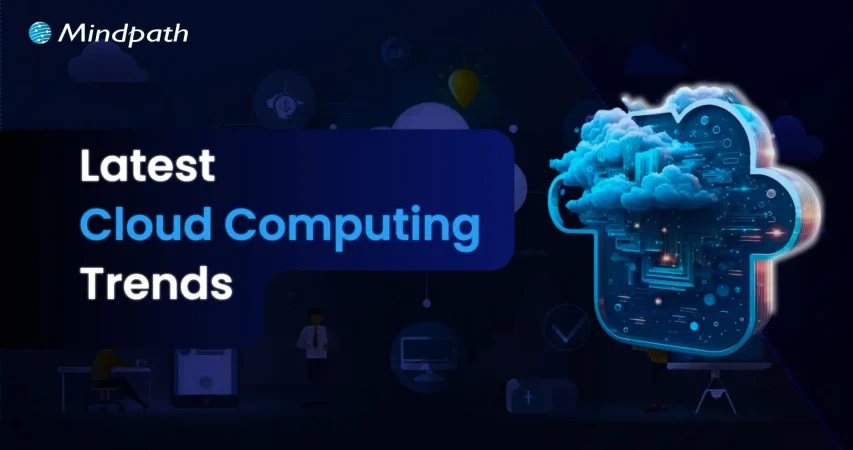
Cloud Computing Trends 2024: A Look Ahead at Emerging Technologies

Join our Newsletter!

Featured Posts

Support Is One Click Away

Home

Cloud Computing Trends 2024: A Look Ahead at Emerging Technologies

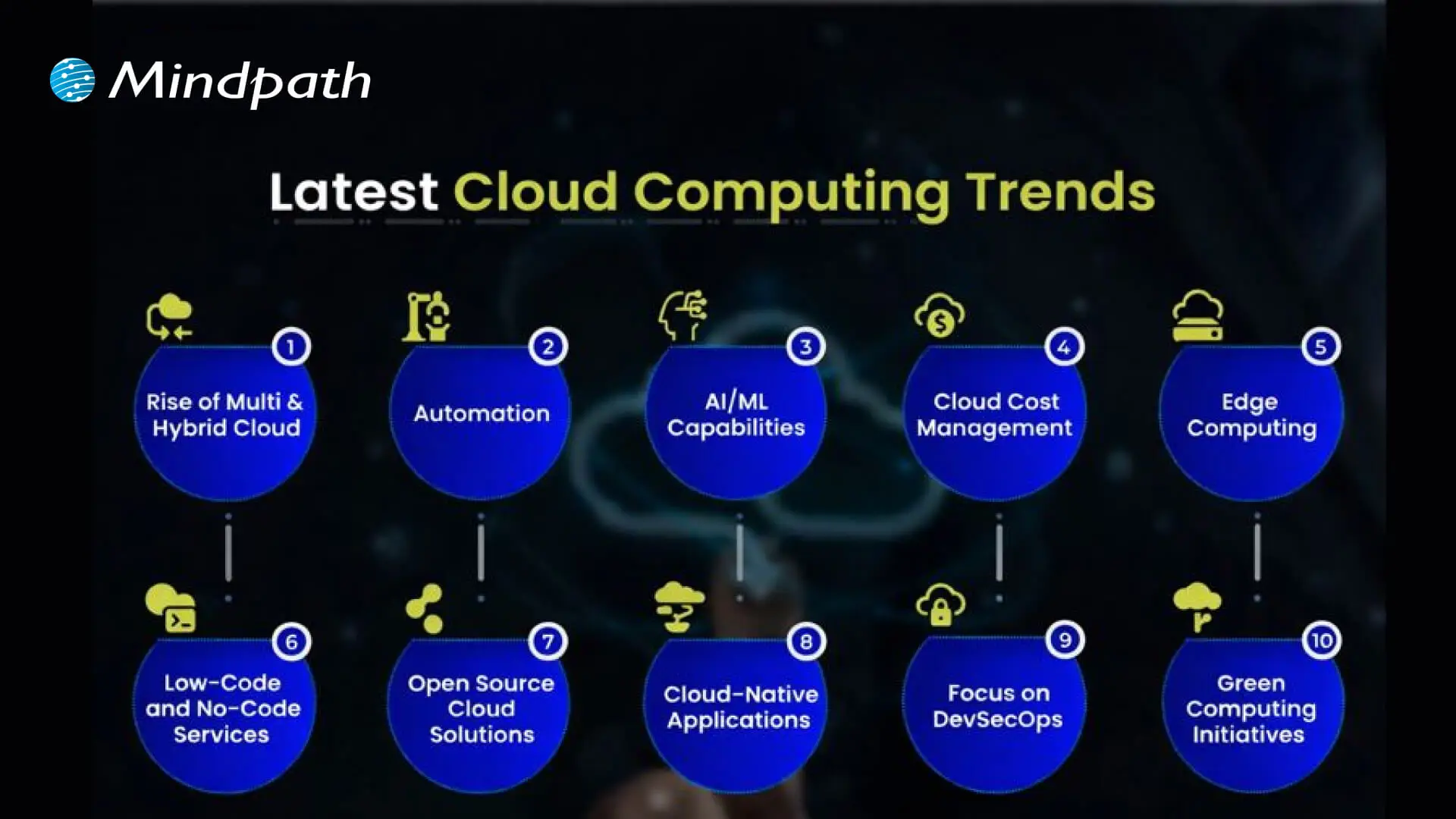
Cloud Computing Trends 2024

Cloud Computing Trends 2024: A Look Ahead at Emerging Technologies

Are you curious about how cloud computing will evolve in 2024? What new technologies will shape the way we store, process, and access data? As the cloud landscape continues to grow and evolve, staying updated on these trends is more crucial than ever. In this blog, we will explore the latest cloud computing trends set to redefine the digital landscape this year. 

Cloud computing is the practice of employing internet-based services rather than maintaining everything on your personal computer. Imagine you need to save data, run programs, or use tools, but instead of doing it on your device, you access them over the internet. The real data, such as your files and applications, is stored on large, powerful computers known as servers, which belong to businesses such as Google, Amazon, and Microsoft. They handle everything, so you don’t need to worry about monitoring or maintaining anything. As long as you have internet connectivity, you may utilize everything you need, such as storage or software, at any time and from any location.  

Understanding cloud computing trends is essential for both your career and business. Businesses can pick the finest services and solutions, save money, and increase efficiency by having a thorough awareness of these trends. Staying up to date on what’s new and popular allows you to make better decisions, stay ahead of the competition, and maximize the benefits of the cloud. 

So, let’s dig in to explore the cloud computing trends 2024! 

Cloud Computing Trends 2024

1. Kubernetes and Docker

In 2024, Kubernetes and Docker will be key players in cloud computing. These technologies make cloud application management and deployment easier and more efficient. Docker enables you to organize your program and its dependencies within a lightweight, portable container. This implies that your program can work properly on any platform, including your PC and the cloud. Kubernetes goes a step further, managing and coordinating these containers. It automates processes such as scaling up or down and balancing workloads, ensuring that everything functions smoothly without requiring continual manual changes. As more businesses use cloud computing, Kubernetes and Docker are becoming increasingly important for improving and flexibly delivering cloud services.  

2. DevSecOps

In 2024, DevSecOps will be an essential approach to cloud computing security. It stands for Development, Security, and Operations, and it focusses on implementing security measures from the beginning of the development process. Rather than waiting until an application is complete to check for security flaws, DevSecOps ensures that security is built in throughout. This helps to defend against issues such as hacking, service outages, and unauthorized access to data. Cloud service providers offer tools and services that enable DevSecOps easy to utilize. Businesses may use these technologies to ensure their cloud environments are secure and free of possible dangers. 

3. Disaster recovery and backup

Disaster recovery and backup will be essential in 2024 for ensuring the security of your cloud data. If anything goes wrong—like a server breakdown, a power outage, a natural disaster, a cyberattack, or a hardware failure—having a robust backup strategy allows you to recover your data fast. Cloud computing simplifies this process by keeping copies of your vital data online. This manner, if something occurs to your primary PC, you can swiftly recover everything from the cloud. Many companies automatically store important data and information to cloud servers. This means companies don’t have to worry about losing important information and can keep their operations functioning smoothly even during catastrophes. 

4. Edge computing

Edge computing is changing the way we handle information by bringing it closer to where it originated. This reduces delays and speeds up operations. With the emergence of 5G networks, edge computing is becoming increasingly significant since it enables real-time data processing and enhanced security. Edge computing is becoming increasingly important as more devices connect to the Internet of Things (IoT), allowing for faster data analysis and smoother communications. Edge computing improves speed by bringing data processing closer to the source, ensuring that data is handled safely and effectively. 

5. Internet of Things (IoT)

The Internet of Things (IoT) is a rapidly emerging technological trend. IoT collects massive volumes of data via a network of sensors and devices, which is subsequently stored on cloud servers. This data is analyzed to offer relevant information for making business decisions. IoT connects various devices, computers, and networks, enabling them to communicate and share information. It can collect data remotely and control things from a distance. This smart connection is crucial for IoT’s appeal in cloud computing since it allows for more effective data management and utilization across several platforms. 

6. Low Code and No Code

Low-code and No-code Cloud solutions are transforming the way we develop applications by making it easy for anybody, not just experts, to create software. These platforms enable people to create apps and employ AI technologies with minimum technical knowledge. Instead of writing large amounts of code, you can quickly develop and launch projects using simple, user-friendly tools. This speeds up the development process, reduces errors, and makes technology more accessible to a larger audience. Users can easily construct apps using popular tools like Figma and Zoho, without having to maintain complex coding systems. 

7. AI and ML

Artificial intelligence (AI) and machine learning (ML) are leading cloud computing trends. These technologies demand a significant amount of computing power and storage to manage data and train models, but they also provide strong and cost-effective solutions. In 2024, we can expect AI and machine learning to drive trends such as self-automation, which allows systems to handle themselves, and personalized cloud services that adapt experiences to individual demands. These technologies will also enhance data security and privacy. Major technology businesses, such as Amazon, Google, and IBM, are aggressively investing in AI and machine learning. Amazon’s AWS DeepLens and Google Lens, for example, make use of machine learning to provide enhanced capabilities and improve user experiences. 

Cloud Computing at Mindpath

Mindpath’s cloud computing platform enables businesses to leverage advanced technologies without having to handle it all themselves. Mindpath provides a variety of cloud services that allow you to conveniently and securely store data, execute programs, and access resources online. 

Our cloud solutions are intended to be adaptable and scalable, allowing them to expand alongside your organization. Whether you need to back up important information, operate complex apps, or optimize your IT infrastructure, we have you covered. We guarantee that everything goes smoothly and securely, enabling you to focus on what is most important to your organization. 

Final Thought

As we look ahead to 2024, the cloud computing world is full of intriguing possibilities. Keeping up with these trends is essential from the rising relevance of Kubernetes and Docker in application management to the creative breakthroughs in AI and ML that are creating smarter, more secure solutions. Edge computing and IoT technologies are changing the way we manage and process data, while low-code and no-code platforms make app creation easier than ever. 

At Mindpath, we are dedicated to assisting organizations in navigating these changes and realizing the full potential of cloud computing. Our cloud solutions are adaptable and scalable to match your demands, whether you want to strengthen your IT infrastructure, secure your data, or innovate with cutting-edge technology.  

Ready to Transform Your Cloud Experience?

Dive into cutting-edge technologies with Mindpath’s tailored solutions and keep your business ahead in 2024.

Related Post

Discover the benefits of hybrid cloud for businesses, including improved performance, innovation, and flexibility.

Related Post

AI in Hyperpersonalization

Have you ever noticed how some brands seem to know exactly what you need, sometimes before you do? Imagine opening a shopping app and seeing recommendations that feel almost handpicked just for you. This level of personalization is no coincidence—it’s powered by AI and is known as hyperpersonalization. But how exactly does AI make this happen? And what does it mean for the future of customer experiences? Let’s dive into how AI is redefining what it means to truly know your customer.  

What is Hyperpersonalization?

Hyper-personalization leverages Artificial Intelligence and real-time data to provide highly personalized experiences, showcasing items and information that are specific to each customer’s tastes. By analyzing individual purchasing behaviors, prior purchases, and browsing habits, AI allows companies to give suggestions that are tailored to each customer’s distinct interests and preferences. 

This high degree of personalization enables organizations to go beyond generic ideas, resulting in a more seamless and engaging client experience. It’s an effective strategy that improves convenience and strengthens brand loyalty by making each customer feel understood and cherished. Hyper-personalization allows marketers to constantly offer relevant, customized information that engages with each client on a personal level. 

The Role of AI in Hyperpersonalization

1. Smarter Product Recommendations

AI’s ability to comprehend user preferences and behaviors is crucial in revolutionizing the way product suggestions are generated. AI can forecast what you will be interested in next based on data such as previous purchases, browsing history, and even time spent on certain things. This goes beyond mere ideas; it tailors each recommendation to your own preferences and needs. 

For example, if you’ve been looking for shoes, AI can recommend a pair that matches your style or even forecast the type of shoes you’d like based on recent searches or seasonal patterns. These recommendations sometimes appear to be “reading your mind,” displaying goods you never considered, but once you see them, they feel like a great fit. This degree of personalization improves the whole buying experience. You spend less time looking for what you want because the AI finds it for you, making each interaction seem more relevant and easier. With hyperpersonalization, AI guarantees that the goods you view are constantly relevant to your tastes, improving your entire shopping experience. 

2. Friendlier Chatbots

AI-powered chatbots have gone a long way towards providing more lifelike, human-like conversations. Instead of robotic, one-size-fits-all replies, these chatbots can now tailor their tone, vocabulary, and behavior to the context of the interaction and the user’s specific demands. They employ powerful AI algorithms to comprehend not just what you’re saying, but also the emotions and meaning behind it. 

These AI chatbots can also personalize replies by recalling prior encounters, recognizing your preferences, and offering relevant solutions. Whether you need help with a product, troubleshooting, or completing a purchase, the chatbot customizes its replies to your individual needs, exactly like a real agent would. AI chatbots boost customer service by making conversations feel more personal and human, resulting in a more engaging and fulfilling experience for customers, allowing businesses to provide 24/7 help without losing quality or empathy.    

3. Better Campaign Strategies

AI-powered solutions have transformed the way businesses approach marketing campaigns, allowing them to analyze massive volumes of data and forecast campaign outcomes more accurately. These technologies look at customer behavior, market trends, and previous campaign performance to spot patterns that might not be visible. Understanding these trends allows AI to assist businesses fine-tune their strategy, ensuring they are targeting the appropriate audience with the right message at the right time. 

Furthermore, AI can enhance processes by automating repetitive operations like segmenting audiences, providing personalized content, and managing digital marketing. This automation minimizes human work and improves marketing teams’ efficiency, allowing them to focus on higher-level strategy and creativity.  AI analyzing data in real time makes marketing campaigns more fluid and responsive. Brands can swiftly alter campaigns based on performance analytics, increasing their ability to remain relevant and adapt to changing client requirements. This increased efficiency not only enhances campaign efficiency, but also enables a more personalized marketing strategy, offering bespoke content and experiences that engage with specific customers. 

4. Tailored Marketing Materials

AI allows organizations to go beyond basic marketing messages by providing highly personalized content that addresses individual tastes and behaviors. AI can generate marketing materials that are specifically tailored to you by analyzing data such as your previous purchases, browsing habits, social media activity, and even real-time elements such as location or current trends. 

Furthermore, AI can adapt the tone, structure, and timing of the material to the individual’s preferences. It can provide a product recommendation at the ideal time, such as when you’re planning a trip or getting ready for a vacation, ensuring that the offer feels timely and relevant. By combining various data points and external variables, AI enables companies to generate targeted, relevant marketing that improves the customer experience and drives stronger connections with their audience.  

Also Read: Top 10 Benefits of Artificial Intelligence in 2024 

AI Development Services at Mindpath

Mindpath specializes in AI development services that help organizations grow and prosper by leveraging smart technologies. Our AI solutions are intended to increase efficiency, improve customer experiences, and make more informed business decisions. We develop specialized AI systems that can analyze vast volumes of data, forecast future trends, and automate repetitive operations, allowing your processes to run quicker and more accurately.  Our AI services may be customized to meet your specific company needs, from creating pleasant chatbots to providing personalized product suggestions. Whether you want to optimize operations or engage customers with intelligent, automated solutions, Mindpath has the AI technologies you need. Our team collaborates closely with you to guarantee that the AI technology we build helps you succeed and stay ahead. 

Final Thoughts!

AI is truly transforming the way businesses connect with their customers, creating a future where experiences are not only personalized but also highly intuitive. Through smarter product recommendations, friendlier chatbots, optimized campaign strategies, and tailored marketing materials, AI is helping brands build stronger, more meaningful relationships with their audiences. At Mindpath, we are dedicated to bringing these advancements to life with our custom AI development services, ensuring that your business stays ahead of the curve and delivers exceptional, personalized experiences. By harnessing the power of AI, you can enhance customer engagement, streamline operations, and create more impactful marketing strategies that drive long-term success. 

Ready to elevate your customer experiences with AI?

Partner with Mindpath today to explore our custom AI development solutions and stay ahead in your industry!

AI drives hyperpersonalization with smarter recommendations, chatbots, and tailored marketing to boost customer experience and growth.
DevOps challenges

DevOps has played a crucial role in transforming conventional approaches to software development. Businesses utilize DevOps to ensure faster software delivery with improved quality and better collaboration between development and operations teams. However, the discussions about DevOps challenges don’t come into the limelight, with most of the emphasis being on the benefits of DevOps.

Most of the teams working with the DevOps approach experience many struggles and roadblocks, which can be frustrating at times. Awareness of the prominent challenges for DevOps and their solutions can help a business owner find the best strategic approach for DevOps implementation. This post will help you discover some of the prominent challenges in DevOps and their potential solutions.

Don’t know how to tackle the challenges in the DevOps process? Our experts will provide practical strategies that help you move forward and streamline your operations. Contact us to get personalized support to achieve successful DevOps implementation.

Why does DevOps Face Challenges?

The most common answers to “What is DevOps?” paint it as a combination of software development and IT operations. However, you need to dive a little deeper to understand what DevOps actually entails. DevOps is not about introducing a new department in the organization or bringing a specific set of tools for better results. As a matter of fact, DevOps is a paradigm shift that requires businesses to change how they think about collaboration and communication.

You can notice that success in DevOps initiatives is more about the cultural and philosophical shift rather than the technical aspects. Even with the undeniable benefits of DevOps attracting the eyes of business owners, there is no way to ignore the challenges. Many organizations fail in DevOps implementation due to their inability to recognize the challenges that are not purely technical.

Exploring the Most Prominent DevOps Challenges

The utility of DevOps is clearly evident in the different advantages like faster time to market, easier recovery from incidents, reduced deployment failures, and enhanced efficiency. However, a lack of awareness of the challenges with DevOps can lead businesses to waste resources and end up with substandard results. The following sections will help you learn about the most critical challenges for DevOps implementation.

1. Cultural Resistance and Fragmentation

The most prominent challenge for DevOps is the cultural shift that comes with it. The traditional approach to software development involved development and operations teams working in silos. Both teams had different goals, mindsets, and metrics for the same project, thereby leading to conflict. For instance, developers focus on faster delivery and innovation, while the operations team emphasizes stability above everything.

The fundamental difference between the two teams can create problems in the adoption of the DevOps methodology for new projects. One of the notable problems that arises from differences between the development and operations teams is the ‘us vs. them’ mentality. In addition, professionals in both teams accustomed to traditional workflows will showcase resistance to new tools and practices. Furthermore, the lack of active involvement of leadership also creates difficulties for the cultural shift required in DevOps.

2. Complexity of Tools and Integration Process

Any business that wants to embrace DevOps can capitalize on a wide range of tools for every phase of the software development lifecycle. You can find DevOps tools for almost everything, including CI/CD, security, version control, and monitoring. The assurance of access to so many tools offers the flexibility to choose any tool according to your needs. At the same time, it also creates challenges for DevOps projects as choosing the right tools can be a considerably daunting task. Some businesses end up adopting a lot of tools that don’t align with each other, thereby leading to inefficiencies.

Businesses have to face difficulties in achieving seamless integration between different DevOps tools. On top of it, DevOps teams must learn about a wide range of tools, which calls for investing a lot of time in training. The challenges due to the complexity of tools also focus on the inconsistencies in development, testing and production environments that lead to deployment failures.

Looking to optimize your CI/CD pipeline with smarter automation and streamlined processes? Visit our blog on DevOps Best Practices to discover the strategies high-performing teams use to achieve consistent, stable releases.

3. Lack of Attention to Security

The next prominent challenge for businesses in the adoption of DevOps is the lack of attention to security. Since DevOps aims at ensuring faster software delivery, most of the focus of DevOps solutions is on speed. However, businesses forget about security until the final stages of the software development cycle. Pushing security to the later stages of development as an afterthought is responsible for many challenges in DevOps. One of the most critical outcomes of ignoring security till the last stage of development focuses on compliance issues. Without integrating security practices from the beginning, any DevOps initiative is likely to face regulatory penalties.

The delayed attention to security results in the discovery of bugs and errors in the final stages of development. As a result, businesses have to spend more resources and time fixing such errors. The possibilities of bugs passing undetected through different stages of development can lead to the creation of insecure code. The problems arising from insecure code, such as data loss and breaches, can damage the reputation of an organization.

4. Rigidity of Legacy Systems

Most of the organizations embracing DevOps work with legacy systems and applications in their infrastructure. The adoption of DevOps for businesses with legacy systems is a daunting task, as the old systems were not designed for agile paradigms. You can think of monolithic architectures that involve large and tightly coupled applications, which create difficulties in frequent modification, testing, and deployment.

The automation-first principle in DevOps is not applicable in legacy processes that rely heavily on manual configuration and deployment. Businesses have to go through nightmares to discover the complex dependencies in legacy systems during transformation efforts. At the same time, businesses must also remember that older systems have more security vulnerabilities, making it difficult to integrate them into a DevOps pipeline.

Planning to integrate security into your DevOps workflow? Explore our blog on DevSecOps to learn how automated security checks and continuous monitoring strengthen every stage of development.

Discovering the Ideal Solutions to DevOps Challenges

The insights on challenges for DevOps reveal that adopting a unified approach to development and IT operations is not easy. However, businesses can overcome these challenges by following a holistic approach to address the limitations of people, processes, and technology. The following sections offer an overview of some of the proven solutions to the challenges of DevOps implementation.

1. Culture of Collaborating and Sharing Responsibility

The foremost addition among the biggest DevOps trends points to efforts to break down silos and establish cross-functional teams. DevOps initiatives require shared goals around desired business objectives rather than focusing on KPIs of individual departments. Business owners must foster open communication and transparency between teams to create new paths for collaboration and knowledge sharing. Most important of all, leaders must showcase active participation in the projects and communicate with team members. When all team members share the same goals and responsibilities, the chances of cultural resistance and conflicts are reduced by a huge margin.

2. Adoption of Standardized Combination of Tools

The large assortment of tools for DevOps is obviously one of the most complex challenges for business owners. However, the solution suggests that adopting a standard set of tools with a thoughtful approach can prevent confusion. For instance, businesses must identify the critical areas for automation while choosing DevOps services and select tools that perform the best in the concerned areas. Most important of all, businesses must choose tools that facilitate easier integration with existing systems. Platforms such as Azure DevOps or GitLab can be the best picks for DevOps with their integrated version control, project management, and CI/CD capabilities.

3. Security from Early Stages

Another proven solution to a formidable DevOps challenge is the adoption of security as a shared responsibility in all stages of the development cycle. Integration of security practices and tools in the early stages of development can involve scanning the source code during development and testing applications to identify vulnerabilities in the running state. DevOps teams should also use techniques like software composition analysis to recognize and resolve open-source vulnerabilities. The other proven solutions to embrace security in the early stages include automated security checks for CI/CD pipelines and security training.

Looking to combine fast DevOps practices with automated security checks? Check out our blog on DevOps vs DevSecOps to understand how DevSecOps adds proactive, automated safeguards to every stage of your pipeline.

Final Thoughts

The overview of the notable DevOps challenges and the solutions recommended for them showcases that embracing DevOps is not easy. On the other hand, a holistic and strategic approach to fighting against the challenges can help businesses embrace DevOps easily. The right DevOps strategy will not only ensure faster time to market but also achieve new benchmarks of competitive advantage.

We at Mindpath have been serving our clients with end-to-end IT solutions, including DevOps services tailored to their needs and vision. Our experts have the experience required to understand the client’s vision and offer relevant solutions. Talk to our DevOps consultants and discover the ideal way to make the most of DevOps benefits now.

Discover key DevOps challenges and effective solutions to streamline development and operations, and boost deployment efficiency.
generative AI for customer service

In the technology-driven era, the customer service landscape has undergone a transformational change.  A key technology that has been serving as a catalyst is generative AI. The rising popularity of generative AI for customer service is evident, as about 65 % of leaders in customer service intend to leverage the technology along with conversational AI to boost customer satisfaction (Source: IBM). 

The emergence of Gen AI has been nothing short of transformational for businesses. One of the main areas that has witnessed a remarkable change because of Gen AI is customer service. The novel technology has undoubtedly broadened the boundaries of customer support. Business entities across diverse industries can focus on enhancing customer experience with AI, especially generative AI. Let’s explore how modern businesses can capitalize on Generative AI in customer service.

If you are looking to leverage the user experience with the use of Gen AI. Contact us to unlock the full potential of Gen AI in enhancing your customer support and delivering personalized services.

An Insight into Generative AI

Before answering the question – How generative AI is improving customer service, it is crucial to have clarity on Gen AI. Generative AI refers to the specific branch of Artificial Intelligence that is capable of creating new content in the form of text, audio, video, and image formats. The output of Generative AI mainly depends on the type of data that it has been trained on.

In recent years, Generative AI has undoubtedly been considered a major breakthrough in the AI landscape. It has not only expanded the boundaries of Artificial Intelligence but also redefined how individuals and businesses interact with AI technology. The functionality of generative AI is not restricted to generating new content. It can also generate chat responses, create deepfakes, and personalize interactions.

Wondering how artists and creators are adapting to AI? Discover how Generative AI is changing the creative industry, and see how automation and imagination now work together.

Role of Generative AI in Customer Service

Customer service is the specific domain where companies offer support and assistance to their customers. The assistance could be offered prior to, during, or after the purchase of their offering. Regardless of the timing of such service, the role of customer service is indispensable since it can have a major influence on the overall experience and satisfaction of customers. At present, the customer service arena has undergone revolutionary change thanks to the adoption of Gen AI by businesses.

Generative AI for customer service has been a boon in the business world. It has certainly equipped businesses to automate their customer service function. As a result, the overall efficiency of business entities to promptly respond to the queries and concerns of their customers has increased significantly. Today, the role of GenAI customer service is of high strategic importance for businesses. By leveraging the core capabilities of Generative AI, businesses are able to redefine how they deliver support to their customers.

Curious about how generative AI is applied in real-world scenarios? Explore Generative AI Use Cases to discover how businesses leverage AI for content, design and innovation.

Key Benefits of Generative AI-based Customer Service

The strategic deployment of Generative AI technology in a customer service setting can give rise to a host of benefits for businesses.  In order to take advantage of the novel technology in an optimum manner, it is a must for businesses to understand its potential at an in-depth level. Some of the major benefits that can arise for businesses by integrating generative AI in customer service include:

1. Prompt Response

By integrating Gen AI-powered customer service, businesses are able to promptly respond to the concerns or queries of their customers. Customers do not have to wait for long hours to get support from businesses. Gen AI undoubtedly empowers businesses to respond to their customers instantly. Moreover, thanks to the use of Gen AI in customer support, businesses are able to offer 24/7 assistance to their customers. This automatically increases the overall convenience of customers and strengthens their association with businesses.  

2. Personalization of Interactions

One of the chief benefits of gen AI in customer support is that it facilitates personalization. As a result, business entities can tailor the interaction to meet the exact needs of their customers. Generative AI technology is basically capable of accessing customer data and past interactions, thereby personalizing the conversations. The integration of Generative AI for chatbots has been revolutionary since it has taken personalization to the next level. Thus, in the competitive business environment, businesses are able to have meaningful conversations as well as interactions with their customers.  

3. Better Productivity of Customer Service Agents

One of the benefits of AI in support teams revolves around the higher productivity of agents. Thanks to the automation of conversations with customers, the workload of customer service agents has significantly reduced. Therefore, they are able to focus on complex interactions and deliver value to customers. Moreover, the possibility of customer service agents suffering from burnout and fatigue can also be significantly reduced.

Must Read: Generative AI Trends 

4. Downside of Gen AI in Customer Service

Although Generative AI technology has been disrupting customer service like no other technology, it has also given rise to a few concerns. In order to get a holistic insight into the potential of Gen AI, it is crucial to take into consideration its shortcomings. By having a comprehensive insight into these next-gen customer service solutions, businesses can leverage the novel technology in an optimal manner.

5. Hallucinations 

One of the major shortcomings revolves around hallucinations. There may be a number of occasions when Gen AI may generate inaccurate or counterfeit responses that may seem plausible. However, due to their inaccuracy, the risk of misinformation may arise. Furthermore, customers may be on the receiving end because of this particular flaw. In sensitive industries such as healthcare or finance, it may act as a major hindrance for both businesses and customers.

6. Absence of domain knowledge

Another downside that businesses need to take into consideration is the lack of domain knowledge. Unless and until companies fine-tune Gen AI prior to its implementation, there may arise knowledge-related gaps. Due to such gaps, Gen AI may not be able to address complex queries that may be asked by customers. As a result, the results may not be relevant and useful for customers.  

7. High reliance on automation

The excessive reliance on automation has the potential to affect the personalization component of the interaction. When customers may expect to get empathetic and emotionally sensitive responses, generative AI may not be the ideal customer service solution to meet their needs. As a result, the issue relating to emotional disconnect may arise, diminishing customer satisfaction.  

It is imperative for businesses to take into account the positives as well as the negatives of Gen AI. It can certainly create an opportunity for businesses to capitalize on the core capabilities of Gen AI and redefine how they deliver customer service. As a result, they can strategically leverage Gen AI to strengthen their association with their target audience.

Trying to keep up with rapid AI advancements? Read Generative AI Revolution to learn how this transformation is redefining business and creativity.

Final Words

The customer service realm has undergone a dynamic change in recent years due to the adoption of Generative AI by businesses. Even though Gen AI is still in its nascent stage, it holds immense promise, especially in the customer service setting. It is essential to bear in mind the associated benefits as well as drawbacks of the generative AI technology.

The novel technology has given rise to a plethora of opportunities for firms to redefine how they interact and engage with their customers while extending customer support to them. In order to leverage Generative AI, you can choose Mindpath as your success partner. The novel digital solutions offered by the company can help businesses take advantage of Gen AI capabilities and enhance their customer service. Thus, businesses across diverse industries and sectors can strategically deploy Gen AI to reshape their customer interactions.

Discover how Generative AI is revolutionizing customer service with automation, efficiency, enhancing customer experience and more.