10 Best Remote Work Tools for Developers

Join our Newsletter!

Featured Posts

Support Is One Click Away

Home

10 Best Remote Work Tools for Developers

Remote work tools

10 Best Remote Work Tools for Developers

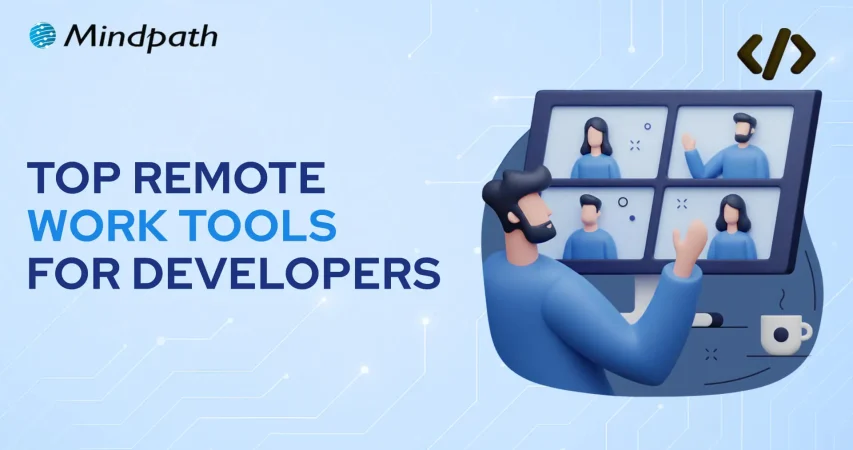
The global workforce went through a seismic shift in the last four to five years, with remote work gaining momentum. Just like many other remote jobs, developers need remote work tools to deliver their best in all tasks. As remote development teams become the norm in many organizations, it is important to know which tools can boost their productivity and efficiency.

Remote work has introduced many opportunities, such as easier access to global talent, cost reduction, and flexibility to work. At the same time, you must also take note of the prominent challenges for remote development teams, such as communication gaps and a lack of transparency. Therefore, remote development teams need reliable tools to achieve better results in their work.

Ready to boost your development capacity with the talented remote experts whom you can trust? At Mindpath, we will match you with skilled developers according to your specific requirements.

Do Remote Developers Need Special Tools?

Yes, every remote developer needs tools that help them improve their productivity. The utility of different tools for remote workers revolves around the fact that they don’t have an office-like infrastructure in their homes. Remote developers have complex responsibilities, which call for attentiveness and focus on strategic tasks. How will developers achieve all this while working in collaboration with other teams? You must look for tools that can help remote workers with different aspects of their work in the comfort of their homes.

Remote developers need different types of tools to boost their productivity in every stage of the development lifecycle. Development teams can use tools for remote work to streamline unwanted complexities in coding and tracking work. The diverse assortment of working from home productivity tools for developers focuses on development environments, collaboration tools, virtual assistants, and complete developer platforms. Developers working from their homes can leverage these tools to boost their productivity and deliver results in alignment with business goals. 

Must Read: Benefits of Hiring Remote Developers    

Unraveling the Top Remote Work Tools for Developers in 2025

The growing adoption of remote work in almost every organization is a testament to the fact that workers will need tools that fill essential resource gaps. For instance, the top 10 remote working tools for developers will not only allow them to communicate with their teammates but also find spaces for shared programming. An overview of the distinct traits of different tools used for remote work by development teams in 2025 can help you understand their significance.

1. GitHub

You can pick any list of developer tools used worldwide, and there’s no way you wouldn’t find GitHub on it. GitHub is the most popular tool used by developers and offers a comprehensive development experience with access to various tools. It is one of the best tools for remote working as it facilitates the benefits of code collaboration and DevOps in one package. 

Development teams can use GitHub Copilot as their AI coding partner to boost their productivity. GitHub also provides cloud-based development environments through Codespaces, thereby reducing resource requirements. On top of it, the features for code scanning, dependency updates, and secret detection help in identifying vulnerabilities before they enter the production stage.

2. Slack

Communication is one of the biggest priorities for any remote development team. Slack is the best tool for remote work in development teams as it centralizes communication for the entire development workflow. For instance, the Huddles feature in Slack allows developers to conduct quick calls without scheduling. 

The best thing about Slack is that it manages all conversations across the toolchain on one interface. With Slack, you can know when Jira updates the ticket status or GitHub provides notifications for pull requests. Another crucial feature of Slack is ChatOps, which offers a command-line approach to development operations on a simple chat interface.      

3. Visual Studio Live Share

The workflow of remote development teams will be incomplete without screen sharing. Some of the best tools for remote work in the domain of software development are screen sharing apps. Remote developers can use screen sharing to review code or write it together. Virtual Studio Live Share offers a transformative experience in shared programming, which empowers developers with control and flexibility.

VS Live Share is a powerful tool for shared debugging or welcoming new developers to the team. It offers a collaborative debugging feature that helps remote development teams streamline the process. Senior developers can inspect the variables and set important breakpoints that serve as guiding lights for junior developers. On top of it, junior developers can also ask questions in real-time and learn crucial debugging techniques.  

4. Zoom

Collaboration through video can be a prominent strength or a setback for remote development teams. Zoom is probably one of the best working from home tools that remote workers rely on for video conferencing. It can help you handle team meetings, client calls and even shared programming sessions. The biggest positive point of Zoom is video quality, which helps remote developers run critical operations without glitches in communication.

One of the prominent features of Zoom that helps developers is the set of robust APIs that help in building custom integrations. In addition, developers can also utilize the SDK options in Zoom for video embedding in the applications they create. The screen sharing feature offers the facility of annotations, which makes it easier for participants to communicate consistently. 

5. Figma

The collection of top tools for remote development teams in 2025 also includes Figma, a reliable design and development platform. It is one of the best tools for remote developers to solve one of the most troublesome aspects in product development. Figma helps in managing the transition from design to code with ease by leveraging different features. The real-time collaboration feature of Figma allows multiple users to edit code simultaneously. 

When combined with the Dev Mode of Figma, the real-time collaboration feature helps in bridging the gap between creativity and practical solutions. The component-based approach of Figma brings the best of modern development frameworks, thereby making it a must-have for remote developers.

Looking to boost productivity and innovation while working remotely? Explore our blog on the top GenAI Tools driving the future of AI development to understand how these tools are empowering developers beyond traditional remote work platforms.

6. Jira

Thousands of developers vouch for Jira as their first choice for project management, especially in remote teams. It is one of the digital working tools that come with a steep learning curve albeit with undisputed benefits for remote developers. Jira is a formidable software development tool that offers extensive customization options and the value advantages of agile methodologies. 

Engineering teams can capitalize on Jira for sprint planning, issue tracking and tracing the entire development lifecycle. With the right configuration and training, remote developers can use Jira to create any workflow model. Furthermore, the Jira Query Language also helps remote development teams extract relevant and productive insights.

7. Confluence

The next top tool for remote development teams is Confluence, a reliable tool for structured documentation. It is a trusted addition in the list of WFH tools that offer a broad set of features and options for better scalability. The support for Jira integration in Confluence streamlines the workflow, starting from ideation and planning to deployment. 

Confluence also helps in maintaining comprehensive documentation with the flexibility for arranging information according to project requirements. The most crucial advantage of Confluence is the assurance of access to updated information and extensive search capabilities.

8. Linear

The competition for effective project management tools in remote work is growing continuously, and Linear is a top competitor. It is a promising remote work tool for project management that works effectively for fast-paced development workflows. Linear provides one intuitive platform for tracking issues, team collaboration, and project planning. 

Remote development teams can capture, categorize, and resolve bugs in their apps with Linear and access real-time updates for better collaboration. The clear interface and collection of features, such as an issue tracker and team collaboration tools, make it a trusted alternative to popular project management tools.

9. Notion

Can developers find tools that offer an all-in-one workspace? Notion has the answer as it is a trusted remote working platform with the flexibility required by developers. It can help in creating engineering knowledge bases with database links for team members, technical decisions, and projects. 

Many remote development teams have adopted Notion for project documentation, combining meeting notes, personal task management, and onboarding guides. On top of it, developers can also leverage Notion AI for generating content and summaries.

10. Miro

The final addition to this list of promising tools for remote development teams is Miro. It is an online whiteboard platform on which developers can collaborate with each other through visual tools. Miro is the top pick among apps for remote workers that make collaboration as easy as possible. The unlimited canvas allows remote developers to organize massive volumes of information while creating a visualization of complex ideas.

Miro can help remote developers in brainstorming with other team members, contributing to the session in real-time. It also facilitates built-in communication tools that allow remote development teams to conduct interactive meetings and workshops. 

Wondering how teams can work smarter in remote environments? Explore how AI Consulting helps in enhancing productivity, collaboration, and decision-making by AI-driven strategies.

Final Thoughts

The insights on some of the most commonly used tools by remote development teams reveal that each tool brings something unique to the table. Many teams want to try free remote work tools before taking the subscription, and that holds them back from experiencing the best tools for remote development. Whether it is a workspace or a collaboration tool, remote developers must pick the ideal tools that enhance their productivity without any burden.

Expert development services at Mindpath bring you peace of mind as we offer remote development teams for different types of projects. We have built our reputation in delivering the best staffing services for various development projects across industries. You can rely on our remote development teams to make the most of top technology stacks suited to your project requirements. Contact us to consult with our experts and capitalize on the benefits of remote development services now.

Related Post

Related Post

ai in web development

Have you ever pondered if machines could design, code or even personalize user experiences better than humans? Sounds like a dream, right? Well, this isn’t a dream anymore, it is the power of Artificial Intelligence. You heard it right; artificial intelligence is becoming a powerful tool in web development in today’s digital world. Want to know how AI in web development can be beneficial for you? From accelerating development to building smarter sites, AI is quietly revolutionizing the construction and experience of digital platforms. 

But what does this revolution look like? And why are businesses and developers embracing AI more than ever? The answers may surprise you. Stay tuned as we uncover the ways AI is transforming the future of web development! 

Are you ready to elevate your website? Contact us for top-notch AI development services and we will bring your AI-driven web vision to life. 

Role of AI in Web Development

AI in web development refers to the use of artificial intelligence for building websites, faster, smarter and easier to manage. It can help with a lot of things such as writing code, fixing bugs and even assisting with the design. AI can be used in web development to save time, reduce errors and create personalized websites. By leveraging AI, developers can avoid doing repeated tasks and focus on more important things. It can find errors, accelerate things and also help users get their requirements faster.

AI plays a major role in making websites better by suggesting designs, writing parts of the code and even testing how well a website works. Once the site goes live, AI can watch how people use it and make things smoother. Now you must have got a good idea about AI in web development. Let us also learn about some of its benefits: 

Also Read: Benefits of AI

Benefits of AI in Web Development

AI is simplifying website creation for everyone. It assists with coding, designing, and even communicating with users. If you’re creating a website or just beginning, AI can help you save time and get things to work more efficiently. Here are some easy ways it can actually help.

Benefits of AI in Web Development

1. Smarter Coding and Testing

The powerful combination of AI and web development can help developers to write cleaner codes by spotting bugs early and improving how the code works. With deep learning, AI-based tools also facilitate automated testing, which assists quality assurance teams in verifying whether the website functions correctly. Although some problematic areas continue to require manual testing, AI streamlines the process and reduces costs. That’s one of the reasons why QA and testing budgets have declined over the past few years, and why more individuals are using AI websites for improved results. 

2. Smooth Website Development

AI in web development handles mundane and time-consuming work so developers can concentrate on the larger aspects of a project. With smart tools and data-driven choices, the entire web development process becomes more efficient and faster. This is incredibly useful, particularly if you’re new to it. By using AI to create websites, you save time and effort while building something awesome and making web development feel less stressful and a lot more efficient from the very start. 

3. Boosts Customer Support

AI in customer service makes it simple to integrate smart chatbots onto websites that are able to engage with visitors’ day and night. These virtual assistants comprehend questions and respond in natural, friendly terms. They provide instant answers, resolve issues rapidly, and never require breaks. This allows owners of websites to assist users without requiring a support team full-time. It’s an easy method to ensure visitors are satisfied and that they always receive assistance, even when there is no one present. 

4. Cost Effective and Personalized Experience

With the help of AI tools, websites are now able to provide customers with a more personalized and seamless experience at reasonable costs. Work that required time can now be processed automatically, saving time for both users and website owners. AI also assists in identifying fraudulent or toxic activities, protecting users. This is why many top AI websites utilize intelligent features to serve customers better. Ultimately, AI assists in providing more value to the customer at a low cost. 

5. Effortless Content Management

Website content management becomes a lot simpler with the assistance of AI. Through analyzing user behavior on a website, AI provides clear concepts regarding what type of content users like most. Website owners can develop improved posts, videos, or pages that genuinely interest visitors due to this. With the assistance of AI web templates and smart recommendation tools, you can lead users to whatever they require and retain them for a longer period. It’s an easy way to make content better and make each visit feel more personal.

Is your business making the most of AI to stay ahead of the competition? Explore how integrating AI in your business strategy can optimize processes, drive growth, and improve decision-making.

How to Use AI in Web Development?

Today, web development thrives on the partnership between AI and human expertise. While AI handles repetitive tasks and enhances efficiency, it still relies on human creativity and problem-solving. Here’s how you can use AI in web development to streamline your process and improve results. 

1. Artificial Design Intelligence (ADI)

Artificial Design Intelligence (ADI) assists you in creating a complete website by simply responding to a few simple questions. It selects the most suitable layout, design, and content depending on your requirements. It’s like having an intelligent assistant that designs a professional-looking site that reflects your style and objectives. This AI website generator makes the process fast and efficient, ensuring you get the site you want with minimal effort.  

2. Search Easier with Voice Assistants

Rather than typing and reading lengthy pages, users can simply speak their question. Voice AI listens, the correct answer quickly, and voices it back. Voice AI assists websites in providing rapid and clear responses, speeding up searches, making it easier, and more accessible to all. 

3. Coding Assistants

Developers can use smart coding assistants to speed up their work. These tools suggest code, spot errors, and help build websites faster. Even when working on big ideas, they take care of the small stuff. It’s like having a smart helper while writing your code. 

4. Personalize User Help with Chatbots

AI chatbots make it easy for users to get the info they need. They can ask questions in simple language, and the bot instantly provides answers or links. The benefit of chatbot is that it provides fast, accurate responses, making the experience more personal and efficient by using the website’s content.

5. Easy Search Engine Optimization (SEO)

AI can make SEO much easier by providing the best keywords, topics, and headlines for your content. It can even write parts of your text, ensuring the right keyword density for better search engine rankings. This helps your website attract more visitors without the hassle of manual research. 

AI is reshaping industries by automating the processes, empowering faster decision-making, and providing data-driven insights. Learn how AI is e-commerce is transforming the future of e-commerce sector.

Ready to Transform Your Website with AI?

AI is changing web development by making tasks faster and more efficient. From designing and coding to improving user experience, AI helps developers focus on what truly matters. By integrating AI, your website can become smarter, more personalized, and easier to manage for everyone involved. 

Mindpath offers top-tier AI development services and delivers high-performing artificial intelligence solutions that enhance your website’s design, performance, and functionality. Our expert team utilizes AI tools to streamline processes, boost user experience, and create custom solutions.  

digital transformation for businesses

Do you think about your company’s future and ask yourself what digital transformation for businesses means? If so, you’re not alone! Many business owners and leaders are trying to figure out how they will continue to be relevant and competitive in a world that is constantly changing. Digital transformation is changing how you work, how you serve and support customers, and how your team grows. So why is it so important?

Digital transformation for businesses impacts every area of a business, from routine activities to strategic targets. It allows you to work smarter, make better decisions, and respond rapidly to changing customer demands. Adopting digital tools and an alternative mindset can help businesses maximise productivity and create new opportunities. Understanding the process is a prerequisite to helping your business flourish in today’s environment. In this blog, you’ll discover how.

Implementing digital transformation in your business can be challenging; you need expert guidance. Partnering with Mindpath will help you in exploring personalized strategies that will reshape your business. Contact us to start your transformation journey.

What is Digital Transformation?

Digital transformation is the use of modern technology across all areas of a business to change how it works inside and how it connects with customers. It can involve updating old systems, adding new tools, and finding better ways to get work done. Companies take this step to keep up with industry changes and market trends. It is a serious shift in how work is planned and delivered every day.

The digital transformation process requires the involvement of people at every level, from leaders to staff. It is not a single project but an ongoing effort, as technology and business needs keep evolving. Companies must stay open to new ideas and improvements to remain competitive. Digital transformation helps an organization stay prepared and flexible in a fast-changing world. It is a commitment to keep moving forward.

Curious which technologies can give small businesses a competitive edge? Explore emerging technologies for small businesses to see the innovations driving digital transformation.

Why is Digital Transformation Important?

Digital transformation is important because it helps companies keep up with changes in their industry and meet customer needs in new ways. It improves how businesses work by using smarter tools and systems, which makes daily tasks more organized and efficient. Focusing on digital transformation for small businesses can help smaller companies compete with bigger ones and stay prepared for what’s next.

One big reason companies choose digital transformation is to replace outdated manual work with better technology. This makes daily tasks easier and helps the whole company run more smoothly. According to digital transformation McKinsey research, 68% of people said they transform their operations mainly to modernize how they work. A clear plan helps every company adapt and stay ready for what comes next.

What are the 4 Types of Digital Transformation?

There are different ways a company can approach digital transformation depending on its goals and needs. Here are four main types of digital transformation every business should know about:

4 types of digital transformation

1. Domain Transformation

Domain transformation happens when a company enters a new market beyond its usual industry. This is often made possible by advanced digital transformation technologies.

2. Cloud Transformation

Cloud transformation moves data and systems to the cloud for better access and storage. Companies can choose public, private, or hybrid models for flexibility.

3. Business Model Transformation

Business model transformation means changing how a product or service is delivered by using modern digital tools. It’s a smart move within any digital transformation framework.

4. Business Process Transformation

Business process transformation improves how work gets done inside the company. It’s a big step in digital transformation for business success.

Benefits of Digital Transformation for Businesses

Digital transformation helps companies improve how they work and respond to changing demands. Below are some of the main benefits it can offer:

1. Cost Savings

One of the biggest advantages of digital transformation for businesses is saving money by removing outdated processes. With better systems in place, companies can spot problems sooner and use resources more wisely.

2. Better Customer Experiences

When processes run smoothly and technology is up to date, customers enjoy faster service and better support. Digital transformation for businesses also makes it easier to adapt based on customer feedback.

3. Support for Sustainability

Modern tools help companies design products and processes that use less energy and fewer materials. This cuts down waste and supports long-term environmental goals.

4. Faster Processes and Higher Productivity

When companies use smart tools and automation, everyday tasks become quicker and more accurate. This gives employees more time to focus on work that adds real value instead of getting stuck on repetitive jobs.

5. Valuable Data Insights

Digital transformation for businesses makes it easier to collect useful data and turn it into insights that help leaders make better choices. This way, different departments can understand trends and work together with clear, reliable information.

6. New Business Models

Following a clear digital transformation roadmap lets companies create fresh ways to reach customers and stay ahead in the market. New ideas and flexible services open the door to growth and higher revenue.

7. Strong Profit and Growth Potential

Companies that have a solid digital transformation strategy often see steady profit growth because they work more efficiently and serve more people. It also helps them expand into new areas over time.

8. Strong Competitive Edge

Digital transformation for businesses helps them stand out with fresh ideas and unique services. Companies that keep innovating stay ahead of the competition and handle change more easily.

9. Quick Adaptation to Change

Digital transformation for businesses gives them the tools to adjust plans when the market changes suddenly. This helps keep things running smoothly and protects the company’s future.

10. Simple Compliance and Regulations

Smart systems help track the right data to meet industry rules and quality standards. This makes it easier to share reports and pass audits without extra stress.

What are the 5 main areas of digital transformation?

Every successful digital transformation covers key parts of a business to make sure changes bring real value. Here are the five main areas of digital transformation that companies focus on:

5 main areas of digital transformation

1. Business Model

Digital transformation often means rethinking how a business makes and delivers its products or services. Companies may find new ways to earn revenue using online platforms or new technologies. This helps them stay competitive and reach more people.

2. Customer Experience

Customer experience means using technology to make every interaction better for your customers. This could be through faster service, easier online tools, or more personal communication. The goal is to keep customers happy and loyal to your business.

3. Operations

Improving operations means making everyday work run more smoothly with digital tools. Automation and better systems help teams save time and avoid mistakes. This keeps the business running efficiently and ready for growth.

4. Technology

Every digital transformation depends on using the right technology, like cloud services, AI, or smart data tools. These tools help companies collect information, solve problems, and create new ideas. Staying updated with technology is key to long-term success.

5. Workforce

Employees need the skills to work well with new digital systems. Companies should train their teams and encourage learning new things regularly. This builds a flexible workforce that can handle changes and keep the business moving forward.

Real-world Examples of Digital Transformation

Knowing about real Digital transformation examples makes it easier to understand how technology can truly change a business. Here are some real-world cases that show what’s possible when companies embrace digital transformation.

Real World exmaples of Digital Transformation

1. Tailored Customer Rewards

Starbucks uses AI in its app to create rewards and suggestions that feel personal to each customer. This digital approach keeps customers happy and loyal to the brand.

2. Personalized Product Fit

Nike’s SNKRS app and foot scan tool help customers find shoes that fit perfectly. This smart use of technology makes shopping easier and gives Nike useful data for better designs.

3. On-Demand Entertainment

Netflix changed how people enjoy movies by moving from renting DVDs to streaming online. This gave people freedom to watch what they want, when they want, without late fees.

4. Cloud-Based Service Models

Adobe transformed from selling boxed software to offering cloud subscriptions like Creative Cloud and Document Cloud. This makes their tools easier to use and keeps customers updated with the latest features.

5. Interactive Buying Experience

Audi introduced Audi City, a digital showroom where people explore cars using large screens and virtual tools. This makes the car-buying process modern, fun, and more convenient in small spaces.

Ready to Future-Proof Your Business?

Digital transformation for business helps you stay competitive, meet customer needs, and grow in a fast-changing world. Using AI and business technology together lets you work smarter, adapt quickly, and make better choices every day. Embracing this change now opens the door for fresh ideas and keeps your company strong in any market.

At Mindpath, we empower you to develop a clear approach to digital transformation by bridging people, processes, and technology. Our experts will guide you through every step of the journey and will ensure your team is employing the best tools to drive ongoing digital transformation. Let’s make your organization agile, productive, and ready for growth using intelligent digital solutions tailored specifically to you.

Explore how digital transformation reshapes businesses, boosts efficiency, enhances customer experiences, and drives sustainable growth for success.
Headless CMS

Have you ever wondered how websites deliver content so seamlessly across different platforms? What if there was a way to manage your content in one place and have it appear perfectly on websites, apps, and even smart devices? Welcome to the world of Headless CMS—a modern solution that’s redefining how businesses manage and deliver content. Curious to know why it’s a game-changer? 

Let’s explore! 

What Is Headless CMS?

A headless CMS is a cutting-edge method of content management that simplifies and expands options. Unlike traditional CMS platforms, where content and design are inextricably linked, a headless CMS keeps both apart. A headless CMS allows you to produce and organize all of your content in one location. Then you can distribute that information across any platform, including websites, applications, smart devices, and even wearables. This separation enables marketers to update and maintain content without requiring assistance from developers. At the same time, developers can focus on creating rapid and inventive digital experiences without being constrained by predefined designs or structures. In contrast, traditional CMS systems combine content with design, making it more difficult to reuse content or build new digital experiences. A headless CMS maximizes your content’s potential by allowing you to scale and adapt as your needs change. 

Advantages of Headless CMS

1. Faster Launches

A headless CMS allows organizations to speed up content delivery by separating the front-end (what users see) from the back end. This implies that developers do not need to re-create user experiences for each platform; instead, they can construct effective solutions using their preferred tools and frameworks. The flexibility of a headless CMS enables teams to integrate new technologies, add features, and deploy changes without delay. Front-end developers can concentrate on creating contemporary, engaging interfaces using the most recent frameworks and technologies, while back-end developers handle content separately. This parallel workflow saves significant time. One of the most significant advantages is how rapidly material can be updated and circulated. Since modifications do not affect the underlying system, teams can quickly deploy upgrades or communicate information across platforms. This is particularly important for firms that must respond fast to market developments, client needs, or new possibilities. Businesses can utilize a headless CMS to significantly cut development time, keep ahead of competition, and guarantee their content reaches customers faster, therefore improving their whole digital strategy. 

2. Tailored User Experiences

A headless CMS allows you to easily personalize and share information across several platforms, including websites, applications, and even wearable devices. Businesses can employ atomic content design to offer personalized and dynamic information suited to each customer, improving their experience regardless of the platform they use. This personalized strategy not only increases engagement but also helps to strengthen client connections. Enterprises can offer personalized content at each stage of the buyer’s journey, resulting in a smooth and relevant experience. Furthermore, the ability to track user behavior enables organizations to better understand client preferences and modify their tactics for greater success. Personalized content delivered via a headless CMS not only increases customer happiness but also helps retain visitors, converting them into loyal, long-term clients. It’s a clever way to enhance user experiences while strengthening business growth. 

3. Better Speed and Performance

A headless CMS separates the front-end from the back end, allowing for faster and more efficient website development. This decoupling allows developers to create lightweight programs, while content is provided swiftly via APIs. This approach is especially beneficial to static sites and single-page applications since it allows for quicker content loading and smoother user experiences. Developers can enhance efficiency even further by using sophisticated techniques like code splitting, caching, and lazy loading. These strategies minimize load times, optimize resource utilization, and ensure that customers receive content promptly. Furthermore, the increased speed of headless CMS websites promotes better SEO performance. Faster-loading sites score higher on search engines such as Google, increasing exposure and visitors. With improved performance, organizations can give a better user experience and drive greater engagement and conversions. 

4. Seamless Tech Integration

A headless CMS’s API-first approach streamlines the integration of third-party systems like ERP, CRM, and marketing automation applications, hence improving your application’s overall capabilities. This adaptability enables firms to seamlessly adopt modern technology into their existing settings while minimizing interruptions. The decoupled design also allows for the usage of AI-powered tools for personalized content creation, automation, and predictive analytics. By integrating third-party APIs, organizations can create smarter solutions that adapt to changing demands and provide more value to customers. This technique enhances data analysis, simplifies operations, and greatly eliminates human error, resulting in faster and more informed decision-making. Additionally, it guarantees that your online apps are scalable, resilient, and available across all platforms, providing clients with a seamless experience. The ability to integrate modern technologies with existing systems not only future proofs your digital infrastructure but also empowers businesses to innovate and grow with confidence.  

5. Scalable and Future-Ready

A headless CMS allows organizations to easily develop and adapt to new technology. Its API-first architecture enables content distribution to a variety of platforms, including websites, mobile applications, and potentially future technologies like AR/VR and the metaverse. This means you don’t require several content systems, which reduces development time while guaranteeing your material reaches the intended audience. Businesses can utilize a modular content approach to build reusable blocks like product descriptions, testimonials, and call-to-actions. These blocks can be merged and customized to work with diverse platforms and situations, making content management more efficient and adaptable. Headless CMS also provides localization and multilingual options, making it simple to reach worldwide audiences while maintaining content consistency across platforms. This flexibility means that organizations can expand without sacrificing performance or brand identity. 

How Mindpath Can Help?

Mindpath understands the value of headless CMS and how it can revolutionize your digital presence. Our team specializes in developing customized solutions to help your business expand and remain ahead of the competition. We can assist you in integrating modern technologies such as AI tools, ERP, and CRM systems into your headless CMS to achieve smarter automation and more productivity. Whether you want to offer speedier content, increase website performance, or develop personalized user experiences, we have you covered. Our expertise make sure your headless CMS is scalable, safe, and future proof. We ensure that everything functions fluidly across platforms such as websites, mobile applications, AR/VR, and even emerging technologies, making your material available to all audiences. Mindpath allows you to fully embrace the flexibility and power of headless CMS while maintaining consistency and performance.  

Wrapping Up!

A headless CMS provides unparalleled flexibility, speed, and scalability, allowing organizations to provide personalized, high-performance content across various platforms. Whether you want to accelerate launches, improve user experiences, or incorporate innovative technology, a headless CMS is the future-proof option for your digital strategy. At Mindpath, we’re here to help you realise its full potential, ensuring that your company remains ahead of the competition and efficiently reaches customers across all channels. Let’s harness the potential of headless CMS together!  

Ready to leverage the power of headless CMS?

Partner with Mindpath today for custom solutions that drive performance and scalability!

Discover the benefits of headless CMS for faster content delivery, personalized experiences, and seamless integration.