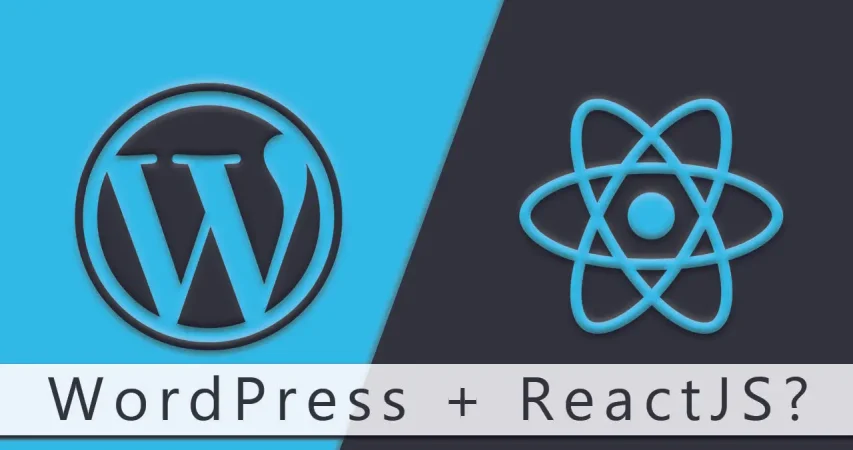
Building a Powerful Web App: Combining React and WordPress

Join our Newsletter!

Featured Posts

Support Is One Click Away

Home

Building a Powerful Web App: Combining React and WordPress

wordpress-react-combine project

Building a Powerful Web App: Combining React and WordPress

Are you curious about how to elevate your web app to the next level? Imagine combining React’s cutting-edge user interfaces with WordPress’s robust content management. Interesting right? In this blog, we’ll guide you through the process of merging these technologies to build a web app that’s both visually stunning and highly functional. So, let’s dig in! 

Overview of React 

React is a JavaScript library that enables the building of user interfaces, mostly single-page applications. It gives a possibility to create interactive elements and dynamic web pages by breaking their content into smaller, re-usable components. It helps in managing updates to the user interface and hence makes applications faster and more responsive. React is essential to today’s digital makeup since it will help in the creation of a much faster, interactive, and dynamic web application that would go a long way in enhancing user experience. Due to its component-based architecture, React simplifies the development process and supports complex applications with high performance, making it a preferred choice for modern web development, where user engagement and responsiveness count the most. 

Overview of WordPress 

WordPress is an extremely popular content management system, and millions of websites are running on it worldwide. Its user interface is very simple, so users can easily create, edit, and manage website content without needing to know how to code. With high flexibility in themes and various plugins, WordPress can be put to any purpose—from personal blogging to the most complicated business sites. WordPress is important due to the flexibility and user-friendliness in creating and managing websites efficiently for any kind of user. It provides access to unlimited customization because of its extended base of themes and plugins, hence becoming a mainstay tool in the modern world for web developers and content creators. 

Why Combining React and WordPress Can Be Beneficial for Developers.   

Integration of React with WordPress enriches development by putting the power of both together. React is empowered for reusing the components, which means simplicity in terms of coding and speed in development. Fast rendering with efficient state management means web applications work harmoniously and respond as the user expects. JSX syntax, with its combination of JavaScript and HTML, enables easier writing and readability of codes. WordPress complements React by taking care of the content and providing a clear user interface. The fact that React can keep data away from the presentation and manage it nicely helps not to lose data under any conditions. Taken together, React and WordPress make the building process much faster and more convenient for creating powerful and extremely dynamic web apps. 

Key Considerations When Building Your Web App with React and WordPress    

1. Existing Infrastructure  

Your existing infrastructure does affect how well React and WordPress work together. If your current system is compatible, the integration of React will go through smoothly and more quickly. For example, a headless setup where React is doing the front end and WordPress the back end could be best for modern needs. This, however, requires more development work, changes in your back-end system, and special expertise to do it correctly. 

2. Maintenance And Updates  

Regular updating and maintenance are vital in the case of a React and WordPress site. In case you do not update them regularly, your site will eventually have performance issues, it will be vulnerable to security exploits, or even crash. When it’s headless—in a setup where React and WordPress run separately—the updates become easier; one could independently update the front end and back end, which will be helpful in keeping the site’s stability and safety. 

3. Developer Skillset  

It requires a wide skill set to build a website with React and WordPress. One needs to be proficient in JavaScript, to understand JSX, and to use state management tools like Redux. One would also want to be familiar with modern development tools like Webpack and Babel and know how to work with APIs. If these competencies are missing in your team, including an expert on a project basis will make the development process smoother and more efficient. 

4. SEO Considerations 

SEO is critical to have your website show up in search results and bring in visitors. Using React with WordPress, SEO can be a little more complex. As its client-side rendering, React may make it hard for search engines to index your content. You can either implement SSR or SSG to make it easier for search engines to crawl and rank your site. Besides, meta, sitemaps, and canonical URLs should be properly set up for effective SEO within a headless WordPress setup. 

Ready to elevate your website to new heights?

At Mindpath, we seamlessly integrate React with WordPress to create dynamic, responsive web experiences.

Configuring React to Work with WordPress      

1. Write Modular Code 

Breaking your code into smaller, self-contained parts makes it easier to handle and reuse. This is like keeping your workspace organized: when everything has its place, it’s much easier to find anything that you may need and use it. Small, reusable components in React are ways by which you can keep your code neat, making changes or fixes on parts of your site without affecting the other parts. 

2. Use A State Management Library   

A state management library, like Redux, that keeps every bit of information of your app in one place. This is good for complicated websites where you deal with a great deal of information. This way, it becomes easy to handle changes and updates for your website to run smoothly and in the desired manner. 

3. Optimize Performance   

Performance optimization of the website enables quick and enjoyable usability by the user. This is achieved through caching, breaking down the code into smaller pieces that load only when needed, or lazy loading—parts of the website only load after becoming visible to the user. Doing this will get your site up and running quickly; this will also improve responsiveness. 

4. Implement A Consistent API   

A good API—like WordPress REST API or GraphQLwill help your React app and WordPress site to communicate smoothly. A consistent API would mean that data flows between the two without any problems. REST APIs offer flexibility, but their design is often varied. GraphQL APIs are more homogeneous and predictable, so it helps in use and understanding. 

5. Plan For Extensibility   

Make a site that will expand and evolve over time without a problem. That means keeping ahead by finding out ways to add new features or update existing ones without breaking the rest of the site. Having an extensible design means it will let your site easily change to meet future needs without having to start from square one. 

6. Automated Testing 

Automated testing means running your code for errors using tools automatically. This will ensure that mistakes are noted and cured in the beginning, thus ensuring that your website does what you want it to. Automated testing saves time and keeps your site stable; this reduces the chances of problems frustrating users. 

Build Your Web Using React and WordPress with Mindpath    

The experienced team at Mindpath uses React to improve user experience and WordPress as the foundation for creating powerful websites. With its incredibly strong and practical content management system, editing and managing website material is effortless. By integrating React, we can increase your site’s speed and amount of interaction while engaging users on a deeper level. Create a dynamic frontend for your website using React to make it load quickly and react to user input as smoothly as possible.

Mindpath offers the best of both worlds: the ease and versatility of WordPress paired with the contemporary, dynamic capabilities of React. We take care of the technical setup and customization so you can have an outstanding website experience and concentrate on your content and business objectives. 

Conclusion  

Combining React and WordPress gives synergy to your Web application, offering a digital experience that is at once impressive and compelling. Being able to interact with dynamically displayed interfaces from React and a robust content management system like WordPress, you are assured of having a site that is at once engaging, powerful, yet very easy to manage. Inherently, this automatically ensures the improvement of user interaction and performance while also making it seamless to update content and manage sites. Embrace this mix of technologies to develop a web app which would be fast, functional, and future-ready. This way, your web presence will always be at the top of its game.
Mindpath excels at bringing this integration to life. Our expert team combines the power of React with WordPress to deliver an ultra-fast, interactive site that is also easy to maintain and update. With Mindpath, you can confidently navigate the complexities of modern web development, ensuring your digital presence is both cutting-edge and effortlessly managed. 

Looking to enhance your WordPress site with cutting-edge React features?

Mindpath is your go-to partner! We specialize in integrating React’s dynamic capabilities with WordPress’s robust CMS to deliver stunning web experiences.

Related Post

Learn essential cybersecurity practices for remote work and how Mindpath can help protect your business with expert solutions.

Related Post

DevOps Trends

Have you been paying attention to the speed at which DevOps trends are changing and how they are affecting businesses? If you’re managing a tech team or are just about to scale up your operations, you may already be thinking about the implications of these trends on your success. As more companies adapt to smarter workflows and quicker ways of delivering value, being up to date is critical. So, how can you stay on top of it without falling behind?

Finding the answer to this question involves understanding the trends that affect how we run businesses in the real world. DevOps best practices today are designed to bring automation, cloud-native tools, or security-first approaches to solve the problems we face in modern situations. Being aware of what’s meaningful and useful can help your team be more effective while accelerating time to market. In this blog, we will examine key trends and look at how they can create real results for your organization.

As businesses embrace DevOps in 2026, the need for expert guidance becomes crucial. At Mindpath, our DevOps services ensure organizations can adopt the right strategies and technologies to stay competitive.

Understanding DevOps: A Quick Dive-in

DevOps is a development approach in which software developers and IT teams collaborate on software and business processes. By working together, they share responsibilities and use tools to speed things up and facilitate the flow of work. DevOps is centered around good communication, collaboration, and automation. In essence, DevOps can deliver near-instant software, identify issues sooner, and get a better and quicker flow between building and deploying applications. As a result, many organizations leverage DevOps for business strategy and agility since it can enhance both speed and efficiency.

In this approach, one team often takes care of everything, including coding, testing, releasing, and maintaining the software. This removes delays and improves software quality. Teams use automation tools to speed up tasks and reduce errors. DevOps also brings security into the process right from the beginning, so it becomes part of every step. This working method helps businesses launch better software faster while keeping systems stable and secure.

Here are some of the benefits that DevOps can offer:

Benefits of Devops

1. Creates a Stable Work Environment

DevOps helps teams handle changes easily without stress. It brings a better balance to daily work and keeps operations running smoothly.

2. Speeds Up Deployment

DevOps allows faster software releases with fewer delays. This helps businesses deliver new features quickly and stay ahead in the market.

3. Improves Software Quality

With regular testing and feedback, DevOps helps catch bugs early. Teams can focus on creating better products with fewer errors.

4. Solve Problems Quickly

DevOps uses monitoring tools to spot issues fast. Smaller and frequent updates make fixing problems easier and more reliable.

5. Supports Flexibility and Quick Changes

DevOps builds a flexible work style where teams can respond to change easily. It helps businesses adapt to market needs faster.

6. Boosts Innovation Through Automation

By reducing manual tasks, DevOps gives teams more time for new ideas. This leads to faster improvements and better products.

7. Reduces Overall Costs

DevOps combines tasks and reduces the need for rework. This saves time, uses resources better, and cuts down project costs.

8. Improves Team Collaboration

DevOps encourages better teamwork and shared goals. Clear communication between teams leads to faster decisions and stronger results.

Aiming to enhance operational efficiency and reduce development risks? Check out our blog on DevOps Challenges and Solutions to discover proven approaches that improve performance, stability, and cross-team cooperation.

Top DevOps Trends 2026

As technology continues to evolve, companies are rethinking how they build, test, and deliver software. DevOps trends for businesses in 2026 show a clear shift toward smarter tools, stronger collaboration, and faster delivery. By following the latest DevOps transformation strategies, organizations can stay ahead and build systems that are both efficient and future-ready.

top devops trends


1. DevSecOps

DevSecOps is becoming a key part of DevOps innovation, where security is built into every stage of the development process. Instead of adding security at the end, teams now include it early to catch risks before they grow. This trend helps businesses create safer applications by using automated testing and continuous monitoring within the DevOps workflow.

2. AI and Machine Learning

AI and machine learning is one of the latest DevOps trends, helping teams work faster and smarter. These technologies support intelligent monitoring, find unusual behavior in systems, and give early warnings before issues grow. By using data to guide decisions, DevOps teams can improve system performance and reduce downtime.

3. Serverless Computing

Serverless computing is becoming a popular trend in DevOps for business success because it removes the need to manage servers. It allows teams to focus only on writing code, which speeds up development and reduces overhead. This approach also helps businesses save costs by using resources only when needed, making operations more efficient.

4. Continuous Integration and Continuous Delivery (CI/CD)

Continuous Integration and Continuous Delivery (CI/CD) is a key DevOps trend that helps teams deliver software faster and with fewer errors. It allows developers to regularly merge code changes, test them automatically, and deploy updates smoothly. This approach improves software quality and supports a steady flow of new features to users.

5. Infrastructure as Code (IaC)

Infrastructure as Code is a growing trend that helps teams manage infrastructure through written code instead of manual steps. It ensures consistency across development, testing, and production, reducing errors and saving time. As one of the leading DevOps tools and technologies, it allows automated setup and easy tracking of changes in infrastructure.

6. Microservices Architecture

Microservices architecture is a DevOps approach where an application is built using many small, separate services. Each service handles a specific function and can be updated or scaled on its own without affecting the rest of the system. This makes the software more flexible, easier to manage, and better at handling changes or failures.

Must Read: DevOps for Business

7. Cloud-Native Development

Cloud-native development is a modern way of building applications that fully uses the power of cloud computing. It is one of the key DevOps trends helping businesses create software that can easily grow, move, and adapt to changing needs. By using containers and microservices, teams can build flexible and efficient systems that are ready for fast updates and smooth scaling.

8. Edge Computing

Edge computing is a growing part of modern DevOps trends that focuses on processing data close to where it is created. This reduces delays and improves the speed of applications by handling data locally instead of in a central server. It also helps save bandwidth and supports real-time decision-making, making systems faster and more efficient.

9. Hybrid and Multi-Cloud Strategies

Hybrid and multi-cloud strategies are important DevOps trends that give businesses more flexibility and control over their cloud usage. By using services from different cloud providers, teams can choose the best tools and features for each task. This approach improves performance, reduces risk, and avoids being tied to one provider.

10. Low-Code and No-Code Platforms

Low-code and no-code platforms are shaping the future of DevOps by making application development easier and faster. These tools allow non-developers to build and launch apps with simple interfaces, helping teams save time. By handling basic tasks through these platforms, developers can focus on more complex work and boost overall productivity.

11. Quantum Computing

Quantum computing is an emerging part of DevOps trends with the potential to solve complex problems much faster than traditional systems. Although still in the early stages, it may one day help teams handle advanced computing tasks more efficiently. As the technology grows, it could bring powerful new capabilities to DevOps in areas like testing, simulation, and optimization.

12. AR and VR (Augmented Reality and Virtual Reality)

Augmented Reality and Virtual Reality are becoming new DevOps trends that support better training, simulation, and team collaboration. These technologies create realistic, hands-on experiences that help teams learn and solve problems more effectively. AR and VR also improve remote teamwork by making interactions more engaging and productive.

Looking to combine fast DevOps practices with automated security checks? Check out our blog on DevOps vs DevSecOps to understand how DevSecOps adds proactive, automated safeguards to every stage of your pipeline.

Is Your Business Ready to Benefit from the Latest DevOps Trends?

DevOps trends continue to shape how businesses grow through faster delivery, better collaboration, and smarter tools. Staying updated helps teams move quickly, improve software quality, and remain competitive in a rapidly changing market. By understanding and applying these trends, companies can build stronger systems and create real value with every software release.

At Mindpath, we offer expert DevOps services that help businesses streamline processes, boost collaboration, and deliver software faster. Our team uses modern tools and proven strategies to support automation, cloud-native development, and continuous delivery. Contact us and we’ll guide you through each stage with clear planning, smooth implementation, and reliable support tailored to your business goals.

Discover the latest DevOps trends to enhance collaboration, streamline processes, and drive business success.
Conversational AI Trends 2024
Artificial Intelligence is the term of the decade. While we might not notice, AI is slowly seeping into our everyday life. Conversational AI, a byproduct of AI is already popular in the form of voice assistants like Siri and Alexa, customer assistant chatbots, messenger bots, and more such solutions.   Market research suggests that in 2022, the worldwide conversational AI market was valued at approximately $7.61 billion. It’s expected to expand steadily at a compound annual growth rate (CAGR) of 23.6% from 2023 to 2030. This growth is primarily driven by increased demand, lower chatbot development expenses, AI-driven customer support, and the adoption of omnichannel approaches.  In this blog, we will explore 5 conversational AI trends that will be prominent in the year 2024. So let’s dive right in!  

5 Conversational AI Trends for 2024

1. Chatbots Will Become More Compassionate

One of the biggest trends in the area of conversational AI is that chatbots are going to acquire emotional intelligence. Chatbots will be able to recognize human emotions and respond to them in a manner that’s more humane.   AI chatbots with emotional intelligence will be able to understand complex human emotions such as frustration, dissatisfaction, and anger and thus tweak their response strategy to handle the unpleasant situations that might take place during customer interactions.   Emotional intelligence can also come in handy to enhance chatbot responses and make them much more user-friendly.  

2. More Personalization For Customers

Conversational AI, especially in the domain of chatbots, is becoming more sophisticated by the day where their application is not limited to simply answering the questions. Conversational AI chatbots are all set to offer more personalization to customers in the coming year.   With their ability to understand natural language, chatbots will be able to grasp customer intent. With adequate training on customer data, they will be able to offer customized responses to customer queries, ultimately boosting the customer experience.   Moreover, conversational AI-powered platforms will also be able to curate content such as articles, videos, guides, etc., for users based on their previous activities, providing a rather holistic and personalized experience.  

3. Conversational Search Engines

In 2024, conversational search engines will revolutionize how users interact with search platforms. Traditional keyword-based search is gradually being replaced by more conversational and natural language queries. So instead of typing keywords, we can ask search engines questions as we would to any other human being, and they would respond!   With the advancement of AI and machine learning algorithms, search engines will become adept at understanding the context and intent behind user queries, leading to more relevant search results.  Conversational search engines will enable users to ask complex questions in a more conversational tone, and the search engine will provide answers based on understanding the semantics of the question rather than just matching keywords. This will enhance the search experience, especially on mobile devices and smart speakers, where typing is cumbersome. 

4. Quick Deployment Of Virtual Agents

Advancements in natural language processing (NLP) and machine learning algorithms will enable companies to build and deploy virtual agents rapidly, without extensive customization or development time.   In 2024, the demand for virtual agents will continue to rise, driven by the need for efficient customer service solutions and automation in various industries. Pre-trained models and modular architectures will streamline the deployment process, allowing organizations to implement virtual agents within weeks rather than months.  Training these models is the most time-consuming process. With the availability of large-scale data, it would become much easier and quicker to train the models and deploy them over the coming years.  

5. Multilingual Capabilities Will Expand

Conversational AI technologies will evolve to support a wide range of languages, dialects, and accents, enabling businesses to cater to a global audience seamlessly.  As businesses continue to expand globally, the need for multilingual conversational AI solutions will become more pronounced in 2024. Enterprises operating in diverse markets will require AI-powered platforms that can communicate effectively with customers in their native languages.  Advanced translation models and cross-lingual transfer learning techniques will allow the development of multilingual virtual assistants that can understand and respond to user queries in multiple languages.  To wrap up, the year 2024 promises to be an exciting year for conversational AI, with innovations in emotional intelligence, personalization, search capabilities, virtual agent deployment, and multilingual support reshaping the landscape of customer interactions and user experiences. These conversational AI trends are all set to transform the customer experience for businesses.   If you are also looking to give your business a competitive edge and improve customer experience, it’s the right moment to invest in conversational AI. At Mindpath, we take pride in having innovation as our core value. Our team of professionals combines cutting-edge technology with deep industry knowledge to deliver bespoke solutions tailored to your business needs.   Whether you want a custom AI chatbot or leverage technologies like OpenAI’s ChatGPT, we can help you with all of it.   So if you are looking to unlock the full potential of conversational AI for your business, we can help! Contact us now to explore how our advanced AI solutions can elevate your customer experience and drive business success.  Let’s talk
Conversational AI, a byproduct of AI is already popular in the form of voice assistants like Siri and Alexa, customer assistant chatbots, messenger bots, and more such solutions.  
Hire ReactJS Developers in California
Are you looking for top ReactJS developers in California to build a high-performance web application? Do you need experts who can create scalable, fast, and user-friendly solutions? Finding the right developers can be challenging, but with the right approach, you can hire the best talent to bring your vision to life. California is home to some of the greatest ReactJS developers, making it an excellent location to discover top talent for your web development requirements. Whether you’re creating a dynamic web application, a complicated business solution, or improving an existing platform, hiring talented ReactJS developers can help you create quick, scalable, and user-friendly solutions. With the increasing need for high-performance web applications, organizations want developers that can use ReactJS to provide seamless user experiences. California’s booming technology ecosystem gives access to seasoned individuals who understand current development trends, best practices, and industry standards. Hiring the proper ReactJS developers ensures that your project is constructed for efficiency, adaptability, and long-term success. Let’s explore how you can find and hire skilled ReactJS developers in California for your project!

Steps to Hire ReactJS Developers in California

1. Define Your Project Needs

To hire a ReactJS developer in California, begin by describing the sort of application you want. Whether it’s an e-commerce platform, a SaaS solution, or a business tool, having a clear vision helps you choose the best developer. List the project’s needed features and functions, such as user authentication, payment processing, and real-time updates. A well-defined feature list helps the developer grasp the scope of work. Creating a budget and project timeframe is also essential. Determine your investment budget and set timeframes for development milestones. A well-structured budget and timetable serve to expedite the recruiting process and guarantee that everything runs smoothly. By carefully outlining your project requirements, you can discover a ReactJS developer with the required competence to produce a high-quality, scalable, and efficient application.

2. Write a Clear Job Description

A well-written job description will help you recruit the best ReactJS developers in California. Clearly define the project details, such as the sort of application being built and the intended results. Define important duties to help applicants understand their involvement in the project. Specify the fundamental abilities necessary, such as knowledge of ReactJS components, state management, and hooks. If the project requires complicated functionality, it includes extra abilities such as Redux, TypeScript, or API integration. Indicate your desired experience level: junior developers for easier duties, mid-level for greater responsibilities, or senior developers for advanced problem-solving and leadership. Providing this transparency helps you obtain applications from the most qualified people. A well-structured job description simplifies the hiring process, making it simpler to identify a developer who suits your project requirements and technical expectations.

3. Source Qualified Candidates

Finding the best ReactJS developer in California begins with looking in the proper locations. Use employment boards like LinkedIn, Indeed, and AngelList to connect with competent developers who are actively searching for work. These systems enable you to screen individuals based on their experience, talents, and location. Networking is also a good approach to uncover great talent. Engaging with industry leaders, attending tech meetings, and joining online developer groups can lead you to competent ReactJS developers through recommendations and referrals. Working with specialized tech recruiting companies is a more targeted strategy. These agencies have access to pre-screened candidates, which saves time and effort during the hiring process. Using numerous sourcing techniques, you can locate highly competent ReactJS engineers who meet your project’s demands and technical specifications.

4. Screen Resumes and Portfolios

Once you’ve compiled a list of possible ReactJS developers in California, evaluate their resumes and portfolios. Look for applicants that have hands-on expertise with ReactJS and are familiar with major frameworks like Redux, Next.js, and TypeScript. Examine their previous projects to determine their technological competence. A successful portfolio should include well-structured, useful, and responsive apps. Pay special attention to projects that exhibit proficiency in creating reusable components, maintaining state effectively, and integrating APIs. Assess their knowledge of JavaScript foundations, as ReactJS depends significantly on JavaScript principles such as ES6 capabilities, asynchronous programming, and DOM manipulation. Candidates with strong JavaScript skills are more likely to manage complex development tasks effectively. With rigorous portfolio and resume screening, you may create a shortlist of the most skilled developers who have the right experience and technical expertise for your project.

5. Conduct Technical Assessments and Interviews

After selecting applicants, the following stage is to assess their technical talents and problem-solving ability. Conduct code challenges to assess their ReactJS competency, with an emphasis on component development, state management, and performance optimization. Evaluate their abilities to build clean, efficient, and scalable code. In the interview, ask technical questions on essential ReactJS concepts including the virtual DOM, JSX, lifecycle methods, and hooks. Understanding the principles is critical for creating high-quality apps. Beyond technical competence, assess communication, cooperation, and teamwork abilities. Developers frequently collaborate with designers, backend engineers, and project managers, thus assessing their teamwork skills is essential. Strong problem-solving abilities, effective communication, and adaptability are essential characteristics of a great ReactJS developer. By mixing coding challenges with in-depth conversations, you can confidently select a developer who meets your technical and project requirements.

6. Make an Informed Hiring Decision

After conducting technical tests and interviews, thoroughly analyze each candidate’s overall suitability for the position. Consider their technical proficiency, problem-solving talents, and ReactJS experience. Examine their previous work, coding style, and approach to issues to guarantee they can manage your project’s complexity. Beyond technical knowledge, evaluate cultural fit and collaborative abilities. A developer that shares your company’s beliefs and work environment will be more productive and cooperate with your team. Once you’ve found the ideal applicant, negotiate a salary plan based on their expertise and industry norms. Discuss project expectations, work arrangements, and contract terms to ensure that all parties understand. Complete the recruiting process by establishing onboarding protocols and giving access to relevant tools and resources. A well-designed hiring decision ensures you bring a skilled ReactJS developer on board who can contribute to the success of your project.

Looking for skilled ReactJS developers to build your next project? Mindpath provides top-tier ReactJS talent tailored to your business needs. Our expert developers deliver high-performance, scalable, and user-friendly applications.

Let’s bring your vision to life with the right expertise. contact Mindpath today! to hire the best ReactJS developers in California!

Discover the ultimate guide to hiring Node.js developers in London. Learn about the skills, benefits, and cost factors involved in finding the right talent for your project.