Home

When Should Businesses Choose LangChain for AI Agent Development?

When Should Businesses Choose LangChain for AI Agent Development?

Join our Newsletter!

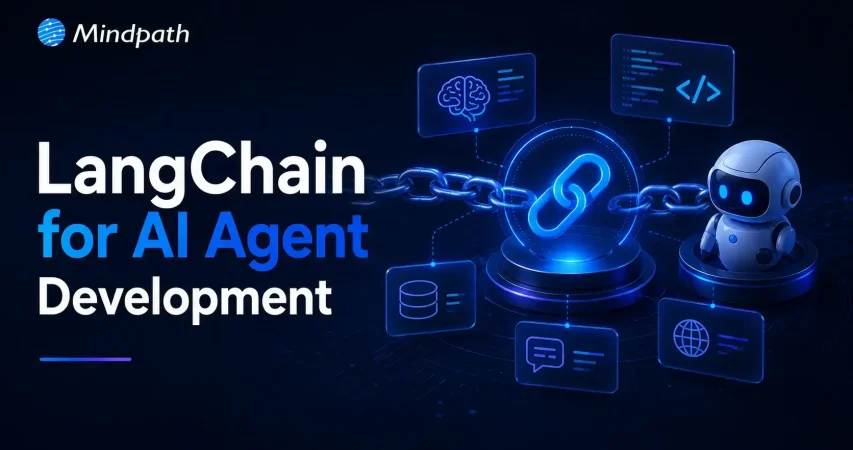
Langchain for AI Agent Developement

Every business leader today is asking the same question in some form: how do we bring AI agents into our workflows without breaking what already works? This is exactly where LangChain AI agent development enters the conversation. As companies move past simple chatbots and into agents that can plan, reason, and take action, choosing the right framework becomes a decision that shapes the entire product roadmap.

Key Takeaways

  • 01 LangChain simplifies complex agent workflows. It reduces the need to build custom logic for memory, tools, and multi-step reasoning from scratch.
  • 02 It fits best when tasks involve multiple steps. Simple single-response bots rarely need it, but workflows involving tools, memory, and data retrieval benefit significantly.
  • 03 Multi agent architecture supports scalability. Splitting tasks across specialized agents improves accuracy and makes systems easier to manage as they grow.
  • 04 Use cases span far beyond customer support. Businesses are applying it to document processing, internal knowledge assistants, and workflow automation across departments.
  • 05 The right framework depends on your actual needs. LangChain works well for teams that want faster development without sacrificing flexibility or control.

Not every project needs the same tools, and not every AI initiative should default to the most popular option on the market. Some businesses need speed; others need control, and many need both at once. In this blog, we are going to explore when LangChain genuinely makes sense for your business and when it might not be the right fit.

Looking to build scalable AI agents with LangChain? At Mindpath, we provide AI agent development services that integrate seamlessly with your existing business systems.

How AI Agents are Shaping Business in 2026?

AI agents have moved far beyond scripted responses. In 2026, they are expected to understand context, call external tools, retrieve live data, and make decisions with minimal human input. A customer support agent today might check order history, apply a refund policy, and email a confirmation, all without a human touching the process. A research agent might pull data from five different sources, compare them, and summarize findings in a format a manager can actually use.

This shift has pushed businesses to look for frameworks that can orchestrate these complex, multi-step behaviors reliably. That is where LangChain has built its reputation. It gives development teams a structured way to connect large language models with memory, tools, APIs, and decision logic, rather than gluing everything together from scratch. Understanding how LangChain works helps explain why so many teams reach for it first when a project moves beyond a single prompt and response.

What is the LangChain Framework and How Does It Work?

The langchain framework is essentially a toolkit that helps developers chain together prompts, models, memory, and external data sources into a working pipeline. Instead of writing custom logic for every single interaction an AI agent needs to have, LangChain provides pre-built components that handle the repetitive parts, so teams can focus on the actual business logic.

At its core, it works by breaking a task into smaller steps. A user query comes in, the agent decides which tool or data source is needed, it retrieves the relevant information, and then it generates a response based on everything it has gathered. This modular approach is a big part of why LangChain AI agent development has become a preferred choice for teams building anything more advanced than a basic chatbot.

1. Chains Connect Logic in Sequence

A chain links one action to the next, so the output of a search step can feed directly into a summarization step without manual handoffs.

2. Memory Keeps Context Alive

The framework can retain earlier parts of a conversation, which means the agent does not lose track of what a user already said.

3. Tool Integration Extends Capability

LangChain lets an agent call APIs, databases, or search engines, turning it from a text generator into something that can actually perform tasks.

4. Prompt Templates Standardize Behavior

Teams can define reusable prompt structures, which keeps agent responses consistent across different use cases.

Key LangChain Use Cases Businesses Are Adopting

Once a team understands the basics, the next question is usually where it actually fits into daily operations. There are several langchain use cases that have become common across industries, and most of them share one thing in common: they involve multiple steps that would be difficult to manage with a single prompt alone.

1. Customer Support Automation

Agents can pull order details, check policies, and respond with accurate, personalized answers instead of generic scripted replies.

2. Internal Knowledge Assistants

Employees can ask questions and get answers pulled directly from internal documents, wikis, or databases, cutting down time spent searching.

3. Document Processing and Summarization

Long contracts, reports, or research papers can be broken down, analyzed, and summarized in a fraction of the time it would take a person.

4. Data Retrieval and Analysis Agents

Businesses use LangChain to connect language models with structured data sources, allowing agents to answer questions that require real-time information.

5. Workflow Automation Across Tools

Agents can trigger actions in other software, such as updating a CRM record or sending a notification, based on a single instruction.
When to Use LangChain for AI Agent Development?

Deciding when to use LangChain really comes down to the complexity of what you are trying to build. A simple FAQ bot does not need this level of infrastructure. But once a project involves multiple tools, ongoing context, or decision-making across several steps, LangChain starts to make a lot more sense.

1. Your Project Needs Multiple Tools

If your agent has to search, calculate, and then write a response, LangChain manages that coordination cleanly.

2. You Need Memory Across Interactions

Businesses building assistants that remember previous conversations benefit from LangChain’s built-in memory handling.

3. You Are Integrating With Several Data Sources

When an agent needs to pull from a database, an API, and a document store in one flow, LangChain simplifies that connection.

4. You Expect the System to Scale

As agent complexity grows, LangChain’s modular structure makes it easier to add new capabilities without rewriting everything.

5. Your Team Wants Faster Development Cycles

Because so many components already exist, teams often build and test working prototypes much faster than building everything from the ground up.

Understanding LangChain Multi-Agent Architecture

As businesses take on more ambitious projects, a single agent handling everything often becomes a bottleneck. This is where langchain multi agent architecture becomes relevant. Instead of one agent trying to do research, analysis, and writing all at once, the work gets split across specialized agents that each handle a specific part of the task and then hand off their results to the next one.

1. Specialized Roles Improve Accuracy

A research agent focused only on gathering data tends to perform better than one agent trying to do everything at once.

2. Parallel Processing Saves Time

Multiple agents can work on different parts of a task simultaneously instead of waiting in a single sequence.

3. Easier Debugging and Monitoring

When something goes wrong, it is far easier to trace the issue back to one specific agent rather than digging through a single massive workflow.

4. Better Scalability for Complex Systems

As business needs grow, new agents can be added to the architecture without disrupting the ones already working well.

This kind of setup is becoming increasingly common for businesses that are serious about long-term LangChain AI agent development, especially when the use case involves research, reporting, or any workflow with distinct stages.

Is LangChain the Right Choice for Your Business?

Choosing a framework is never just about following what is popular. It comes down to what your business actually needs to accomplish, how complex your workflows are, and how much your team wants to build versus manage. LangChain has earned its place as one of the strongest options for teams building agents that need to reason, remember, and act across multiple steps. For businesses working on genuine LangChain AI agent development rather than a simple one-off script, it offers a level of structure and flexibility that is hard to match with a lighter tool.

At Mindpath, we work closely with businesses to design and build AI agents that fit their actual operations, not a generic template. Whether you need a single well-trained assistant or a full multi-agent system handling different parts of your workflow, our team brings the technical depth to build it right. We provide AI agent solutions that are tailored to your data, your tools, and your goals, so the technology actually solves the problem you started with.

Frequently Asked Questions

LangChain provides ready-made components for memory, tool integration, and chaining logic. This saves development time and reduces the chance of errors compared to building every piece manually.
Yes, small businesses can use LangChain for tasks like customer support or internal document search. The framework scales down well for simpler, single-purpose agents too.
No, LangChain supports much more than chatbots. It is widely used for data retrieval, document analysis, workflow automation, and multi-step decision-making tasks.
Developers with Python experience usually pick it up fairly quickly. The learning curve depends on how complex the agent workflow needs to be.
LangChain is designed to be flexible and supports integration with multiple language models, not just one specific provider, giving businesses more freedom in their tech stack.

Support Is One Click Away

Featured Posts

Related Post

role of vector database in ai application

Have you ever thought to yourself about how AI can interpret images, voices, or texts so accurately? Well, it is due to the rapid growth of the role of vector databases in AI applications. Standard databases do a good job of storing structured data, while much of AI work involves dealing with complex and unstructured information. Vector databases provide methods for storing and comparing information which allow machines to recognize patterns, context, and meaning much faster and with higher accuracy.

As AI systems become more intelligent, the demand for methods to support thinking beyond the simple data is also increasing. Vector databases provide that opportunity for AI to correlate information, learn from it, and generate more impactful results. They are quickly becoming the framework of modern AI innovation. In this blog, we will take a look at the power of vector databases in AI applications and why they are a necessary future element of intelligent systems.

Looking for a way to enhance personalization with the help of AI in your apps using a vector database? Explore Mindpath’s AI development services, which provide expert guidance and knowledge on how to maximize the value of the vector database to elevate your AI capabilities.

What is a Vector Database for AI?

A vector database is a specific type of database that enables storing and searching for data represented as vectors. Vectors are sets of numbers that represent the meaning or features of data such as text, images, and audio. Instead of searching for exact matches of data, a vector database searches for similar items, based on the context, illuminating AI’s capacity to perform at a more intelligent level based on context.

In basic terms, it works like the brain of AI systems that require memory and comparison. A vector database in AI enables quick and accurate data searches among very large and complex datasets. They are often used in applications such as chatbots, recommendation engines, and image searches where the response time and clearly related results mean everything.

Curious how AI chatbots can boost engagement and revenue? Discover AI Chatbot examples to learn how vector database-driven intelligence improves customer interactions.

How Does a Vector Database Work?

Vector databases assist artificial intelligence to comprehend and look through data in terms of meaning rather than precise words. Data is stored as numbers that illustrate what the data depicts. This helps AI connect ideas, find similarities, and give more accurate and useful results.

1. Creating vector embeddings

AI models process raw data to create vectors, which are sets of numbers that represent the meaning of the data. Vectors are mechanisms for AI to understand the connections among different data points.

2. Storing and indexing vectors

The vectors are kept within a vector database, which can be indexed with smart indexing methods, such as HNSW (Hierarchical Navigable Small World) or IVF (Inverted File Index). The role of vector databases in AI applications here is to store, group, and quickly find similar data when needed.

3. Performing similarity search

When the search begins, it will convert the query into a vector, which it begins to compare to other stored vectors. The database returns the closest elements based on meaning, so the AI can accurately and relevantly respond to the user.

Looking to optimize AI models without heavy computational costs? Explore Low-Rank Adaptation (LoRA) to discover techniques that improve vector database-powered AI efficiently.

Role of Vector Database in AI Application

The importance of the vector database for the AI application is becoming more necessary and prevalent as AI works with larger and more complicated data. Below are the main ways in which it helps and enhances the AI systems.

1. Smarter Search with Meaning

An AI application that utilizes a vector database can perform searches on meaning, rather than just a specific word. It finds things that are contextually similar in vector space; this is a lot more precise and much more human-like. This is incredibly useful, because the AI system can determine what users mean, not simply what they type.

2. Supporting Retrieval-Augmented Generation (RAG)

Vector databases provide large language models with access to current facts, knowledge, and data points from the public domain. The user’s inquiry is converted to a vector, which retrieves information from data similar to that represented in the user’s question. The information and materials retrieved help the AI provide responses that are elevated in relevance and made to be factually accurate.

3. Managing Complex Data Types

The role of vector database in AI application is to be able to manage unstructured data including images, text, and audio. A vector database does this by representing the unstructured data as numerical vectors that convey meaning. This allows AI to be able to compare unstructured data types more easily.

4. Enabling Fast Similarity Search

Vector databases leverage novel algorithms to identify similar items quickly, even among massive datasets. This capability is crucial for a number of artificial intelligence (AI) applications that depend on real-time results. The vector database in the AI application in this case is to return results quickly and still maintain precision.

5. Improving Recommendations

Recommendation systems utilized vector databases to recommend similar attributes to items or products that users had liked before. AI uses patterns in the vectors and can customize content for each individual. This leads to a more meaningful and engaging experience for the user.

6. Powering Computer Vision

In computer vision, a vector database in AI helps identify and compare images or videos efficiently. It supports tasks like face recognition, image search, and visual content filtering. By finding visually similar vectors in AI systems it improves speed and accuracy.

7. Building AI Memory

The role of the vector database in AI applications is that it is a dependable memory mechanism for the AI agents. It strengthens the AI agent’s ability to store and retrieve information in support of reasoning and decision-making. Thus, vector capacity increases the multi-step capabilities of AI agents when solving complex tasks.

8. Hybrid and Refined Search

Vector databases have the ability to merge traditional filters like date or category with similarity search. This hybrid effort increases the precision and relevance of a search result. Users can quickly and clearly find exactly what they are looking for.

Wondering how AI systems focus on the most important information in complex datasets? Discover the Attention Mechanism to learn how it enhances AI performance in combination with vector databases.

Ready to Build Smarter AI Solutions with Vector Databases?

Vector databases are transforming how AI systems process and understand information. They enable faster searches, handle complex data, and make AI responses more meaningful and accurate. As technology continues to advance, the role of vector databases in AI applications will remain central to building intelligent and scalable solutions across industries.

At Mindpath, our AI development services combine the power of vector databases with advanced machine learning models to build smarter and more efficient systems. We help businesses create intelligent applications that learn, adapt, and deliver real results. Partner with us to design AI solutions that drive innovation and long-term success.

outsource web development

In the current hyper-computing and changing digital environment, a scalable and user-friendly web presence has become a basic necessity. However, it requires a strategic approach along with creative thinking. And this is where you can outsource web development to enjoy the desired results.

Today, outsourcing web development has become a profitable solution for companies. After all, it helps them innovate and efficiently scale in this expanding digital world. Furthermore, when you outsource web development to external experts, you will be able to witness distinct advantages. In this detailed blog, we will explore some primary reasons why you should outsource website development. Besides, you will also get to know how to select the right partner to enjoy long-term success. So, keep reading further!

Struggling to scale your digital presence while keeping development costs and timelines under control? Our web development services provide scalable solutions that help your business grow faster.

Scaling a Business Begins with Smarter Strategies

Scaling a business goes beyond just increasing revenue or expanding your team. It involves scaling strategically and at the same time being profitable and productive. However, when a company grows, it can face a few serious issues, which can impede its growth.

1. Resource Constraints

Rapid growth may create considerable pressure on internal teams. Besides, it may put a strain on your budget. As a result, you may suffer from inefficiencies and burnout.

2. Skill Gaps

New technologies and project demand expertise and experienced professionals. And your team might not have them yet.

3. Rising Operational Costs

Budget allocation can be affected by Infrastructure improvements, regulatory compliance, and employee training.

Outsourcing offers businesses a smart way of overcoming the scaling challenges. Through collaboration with an external service provider, businesses will be able to re-distribute their resources efficiently.

Want to scale your business efficiently through outsourcing? Discover web development technologies that help you build faster and more scalable digital solutions.

In-House Web Development- Complexity and Costs

It is crucial to understand the pitfalls of managing an in-house team before delving into  reasons to outsource web development projects. Well, the following are some common pitfalls you may encounter.

1. Recruitment and Training

Recruiting, training, and retaining talented employees is a costly and time-consuming process.  For instance, it can take weeks to hire a senior web developer. Moreover, you will have to offer competitive salary to retain him/her.

2. Heavy Overhead Costs

Besides salaries, you can face heavy overhead costs if you create an in-house team. You will have to pay for equipment, office room, training, HR resources, etc.

3. Limited Skill Set

In case a project requires a new framework, some design aesthetics, and niche technology, then your internal team might not have that. And it can lead to delays and poor results. On the other hand, it can be time-consuming and costly to train your own team.

All these things make outsourcing web development services an ideal solution for every business.

Curious how leading brands stay ahead while outsourcing their web projects? Check out the latest web development trends to learn what is driving innovation and long term growth.

Why Outsource Web Development- Strategic Benefits

Outsourced web development doesn’t just help companies offload their problems. It also helps them attain growth more efficiently and effectively.

1. Access to Global Talent

When you hire web development outsourcing companies, you get to access a wide pool of global talent. You can be sure of getting highly talented and specialized professionals for the work.

You can easily find proficient web developers with vast experience in any framework, technology stack, AI, etc. Whether you need a Django or Python expert, a React.js specialist, or a professional UI designer, you can recruit one easily through the outsourced company.

2. Affordable

You can lower operational costs without compromising project quality when you outsource web development. It helps you take advantage of their latest infrastructure as well as expertise.

Moreover, with an outsourced web development company, you no longer have to stress about maintaining the expensive software, hardware, or in-house IT teams. You can invest the saved money in other crucial aspects that support business expansion.

3. Flexibility and Scalability

A majority of businesses experience a linear growth. They have new product launches, strategic realignment, and peak seasons. Well, outsourcing provides businesses with the required flexibility to scale their growth as required.

4. More Focus on Core Organizational Functions

Every hour you spend on hiring, managing, or training is an hour not invested in what makes your organization unique. When you outsource web development, you can free up your team and concentrate on the core competencies.

You will get sufficient time for strategy, product innovation, market expansion, customer relationships, sales, and more. All these things will support the overall business growth.

5. Better Security and Compliance

Trusted web development services always prioritize and focus on industry-leading compliance and security practices, with a strong emphasis on web application security. Furthermore, they follow established project management methodologies, such as Scrum or Agile.

With this, businesses can enhance their data security measures and ensure compliance with necessary regulatory standards while reducing the risk of security vulnerabilities.

6. Faster Time to Market

Web development companies function with established, proven methodologies, dedicated development teams, etc. They can start a project more quickly and complete it on time.

A faster time to market means you can capture market share and meet the demands of customers in a more efficient and effective manner.

7. Access to New Technologies

Web development is evolving rapidly. Keeping your in-house team updated on new security protocols, best methods, and new frameworks can be a significant challenge. However, an outsourcing web development firm specializes in these.

They have protected experience, dedicated R&D, and continuous training programs to keep their team updated. Besides, with them, you will get access to the latest methodologies, technologies, and tools without spending a lot of money.

In short, outsourcing web development can strategically support your business growth by offering cost efficiency, global talent, flexibility, and security, allowing you to concentrate on core activities.

Planning to outsource your web projects for better scalability? Check out web development tools that enhance collaboration and improve project outcomes.

When Can You Opt for In-House Development?

Well, outsourcing web development can offer a lot of benefits. But in some cases, in-house development will be a perfect solution.

For example, if your project is based on proprietary information and sensitive data, then you may opt to use in-house development in order to have better control of security practices.

When your projects are aligned with the business strategy, then in-house development may be able to provide you with better integration.

Major Considerations for Successful Outsourcing

While the business benefits of outsourcing web development are quite clear, successful outsourcing partnerships require a thoughtful approach. Consider these tips and proceed with care.

1. Understand What You Need

It is crucial to be clear about your expectations and goals. In the absence of clear requirements, you may face delays.

2. Choose the Right Partner

Remember that it is not always bout the price. When looking for an agency, check their experience in the industry. Besides, ensure that the agency has a proven track record.

3. Effective Communication

Have effective communication protocols and channels. The use of modern project management systems, and elaborate reporting are important to ensure effective communication.

4. Keep a Track

Monitor your outsourced web development projects on a regular basis and also collect relevant feedback. You should have a transparent communication with your service provider to ensure lasting success.

Looking to scale your business faster with smarter digital solutions? Discover AI in web development to learn how automation and intelligent features can enhance your outsourcing strategy.

Want to Grow Your Business With Outsource Web Development?

Professional web development is a strategic investment that drives business growth. It helps create high-performing, secure, and user-friendly websites, boosts customer engagement, improves search visibility, and ensures your brand stands out in a competitive digital landscape.

At Mindpath, we understand that every business has unique needs, goals, and challenges. Our professional web development services deliver tailored, scalable, and high-quality solutions designed to enhance user experience, strengthen your digital presence, and give your business a competitive edge.

Hire nodeJS developer

In today’s digital-first economy, companies are always under pressure to make apps that work well, can grow, and work in real time. Backend technology is very important for success, whether a startup is making its first product or a big company is updating its old systems. Node.js is one of the most popular backend technologies for making apps that can grow and run quickly.

Because of this, businesses all over the world are looking for NodeJS developers who can use this powerful runtime environment to make apps for the web and mobile devices. You can’t just hire someone who knows Node.js. You should make a plan, decide what skills you need, think about how much it will cost, and choose the best way to hire people.

This full guide will teach you everything you need to know about hiring a Node.js developer, including why companies like Node.js, what skills to look for, how to hire someone, how much it will cost, and the best ways to make sure your project is done on time.

Looking to turn your project idea into a powerful digital solution? Mindpath provides professional services where you can hire expert NodeJS developers for scalable and customized development.

Understanding Node.js: A Brief Overview

Node.js is a free, cross-platform runtime environment that lets developers run JavaScript on the server side. It uses Google’s V8 engine and is known for being fast and able to handle a lot of connections at once.

Everyone knows that Node.js has an event-driven, non-blocking I/O architecture. It lets Node.js handle more than one request at a time without having to wait for the first one to finish. This is great for apps that need to be able to grow quickly and work in real time.

Node.js doesn’t use more than one thread like other server-side languages do. It has an event loop and a model that only uses one thread. This speeds things up and cuts down on extra work, especially for apps that do a lot of input and output, like APIs, streaming platforms, and chat apps.

Node.js also supports the idea of “JavaScript everywhere,” which means that developers can write both the front end and the back end in the same language. This makes it easier to work together, makes projects less complicated, and makes it easier to develop.

Also Read: Advantages of NodeJS 

Why Businesses Choose to Hire NodeJS Developers?

It’s not a coincidence that more and more people want Node.js; it really helps businesses. There are many good reasons for businesses to hire NodeJS developers.

1. Exceptional Scalability

Node.js can handle thousands of connections at once without getting slower. Apps stay responsive even when they’re under a lot of stress because of how they’re built. This is great for platforms that can grow, like e-commerce sites, SaaS apps, and social media sites.

2. High Performance

Node.js uses the V8 engine to turn JavaScript into machine code, which makes the program run faster. Node.js apps are popular because they are fast and responsive, which is how they work.

3. Real-Time Application Capabilities

Node.js is used a lot for chat programs, tools for working together, and online games that need to work right away. It is a great choice for apps that need live updates because it can process data right away.

4. Rich Ecosystem (NPM)

Node Package Manager (NPM) gives Node.js one of the biggest collections of open-source libraries. There are over a million packages available, so developers can save time by using pre-made modules instead of making everything from scratch.

5. Cost-Effective Development

Using Node.js can help businesses save a lot of money on development. You won’t need as many separate development teams if you use JavaScript for both the front end and the back end. Companies can also hire NodeJS developers who work from home in places where costs are lower and still get good work.

6. Strong Community Support

A lot of developers are always working on Node.js and adding to it. This makes sure you get regular updates, better security, and a lot of help and information.

Types of NodeJS Developers You Can Hire

It’s important to know what levels of experience a NodeJS developer has and what they can do for you before you hire them.

1. Junior NodeJS Developers (0 to 2 Years):

Most of the time, junior developers are new to the field and only know the basics of JavaScript and Node.js. They can do basic tasks like writing simple APIs, fixing bugs in code, and helping more experienced developers. They do best when they work on small projects or with a group.

2. Mid-Level NodeJS Developers (2–5 Years):

Mid-level developers have already built applications and navigated databases, APIs, and frameworks. They’re capable of independent work, contributing to architectural decisions, and tackling moderately complex tasks.

3. Senior NodeJS Developers (5+ Years):

Senior developers know a lot about how to build systems, improve their performance, and make them bigger. They can manage teams, choose the architecture, and make sure that development follows best practices. For big or important projects, it’s very important to hire senior developers.

Must-Have NodeJS Developer Skills

If you want to hire good NodeJS developers, you need to look at both their technical and soft skills.

1. Proficiency in JavaScript and TypeScript

Node.js is built on JavaScript, so developers need to know a lot about ES6+ features, promises, callbacks, and asynchronous programming. When you want to make apps that can grow, it’s helpful to know TypeScript.

2. Experience with Node.js Frameworks

Frameworks like Express.js, NestJS, and Koa help you build things faster. At least one of these frameworks should be known by a good developer.

3. Database Management Skills

Node.js developers should know how to use both SQL databases, like MySQL and PostgreSQL, and NoSQL databases, like MongoDB. It’s important to know how to model data and make queries work better.

4. API Development and Integration

One of the most important things Node.js developers do is build and connect RESTful APIs. Knowing GraphQL is also becoming more and more useful.

5. Understanding of DevOps and Cloud Platforms

People who work in modern development need to know how to use tools like Docker and Kubernetes, as well as cloud platforms like AWS, Azure, and Google Cloud.

6. Version Control Systems

If you want to work together on development, you need to know how to use Git and sites like GitHub or GitLab.

7. Problem-Solving and Communication Skills

You need more than just technical skills. Developers need to be able to communicate clearly, understand what the project needs, and fix problems right away.

Hiring Models: Choosing the Right Approach

When you hire dedicated NodeJS developers, it’s very important to pick the right hiring model.

1. Freelancers

Freelancers are great for short-term jobs or jobs that need to be done quickly. They might not stick around for long, but they can help you save money and give you more options.

2. In-House Developers

Full-time, in-house developers are easier to manage, talk to, and work with. But it costs more, like building things, paying people, and giving them benefits.

3. Outsourcing to Agencies

When companies outsource, they can quickly add to their teams and hire people who have already been checked out by other companies. It’s a good choice for businesses that want to focus on their main tasks.

4. Dedicated Developers

With a dedicated developer, you get the best of both worlds: they only work on your project. Many individuals opt for this approach when embarking on lengthy projects.

Step-by-Step Process to Hire NodeJS Developers

A structured hiring process makes it easier to find the right people.

Step 1: Define Your Requirements

Start by clearly outlining your project goals, scope, and expected outcomes. Identify the type of application you want to build, whether it’s a real-time platform, API, or web application. Define the required technologies, level of expertise (junior, mid, senior), and project timeline. A well-defined requirement helps you attract the right candidates and avoids confusion later in the hiring process.

Step 2: Choose the Right Hiring Model

Decide how you want to hire based on your project needs and budget. You can choose freelancers for short-term or small tasks, in-house developers for long-term collaboration, or outsource the project to a NodeJS development company for end-to-end solutions. Each model has its own advantages, so selecting the right one ensures better efficiency and cost management.

Step 3: Create a Detailed Job Description

Write a clear and comprehensive job description that includes required technical skills (JavaScript, NodeJS frameworks, APIs), experience level, roles, responsibilities, and expectations. Mention project details, work environment, and deliverables. A strong job description helps filter out unqualified candidates and attracts the right talent.

Step 4: Source Candidates Effectively

Use multiple platforms to find qualified developers. You can explore job portals, freelance platforms, LinkedIn, developer communities, and NodeJS development agencies. Leveraging different channels increases your chances of finding experienced and reliable candidates.

Step 5: Conduct Technical Screening

Evaluate candidates through coding tests, technical interviews, and portfolio reviews. Assess their understanding of NodeJS concepts, API development, database handling, and problem-solving skills. Real-world tasks or assignments can help you understand how they approach practical challenges.

Step 6: Assess Soft Skills

Technical knowledge alone is not enough. Evaluate communication skills, teamwork, adaptability, and time management. A developer with strong soft skills can collaborate effectively, understand business requirements, and contribute to a positive work environment.

Step 7: Finalize and Onboard

Once you select the right candidate, complete the hiring process with proper documentation, contracts, and onboarding. Provide clear guidelines, tools, and access to resources so they can start working efficiently. A smooth onboarding process ensures faster integration and better productivity.

Cost of Hiring NodeJS Developers

There are many things that affect the cost of hiring a NodeJS developer, such as their experience, where they live, and how you want to hire them.

1. Hourly Rates (USA)

(Based on U.S. Bureau of Labor Statistics data)

  • Junior Developers: $22–$30/hour
  • Mid-Level Developers: $30–$55/hour
  • Senior Developers: $55–$75+/hour

2. Annual Salaries (USA)

(Source: U.S. Bureau of Labor Statistics)

  • Junior: ~$48,000 – $70,000
  • Mid-Level: ~$80,000 – $110,000
  • Senior: $120,000 – $160,000+

Factors Affecting Cost

  • Developer experience
  • Project complexity
  • Geographic location
  • Engagement model

You can save a lot of money by hiring developers from India or Eastern Europe, and the work will still be good.

Where to Hire NodeJS Developers

Depending on what you need, you can hire NodeJS developers from a number of places.

1. Job Portals

LinkedIn, Indeed, and Stack Overflow are just a few of the places where you can find full-time developers.

2. Freelance Platforms

Freelancers from all over the world work on Upwork, Toptal, and Fiverr.

3. Development Agencies

Agencies often bring back developers they’ve previously collaborated with, streamlining the hiring process. This method is generally faster and less of a hassle.

4. Developer Communities

You can find good developers and see what they’ve done on GitHub, in tech forums, and at meetups.

Benefits of Hiring Dedicated NodeJS Developers

When you hire dedicated developers, you gain several advantages:

  • Full commitment to your project
  • Faster development cycles
  • Better communication and collaboration
  • Scalability and flexibility

In addition, dedicated NodeJS developers offer the following benefits:

1. Consistent focus and productivity

Dedicated developers work exclusively on your project, ensuring steady progress and minimal distractions.

2. Better understanding of your business needs

Over time, they gain deeper insights into your goals, leading to more tailored and effective solutions.

3. Improved code quality and maintainability

Continuous involvement helps maintain coding standards, resulting in cleaner and more reliable code.

4. Faster issue resolution and support

Since they are fully involved, bugs and issues are identified and resolved quickly.

5. Seamless team integration

Dedicated developers act as an extension of your in-house team, aligning with your workflows and tools.

6. Cost efficiency in the long run

Reduces overhead costs related to hiring, training, and managing multiple resources.

7. Greater control and transparency

You have direct communication and visibility over progress, timelines, and deliverables.

Dedicated developers act as an extension of your in-house team, ensuring consistent progress and high-quality results.

However, while hiring dedicated NodeJS developers, businesses should also be aware of common mistakes that can impact project success:

  • Not defining clear requirements
  • Hiring based solely on cost
  • Ignoring communication and soft skills
  • Skipping technical evaluations
  • Choosing the wrong hiring model

Avoiding these mistakes ensures that you not only hire the right talent but also maximize the benefits of working with dedicated developers.

Ready to Hire the Right NodeJS Developer for Your Project?

Choosing the right Node.js developer is a big deal; the person you pick can make or break your project’s chances. Every step of the way is important, from grasping the technology to evaluating what candidates can do and figuring out the best way to hire them.

This guide provides a comprehensive overview, helping you navigate the decision-making process: should you bring on remote NodeJS developers, assemble your own team, or outsource the project entirely?

Businesses can hire expert NodeJS developers to make high-performance, scalable apps that help them grow if they follow best practices and put quality ahead of cost.

FAQs

1. Why do I need to hire NodeJS developers?

Node.js developers utilize a robust backend architecture, enabling them to create applications that are both swift and capable of scaling. These applications are designed to function in real-time.

2. What are the most important skills that a NodeJS programmer should have?

You should know how to use Node.js frameworks, JavaScript, make APIs, manage databases, and connect to the cloud.

3. How much does it cost to hire a developer who knows NodeJS?

A junior developer can charge as little as $25 per hour, while a senior developer can charge as much as $150 per hour. This depends on where they live and how long they’ve been doing it.

4. What is the best hiring model?

Freelancers are good for short-term work, dedicated developers are good for long-term work, and agencies are good for work that needs to grow.

5. Where can I hire NodeJS developers?

Job boards, freelance sites, development agencies, and developer communities like GitHub are all places where you can find people to hire.