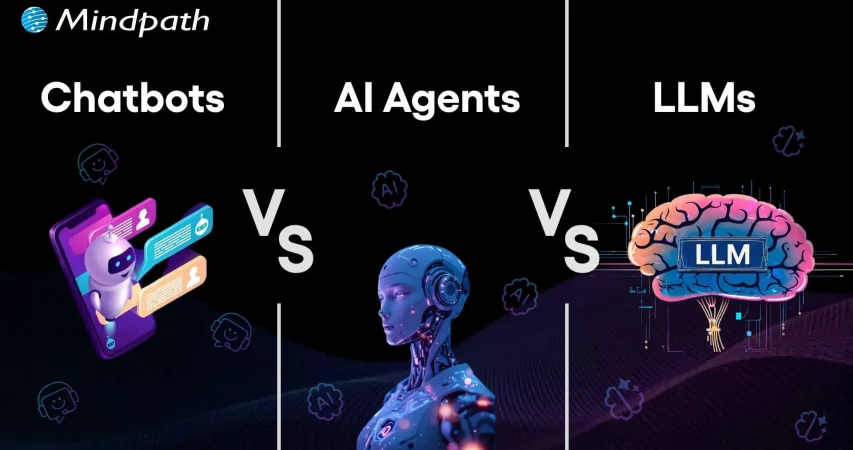
Chatbots vs AI Agents vs LLMs – Choose the Best One for Your Business?  

Join our Newsletter!

Featured Posts

Support Is One Click Away

Home

Chatbots vs AI Agents vs LLMs – Choose the Best One for Your Business?  

chatbots vs AI agents vs LLMs  

Chatbots vs AI Agents vs LLMs – Choose the Best One for Your Business?  

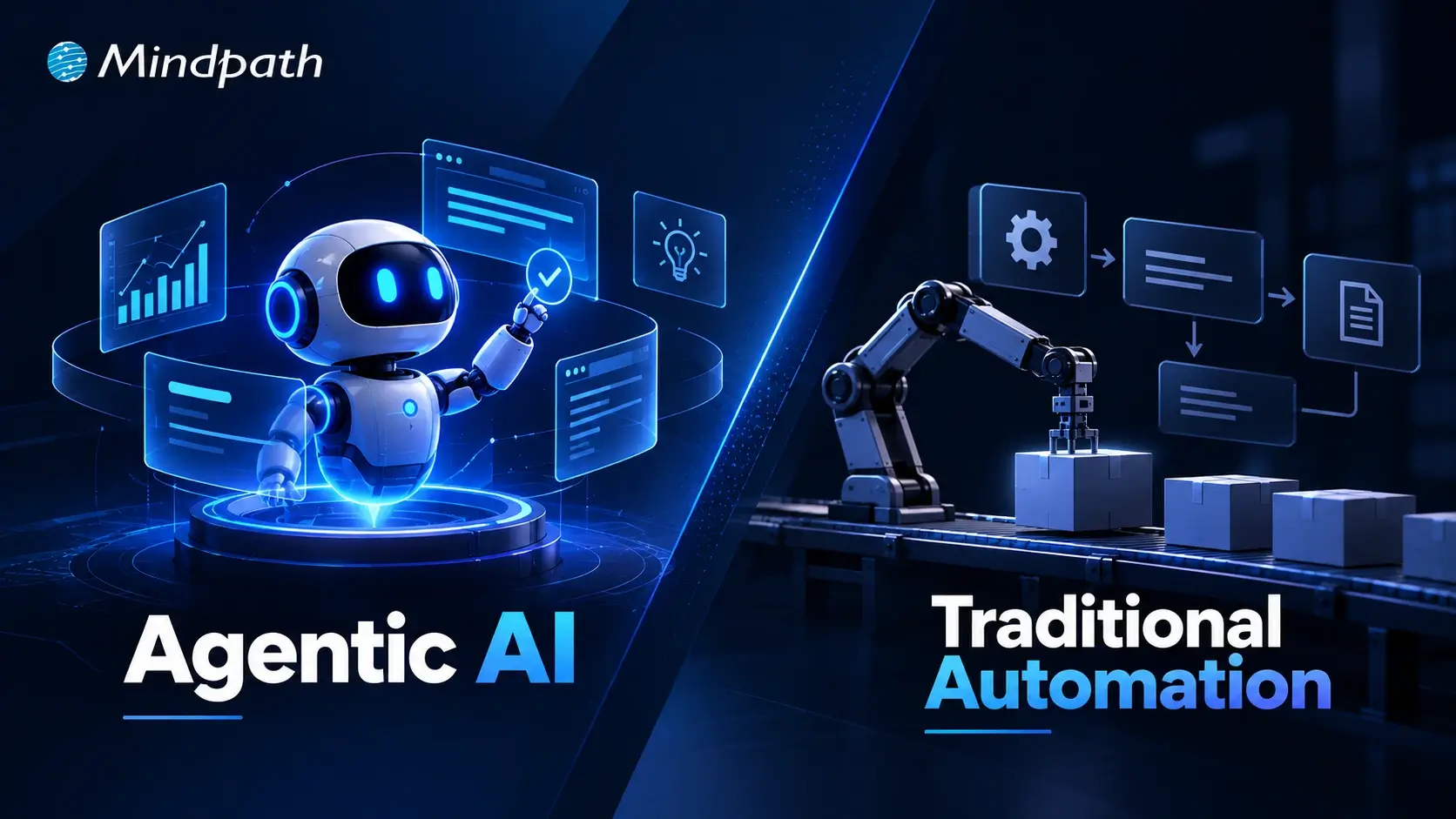
AI is transforming business communication, behavior, and decision making. However, the process of selecting the appropriate intelligence layer is still bewildering, right? When teams compare chatbots vs AI agents vs LLMs, the choice impacts speed, cost, and growth. So, how do you align technology and actual business objectives? We must overcome the indecisiveness and begin to think clearly, practically and strategically.

Expectations are growing at a rapid rate as the debate on automation commences. Customers desire fast responses, smarter behaviors, and repeat experiences. In the meantime, leaders desire control, magnitude, and value that is measurable. This tension renders this decision to be critical. But what are some of the ways these technologies would fit various business requirements nowadays? In this blog, we will guide you to make the correct choice for your business with confidence. So, continue reading further!

Ready to use the right AI technology to streamline and scale your business? Mindpath offers customised AI development services to build chatbots, AI agents, and LLM-powered solutions.

Choosing the Best: Chatbots vs AI Agents vs LLMs

In today’s industry, chatbots, AI agents, and LLMs play key roles in improving business operations. Each brings unique capabilities, but the right choice depends on your specific business needs. Let’s dive deeper into each technology to understand how it can best serve your goals.

What is a Chatbot?

A chatbot is a computer application that converses with the user via text or voice. It solves queries, provides information and directs the users in real time. Companies implement chatbots on websites and applications to assist customers, save time, and enhance the speed of the responses.

Chatbots cope with direct and simple conversations that are easy to explain in the context of chatbots vs AI agents vs LLMs debate. They respond according to set patterns or trained responses. This renders them dependable when it comes to FAQs, bookings, and simple support matters.

How Does a Chatbot Work?

Chatbots operate through reading the input of users and comparing it with the trained data or rules. They apply AI, machine learning and NLP to comprehend intent. Then, they choose the most appropriate response, according to some patterns, logic, or previous interactions.

There are two main chatbot types for chatbot for business use. Declarative chatbots act according to the established rules and respond to the frequently asked questions. Predictive chatbots are based on advanced AI and learning. They are dynamic, personalized, and predictive in terms of user needs.

What are the Key Benefits of a Chatbot?

Chatbots are more effective in addressing specific tasks. This is why they are highlighted in comparisons such as Chatbots vs AI agents vs LLMs. Some of its notable advantages include the following.

1. Offer 24/7 services immediately that enhance customer satisfaction.

2. Provide quick and reliable customer experiences channelwide.

3. Drive growth and sales with personal and timely contacts.

4. Gather customer information to enhance knowledge and business practices.

5. Minimize the expense of dealing with the large volume of queries via chatbots and AI agents.

Curious which chatbot capabilities deliver real value compared to AI agents and LLMs? Discover AI chatbot examples to check out practical use cases that support smarter decisions.

What is an AI Agent?

An AI agent refers to a system that performs work without human intervention through the use of tools and workflow. It is able to make decisions and resolve problems. AI agents respond to environments and take actions, which means that there is no need to have human guidance on daily operations.

As we always compare Chatbots vs AI agents vs LLMs, AI agents are more effective in complex and multi-step tasks than simple chatbots. They apply NLP in LLMs, automate processes, and offer intelligent support to all enterprise software and IT systems.

How Does an AI Agent Work?

The AI agents operate based on a defined role, type of communication and personality. They obey orders and apply tools to accomplish tasks that are effective. The agents evolve with time, learn to be more accurate, make better decisions and cope with complex situations.

A clear persona makes sure that there is a consistent behavior as the agent develops. Memories store short term, long term, episodic, and shared information to aid in learning. Tools enable access to data, manipulation or control of systems. LLMs play the role of the brain where they can make intelligent use of understanding, reasoning and language production.

What are the Key Benefits of an AI Agent?

The AI agents provide more intelligent automation and work on more advanced tasks than simple interactions. They have advanced business capabilities in comparison with Chatbots vs AI agents vs LLMs. Some of the most outstanding advantages are as follows.

1. Increase productivity through an AI agent for business to automate your tasks.

2. Better accuracy through identification of mistakes and production of quality output.

3. Work 24/7, accomplish tasks and help teams at any time.

4. Cut the expenses through automation of workflows and manual inefficiencies when we comparison chatbots vs AI agents.

5. Use data to offer information and make superior decisions.

Looking to decide whether AI agents are the right fit for your business operations? Check out the role of AI agents to learn how they handle complex tasks autonomously.

What is an LLM?

Large language model (LLM) is a computer program that is capable of comprehending and producing text based on deep learning algorithms. It learns on large amounts of data to identify patterns in language and comprehend human language.

LLM forms the backbone of chatbots and AI agents in the debate of Chatbots vs AI agents vs LLMs discussion. They interpret speech, invent answers and facilitate thinking. Fine-tuning LLM provides an accurate performance of tasks. These include answering questions or summarizing content or translating the text effectively.

How Do LLMs Work?

LLMs learn language by training on massive text datasets. They apply Transformer neural networks, which apply self-attention to learn context, patterns and relationships. This enables them to produce human text, respond to questions, summarize, and do other language tasks.

In LLMs for business, these models automate the process of creating content, customer support and data analysis. They forecast words in a text one by one, identify more complex patterns and give correct answers. They also enable companies to save time, enhance communication, and make smarter decisions effectively.

What are the Key Benefits of LLMs?

LLMs have advanced language interpretation and generation that redefine the way businesses interact with data and clients. They are more flexible and intelligent than any other model in comparisons such as Chatbots vs AI agents vs LLMs. Some of the notable advantages include the following.

1. Automation of language and data processes to enhance productivity and minimize the effort.

2. Scale operations in a graceful way to handle the large and increasing quantities of data.

3. Provide low-latency and fast responses to improve Chatbots and LLMs based interactions.

4. Multiple languages should be supported to allow worldwide communication and expanded presence.

5. Create insights that can make informed choices in the comparison of AI agents vs LLMs.

Want to see how LLM capabilities will expand beyond text generation? Learn about the future of LLMs to discover trends redefining intelligent systems.

Chatbots vs AI Agent vs LLMs: Key Differences

Before settling on the appropriate intelligence model to use, businesses should have clarity. This section describes the difference between the chatbots and the AI agent and the LLMs:

1. Functional Scope

Chatbots are based on guided responses and structured conversations. They are able to deal with direct user queries in their day-to-day operations.

AI Agents accomplish objectives based on actions and decisions. They work outside of a discussion and control workflows on their own.

LLMs are language understanding and language generating machines. They justify contents, analysis and arguments between systems.

2. Intelligence Depth

In Chatbots vs. AI Agent vs. LLMs, chatbots are based on predetermined logic. They are competent in foreseeable and monotonous situations.

AI agents are based on reasoning and awareness. They modify behaviors depending on the objectives and results.

The LLLs have high language intelligence. They decode intent, tone as well as context.

3. Level of Autonomy

Chatbots are responsive and wait until the users prompt them. They are unable to start and take charge of things individually.

AI agents are very independent and only act on the goals that have been specified. Their planning and implementation are not guided constantly.

The operation of LLMs needs prompts or integrations. They never take action independently.

Also Read: LLaMA LLM

4. System Complexity

Chatbots have minimal architecture and processes. This makes deployment and maintenance simple.

AI agents entail multi-step systems containing memory and equipment. They control cross-platform complex processes.

LLMs are based on the use of advanced neural networks. They are complex enough to do in-depth processing of language.

5. Cost and Growth Readiness

Chatbots provide cost-effective scaling when it comes to simple support requirements. A lot of teams implement them rapidly.

AI agents are more expensive to invest in but are easily scalable to automation. They are appropriate to be used in the enterprise settings.

The LLMs are ecologically friendly as they are scaled using cloud APIs. The overall cost depends on the volume of usage.

6. Architectural Dependency

Chatbots tend to incorporate LLMs to have conversations. The connection is evident in Chatbots vs LLMs discourses.

AI agents use LLMs as their reasoning engine. They incorporate action and planning layers.

LLMs provide the foundation across systems. This role helps explain the differences in Chatbots vs AI agents vs LLMs clearly.

Planning to deploy AI solutions that focus on instant communication and support? Discover conversational AI chatbot to check out how they fit modern business needs.

Let us understand more clearly through the difference table:

Feature  Chatbots  AI Agents  LLMs 
Interaction Communicates with users through text or voice Interacts with users and systems to complete tasks Understands and generates language for multiple applications
Task Scope Handles simple and repetitive tasks Manages complex multi-step workflows independently Performs advanced content, analysis, and language tasks
Decision-Making Follows predefined rules and scripts Makes autonomous decisions based on goals and context Supports reasoning when integrated into systems or prompts
Learning Learns slowly through updates and rules Improves from past interactions and feedback Learns from large datasets and adapts to patterns automatically
Integration Works alone or with basic systems Integrates with tools, software, and workflows Powers other systems and integrates into chatbots or AI agents
Efficiency Provides quick responses for simple queries Saves time through task automation Processes large amounts of language data rapidly
Suitability Ideal for basic customer support and FAQs Best for enterprise automation and multi-step tasks Suitable for advanced language intelligence and analysis
Scalability Scales easily for repeated interactions Handles growing workflows and processes Scales via cloud APIs for large data and tasks

Ready to Choose the Right AI for Your Business?

The decision on Chatbots vs AI agents vs LLMs influences the manner in which your business operates and develops. All the options address various problems and suit various objectives. Chatbots are good at one-dimensional conversations. AI agents are independent in handling complex tasks. LLMs drive language comprehension on a system-wide basis. Understanding needs will result in more intelligent decisions. The comparison assists teams in making clear and confident decisions.

At Mindpath, our AI development services assists companies to convert AI concepts into practical solutions. Our professionals create chatbots, AI agents, and LLM based systems that will suit your objectives. We are concerned with speed, precision and a value that is measurable. Mindpath Teams develop scalable AI solutions using the framework that enable growth, better decisions, and customer experiences in industries.

 FAQS

1. What are the major differences between Chatbots, AI Agents and LLMs?

When we make a comparison of chatbots vs AI agents vs LLMs, each has a different business purpose. Chatbots are directed towards basic conversations and user guidance. The AI agents are involved in their tasks and decision-making, whereas the LLMs comprehend and create language within systems.

2. Can chatbots work without LLMS?

Yes, chatbots and LLMs do not always work together. Business chatbot can be executed with the help of predefined rules or scripts. LLMs do not make simple tasks mandatory, and they enhance the quality of conversation.

3. Between chatbots and AI agents, which is more advanced?

The AI agents prove better in the chatbots vs AI agents debate. They are future-oriented and execute multifaceted and multi-process work. Chatbots are primarily the ones that answer questions and are programmed to act according to certain patterns.

4. Do AI agents need LLMs to function?

LLMs for business improve an AI agent and LLMs combination. Even in the absence of LLM, AI agents can operate with the help of tools and rules. LLMs enhance the agents by making them smarter, improving their reasoning, understanding and natural language output.

5. When should a business choose AI agent, chatbot, and LLMs?

Chatbots and AI agents can be used to support or automate the work. Chatbots and LLMs perform better when the natural language understanding is serious. The appropriate decision is based on the complexity of the task and business objectives.

Related Post

Discover how integrating AI into web development can enhance user experience, improve efficiency, and drive innovation.

Related Post

Monolith to microservices

Enterprise systems tend to have one unified architecture that facilitates early expansion. Gradually, construction gets heavy and hard to ascend. Releases slow down. Minor modifications require huge test cycles. Teams become under pressure to be more innovative. This is where monolith to microservices will be a strategic move towards enterprise legacy modernization. It is not a trend. It is a realistic reaction to actual operation constraints that influence operation, agility, and long-term development.

As businesses grow, they require systems that are flexible and capable of constant delivery and autonomous growth. Nevertheless, a monolithic building goes down only with solid architectural design and business focus. The technology leaders need to reconsider their deployment models, data management, and ownership of teams. Each step requires thorough consideration. In this blog, we will discuss how businesses may proceed in a practical manner to modernize architecture with clarity. So, keep reading!

Looking to simplify complex legacy systems for better agility? Mindpath’s legacy modernization services make it easier to break monoliths into microservices while keeping operations smooth.

What is Monolithic Architecture?

A monolithic architecture integrates all the application elements into a single piece of code. The database layer, business logic and user interface are a single system. Teams develop, test and deploy the application as a whole. It is a structure that promotes centralized control and easy management.

This model has been used by many enterprises to embark on their digital journey. Growth, however, makes the process more complex and causes the changes to slow down. Such a challenge tends to motivate the migration of monolith to microservices to enhance scalability and agility. Nevertheless, it is important to comprehend the monolithic basis before strategizing in terms of modernization.

Some of the advantages of monolithic architecture are listed here:

1. Quick initial development

2. Simple deployment process

3. Managing codes centrally

4. Reduced initial infrastructure price

5. Suitable for small teams

What is Microservice Architecture?

Microservice architecture forms an application of tiny, concentrated services. Every service deals with a certain business operation. They have teams that construct and operate. Services interact via APIs or messaging, which are lightweight. It is a structure that enables quicker releases and better ownership over teams.

Companies that switch from monolith to microservices have the goal of enhancing agility and scalability. Complex systems are broken down into services by teams. They enhance update control and performance control. This model facilitates constant delivery and the alignment of technology to evolving business needs.

Some of the advantages of microservice architecture are listed here:

1. An independent deployment of service.

2. Faster feature releases

3. Better fault isolation

4. Loosely planned technology options.

5. Targeted scalability

Want to ensure your move from monolith to microservices follows a clear direction? Explore legacy modernization strategy to build a structured and effective transformation plan.

Why do Organizations Switch from Monolith to Microservices?

As organizations become more and more application-driven, they become more complex. Monolith to microservices migration becomes a strategic decision when traditional architectures start limiting growth and flexibility.

benefits of switching from monolith to microservices

1. Independent Team Ownership

Microservices provide teams with a definite service scope. The teams are in charge of their updates and releases. This construction minimizes wasting of time and enhances concentration. Organizations that follow monolith-to-microservices patterns build stronger ownership models.

2. Flexible Technology Stack

The appropriate tools depend on the service selected by the teams. They do not rely on a common technology. This innovation and future development is supported by this flexibility. It makes architecture flexible to alterations.

3. Targeted Scalability

Monolithic systems need to scale the whole application. Microservices permit the scaling of particular services. This method enhances management of resources. This accuracy is why many enterprises are abandoning monolithic to microservices.

Must Read: Legacy Modernization Roadmap

4. Better System Stability

Even a single problem within a monolith is capable of affecting all. Microservice provides isolation of failures in a single service. The teams address the issues without impacting the entire system. This improves reliability.

5. Faster Release Cycles

Teams create and implement services on their own. They make releases without necessarily having to recreate the system. This enhances the speed of delivery. Business enterprises migrate from monolithic to microservice to enhance momentum.

6. Easier Maintenance

The huge codebases become hard to handle. Microservices separate applications into smaller parts. Developers are able to maintain and update services with ease. This facilitates long-term clarity.

Planning to reduce system limitations while adopting modern architectures? Learn from the benefits of modernizing legacy systems to improve overall performance.

Key Steps for Migrating from Monolith to Microservices

Organizations need to strategize before they shred a monolithic system into smaller services. Successful migration to microservices is based on clear strategy and disciplined execution.

key steps for migrating from monolith to microservices

1. Assess the Current System

Begin by doing a line-by-line audit of your monolithic system. Check review services, dependencies, data flow, and performance gaps. This analysis forms the basis of successful monolithic to microservices migration.

2. Define a Clear Migration Strategy

Establish simple service boundaries on the capability of the business. Make decisions on the size of the service and the style of communication at the early stage. A strong monolithic to microservices migration strategy reduces confusion and prevents rework.

3. Build the Right Infrastructure

Finalize API gateway, service discovery and CI/CD pipelines. Insert containers and orchestration tools to introduce consistency. The powerful infrastructure promotes consistent monolithic to microservices conversion.

4. Extract a Low Risk Service First

Select a valuable module that is loosely coupled. Build it as a stand-alone service having its database. It is a risk-controlled step that is proving yourself.

Must Read: Benefits of Cloud Migration

5. Refactor and Validate Carefully

Refactor the chosen ones into a single service. Implement it and observe behavior closely. Logging and tracing helps to identify problems at an early stage.

6. Gradually Expand the Migration

Move other modules depending on the business priorities. Break-even monolith tasks gradually. This phased approach supports smooth monolithic application to microservices’ evolution.

7. Separate the Data Layer

Discontinue reliance on a corporate database. Allocate domain-owned datastores to each service. Synchronize the plan data keenly to ensure that it is consistent.

8. Align Teams with Services

Establish cross-functional teams for each microservice. Provide them with complete development and operations ownership. This is a structure that reinforces autonomy and long-term scalability.

Looking to enhance your modernization process with intelligent automation? Learn from AI-driven legacy system modernization to boost efficiency and performance.

Ready to Modernize Your Enterprise Architecture?

Contemporary business requires the ability to expand its systems as it grows and facilitate ongoing innovations. A clear shift from monolith to microservices improves agility, resilience, and operational control. The key to success lies in effective planning and implementation in phases and aligning a team. Through proper strategy, companies become simpler and create future ready digital platforms that underpin long-term business objectives.

At Mindpath, we provide legacy modernization services which help companies plan and implement legacy modernization with confidence and clarity. Our specialists evaluate architecture, establish migration roadmaps and deploy scalable microservices. We are performance-based, stability-centered and result-orientated. Collaborate with Mindpath to modify old systems into nimble, growth-motivated digital systems.

FAQs

1. Why should enterprises consider monolith to microservices today?

Enterprises face rapid market shifts and rising customer expectations. Monolith to microservices helps organizations build adaptable systems that support faster innovation. It also aligns technology with business domains, enabling better ownership, governance, and long-term digital growth without increasing structural complexity.

2. How do we know if our organization is ready for migration?

You should assess technical maturity, DevOps readiness, and team structure. Clear service boundaries and business alignment indicate strong readiness. Leadership commitment also plays a key role in successful transformation and sustainable architectural evolution.

3. Is monolith to microservices suitable for every business?

Not every system requires immediate migration. Smaller or stable applications may perform well as monoliths. However, enterprises planning aggressive scaling, multi-team collaboration, or global expansion often benefit from monolith to microservices as a long-term strategy.

4. What technical challenges arise during data separation?

Data decoupling often introduces consistency and transaction complexity. Teams must design domain owned databases and manage synchronization carefully. Event-driven patterns and API governance help maintain reliability during service level transitions.

5. How can Mindpath support our legacy transformation journey?

Mindpath’s legacy modernization services guide enterprises through assessment, planning, and execution. Our experts design scalable architectures and structured migration roadmaps. We help organizations transition confidently using proven monolith-to-microservices approaches aligned with measurable business outcomes.

Custom mobile application development

Businesses today, in a fast-moving digital world, are always trying to innovate so they can stay ahead. Custom mobile application development helps drive the change in how companies interact with their customers and improve internal operations. Try to imagine having a solution that is just for your business and will improve efficiency, engagement, and accelerate growth. Developing an app with a solution for the goals of your business has become a strategic need for any business wanting to be an industry leader.

As technology develops, the demand for personalized digital experiences grows, and the expectations of customers rise. If organizations want to provide authentic value, they can no longer select a generic approach. With custom mobile application development services, organizations gain the ability to adjust quickly, have deep functionality, and create seamless experiences that genuinely resonate. In this blog, we will discuss how those applications form the basis of digital transformation and change the way businesses are operating in a connected world.

Unlock new ways of connecting with users that help your business reach greater heights with Mindpath’s mobile app development services, which provide solutions according to the individual business demands.

Overview of Custom Mobile Application Development

Custom mobile app development means developing customized mobile applications that align with the company’s unique goals and workflow. A custom mobile app development company constructs your app from the ground up, giving you total control of features, design, and experience, while they supply the solutions to maximize efficiency and growth.

The process enables organizations to provide seamless integration of the app with their current systems with full confidence in security and scalability. Throughout the process, from planning and designing to developing and supporting, every phase of the app is managed to achieve business requirements and provide a smooth, entertaining experience for users.

How Does Custom Mobile Application Development Drive Digital Transformation?

Custom mobile app development is changing the way businesses think about tech and growth. It allows organizations to embrace newer solutions to replace their technologies that serve the company’s individual goals and strategies in this digital age.

Driving Digital Transformation with Custom Mobile Application Development

1. Boosting Customer Experience

By using custom mobile application development, a company can have an app that is unique and offers a different experience for the users. These applications are the most convenient way for the customers to interact with the company, get a response, and receive the service. If a business adopts a user-centric design, it is only a matter of time before they will see their customers being more loyal and having a stronger bond with them.

2. Improving Workflow Efficiency

Personalized applications simplify core business operations through the automation of monotonous tasks and the minimization of errors. As a result, the company productivity is elevated and operational expenses are lowered. Enterprises thus become winners of facilitated work processes and a better structured system.

3. Supporting Smart Decision-Making

Custom app development enables real-time data collection and analysis. Companies have the ability to monitor consumer behavior, industry trends, and their own performance in an easy way. Such a data-driven strategy is a great source of power for decision-makers, as it enables them to take correct and prompt decisions.

Want to understand which tools and frameworks power successful mobile apps and accelerate digital transformation? Explore our detailed guide on mobile app development technologies to discover the platforms and tech stacks driving innovation.

4. Encouraging Innovation and Agility

By using tailored solutions, businesses have the possibility to create exclusive features that tackle issues directly. Such freedom from constraints promotes creativity and makes it possible for the company to adjust to the changes in the market swiftly. In other words, companies have the opportunity to be ahead of their competitors in the sense that they can try out new things and make their moves faster.

5. Gaining a Competitive Edge

Custom applications are a great way for companies to be different from the rest of the businesses by giving them exclusive features and a better user experience. Such differentiation leads to a powerful market presence. A good app is the company’s strongest weapon in the battle for customers against competitors.

6. Preparing for Growth

Custom mobile application development is a wise decision when considering business growth because it guarantees that the app will be scalable. It is very easy to add new features or make a service available to more users. The company can grow with no problem of performance or user experience being compromised.

Must Read: AI in Mobile Apps

7. Securing Data and Compliance

Custom apps may have the most sophisticated security features that are specifically tailored to meet the needs of different industries. Such features not only secure sensitive information but also help in maintaining compliance with the set regulations. Companies can go about their operations without any worries that their data is secure.

8. Integrating Seamlessly with Systems

Custom apps built using the right mobile app development tools can be linked to existing corporate software and platforms without any problems. As a result, this leads to the creation of a single digital ecosystem that spans across different tools. Information exchange between various systems becomes very easy. Hence, the mistake rate is reduced, and the speed of work is increased.

9. Supporting Remote Teams

With the help of mobile application development platforms, employees get access to tools and information from anywhere. This provision of remote access is a great boost to collaboration, which can now happen across different locations. It also allows work arrangements to be flexible. Teams are thus not being unproductive as they are not bound to a single office.

10. Creating New Business Opportunities

The creation of custom apps may result in a business gaining revenue streams through subscription fees, in-app purchases, or new digital models. Companies can now dig into newer ways of monetizing their services. By means of website and mobile app development, the business can ensure that these opportunities are indeed going in line with their overall strategy.

Looking to future-proof your mobile app strategy? Discover the latest insights in our blog on mobile app development trends to see how emerging technologies are redefining digital experiences.

Want to Drive Growth with Custom Mobile Apps?

Custom mobile application development is a powerful tool for businesses looking to innovate and stay competitive. Tailored apps improve efficiency, enhance customer experience, and provide data-driven insights that guide smarter decisions. By adopting custom solutions, organizations can drive growth, strengthen their market presence, and create seamless digital experiences that truly align with their goals.

At Mindpath, we offer professional custom mobile application development services to help businesses achieve these results. Our team builds scalable, secure, and feature-rich mobile applications that integrate smoothly with existing systems. We focus on delivering solutions that match your business needs and foster innovation. We provide a superior user experience across all platforms.

Hire ReactJS developers in London

The vibrant tech space in London, with the rise of new startups, has been fostering innovation and attracting top-tier talent. As the trend of hiring ReactJS developers in London gains momentum, you might be worried about selecting the best developers for your next project. Whether you are a budding startup or a large corporation, this ultimate guide will help you learn everything required to hire expert ReactJS developers in London.

Looking for an experienced ReactJS developer who delivers quality as well as innovation? Hiring ReactJS developers in London through Mindpath will provide you with the combination of technical expertise and creativity to build custom solutions that drive business growth.

The ReactJS Status in London

Before you learn the best practices to hire ReactJS developers, you must know the popularity of the framework. With more than 2,200,000 websites built using ReactJS in the UK, you can notice how it attracts job opportunities (Source). As the tech capital of the UK, companies in London have been exploring new avenues for innovation. Companies can foster innovation due to the robust economy of the city, diverse talent pool, and easier access to funding. 

Despite being a prime tech destination in Europe, London has to experience some challenges. You might find it difficult to hire ReactJS developers in London as the market becomes more saturated with growing demand and limited supply. At the same time, ReactJS developers have higher salary expectations due to the higher cost of living in the UK. 

Furthermore, finding a ReactJS developer with the desired level of expertise can be difficult. For instance, hiring a senior developer only to create a single web page application might not be the best decision. Therefore, business owners must recognize the challenges of hiring React developers in the UK before they make major decisions. 

Must Read: Benefits of ReactJS Development Services

Why Should You Hire ReactJS Developers?

The concerns regarding best practices to hire ReactJS developers also draw attention to the reasons. You can find out how to hire ReactJS developers only after learning the “why” for the same. React is the world’s leading frontend development framework that drives more than 52 million websites (Source). Another prominent factor that validates the credibility of React is the fact that it was created by Meta. You can also notice the popularity of React in the list of more than 1700 contributors on GitHub (Source). 

The biggest strength of React is its ecosystem that promotes innovation, driven by the efforts of Meta and the global community. For instance, community tools such as Redux and React Router make frontend development more efficient and resource-effective. According to a 2024 survey by Stack Overflow, almost 42% of professional developers use ReactJS, making it the most popular web framework (Source).    

If you think that the top ReactJS talent in London enjoys demand because of the popularity of React, then think twice. While community strength and popularity among developers are one thing, ReactJS stands out for its functional benefits. ReactJS helps you craft scalable and high-performance web applications with visually appealing user interfaces. 

The features of ReactJS also make it a trusted framework to accelerate the development lifecycle with a modular architecture. Expert ReactJS developers can help you capitalize on these benefits while making the most of the tools and support by the global ReactJS community.  

Want to keep your large React app fast and responsive as it scales? Discover the best practices for optimizing React performance for large applications.

Identify the Essential Skills of ReactJS Developers in London

The most crucial part of hiring ReactJS developers is the awareness of key skills. With a clear understanding of the ReactJS developer skills to look for, you can pick the best talent for your projects. Every expert ReactJS developer must have a proportionate blend of technical and soft skills. You should look for the following technical and soft skills in candidates for ReactJS developer jobs.

1. Technical Skills

Professional ReactJS developers must have an in-depth understanding of new JavaScript features and React fundamentals. The developer must know the different concepts in React, such as components, lifecycle methods, Hooks, props, and state. ReactJS developers should also have a practical understanding of state management libraries, such as Redux, which help in managing complex application states. Another core technical skill of a React developer is TypeScript, since TypeScript integration in React 19 provides the foundation for more scalable and maintainable code. 

The other prominent skills mentioned in React developer hiring tips point to knowledge of frontend tooling, API integration, and version control. ReactJS developers must know how to work with frontend build tools and package managers like yarn or npm. Developers should also know the best practices for efficient API integration with backend services by using GraphQL and RESTful principles. In addition, ReactJS developers must know how to work with version control on Git for collaborative development.      

The technical skills of ReactJS developers also focus on testing frameworks and performance optimization techniques. Developers should have practical experience of testing libraries such as the React Testing Library and performance optimization techniques like code splitting. React developers must also know how to craft responsive UIs with popular CSS frameworks. On top of it, developers with expertise in Next.js can be the most valuable assets for your organization. 

2. Soft Skills

The search for answers to “What skills should a ReactJS developer have?” will also lead you to soft skills. ReactJS developers must have essential soft skills, such as problem-solving, communication, teamwork, a proactive attitude, and adaptability. Each soft skill contributes to the efficiency and productivity of React developers in their work. For instance, problem-solving skills empower developers to critically evaluate every problem and identify the root cause to craft effective solutions. 

ReactJS developers must be good communicators as they have to work in collaboration with other teams. Effective collaboration with designers, product managers, backend teams, and stakeholders is important for the work of every React developer. At the same time, React developers must also have the ability to take the initiative to identify potential issues or areas that require improvement. 

The most crucial soft skill for any ReactJS developer is adaptability, which contributes to the scope for collaboration with other teams. ReactJS developers who are adaptable can adjust to the working conditions in any environment. On top of it, adaptability ensures that developers can cope with new technologies and trends in the React ecosystem.    

Looking for specialists who can handle complex front-end challenges in your business? Learn why partnering with an expert React Development Company is a smart move.

Important Considerations before Hiring ReactJS Developers

Another important aspect that you must keep in mind while hiring React developers in London is the set of critical considerations. The critical considerations for any business owner or hiring manager while choosing ReactJS developers include project complexity, budget limit, and the preferred hiring model. Some business owners might find the ReactJS developer hourly rates in UK beyond their budget. With complete awareness of the budget limit, business owners can choose the right hiring model. The budget of a ReactJS development project generally depends on the complexity of the project. 

You can notice how the three important factors connect with each other as complex projects will require senior developers, thereby increasing the cost of the project. Depending on your budget, you can choose in-house teams, freelance developers or remote ReactJS developers for your project. This is where you have to think about the hiring model for web application projects. 

Is it better to hire freelance or in-house React developers? The answer to such questions depends on the preference of the business owner. For instance, business leaders seeking direct, real-time collaboration in web projects can build in-house teams. On the other hand, outsourcing ReactJS development projects to professional service providers helps in tapping into a global talent pool. Freelance developers or professional development services can offer a cost-effective option to complete ReactJS web projects within the desired budget.

Essential Steps in Hiring ReactJS Developers

Once you have learned all the crucial factors to take into account before hiring ReactJS developers, you must familiarize yourself with the hiring process. As one of the most popular frontend development frameworks, ReactJS has also become a top favorite of developers. Therefore, it is difficult to find talented developers from the crowd, especially when you urgently need one for your next web project. 

The concerns regarding the cost of hiring ReactJS developers in the UK might have you thinking twice before searching for ReactJS developers. If you want to capitalize on the full potential of ReactJS, then you must pay attention to the following steps in the hiring process. 

1. Clear Definition of Project Requirements

The first step of the hiring process for any job begins with identification of project requirements and skill requirements. You should have a clear outline of the scope of your project, including details of the project’s complexity and resource requirements. The project requirements can help you create the ideal ReactJS developer job description to find the right talent. Hiring managers must also find out the essential skills required for the project, depending on the complexity. For instance, some businesses may need developers with only front-end expertise while others may need developers with full-stack capabilities.

2. Develop an Appealing and Unique Job Description

The job description serves as an integral component of every job listing for ReactJS developers. It also works as an advertisement for the organization to attract top-tier talent. Most of the answers to “How do I find a skilled ReactJS developer in the UK?” will suggest that creating an effective job description gets half the job done. The job description for ReactJS developers must provide a clear understanding of the job title, responsibilities, and qualifications required for the job. Hiring managers should also include the details of specific technologies which candidates must know to apply for the job. Most important of all, the job description must help in understanding the complexity of the project.

Also Read: React Roadmap

3. Find the Right Places to Find ReactJS Developers

Many hiring managers complain about the difficulties in finding proficient ReactJS developers due to a lack of awareness regarding places to search for talent. LinkedIn is one of the most common sources used by business owners to search for ReactJS developers in the UK. While it may be the first choice of thousands of hiring managers to acquire top-tier talent in ReactJS development, you need to dive deeper into the job market. For instance, specialized tech job boards like Dice or IT Jobs Watch and developer communities like Stack Overflow Jobs can help you find more productive developers. 

4. Comprehensive Screening Process and Interview

The most crucial phase while hiring in-house or remote ReactJS developers in London is the screening process. Hiring managers should evaluate the resumes of applicants and review their portfolios to identify whether they have the relevant skills. Automated coding assessments are one of the proven screening methods to evaluate the practical expertise of applicants. The technical interviews for candidates should focus on the evaluation of their knowledge of React concepts, problem-solving abilities, and skills in state management. Recruiters must check whether the applicants can use their skills in real-world projects to solve business problems.

Are you looking for a cost-effective way to scale your development team without compromising quality? Read the key Benefits of hiring remote developers to see how global talent can drive faster growth.

How Much Should You Pay ReactJS Developers?

The cost of hiring expert React developers in the UK might be one of the biggest challenges for companies, especially burgeoning startups. Finding the answer to “What is the cost of hiring a ReactJS developer in London?” can help you establish realistic expectations in your job listing. According to Glassdoor, the average annual salary of ReactJS developers in London varies between £42,000 and £69,000. Hiring a React developer in London may eat up a huge share of the budget for web projects. 

The salary is not the only factor that determines the cost of hiring React developers in the UK. Some of the other notable factors that influence the hiring costs of hiring React developers include experience and geographical location. For instance, a senior React developer may command up to £103,000 per year, while junior developers can be hired at an annual salary of almost £33,000. 

Are You Ready to Hire the Best ReactJS Developers in London?

Building a stronger digital presence requires special attention to the effective use of frameworks like ReactJS. It is the most desired open-source library for frontend development and powers more than 50 million websites worldwide. If you want to hire proficient developers, then you must learn about ReactJS developer cost in London and other factors, such as skill requirements and reasons to trust ReactJS. 

The good news for every business owner reading this right now is that we at Mindpath deliver the best ReactJS development solutions. We have been striving to take London-based ReactJS development services to a whole new level. With years of professional experience, we have served clients with the most productive solutions and high-performance web apps. Reach out to our experts and find the ideal talent for your ReactJS development needs.  

How much does hiring a ReactJS developer cost? Learn about factors affecting rates, and how to find the best talent within your budget.