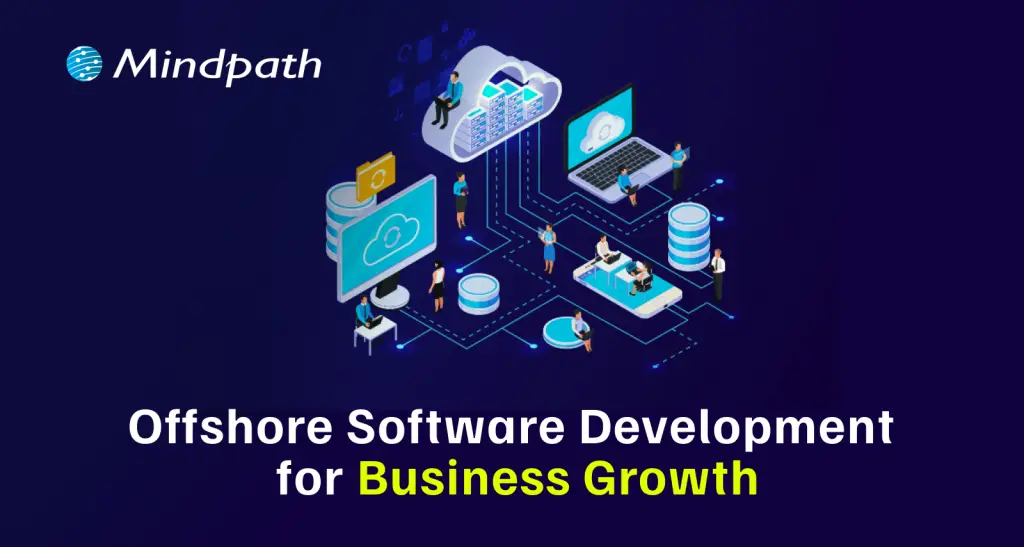
Would you like to grow your business quickly without spending a lot of money? If so, offshore software development may be an appealing option for you. Many companies today are choosing this model due to the cost-saving element, access to global talent, and keeping pace with digital technology. So, for companies that want to grow fast and provide more resources to their primary company without the pressure on their in-house or workforce, offshore development is a viable choice.
Now with this increased interest, offshore development services in 2026 are perceived as a way to stay agile and innovate faster while providing the continued influx of technology in the marketplace. Businesses of all sizes, including small startups and large enterprise clients, are increasingly leveraging offshore teams to produce robust and dependable software solutions. In this blog, we will explore why this trend is growing and how your organization can benefit from it.
Ready to take your business to the next level? Partner with Mindpath for expert offshore development services that drive innovation, efficiency, and growth. Contact Us!
What is Offshore Development?
Offshore development refers to hiring a software development team from abroad to either build or manage your software projects. It’s a form of software development outsourcing and allows companies to choose to work with teams located in different countries. It is beneficial for companies to consider going offshore for lower costs, accessing greater developer skill sets, and spending their time on their core business processes.
For instance, if a company in the UK hires a software development team from India to develop its web application, the rates in India will be cheaper than in the UK, while still maintaining high-skilled developers. Thus, using offshore development can help a company scale quickly and effectively with good quality work.
According to a Business Research Insights Survey, the software offshore market was worth roughly USD 160.9 billion in 2024, and is on track to reach USD 413 billion by 2033, with a CAGR of 11.04%.
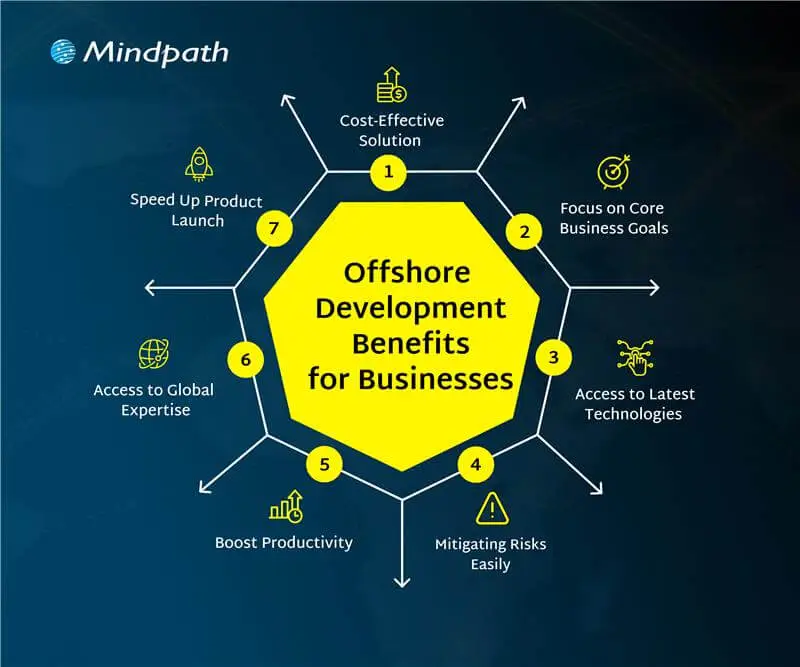
Offshore Development Benefits for Businesses
There is a growing number of businesses opting for offshore teams to deliver their software needs. The benefits of offshore development have made it a popular option for organizations seeking smart and adaptable options for growth. Let’s have a look:
1. Cost-Effective Solution
Offshore development services help businesses lower their software development costs without losing quality. Companies can hire skilled developers from countries where salaries are more affordable compared to local markets. This approach offers a smart way to achieve cost-effective software development without compromising on results. The money saved can then be used in other important areas like marketing, research, or improving infrastructure.
2. Focus on Core Business Goals
Offshore development lets companies’ hand over routine tech tasks to external teams. This helps free up internal staff to work on more important goals and long-term plans. With fewer day-to-day responsibilities, businesses can focus better on innovation and growth. It also gives them more time to strengthen their position in the market.
3. Access to Global Expertise
Working with global software development teams allows companies to tap into a wide range of skills and knowledge. They can bring in experts who specialize in tools or technologies that are hard to find or too expensive locally. This helps businesses build better solutions and stay updated with the latest trends. It also brings fresh ideas and faster problem-solving from experienced professionals around the world.
4. Mitigating Risks Easily
Working with offshore teams helps reduce risks that may affect your local operations. This includes not just natural disasters or political changes, but also technical issues like system failures or delays in development. Offshore partners can quickly step in to handle problems and share responsibility when challenges arise. This setup keeps your projects moving and makes your business more stable and prepared.
5. Boost Productivity
Offshore teams usually have clear roles and focus on getting results. This helps manage projects better and use resources more effectively. Many offshore developers work in well-organized environments that support smooth and efficient work. As a result, they often deliver high-quality work on time and sometimes even ahead of expectations.
6. Access to Latest Technologies
Offshore teams give businesses access to modern tools like AI, cloud computing, blockchain, and IoT. Many offshore developers already have experience with these technologies and know how to use them well. This helps companies stay up to date and try new ideas without spending extra on training or new systems. It also supports faster innovation and better tech solutions.
7. Speed Up Product Launch
Tech talent outsourcing helps businesses work faster by using teams in different time zones. When one team finishes their day, the offshore team can continue the work, keeping the project going around the clock. This constant progress helps fix issues quickly and speeds up development. As a result, companies can launch their products sooner and meet deadlines with ease.
Want to know how this round-the-clock development approach works best ? Understanding the stages of the software development life cycle helps ensure offshore teams collaborate efficiently while maintaining quality and timelines.
Are you facing any confusion between offshore software development and onshore software development? Let us learn about the difference between them.
Offshore vs Onshore Development: A Comparison Table
When planning a software project, businesses often choose between offshore and onshore development based on their goals, budget, and timeline. Both options have their own advantages and challenges. The table below gives a clear comparison to help you decide which model suits your business needs best.
Factor |
Onshore Development |
Offshore Development |
| Definition | Development done by a local team | Development handled by a team in another country |
| Location | Within the same country | Access to cost-effective global locations |
| Proximity | Easy access to the team | Remote but manageable with clear planning |
| Cultural Fit | Shared work culture | Diverse perspectives and global work culture |
| Communication | Face-to-face communication possible | Efficient digital communication tools |
| Talent Base | Limited to local skills | Broader access to global tech talent |
| Language Barrier | Minimal language issues | Clear strategies help overcome language gaps |
| Time Zone | Same time zone, easy scheduling | 24/7 progress through time zone advantage |
| Work Cycle | Fixed to local business hours | Continuous work with round-the-clock development |
Looking to Scale Smartly with Offshore Software Development?
Offshore software development continues to be a smart and flexible solution for businesses in 2026. It helps reduce costs, improves access to global talent, and supports faster innovation. By using offshore teams, companies can stay competitive, scale quickly, and focus on their main business goals. No matter if you’re a startup or an established company, offshore development can support your long-term growth.
At Mindpath, we offer reliable offshore development services tailored to your business needs. Our expert teams are equipped with the latest tools and technologies to deliver high-quality solutions on time. With a focus on communication, transparency, and results, Mindpath helps you build the right IT outsourcing strategy for long-term success.
Frequently Asked Questions
1. How do offshore development services ensure quality work when teams are remote?
Offshore teams follow structured processes, regular updates, and clear communication to maintain quality. Many companies also use agile methods, testing practices, and performance tracking tools. With the right planning and collaboration, remote teams can deliver reliable and high-quality results consistently.
2. Is offshore software development suitable for small businesses or only large enterprises?
Offshore software development is suitable for both small businesses and large enterprises. Startups can benefit from lower costs and faster development, while larger companies use it to scale operations. It offers flexibility for any business aiming to grow efficiently without heavy investment in local hiring.
3. What challenges can businesses face with offshore development, and how can they manage them?
Common challenges include time zone differences, communication gaps, and cultural differences. These can be managed by setting clear expectations, using collaboration tools, and scheduling regular meetings. A well-defined workflow and strong project management help ensure smooth coordination and project success.
4. How do offshore development services help businesses stay competitive in a fast-changing market?
Offshore development services give access to global talent, faster delivery cycles, and modern technologies. This allows businesses to innovate quickly and adapt to market changes. With continuous development and cost savings, companies can focus more on strategy and stay ahead of competitors.
5. What factors should be considered before choosing an offshore development partner?
It is important to check the partner’s experience, technical expertise, communication approach, and past projects. Understanding their work process and support system is also key. Choosing the right partner ensures better collaboration, smoother execution, and long-term project success.
In a digital environment where GenAI is emerging as a new place to start innovating, we are often faced with questions like, can AI be creative? Have you ever thought about how generative AI work in creative industry today? Well, generative AI is no longer just technology; it is a creative partner. It can assist with day-to-day entries to concepts, to producing full designs or content. GenAI solutions are beginning to change how professionals will manage their work moving forward. It is creating new opportunities to bring imagination together with intelligent automation. How exciting is that, right?
As more professionals utilize AI to support their creative processes, the impact is becoming apparent across multiple industries. According to a study by The Business Research Company, the generative AI market in creative industries grew from $3.08 billion in 2024 to an expected $4.09 billion in 2025, and it’s projected to reach $12.61 billion by 2029. With open-source tools, rising interest, and cross-industry use, the landscape is evolving fast. Want to know about this in depth? In this blog, we’ll be taking a closer look at how generative AI is changing creative work and the impact it will have on the future of the industry.
Looking for ideas to reshape your business with generative AI? Unlock smarter growth, faster innovation, and personalized customer experiences with our AI-powered solutions.
What is Generative AI?
Generative AI is a type of technology that enables computers to produce new content such as text, images, music, or even computer code. Instead of just producing answers or analyzing data, generative AI will generate new content on its own by analyzing a data set or learning from examples. For companies, this opens the door for them to use generative AI to save time, produce content faster, and create even more personalized experiences for their customers. It allows teams to be more productive collaboratively and be more creatively enabled.
How does Generative AI Work?
Generative AI works by learning from large amounts of data like text, images, or audio, and then creating something new based on that learning. It uses neural networks, which are computer systems designed to understand patterns, such as how sentences are written or how pictures are formed.
These systems are trained using different types of learning methods, often with very little labeled data. This helps build foundation models that can do many tasks. Generative AI examples include tools like ChatGPT, which can write stories or articles from short prompts, and DALL·E, which creates simple images from written descriptions.
How Generative AI Work in Creative Industry?
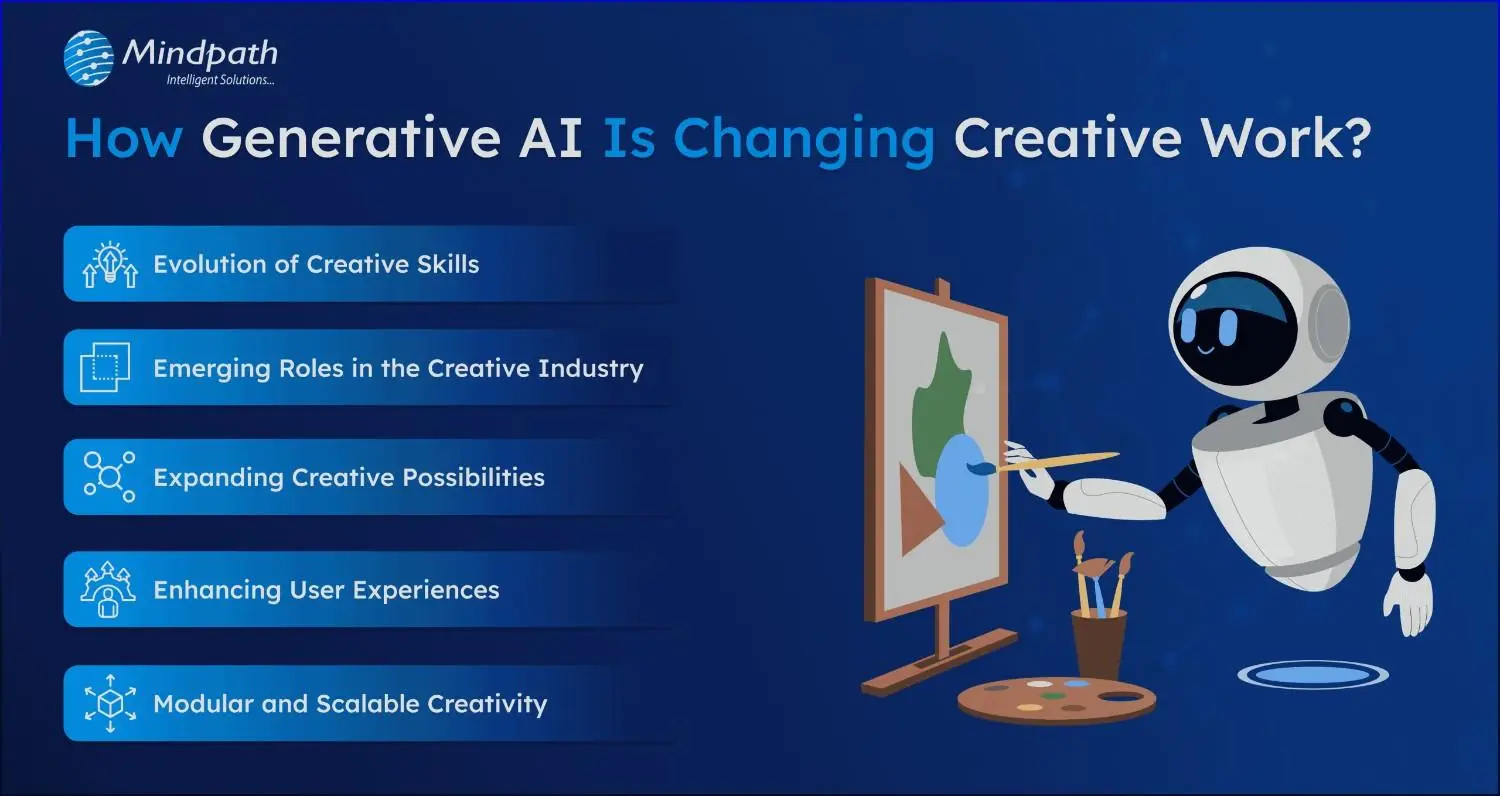
Creative work is changing in many exciting ways with the help of GenAI. It’s helping people come up with new ideas, save time, and try things that were not possible before. If you’re curious about how does generative AI affect creativity, here are the ways it’s making the creative process easier, faster, and more inspiring.
1. Evolution of Creative Skills
Today’s creative professionals need more than just talent. They also need to understand how to use generative AI tools wisely and make thoughtful, responsible choices. Skills like curation help them pick and improve AI-generated ideas, while AI fluency means knowing how to use tools like ChatGPT or DALL·E. Most importantly, they must think ethically to ensure their work respects people and values.
2. Emerging Roles in the Creative Industry
As AI becomes a regular part of creative work, new types of roles are starting to appear. These jobs mix creative thinking with technical skills, showing how generative AI work in creative industry. For example, Prompt Engineers write clear instructions to help AI create content, while AI Art Directors use AI tools to design visuals quickly. There are also roles like Synthetic Media Producers and AI UX Designers who focus on virtual content and improving user experiences.
How are different industries leveraging Generative AI today? Find out in our blog on Generative AI Use Cases across Industries—from content creation to customer service and beyond.
3. Expanding Creative Possibilities
Generative AI is removing many of the limits that once held creative ideas back. Now, artists, marketers, and musicians can quickly try out new concepts without worrying about time or cost. They can test visuals, messages, sounds, and styles almost instantly. This freedom encourages bold thinking and opens the door to more creative experiments than ever before.
4. Enhancing User Experiences
Creative work is becoming more interactive and personalized, thanks to the use of generative AI. Brands and creators are now building experiences that adapt in real time, giving users a chance to take part in the creative process. From custom storylines to co-designed fashion and dynamic game worlds, AI is adding a new layer of engagement. Rather than replacing creativity, it’s helping people bring their ideas to life in exciting new ways.
5. Modular and Scalable Creativity
Generative AI is making it easier to create content in parts, or modules, that can be reused and adapted for different needs. This helps teams customize content for various platforms and audiences without starting from scratch each time. Marketing teams can turn one idea into ads, videos, or social posts quickly. Designers and writers are now building flexible templates that save time and boost creativity.
Real-World Examples of GenAI Transforming Creative Industries
Generative AI is making a real difference in how creative work happens across different industries. Many companies and creators are already using it in ways that are smart, fast, and effective. Here are a few real-world examples showing its growing impact.
1. Entertainment Industry
GenAI is helping creators in entertainment and gaming bring stories and virtual worlds to life more quickly and creatively. Game developers are using AI to design characters, build game levels, and create realistic dialogue. It also supports features like deepfake voices and more dynamic non-player characters. In filmmaking, tools like Runway ML make it easier to edit videos and add visual effects in real time.
2. Writing and Publishing Industry
Writers are now using generative AI to boost both creativity and productivity. From coming up with ideas to drafting and editing, AI tools help simplify the writing process. Platforms like ChatGPT offer support when writers face blocks or need quick content suggestions. Publishers are also using AI to create short stories, newsletters, and SEO content at a larger scale.
3. Advertising and Sales Industry
Generative AI supports sales teams by helping them write personalized emails, prepare reports, and test different sales pitches more efficiently. It also assists in understanding products, markets, and risks by analyzing use cases and offering clear insights. Tools like ChatGPT and Gemini can explain complex visuals and data, making it easier to make informed decisions. Platforms like Jasper even help sales teams expand globally by translating content into multiple languages.
4. Marketing Industry
Marketing is one of the industries seeing the biggest impact from generative AI. It allows companies to personalize content at scale, create high-quality visuals and videos quickly, and manage large volumes of work in less time. Tools like ChatGPT, Jasper, and Einstein Copilot help with ad optimization, brand design, and social media content. These tools also support strategy by building customer profiles, analyzing competitors, and predicting market trends.
5. Media Industry
GenAI is helping media industries create content faster by assisting with writing, editing, and transcribing. News outlets use it for generating headlines, interview questions, and social media posts. Some broadcasters also use AI anchors and tools to automate simple news stories. While a few bold moves faced setbacks, many media groups now rely on AI to improve efficiency and scale content production.
Ready to Transform Your Creative Process with Generative AI?
Generative AI is transforming how creative professionals work by making tasks faster, smarter, and more flexible. It supports everything from writing and design to marketing and media. By understanding how generative AI work in creative industry, teams can unlock new levels of innovation, improve productivity, and explore fresh ideas without limits.
At Mindpath, we offer advanced Generative AI development services that help businesses simplify creative work and scale innovation with unexpected solutions. Whether you’re looking to generate content, design visuals, or build engaging user experiences, our expert team and tools are ready to support your goals. We work closely with you to deliver practical, AI-powered solutions that drive results. With Mindpath, your ideas turn into impact – faster, smarter, and with creative confidence.

In this fast-paced world of business, companies are actively seeking smarter tools to improve customer service and communication. Chatbots are one of the most common, and a great way to get attention. If you have engaged with a virtual assistant on a website, chances are that you have seen it in action. So, what is a chatbot? You may have wondered about this when you are chatting with a brand online or if you are shopping on a website where you are getting instant replies.
As these types of digital assistants proliferate, they are quickly becoming an essential aspect of how businesses operate in 2026. With faster response times and the ability to interact with multiple customers at once, it is no surprise that chatbots are altering how companies relate to their customers. In this blog, we will provide you with everything you need to know about chatbots including benefits, features and examples of chatbots in action.
Struggling to keep up with customer queries or deliver 24/7 support efficiently? Mindpath’s GenAI-driven chatbot development services can help you manage customer service and boost business performance.
What is a Chatbot in Simple Words?
A chatbot is an artificial intelligence (AI) software application that is designed to have human-like conversations. They use natural language processing (NLP) to understand what users are stating and respond in a way that feels natural in a conversation and is helpful. They can help with answering questions, can guide the user, and can perform some tasks.
Chatbots can be a part of a website, an app, a messaging app, or a voice assistant. AI chatbots help businesses communicate with customers 24/7. They can perform tasks like making bookings, solving common problems, and providing information. AI chatbots are invaluable tools for improving customer experience and communication.
How does a Chatbot Work?
Chatbots work by using artificial intelligence and natural language processing to understand what users are saying. When someone types or speaks to a chatbot, it reads the message and tries to figure out what the person wants. It does this by matching the message with words or phrases it already knows.
Once the chatbot understands the request, it picks the most suitable response and replies to the user. Some chatbots follow simple rules, while others learn from past conversations to improve over time. This process allows chatbots to provide quick and helpful replies in a natural and professional way.
What are the Benefits of Using AI Chatbots for Businesses?
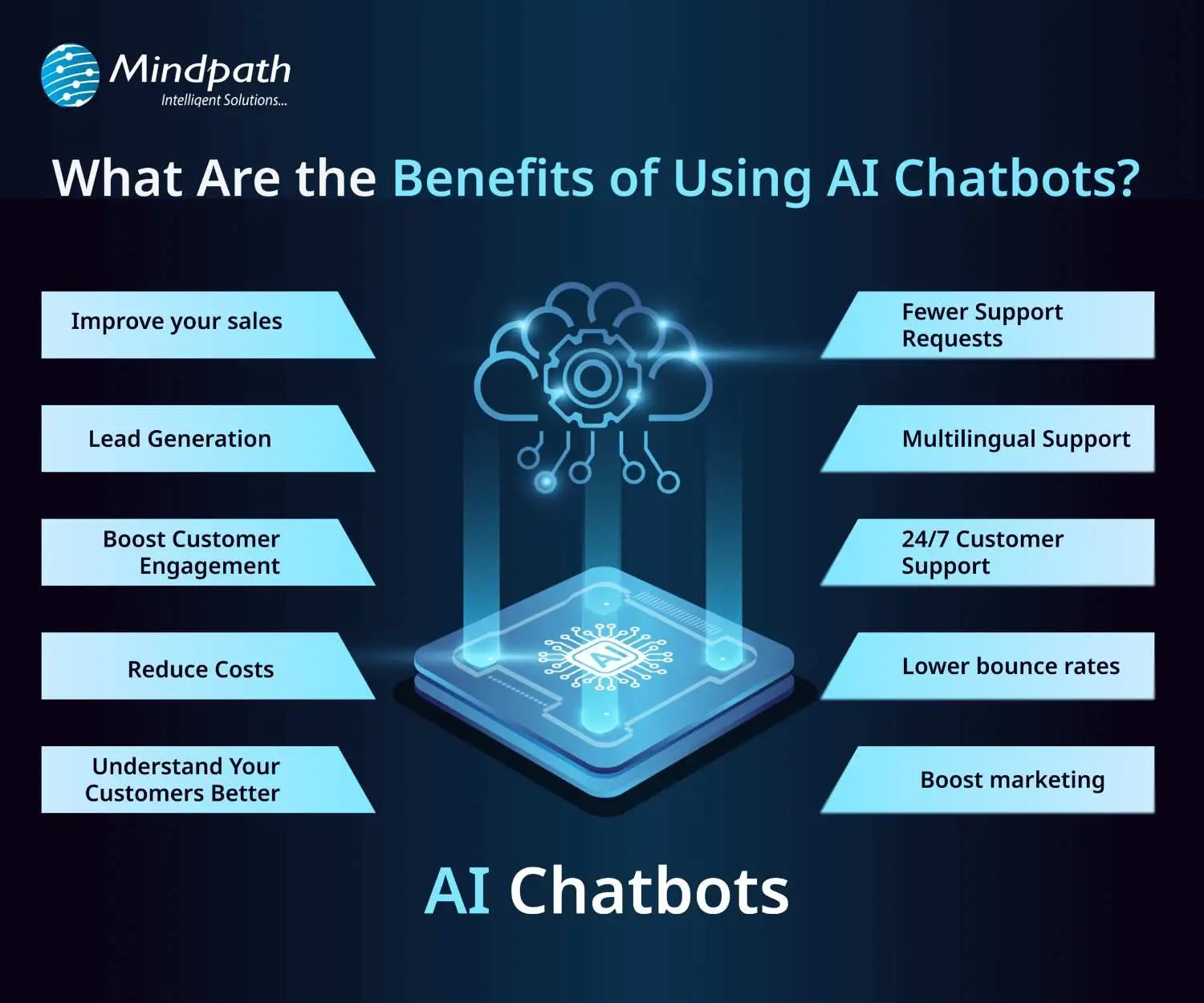
AI chatbots are now widely used by businesses to improve customer interaction and automate routine tasks. Here are some of the key benefits of chatbot technology that can help boost your business:
1. Improve Sales
Chatbots can increase sales by showing new products or offering special discounts to website visitors. They send helpful messages that guide users toward making a purchase. These bots also assist in product selection and order placement. This makes it easier for new visitors to become paying customers.
2. Lead Generation
Chatbots help gather leads even before a conversation starts. They ask visitors for basic details like name and email to begin the chat. They can also qualify these leads by asking relevant questions based on customer needs. This helps your sales team know who they’re speaking with and what the customer is looking for.
3. Boost Customer Engagement
Chatbots make online experiences more interactive and personal. Instead of searching through a website, users can chat and get instant answers. Bots reply with clear information based on user questions. This keeps customers engaged and helps them find what they need quickly.
4. Reduce Costs
Using chatbots is more affordable than hiring multiple support agents. They can handle many tasks like answering FAQs or booking appointments, which saves time and money. You’ll still need some team members, but bots make the process faster. This is especially helpful for managing high volumes without extra costs.
5. Understand Your Customers Better
As chatbots collect important customer data during conversations, they can also run surveys to check customer satisfaction. By reviewing these chats, businesses can find out what customers like or dislike. This feedback helps improve products and services over time.
Wondering why chatbots are becoming essential for modern businesses? Explore the top Benefits of Chatbots Every Business Leader Should Know and learn how they drive growth.
6. Fewer Support Requests
Chatbots handle many common questions, which reduces the number of queries sent to human agents. This helps agents focus on more complex issues. It also improves customer satisfaction by providing quick solutions. A chatbot for business can balance automation and personal support effectively.
7. Multilingual Support
Multilingual support allows chatbots to speak different languages. This is helpful if your business has customers from various countries. The bot can reply in the language your customer prefers. This makes a chatbot for small businesses and large companies more accessible to global audiences.
8. 24/7 Customer Support
Chatbots are always available, even when your team is offline. If someone is browsing late at night and needs help, the bot can step in. It can guide them to the right product or answer their questions. This leads to better customer service and more satisfied clients.
9. Lower Bounce Rates
Chatbots can keep users on your site longer by offering help when someone is about to leave. They provide answers or discounts that encourage people to stay. This improves your website’s engagement and SEO performance. Visitors feel supported and are more likely to explore further.
10. Boost Marketing
Marketing chatbots can suggest products, offer deals, and guide customers through the buying process. They also collect useful data for future campaigns. One of the ideas can be a spinning wheel offering discounts, which encourages users to buy. This creates an engaging and effective marketing strategy.
How can conversational AI take your customer engagement to the next level? Explore the power of Conversational AI Chatbots for Business Growth and discover how they drive results.
Real-World Use Cases of Chatbots
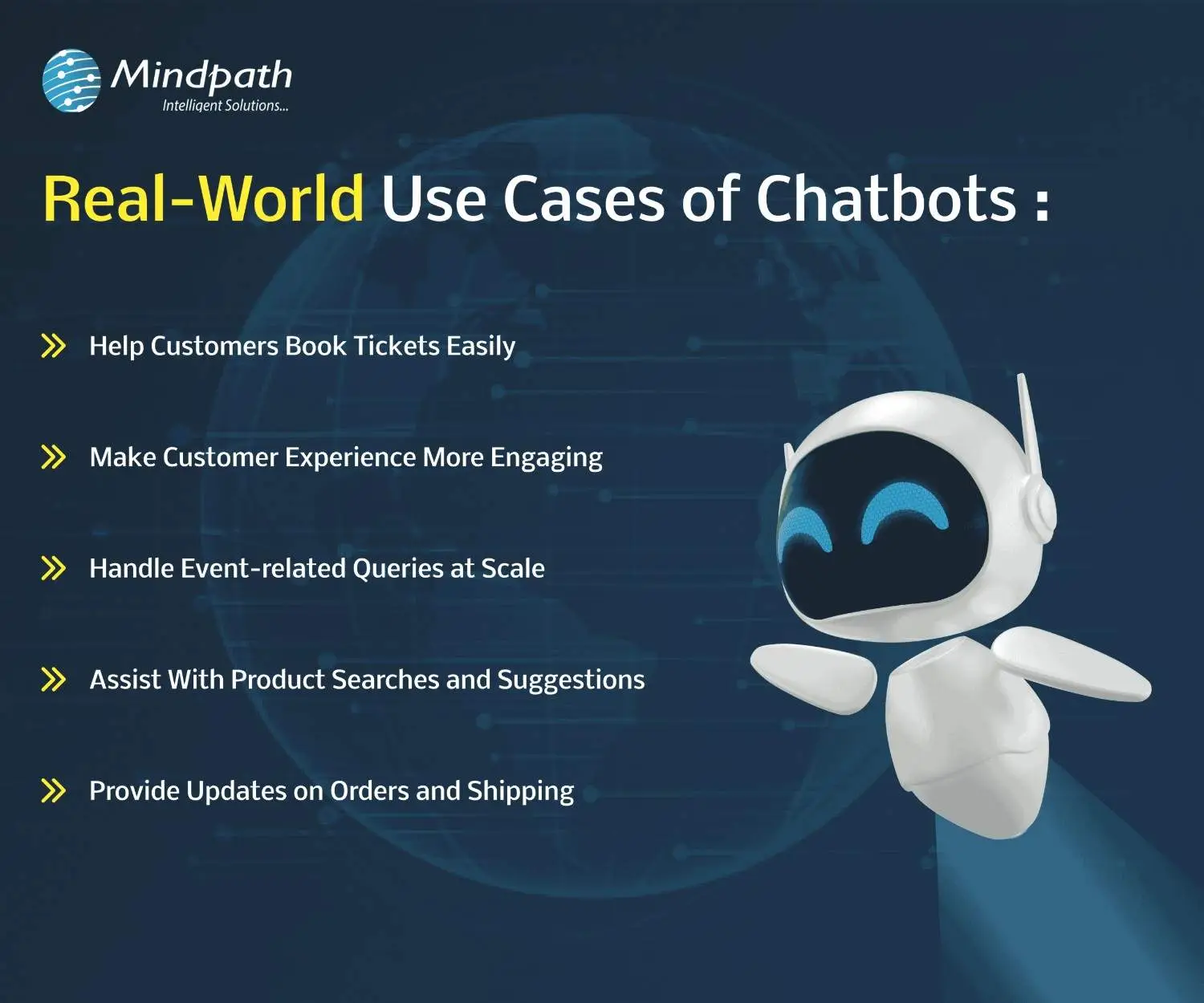
Chatbots are being used across many industries to simplify tasks and improve customer experiences. Here are some real-world chatbot examples that show how businesses are using them effectively for different needs.
1. Help Customers Book Tickets Easily
A chatbot can answer common questions like seat availability, movie timings, and refund policies while guiding users to book tickets smoothly. PVR Cinemas uses this on their website to help visitors quickly complete bookings and check offers.
2. Make Customer Experience More Engaging
Chatbots can add personality by offering quizzes, jokes, and product suggestions in a fun and helpful way. LEGO’s chatbot Ralph helps users find the right gift through playful questions and interactive chat.
3. Handle Event-related Queries at Scale
When thousands of people need answers about an event, a chatbot can respond instantly with details like schedules, speakers, and directions. Slush uses one to manage large volumes of attendee questions efficiently on their event site.
4. Assist With Product Searches and Suggestions
A chatbot can search inventory and offer personalized product recommendations based on customer preferences. Sephora’s chatbot does this well by guiding users to suitable makeup products and checking stock availability.
5. Provide Updates on Orders and Shipping
Instead of navigating emails and websites, customers can enter their order ID in a chatbot to get instant shipping updates. H&M allows shoppers to track their deliveries directly through its chatbot.
Thinking about Using Chatbots to Elevate Customer Experience?
Chatbots are transforming how businesses interact with customers by offering fast, helpful, and personalized service. From booking tickets to answering questions, these tools simplify tasks and improve user satisfaction. With so many benefits, it’s no surprise that more companies are embracing chatbot technology to stay ahead in 2026.
At Mindpath, we offer custom chatbot development tailored to your business goals. Our chatbot development services are designed to help you improve customer interactions, increase engagement, and streamline operations. Whether you need a simple support bot or a fully integrated solution for sales, marketing, or service, our expert team builds smart, reliable chatbots that deliver real results.
Frequently Asked Questions
1. How can a chatbot improve customer experience on a website?
A chatbot improves customer experience by offering instant responses, guiding users to the right information, and reducing wait times. It creates a smooth journey by helping visitors find what they need quickly, which increases satisfaction and encourages them to stay longer on the website.
2. What is a chatbot used for in daily business operations?
A chatbot is used for handling routine tasks like answering FAQs, booking appointments, collecting customer data, and assisting with purchases. It helps teams save time by automating repetitive work while ensuring customers receive quick and consistent support throughout their interaction.
3. Can chatbots work effectively for both small and growing businesses?
Yes, chatbots are useful for both small and growing businesses. They help manage customer queries without needing a large team, making operations more efficient. As the business grows, chatbots can scale easily to handle more interactions without increasing costs significantly.
4. What should businesses consider before implementing a chatbot?
Before implementing a chatbot, businesses should define clear goals, understand customer needs, and choose the right type of chatbot. It is also important to plan integration with existing systems and ensure proper testing to deliver a smooth and effective user experience.
5. What is a chatbot’s role in improving website engagement?
A chatbot plays an important role in keeping users engaged by starting conversations, offering assistance, and providing relevant suggestions. It reduces bounce rates and encourages interaction, helping businesses create a more interactive and user-friendly website experience that keeps visitors interested.
The generative AI revolution is changing the business landscape. From design automation to optimized operations and improved client experience, GenAI is enabling new opportunities across the spectrum of industries. Companies now leverage this technology to not only save uptime, but to innovate more rapidly, customize and provide service to their consumers more favorably, and remain competitive in an ever-expanding digital world.
Generative AI allows machines to learn patterns and create new output in a number of ways. Businesses are now adapting to this change and thinking about how they can move forward in a new way. It is gradually becoming a key part of business innovation and digital evolution. In this blog we will discuss the growing influence of GenAI and its role in transforming the modern business environment. To begin with, let us have an understanding of GenAI.
Looking for ideas to reshape your business with generative AI? Unlock smarter growth, faster innovation, and personalized customer experiences with our robuts and scalable Gen AI development services.
What is Generative AI?
Generative AI is a form of artificial intelligence that can generate new things, such as text, images, music, or video, by learning from existing data. For example, if you give 1,000s of product descriptions from an online store, it will generate completely new and unique product descriptions for similar products, all by itself. GenAI does this by looking at patterns and learning about how things can be constructed so it can produce something new that looks very realistic.
This type of technology is spreading and evolving rapidly across the globe. A research from Statista shares that the market size of generative AI is expected to be US$66.89 billion in 2025, with annual growth of 36.99% every year, reaching a market size of US$442.07 billion by the year 2031. Among all countries, the United States is estimated to have the largest market size in 2025 at US$21.65 billion.
How Does Generative AI Work?
Generative AI uses neural networks to examine existing data to identify patterns and create new data that appears to be real. Most generative AI models utilize an unsupervised or semi-supervised learning process that is less of a hurdle, because it tends to require a broad array of unlabeled data. Consequently, it becomes much simpler for organizations to develop more powerful AI systems.
Generative AI examples can be seen in all businesses today. For example, Jasper is a tool that helps marketers create blog posts or advertising copy, and DALL·E creates images based on simple text descriptions. These foundation models make it possible to perform tasks like writing, designing, or summarizing in seconds, improving speed and creativity.
Want to stay ahead in the rapidly evolving world of GenAI? Explore the top Generative AI Trends shaping the future of development and strategy.
How is Generative AI Transforming Business?
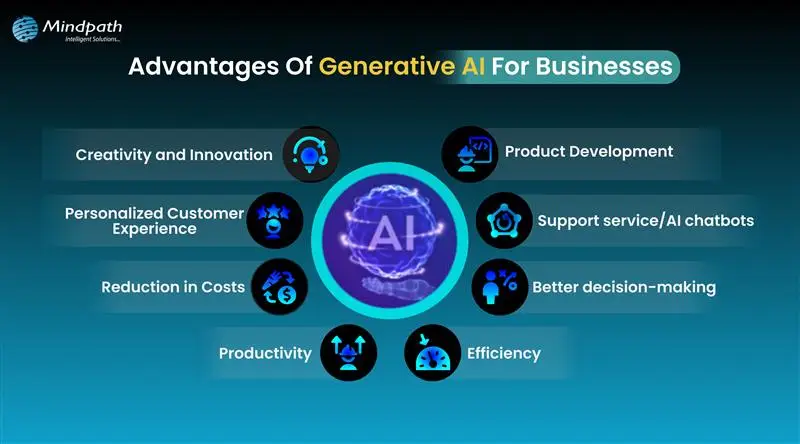
The generative AI revolution is changing the way companies operate, innovate, and treat their customers. With generative AI in business, tasks which took hours can now be completed in minutes, increasing speed and creativity for teams. Here’s the way it is changing the business world:
1. Boost Creativity for Marketing and Innovation
GenAI is changing creative industries by bringing ideas to life faster by offering design concepts and fresh content ideas. This supports quicker campaign launches and product development. It also gives teams more time to focus on refining ideas or exploring new ones. As a result, human creativity grows while the creative process becomes faster and more effective.
2. Enhance Customer Support
The GenAI revolution is helping businesses improve customer service like never before. Instead of making customers wait for answers, generative AI can quickly find the right solution by pulling information from many sources. It also creates clear post-call summaries, making support faster, more accurate, and more personalized, leading to better customer satisfaction and trust.
3. Improve Sales Communication with Smart Insights
The economic potential of generative AI is clear in sales. It can write call summaries and follow-up emails, helping reps spend more time with customers. Sales managers can track how well AI-generated messages perform, like whether they speed up deals or increase order values. This leads to better sales processes and stronger customer communication.
Wondering how GenAI for business can be your key to success? Generative AI for business enhances innovation, and streamlines operations—thus empowers companies to stay competitive and get future-ready.
4. Boost Content Creation for Better Productivity
Generative AI helps businesses create high-quality content quickly by providing first drafts in just a few seconds. This allows teams to produce more sales messages, marketing content, and product documents in less time. As a result, companies can respond faster to customer needs while giving employees more time to focus on building stronger customer connections.
5. Create Personalized Customer Experiences
The role of AI in business growth and human empowerment is very clear when we think of how it can assist businesses in creating personalized customer journeys. By understanding their customer data, likes/dislikes, and behaviors, GenAI makes it easy for businesses to create personalized suggestions and relevant content. AI personalized customer experiences can truly bring better connections, embed customer loyalty, and create a better experience for everyone involved.
6. Speed Up Development with Smarter Coding
Generative AI applications can help developers save time by writing routine code and automating common tasks. The role of GenAI in app development brings unexpected benefits such as boosts productivity, reduces errors, and keeps projects on track. It also supports non-technical teams through no-code and low-code tools, making app creation easier for everyone, not just engineers, and allowing more people to contribute to digital solutions.
Ready to Embrace the Generative AI Revolution in Your Business?
The generative AI revolution is creating exciting new possibilities across industries by helping businesses work faster, smarter, and more creatively. From personalized customer experiences to automated content and improved development, generative AI is no longer a future trend; it’s the present opportunity. Now is the time to explore how it can redefine the way your business operates and grows.
At Mindpath, we offer smart and scalable GenAI solutions that help businesses unlock real value. From custom AI applications to intelligent automation and personalized customer engagement tools, our AI development services help businesses fuel innovation, boost productivity, and empower teams. Let us help you stay ahead in this fast-changing digital world with cutting-edge generative AI services.
Frequently Asked Questions
1. How can businesses start using the generative AI revolution without major risks?
Businesses can begin with small pilot projects like content generation or customer support automation. This allows teams to test outcomes, understand value, and make improvements before scaling. Starting small helps reduce risks while building confidence in adopting generative AI solutions effectively.
2. What makes the generative AI revolution different from earlier AI technologies?
The generative AI revolution focuses on creating new content rather than just analyzing data. It can produce text, images, and code, making it more interactive and creative. This shift allows businesses to automate tasks while also improving innovation and decision-making processes.
3. How does generative AI support faster decision-making in businesses?
Generative AI can quickly analyze large volumes of data and generate useful insights or summaries. This helps decision-makers understand trends, identify opportunities, and respond faster. With quicker access to relevant information, businesses can act confidently and stay competitive in dynamic markets.
4. Can generative AI replace human creativity completely?
Generative AI supports creativity but does not replace human thinking. It helps generate ideas, drafts, and suggestions, but human input is still needed for refinement and strategy. The best results come when businesses combine AI capabilities with human creativity and expertise.
5. What challenges should businesses be aware of when adopting generative AI?
Businesses should consider data quality, security, and ethical concerns when using generative AI. Proper planning, monitoring, and clear guidelines are important to avoid risks. Understanding limitations and maintaining human oversight ensures that AI is used responsibly and effectively.


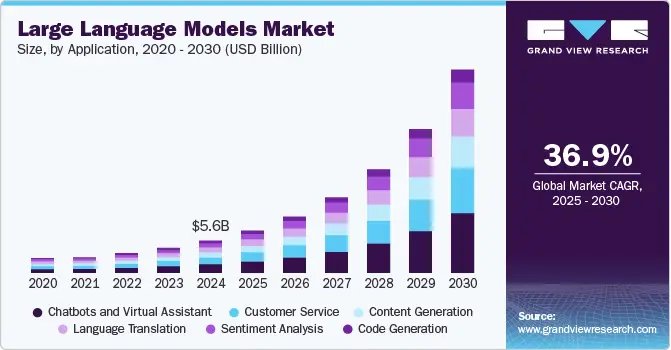
Are you hearing a lot about the LLaMA LLM lately and wondering what it is and why it’s special? If so, you’re not alone. Buzz regarding this powerful open large language model (LLM) continues to build and spread from technology forums to developer circles and the larger AI community. It’s fundamentally reshaping how many people think about AI tools and putting the spotlight on open-source innovation that has never been seen before.
The emergence of open-source LLMs fundamentally reshapes how AI is developed, shared, and scaled. Until now, the primary focus in the industry has been on the deployment and governance of closed prompts within a closed model. Large language models with open-source options, like LLaMA, are a welcome addition that now allows access for researchers, developers, and even startups, with fewer restrictions to experiment, customize, and build. It will not only provide greater access to advanced AI but also create a larger momentum for innovation across many sectors. In this blog, we’ll explore what sets LLaMA apart and how it’s driving this change.
Looking to harness the power of LLMs and AI for your business but don’t know where to start? Mindpath offers AI Development Services to help you build, customize, and deploy intelligent solutions that drive real results.
Before diving further, let us have an idea about open LLMs:
Understanding Open LLMs
Open-source large language models (LLMs) are incredible power AI models that can be deployed, changed, and shared for free by anyone. Where closed or paid models like OpenAI’s GPT are restricted to only those who pay to access the models, open-source LLMs are built on being open and transparent, meaning that developers and researchers can inspect, make improvements and train on their own data. These models are often contributed as a collaborative effort by communities or organizations who believe in promoting open innovation making it possible for others to learn and create new things with AI.
There are many benefits to using open-source LLMs. They can save researchers a lot of money, because there’s no licensing fee and they can be adapted in very precise ways to what the researcher wants. Developers can also rely on strong open-source communities from which they can freely draw robust sets of tools, tutorials, and updates. This community effort often supports not only researchers’ progress but also helps more people get involved in shaping the future of these technologies.
Curious about the different kinds of AI and how they impact businesses? Learn about the types of AI to understand where LLMs like LLaMA fit in the broader artificial intelligence landscape.
Among these Open-source LLMs, the most popular one is LLaMA LLM. Let’s dive into that!
What is LLaMA LLM?
LLaMA is a large language model developed by Meta that can understand and generate human-like text. It learns from a huge amount of data and uses a special design, or architecture, to figure out patterns in language. This helps it give smart and relevant answers, whether it’s writing something, translating, or answering questions.
What makes LLaMA stand out is its strong performance and the way it is available for the tech community. Many people ask, is LLaMA open source? While it’s not fully open like some models, Meta has made it available to researchers and developers, making it easier for them to explore, test, and build new AI tools using LLaMA.
Why is LLaMa LLM So Popular?
LLaMA AI has quickly gained popularity in the AI community, and it’s easy to see why. Its performance, accessibility, and flexibility make it a strong choice for developers, researchers, and businesses alike. Here are some key reasons behind its rising popularity:
1. Scalability and Efficiency
LLaMA is scalable, which means it can run on different kinds of hardware — from powerful GPUs to everyday computers. This makes it easier for researchers and developers who may not have access to expensive systems. By making advanced AI tools more reachable, LLaMA helps more people experiment and innovate. That’s why many developers now use LLaMA in app development without needing a huge setup or high costs.
2. Adaptability
LLaMA can be trained for specific uses, which makes it really flexible. Whether it’s a chatbot for customer service or a tool that creates content, it’s possible to fine-tune LLaMA to fit different industries and goals. This adaptability means it can work well in many real-world situations. It’s not just a one-size-fits-all model, rather it adjusts to what you need it to do.
3. State-of-the-Art Performance
LLaMA has shown top performance in different language tasks like translation, classification, and more. These results come from how well the model is designed and trained. Meta’s AI team used smart methods and architecture to make sure LLaMA performs at a high level. Because of this, it stands out as one of the most powerful tools in the language model space today.
4. Open-Source Initiative
Meta has taken steps to make LLaMA more open and available to the research community. By releasing the models and sharing detailed documentation, they’ve made it easier for others to use, study, and build on LLaMA. As a leading example of an open source LLM, LLaMA is helping more people explore and contribute to the future of AI in a truly collaborative way.
Want to customize large language models to fit your specific business needs? Learn how OpenAI’s Fine-Tuning API enables developers to fine-tune AI models for more accurate and specialized applications.
Real–World Applications of LLaMA
LlaMA LLM is being used in many real-life projects today. Its open nature makes it easier for developers to build and improve solutions, and it’s often seen as a strong example of how open models can drive real innovation. Here are a few practical ways people are using LLaMA today:
1. Faster Content Creation for Marketing Teams
A digital marketing agency can use LLaMA to write content like blog posts, social media captions, or newsletters. This helps them save time and focus more on creative ideas and strategies. Since LLaMA can quickly generate useful content, the team can keep up with deadlines without stress. It’s a great LLaMA open source LLM example that shows how AI can help marketing teams work faster and smarter.
2. Smarter Chatbots for Customer Support
A business can use a chatbot powered by LLaMA to answer customer questions. The bot gives fast, helpful replies to common queries, so human support agents can handle more complex problems. Over time, the chatbot can learn from interactions and get even better. This helps improve customer satisfaction. You can even build one yourself by following a simple LLaMA open source LLM tutorial, which makes it easier for teams to create smart support tools.
3. Breaking Language Barriers with AI
An international company can use LLaMA to translate emails, documents, or messages into different languages. This helps their teams communicate better across regions. LLaMA can provide quick and accurate translations, making global teamwork easier. With an open-source model like this, it’s possible to build tools that support real-time communication without high costs or complex setups.
4. Understanding Customers Through Sentiment Analysis
A brand tracking tool can use LLaMA to understand how customers feel by reading reviews or social media posts. The tool can spot trends, positive feedback, or complaints. This helps companies make better decisions to improve their products or reputation. Because LLaMA is flexible and open, teams can customize it to track the right kind of feedback for their needs.
Want to see AI in action, improving business outcomes? Explore AI chatbot examples to understand how LLM-powered chatbots are driving real-world results.
Curious about Using LLaMA for Your Business?
LLaMA LLM is changing the way people use and develop AI by making powerful language models more open and accessible. Its flexibility, strong performance, and the support of an open community allow researchers, developers, and businesses to build smarter, faster, and more customized AI solutions. As an open-source LLM example, LLaMA is helping drive innovation across many industries, breaking barriers and making advanced AI tools available to more people than ever before.
If you want to harness the power of LLaMA in your own projects, Mindpath AI Development services can help. We specialize in building tailored AI tools using open-source models like LLaMA to meet your unique business needs. Whether you want to improve customer support, create content, or analyze data smarter, our team can guide you through every step to bring your AI vision to life efficiently and effectively.