Home

How Much Does It Cost to Build a Custom GenAI Solution in 2026? A Real Pricing Breakdown

How Much Does It Cost to Build a Custom GenAI Solution in 2026? A Real Pricing Breakdown

Join our Newsletter!

generative ai development cost

Planning a custom GenAI solution often begins with one difficult question: what will it cost? The generative AI development cost can look simple at first, yet many details shape the final investment. Data preparation, model selection, security, integrations, and ongoing support all influence pricing. So, how can you budget confidently without missing essential costs?

Key Takeaways

  • 01
    A basic GenAI MVP typically requires a $20,000 starting investment. 
  • 02
    Enterprise GenAI platforms can exceed $500,000 with complex security requirements. 
  • 03
    Data preparation and RAG setup can add $10,000 to $40,000. 
  • 04
    Monthly API and cloud usage can significantly increase long-term project costs. 
  • 05
    Clear scope and vendor expertise prevent budget overruns during GenAI implementation. 

That question becomes even more important when every decision affects your project’s value. A basic tool and a fully customized solution can require very different investments. You also need clarity before resources, timelines, and expectations start moving forward. Interested in knowing the real pricing breakdown? We have got you covered! This article breaks down the cost to build a GenAI solution, major pricing factors, hidden expenses, and practical planning considerations. So, let’s get started!

Need a cost-effective custom GenAI solution for your business? We offer generative AI development services to build secure, scalable, and ROI-driven AI solutions.

Why Are Businesses Seeking Custom GenAI Solutions in 2026? An Overview

As we know, custom GenAI development creates tailored AI applications for specific business needs. These solutions combine foundation models with internal data, workflows, and brand requirements. They help organizations automate complex work, protect sensitive information, and deliver more relevant insights than standard tools.

Businesses are seeking custom GenAI solutions because standard tools cannot fully support unique processes and goals. They need AI that understands internal data, protects sensitive information, and delivers relevant outcomes.

Here’s what custom GenAI solutions can do for a business.

1. Smarter Business Decisions: Turn scattered internal data into faster, more informed decisions.

2. Secure Innovation: Use proprietary knowledge to support product development, coding, and content creation.

3. Personalized Customer Support: Deliver relevant recommendations, interactions, and assistance at scale.

4. Streamlined Daily Workflows: Automate repetitive tasks across systems, teams, and business processes.

5. Stronger Compliance Controls: Generate secure, compliant outputs for sensitive and regulated operations.

 Must-Know Insights

  • Over 80% of enterprises will use GenAI in production. (Gartner)
  • 74% of companies plan multi-agent AI deployments soon. (Gartner)
  • AI spending could reach $2.59 trillion worldwide. (IMF)
  • Security incidents will shape enterprise GenAI design decisions. (Gartner)

What Drives the Cost to Build GenAI Solution?

A custom GenAI solution does not come with a fixed price tag. Each business brings different data, goals, systems, and security needs to the project. That is why GenAI development pricing can vary widely. The following are the key factors that influence the final cost.

1. Data Preparation and RAG

Clean, structured business data forms the foundation of a useful GenAI solution. Secure data pipelines and vector databases can increase the custom generative AI development cost.

2. Security and Compliance

Strong security controls protect sensitive business and customer information. Compliance requirements can add significant effort to the overall generative AI implementation cost.

3. Integration and Workflow Design

Connecting GenAI with existing systems requires careful planning and development. Complex workflows and multi-agent capabilities can raise the cost to build GenAI solution.

4. Model Strategy and API Usage

The selected model directly affects GenAI development pricing and ongoing expenses. High API usage, fine-tuning, and longer outputs can increase costs.

5. Infrastructure and Compute

Cloud hosting, storage, GPUs, and data transfers support reliable GenAI performance. Higher usage and scaling needs can increase long-term operational costs.

How Much Does Generative AI Development Cost in 2026?

Every GenAI project has a different price because every business has different needs. So, how much does generative AI cost for your goals? The answer depends on the solution’s scope, data, integrations, and security needs. For a clear understanding, let us break down the expected cost ranges.

1. Proof of Concept or GenAI MVP

Estimated cost: $20,000 to $60,000

This option helps businesses test one focused GenAI idea before making a larger investment. It may include a basic interface, model API integration, limited data access, and simple workflows.

2. Production GenAI Features

Estimated cost: $60,000 to $150,000

This range suits customer assistants, content tools, internal knowledge search, and automated workflows. It usually includes stronger integrations, better user controls, and more complete testing.

3. Custom AI Agents and Workflow Automation

Estimated cost: $100,000 to $250,000

These solutions complete multi-step tasks by connecting with business tools and systems. Costs increase when agents need approvals, memory, tool access, monitoring, or complex workflow logic.

4. Enterprise GenAI Platforms

Estimated cost: $250,000 to $500,000+

Enterprise solutions support multiple teams, larger data volumes, and broader business use cases. They often require scalable infrastructure, advanced security, governance controls, and detailed audit records.

What Is Included in the Custom Generative AI Development Cost?

A reliable custom generative AI development cost estimate should cover more than coding. It should include the work needed to make the solution useful, secure, and ready for real business use.

1. Discovery and solution planning: $5,000 to $20,000

2. UI/UX design and application development: $8,000 to $30,000+

3. Data preparation and RAG setup: $10,000 to $40,000

4. API and model integration: $10,000 to $50,000+

5. Testing and quality assurance: $5,000 to $30,000

6. Security and compliance: $10,000 to $50,000+

Hidden Costs to Consider Before Building a GenAI Solution

The initial Generative AI implementation cost does not cover every expense. These ongoing or overlooked costs can affect the total cost to build GenAI solution over time.

1. Cloud hosting and GPU compute: $1,000 to $30,000+ per month

2. API usage and token consumption: Varies based on users, prompts, and output length

3. Model monitoring and evaluation: $10,000 to $40,000+ per year

4. Data updates and scheduled retraining: $15,000 to $80,000 per year

5. Third-party tools and subscriptions: Varies by platform and workflow needs

6. Ongoing maintenance and support: $15,000 to $80,000 per year

7. Security reviews and compliance audits: $10,000 to $50,000+

Custom Generative AI Development Cost Planning Checklist

To understand the cost to build GenAI solution in a better way, follow this table. You will have better knowledge and can plan your budget accordingly.

Cost Area  Include in Initial Budget  Plan as Ongoing Cost  Why It Matters 
Discovery and solution design Yes No Defines scope, priorities, and technical requirements
Data preparation and RAG setup Yes Yes Internal data needs setup, updates, and quality checks
Application development and integrations Yes No Connects GenAI with workflows and business systems
Security and compliance Yes Yes Requires implementation, reviews, monitoring, and updates
API and token usage No Yes Costs grow with users, prompts, and response length
Cloud hosting and infrastructure No Yes Supports storage, processing, availability, and scaling
Testing and model evaluation Yes Yes Maintains accuracy, safety, and output quality
Maintenance and support No Yes Covers fixes, improvements, and model or API changes

Best Practices to Plan GenAI Budget More Effectively

Businesses can control costs by defining the right scope before development begins. A phased approach also helps teams prove value before scaling investment.

  • Start with one high-value and measurable use case
  • Define success metrics before selecting technology
  • Separate one-time build costs from ongoing operating costs
  • Confirm data security and compliance needs early
  • Plan for testing, monitoring, and future improvements
  • Work with a GenAI development partner that understands your industry

  Consider these Factors to Choose the Right GenAI Development Partner

1. Review Technical Expertise: Choose a partner with proven RAG, agent, integration, and evaluation experience.

2. Check Security and Compliance Practices: Confirm how they protect data and support relevant compliance requirements.

3. Understand Their Cost Approach: Ask for clear build, API, cloud, maintenance, and support estimates.

4. Discuss Outcome-Based Engagements: Align project pricing with measurable business goals and expected results.

5. Set Clear Service Agreements: Define uptime, response times, support responsibilities, and knowledge transfer expectations.

Looking for a Custom GenAI Solution Built Around Your Business?

A successful GenAI project starts with a clear scope, realistic budget, and long-term operating plan. By considering data, integrations, security, and maintenance early, businesses can manage the generative AI development cost while building a solution that delivers meaningful and measurable value.

At MindPath, we create custom GenAI development solutions around your business goals, workflows, and growth plans. Our team helps you define the right approach, control costs, and build secure AI capabilities that scale.
Frequently Asked Questions

Not always. A development partner can assess existing data, identify gaps, and create a preparation plan. Early data review helps avoid delays, unreliable outputs, and unexpected costs later.
Existing tools suit general tasks, while custom solutions support unique workflows, internal knowledge, and stronger controls. The right choice depends on your use case, data sensitivity, and long-term goals.
Set measurable goals before development, such as faster response times, reduced manual work, improved accuracy, or higher customer satisfaction. Tracking these outcomes helps demonstrate value and guide future investment.
Ask about relevant project experience, data protection methods, integration capabilities, testing processes, support plans, and cost transparency. Clear answers help you select a partner that matches your technical and business needs.
Yes, when teams design it with flexible architecture, scalable infrastructure, and modular integrations. A phased approach lets businesses add features, users, data sources, and workflows as needs evolve.

Support Is One Click Away

Featured Posts

Related Post

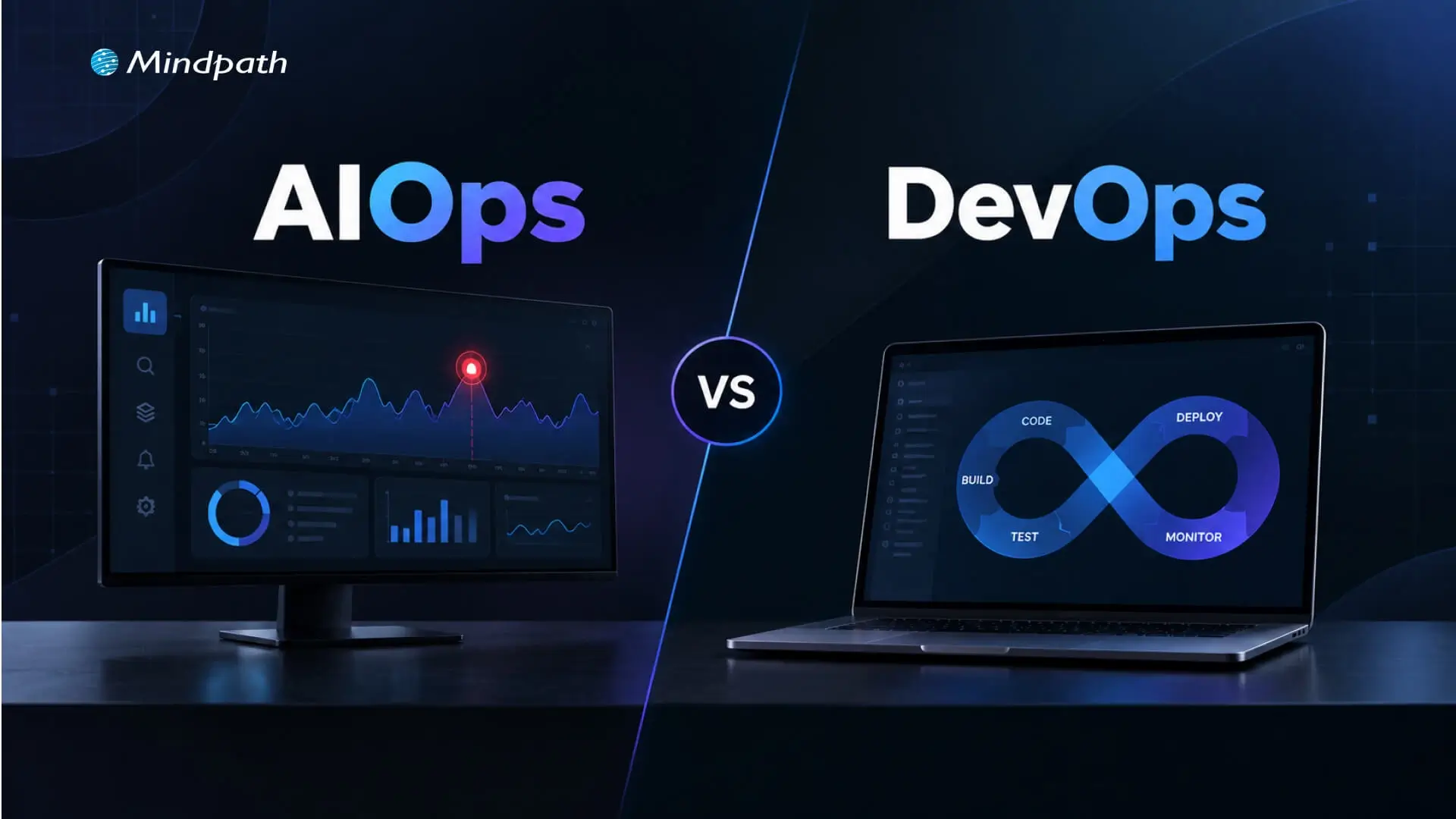
DevOps vs Traditional IT

The technology landscape has been drastically developing at a great pace. Businesses are under pressure to innovate faster and deploy more reliable customer experiences. At this great transformation, the conversation around DevOps vs. Traditional IT has become critical. So, the right approach can influence your speed, innovation, costs, and even customer satisfaction.

Further, there are some companies that still benefit from the structure and control of traditional models. On the other hand, others need the agility and automation that DevOps delivers. In this blog, you are going to understand the difference. This can also help you make the right choice that matches your business goals.

Planning to modernize your IT operations for faster and more efficient delivery? Mindpath offers DevOps services that help streamline workflows, enhance collaboration, and accelerate your development lifecycle.

What is Traditional IT?

The global IT services market size has already reached USD 1,652.27 billion this year. Further, it is going to expand to reach USD 3,299.78 billion by 2033. So, traditional IT values a structured process and initiates work step-by-step. Here, different teams manage multiple parts of the software development lifecycle. For example, developers write the code, and testers will verify if the system has any issues.

This structure majorly values the Waterfall model, where every phase must be completed before shifting to the next one. One of the best parts of traditional IT infrastructure is that it ensures thorough documentation and testing. But it somehow makes the process slower and more rigid. Any last-minute change can include major delays and disturbances.

  • You can have clear department roles and responsibilities.
  • It is a better option for legacy applications.
  • You can have strong control over infrastructure and other processes.
  • It is easily compliant in highly regulated environments.

What is DevOps?

The DevOps market size is expected to reach USD 108.26 billion by 2035. As per the recent statistics, around 72% developers are using the Agile method, whereas 46% of organisations are combining methodologies. So, DevOps is a modern and collaborative approach that combines development and operations into an individual workflow.

Instead of working in isolated teams, DevOps creates a culture of shared responsibility. Further, your whole team can leverage the relevance of automation and continuous improvements.

  • Unlike a traditional system, DevOps values agile principles.
  • It initiates modern IT operations that automate tasks like testing, integration, and deployment.
  • Additionally, this approach can help you reduce errors while improving the overall efficiency.

The Major Difference Between DevOps vs. Traditional IT

Both approaches aim to support your business technology. However, they hold some prominent differences as given below.

1. Deployment Speed

Traditional IT mainly uses scheduled releases, sometimes weekly or monthly. On the other hand, DevOps supports continuous releases through automation. This means you can go live with your features, fixes, and updates faster.

2. Team Structure

Your whole team might remain separated in traditional IT. Developers need to write the code, and they deploy it while handling the issues in the later stage. This can create communication gaps and delays. However, in DevOps, teams can work together from the beginning. This is one of the biggest DevOps benefits for business. Your developers and testers will have ownership.

3. Infrastructure Management

Traditional environments majorly depend on physical servers or manually managed systems. But DevOps relies on cloud environments, containers, and automation to handle infrastructure effectively.

4. Risk Handling

Traditional IT might avoid changes because it can introduce instability in the whole system. However, DevOps is capable of handling risks differently. Instead of making fewer big changes, it allows you to include smaller and more frequent updates.

Top DevOps Benefits for Business and IT Operations

Here are some top DevOps benefits for business that can incredibly encourage your performance in the long run.

1. Faster Time to Market

One of the biggest advantages of DevOps is speed. With automation, you can reduce the chances of delays in testing, deployment, and monitoring. This means your business can launch new products or features much faster.

2. Effective Collaboration

Instead of your teams blaming each other when issues arise, DevOps allows you to have better communication. They can work together and share goals and vision.

3. Higher Reliability

DevOps is not just about moving fast. It accesses continuous monitoring, automated testing, and smaller releases. This makes your systems stable over time.

4. Reduced Operational Charges

Manual processing can be expensive for you. Repetitive deployments, testing, and infrastructure management can consume your time and resources. So, DevOps can reduce these defects through precise automation.

5. Improved Security

With the right DevOps implementation, security assessment and monitoring tools can be directly added to your delivery pipeline. So, fewer blind spots mean faster issue assessment.

Why are Traditional IT Advantages Still Making Sense?

With the ultimate rise of DevOps, traditional models are still relevant in the market. Here are the situations where traditional advantages can be more prominent than speed.

  • You handle a strict environment with severe policy regulations.
  • Your application updates are infrequent and not very urgent.
  • Your internal team is structured around conventional infrastructure management.

A Brief Comparison Between Traditional IT vs. DevOps

Here are some key aspects that define the values of DevOps vs. traditional IT in a structured way.

Factors Traditional IT DevOps
Core Strength Stability and Control. Speed and collaboration.
Team Structure Excludes teams from development and operations. Make a team to work together.
Infrastructure Values manual proceedings. Use automation.
Business Impact Helps in maintaining stable IT environments. Supports modern IT operations.
Best For Regulated Industries Fast-Growing Businesses

The Best Approach for Many Businesses

You need to understand that organizations don’t just jump directly from traditional IT infrastructure to full DevOps. In fact, they change with time. They start by automating the testing phase while influencing the operation pipelines. Further, they might move selected workloads to the cloud while modernizing one application at a time. This hybrid approach can work best because it reduces disruptions while still bringing in the benefits of modern IT operations.

Conclusion

When it comes to DevOps vs. Traditional IT, both approaches come with their own uniqueness. But, in today’s highly developing technological world, DevOps is becoming a serious choice among competitive businesses. However, the best approaches depend on your business goals and growth plans.

If you are ready to make the shift to DevOps and future-proof your business, Mindpath can be your ideal partner. With our cloud and DevOps services, we help bridge the gap through automation, scalable infrastructure, and DevOps-led transformation solutions.

FAQs

1. What is the Major Difference Between DevOps and Traditional IT?

The main difference is that traditional IT works in separate departments, whereas DevOps can encourage precise collaboration and automation.

2. Is DevOps Better Than Traditional IT for All Major Businesses?

DevOps is ideal for businesses that need speed and continuous updates. On the other hand, traditional IT can work well for highly regulated environments.

3. What are the Major DevOps Benefits for Businesses?

Some of the essential benefits include faster time to market and better collaboration while valuing operational charges and improved reliability.

4. Can I Use DevOps and Traditional IT at the Same Time?

Many businesses take a hybrid approach by keeping stable legacy systems in place. They use DevOps practices for newer applications.

5. How Can I Start Moving from Traditional to IT DevOps?

The best way to shift from traditional IT to DevOps is through automation and cloud migration. You can also initiate it by improving collaboration between development and operations teams.

augmented staff onboarding

Businesses are in constant need of scaling their IT workforce in the current scenario. This is why many organizations have turned to staff augmentation. It is a viable approach to bring in the external IT experts to work along with your internal teams. As per recent ISACA studies, around 75% of employees are prioritizing hybrid work environments. This has made IT staff augmentation even more powerful.

However, simply hiring augmented professionals is not enough. Without a structured approach, even the most talented developers might struggle to integrate properly with your workflow. In this guide, we will go through some practical steps for staff augmentation onboarding. This can help you successfully adopt remote or hybrid teams while maintaining precise collaboration.

Need a cost-effective way to scale your team with qualified IT talent on demand? At Mindpath, we offer flexible staff augmentation services to help businesses hire top-tier developers and specialists without long-term commitments.

What is Augmented Staff Onboarding and How It Can Upgrade Your Operations?

IT staff augmentation is all about hiring experts temporarily from a third-party organization. Further, the extended team will help your business grow while accelerating the project workflow. They will work under your management while filling the skill gaps.

With proper augmented staff onboarding, you can easily tackle the risks and expenses related to traditional hiring models. A company leveraging these services will match you with all the resources you require for a limited timeframe. Here are the benefits that make staff augmentation an attractive prospect.

1. Minimal Cost

If we compare it to full-scale hiring, augmented staff is a much more budget-friendly solution. Your vendor will cover their recruitment charges and benefits. However, the pricing structure completely depends on the region or the offshore companies you are selecting.

2. Outstanding Productivity

Unlike freelancers or outsourced teams, integrating augmented teams can be managed in real time. You can collaborate with them and encourage your productivity.

3. Global Pool of Talent

With IT staff augmentation, you are breaking the limits of the local talent pool. Further, casting a wider net offers you a better chance of finding skills that exactly match your business objectives.

For your knowledge, an effective onboarding process can upgrade your business productivity by 70%. Organizations with a streamlined onboarding process can boost new hire retention by 82%.

Want to stay ahead of evolving workforce strategies and technology demands? Discover the latest staff augmentation trends that are transforming how businesses scale teams and adopt hybrid work models.

A Detailed Step-by-Step IT Staff Onboarding Process

Integrating augmented professionals into your team needs more than an orientation meeting. So, here is a structured approach to ensure seamless integration of augmented teams into your existing workforce.

1. Define the Roles and Project Expectations

Before the augmented team starts working on your project, you should clearly define your expectations. Moreover, you need to be precise about your project goals and milestones. Make the experts know their individual responsibilities and reporting structure.

Clear expectations can eliminate any type of confusion while allowing your team members to start contributing faster. In the recent scenario, average tech skills are becoming outdated. So, identify their gaps and bring in experts who can make an immediate impact.

2. Prepare the Technical Environment

One of the biggest onboarding delays happens when new employees wait to access new tools and systems. So, before your staff augmentation onboarding, make sure they have access to development environments and other collaboration tools. They should also be aware of your security credentials and permissions.

Offering access to project management tools and collaboration platforms ensures everyone can trace the task and can update the feedback in real time. The new team should be responsible enough to immediately begin exploring the system architecture and your project structure.

3. Conduct a Structured Orientation Session

Orientation can be tagged as the first official step in the remote team onboarding. So, this session should introduce augmented staff to the company’s mission and culture.

You should be vocal about your company’s goals and values. Further, you can discuss the overview of your products or services. Give an introduction to key stakeholders and be sure about the project timelines.

You can also schedule a one-on-one session with the managers or team leads to explain the expectations. This approach will ensure augmented professionals completely understand the bigger picture.

Planning to streamline your recruitment process and onboard experts faster? Check out how staff augmentation hiring enables businesses to quickly integrate skilled professionals into their teams.

4. Introduce Augmented Staff to Your Internal Team

A major challenge in staff augmentation is generating a sense of belonging. So, if your external professionals are not feeling connected enough, the overall collaboration can suffer.

You can introduce your team members through virtual team meetings. Further, you can make informal introductions with your major stakeholders. This is one of the major steps in staff augmentation onboarding as it encourages collaboration.

5. Assign a Mentor or Guide

Assigning a mentor can speed up the learning process. The mentor can help the new members understand the internal workflows. Further, they can answer queries regarding the tools or other internal systems.

A dedicated point of contact can minimize communication gaps, and the augmented staff will also understand who to approach when they find something challenging. This approach can encourage productivity while strengthening collaboration between the internal and external teams.

A professional point of contact can easily fill in the communication gaps, and the external staff will also understand who to contact when they face any issues. This step can upgrade your productivity while strengthening the collaboration efforts.

6. Regarding a Clear Communication Channel

Communication is the backbone of successful staff augmentation onboarding. So, when your team works across multiple regions or time zones, clear communication becomes essential.

To ensure clear communication, define your communication protocols and response expectations. Conduct a meeting and use an individual collaboration platform to assess the doubts of your team. Your organization should also welcome queries and concerns of the augmented staff. In this way, professionals will feel comfortable sharing their innovations or ideas.

Want to optimize your team collaboration while keeping operational costs under control? Discover how cost effective IT staff augmentation helps businesses maintain efficiency and productivity without increasing hiring expenses.

7. Provide Training and Resources

Even experienced professionals or IT specialists need time to understand a company’s internal systems. So, your stretched team should have proper access to your documentation process.

Continuous training and workshops can upgrade the knowledge while making your team understand the overall project environment.

8. Verify Performance and Progress

Your onboarding process shouldn’t be for the first weeks. You should acknowledge continuous feedback to make your external staff know your project needs. Your managers should also check the performance of your team every week. Assess their work and give them reviews for better work processing.

These sessions can help you identify early opportunities to improve collaboration and overall productivity.

9. Follow up on the Onboarding Process

Your business should assess the importance of the onboarding process. Most importantly, consider the concerns and feedback of your internal team. Companies that refine their onboarding strategies over time can scale their augmented teams more effectively while increasing productivity.

Wondering which workforce model best fits your business needs and long-term goals? Learn the key differences between staff augmentation vs managed services to make a more informed decision.

Conclusion

If your business needs quick and scalable IT talent, staff augmentation can be an ideal solution. However, your IT staff onboarding process should be streamlined enough. It can simplify the process while making your augmented teams match the existing workflows.

Companies like Mindpath can help your business upgrade its IT capabilities. Our expert team leverages efficient strategies and streamlined staff augmentation. Our approaches have already been beneficial for many industry leaders. We can be your perfect match for fulfilling the digital transformation your company demands.

Discover best practices for onboarding augmented IT staff, from identifying team needs to seamless integration, ensuring success.
maintenance and support services

Technology is the source of business development, and any system requires frequent maintenance to remain dependable. Maintenance and support services assist businesses in maintaining, securing, and making software maintainable. A minor problem is likely to slow down the operations and influence the experience of the customers. Sophisticated companies understand that high IT performance requires continuous focus, on-time repairs, and professional management. So, how do companies keep their systems running smoothly while meeting rising digital demands?

Due to the complexity of technology, businesses cannot afford instant fixes to keep up with the competition. Teams need to monitor the health of systems, fix problems quickly, and implement updates in a timely manner. Such a strategy minimizes downtime and ensures that day-to-day activities are not slowed down. It also assists companies in safeguarding data and enhancing user satisfaction. This blog will discuss the ways these services contribute to long-term IT resilience and business performance.

Planning to reduce downtime and keep your business operations consistent? Our maintenance and support services at Mindpath help you manage updates, fixes, and performance with ease.

What are Maintenance and Support Services in IT?

IT support and maintenance services ensure that business technology operates efficiently at all times. Maintenance involves frequent updates, security checks, backups and repair of system problems before they escalate. It assists software to remain stable, secure and effective, thus businesses save time and do not face delays due to unexpected technical issues.

Support services intervene when users have technical problems or require assistance to use systems properly. Support teams resolve problems, answer questions, and direct users through issues within minutes. Maintenance and support together form a stable IT environment, which enhances performance, downtimes, and business needs of the day-to-day business.

Why are Maintenance and Support Services Important for Businesses?

Technology is important in businesses to support daily business activities. The subsequent points demonstrate why maintenance and support services are imperative towards stable IT performance. They assist in minimizing downtime and ensuring systems operate effectively.

1. Stronger Data Security

Companies should have effective security measures to safeguard confidential data against cybercrimes. IT maintenance services mitigate risks by performing frequent security inspections, maintenance, and security measures such as firewalls.

2. Quick Technical Help

Problems in technology require immediate response to prevent delays in work. Proficient support teams are able to resolve issues promptly and provide assistance to users in case they experience system malfunctions or have queries.

3. Better System Performance

Consistent check-ups ensure smooth operation of systems and detecting problems at an early stage. This minimizes delays and ensures that business run smoothly and effectively on a daily basis.

4. Improved Customer Experience

Customers demand rapid and continuous services in all cases. Good system support means less downtime, thus enabling businesses to provide higher quality and more coherent experiences.

5. Timely Bug Resolution

Bugs in the software can impact the performance and cause unpredictable disruptions. Support teams can find out the root cause in a short time and correct errors before they lead to more significant problems.

6. Easy Upgrades and Improvements

The world of technology is rapidly evolving and business software is not left behind. Constant updates and upgrades enhance capabilities, enhance efficiency, and remain competitive.

Types of Maintenance and Support Services

Maintenance and support services cover different areas that keep IT systems reliable and efficient. We can take a look at the primary types that assist businesses in the control of performance, security, and system stability.

1. Software Maintenance Support

Software maintenance services keep software updated, secure, and free from errors. They contain bugs, patches and updates that aid the smooth operation of systems.

2. Hardware Support Services

Hardware support deals with hardware such as servers, computers and network support. Periodic inspections are used to avert failures and maintain devices in proper operation.

3. Network Support Services

Network support ensures that internet connections are maintained in a stable and safe condition to be used in the day-to-day running of business. It also secures systems via firewall configuration and network watchdog.

4. Helpdesk Support and Troubleshooting

Helpdesk staffs offer rapid assistance when customers have technical issues. They find solutions quickly to allow work to proceed without delays.

5. Application Maintenance and Support

Application maintenance services ensure that business applications are maintained and operational. They enhance performance, correct problems, and assist applications to conform to evolving business demands.

6. WordPress Maintenance and Support

WordPress maintenance and support keeps websites secure, updated, and fully functional. It covers the updates of the plugins, security, backups, and error correction.

Factors to Consider While Choosing a Maintenance and Support Service Provider

The following are the factors that you should consider when selecting a Support and Maintenance service provider to your business. The right choice assists in providing quality service, quicker problem resolution, and extended IT stability.

  • Select a provider who has the appropriate technical capabilities and actual industry experience.
  • Ensure response and resolution times are clearly stated in service agreements.
  • Seek positive support that corrects risks before it turns to a problem.
  • Check reviews and client feedback to understand their reliability.
  • Make sure they provide a flexible support that can be expanded with your business.
  • Look at long-term value, rather than making a decision based on low cost.
  • Work with a group that listens effectively and knows what you require.

Best Practices for Implementing Maintenance and Support Services

The right strategy is the best fit with strong maintenance and support. These are the best practices that can assist businesses to run systems smoothly and prevent unnecessary disruptions.

  • Be proactive to find problems and resolve them before they lead to system downtime.
  • Establish an effective ticketing system to monitor, control, and address support orders effectively.
  • Automate common operations and provide self-service in order to handle issues faster.
  • Establish clear objectives of service and regularly measure performance.
  • Develop a robust knowledge base and educate support teams to manage issues.

Challenges of Maintenance and Support Services

Despite its many advantages, maintenance and support services also entail some operational obstacles. The following are some of the problems that businesses can encounter when handling such services.

  • IT systems become more difficult to maintain when the old and the new technologies are managed. It tends to provide unnecessary complexity to support teams.
  • Cybersecurity threats keep increasing and require constant monitoring. Companies should remain ready to safeguard information and comply with safety requirements.
  • The absence of skills may complicate the management of new technologies. Regular training of teams is frequently necessary.
  • Low budgets and resources may influence quality of support. Small teams can be unable to cope with increased workloads.
  • Unforeseen downtime may derail day-to-day business operations at a short notice. Rapid response is required to minimize losses and delays.
  • Ineffective communication may delay the resolution of issues and cause confusion. Proper documentation assists in making teams more effective.

Looking for Reliable IT Support That Keeps Your Business Ahead?

Support and Maintenance services play a vital role in keeping business systems secure, stable, and efficient. Strong maintenance and support services reduce downtime, improve performance, and help businesses adapt to changing technology demands. With the right approach, companies can protect operations and ensure long-term IT reliability.

At Mindpath, we provide maintenance and support services tailored to your business needs. Our expert team helps manage updates, resolve issues quickly, and keep your systems running smoothly. Partner with Mindpath to strengthen your IT environment and support continuous business growth.

Frequently Asked Questions

1. How do maintenance and support services help prevent unexpected system failures?

Maintenance and support services help detect small technical issues before they become major failures. Regular monitoring, timely updates, and preventive checks reduce the risk of sudden breakdowns. This keeps systems stable, avoids costly downtime, and helps businesses maintain smooth daily operations without unexpected disruptions.

2. How often should a business review its IT support and maintenance services?

Businesses should review IT support and maintenance services at least every few months or whenever major system changes happen. Regular reviews help ensure service quality, identify gaps, improve system performance, and keep technology aligned with growing business needs and changing operational demands over time.

3. What signs show that a company needs better maintenance and support services?

Frequent downtime, slow system speed, repeated software errors, and delayed technical responses often show that support needs improvement. If employees face regular disruptions or unresolved IT issues, stronger maintenance and support services become necessary to restore efficiency and protect daily business productivity.

4. Can maintenance and support services improve data security for growing businesses?

Yes, these services strengthen data security through regular patches, system updates, backups, and threat monitoring. Growing businesses face higher cyber risks, so proper maintenance helps protect sensitive information, reduce vulnerabilities, and create a safer IT environment that supports secure and reliable business growth.

5. Why are IT maintenance services important even when systems seem to work fine?

Even when systems appear stable, hidden issues can develop over time without warning. IT maintenance services help catch early risks, apply updates on schedule, and maintain strong performance. This preventive approach keeps technology secure, efficient, and less likely to fail during important business activities.