AI in Software Engineering: Revolutionizing Software Maintenance

Join our Newsletter!

Featured Posts

Support Is One Click Away

Home

AI in Software Engineering: Revolutionizing Software Maintenance

AI in software engineering

AI in Software Engineering: Revolutionizing Software Maintenance

Artificial intelligence is the biggest force of transformation in software development, with AI tools enhancing innovation and productivity. The applications of AI in software engineering also draw attention towards the utility of artificial intelligence in software maintenance. Artificial intelligence has been helping with automated code generation and optimizing the testing and deployment processes. Where does AI come into play in the maintenance of software applications?

AI technologies can contribute to software maintenance with automated debugging and testing to identify areas for improvement. Software engineers can also use advanced AI tools to avoid future issues with proactive maintenance strategies. Furthermore, artificial intelligence also expedites other maintenance tasks, such as resource allocation and real-time performance monitoring. As AI continues evolving, it may introduce fundamental changes in all aspects of software maintenance. 

Planning to use AI to optimise your software engineering workflows? Mindpath’s software maintenance and support services provide smart solutions that simplify maintenance and support growth.

Unraveling the Role of AI in Maintaining Software Applications

How do you ensure that software applications work exactly as you intended after launching them? Many people don’t understand how important maintenance in software applications can be, especially for critical apps. Traditional software maintenance practices involve identifying and fixing bugs, introducing updates and implementing new improvements like security patches. The other responsibilities involved in software maintenance include troubleshooting issues, understanding legacy code, analyzing logs and resolving user complaints.

Most of the work in software maintenance required manual effort, which led to many other problems. The biggest problems in traditional software maintenance approaches include the possibilities of human error, intensive resource allocation and extended response times. Artificial intelligence revolutionizes software maintenance by automating different tasks and improving overall efficiency. With the power of automation and predictive analytics, AI can provide a strong foundation for proactive software maintenance.

Want to understand what makes engineers thrive in AI-powered development environments? Check out our qualities of a good software engineer blog to discover the traits that set top professionals apart.

Why Should AI Be Your First Choice for Software Maintenance?

You can notice one of the prominent reasons to use AI for software application maintenance in how AI tools can analyze code and identify vulnerabilities. The utility of AI in software development extends beyond automated code generation or creation of test cases. Developers and engineers can rely on AI for automated bug detection for better advantages than manual code testing. Artificial intelligence also empowers developers with the capability for identifying trends and patterns that would have been impossible with manual methods. 

The primary reason to choose AI for more efficient software maintenance revolves around the assurance of multiple benefits. You can notice a significant reduction in time and effort required for software maintenance with artificial intelligence. AI-powered tools can help with automatic creation of code documentation, thereby saving the valuable time of maintenance teams. 

The applications of AI in software maintenance also help developers in focusing on the critical issues. With AI handling automatic bug detection and creation of bug reports, developers can achieve more effective software maintenance. For example, AI tools can use past instances of bug fixes to come up with solutions for similar issues. As a result, you can enjoy faster resolution along with access to knowledge that can help with future maintenance activities.

Want to better plan your project budget and avoid unexpected expenses? Discover our software development cost blog to learn the key factors that influence overall development pricing.

Understanding the Use Cases of AI for Software Maintenance

Artificial intelligence might seem like the omniscient computer systems from science fiction movies and novels. Have you ever wondered how AI is used in software development and maintenance? The use cases of AI for maintenance of software applications involve the use of machine learning, large language models, natural language processing and other AI technologies. The integration of these technologies in software maintenance services can improve accuracy and ensure seamless functionality of software applications. 

1. Predictive or Proactive Maintenance

One of the most noticeable applications of artificial intelligence in software maintenance points at predictive maintenance. It enables a proactive approach to software maintenance by identifying and resolving issues before they happen. AI tools can leverage machine learning to learn from historical data of bug repositories and version control systems. 

Artificial intelligence can predict potential areas in the code where you can find bugs and vulnerabilities. As a result, developers can rely on a proactive approach to software maintenance with artificial intelligence. Predictive analytics with AI can help with assessment of system health, prior incidents and usage patterns. Software maintenance teams can take preemptive action in situations where manual maintenance approaches would have failed.

2. Bug Detection and Resolution

Another common way in which IT software support teams can enhance maintenance with artificial intelligence is bug detection. AI algorithms can facilitate easier detection and classification of bugs in software applications. Artificial intelligence offers the power for analyzing logs, code repositories and telemetry data for faster bug detection. Machine learning algorithms in AI tools can identify recurring patterns, create bug reports and identify vulnerable aspects of the code. On top of it, AI tools can also recommend ways to resolve the bugs efficiently.

Also Read: Generative AI Tools for Content & Code Creation

3. Automatic Code Refactoring

Software developers and engineers can also leverage AI tools for automated code refactoring to achieve more efficient software maintenance. Automated code refactoring refers to the process of breaking down a code to discover potential areas for improvement. The significance of AI in software engineering is clearly evident in how AI algorithms can recommend improvements for performance, readability and ease of maintenance. As a result, developers can achieve easier code optimization alongside reducing technical complexity. 

4. Resolving Support Tickets

Internal teams also raise support tickets along with users, thereby making ticket resolution an important priority in software maintenance. NLP algorithms can help with automatic classification and prioritization of new maintenance support tickets according to urgency. You can also find some platforms with AI tools that recommend suggestions to resolve the support tickets. The use of AI in resolving maintenance support tickets reduces the burden on human support teams. 

Want to stay ahead of evolving development practices? Discover our software development trends blog to explore what’s shaping the future of software.

New Trends Expected in AI-Powered Software Maintenance

The evolution of artificial intelligence has brought many new enhancements across different industries. You can also expect the role of AI in software development and maintenance to grow bigger with the arrival of new AI capabilities. The latest developments in AI will play a major role in redefining software maintenance in the future.

1. Adoption of AI Agents in Software Maintenance

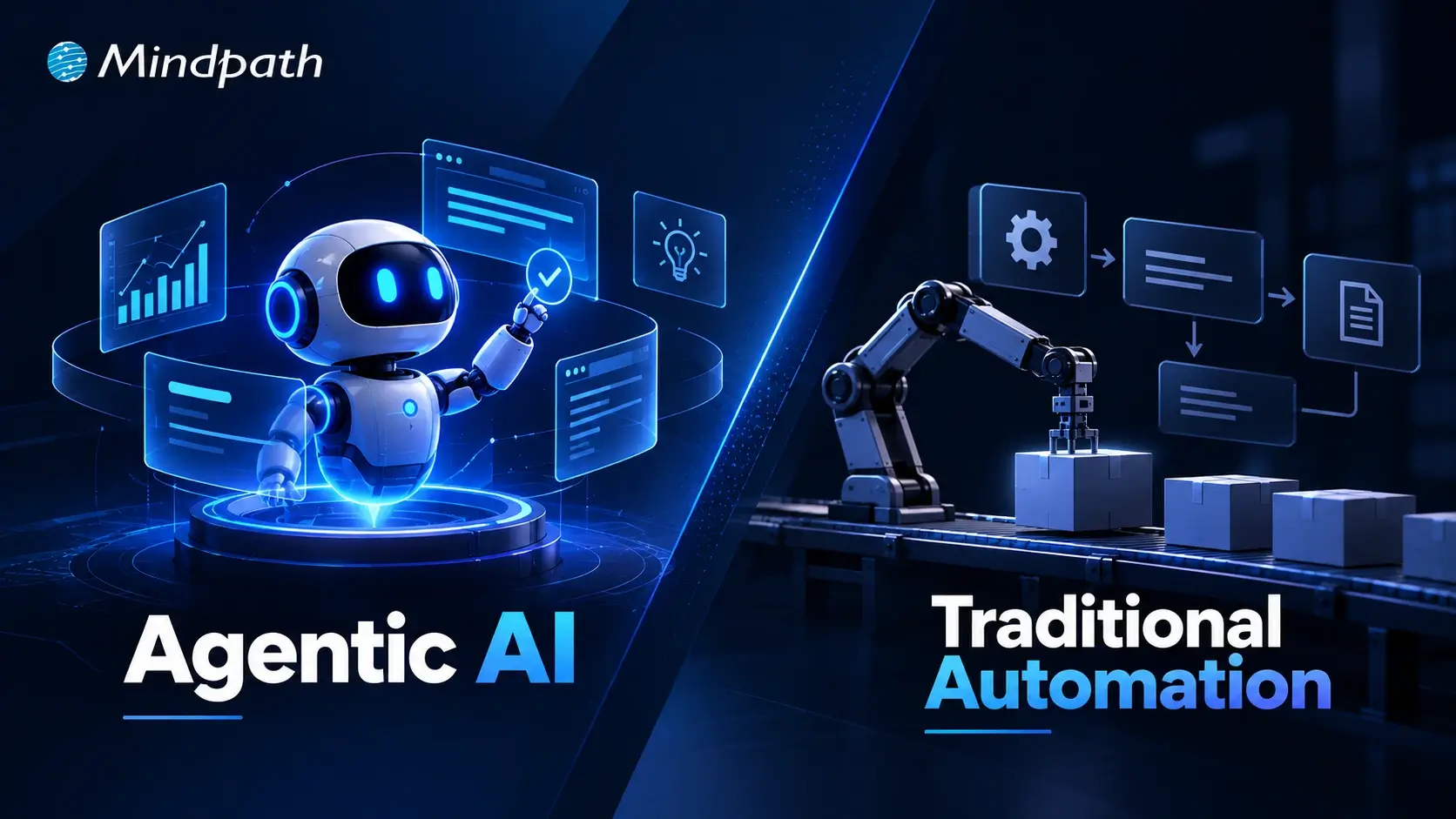
Agentic AI is one of the biggest trends that have been grabbing headlines everywhere in the domain of AI. Many businesses have embraced autonomous or semi-autonomous AI agents for software maintenance tasks, including software developers and technical support agents. AI agents can perform regular maintenance tasks, such as rolling out new updates, applying patches or restarting services without direct human intervention.

2. Using Generative AI to Improve Legacy Code

Legacy code is a formidable challenge in software maintenance as engineers have to check old codebases to identify errors and vulnerabilities. With the help of generative AI, software development teams can now analyze legacy codebases easily at a faster pace. On top of it, generative AI tools can help with detection of security issues and suggest patches. Some platforms also offer the advantage of rewriting old modules in new programming languages.

3. Reinforcement Learning in Software Maintenance

The next promising way in which AI can become a part of software maintenance involves the use of reinforcement learning. You can improve maintenance in software applications by using reinforcement learning algorithms to learn from feedback. The insights gained from feedback will help in improving performance, especially for complex software maintenance tasks. 

Ready to invest in technology built specifically around your goals? Check out our custom software development blog to learn why customization matters.

Final Thoughts

The reasons to adopt artificial intelligence in software maintenance revolve primarily around enhancing speed and efficiency. You can notice how AI improves software maintenance by facilitating automated detection and resolution of bugs. Artificial intelligence can empower software maintenance companies to adopt new trends like AI agents and generative AI for effective maintenance.

Mindpath is a trusted name for software maintenance and support services with tangible proof of expertise in artificial intelligence. Our software engineering services have been delivering excellence to all our clients with capabilities to leverage AI technologies in software maintenance. We have earned the love of clients with software maintenance and support services that deliver exactly what they want. Consult with our experts now and find the best ways to integrate artificial intelligence into your software maintenance workflows.              
Related Post

How much does hiring a ReactJS developer cost? Learn about factors affecting rates, and how to find the best talent within your budget.

Related Post

Hybrid Cloud

Imagine a world where businesses can enjoy the flexibility of public cloud services while keeping sensitive data safe in a private environment. Sounds ideal, doesn’t it? That’s the promise of hybrid cloud! But why is it gaining so much attention? What makes it the perfect choice for modern businesses? Let’s dive into the key benefits of this game-changing approach. 

What Is Hybrid Cloud?

A hybrid cloud is a configuration that combines private and public cloud technologies. It combines private servers in your office or data center with public cloud services from firms such as Google Cloud or Amazon Web Services. This architecture allows enterprises to store and manage their data and apps in the most appropriate location for their purposes. For example, sensitive or vital data can be kept protected in the private cloud, while less crucial operations can be done on the public cloud to save money and enhance speed. Businesses can also shift workloads across various clouds, making it an extremely adaptable and practical option. Hybrid clouds are popular because they provide businesses with the best of both worlds: security and flexibility. They are especially useful during digital transitions, when firms need to change their systems without totally shutting down their existing activities. This strategy enables businesses to work smarter, save money, and expand more effectively.  

How Does Hybrid Cloud Work?

A hybrid cloud combines two or more types of cloud environments, such as private data centres and public cloud services, into a single system. This connectivity enables enterprises to effortlessly transfer data and applications across various environments. The hybrid cloud requires robust networking to function properly. This is accomplished via techniques such as local networks (LAN), virtual private networks (VPN), and APIs, which allow smooth communication between the various elements of the cloud. Virtualization and containerization are two common current technologies used in hybrid cloud systems. These solutions simplify resource management and sharing by producing virtual replicas of hardware or software. These resources are also managed using specialized software, which enables organizations to swiftly change or assign them as needed. 

Advantages of Hybrid Cloud

1. Better Return on Investment (ROI)

A hybrid cloud enables you to integrate your existing private infrastructure with public cloud services. This allows you to simply extend your computer capacity without having to invest in expensive new hardware or run additional data centers. Instead of investing more in physical servers, you can leverage the public cloud to meet additional storage, computing power, and processing requirements. This technique guarantees you only pay for what you use, which helps to keep prices down. By embracing the public cloud’s flexibility and scalability, you improve your capacity to manage rising workloads while saving money on infrastructure. As a consequence, organizations can enhance their return on investment (ROI) by employing cloud services more efficiently and lowering operating costs. This combination of flexibility and cost savings makes hybrid cloud an excellent solution. 

2. Enhanced Speed and Performance

Hybrid cloud solutions enhance performance, particularly for applications that require quick processing and minimal latency. By combining private and public cloud resources, data can be processed closer to end users, saving travel time and resulting in faster response times. This is vital for applications that need real-time processing, such as video streaming, online gaming, and financial transactions. For applications deployed in remote regions or with high performance requirements, a hybrid cloud configuration can guarantee that data is handled quickly by allocating resources to the best location. This can be accomplished by edge computing, which brings processing closer to the user, minimizing latency and improving the user experience. By lowering latency, hybrid cloud enables organizations to provide quicker, more dependable services, hence boosting overall application performance and customer happiness. 

3. Accelerated Innovation

Hybrid cloud solutions allow enterprises to use cutting-edge technologies such as AI and machine learning without having to entirely replace or expand their present infrastructure. This makes it easy to implement modern tools and capabilities while minimizing costs and interruption. Businesses can maximize their existing systems while gaining access to the cloud’s scalability and flexibility by combining private and public cloud services. This allows teams to operate more effectively, minimizing the time required to create and deploy new apps. Organizations can bring innovations to market faster by shortening development cycles and responding to customer needs and industry developments in real time. The hybrid cloud method enables firms to explore, create, and deploy apps more quickly, providing a competitive advantage. This mix of technological access and operational flexibility accelerates innovation, allowing businesses to stay competitive in a rapidly changing digital market. 

4. Stronger Control Over Applications

A hybrid cloud model provides enterprises with more flexibility over where their applications are hosted and how computing resources are distributed. This flexibility enables businesses to select the optimum environment for each application, ensuring that sensitive data is kept safe and regulatory needs are satisfied. This is particularly significant in regulated businesses. Businesses can enhance their data privacy and control by hosting particular apps in private clouds or on-premises. Simultaneously, less sensitive apps can operate on the public cloud, improving scalability and efficiency. Businesses can leverage hybrid cloud to guarantee that their applications are efficiently managed, reducing risks while still benefiting from the flexibility and cost savings provided by public cloud services. This control enables organizations to achieve privacy requirements and regulatory compliance. 

5. Flexible and Efficient Operations

Hybrid cloud computing allows enterprises to pick the environment that best meets their needs. Hybrid solutions, whether in a private or public cloud, enable you to adapt and grow in response to individual requirements. One of the primary advantages of hybrid cloud is the ability to construct apps with containers. Containers make programs portable, allowing them to be seamlessly transferred between public and private clouds. This flexibility enables enterprises to take use of the finest aspects of any cloud environment, therefore improving performance, security, and cost-effectiveness. A hybrid cloud allows you to easily modify your operations to suit changing demands, such as scaling up during peak hours or relocating apps to a more secure environment when necessary. This versatility benefits companies to stay agile, reducing downtime and improving overall operational efficiency. 

Also Read: Multi-Cloud vs. Hybrid Cloud: Key Differences You Need to Know

Cloud Computing Services at Mindpath

At Mindpath, we provide a variety of cloud computing services to help your organization function smoothly and efficiently. Whether you need to store data, operate apps, or extend your operations, our cloud solutions offer the flexibility and security you want. We assist you in selecting the best cloud configuration for your organization, whether it’s a private cloud for sensitive data or a public cloud for ease of access and scalability. Our staff guarantees that your cloud environment is optimized for speed, cost-effectiveness, and security, enabling you to focus on developing your business rather than worrying about technology. Mindpath’s cloud computing services allow you to develop quicker, enhance productivity, and take use of the newest cloud technologies to remain ahead of the competition. 

Wrapping Note!

Hybrid cloud is transforming businesses by offering a mix of flexibility, security, and scalability. It allows companies to optimize resources, improve performance, and innovate faster, all while ensuring data privacy and compliance. At Mindpath, we provide tailored cloud computing services to help you harness the full potential of hybrid cloud, enabling your business to stay agile and competitive. Let us help you take your business to the next level with the power of hybrid cloud. 

Ready to leverage hybrid cloud for your business?

Partner with Mindpath today to explore our tailored cloud solutions and stay ahead in the digital world!

Discover the benefits of hybrid cloud for businesses, including improved performance, innovation, and flexibility.
Generative AI for Businesses

Are you struggling to keep your business ahead in an increasingly competitive market? Wondering how leading companies are innovating faster, reducing costs, and delivering personalized experiences? What if there was cutting-edge technology that could unlock new levels of creativity and efficiency for your business? Could Generative AI be the missing piece in your strategy for success? In this blog, we will explore how generative AI is impacting your business. So, let’s dive in! 

What is Generative AI?

Generative AI is a type of technology that employs complex algorithms to generate new and realistic material based on previously learnt data, such as writing, photos, or even noises. These algorithms function by training on massive volumes of data, allowing them to recognize patterns and produce material that appears to be unique. The most powerful types of generative AI are based on what are known as foundation models, which are trained on massive datasets without the requirement for specific labels. This enables the AI to learn in a more flexible manner and tackle a wider range of tasks. 

Why is Generative AI Important?

Generative AI is essential because it boosts creativity by creating new content based on patterns learnt from data. It also personalizes user experiences, enabling firms to adjust information to specific customer requirements and interests. Furthermore, generative AI promotes cooperation by working alongside individuals, using their talents to create greater results. This technology also speeds up procedures, increasing operational efficiency. Furthermore, its broad effect spans sectors, providing greater insights into artificial and human intelligence, propelling innovation and understanding forward. 

How Does Generative AI Impact Businesses?

1. Improved Customer Experience

Improving customer experience is a prominent application of generative AI, giving organisations a valuable tool for improving interactions. Businesses can create more engaging and rewarding consumer experiences by implementing dynamic AI agents that provide human-like replies, hence strengthening connections. 

These AI-powered chatbots, based on advanced language models, provide more nuanced and intelligent replies, enhancing interactions and making customers feel heard and understood. Beyond direct connection, generative AI is an invaluable support mechanism for customer care personnel. These AI agents use natural language processing (NLP) to listen to discussions between agents and clients, instantly collecting relevant information to help in real time. This increases service quality and cuts response time and the workload of human agents.  

2. Personalized Learning

Generative AI systems excel in adaptive learning, which enables them to constantly improve by incorporating feedback and analyzing new data. This constant modification improves their effectiveness, allowing them to offer outcomes that better match user preferences and company objectives. For example, in a corporate environment, generative AI can be used to improve marketing strategy by analyzing consumer interactions and feedback. As the system better understands client preferences and behaviors, it will create more focused and successful marketing efforts. Furthermore, it may tailor recommendations and information to particular client demands, resulting in more personalized and effective interactions. This skill not only improves the efficiency of marketing activities, but also allows organizations to remain flexible and responsive to changing market trends. 

3. Data Generation

Generative AI provides considerable data synthesis benefits. These AI algorithms can mix and interpret massive volumes of data to generate significant insights by analyzing many datasets. For example, in the financial business, generative AI can build predictive models by analyzing market patterns, customer behavior, and economic statistics. These models assist organizations in making sound investment decisions by offering a clearer view of future market movements. Generative AI, which harnesses the power of data synthesis, helps organizations in many industries to access actionable insight, offering them a competitive advantage in today’s data-rich environment. 

4. Increased Efficiency and Productivity

Generative AI improves efficiency and productivity by automating difficult and time-consuming operations, allowing firms to optimize workflows and better allocate resources. For example, in the manufacturing industry, AI can deliver optimized production plans that decrease waste and increase overall efficiency. In customer service, generative AI can assist support agents by summarizing tickets, proposing relevant replies, and selecting the best tone for conversations. This allows agents to resolve enquiries faster and more correctly, increasing productivity and enhancing customer service quality. Businesses that use generative AI can boost productivity, save operating costs, and improve performance across several departments. 

5. Reduced Time and Costs

Generative AI saves time and money by automating processes that previously needed significant human effort. For example, in architecture and design, AI can quickly generate architectural plans based on certain factors, considerably speeding up the design process and minimizing manual labor. AI can also analyze stakeholder comments and market trends to produce new product ideas and improve designs more effectively. This capacity to analyze massive amounts of data quickly not only reduces operating costs, but also shortens project timeframes and improves resource al__cpLocation, resulting in increased overall efficiency for enterprises. 

6. Boosted Creativity

Generative AI greatly increases creativity by allowing organizations to efficiently create a diverse range of interesting and unique content. In the advertising sector, for example, AI-powered solutions can create intriguing ad copy, eye-catching images, and even dynamic video material. This feature not only speeds up the creative process, but also allows firms to experiment with new thoughts and ideas without the constraints of physical labor. 

Beyond advertising, generative AI may help with a variety of creative tasks, from designing distinctive product packaging to creating interactive customer experiences.  It’s an effective tool for brainstorming and refining ideas, allowing teams to push creative limits and remain ahead of trends. By automating repetitive operations and providing new viewpoints, generative AI enables firms to sustain a steady flow of creative content while remaining competitive in a constantly evolving market. 

Generative AI Services at Mindpath

Mindpath provides a variety of services that leverage generative AI to help your business succeed.

Our artificial intelligence (AI) can generate interesting material, such as ad copy, graphics, and even motion pictures, all personalized to your specifications. This means less time spent on manual labor and more time for creativity. 

We also utilize AI to analyze data and produce valuable insights, allowing you to make better decisions. Whether you need new marketing ideas or better methods to understand your consumers, our generative AI services will help you stay competitive in today’s fast-paced environment. 

Wrapping Up!

Generative AI is a game changer for organizations, providing creative solutions for increasing creativity, streamlining processes, and improving consumer experiences. By automating complicated activities and delivering important insights, it allows businesses to cut expenses while staying competitive. As more firms use this technology, those that use generative AI will be better positioned to promote development, respond to market changes, and achieve long-term success. Embracing generative AI is more than simply a technological advancement; it is a strategic step towards a more dynamic and efficient future. At Mindpath, we offer tailored generative AI solutions that streamline processes, cut costs, and elevate customer experiences. Embrace the future with Mindpath and unlock new opportunities for growth and innovation in today’s fast-paced market. 

Ready to elevate your business with cutting-edge technology?

Discover how Mindpath’s generative AI solutions can transform your operations and drive success.

Discover how generative AI for businesses can drive innovation, efficiency, and creativity. Explore its impact in our latest blog.
Recruiting a Node.js developer in California inecessitates a thorough assessment of technical knowledge, soft skills, market trends, and the recruiting process. With the state’s highly competitive technology economy, finding the appropriate personnel requires going beyond coding abilities. A good Node.js engineer should be familiar with backend frameworks, databases, and cloud technologies, as well as possess excellent communication and problem-solving skills. Understanding California’s employment market and creating an efficient recruiting procedure can also help you attract the top applicants. Here are some important aspects to consider when hiring a Node.js developer in California.

1. Technical Proficiency and Experience

When hiring a Node.js developer, make sure they are proficient in JavaScript, asynchronous programming, and Node.js frameworks such as Express.js or Nest.js. Knowledge of databases (MongoDB, PostgreSQL), RESTful APIs, and cloud services (AWS, Azure) is essential for developing scalable apps. Experience with unit testing, CI/CD pipelines, and version control (Git) contributes to a smoother development process. Additionally, match their experience level with the intricacy of your project to obtain the appropriate competence. Reviewing their previous projects and contributions to open-source repositories might help them evaluate their real-world coding abilities.

2. Soft Skills and Team Collaboration

A Node.js developer should be able to communicate effectively, work well in groups, and solve problems. They must work well with front-end developers, designers, and product managers to ensure that the project runs smoothly. Adaptability is also important, as the Node.js environment changes frequently with new upgrades and best practices. Look for applicants that can troubleshoot effectively, think critically, and perform well under deadlines. A developer with great soft skills can easily fit into your team and contribute to a healthy work atmosphere.

3. Understanding California's Market Trend

The California tech business is very competitive, with a growing demand for talented Node.js developers. Salaries vary according to experience, region, and sector, so analyzing market trends and pay packages is essential. Companies in large tech hubs such as San Francisco, Los Angeles, and San Diego frequently provide competitive bonuses to attract top people. Offering remote or hybrid work opportunities might also help your job commercial stand out. Understanding these variables allows you to establish an effective hiring strategy and attract the best developers for your company.

4. Interviewing and Hiring Process

A systematic interview method helps you hire the top Node.js developers. Begin with a technical test, such as coding challenges, whiteboarding activities, or homework projects, to measure their problem-solving abilities. Next, perform behavioral interviews to assess communication skills, collaboration, and flexibility. Reviewing their portfolio and GitHub contributions provides insight into their real-world development experience. Finally, base your compensation, perks, and job expectations on market research. A well-planned recruiting strategy can help you identify the best Node.js talent for your project.

Finding the right Node.js developer can be challenging but Mindpath makes it easy! Our experienced Node.js developers specialize in building scalable, high-performance applications tailored to your business needs. Whether you need backend development, API integration, or cloud-based solutions, we have the expertise to deliver.
Ready to build your next project with top Node.js talent? Partner with Mindpath today and bring your vision to life!

Discover the ultimate guide to hiring Node.js developers in London. Learn about the skills, benefits, and cost factors involved in finding the right talent for your project.