Emerging Technologies That Will Redefine the Digital World

Join our Newsletter!

Featured Posts

Support Is One Click Away

Home

Emerging Technologies That Will Redefine the Digital World

Emerging Technologies

Emerging Technologies That Will Redefine the Digital World

In the digitalized era, several new emerging technologies have surfaced that are full of promise. The identification of such technologies is essential for individuals as well as businesses. This is because they can influence the lives of people in society and the overall economy.

Before identifying different types of emerging technologies, it is important to understand the emerging technologies meaning. Emerging technologies are rapidly evolving technologies whose potential is yet to be realized entirely. AI is among the top emerging technologies examples that one can come across. 83% of business entities have claimed that they prioritize AI in their business plans. A comprehensive list of new technologies has been developed that can transform the digital realm.

Ready to explore how emerging technologies like AI, Blockchain, and IoT can transform your business? Contact us to discover how our expertise can turn these emerging trends into practical solutions

Top Emerging Technologies

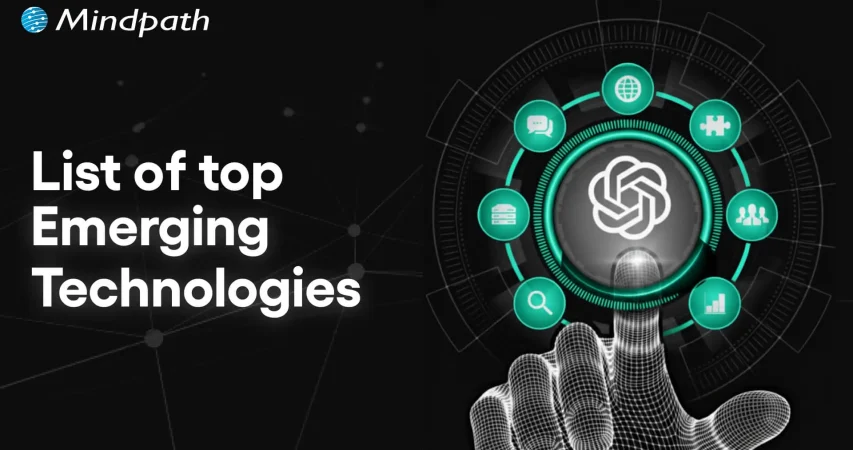
Now that you are familiar with the concept of emerging technologies, it is time to look at some of the top emerging technologies. Currently, new technologies are entering the digital space like never before. It is crucial for IT leaders to keep track of emerging trends and technologies. The insight can enable them to leverage top technologies to shape the future with responsible innovation. The list highlights the 8 types of emerging technologies in a digital world that can act as a revolutionary force in 2025.

1. Artificial Intelligence

While discussing the topic of emerging technologies, the first novel technology that comes to mind is undoubtedly Artificial Intelligence (AI). AI can be defined as the ability of computer systems to emulate human intelligence. This emerging technology enables machines to reason, learn, and perceive just like humans. Although AI is still in its nascent stage, it has evolved into a powerful tool that is redefining diverse industries such as healthcare, manufacturing, education, and many more. While making technology-related predictions, one cannot ignore AI.

2. Virtual Reality and Augmented Reality

Virtual Reality (VR) and Augmented Reality (AR) are undoubtedly among the top cutting-edge technologies in 2025. VR is capable of immersing users in environments that are fully simulated. Thus, it blocks the actual world and allows individuals to experience a virtual space. AR technology integrates digital elements into the real world. As a result, it is capable of enhancing the perception of users with rich contextual information as well as visuals. AR and VR have found a place in Gartner technology trends 2025 as they are capable of offering immersive experiences to users.

3. Blockchain

While discussing the topic of Emerging Technologies 2025, one has to consider blockchain technology. Blockchain can be defined as a digitalized and immutable ledger that is capable of recording transactions while tracking assets across a business network. It is among the latest technology trends since it is highly transparent and secure in nature. This novel technology has gained high prominence in recent years due to cryptocurrencies.

4. Internet of Things

The Internet of Things or IoT is definitely among the most promising technologies that exist today. It basically helps connect physical devices to the internet. Therefore, it is possible to gather, share, and process data in a seamless manner. It is certainly among the top trending technologies that are transforming lives. Today, it is common to leverage IoT technology to create smart cities. In the future, the capabilities of IoT may reach new heights, and its presence may expand further.

5. Robotics

Robotics is certainly among the top technologies that exist in the year 2025. It is a rapidly evolving innovation that has been reshaping industries through automation and efficiency. This is among the top trending techs as it is capable of designing, operating, and using robots. The emergence of robotics technology has made it possible to utilize robots so that they can perform repetitive tasks. The strategic adoption of this technology can boost the overall efficiency of businesses across various industries.

6. Agentic AI

Today, Agentic AI is recognized as one of the top innovative digital technologies. Agentic AI has sophisticated reasoning capability, which enables it to solve complex problems. This novel technology can make decisions in an autonomous manner. Thus, it does not rely on human intervention to achieve challenging goals and objectives. It is a novel technology that is able to adapt in real-time. Hence, it acts as a valuable tool for businesses in the current times. By leveraging agentic AI technology, businesses can understand customer intent and predict their future needs. Thus, they can easily get a competitive edge in their area of operation.

7. Quantum Computing

Quantum Computing is among the most promising emerging technologies that exist now. This evolving field basically relies on quantum mechanics for solving complex problems. Thus, its ability to handle problems is a much more efficient way as compared to conventional computer systems. Although this novel technology is in its early stages, it is full of promise. The evolution of quantum computing can revolutionize diverse areas such as cryptography as well as drug discovery. This emerging technology is based on aspects relating to physics, mathematics, and computer science. This innovation is among the top predictions for 2025 that businesses need to focus on.

8. Ambient Computing

The list relating to emerging technologies cannot be complete without ambient computing. Ambient computing refers to the technology that can be seamlessly integrated into one’s surroundings. Thus, it can become an intuitive part of one’s life. The purpose of such technology is to create environments that are capable of responding to human needs. Ambient Computing is among the new and emerging technologies that rely on both IoT as well as AI. One of the most popular examples in this context involves wearable devices that monitor the health condition of individuals.

Challenges Associated with Emerging Technologies

It is true that diverse types of novel technologies are arising that hold immense promise. However, they also give rise to certain challenges and concerns. A number of challenges have been identified relating to the top types of emerging technologies in the digital world.

1. Ethical concerns

A common issue that arises in the digital space due to emerging technologies revolves around ethical concerns. For example, Agentic AI is the latest emerging technology that gives rise to ethical issues relating to bias and poor transparency.

2. Privacy concerns

A common concern that exists in the digital world is related to privacy risks. Malicious actors may exploit emerging technologies by using sophisticated techniques. As a result, the privacy of online users may be at the receiving end.

3. Regulatory challenges

As technologies are constantly evolving, the regulatory landscape is not entirely developed. Thus, it creates gaps that may be exploited. For instance, poor regulations may increase the risk relating to cybersecurity aspects.

Final Words

In the prevailing technology-driven era, new types of technologies are coming into existence. Some of the most promising technologies are AI, Blockchain, IoT, and many more. These technologies hold the promise to redefine the digital space like never before.

The list of emerging technologies highlights some of the top technologies that can impact individuals as well as businesses. In addition to identifying these technologies, a number of challenges have been identified. It is necessary to take into consideration their potential along with the associated challenges as these elements may together transform the digital space. Mindpath helps businesses and individuals navigate these emerging technologies through tailored solutions and expert guidance

Related Post

Discover how generative AI for businesses can drive innovation, efficiency, and creativity. Explore its impact in our latest blog.
Discover how CI/CD pipelines streamline software development, boost quality, and reduce costs with automated processes.

Related Post

healthcare software development services

Ever Wondered how technology is really influencing the healthcare sector? From electronic health records and telemedicine to mobile health apps, today healthcare software development plays a great role in changing the way patients receive and providers provide treatment.  

But what exactly are healthcare software development services, and why are they crucial for modern medicine? In this blog we will explore healthcare software development services and how these cutting-edge solutions are going to shape the future of healthcare, improve patient outcomes, and smooth operations. 

What is Healthcare Software?    

Healthcare software development is the process of developing individualistic computer programs designed for hospitals, clinics, and all other types of healthcare organizations. These programs assist in enhancing how healthcare providers render care by making processes more effective, accurate, and oriented towards patients. Healthcare software creates a complete digital system within a healthcare organization.  

This allows medical professionals to offer better and more accurate clinical services. To doctors, this represents an easy way to do follow-ups and monitor the health of their patients, schedule appointments, and get access to medical reports, all from the comfort of managing staff. To patients, it offers online appointment booking, live chat with doctors, sharing of medical reports, and receiving health advice.   

These software solutions come with various benefits associated with the improvement in patient care, efficiency, and reduction in medical errors. They can digitize the traditional paper-based systems and take care that patient care is performed quicker and much more safely. Healthcare software is further creating new sectors, such as patient engagement, clinical robotics, and telehealth, driving a lot of startups to bring ideas into life. 

 Types of Healthcare Software Development Services  

Types of Healthcare Software Development Services - infographic

1. Electronic Health Record (EHR) Software   

EHR software is being used by hospitals and clinics like any CRM, but with a healthcare tune. It contains all the relevant information concerning every patient, among them what medicines they use, the various doctors’ advice, and the medical processes that they have gone through. Many EHRs incorporate mechanisms for billing, collection, and even a patient portal that allows patients to view consultation history, medical records, and prescriptions. There are two types of EHR software: the electronic patient record, which is used in hospitals for management purposes concerning a patient internally, and the electronic medical record, which keeps track of information like medications, past and future procedures, and how well the patient is recovering. 

2. Medical Database Software   

Medical database software can be called a huge library of information about medicine, not according to the profiles of patients but according to diseases. This tool aids doctors in looking through cases like one that is being treated and thus making informed decisions about its cure. It is also used for learning by allowing doctors to know more about certain diseases. For example, a dermatologist using medical database software can view all the patients diagnosed with Atopic Dermatitis, compare their symptoms, treatments, and recovery plans, and find the best approach for their current patients. 

3. Health Tracking Apps 

Health-tracking apps are part of the fast-growing industry called mHealth, which stands for “mobile health.” This industry, valued at $37 billion globally for 2019 alone, allows users to trace and manage their health from their smartphones. Some of the popular health monitoring apps include fitness apps such as 8fit, diet apps such as Fitatu Calorie. For instance, sleeping patterns are monitored by the FitBit wristband, while the Oura Ring is responsible for monitoring several health metrics. Others include glucometers for testing blood sugar levels and, of course, thermometers in general—for instance, tracking menstrual cycles like the Kindara app. All these tools work together to give users a better understanding of their health and wellness. 

4. E-prescribing Software 

The e-prescribing software is becoming a tool that every doctor must have, with countries all over the world rapidly adopting electronic prescriptions. Such software allows doctors to easily manage all prescriptions for all patients by tracking, renewing, and canceling them as need be. It is also connected to national drug reference databases that help in picking up the right medications and making sure there is no error. Examples include MediTab and ScriptSure, two software programs designed to ease e-prescribing and improve the capabilities of health professionals to deliver accurate and effective care. 

5. Appointment Scheduling (booking) Software 

Appointment scheduling software is designed to assist hospitals, clinics, and medical practices in managing their appointments online. This normally allows the provision of a user-friendly platform through which patients can easily book appointments via an app or website without calling up the office. This type of software normally features email notifications and automatically sends reminders to doctors and patients about upcoming appointments. It accommodates multiple doctors’ schedules, cancellations, or rescheduling of appointments, and does much more to provide appointment trend data that helps in bringing efficiency to the practice. Additionally, AI chatbots are integrated into these systems to enhance the booking experience. These chatbots can handle appointment scheduling, provide immediate responses to patient inquiries, and assist with rescheduling or cancellations. 

Looking to boost your healthcare operations with top-tier software solutions?

At Mindpath, we deliver cutting-edge, customized healthcare software to empower efficiency and elevate patient care.

Why Are Healthcare Practitioners Going Digital? 

Health practitioners use digital technologies greatly because of the great advantages they present in improving patient care and practice management. Digital healthcare solutions help doctors in the management of patient information. Therefore, record-keeping becomes more accurate and efficient while diminishing the burdens of paperwork.  

Healthcare IT has been one of the fast-growing markets and is expected to grow further. From $303.4 billion in 2022, this is projected to rise as high as $974.5 billion by 2027 with a good annual growth rate. The market is expected to grow to $728.63 billion by 2029 and even further to $1,069.13 billion by 2032. Healthcare provider solutions take up about 38% of the market, such as those in Electronic Health Records. On the other hand, IT services form 52% of the market, including online payments and cybersecurity. Growth is fueled by new technologies, increased spending by consumers, and government initiatives; however, challenges persist, with the most important ones being related to cybersecurity risks. It has the maximum market share in North America due to its better and advanced infrastructure. The European region is predicted to grow fast with government help and support, adoption of AI soon. Some major players in this field are GE Healthcare and Philips, which are carrying the industry forward. 

Leading Healthcare Software Development Services at Mindpath 

Mindpath offers a full cycle of healthcare software development services that meet all the needs of healthcare providers, patients, and all those concerned. Our offered solutions work toward better patient care while easing operations. Here are the services we provide: 

Leading Healthcare Software Development Services at Mindpath - infographic format

1. Healthcare Software Development Consultation: 

We assist in planning and designing your healthcare software project from an idea to detailed planning. Our advice ensures you will have a clear roadmap for developing effective healthcare solutions.  

2. Healthcare Software Development: 

We develop various healthcare IT software solutions, including Electronic Health Record (EHR) software, practice management systems, patient portals, among others. The solutions are secure, scalable, and well-built according to the industry regulations to ensure better patient care and efficiency. 

3. UI/UX Development: 

We design easy-to-use interfaces that will be convenient and pleasant for the eye. We focus on bringing your healthcare software both functionality and user experience. 

4. AI Chatbot for Healthcare: 

Our AI chatbots for healthcare answer questions, provide appointment scheduling, and disseminate medical information. They help improve interaction with patients and relieve some workload from the health staff. 

5. Modernization of Healthcare Software: 

Legacy system upgrade and migration to state-of-the-art platforms, enrichment of new functionalities, and updating of old technologies to manage your software and keep it relevant. 

6. Maintenance & Support: 

Ongoing support and maintenance are available to make sure that your healthcare software keeps running smoothly and aligns with your changing needs. 

Conclusion  

The huge effects of rapid growth in technology reshaping healthcare to become more effective, accessible, and patient-centered are undeniable. It is evident from the adoption of electronic health records and e-prescribing software at the end of the spectrum to health-tracking apps and AI-driven tools that are revolutionizing how healthcare providers care for patients and their practices.  

Such innovations not only improve the quality of care provided to patients but also the administrative flow, hence making healthcare very responsive and effective. Adopting the newest technology is crucial for healthcare organizations to keep ahead of these trends as the sector continues to change. This is where a holistic approach to healthcare software development is necessary. Healthcare providers may enhance patient outcomes, streamline operations, and more adeptly navigate the digital terrain by incorporating cutting-edge software solutions.  

At Mindpath, we are dedicated to supporting healthcare providers through every step of this transformation. From development and consultation to UI/UX design and modernization—our services cover a large area of needs, all meant to make sure you can drive positive change in healthcare through digital technology. Be it building new systems, updating existing ones, or ensuring ongoing support, Mindpath makes sure that your healthcare software is of the highest quality and effectiveness. 

Are you curious about how cutting-edge medical software might transform your business?

At Mindpath, we develop solutions that improve patient care and expedite operations.

Explore how healthcare software development enhances patient care and operations. Discover services like EHR, medical databases, and more. Transform your practice today!
types of software development

Picture a scenario in which you are running a growing business, and things are moving at a fast pace. At this point, your customers will expect more; teams will need better tools, and competition will just be a click away. You must keep in mind that the real game changer isn’t just having software but rather, its choosing the right kind of software. For this, understanding the types of software development can make a huge difference.  

Behind every great digital solution, there lies a specific type of development which is tailored to a specific need. Understanding the key categories of software development enables businesses to make smarter, confident investments while choosing the right technology teams to partner with for the future. So, if you are interested in knowing about the software development types, then this blog will guide you perfectly. We will explore the major kinds of software development, which every business should know to make smarter investments and drive meaningful growth. 

To begin with, let us first have a basic understanding of software development. 

Are manual operations draining time and resources from your business growth? At Mindpath, we offer end-to-end software development services to automate processes and enhance efficiency.

What is Software Development?

Software development refers to the act of creating, designing, testing, and maintaining applications or systems that run on devices or computers. It combines the imaginative and creative process with the technical process of building software that can help your business work smarter and serve your clients better. Developers take your ideas and combine programming languages, libraries and frameworks to develop working software that solves real problems. 

There are many benefits of custom software development for businesses. It can increase productivity via automation and lower costs by streamlining processes. It also increases customer satisfaction through user-friendly overall features and allows companies to stay ahead of competitors by providing innovative solutions. Software can also be customized to provide better management of growth within the business and can enhance data cybersecurity protocols and processes while supporting better collaboration across teams.  

What are the 5 Principles of Software Development?

Strong software development relies on key principles that guide the process and ensure reliable, high-quality results. These principles help teams build software that is efficient, adaptable, and easy to maintain over time. 

1. Working in Iterations

Working in short cycles allows teams to test, adjust, and improve regularly. This keeps the software flexible and ready for change. 

2. Reuse Components

Building with ready-to-use parts speeds up development and keeps the software consistent. It also makes updates and maintenance much easier. 

3. Set Quality Standards

Setting clear quality standards from the start helps catch problems early. It ensures the final product meets expectations and works reliably. 

4. Plan Architecture First

A strong foundation starts with early architectural planning. It helps avoid confusion, improves decisions, and sets the direction for smooth development. 

5. Control Changes Effectively

A clear system for handling changes keeps the project stable. It helps teams adapt without causing confusion or risk to the software. 

Curious why software development prices can vary so much? Explore the factors behind software development costs before your next project and avoid common budgeting mistakes.

What are the Different Types of Software Development?

Software development comes in many forms, each designed to meet specific business or user needs. Understanding these different types helps businesses choose the right solutions for their goals and growth. 

1. Frontend Development

Frontend development is a software development type that focuses on the part of an application users see and interact with. It involves creating user interfaces that are smooth, responsive, and visually clear. Frontend developers work with tools and technologies like React, CSS, JavaScript, and Flutter. Their goal is to ensure a great user experience on both web and mobile platforms. 

2. Backend Development

Backend development focuses on the parts of an application that users don’t see. It includes building servers, databases, and the internal logic that powers the software. Backend developers use technologies like Java, Python, and Django to make sure everything runs smoothly. They connect the front end with data and functions to keep the application working behind the scenes. 

Must Read: Role of Front-end and Back-end

3. API Development

API development is about creating connections that let different software systems talk to each other. Developers build APIs to help applications share data and work together more easily. This is useful for adding features like payment systems, login tools, or maps from other services. API development makes software more flexible and able to work with a wide range of platforms. 

4. Cloud Computing Development

Cloud computing development is the software development process of building applications that run on platforms like AWS, Microsoft Azure, or Google Cloud. It helps businesses store data, manage services, and scale their systems more easily. Cloud developers set up secure and flexible environments tailored to company needs. This process supports smooth operations and better performance without relying on local servers. 

5. Database Development

Database development focuses on building systems to store, manage, and organize data. Developers work with different types like SQL for structured data and NoSQL for more flexible, unstructured data. Some databases are made to handle huge amounts of information, often used for big data and real-time analytics. The goal is to keep data accurate, secure, and easy to access when needed. 

6. DevOps

DevOps engineering combines development and operations to build and deliver software more efficiently. It focuses on teamwork, automation, and continuous improvement throughout the project. DevOps engineers use skills like coding, testing, and scripting with languages such as Python, Java, and PHP. One big advantage is that quality checks continue even after the software is launched. 

7. Full-Stack Development

Full-stack development covers both front-end and back-end work to create complete, user-friendly software. A full-stack developer understands how to build smooth interfaces and also manage server-side systems that power the application. They often use a wide range of software development tools to deliver reliable and efficient results. Teams can also achieve this by having front-end and back-end developers work closely together. 

8. Mobile Development

Mobile development focuses on creating apps for smartphones and tablets. Developers may specialize in building for Android using Kotlin or Java, or for Apple devices using Swift or Objective C. Some also work on hybrid apps that run on multiple platforms, which need special skills. Mobile developers handle coding, design, and maintenance to make sure apps work well on different screen sizes and devices. 

Wondering what makes a software engineer truly effective in driving business success? Discover and understand the top qualities of a good software engineer that set top developers apart.

Which Type of Software Development Fits Best for Your Business Needs?

Understanding the various types of software development helps businesses choose the right solutions to grow and succeed. Each type plays a unique role in creating software that meets specific goals, improves efficiency, and enhances user experience. Knowing these types allows smarter decisions and better investments in technology. 

At Mindpath, we provide expert software development services tailored to your business goals. Our skilled team works with you to build reliable, efficient, and user-friendly software solutions. Partner with us to get the right development support and technology expertise for your next project. 

Discover how AI is transforming the world. Explore the top 10 benefits of artificial intelligence, from solving complex problems to enhancing customer experiences.
what is edge computing

The radical growth in the amount of data generated by devices connected to the internet created concerns regarding the traditional approaches to computing and data storage. Many companies have shifted their business models towards cloud computing to accommodate the demand for storing more data. However, the search for answers to ‘what is edge computing’ is gaining momentum due to the limitations of cloud computing. One of the biggest setbacks of cloud computing is the latency, which is a direct outcome of the distance between users and cloud data centers.

Edge computing has emerged as a promising alternative by providing a distributed computing model in which computation and data storage are closer to the source of data generation. Understanding the strengths and limitations of edge computing offers the ideal foundation to integrate it effectively in enterprise operations.

Is your business struggling to act on data fast enough to stay competitive? Contact us to deliver real-time processing to power faster and smarter decisions.

Discovering the Ideal Definition of Edge Computing

The traditional cloud-based infrastructure has been the favorite choice of companies who prefer agility and scalability. On the other hand, the limitations of cloud computing have created setbacks in supporting emerging use cases and workloads. Apart from the high latency, cloud computing makes you dependent on central data centers and burdens you with costs. Therefore, an alternative like edge computing has become the need of the hour for thousands of businesses worldwide.

Upon searching for edge computing definition on different platforms, you will come across multiple entries. The most common definition of edge computing paints it as a distributed computing approach that involve shifting computing resources as close as possible to the source of data generation. It involves carrying out data processing tasks on or near the devices on the edge, thereby reducing network costs and latency requirements.

You must know that the edge may be a router, routing switches, ISP, multiplexers or integrated access devices. The only thing required for edge computing is that the network edge must be in proximity of the device.

Understanding the Components in Edge Computing Architecture

You might have many questions about the way in which edge computing overcomes the challenges with cloud computing. The basic edge computing meaning does not shed light on the fact that edge computing works with different components. Without understanding the architecture of edge computing, you cannot figure out how it is better than cloud computing. A breakdown of the important components in edge computing architecture can help you decipher how edge computing works.

1. Edge Devices

Edge device refers to the actual device on the edge, such as a camera, IoT device or a sensor. It is the source where raw data is generated and serves as the first point of contact in the edge computing architecture. The edge device can support minimal processing tasks, such as data filtering.

2. Edge Gateways

The next crucial component after edge computing devices is the edge gateway, which serves as a data aggregator. Edge gateway is the place where the system aggregates data from multiple devices and deals with basic analytics and preprocessing tasks.

3. Edge Servers

You cannot think about using edge computing for real-time tasks without edge servers in the picture. Edge servers handle the local processing tasks for real-time applications and running AI inference models or containerized workloads. As a matter of fact, edge servers take care of critical data on a temporary basis before sending it to the cloud.

4. Network Layer

The network layer helps in ensuring the use of 5G, LAN, Wi-Fi or satellite connection for connecting edge components to each other and the cloud.

5. Data Center or the Cloud

The data center or the cloud in edge computing architecture is useful for long-term storage and in-depth analytics. It also facilitates easier prospects for model training alongside the utilities like component orchestration and centralized management.

Unraveling Real-World Use Cases of Edge Computing

The introduction to edge computing also creates curiosity about the different ways in which businesses can use it. You can find edge computing examples in almost every industry and even in your daily lives. Learning about the real-world use cases can help you get a better idea of how edge computing can revolutionize the future of computing.

1. Retail

Edge computing serves the ideal resource for real-time processing and analytics in the retail sector to provide seamless customer experiences. Retailers can use edge computing in inventory management, customer analytics and personalized advertising to improve operations as well as the customer experience.

2. Manufacturing

The widespread use of edge computing in IoT applications provides the foundation for leveraging the new computing approach in manufacturing. IoT devices allow manufacturers to monitor their equipment, production lines and quality control. With the help of edge computing, manufacturing processes gain the benefit of automation, thereby ensuring faster manufacturing.

3. Autonomous Vehicles

The examples of different types of edge computing applications in the real world will be incomplete without mentioning autonomous vehicles. Edge computing can provide the lowest levels of latency required for processing input data from cameras. The low latency plays a major role in enhancing safety and navigation in autonomous vehicles.

4. Smart Cities

If you talk about autonomous vehicles among use cases of edge computing, then you should not leave smart cities from the discussion. The faster and localized data processing with edge computing offers a formidable boost for various tasks in smart cities. Edge computing has the potential to streamline energy optimization, public safety monitoring and real-time traffic management.

Does Edge Computing Have Any Variants?

Most of the discussions about edge computing focus only on its definition, its applications and benefits. The search for answers to ‘how does edge computing work’ does not lead you to the more intricate details of the new computing approach. You should also know that edge computing works at different levels with distinct utilities in different scenarios.

1. Regional and Local Edge

The regional and local edge locations help in extending the capabilities of cloud computing with reduced latency. The regional hubs work like the cloud to facilitate compute and storage services near end-users. Positioning of regional and local edge hubs before the last-mile network ensures that they can support applications which need moderate latency and enhanced data throughput.

2. On-site Edge Computing

Another notable variant of edge computing is on-site edge computing in which edge servers and devices are present in the physical premises of an organization. The on-site edge computing systems are more reliable choices for mission-critical applications as they enable real-time decision making without external networks. On-site edge computing also provides the assurance of more autonomy, control and security for enterprises.

3. Device Edge Computing

The diverse applications of edge computing also draw references to device edge computing with IoT endpoints. Device edge computing involves a combination of IoT devices, embedded systems and sensors which interact directly with the physical environment. The utility of device edge computing is primarily evident in distributed edge networks as they reduce data transfer and support localized actions.

How Can Edge Computing Help Your Business?

Edge computing offers significant advantages that make it a better alternative to cloud computing. As a matter of fact, the benefits of edge computing make it a powerful option for many emerging use cases.

1. Lower Latency

One of the most notable entries among the benefits of edge computing is low latency. With the help of local processing, edge computing ensures that the data never goes to the cloud for processing. As a result, edge computing can ensure significantly faster response times, which is essential for time-sensitive applications.

2. Enhanced Reliability

The local processing in edge computing ensures that it does not have to depend on external networks or resources. You can notice that the advantages of edge computing don’t give up on you in times of outages. You will not need a stable internet connection at all times to make the most of edge computing in real use cases.

3. Reduced Bandwidth Costs

Edge computing plays a major role in reducing network congestion, which ultimately leads to lower operating costs. With limited data transfer to the cloud, edge computing provides the assurance of improved performance in limited bandwidth. As a result, edge computing can help you avoid the costs of uninterrupted high-speed internet connectivity.

4. Better Flexibility

The isolated processing on devices in edge computing not only showcases how the power of computing can come at low costs but also with more flexibility. Edge computing allows you to add more connected devices without the urgency to connect them to central servers. On top of it, edge computing also facilitates hybrid scaling with the help of cloud resources and flexibility for deploying new edge nodes with growing demand.

Final Thoughts

Edge computing is a new paradigm that aims to revolutionize compute and data storage services. It provides a better alternative to cloud computing by enabling data processing on the devices at the network edge. The difference between cloud and edge computing is clearly evident in latency and resource requirements. Edge computing consumes significantly fewer resources than traditional cloud computing and delivers lowest latency. The adoption of edge computing in smart cities, autonomous vehicles and smart manufacturing units is a proof of how the new computing approach is better than its predecessors.

Mindpath is a leading end-to-end IT solutions provider with years of experience in catering to clients from different industries. We specialize in edge computing solutions tailored to modern specifications and capable of delivering the best results in alignment with your business goals. Take the first step to embrace the power of edge computing in your business with us.

Discover how edge computing enhances data processing, helping businesses make real-time decisions and optimize operations.