Backend vs Frontend Developer – A Detailed Comparison

Join our Newsletter!

Featured Posts

Support Is One Click Away

Home

Backend vs Frontend Developer – A Detailed Comparison

backend vs frontend

Backend vs Frontend Developer – A Detailed Comparison

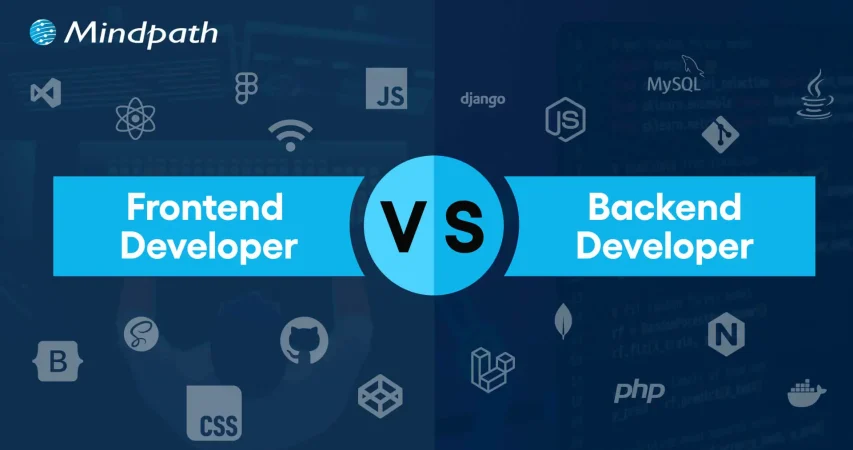
The most common words that you will find in any web development cheat sheet are frontend development and backend development. These are the two critical components that make up a web application and work in unison to deliver desired functionalities. The backend vs frontend comparison is one of the essential points every web development beginner must learn before diving into practice. 

With more than a million live websites running all over the world right now, learning about frontend and backend development can be a huge advantage. Frontend developers work on the visual aspects of a website, including its layout, design, styling, and buttons. On the other hand, backend developers work on the things that drive a website behind the scenes, including its database, logic, and security. With this post, let us dive deeper into the differences between frontend development and backend development.

Want to hire developers who can handle both front and backend development? At Mindpath, we provide full-stack development services where you get versatile solutions to accelerate your project success.

Understanding Frontend Development

Before exploring the differences between frontend and backend development, you must know their basic definition. Frontend development is all about creating the user interface and the user experience components. It helps in developing the elements of a website that users will interact with. Most of the work of frontend developers revolves around converting innovative design ideas into functional elements on web pages. Frontend developers rely on programming languages like JavaScript and HTML to create visually appealing user interfaces with elements that offer the best user experience. 

From the first look, one would imagine that frontend developers focus only on the aesthetics of web applications. However, the backend vs frontend comparison should also focus on the fact that frontend developers also implement the website’s architecture, pick the CSS styling option, set up build tools, and organize files and directories. Frontend development also involves the use of frameworks like React and Angular to optimize the performance of a website. 

Understanding Backend Development

The next player in the discussions on “What is frontend and backend development?” or backend development is about the elements that manage the functionalities of web apps in the background. Backend developers create the server-side logic that drives interactions with databases and helps in processing user requests. Backend development also includes bridging the gap between the backend and frontend of web applications to facilitate the seamless flow of data. 

You must know that backend developers work on scripting, website architecture, database management, server management, and API management. The search for answers to “What is front-end and back-end programming?” will show that backend developers use different frameworks like Django and Ruby on Rails. Backend developers capitalize on these frameworks to accelerate the development process with better efficiency. One of the overarching objectives of a backend developer is to create and implement an architecture that aligns with the project goals. 

Identifying the Differences in a Backend vs Frontend Comparison

The first thing that you should know while comparing frontend development with backend development is that they both are significant aspects of web development. Most of the discussions about “What is backend and frontend?” focus on how they help you make better web apps. However, an overview of the differences between them will offer valuable insights on how to use both effectively for your next web project.

1. Goal of the Development Process

The definitions of frontend development and backend development give a clear impression of their goals. Many people assume that frontend development emphasizes solely on creating the user interface. Frontend development focuses more on creating a positive user experience and optimizing web apps for better performance and accessibility. Frontend developers ensure that users can easily interact with an application that is accessible on different platforms and devices. 

The goal of backend developers is to create and maintain the server-side architecture of web applications. One of the notable aspects in a frontend vs backend developer comparison is the complexity of responsibilities that fall on backend developers. The responsibilities in backend development involve creating a reliable architecture that delivers efficiency and accuracy in its results. Backend developers must also accommodate all user requirements, alongside addressing the concerns in security and reducing costs.

2. Technologies Used in the Process

Another significant point of comparison between frontend development and backend development is the list of technologies used in them. The most common languages used in frontend programming are HTML, CSS and JavaScript. Frontend developers also work with frameworks like React, Vue, and Angular to make the apps more intuitive and responsive.

You can notice a stark difference between the programming languages used in frontend and backend development. The most popular additions in a backend language list include Java, Ruby and Python, which help in writing the server-side code. Backend developers use frameworks like Ruby on Rails and Django to capitalize on diverse tools for faster and efficient development. The list of technologies used in backend development also includes database management systems, API technologies, and storage technologies.

3. Security

The next prominent aspect that differentiates frontend development from backend development is the element of security. How do frontend and backend developers safeguard the components of a web application from threats? The backend vs frontend comparison must shed light on how frontend security focuses on client-side scripts, input forms, and user authentication. Some of the general strategies for frontend security include disabling the settings for typing code in the text boxes, multifactor authentication workflows, and input validation. On the other hand, users also share some responsibility for frontend security with password and device protection.

The primary target of backend security is the data in transit and storage. Backend developers have to manage everything from authentication to session control and access controls. Backend security encompasses all the backend programming languages, connected databases, and APIs. The notable best practices for backend security include secure systems for authorization and authentication, secure coding practices, and data encryption.

4. Concurrency

The differences between frontend development and backend development also bring the limelight towards the issue of concurrency. The difference between a backend and a frontend developer is that frontend development has nothing to do with concurrency. In the case of the frontend of an application, every user has a copy of the application on their mobile app or browser. Therefore, frontend developers don’t have to think about concurrency issues.

On the other side of the project, the backend has to deal with multiple requests at a time. How will the backend manage thousands of requests within seconds? The solutions to concurrency issues in backend programming include asynchronous programming, multi-threading, and event-driven programming.

Here is a brief summary of the backend vs frontend comparison. 

Criteria Frontend Development Backend Development
Goals of the Process Frontend development focuses on creating a positive user experience and optimizing web apps for better accessibility, visual appeal, and responsiveness. Backend development aims to develop and implement a reliable web application architecture that ensures enhanced efficiency and performance. 
Technologies Used Frontend developers use languages like JavaScript, HTML, and CSS, and frameworks like Angular and React. Backend developers use Ruby, Python, and Java to write server-side code and frameworks like Django and Ruby on Rails.
Security Frontend security emphasizes multifactor authentication workflows, input validation, and password protection. Backend security revolves around security coding, stronger authentication and authorization, and data encryption.
Concurrency Frontend developers don’t have to worry about concurrency. Backend developers use different strategies, such as multi-threading and asynchronous programming, to manage concurrency.


Final Thoughts

The comparison between frontend development and backend development revealed that both components must work cohesively to create better web applications. If you want to build a web app, then you must know how the backend frontend relationship helps you translate ideas into functioning web apps. Frontend development is different from backend development in terms of security strategies, concurrency issues, and technologies used in the process. 

We specialize in both frontend and backend development with years of experience in the industry. We have been delivering end-to-end IT solutions with our full-stack development services, which include both frontend and backend development. Our experts at Mindpath work with different frontend and backend languages and frameworks to create web apps that help you achieve your business goals. Consult with our experts to find the ideal solutions for your next web development project now.

Related Post

Explore how digitization transforms logistics with real-world use cases, benefits, and cutting-edge technologies that boost efficiency, reduce costs, and enhance customer experience.
Learn how combining React and AI enhances front-end development, offering smarter, personalized user experiences and dynamic features.

Related Post

AI consulting 

Artificial intelligence is now at the center of business decision-making, creating growth and efficiency across industries. Companies that turn to AI consulting receive better insights, more efficient systems and management, and stronger customer ties. Business leaders today operate in a world where competitors move quickly to leverage evolving technology. The advantage lies in applying AI to directly address their goals and challenges. AI transforming future where consulting provides highly technical solutions into practical applications, enabling businesses to take the next steps with confidence.

Ultimately, the biggest challenge we are facing today is implementing AI in a way that produces measurable impact. This is where consulting firms can assist, through methodologies, strategies, roadmaps, and implementation assistance. Consulting makes complexity simple and provides direction and location for leaders in a digital economy that is rapidly changing. In this guide, we’ll provide perspectives on how consulting can help your business stay relevant and future-ready.

Want to get expert guidance on how to use AI in your business to tackle your challenges? Mindpath AI Consulting Services offers personalized strategies that unlock the AI’s full potential.

What is AI Consulting?

AI consulting encompasses bringing value to businesses through AI usage. It is the combination of technical skills and industry knowledge to help organizations realize their objectives, from conceptual planning to operationalizing and managing AI solutions. AI consulting should always address how to make AI work for a particular business need.

Consultants start by investigating how a company operates, what its goals and objectives are, and its data quality. AI strategies and solutions are created and customized in a way that supports the overall goal and aspirational growth of the company.

Key Roles of an AI Consultant

The role of AI consulting firms is vital to the adoption and scaling of artificial intelligence by businesses. The consultants in these firms take on multiple roles and help businesses execute AI projects that are well-designed, actionable, and aligned with their objectives.

Key Roles of an AI Consultant

1. Assessing AI Readiness

Consultants begin by looking at a company’s current technology and the structure of its data. They examine strengths, gaps, and where AI could be optimally used. This step ensures the business is ready for AI to move forward with AI consulting.

2. Building the Right Strategy

Consultants partner with executives to harmonize AI initiatives with broader business objectives. They outline achievable outcomes, prioritize initiatives, and develop a roadmap that considers both growth and innovation. This allows companies to better understand how AI properly fits in their operating model and reduces any bias that AI strategy consulting can involve.

3. Designing and Implementing Solutions

Consultants develop AI models, tools, or applications to satisfy custom requirements. This can include customizing existing technology when that is more efficient, cost-effective or time-conserving. The consultant is the one who determines the methods used to develop and test the models to create measurable outcomes.

4. Managing Data Effectively

Consultants generally prioritize data quality, security, and organization, as those are all critical parts of any AI project. They create the actual process for collecting, organizing, and engaging with that data. If organizations can manage their data effectively, they can get actionable insights more efficiently and ultimately leverage the long-term value of AI consulting for business leaders.

5. Ensuring Ethical Use

Consultants establish boundaries and frameworks for ethical AI behavior, while assuring AI systems demonstrate fairness, transparency, and compliance. With governance in place, Artificial Intelligence consulting companies help clients build trust and reduce risk.

6. Training and Supporting Teams

Consultants will also prepare employees to use new AI systems confidently. They design and execute traineeships and develop protocols to transition through changes in workflows. This allows for a transition with less friction and allows the teams to adapt to new ways of working.

For a deeper understanding of how AI trends help businesses in achieving digital transformation. Read our blog: Top AI Trends.

AI consulting for small businesses helps with AI adoption to increase efficiency and lower costs while making more informed decisions. AI consultants will help small businesses find the best tools and strategies for their situation and growth objectives.

Importance of AI Consulting

1. Expert Knowledge

AI consultants bring deep technical and industry knowledge to guide businesses to learn about and select the best AI technologies available. Such guidance will provide information to make informed decisions and help prevent expensive mistakes that will demonstrate the value of the AI consulting.

2. Clear Strategy Planning

Consultants create an actionable roadmap that aligns the business goals of AI-related projects, identify priority use cases, set measurable outcomes, and provide a path to success through AI adoption consulting. AI in business strategy leads to growth and innovation, which helps the business to stand out from its competitors.

3. Tailored Solutions

Companies are provided with AI solutions based on their needs, problems, and data context. Consultants also confirm that the AI solution can run with their process; this shows the level of expertise offered in AI implementation consulting.

4. Scalability and Flexibility

Consultants design AI systems to be highly scalable and flexible for changing conditions. They also govern projects from small pilots to full deployments while applying proven practices from AI consulting examples.

5. Risk Management

Consultants establish governance standards and monitor AI systems to support bias mitigation, data protection, and a compliant setting. This governance approach reduces risk and adds certainty to AI advancements, which aligns with the goal of AI integration consulting when done properly.

6. Cost Efficiency

The goal is to remove repetitive tasks from the shoulders of employees, reduce errors, reduce resources used, save money, become more productive, and advertise the value of AI consulting.

7. Competitive Advantage

The benefit of using AI for customer service enables organizations to innovate, streamline customer interactions, and make faster data-driven decisions. Expert teams or firms providing consultancy can help organizations stay ahead of competitors and discover new opportunities, particularly highlighting the utility of a well-developed AI consulting guide.

Also Read: Top Benefits of AI Consulting for Your Organization

The Process of AI Consulting

The process of AI consulting has a structure that guides businesses from the plan to a successful and assured implementation. Each stage focuses on connecting technology to real business goals to ensure smooth and outcome-driven adoption.

1. Business Review

Consultants examine present systems, data, and workflows to observe strengths and gaps. They look at goals and challenges while creating the right path forward for AI Consulting.

2. Strategy Roadmap

Following that review, consultants synthesise work into a strategy, with priorities and measurable goals. The actual roadmap describes the roadmap for the entire AI journey.

3. Solution Planning

Consultants formulate solutions that are appropriate for business requirements and help determine the right Gen AI tools to choose. They define data requirements and provide planning methods for system integration.

4. Guided Execution

Consultants help businesses build pilot projects to test the value of solutions. They iterate the solutions before proceeding to full deployment.

5. Team Training

Consultants train employees in the use of AI tools and new workflows. They also create change management plans to ensure seamless implementation.

6. Ongoing Optimization

Consultants monitor the performance of AI systems and make adjustments if necessary. They review outcomes on a periodic basis to keep up with the constantly changing needs of the business.

AI consulting helps organizations to make smarter decisions and turn new ideas into real business results. Discover more about why organizations need AI consulting services to unlock growth in your business.

Ready to Transform Your Business with AI Consulting?

AI consulting services give businesses the expertise and structure needed to adopt artificial intelligence effectively. By evaluating, planning, and acting, companies can realize new efficiencies, enhance customer experience, and mitigate risk. When done correctly, business AI consulting navigates to make complex technologies practical and measurable, and helps organizations keep pace competitively in the rapidly changing digital economy.

At Mindpath, we deliver tailored AI consulting services designed to meet your business goals. Our experts focus on AI integration consulting to ensure solutions are scalable, ethical, and results-driven. With proven experience in business AI consulting, we provide strategies and implementation support that bring real impact. Partner with us to accelerate innovation and future growth.

Web Development Costs
Ever puzzled over why web development costs vary so much? What exactly drives the price tag of a new website? Are you aware of the key factors that influence these costs and how they affect your budget? In this blog we are going to explore what affects web development costs, unravel the various factors that influence pricing, and provide you with the insights necessary to make strategic financial decisions for your project.  Web development is the process of building and designing websites to ensure that they appear attractive, are easy to use, and perform smoothly. The duties of a web developer extend beyond creating visually appealing websites; they also include optimizing a site’s functionality, such as speed and capacity to accommodate large numbers of users simultaneously. It implies that they work on everything from the style and design to the underlying coding that powers the website. Understanding the whole cost of web development is important for multiple reasons. It helps you create a precise budget, allowing you to know how much you can spend and prevent unexpected spending. Knowing the expenses may help you make intelligent choices about the features and functions to add, ensuring you get the most for your money. Since web development is a continuous process, it also enables you to prepare for upcoming upgrades or enhancements. By understanding the expenses and factors that impact them, you can collaborate more effectively with developers, manage your project more efficiently, and ensure the success of your website.  So, let us dig in deep to know about the factors influencing the cost of web development in detail! 

Factors Influencing Web Developer Hiring Costs

Web Development services at Mindpath

1. Complexity of Project

The complexity of your project significantly influences the cost of hiring web developers. Simple websites, such as personal blogs or small commercial sites, are typically less expensive to build. They require simple functionality and a simplistic design, making them quicker and easier to construct. More complicated projects, such as online stores with various features or specialised web apps, require a higher budget. These projects need complex coding, special design work, and maybe the integration of numerous technologies, all of which add time and effort to developers’ workloads. Understanding the complexity of your project allows you to better manage your budget and guarantee you have the right degree of expertise for your needs. 

2. Level of Experience

The cost of hiring a web developer is heavily influenced by their level of expertise. Junior developers, who are new to the profession, typically charge cheaper fees because they are still building expertise. Senior developers, on the other hand, charge more fees due to their years of expertise and specialized talents. Their skill typically allows them to manage more complicated jobs and provide higher-quality results. So, if you want complex features or a high degree of skill, expect to pay extra for a senior developer. 

3. Type of Model

The cost of web development is also influenced by whether you hire freelancers, in-house teams, or outsourcing companies. Hiring freelancers is often less expensive than taking on a whole in-house staff. Freelancers provide flexibility and reduced prices because they operate independently and have no additional overhead expenditure. Outsourcing, in which you contract with outside companies or teams, can still be less expensive than recruiting an in-house team, but typically more expensive than freelancers. Outsourcing allows companies to have access to specialized talents and resources without the long-term commitment required for in-house recruiting. Each choice has its own economic consequences, so knowing them can help you choose the most cost-effective solution for your project. 

4. Location

Developers in North America and Western Europe typically demand greater fees because of the higher expense of living and market standards in these locations. In contrast, developers in Eastern Europe or Asia frequently offer lower prices due to reduced living costs and differing market conditions. By evaluating the location, you may strike a balance between quality and affordability that fits your budget while still satisfying your project’s requirements. 

Ready to elevate your online presence?

Mindpath delivers exceptional web development tailored to your needs. 

How Much Does Web Development Costs?

Web development prices can range from $1,000 to $145,000, based on project scope, website complexity, and business size. Businesses often spend $1,001 to $10,000 per year on continuous maintenance. Agencies often charge between $1,000 and $5,000 per year for full services, whereas freelancers may charge between $1 and $500 per year to specialize in individual tasks. The overall cost might also represent the specific requirements of each firm, such as interactive features or enormous content. Investing in web development is typically regarded as beneficial, with 82% of organizations reporting satisfaction with their return on investment. 

Web Development Services at Mindpath

Factors Influencing Web Developer Hiring Costs

At Mindpath, we provide Web Development services to assist you establish a strong online presence. We design websites that look amazing on any device and are simple for your visitors to browse. Whether you require a basic website or a complicated web application, we ensure that your site runs smoothly and accurately portrays your brand. Here are some of our services: 

1. Responsive Website Design

We create websites that adapt to any screen size, ensuring they look great and work well on both phones and computers. 

2. Frontend and Backend Development

Our team maintains both the sections of your website that people interact with (frontend) and the underlying mechanisms that allow it to function (backend), resulting in a comprehensive and successful online solution.

3. Content Management Systems (CMS)

We install user-friendly systems that allow you to add, update, and manage your website’s content without difficulty.

4. E-commerce Solutions

We create customized online shopfronts that make it easy for you to exhibit and sell your items or services, giving your consumers a pleasant shopping experience. 

Wrapping Up!

Understanding web development expenses might be difficult, but it is critical for making intelligent choices and managing your budget properly. By considering project complexity, developer experience, recruiting methodology, and location, you can better understand what drives the pricing and how to maximize your investment.  

At Mindpath, we provide high-quality web development services that are personalized to your specific requirements, guaranteeing a seamless and effective online presence. Whether you need a flexible website design or a solid e-commerce solution, our skilled team is here to help you realize your vision while getting the most out of your investment.  

Looking for top-tier web development services?

At Mindpath, we craft stunning, functional websites that align with your goals. 

How Much Does It Cost to Hire a ReactJS Developer in London?

The cost of hiring a ReactJS developers in London  varies depending on experience, competence, and the hiring strategy. Understanding wage expectations allows you to make a knowledgeable recruiting decision, whether you require a junior developer for simple duties or a senior developer for more complicated projects. Here’s a quick overview of the various kinds of ReactJS developers and their prices: 

1. Junior React Developers (£32,450 - £52,320+ annually)

Junior developers often have 1-2 years of experience, making them appropriate for simple projects, UI changes, and tiny feature implementations. They need supervision from seasoned developers yet can execute entry-level work effectively. Hiring a junior developer is a cost-effective solution for tasks that do not require extensive technical knowledge.

2. Mid-Level React Developers (£52,320 - £78,650+ annually)

Mid-level developers have 3-5 years of experience and can manage moderate to difficult projects. They have extensive technical knowledge, operate autonomously, and maximize performance. Suitable for enterprises who want skilled developers to create scalable React apps at a lesser cost than recruiting senior specialists.

3. Senior React Developers (£78,650 - £103,000+ year)

Senior developers have over 5 years of expertise in advanced development, architectural design, and team management. They address challenging technological issues and assure high-performance applications. If your project necessitates React, state management, performance optimization, and leadership skills, hiring a senior React developer is a wise decision.

4. Dedicated React Developers (£30–£100 per hour)

Dedicated React developers work on an hourly basis, allowing you flexibility on short-term or specialized projects. Their fees vary depending on their level of experience and the intricacy of the job. This solution is perfect if you want a specialist for certain tasks without hiring a full-time staff, making it a cost-effective alternative.

5. Offshore React Developers (£15 – £40 per hour)

Offshore developers from regions like India, Ukraine, and Eastern Europe offer a cost-effective alternative while maintaining high-quality standards. Offshore hiring allows you to reduce development costs without compromising on expertise. This is a great option for startups or businesses looking for affordable, scalable solutions.
At Mindpath we provide highly skilled ReactJS developers to match your project needs and budget.   Get in touch with us today! today to find the right talent for your React development. 
How much does hiring a ReactJS developer cost? Learn about factors affecting rates, and how to find the best talent within your budget.