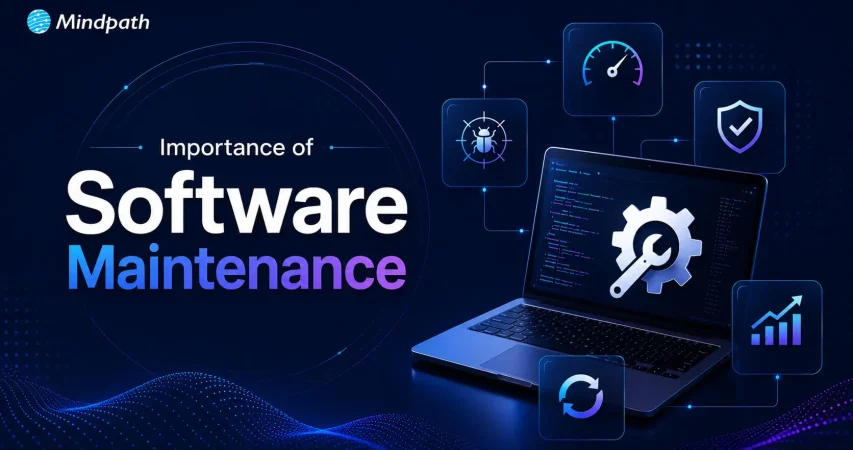
Digital systems are now a business necessity, and that is why software maintenance is a fundamental aspect of long-term success. All applications require ongoing maintenance to remain stable, secure, and in line with changing user requirements. Even the powerful systems begin to demonstrate sluggishness and unforeseen problems that impact daily operations and customer experience without appropriate maintenance of software.
The concern then is not with the creation of software, but rather its effectiveness after release. Most companies invest in development, but they neglect continuous updates, fixes and improvements that ensure systems remain dependable. Technology is evolving at a fast rate and frequent check up maintains smooth operation and improved management of business performance. In this blog, we will understand why software maintenance matters for sustainable growth.
Looking to extend the life of your software while maintaining top performance? Mindpath offers maintenance and support services to keep everything optimized and running efficiently.
What is Software Maintenance?
Software maintenance is defined as the process of ensuring that a software product is running properly once it has been launched. It comprises updates, system checks, and performance improvement. Maintenance of software ensures that applications remain safe, effective, and in line with the evolving user requirements and business objectives. It also helps maintain stability in the system in the long term.
It is not just about correction of mistakes but also enhancement of features and performance. Consistency of updates minimizes risks and failures. In the software engineering, it entails scheduled modifications and emergency repairs. These initiatives maintain the system steady, dependable and capable of providing uniform value to users.
These are some of the software maintenance types:
1. Adaptive Maintenance
It is concerned with making the system work in the new environment. It is the mechanism by which software remains capable of operating alongside new operating systems, rules, and regulations.
2. Corrective Maintenance
It is the work of identifying and removing bugs, flaws, and errors. It helps to keep the system running without any hick-ups and to prevent disruptions in day-to-day operations.
3. Perfective Maintenance
It is a process by which the system is improved through the users’ feedback. It entails incorporating features that are helpful and getting rid of the ones that have lost their relevance.
4. Preventative Maintenance
It aims to prevent possible problems in the future. Apart from that, it also changes the system to be more manageable, scalable, and maintainable with time.
The Importance of Software Maintenance in Modern Businesses
Today software plays an essential role in the running of the businesses as without it, they would hardly be able to keep track of the management or improve the efficiency and the quality of the user experiences. The following are the few main reasons that demonstrate the necessity of software in the modern business world.
1. Enhanced Security Protection
Periodic upgrades keep a program up to date with the changes in hackers’ tactics and the latest cyber threats. Promptly implemented patches help mitigate vulnerabilities and potential security breach that can lead to exposing sensitive business data.
2. Improved System Performance
Software that is being continuously developed gets faster and more capable of doing the work efficiently. Besides that, code and system processes that have been optimized.
3. Better User Experience
Incorporating user feedback is one of the best ways to build new features that will resonate with users and significantly improve things that people really care about. This is one of the best ways to keep the software relevant, simple to use and satisfying for the users as their needs always evolve.
4. Reduced Long Term Costs
Addressing issues early on will prevent from later encountering bigger and more costly problems. Consistent maintenance also plays a part in reducing downtime, avoiding major breakdowns and helping the business save both time and operational costs.
5. Seamless Compatibility
System updates make it compatible with newly introduced technologies and devices. Users are therefore able to upgrade their systems without worrying about disruptions or compatibility issues.
6. Reliable Issue Handling
Addressing bugs swiftly helps keep the software stable and dependable. Software maintenance support ensures issues are tackled early, thus preserving trust and sustaining system performance consistently.
7. Stronger Compliance Management
Update regularly helps to align with constantly changing legal and industry standards thereby minimizing the risk of non-compliance related penalties and ensuring adherence to laid down guidelines at all time.
8. Extended Software Lifespan
Frequent enhancements make the system stay functional for a longer period. Software updating regularly enables the software to respond to change and keep providing benefits even in a competitive environment.
Ready to Strengthen Your Business with Software Maintenance?
Software is a major factor for business success today. Consistent monitoring and upgrading of the programs result in efficient, dependable machines. Maintaining software is also a way of enhancing security, supporting expansion, and overall bettering the products. Organizations that channel their resources into it are always on their toes and have an efficient mechanism of risk management.
At Mindpath, we provide software maintenance and support services for modern businesses. Our experts constantly perform updates and resolve issues promptly. We collaborate in keeping the systems stable and functional. Hence, your range of products will be always protected, dependable, and suitable for any changes.
Frequently Asked Questions
1. Why does software maintenance matter even after a successful launch?
Many businesses assume the job ends after deployment, but software needs ongoing care to perform well. Regular updates, fixes, and improvements help avoid slowdowns, security risks, and user frustration. It ensures the system stays reliable and continues to support business operations effectively.
2. How often should a business plan software maintenance activities?
The frequency depends on the system, its usage, and industry requirements. However, regular monitoring and scheduled updates are essential to prevent issues. Consistent attention helps maintain performance, reduce unexpected failures, and keep the software aligned with changing business and user needs.
3. What are the risks of ignoring software maintenance for too long?
Ignoring maintenance can lead to performance issues, security vulnerabilities, and system failures. Over time, small problems can grow into major disruptions that affect business continuity. This can also result in higher repair costs and a poor user experience that impacts customer trust.
4. How does software maintenance support business growth in the long run?
Software maintenance helps systems adapt to new technologies and user expectations. It allows businesses to improve features, enhance performance, and stay competitive. With proper care, software continues to deliver value and supports smooth operations as the business grows.
5. Is software maintenance expensive for small or growing businesses?
Many businesses worry about costs, but software maintenance often prevents larger expenses. Regular updates and fixes reduce the chances of major failures and downtime. Investing in maintenance helps control costs over time while ensuring the system remains stable and efficient.