Building an AI Roadmap: A Step-by-Step Guide for Business Leaders

Join our Newsletter!

Featured Posts

Support Is One Click Away

Home

Building an AI Roadmap: A Step-by-Step Guide for Business Leaders

AI Roadmap

Building an AI Roadmap: A Step-by-Step Guide for Business Leaders

Companies are pressured to adapt, innovate, and make faster decisions. Rapid changes in markets and increased competition mean that traditional approaches are not effective enough now. This is the role that an AI roadmap will serve. It provides leaders with a framework to use AI in ways that allow them to be more efficient, more innovative, and provide meaningful value to the business. However, developing one requires an appropriate balance of vision and pragmatic planning.

Rather than following fragmented opportunities, leaders need to craft a plan with steps that link AI to business objectives. The real power lies in asking the right questions, assessing their resources, and establishing priorities before starting execution. With a map pointing in the right direction, the AI effort becomes a coordinated effort with measurable influence. Now, let us consider how businesses can develop this map with confidence and clarity.

Do you want to adopt the AI roadmap in your business? Then you need to get the right expertise that can navigate you through the process. Our AI development services will deliver full support from planning to execution to help you attain real and measurable outcomes.

What is an AI Roadmap?

An AI roadmap for business offers a systematic approach for describing how a business plans to leverage Artificial Intelligence to meet its aims. It allows teams to create specific and manageable goals, outline the best potential use cases, allocate resources, and plan timelines. With an AI roadmap, managers can explain how the employees will move toward the longer-term strategy while providing confidence to the employee base.

A roadmap is a great tool for helping teams create the right skills and focus on the priorities they should be focusing on. It helps connect every AI project directly back to the business strategy to ensure that your team’s work creates actual value and is not just a random attempt to test out AI. Companies can use it for an organization-wide adoption, or they can focus on those specific aspects of the business, but in either case, the roadmap makes AI a viable contributor to your growth and success.

Advantages of Having a Roadmap for AI

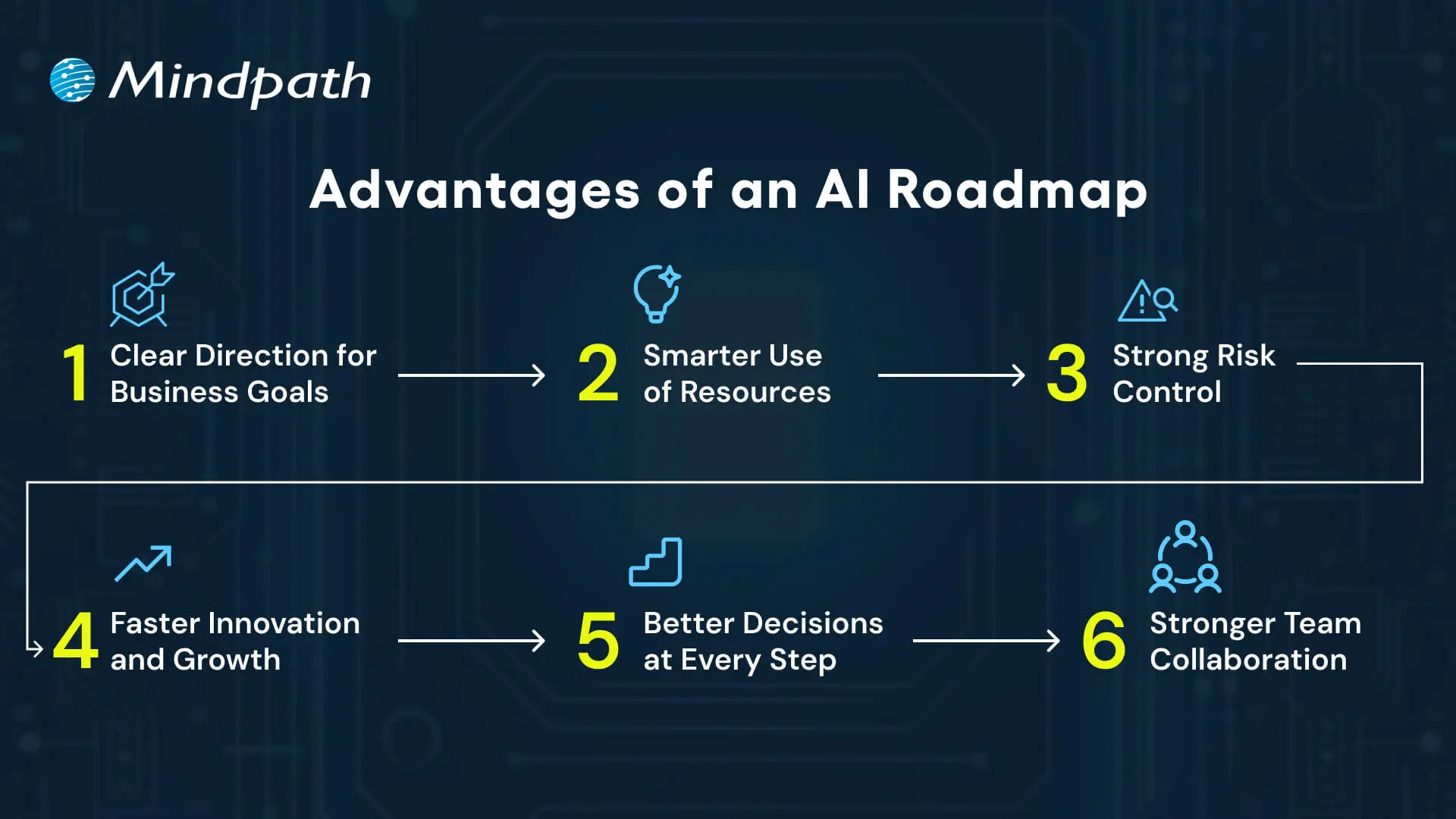
Developing an AI roadmap gives businesses clarity and helps eliminate uncertainty in the implementation stage. Rather than jumping to general-purpose AI without a clear structure, a roadmap ensures every action you take is aligned to your real goal with measurable results. Here are the primary benefits of having an AI roadmap.
Advantages of an AI Roadmap

1. Clear Direction for Business Goals

An AI roadmap links all work to the company’s longer-term vision. This keeps both leaders and teams aligned and working towards the same purpose, minimizing any confusion or delays.

2. Smarter Use of Resources

Make each business plan deliberate and focused, so budget, skills, and tools are applied to the most impactful projects. An AI roadmap generator can help you do this faster and with more precision.

3. Strong Risk Control

An AI roadmap allows organizations to tackle any aspects of security, compliance, or data quality up front. Having a plan reduces risk for organizations and ensures a more streamlined implementation.

4. Faster Innovation and Growth

A roadmap allows organizations to have agility and the ability to experiment and scale solutions. Even a beginner-friendly AI roadmap can outline the first steps that will lead to innovation and growth.

5. Better Decisions at Every Step

Leaders use the roadmap to select the appropriate use cases and monitor progress. With this practical approach, it resembles an AI developer roadmap in which each step takes you to the next level of value.

6. Stronger Team Collaboration

An explicit roadmap promotes better communication across departments. It builds teamwork and supports everyone in contributing to developing and using AI in the way it is most useful.

Key Steps to Build an AI Roadmap 2025

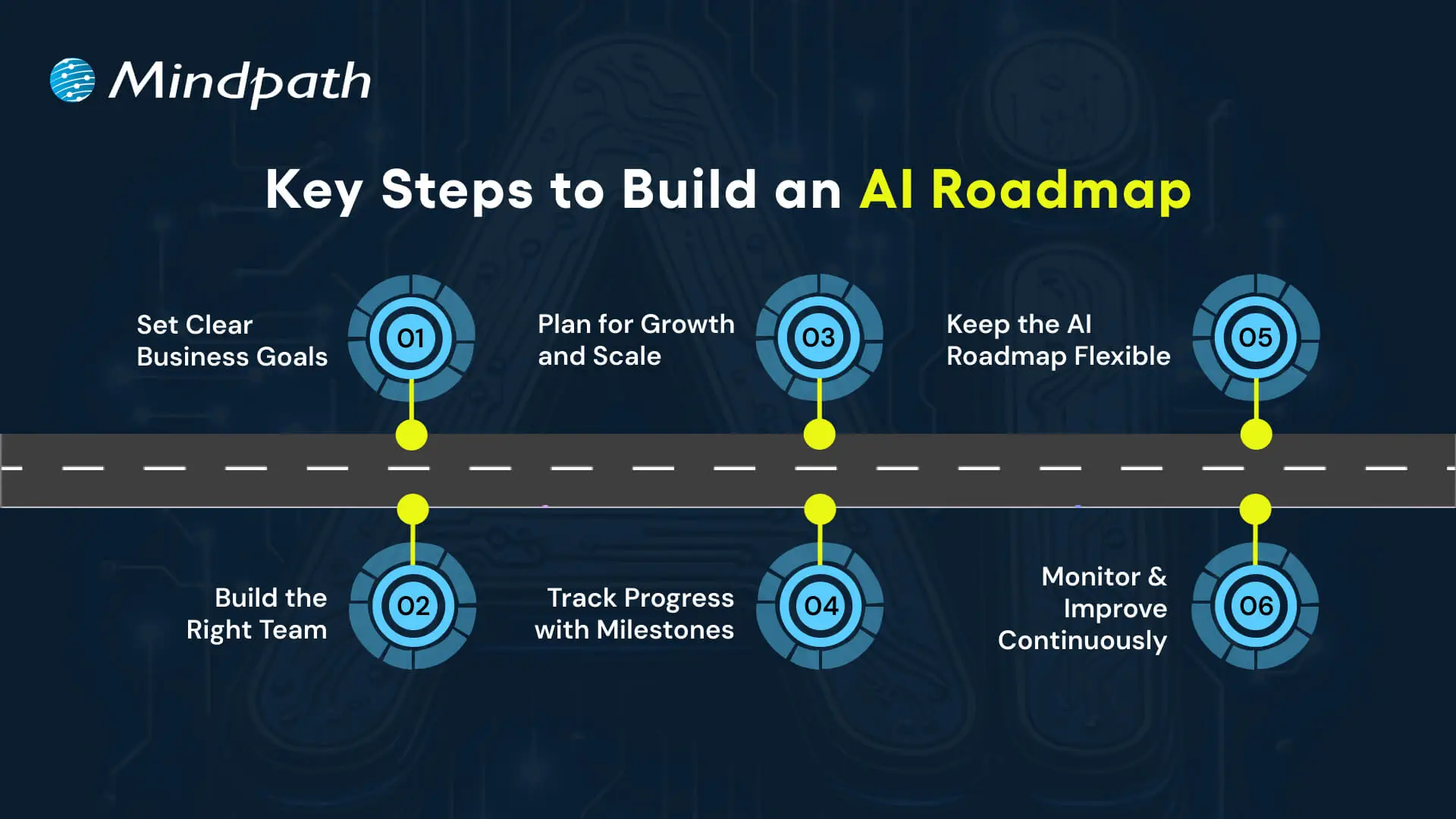
Constructing an AI roadmap in 2025 necessitates a defined plan that relates AI projects to real business objectives. Companies must assess their focus on strategy, resources, and measurable outcomes in order to ensure the AI investments add value. Here are the key steps for building an effective roadmap.
Key Steps to Build an AI Roadmap 2025

1. Set Clear Business Goals

Every successful AI roadmap begins with a definitive goal. Set the desired outcomes that are most important. Simply articulate it so everyone understands what it means to them. This clarity likewise connects each project to real business value.

2. Build the Right Team

A roadmap is only effective if the correct drivers are behind the wheel. Organize your engineers, strategists, and experts in the domain who can operate at the intersection of technology and business. Taking a look at an AI engineer’s roadmap may help you frame up the skills you need to develop as a team.

3. Plan for Growth and Scale

A successful strategy looks to the future. Creating systems for larger datasets with multiple models and interconnected data with business apps. It translates minor pilots into a comprehensive AI roadmap, facilitating ongoing growth.

4. Track Progress with Milestones

Break the journey into smaller, actionable segments. Start with a pilot, grow to teams, and then link to enterprise systems. As they reach a milestone, they will be able to see their progress and also validate that the roadmap is indeed compliant.

5. Keep the AI Roadmap Flexible

As the market landscape evolves, priorities shift. Consistently update your AI roadmap to reflect new goals and possibilities. The adaptability within your roadmap will allow AI to remain relevant as your business develops.

6. Monitor and Improve Continuously

AI models must receive ongoing maintenance to remain valuable. Form an AI team to monitor precision, solicit user feedback, and update models when the data or needs change. Researching a generative AI roadmap can also help in developing new capabilities.

How will You Shape Your AI Roadmap for Success?

An AI roadmap provides businesses that want to adopt Artificial Intelligence with structure, direction, and confidence on their journey. It allows business leaders to set and achieve organizational objectives, manage and allocate resources, reduce risk, and scale innovation with measurable outcomes. With a flexible and constantly evolving AI roadmap, organizations can adapt their actions to changes in the market and continue to reap value from AI initiatives. A solid plan will use a shared vision for long-term success.

At Mindpath, we are experts in conceptualizing and executing custom AI solutions, providing end-to-end AI development services, aligned with your business goals. Throughout the entire process, from strategy & roadmap planning to development and scaling, our specialists will assist you.  Our passion for innovation and growth allows us to harness the real power of AI and transform complex problems into quantified outcomes.

Related Post

Discover the benefits of hybrid cloud for businesses, including improved performance, innovation, and flexibility.
Discover how edge computing enhances data processing, helping businesses make real-time decisions and optimize operations.

Related Post

Web Scraping with Node.js

Have you ever needed data from a website but didn’t know how to get it without manually copying everything? What if there was a way to automate this process? Web scraping with Node.js makes it possible! Curious to learn how? In this blog, we will explore the basics of web scraping with Node.js which can be the solution to questions.  

Web scraping is the process of utilizing a specialized program to mechanically collect information from websites. Instead of manually copying and pasting data, web scraping allows you to instantly gain pricing, photos, and news items from the internet. It operates by making requests to websites, capturing the necessary data, and organizing it in an understandable format. This is very useful when you need to collect a large amount of information from many pages. 

Web scraping with Node.js involves a way of automatically gathering data from websites. Node.js simplifies this process using tools like Axios for making queries and Cheerio for reading HTML and extracting information such as text or images. This method allows you to collect data fast without having to do it manually, making Node.js an excellent choice for web scraping. 

So, let’s dig in to explore the basics of web scraping with Node.js! 

How to Conduct Web Scrapping with NodeJS

1. Set Up a NodeJS Project

First, create a folder for your web scraping project and name it anything you like. Then, enter this folder and use npm to create a new Node.js project. This will generate a file called package.json that stores your project’s information as well as dependencies. Once your project is set up, make a primary file, such as index.js, in which you will write your scraping code. To make sure everything works properly, include a simple script in package.json to run your main file. Run the script to ensure that your Node.js configuration is right, and you’re ready to start developing web scraping programs! 

2. Install Axios and Cheerio

Now it’s time to install the Node.js web scraping tools. We will use two libraries: Axios for obtaining web pages and Cheerio for simply reading and extracting data from HTML. You may evaluate the target page to determine which libraries are most suited to your web scraping needs. Right-click an empty space on the page, pick “Inspect,” and navigate to the Network tab, especially the Fetch/XHR section. If this section is mainly empty, it means that the data you need is available directly in the page’s HTML, without the need for JavaScript or a headless browser. 

3. Download Your Target Website

Connect to the website you wish to scrape via Axios. This entails requesting the website’s URL to retrieve its HTML content. Since many websites have measures to prevent scraping, include a proper User-Agent header to make your request appear from a legitimate web browser. To do this, include the User-Agent header when delivering the request using Axios. This will allow you to avoid being blocked by the website. Once you’ve received the website’s HTML, you’ll be able to extract the necessary information. Next, examine the HTML of the target page to determine how to locate and extract the precise data you’re interested in. 

4. Examine The HTML Page

To find the data you want to scrape, first inspect the target website’s HTML code. For example, if you want to learn more about industry on a page, right-click on an item and pick “Inspect” to get the DevTools. This will display the HTML code of the selected element. Look at the HTML structure to see how the data is organized. Examine the tags and CSS classes used on the components you wish to scrape. This information will assist you in writing the appropriate CSS selectors for extracting the data. 

5. Use Cheerio to Select HTML Elements

Cheerio can be used to extract data from a webpage’s HTML content. First, load the HTML you acquired via Axios into Cheerio. This configures Cheerio so you can start selecting items from the page. Cheerio lets you select HTML components with CSS selectors, like how jQuery works. For example, you can choose components based on their class or ID. You may also reduce your options by looking for components within other elements. Once you’ve selected the items you’re interested in, you may loop through them to extract the information you want. This approach involves utilizing Cheerio’s methods to filter and iterate over the components based on your scraping objectives. 

6. Extract Data from the Target Webpage Using Cheerio

After you’ve configured Cheerio and selected your HTML components, the following step is to extract the necessary data. Begin by building a structure, such as an array, to store your scraped data. Use Cheerio to extract precise characteristics about each element you’ve selected, such as attributes or text content. When extracting data, be sure to remove any unnecessary information and organize the relevant parts into clear, organized objects. These items should then be added to your database structure. If your webpage has many parts or categories of information, repeat the procedure for each section, modifying your selectors and extraction logic as necessary. By the end of this stage, you should have a well-organized collection of data from the webpage that is specific to your scraping goals. 

Web Scrapping with NodeJS at Mindpath

Mindpath provides web scraping services using Node.js to help you obtain crucial information from websites. Node.js allows us to easily download and extract data from web pages. This procedure entails retrieving the website content and then locating the specific data you want, such as text or photos. 

Our team utilizes Axios to obtain the web page and Cheerio to filter through the HTML and extract the necessary information. This enables us to collect and organize information fast and precisely. Whether you need data for research, analysis, or other uses, our web scraping services using Node.js make it simple and effective to obtain the information you want. 

Wrapping Note!

Mastering web scraping with Node.js brings up a plethora of opportunities for quickly obtaining data from websites. Whether you want to extract information for market research, competitive analysis, or just to simplify data collecting, Node.js offers a robust and user-friendly framework for accomplishing these objectives. You may automate data extraction by using technologies like Axios for downloading web pages and Cheerio for parsing HTML, which saves time and reduces manual work. 

Mindpath uses Node.js to create accurate and organized web scraping solutions that are suited to your specific needs. Our experience guarantees that you receive the necessary data fast and properly, allowing you to make intelligent choices and move your initiatives ahead. 

Looking to streamline your data collection?

Mindpath specializes in efficient web scraping with Node.js to help you get accurate insights fast. 

hyperautomation technology

The rapid evolution of the business landscape has made organizations think about approaches to improve efficiency and customer satisfaction while reducing costs. The adoption of hyperautomation technology is a testament to the fact that businesses want more than traditional automation. Hyperautomation represents a huge paradigm shift that helps businesses achieve comprehensive automation in all their operations. 

Many people believe that automation is the sole answer to queries regarding the adaptability of businesses in competitive markets. However, the scope of automation is limited to specific tasks. Hyperautomation calls for using multiple technologies together to optimize their business operations with an integrated approach. Let us learn more about hyperautomation and how it is better than simple automation.  

Ready to take advantage of Hyperautomation for your business? Contact us to discover the customized solutions can bring to the table, which streamline your processes and boost efficiency.

Understanding the Fundamentals of Hyperautomation

The definition of hyper automation by Gartner describes it as a disciplined and business-centric approach used to recognize, refine, and ensure automation of different business and IT processes. The distinctive highlight of hyperautomation is the fact that it involves the coordinated use of different technologies, tools, and platforms. Some of the notable technologies that drive hyperautomation include robotic process automation or RPA, low-code/no-code tools, business process management, event-driven architectures, and machine learning. 

Upon diving deeper into answers to “what is hyperautomation,” you will also find how each technology helps with hyperautomation. The following technologies serve distinct advantages to every business that adopts hyperautomation.

Also Read: AI Trends

1. Robotic Process Automation

Robotic process automation serves as the foundation layer for automation of repetitive tasks in high volumes. The working of RPA systems is almost similar to how human users would interact with digital systems. 

2. Artificial Intelligence

You might come across queries like “what is the difference between AI and hyperautomation” when you learn about hyperautomation. The primary difference between AI and hyperautomation is that artificial intelligence is a technology that drives hyperautomation. AI technologies such as machine learning, computer vision, and natural language processing offer the cognitive capabilities required to understand, analyze, and draw predictions or decisions.

3. Low-code/No-code Platforms

The effectiveness of hyperautomation strategies also depends on how a business utilizes low-code or no-code platforms. These platforms can help developers craft and deploy applications with minimal coding. As a result, businesses can automate processes while enjoying the benefits of faster time to market and accelerated adoption.

4. Business Process Management Suites

Business process management tools and intelligent BPM suites also play a major role in fostering hyperautomation in 2026 through optimized workflows. The BPM tools and suites offer the ideal framework to design, execute, monitor, and optimize complex business workflows alongside managing different automation components. 

5. Process Mining, Task Mining, and Analytics

The effectiveness of hyperautomation strategies depends significantly on the identification of the right processes and tasks for automation. Process mining and task mining are crucial processes for the discovery, mapping, and analysis of existing processes. The two mining methods help in identifying opportunities for automation as well as the potential bottlenecks for the same. On top of it, real-time analytics and reporting can offer useful insights before, during, and after automation to ensure data-backed decisions and continuous improvement. 

The combined use of these technologies explains the hyperautomation vs. automation difference, as hyperautomation focuses on more than automating tasks. On the contrary, hyperautomation emphasizes adaptability and a cycle of continuous improvement in the automation process.      

Struggling to scale automation across your business without a clear strategy? Explore digital transformation for businesses to see how end-to-end automation and modern technologies work together to drive efficiency and growth.

How Does Hyperautomation Work?

Many of you might be wondering about the necessity of adopting hyperautomation when businesses can opt for automation of individual steps. The focus on end-to-end automation makes hyperautomation better than simple automation. Hyperautomation aims to ensure automation of all business processes from their beginning to completion. The scope of hyperautomation can include processes that span different systems and departments. You can rely on hyperautomation for automation of processes that rely on structured data and even the ones that use unstructured data.

You can use a simple example of a customer onboarding process to understand how hyperautomation works. If you use a traditional RPA system for the customer onboarding process, it will automate the data entry process. The RPA system will only facilitate automated entry of data from a structured form into CRM systems.

Hyperautomation delivers more than just automated data entry for the customer onboarding process. You can notice the end-to-end automation with hyperautomation in business processes with the customer onboarding process, where other technologies like NLP, AI, and ML come into play. For instance, NLP will help in extracting information from unstructured data, like customer emails. Subsequently, hyperautomation can leverage RPA for populating multiple systems with the data and use AI/ML for risk assessment and identity verification. The use of BPM tools can help in managing approvals, while analytics can support monitoring of the onboarding process to ensure compliance and efficiency.

Almost all answers to “what is an example of hyperautomation” will help you understand that hyperautomation is a holistic approach. It focuses on achieving seamless integration between different systems and processes, thereby reducing manual handoffs and errors. Hyperautomation breaks down departmental silos and supports a unified workflow for all business operations rather than relying on fragmented automation.

Looking to automate processes without increasing energy costs or resource usage? Discover how energy-efficient computing supports sustainable, high-performance automation across end-to-end business operations.

Unraveling the Advantages of Hyperautomation

The effectiveness of hyperautomation is clearly visible in the different ways in which it helps in transforming automation. The following benefits of hyperautomation will encourage more businesses to embrace it right away.

1. Reduced Costs

The most obvious benefit of hyperautomation is the assurance of cost reduction. Businesses can reduce operational costs across various processes by replacing manual efforts, reducing errors, and time invested in administrative tasks. The combination of hyperautomation tools and technologies with redefined operations and processes can reduce operational costs by a significant margin.        

2. Better Productivity

The automation of repetitive and time-intensive tasks with lower chances of human errors helps in reducing the workload of employees. As a result, employees can focus on more strategic activities that require critical thinking, empathy, and human creativity. Organizations can achieve improvements in overall productivity as hyperautomation empowers employees to add more value to the business.

3. Agility and Scalability

The widespread adoption of hyperautomation technology also empowers businesses to adapt quickly to fluctuating market conditions. Hyperautomation also helps in adapting to changing customer demands and regulatory requirements, thereby improving agility. On top of it, hyperautomation also enables easier scaling of processes to meet changing workloads and achieve competitive advantage.

4. Enhanced Customer and Team Experience

The benefits of hyperautomation, such as reduced manual errors and faster processing times, ensure that employees can have better experience. In addition, the customer experience also gets better with round-the-clock availability of automated services. The utility of intelligent tools in hyperautomation plays a vital role in ensuring job satisfaction and improving customer engagement.

5. Accurate and Timely Decisions

The keyword in any hyperautomation meaning is automation with an integrated approach. The innovative approach to automation ensures better precision and consistency with the use of technologies like AI and ML. Furthermore, the technologies for hyperautomation also help in drawing more insights from process data. As a result, the organization can take improved data-driven decisions and draw predictions for future trends with ease.

Wondering how to streamline automated workflows while maintaining speed and reliability? Explore devOps best practices to learn how optimized pipelines and continuous automation support scalable, end-to-end hyperautomation.

Final Thoughts

As the world steps into a new age of digital transformation, automation becomes more important than ever. The benefits derived from hyperautomation use cases across different industries encourage more businesses to choose hyperautomation. It is an integrated approach to automation that focuses on automating all business processes from initiation to completion. 

At Mindpath, we aim to deliver the best end-to-end automation solutions tailored to your business requirements with different technologies. We believe in crafting our hyperautomation approach in alignment with the client’s business goals and vision to achieve the ideal results. Consult with us and discover the promising advantages of hyperautomation right now.

FAQs Related to Hyperautomation Technology

While the introduction to hyperautomation may have helped you learn its fundamentals, there might be many other doubts on your mind. Let us take a look at some of the common FAQs to resolve the biggest doubts regarding hyperautomation.

What is the difference between RPA and hyperautomation?

The primary difference between RPA and hyperautomation is that RPA, or Robotic Process Automation, is one of the technologies used in automation. On the other hand, hyperautomation is a novel approach to automation that relies on the integrated use of different technologies, including RPA.

How does hyperautomation work?

Hyperautomation works by using different tools and technologies to recognize and vet organizational processes and tasks for automation. It involves coordinated use of technologies such as RPA, AI, machine learning, business process management tools, and low-code or no-code platforms. 

What are the benefits of hyperautomation?

The benefits of hyperautomation include reduced costs, limited chances of human error, and better overall productivity of an organization. Hyperautomation also empowers businesses with the essential tools to draw accurate insights from process data to make relevant and informed decisions.

How is hyperautomation different from traditional automation?

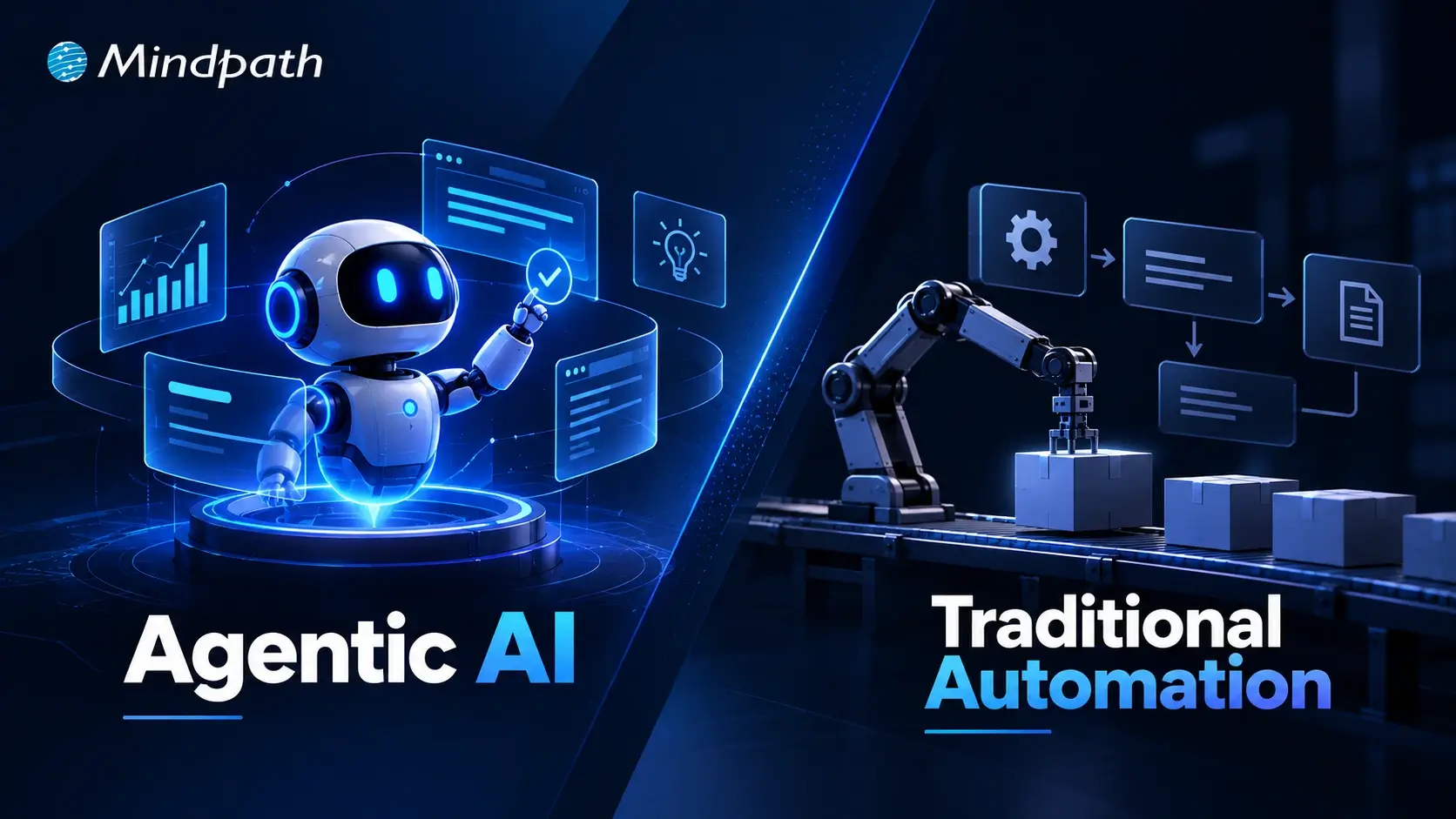
Hyperautomation is different from traditional automation in the fact that it does not focus on a single task or process. On the contrary, it aims to achieve comprehensive automation of all business processes and workflows while ensuring continuous improvement.

Which industries use hyperautomation?

Hyperautomation has found applications in various industries, such as finance, telecommunications, retail, healthcare and manufacturing. The use cases of hyperautomation in these industries help in reducing costs, enhancing decision-making, and improving efficiency in different tasks.

Discover how hyperautomation can transform your business by boosting efficiency, productivity, and ROI. Learn how Mindpath can help.
The Complete Guide to Hiring Expert Node.js Developers in London
Hiring the right developer for your project is crucial, especially when it comes to complex web applications. If you’re looking for a solution that is scalable, high-performance, and capable of handling real-time data, Node.js might be the technology you need. But how do you ensure you’re hiring the best Node.js developers for your needs in a competitive tech hub like London? In this comprehensive guide, we’ll walk you through the essential aspects of hiring Node.js developers in London, what to look for in a candidate, and why London is an ideal place to find top-tier talent.

Why Hire Node.js Developers in London?

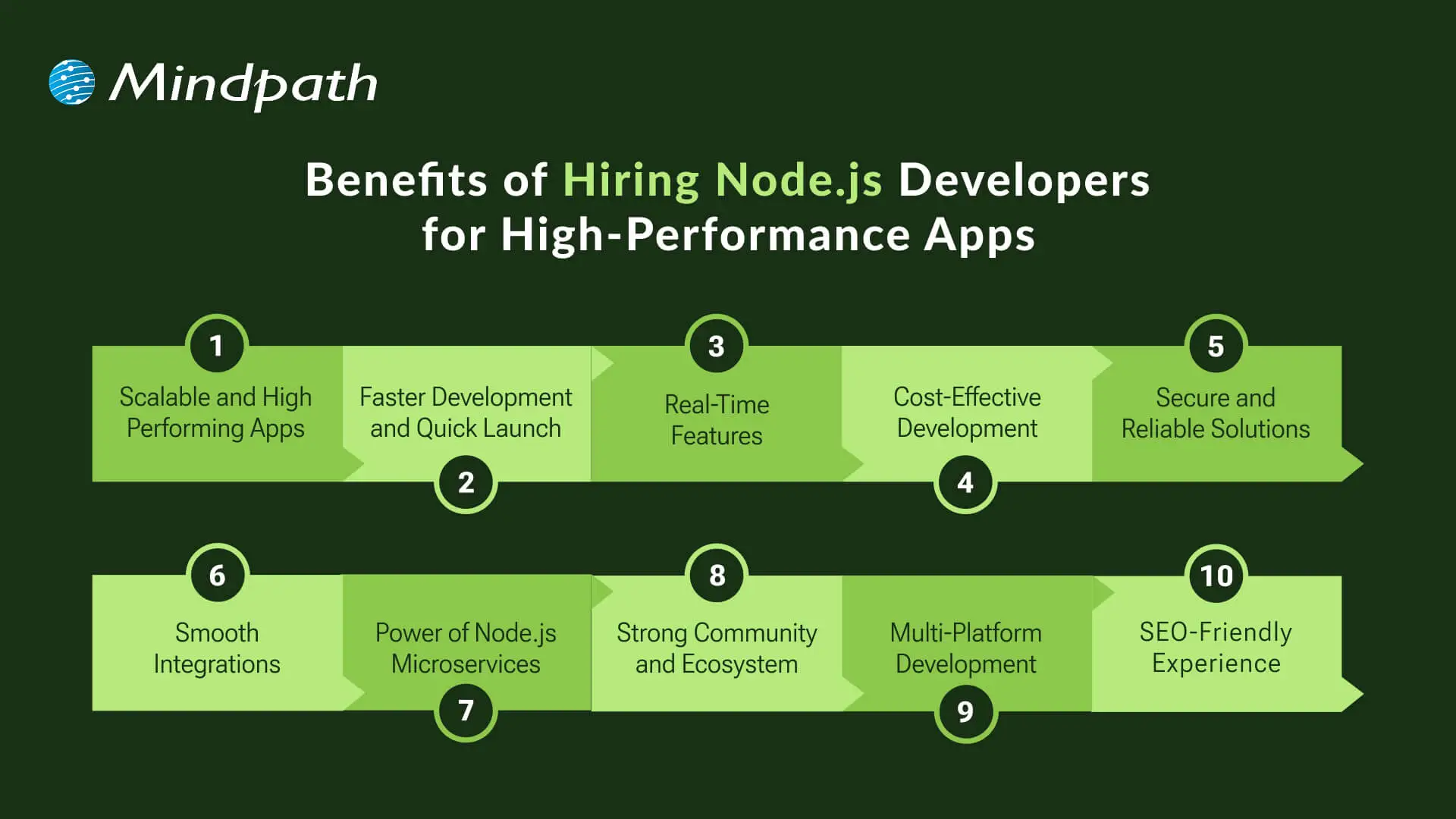
When it comes to building fast, scalable web applications, Node.js is one of the best frameworks available. Leveraging its ability to handle real-time data, build microservices, and manage high-performance APIs, many businesses are turning to Node.js developers to bring their vision to life. However, finding the right developers can be tricky. That’s where London comes in—a vibrant hub of innovation and tech talent.

Hiring Node.js developers in London gives you access to some of the most skilled professionals in the industry. These developers have a deep understanding of JavaScript and backend technologies, making them adept at creating modern, robust applications. Let’s dive into the benefits and considerations when hiring Node.js developers in this thriving city.

Key Benefits of Hiring Node.js Developers in London

1. Scalability and Performance

Node.js is known for its scalability and ability to handle large amounts of traffic. By hiring Node.js developers in London, you ensure your application is built to scale seamlessly. Whether your project involves real-time communications, an online marketplace, or a streaming service, Node.js can handle numerous requests simultaneously, making it ideal for high-performance apps. London’s developers are adept at building lightweight, fast, and scalable systems capable of supporting thousands of concurrent users without affecting performance. This makes it an excellent choice for businesses anticipating rapid growth or dealing with high user interaction.

2. Cost-Effectiveness

While London is known for its high living costs, it offers a wealth of skilled professionals at competitive rates. Node.js developers in London are highly efficient, and their expertise helps reduce development costs. Since Node.js operates on a single-threaded event loop, it reduces the need for additional servers, thus lowering infrastructure costs. Moreover, London-based developers are experienced in building scalable solutions, saving your company from costly redesigns or performance issues down the road.

3. Faster Development Cycles

One of the biggest advantages of Node.js is its speed. Because it allows developers to work on both the frontend and backend with JavaScript, development cycles are streamlined. Node.js also has a non-blocking architecture, which allows developers to build apps that process multiple requests at the same time without delay. This is especially beneficial for companies that need to get products to market quickly and react to changing business conditions.

4. Access to a Diverse Talent Pool

London boasts a large and diverse community of developers skilled in Node.js. The city’s reputation as a tech hub means that you can easily find developers with the right set of skills to meet your project requirements. Whether you need a single expert or an entire development team, London’s talent pool offers flexibility in terms of experience and specialization. Additionally, developers in London are well-versed in modern development practices like microservices, cloud computing, and API development, enabling them to tackle a variety of complex projects.

5. Expertise in Emerging Trends

London-based Node.js developers are often at the forefront of emerging technology trends. The city’s vibrant tech ecosystem ensures that developers are continuously learning and adapting to new tools and frameworks. Whether it’s serverless architecture, real-time applications, or the integration of microservices, London developers have firsthand experience in utilizing the latest technologies to build innovative solutions. Their deep knowledge of industry best practices ensures that your application will be developed with modern techniques, making it future proof.

Factors to Consider While Hiring Node.js Developers in London

When you start the hiring process, it’s crucial to know what to look for in a Node.js developer to ensure you find the right fit for your project. Experience, technical skills, problem-solving abilities, and familiarity with modern development tools all play a key role in making the right choice. Additionally, understanding the local job market and legal considerations can help streamline the process. Here are some of the key factors to consider while hiring Node.js developers in London to ensure you hire the best talent for your business needs.

1. Strong JavaScript Foundation

Since Node.js is built on JavaScript, your developers must have a deep understanding of the language. Developers should be proficient in core JavaScript concepts like closures, promises, asynchronous programming, and event loops. A strong foundation in JavaScript will ensure that your project runs smoothly and that the code is efficient and easy to maintain.

2. Experience with Popular Node.js Frameworks

Node.js frameworks like Express.js, Koa.js, and NestJS simplify the development process and make it faster. These frameworks offer tools to build scalable and efficient applications with minimal effort. Developers with experience using these frameworks will be able to deliver high-quality results in less time. When hiring, ensure the developer is comfortable with at least one of these frameworks to ensure efficiency.

3. Database Management Skills

Node.js developers should have experience working with databases such as MongoDB, MySQL, and PostgreSQL. Knowledge of both SQL and NoSQL databases is essential for building scalable and efficient applications. Developers should be able to design, query, and manage databases to store, retrieve, and manipulate data securely and efficiently.

4. Asynchronous Programming Expertise

Asynchronous programming is a key component of Node.js development. Node.js is non-blocking, meaning that it can process multiple requests simultaneously without delay. Developers need to be well-versed in callbacks, promises, and async/await to handle concurrent processes effectively. This is particularly important for real-time applications that need to respond quickly under heavy traffic loads.

5. Collaborative and Adaptable

In addition to technical skills, collaboration is essential. Node.js developers need to work well with other team members, including designers, front-end developers, and stakeholders. The ability to communicate effectively and adapt to changing requirements will ensure that your project stays on track and meets deadlines.

What Skills to Look for While Hiring Node.js Developers in London

Finding the right Node.js developer requires a deep understanding of the technical expertise needed for building high-performance applications. A skilled developer should have strong proficiency in JavaScript, experience with Node.js frameworks, and knowledge of database management and API development. Additionally, familiarity with performance optimization and security best practices is essential. Here are the critical skills to look for while hiring Node.js developers in London to ensure you select the best candidate for your project.

1. JavaScript Fundamentals: A solid understanding of JavaScript fundamentals, such as closures, scopes, and asynchronous programming, is essential for any Node.js developer. Mastery of these concepts will lead to clean, efficient code and optimal application performance.

2. Experience with Node.js Frameworks: Developers should have hands-on experience with popular Node.js frameworks such as Express, Koa, and NestJS. These frameworks help streamline the development process and offer tools for building scalable, secure applications.

3. Database Management: Node.js developers must be proficient in managing databases such as MongoDB, PostgreSQL, and MySQL. A strong grasp of data storage and retrieval methods is essential for building high-performance applications.

4. API Development: Node.js developers should have expertise in designing and implementing RESTful APIs. This is essential for integrating different parts of your application and enabling communication with external services.

5. Asynchronous Programming: Developers need to be familiar with asynchronous programming patterns like callbacks, promises, and async/await. This is vital for managing concurrent processes and ensuring the responsiveness of your application, especially under heavy traffic conditions.

6. Security Best Practices: Ensuring the security of your application is paramount. Developers should be well-versed in security best practices, such as input validation, data sanitization, and secure coding techniques to protect against vulnerabilities like SQL injection and cross-site scripting.

7. Version Control: Proficiency in Git is essential for managing code changes and collaborating with other developers. Node.js developers should be familiar with Git workflows to ensure smooth project development.

How Much Does It Cost to Hire Node.js Developers in London?

The cost of hiring Node.js developers in London can vary significantly based on their experience, the complexity of your project, and the company size. Here’s a breakdown of what you can expect:

1. Experience Level

Junior Developers: Junior developers with limited experience typically charge £30-£70 per hour. They are well-suited for handling simpler tasks but may need guidance on more complex issues.

Senior Developers: Experienced developers with advanced skills and expertise charge £70-£150 per hour. They are capable of managing complex projects, leading teams, and solving technical challenges, which justifies their higher rates.

2. Project Complexity

The complexity of your project also plays a key role in determining the cost. If your project requires advanced knowledge in areas like cloud computing, microservices, or real-time systems, you’ll need developers with specialized skills, which can increase rates.

3. Company Size and Location

Larger companies based in central London typically offer higher hourly rates, ranging from £70 to £150. Smaller startups or companies located in suburban areas may offer lower rates, often between £30 to £70 per hour, depending on their budget and project scale.

Wrapping Note!

Hiring skilled Node.js developers in London can significantly enhance the performance, scalability, and reliability of your web applications. With a rich talent pool, competitive pricing, and expertise in the latest technologies, London offers a great environment for finding developers who can bring your ideas to life. By considering factors such as experience, technical skills, and project requirements, you can ensure that you hire the right developers for your next big project.

Ready to take your project to the next level? Hire skilled Node.js developers At Mindpath in London and bring your vision to life with high-performance, scalable applications.

Contact us today to build a future-ready solution tailored to your needs!

Discover the ultimate guide to hiring Node.js developers in London. Learn about the skills, benefits, and cost factors involved in finding the right talent for your project.