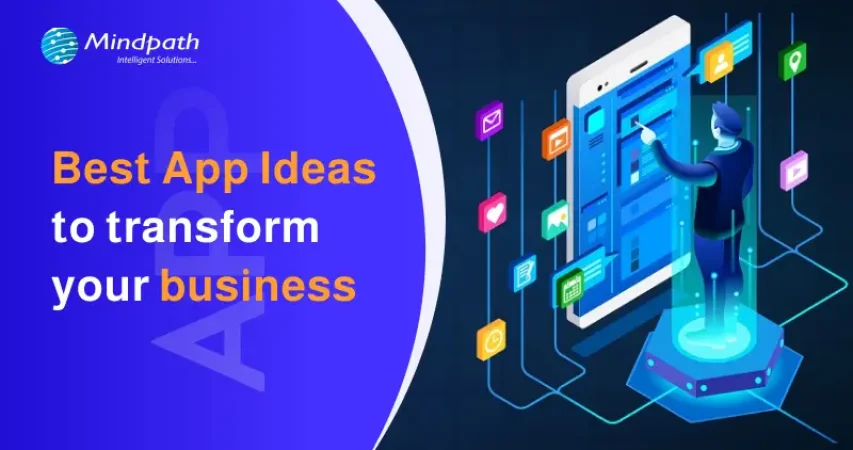
Top App Ideas to Transform Your Business in 2026

Join our Newsletter!

Featured Posts

Support Is One Click Away

Home

Top App Ideas to Transform Your Business in 2026

Top App Ideas

Top App Ideas to Transform Your Business in 2026

Are you in search of top app ideas that can take your business to the next level? Confused about which app can be beneficial for your business? If so, you are not alone in this! Nowadays most of the business owners are turning to smart, easy-to-use apps that can boost customer engagement, simplify daily tasks, and even gain better profits. When you are looking for an app idea that can help you develop your business in 2026, choosing the right app idea can make a huge difference.

In today’s technology-enabled world, new technologies like AI, machine learning, and cloud services make it easier than ever to construct transformational apps. These apps can keep you ahead in a fast-moving market and provide the best possible service to your customers. In this blog, we have compiled a list of the best app ideas to transform your business in 2026. Each idea is based on current trends, real needs, and new opportunities for the future. 

Great ideas grow with the right technical foundation. Discover how Mindpath’s services for web and application development may help your company create cutting-edge digital products.

30 Top App Ideas to Watch in 2026

Here are the 30 best apps to make in 2026, carefully selected to reflect future business trends and user needs. They all focus on real-world problems, user experience and how to help companies to accelerate their growth in a digital-first world. 

1. E-learning App

An e-learning application allows people to learn anything, anytime, directly from their phones. An e-learning app can provide video lessons, quizzes, and tracking progress over a few different topics, such as languages, coding, or business.  

2. Expense Management App

An expense management app helps users track spending, set budgets, and stay on top of their finances with ease. It replaces messy receipts and manual tracking with simple, automated tools. This is one of the best app ideas for startups looking to offer real value and solve everyday money problems. 

3. AI Prompts Generator

An advanced AI prompt generator helps users come up with smart, goal-based prompts for writing, content creation, and planning. It adjusts to user needs, whether it’s for business, education, or personal growth, and keeps getting better with use. It’s one of those mobile app ideas that can change the world by making creativity and productivity easier for everyone.  

4. AI Image Enhancer

An AI image enhancer lets users quickly improve photo quality without needing advanced editing skills. It can sharpen details, fix colors, and upscale low-res images with just a few taps. Perfect for anyone who wants clearer, better-looking photos in less time. 

5. AI Chatbots for HRMS

An AI chatbot for HRMS makes it easy for employees to handle tasks like leave requests and timesheet updates right from their chat workspace. It connects smoothly with tools like Microsoft Teams and works with different HR systems.  

Must Read: AI Chatbot Examples

6. Eco-Friendly Commute Planner

An eco-friendly commute planner helps users find routes that are both timesaving and better for the environment. It suggests options like biking, carpooling, or public transport based on real-time traffic and emissions data. Among practical business app ideas, this one encourages greener habits while supporting corporate sustainability goals. 

7. Language Learning App

A language learning app makes it fun and simple to pick up a new language, starting with basics like the alphabet and moving up to real conversations. It can include voice features to help with pronunciation and keep learners engaged. This is one of the best trending mobile app ideas for beginners who want to build language skills step by step. 

8. Food Delivery App

A food delivery app connects users with local restaurants and food vendors for quick, tasty meals at home. It can include features like user reviews, exclusive deals, and social sharing to create a lively food-loving community. It’s a simple way to enjoy great food while supporting neighborhood businesses. 

9. Vehicle Insurance App

A vehicle insurance app helps users compare plans, get instant quotes, and manage their policies all in one place. It makes tracking renewals and paying premiums quick and stress-free. With easy claim filing and real-time updates, it keeps the whole insurance process simple and smooth. 

10. UPI Payment App

A UPI payment app lets users send and receive money instantly using just their phone, without needing cash or cards. It links multiple bank accounts and supports payments through numbers, virtual addresses, or QR codes for easy transactions. This convenience makes it one of the million-dollar app ideas transforming how people handle money every day. 

Choosing the right tools and frameworks is essential to bringing your app ideas to life effectively. Learn about the top mobile app development technologies that power innovative apps and help you stay ahead of the competition.

11. Drone Service App

A drone service app connects users with professional drone operators for tasks like aerial photography, surveying, and fast deliveries. It makes using drone technology easy and accessible for various needs. This app opens up new possibilities by bringing the power of drones right to your fingertips. 

12. Restaurant Reservation App

A restaurant reservation app lets users quickly book tables at their favorite spots without waiting. It shows availability, menus, and special deals, making dining planning easy and personalized. For restaurants, it helps manage bookings smoothly, so everyone enjoys a better experience. 

13. Customer Support Chatbot App

A customer support chatbot app helps businesses respond instantly to common questions, cutting down wait times and improving user satisfaction. With features like natural language processing and 24/7 availability, it provides reliable help anytime and can hand off complex issues to human agents. 

14. Workflow Management App

A workflow management app streamlines team collaboration by automating tasks and organizing projects. It offers features tailored to fit specific team needs, making remote work easier. With shared access and PC-friendly tools, it’s a top choice for improving business operations. 

15. Container Tracking App

A container tracking app makes it easier to keep tabs on your shipments in real time. You can see exactly where your cargo is and when it’s expected to arrive. It’s a simple way to stay organized and keep your logistics running smoothly. 

Curious how the latest tech can make tracking shipments even easier? Explore the mobile app development trends and discover the innovations transforming logistics and business apps.

16. Voice Translation App

A voice translation app can be a game-changer for anyone traveling to a country where they don’t speak the language. Just speak into your phone, and it instantly translates your words into the local language and the other way around too. It’s like having a personal translator in your pocket, making conversations abroad way less stressful. 

17. Video Editing App

With so many people posting videos on social media, a solid video editing app is a must. It helps users turn casual clips into clean, professional-looking content that actually grabs attention. Whether it’s for personal stories or product promos, this app makes polished videos super easy to create. 

18. Interior Design App

An interior design web app lets users visualize home changes with 3D tools and AR. They can place virtual furniture in real spaces for a personalized touch. It’s one of those new app ideas perfect for home makeover lovers. 

19. Fitness App

A fitness app like this makes staying healthy a lot easier by letting users track key habits and health stats in one place. With support from real experts and custom plans, it’s great for anyone looking to prevent lifestyle issues. Plus, built-in chat helps users connect with coaches and others on the same journey. 

20. AI Logo Maker

An AI logo maker allows users to generate unique and professional logos by inputting keywords, colours, and information about their industry. The AI logo maker will suggest designs quickly and to be easily customized. It is a good option for anyone looking for a sleek logo without paying a designer to create it.

Want your AI logo maker to perform flawlessly and scale with ease? Learn how the right tech stack for web app success can power your app from concept to launch.

21. Railway Tracking App

A train tracker app would give commuters real-time alerts of where the trains are on track and when they are due to arrive at their station, alleviating stress related to planning commuting journeys. It removes the guesswork of if a train is late or having any other disruptions so they can avoid waiting at the station or running around for alternative methods of transportation. 

22. Virtual Art Curator

A Virtual Art Curator application uses AI technology to develop individualized virtual art exhibitions tailored to your preferences and chosen styles. It will recognize the types of art and artists you enjoy and actively auto focus on a gallery designed specifically for your tastes and interests. 

23. Car Sharing App

When users share their vehicles and intended destination in real-time, finding rides is easy for the passenger that will be heading the same way. Passengers can connect with their driver going in the same direction and share the ride. It is a simple way to save some money and cut down on congestion by taking a trip together.  

24. Disaster Management App

A disaster management app can alert people to disasters that are happening nearby, informing them of the type of disaster and its severity to keep them safe. It can help people understand what to do during an emergency, and it can help locate people that are stranded. The app will help rescue teams by providing real-time information on damage and people requiring assistance. 

25. Doctor’s Consulting App

A doctor’s consulting app lets you easily ask questions and get answers directly from doctors. You can also stay updated with the latest medical news and research. Plus, it makes booking appointments quick and simple, all in one place. 

26. Logistics App

A goods-transporter app connects people who require swift deliveries with any nearby available vehicles. It helps to coordinate shipments with trucks that might return to the shipper empty after deliveries. It helps save time and makes it easier for everyone to transport goods. 

27. Virtual Clothes Shopping App

A virtual clothes shopping application will show users what they look and fit like, without the need to try them on physically. This saves a considerable amount of time spent changing and waiting in dressing room lines. Virtual shopping with an app is faster and more entertaining from the comfort of your home. 

28. Restaurant POS App

Using a restaurant POS app makes reserving the ideal table so easy and quick. You simply choose your favorite table and time and reserve it directly within the app. It’s a simple way to figure out a nice evening out without the hassle. 

29. Grocery Delivery App

A grocery delivery app offers users the ability to shop at their local stores and have fresh groceries delivered to their doorstep, with fast delivery times. Grocery shopping is made easy with customized shopping lists, real time inventory updates to the app, and a streamlined payment process. Users can also monitor their delivery in real time, ensuring a simple experience every time.

30. Event Management App

An event management app alleviates the stress of planning! They take care of guest lists, ticket sales, and real-time updates, all in one app. Event management apps can sync seamlessly with payment systems and social media, enabling event promotion and engagement with attendees to be easier. 

Ready to turn your app ideas into reality? Explore the Web App Development Roadmap to see step-by-step how to plan, design, and launch apps that deliver real business value.

Ready to Turn a Top App Idea into Your Business Success in 2026?

These top app ideas for 2026 offer practical ways to improve customer experience and streamline business tasks. Whether it’s AI tools, delivery apps, or event planners, each idea focuses on real needs that can help your business grow and stay competitive in a fast-changing market. 

At Mindpath, we specialize in web and application development services that bring your top app ideas to life. Our expert team creates custom, scalable solutions designed to meet your business needs and future challenges. With Mindpath, you get reliable support and cutting-edge technology to grow your business confidently. 

Frequently Asked Questions

1. How can a business decide which app is worth developing in 2026?

Businesses should evaluate market demand, customer pain points, and revenue potential. Conducting competitor analysis, surveys, and pilot testing helps identify which app concepts can deliver real value. Prioritizing apps that improve efficiency, engagement, or profitability ensures resources are used wisely.

2. What factors make an app scalable as user demand grows?

Scalable apps rely on flexible architecture, cloud infrastructure, and modular design. They should handle increased traffic, add new features without major rework, and integrate easily with other systems. Scalability ensures the app continues performing well as the business expands.

3. How can apps enhance both customer experience and operational efficiency?

Apps that automate tasks, simplify workflows, or provide real-time insights benefit both users and internal teams. For example, delivery, logistics, or expense tracking apps reduce manual effort while offering faster, smoother experiences for customers, improving satisfaction and operational efficiency simultaneously.

4. What role does technology like AI or AR play in modern business apps?

AI and AR add intelligence and interactivity, enhancing personalization and problem-solving. AI can provide recommendations, automate routine tasks, and analyze data for insights. AR improves visualization and engagement, helping users interact with products or services in innovative ways.

5. How should businesses future-proof their apps in 2026?

Future-proofing requires choosing adaptable frameworks, regular updates, and integration capabilities with emerging technologies. Monitoring user feedback, staying aligned with trends, and designing for modularity ensures apps remain relevant, flexible, and capable of supporting long-term business growth.
Related Post

Discover how top companies like LinkedIn, Netflix, and Walmart leverage Node.js for performance, scalability, and faster development. Learn more with Mindpath’s services.

Related Post

Wordpress vs workflow

In the year 2025, the debate of WordPress vs Webflow is hotter than ever. This is because business entities and content creators are looking for the best platform to build secure as well as SEO-friendly websites. It is true that WordPress has been dominating the CMS market thanks to its vast plugin ecosystem coupled with high flexibility. But it is essential to bear in mind that Webflow has been gaining momentum with designers as well as startups, thanks to its no-code visual editor along with built-in hosting. 

In case you are wondering, is Webflow better than WordPress? You need to look at the main difference between these tools. You need to know which one is better so that you can choose the tool that perfectly aligns with your needs. The guide breaks down everything you need to know while choosing Webflow or WordPress.

Choosing the right platform makes all the difference when it comes to performance and growth for your online presence. Explore Mindpath’s WordPress development services for expert guidance on what your business needs.

A Deep Dive into WordPress

WordPress is undoubtedly the most popular content management system in the world. It powers a large number of websites that exist in the online realm. WordPress has gained massive popularity thanks to its ease of use coupled with flexibility. It serves as an ideal tool for beginners, professionals, and businesses in the digitalized setting.  

At the core of WordPress is open-source software. It means that WordPress is free to use. Moreover, it is supported by a global community of developers. One of the biggest strengths of WordPress is its SEO-friendly structure. The novel platform generates clean and crawlable code that adds value to search engines’ index content efficiently. Users can even leverage useful plugins such as Yoast SEO and Rank Math for optimizing titles and meta descriptions that can improve the visibility in search results.

An Insight into Webflow

Webflow serves as a robust no-code website builder. It is capable of bridging the gap between design and development. Unlike conventional drag-and-drop platforms, Webflow provides a visual interface that allows users to write clean and production-ready code. This feature of Webflow certainly makes it a favorite among designers who want to have creative freedom without relying on developers.

A standout feature of Webflow that you need to be aware of is related to its design flexibility. Users have the option to create fully custom layouts as well as animations without having to write a single line of code. Webflow basically combines the best of graphic design tools along with the functionality of a content management system. For businesses that need more tailored solutions, custom WordPress development offers similar flexibility with the added power of plugins, themes, and scalability, allowing organizations to build websites that precisely meet their unique requirements. It serves as a valuable tool for businesses and startups that wish to leverage its ability to deliver professional and responsive websites effectively and efficiently.

Must Read: WordPress Developer Checklist

Comparison Between WordPress and Webflow

Now that you have an insight into Webflow WordPress, it is time to look at the difference between these novel tools. Developers as well as businesses need to understand the difference between WordPress and Webflow so that they can make a wise selection. The core differences have been presented by focusing on specific areas such as ease of use, design, customisation, and many other features. 

1. Ease of Use

Webflow offers a visual no-code editor. It is highly appealing to designers as well as marketers. In fact, it is great for rapid prototyping along with pixel-perfect layouts. On the other hand, WordPress requires setup with a theme or page builder. So beginners may take some time to learn how to use the tool. However, developers with proper knowledge and experience can get full control over the tool. Thus, while discussing Webflow vs WordPress, a major difference between them revolves around the ease of use.  

2. Design and Customization

Webflow serves as an ideal tool for making custom designs without requiring any coding. The responsive control built in can ensure that users can derive optimum value from the tool even if they have limited coding-related skills. On the other hand, WordPress has a large ecosystem of themes as well as plugins. These elements make it highly customizable in nature. But this maturity also makes it plugin-dependent at times.

3. SEO Features

Webflow provides built-in SEO tools such as meta tags and schema options. It even delivers strong performance when it comes to integrated hosting. However, WordPress relies on plugins such as Yoast SEO for advanced SEO control. Thus, this feature makes WordPress extremely powerful, which is capable of precise optimization. You need to bear in mind that, starting from Webflow to WordPress, the role of top SEO features is a must for users.

Stuck deciding whether WordPress or Drupal is a better match for your business? Our WordPress vs Drupal guide breaks down key differences to help you pick the perfect solution.

4. Security

While talking about WordPress vs Webflow, it is a must to take into account the security aspects. Webflow is certainly more secure by default in comparison to WordPress. This is mainly because it offers built-in security features such as DDoS and SSL protection. The top-notch security feature of Webflow acts as its major strength. When it comes to WordPress, the security mainly depends on users. You need to manage separate security plugins and carry out frequent maintenance in order to prevent vulnerabilities. In order to boost the level of security, you need to make sure that you, as a user, maintain cybersecurity resilience while developing your website. 

5. Performance

Webflow is capable of offering better out-of-the-box performance. This is mainly because of integrated hosting coupled with a global Content Delivery Network and clean code. On the other hand, when it comes to WordPress, its performance mainly depends on the chosen hosting and plugins. The selected theme can also impact the performance that is delivered by the tool. If you use Webflow, your website can load faster by default. But if you choose WordPress, you can rest assured about the site performance if you choose appropriate hosting. 

6. Pricing

If you are wondering – is Webflow similar to WordPress in terms of pricing, the answer is no. The pricing of WordPress is variable in nature. You may have to incur separate costs for different things, such as hosting and a domain. Similarly, the price also depends on the chosen plugins and themes. So it may seem cheaper initially, but its price may increase with additional functionality. When it comes to Webflow, the pricing is based on the all-inclusive subscription model. It can become expensive for you if you opt for higher-tier plans.  

Want to make sure your WordPress site is accessible to everyone? Check out our post on improve WordPress web accessibility to learn practical steps for making your site more inclusive and user-friendly.

WordPress vs Webflow – Comparison Table

The difference between WordPress and Webflow has been presented in the table below. You need to understand how Webflow and WordPress are different from each other so that you can choose the ideal tool wisely. The insight can surely guide you to decide which platform you intend to use to fulfil your specific needs. 

Features Webflow WordPress
Ease of Use  No Coding Knowledge needed  Coding knowledge is not strictly needed but can help for advanced customization
Design and Customization Highly flexible in nature  Availability of extensive themes for customization
SEO Features Built-in SEO tools Availability of SEO friendly structure 
Security  High security  Low security 
Performance High optimization for speed Performance depends on hosting 
Pricing Subscription-based pricing model Variable pricing model

Final Winner Between WordPress and Webflow

You must choose Webflow if you prioritize visual design control along with built-in hosting. Webflow is the better choice if you need to manage your website in a simple way. It is well-suited for small business entities as well as startups that want to launch their site quickly with a clean and modern design.

WordPress is an ideal choice for you if you are looking for scalability and advanced SEO capabilities, along with flexibility through plugins. In such cases, WordPress can certainly act as a stronger platform that can meet your needs perfectly. The platform is best-suited for enterprises and e-commerce stores that wish to have full control over SEO as well as integrations. 

Therefore, both Webflow and WordPress serve as useful tools. You need to choose between WordPress and Webflow by considering your needs. In case you are wondering – Does Webflow work with WordPress? The good news is, yes! Webflow can definitely work along with WordPress if you utilize the official Webflow Pages plugin. It will certainly allow you to build pages in Webflow while serving them on your WordPress site.

Worried about security risks and vulnerabilities on your WordPress site? Read our guide on safeguarding WordPress vulnerabilities to learn how to protect your site and keep it secure against threats.

Final Words

The emergence of WordPress and Webflow has been transformational in the prevailing business world. Both these platforms have their unique strengths and advantages. The ultimate choice between WordPress and Webflow in the year 2025 mainly depends on the goals of your website and your budget. You also need to take into consideration the long-term growth plan before making the choice between WordPress and Webflow.

If you wish to derive optimum value from WordPress, you need to partner with a reliable partner. Mindpath’s top-grade WordPress development services can certainly help you develop a world-class website. It can offer the ultimate go-to solution in terms of scalability as well as limitless customization. You can also take advantage of the advanced SEO-friendly structure in order to boost the online visibility of your website. It can certainly give an edge to businesses in the competitive business world.

Web development roadmap

Producing impactful online experiences begins with a clearly defined web development roadmap. The ultimate goal is to create an application where every click, scroll, and animation feels natural and engaging. You are not simply building webpages; you are creating experiences that resonate with people and enable ideas to be expressed, although it is an endless process that presents incredible skills to learn, tools to manipulate, and decisions that will define how your web applications will perform, appear, and feel.

Every step of this journey adds a new dimension to your skills and perspectives. From planning your layouts, designing usable interactions, creating activities, and optimizing the performance, all are built to produce something fantastic. The web development roadmap acts like a compass, guiding you towards building valuable applications for users that “stand out” in a digital moving landscape.

If you are planning to build an ultimate web app development? Mindpath’s web app development services will bring expertise and deliver digital solutions that enhance your business performance.

Understanding the Basics of Web Development

Web development is the act of developing and maintaining websites and web applications. It involves tasks like coding, design, testing, and maintaining that ensure everything is performing as it should for the user. All of these different platforms allow businesses, educational entities, governments, and other organizations to distribute information, market and sell products, provide services, and communicate with others online. Well-developed websites and web applications improve user experience, improve accessibility to information, and support business objectives, which is why they play a major role in achieving success in presently shared digital and real-world spaces.

Collectively, Business Insight Research has valued the global web development market at USD 70.6 billion in 2024, which is expected to grow to USD 141.49 billion by 2033, with a CAGR of 8.03% between 2025 and 2033. The growth is attributed to the proliferation of the internet, smartphones, and e-commerce. The globalization of business has led organizations to invest in professionals to create websites that are visually appealing, fast, and have a highly navigable experience to stay profitable.

Also Read: Web Development Trends

Here are the three types of Web Development

Types of Web Development

1. Front-end Development

Front-end development refers to all the content and elements that appear on the screen in a web browser. Developers using HTML, CSS, and JavaScript create page layouts, decorative elements, and interactive front-end functionality. The purpose of each front-end web page is to be visually appealing, responsive, and usable. Understanding this part is essential in any web development roadmap.

2. Back-end Development

Back-end development refers to everything that happens server-side in order for a website to run properly. Developers will work with data, databases, and user authentication and will largely be responsible for connecting the front-end to the server through application programming interfaces (API). Essentially, back-end development means processing data, executing business logic, and making sure everything is secure.

3. Full-stack Development

Full-stack development encompasses both front-end and back-end development as a way to build fully operating web apps. Developers take on user interface design, server-side, database operation, and everything in between. In this, developers are able to drive every aspect of a project and maximize consistency in integrating the interface visited by a user and the underlying system.

Curious how a web application actually works behind the scenes? Explore the role of frontend and Backend to understand how both layers drive performance and user experience.

What are the 7 Stages of Web Development?

Web development is a precise discipline as it transforms ideas into interactive digital experiences. In web development, everything is sequenced and implemented purposefully, which culminates in a well-polished, functional product that leaves an impression. Each stage is dependent on the prior stage, which allows web developers to build a website or web application for a target audience. Grasping these stages is an essential step in building a successful web development roadmap.

Stages of Web Development

1. Setting Clear Project Goals

Identifying the purpose of your site is the first step, as well as how it will serve your audience. You need to identify your business goals, unique value proposition, audience preferences, and competitive space. A clear vision is the basis of the whole web development plan.

2. Structuring Your Website Plan

Developing a full model for your website will include solid materials such as sitemaps and wireframes. The sitemap will tell you how pages are linked, while the wireframes provide a visual representation of how you want the major elements of your site structured and what areas they will fill. Getting this correct will help ensure that your website navigation, layout, and the way users will travel around the site are thought out in a solid manner from the start.

3. Designing the Visual Experience

At this stage, we start to think about site aesthetic and brand elements, color, typeface, imagery, and iconography. The design must remain uniform across channels to build brand awareness. User user-friendly and aesthetically pleasing design can draw people in and build trust!

4. Creating Engaging Content

At this stage, you’ll develop content for landing pages, product descriptions, blogs, images, videos, etc., in more detail. Content not only needs to align with the needs and questions of your audience, but content also provides engagement opportunities. Keywords will be employed, and if we do this strategically, we can improve reach and connect with specific traffic that can bring targeted traffic to your site.

5. Developing the Website

Once everything about your design and content has been established, developers will start building the front end (client side) and back end (server side) of your website. Their job is to code your site, code in your required functionalities, and build a technical foundation on which the site can grow as needed. It is essential that you have the technical foundation in place, as having the right technical foundation allows your site to function seamlessly while hopefully supporting businesses in their growth.

6. Testing for Quality and Performance

Everything on your website needs to work correctly before the site launches. Prior to launch, the site must be tested on different devices and different browsers. This testing will include broken link checking, speed optimization, and mobile responsiveness. Testing is considered a crucial step in the process to ensure that the user experience is flawless when the user first experiences the website.

7. Ongoing Maintenance & Updates

Once a website is launched, it must be updated on a regular basis to remain useful, secure, and on trend. Updating a website can mean a lot of things and can include adding content, fixing bugs, adding features or functionality, and backing up. Frequent maintenance will keep you more competitive and help with longer-term success. Mastering these stages plays a vital role in shaping a clear and effective web development roadmap.

Is your web application prepared to handle modern security threats? Explore application security best practices for Web and Mobile Apps to learn how to protect your data, users, and business operations.

Web Development Roadmap 2026: A Step-by-Step Guide

A website development roadmap is a structured plan that outlines the stages, tasks, and goals involved in building and launching a website. This web development roadmap for beginners explains what a website roadmap is by showing how each step connects, helping you create a professional, user-friendly site that meets your goals and performs well in 2026.

Web Development Roadmap 2025

1. Mastering Core Web Technologies

The important first part of the web development roadmap is getting familiar with the core technologies that underpin the internet. HTML provides the structure, CSS provides the layout, and JavaScript provides interactivity to web pages. Developers should be familiar with some protocols like HTTP/HTTPS, FTP, and TCP/IP that define how data is transferred between the server and the browser. The basics of accessibility, usability, and web semantics are important to know to create accessible, well-structured websites. The fundamentals are the starting point for anyone on the roadmap.

2. Understanding Web Application Types

Before you start building, it’s a good idea to understand the different kinds of web applications and their use cases. Static HTML pages indicate fixed content. Dynamic pages have content that changes based on user interaction. Server-side applications deliver content through languages like PHP, Python, and Java.

Single-page applications provide fast and fluid experiences, with only slight page reloads. Progressive web apps provide offline capabilities and app-like experiences. Hybrid apps combine web and native features. Understanding these types of web applications familiarizes web developers with the appropriate way to develop for each available project.

3. Building the Right Tool Stack

A complete full-stack web development roadmap involves selecting the proper tool set to orchestrate front- and back-end work simultaneously. For the front end, tools like React, Angular, and Vue.js facilitate responsive and interactive interfaces supported by a variety of CSS pre-processors like Sass for long-term maintainability. For the back end, languages like Java, Python, and PHP power the application logic supported by frameworks like Express.js and Django.

Databases like MySQL and MongoDB facilitate data storage. APIs link the client and server, which helps decouple the presentation of data and business logic. There are many elements that the client and server need against the tool stack for productivity, scaling, and performance.

4. Preparing for Deployment

Deployment refers to the process of making your application available to users on the internet. While the use of Git version control helps keep track of application code changes, Docker guarantees the environment in which we run applications will be consistent. Orchestration tools such as Kubernetes are used to serve developer needs when we are doing large deployments.

Most CI/CD pipelines, like Jenkins and GitLab CI, work together to automate the build and release process for applications. Many providers in the cloud space, such as AWS, Azure, and Google Cloud, give us secure environments where our products can be built and serve to scale with ease. Finally, monitoring tools will allow a web developer to track the service performance and ensure their application is performing as expected post-launch.

5. Implementing Testing and Quality Checks

Testing is vital in web development because it ensures that the website is functioning across devices, browsers, and user conditions. Testing types include unit tests, which test individual items (API, elements, etc at the component level) integration testing, which tests that the pieces of the application work together correctly, and end-to-end testing, such as Cypress or Selenium, which will simulate user behaviors to verify a complete workflow. Accessibility testing is a type that checks that the website can be accessed by individuals with disabilities, and performance testing looks to see how quickly the site responds and how it responds under heavy load conditions.

Periodic testing is an essential factor of this process that leads to quality and reliability in the web. The integration testing tests the pieces of the application work together correctly; and end-to-end testing, such as Cypress or Selenium, which will simulate user behaviors to verify a complete workflow.

Not sure which technologies are right for your web app? Explore the tech stack for your web app success to make informed decisions that drive growth and reliability.

Want to Turn Your Web Development Roadmap into a Success Story?

Following a clear web development roadmap ensures you move through each stage with purpose and precision. It helps align design, functionality, and performance to create websites that truly serve their audience. By mastering core technologies, understanding application types, and implementing strong testing, you build projects that are scalable, secure, and ready for long-term success.

At Mindpath, we create websites that are fast, secure, and built to grow with your business. Our web development services cover everything from front-end design to back-end functionality, ensuring a seamless user experience. We specialize in custom web applications, e-commerce platforms, CMS solutions, API integrations, and performance optimization. With a focus on scalability, usability, and innovative design, we turn your ideas into high-performing digital solutions that engage users and deliver results.

Headless CMS

The digital landscape always adopts unique approaches that engage audiences widely. So, accordingly, businesses are striving to offer exceptional online experiences to be prominent in the digital world. To achieve this, a systematic content-management system can play a critical role. However, traditional CMS systems might limit your performance while restricting your content delivery over multiple channels. 

This is where a headless CMS can be a desirable option to rely upon. As per the statistics, the estimated market of headless CMS software is going to touch USD 7,113.6 million by 2035. This is efficiently transforming the way businesses manage and distribute their content. 

Looking for a website that attracts more customers and grows your business? At Mindpath, we offer professional web development services to build fast, secure, and high-converting websites for your business.

What is a Headless CMS, and How Does It Work?

A headless CMS is known to be a content management system that generally decouples the backend from the front-end. Talking about the traditional CMS platforms, they were able to analyze how content is displayed. But a headless CMS allows developers to prefer their desired front-end technology, making the process more adaptable and versatile. 

A headless CMS uses APIs to deliver content and ace its way for making your customers’ experience more user-centric. Now, you are well aware of what is a headless CMS. Further, let us learn about its working capabilities. 

  • Through a headless CMS architecture, content developers can work within the backend, where they can seamlessly add, modify, or organize content as per their requirements. 
  • The backend is considered to be a repository or a database. So, instead of creating HTML pages, the headless CMS offers content through APIs. This allows your developers to fetch it and display it over multiple platforms. 
  • Accordingly, front-end developers can use JavaScript frameworks like Angular, React, or Vue.js to present the content in a more appealing way. This ensures your brand values have been implemented properly into the content.

Want to understand how digital transformation is changing the way businesses manage content and technology? Explore our blog on digital transformation trends to discover the key innovations driving modern digital experiences.

How a Headless Content Management System Can Be Beneficial for Your Business?

A headless content management system comes with a series of benefits that can escalate the versatility of your business in the digital landscape. 

1. Efficient Omnichannel Service

A headless content management system allows your team to channelize content seamlessly through different channels. No matter if you prefer IoT devices, a website, or a mobile app, your content will remain consistent. This is how your users will love the interactive experience while fueling your brand values. 

2. Enhanced Flexibility

Your business doesn’t have to work with pre-defined layouts, as a headless CMS will always help you perform uniquely. You can easily understand the power of your front-end technologies while allowing you to leverage your creativity and custom efforts. 

No matter if you want a personalized website or a mobile app with a unique interface, a headless CMS platform can offer you flexibility while bringing life to your vision. 

Must Read: Top Mobile App Development Technologies

3. Offers Scalability and Keeps Your Business Future-Proof

Headless CMS offers scalability to your designs. With your business growth, you might discover new channels and technologies. So, a headless CMS makes it easier for integration. The decoupled architecture ensures your content can be efficiently distributed without disturbing your active work structure. 

So, no matter if you want to diversify your product line or want to reach new markets, headless CMS can completely support your growth. 

4. Better Market Delivery

With the backend and front-end separated in a headless CMS platform, it ensures your workflow is not disturbed. This allows your business to initiate rapid content updates, respond swiftly, and launch detailed campaigns faster as per the market demands. 

This valuable approach offers you a great significance in the competitive edge. With better turnaround times, your business can gather better opportunities while reacting to changing trends. 

5. Easy Customization

Businesses can easily personalize their content with the help of headless CMS options. This can be done to satisfy your users’ preferences and behavior. By delivering data-rich insights, you can easily target your audience segments for better reach. Further, this step can enhance your customer engagement while escalating their satisfaction rate. 

For your information, personalization always breeds loyalty, and a headless CMS always equips you with tools that tailor content as per individual user requirements. Moreover, it creates memorable experiences that give rise to long-term customer relationships. 

Wondering how modern technologies and strategies are reshaping the way businesses operate? Read our detailed blog on digital transformation for business to understand how it drives growth and innovation.

Where You Should Utilize a Headless CMS?

A headless CMS can be your ultimate solution for a series of scenarios, as given below. Discover where the headless CMS options can be your viable preference. 

1. Custom Front-end Development

If you require a unique and custom front-end experience, a headless CMS can allow your front-end developers to effectively discover their creativity. So, your user experience and designs are not limited to any pre-built templates. It allows you to generate a unique digital experience that can make your customers happy. 

2. Multi-platform Requirements

If you want your content delivery to be seamless through multiple platforms, a headless CMS architecture can be your suitable pick. It simplifies content distribution while keeping your user experience valuable over different channels. 

3. Content-first Integrations

There are many organizations that desire content marketing. So, a headless CMS can easily align your content creation with its delivery. Apart from this, it accesses your markets to acknowledge engagement while your development team can handle the technical aspects. 

Thinking about how emerging AI technologies can enhance your digital ecosystem alongside Headless CMS? Read about the most impactful AI trends shaping the future of technology.

4. E-commerce Applications

Headless CMS can be a suitable choice for your e-commerce platforms, where you need to endlessly update your content and products. Moreover, it allows you to initiate swift updates in your pricing, product listing, and promotional content. 

5. IoT Applications

Headless CMS can easily manage and offer content to a variety of connected devices in IoT applications. It includes healthcare devices, smart applications, and even manufacturing equipment. Further, headless CMS architecture ensures real-time updates and proper content distribution to these devices. 

6. Personal Web Application

Organizations that create custom web apps or websites with unique approaches and functionality requirements can adopt the values of Headless CMS. You can use APIs to access and display content as per your requirements, offering you greater flexibility in layout and designs. 

Struggling to understand how modern businesses build scalable digital systems to support flexible content architectures? Read our guide on custom software development to see how businesses build future-ready platforms.

How to Implement Headless CMS with Best Practices?

Integrating a headless CMS is not random, as you need to adopt a better plan. 

1. Assess Your Requirements

In the initial phase, start by identifying your content delivery needs. This might include the type of content and the number of platforms you want to target.

2. Opt for the Right CMS

Prefer a headless CMS that fulfills your business motive. You can consider elements like ease of use, scalability, content modeling ease, etc. 

3. Data Migration

In the next step, you need to think about migrating your existing content to the headless CMS platform. This includes transferring all the content from your existing CMS platform to the new one. 

4. Content Modeling

Next, you need to think about content modeling that can match your business’s unique requirements. 

5. API Integration

There are many headless CMS platforms that offer APIs to access and further retrieve the content. So, you can develop APIs for your front-end apps. 

Curious about how AI models can be trained to generate more relevant and contextual content for modern CMS platforms? Learn how OpenAI fine-tuning API works and how it can enhance your content strategy.

Conclusion

The digital landscape is changing in a blink. So, brands that can offer consistent and engaging content through multiple channels are more likely to survive in the market. So, a headless CMS platform can make your modern development teams unique by offering them the flexibility they desire. 

No matter if you want to extend your digital presence or just want to elevate your engagement rate, a headless CMS can provide you with a good foundation to be successful. Here, Mindpath can be your ultimate partner. This company can help you with the best CMS implementation while keeping you ahead with your unique innovations and dedicated content. 

Discover the benefits of headless CMS for faster content delivery, personalized experiences, and seamless integration.