Top 10 Most Popular AI Models

Join our Newsletter!

Featured Posts

Support Is One Click Away

Home

Top 10 Most Popular AI Models

top AI models

Top 10 Most Popular AI Models

The world is experiencing a huge technological transition, driven by emerging AI trends. This shift is justified by the active development of Artificial Intelligence and powerful AI models. They are high-end neural networks that have the capability to generate code, pictures, videos, and text. The selection of the top AI models can be a breakthrough for a company.

Whether you are launching new products or developing your strategy of content, the best AI models can make all the difference. However, which is the most appropriate one to meet your business requirements? Well, there is no need to fret about it, as this best AI models list contains the top 10 options that are dominating the AI arena. Let’s have a look.

Ready to implement advanced AI models but unsure which ones can truly move your business forward? Mindpath offers expert AI development services that help you build customised, high-performance AI solutions tailored to your goals.

AI Models – Understand the Basics

Before we dive deep into the list of most popular AI models, let’s understand what AI models actually are. 

AI models refer to complex computer programs that are used to interpret different patterns and provide results depending on the data. These models power modern tools that code, comprehend languages, and create images.

While certain top AI models are built to perform simple tasks, others focus on domain-specific tasks. The use of AI tools and models is growing with time. In fact, more than 88% of businesses are now using AI tools, and in 2004, it was 78% (Source: McKinsey). 

Another report for Gartner informs that total spending on generative AI is projected to cross USD 644 billion in 2026, around a 76% increase from 2025. These numbers clearly prove the rising importance of AI for today’s business. 

Want to understand the different kinds of artificial intelligence? Explore types of AI to learn about ANI, AGI, and ASI, and how each is applied in real-world scenarios.

Now, let’s talk about the top AI models you can opt for in 2026 that can support your workflows and business growth.

Top 10 AI Models for Modern Businesses

The best AI models are not just designed to process data. In fact, they have the ability to think and create. Some models can interact like humans, and some can easily explain complex logic. Here are the 10 most popular AI models that define innovation and power. 

1. GPT-5

When talking about which AI models are the most popular right now, we can’t ignore GPT-5. Developed by OpenAI, this is the most powerful AI model available to all. It can handle multiple tasks, including code generation, audio, images and text creation. GPT-5 is now powering tools like ChatGPT and Microsoft Copilot. 

This model helps users plan, write and solve issues with ease. Besides, it supports ultra-long conversations. That means when you use it, you will feel like interacting with an intelligent assistant. GPT-5 is a versatile model and can be used for personal productivity apps or enterprise tools. 

Want to customise AI models for your specific needs? Check out our OpenAI Fine-Tuning API tutorial to learn step-by-step how to fine-tune models for better performance and accuracy.

2. Claude Sonnet 4.5

It is one of the most advanced AI models by Anthropic. Claude Sonnet is developed for power users looking for deep reasoning, speed and precision. This model offers impressive results on maths, long-running tasks and coding.  

It is an excellent option for businesses that prioritize ethical AI, reliable automation and compliance. With a 200K token input and powerful tools like content editing, it can handle various complex workflows easily. 

3. Gemini 3

Searching for top AI models that can help you bring your ideas to life? Gemini 3 can be a top choice. Developed by Google DeepMind, this model supports sophisticated reasoning and helps users learn and create anything they want. 

People like to use Gemini, as it is smart and feels intuitive. Whether you want to analyze complex data, summarize documents, or brainstorm new ideas, Gemini can be your reliable assistant. 

4. DeepL

Another popular AI model you can consider is DeepL. It offers quick and accurate translation services. It is popular for its amazing human-like output and impressive accuracy. The model supports multiple languages, more than 30 languages. 

Content creators, businesses, and professionals use it for translating documents, emails, and websites. Recently, the company introduced DeepL Write, which helps users with spelling, grammar, and more.

5. Grok 4.1

It is xAI’s most powerful and intelligent AI model and is integrated into X. The model is designed for collaborative, creative, and emotionally intelligent interactions. As a result, all conversations feel more engaging and natural. 

The model is generally trained on social media data and can be easily adapted to evolving internet culture. Built on a large-scale reinforcement learning infrastructure, it offers a more compelling and perceptive experience. 

Also Read: Benefits of AI

6. Mistral AI’s Mistral Large 2

Mistral Large is an advanced and high-performance language model introduced by Mistral AI. The model is capable enough to handle advanced reasoning and multilingual tasks. It is optimized for accuracy and speed. If you are developing chatbots or want to optimize technical workflows, you can give it a try.

Different from other Mistral models, it activates all parameters and offers consistent results. It can achieve an accuracy rate of 84 percent for code generation (Source: Mistral AI). 

7. DeepSeek VL

The AI models list will remain incomplete without covering this particular AI model. This open-source Vision Language model is quite efficient for real-world language and vision applications. It can understand logical diagrams, scientific literature, charts, diagrams, web pages, and more. 

Educators and researchers utilize it to analyze scientific papers and make complex concepts easy to understand. The company is now working on a new model that can perform multi-step and complex actions with less human input. 

8. Llama

Introduced by Meta, Llama models are developed based on an open-source approach. The latest model released by the company is Llama 4, and it includes two multimodal models, such as Llama 4 Maverick and Llama 4 Scout. 

All these models can process short videos, images, and text. As these are based on a MoE- Mixture-of-Experts architecture, they demonstrate increased efficiency. Its open-source nature provides developers with better control and flexibility. You can fine-tune it as per your requirements. 

9. Stable Diffusion

It is an open-source AI image creation model based on the Stable Diffusion XL model. The model is popular for generating high-quality images using various text inputs such as frame, presets or style. 

Besides, it can also replace or add parts of any images through “outpainting”. Whether you need help for digital storytelling, concept art or marketing, Stable Diffusion can offer you a perfect kickstart. Its speed, community-driven ecosystem and flexibility make it one of the top AI models among designers, artists and content creators. 

Wondering how AI can understand and generate human-like text? Check out our Large Language Model (LLM) blog to learn how LLMs power smarter applications and chatbots.

10. Cohere Command R+

This powerful large-language model is built for accuracy, speed and smooth private deployment. It is developed for enterprise-grade search and document analysis. By combining real-time document processing with large language models, it offers accurate question answering and summarization. 

Thanks to its API-first design, you can easily integrate it into your existing system. Most businesses are using it for customer support, legal discovery and knowledge management. In an environment where context and accuracy are vital, this model offers reliable performance. 

Tips to Choose the Right AI Models

Well, it is common to feel overwhelmed as the options are more. However, by considering these simple tips, you can come up with an informed decision. 

1. Understand how you want to use an AI model, for content creation or other purposes.

2. Now, consider your budget as well as your technical skills. If you are using a model for the first time, you can go for GPT 5 or Gemini. Mistral and Llama require technical skills.

3. Don’t forget to check context length. Longer context windows are good for performing multi-step tasks.

4. Go for the free web version and test models properly. Compare the results before making your final decision. 

Want to know how AI models focus on important information? Read our attention mechanism explained blog to understand this key concept behind modern AI and LLMs.

Let the Experts Help You Choose the Best AI Models

The AI model arena is evolving rapidly. Some top AI models such as GPT-5 and Gemini, are establishing a new level of accuracy and performance. Specialised models, such as Cohere and Stable Diffusion, on the other hand, are dominating their niches.

Still don’t know which top AI models to use for your business? Allow Mindpath to help to make the right decision. Our team can help you identify, deploy, and fine-tune AI models best suited for you. We also help businesses with AI development services, which guarantee scalability and performance.
Related Post

Want to know about the potential conversational AI use cases? You have reached the right place;
Discover the ultimate guide to hiring Node.js developers in London. Learn about the skills, benefits, and cost factors involved in finding the right talent for your project.

Related Post

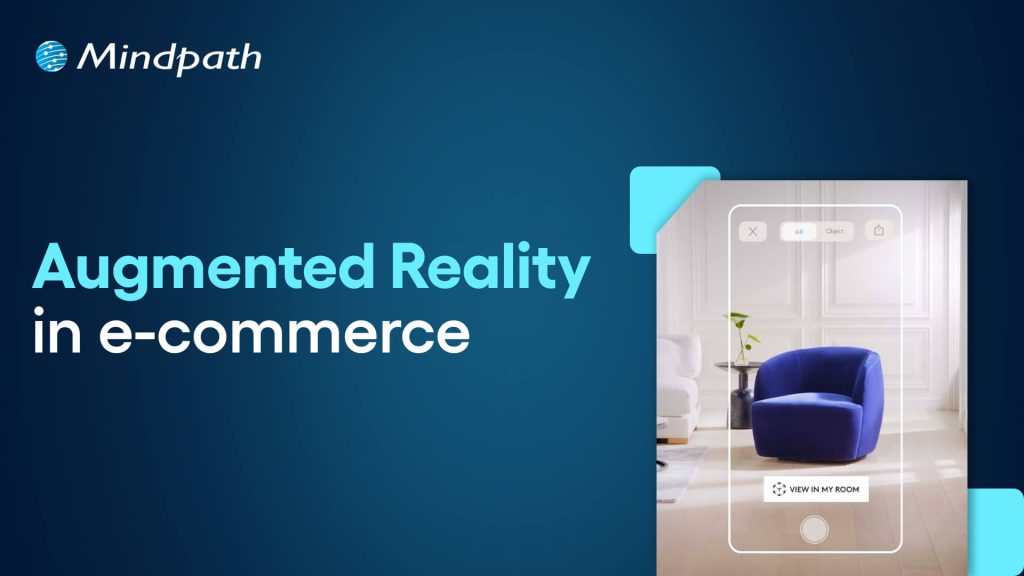
Augmented reality in ecommerce

The e-commerce model has led to the transformation of how business operations are conducted in the 21st century. This novel concept has expanded the boundaries for businesses. E-commerce businesses are in a position to exploit a broad range of advanced technologies. A new technology that has been redefining the e-commerce landscape is augmented reality.

Augmented reality in e-commerce has the potential to enhance the online shopping experience of customers. This is possible since AR commerce blends digital products with the real-world environment of customers. Thus, augmented reality allows customers to view as well as interact with virtual products before making the purchase. It is the perfect time to learn how the augmented reality process is revolutionising the e-commerce setting. 

Want to prepare your online store for the growing demand for immersive and interactive shopping experiences? Connect with Mindpath to discover how you can bring advanced AR capabilities into your business.

What is Augmented Reality?

Before exploring the impact of augmented reality in e-commerce, you need to know what is augmented reality. Augmented reality refers to the technology that is capable of overlaying digital information on how a user views the real world in real time. This advanced technology enhances their reality by adding computer-generated elements to it. 

Within a short span of time, augmented reality has gained massive popularity. This is because it can merge the physical and digital worlds, thereby creating an interactive experience for users. You can have such a surreal experience either through a smartphone, AR glasses, or a tablet.  

Is your e-commerce business ready for the next phase of digital innovation? Explore digital transformation for businesses to discover how AR fits into modern growth strategies.

How E-commerce Businesses are Using Augmented Reality?

Although the AR technology is in its infancy, its application in the e-commerce space has been surging. Many e-commerce businesses have been leveraging the technology in diverse ways to shape the experiences of their customers. 

1. Virtual Try-Ons

While purchasing apparel, people usually prefer to try on the garments. You do not need to physically try on apparel thanks to the use of Augmented reality in e-commerce. This is because you can try it out virtually before deciding whether to buy it or not. Therefore, the augmented reality technology helps online shoppers comprehend what they are purchasing and how the items will look on them. 

2. Interactive User Manuals

An interactive user manual is considered to be a great application of AR in e-commerce. This is especially useful when customers buy a product that has a learning curve before it can be used easily. Such manuals can be a great help for users as they can refer to them to understand how the product works. Interactive user manuals are capable of responding to the actions of users. Moreover, they can offer on-page contextual support while using a website or software. 

3. Preview Placement

The preview placement gives customers a view in real-time of what a product will look like in their own environment. This can be extremely helpful when you decide to buy furniture or a television set for your home. Many brands have started using AR in order to help their customers visualize how their products will fit in the homes of customers. It has undoubtedly simplified the overall shopping experience for modern customers. 

4. Social Media Filters

There was a time when social media filters were used by online users just for fun. However, a number of brands have started leveraging social media filters to showcase their products. Many brands have already come to realize that the novelty factor relating to AT filters has the potential to boost customer engagement. Such strategic use of AR by brands has been wowing customers today. 

How do businesses measure the real impact of AR on conversions and engagement? Explore the importance of data-driven decision-making for Businesses to discover how insights optimize e-commerce performance.

Benefits of Augmented Reality for Businesses

The proper use of AR by e-commerce businesses can give rise to immense value for them. The capabilities of Augmented Reality can give an edge to modern businesses while they create value for their customers. 

1. Better Customer Engagement 

You need to bear in mind that augmented reality technology is highly interactive in nature. Thus, it can make it easier for customers to get hooked on the sites of online businesses. The longer they stay on the site, the higher the chances for them to make a purchase. Even if they do not make a purchase, it will create an opportunity for them to build a relationship with the brand. Thus, the quality of customer engagement can improve. 

2. Reaching Out to New Customers

In the highly competitive e-commerce landscape, businesses need to constantly look for new customers. The use of Augmented Reality can certainly give you an edge as a business. In the noisy world, it can serve as a suitable tool that can help grab the attention of your potential customers. You can create a highly engaging AR campaign in order to make your business seen and heard by online users. 

3. Reduced Returns

When businesses use AR technology, they not only empower themselves but also empower their customers. As customers have a lot of information, when businesses use AR, the possibility of product returns drops considerably. The application of AR makes it possible for customers to get a glimpse of how certain products will look in their personal space. So they can be more sure while making their purchase decisions. 

4. Possible Challenges That May Arise

The rising number of augmented reality examples shows that the future of AR in e-commerce is full of new possibilities. However, it is crucial for businesses to bear in mind that they may face a number of challenges while adopting AR technology. The insight can help them prepare themselves to use the novel technology in a strategic manner.

Wondering how artificial intelligence complements augmented reality in online shopping? Explore AI in e-commerce to discover how intelligent technologies personalize experiences and increase conversions.

5. High-Quality 3D Models

A common technological challenge that businesses may encounter is related to achieving high-quality 3D models. Businesses must keep in mind that the models need to be realistic in nature in order to boost customer engagement and experience. However, in the technical sense, it may not be an easy task to achieve. In order to reduce this kind of complexity, it is advisable for businesses to use robust tools. 

6. Balancing Efficiency and Cost

It is very important to bear in mind that generating 3D assets can be a costly affair. In fact, the costs may range between a few hundred and several thousand dollars per product. In order to strike a balance between cost and efficiency, businesses can consider leveraging cloud infrastructure. 

7. Seamless Integration with Workflow

Another challenge that may arise in the path of businesses revolves around the integration of AR technology with the existing workflow.  Complexities may arise when online retailers try to integrate 3D assets into their current product catalogue. It is vital to remember that this specific process needs to be smooth and streamlined. It must also be scalable to enhance overall customer satisfaction. 

It is essential for online retailers to effectively address these challenges. By addressing these obstacles and bottlenecks, they can leverage AR technology to the fullest and offer a highly engaging experience to their target audience. 

Planning to deliver AR experiences through mobile commerce apps? Discover mobile app development technologies to explore tools that power interactive shopping journeys.

Final Words

Augmented Reality has emerged as a breath of fresh air in the prevailing e-commerce landscape. The novel technology has been gaining high momentum as it creates a plethora of benefits for businesses in the form of better customer engagement, the ability to reach out to new customers, and reduced returns.

Mindpath’s innovative services relating to augmented reality can create immense value for modern businesses. Our experts will ensure that your businesses can boost customer engagement by leveraging augmented reality technology. You can capitalise on the real potential of AR technology and witness your business reach new heights.  

Discover how Augmented Reality (AR) is transforming e-commerce with immersive shopping experiences, boosting engagement, and improving sales.
what is edge computing

The radical growth in the amount of data generated by devices connected to the internet created concerns regarding the traditional approaches to computing and data storage. Many companies have shifted their business models towards cloud computing to accommodate the demand for storing more data. However, the search for answers to ‘what is edge computing’ is gaining momentum due to the limitations of cloud computing. One of the biggest setbacks of cloud computing is the latency, which is a direct outcome of the distance between users and cloud data centers.

Edge computing has emerged as a promising alternative by providing a distributed computing model in which computation and data storage are closer to the source of data generation. Understanding the strengths and limitations of edge computing offers the ideal foundation to integrate it effectively in enterprise operations.

Is your business struggling to act on data fast enough to stay competitive? Mindpath’s Edge Computing Services deliver real-time processing to power faster and smarter decisions.

Discovering the Ideal Definition of Edge Computing

The traditional cloud-based infrastructure has been the favorite choice of companies who prefer agility and scalability. On the other hand, the limitations of cloud computing have created setbacks in supporting emerging use cases and workloads. Apart from the high latency, cloud computing makes you dependent on central data centers and burdens you with costs. Therefore, an alternative like edge computing has become the need of the hour for thousands of businesses worldwide.

Upon searching for edge computing definition on different platforms, you will come across multiple entries. The most common definition of edge computing paints it as a distributed computing approach that involve shifting computing resources as close as possible to the source of data generation. It involves carrying out data processing tasks on or near the devices on the edge, thereby reducing network costs and latency requirements.

You must know that the edge may be a router, routing switches, ISP, multiplexers or integrated access devices. The only thing required for edge computing is that the network edge must be in proximity of the device.

Understanding the Components in Edge Computing Architecture

You might have many questions about the way in which edge computing overcomes the challenges with cloud computing. The basic edge computing meaning does not shed light on the fact that edge computing works with different components. Without understanding the architecture of edge computing, you cannot figure out how it is better than cloud computing. A breakdown of the important components in edge computing architecture can help you decipher how edge computing works.

1. Edge Devices

Edge device refers to the actual device on the edge, such as a camera, IoT device or a sensor. It is the source where raw data is generated and serves as the first point of contact in the edge computing architecture. The edge device can support minimal processing tasks, such as data filtering.

2. Edge Gateways

The next crucial component after edge computing devices is the edge gateway, which serves as a data aggregator. Edge gateway is the place where the system aggregates data from multiple devices and deals with basic analytics and preprocessing tasks.

3. Edge Servers

You cannot think about using edge computing for real-time tasks without edge servers in the picture. Edge servers handle the local processing tasks for real-time applications and running AI inference models or containerized workloads. As a matter of fact, edge servers take care of critical data on a temporary basis before sending it to the cloud.

4. Network Layer

The network layer helps in ensuring the use of 5G, LAN, Wi-Fi or satellite connection for connecting edge components to each other and the cloud.

5. Data Center or the Cloud

The data center or the cloud in edge computing architecture is useful for long-term storage and in-depth analytics. It also facilitates easier prospects for model training alongside the utilities like component orchestration and centralized management.

Unraveling Real-World Use Cases of Edge Computing

The introduction to edge computing also creates curiosity about the different ways in which businesses can use it. You can find edge computing examples in almost every industry and even in your daily lives. Learning about the real-world use cases can help you get a better idea of how edge computing can revolutionize the future of computing.

1. Retail

Edge computing serves the ideal resource for real-time processing and analytics in the retail sector to provide seamless customer experiences. Retailers can use edge computing in inventory management, customer analytics and personalized advertising to improve operations as well as the customer experience.

2. Manufacturing

The widespread use of edge computing in IoT applications provides the foundation for leveraging the new computing approach in manufacturing. IoT devices allow manufacturers to monitor their equipment, production lines and quality control. With the help of edge computing, manufacturing processes gain the benefit of automation, thereby ensuring faster manufacturing.

3. Autonomous Vehicles

The examples of different types of edge computing applications in the real world will be incomplete without mentioning autonomous vehicles. Edge computing can provide the lowest levels of latency required for processing input data from cameras. The low latency plays a major role in enhancing safety and navigation in autonomous vehicles.

4. Smart Cities

If you talk about autonomous vehicles among use cases of edge computing, then you should not leave smart cities from the discussion. The faster and localized data processing with edge computing offers a formidable boost for various tasks in smart cities. Edge computing has the potential to streamline energy optimization, public safety monitoring and real-time traffic management.

Does Edge Computing Have Any Variants?

Most of the discussions about edge computing focus only on its definition, its applications and benefits. The search for answers to ‘how does edge computing work’ does not lead you to the more intricate details of the new computing approach. You should also know that edge computing works at different levels with distinct utilities in different scenarios.

1. Regional and Local Edge

The regional and local edge locations help in extending the capabilities of cloud computing with reduced latency. The regional hubs work like the cloud to facilitate compute and storage services near end-users. Positioning of regional and local edge hubs before the last-mile network ensures that they can support applications which need moderate latency and enhanced data throughput.

2. On-site Edge Computing

Another notable variant of edge computing is on-site edge computing in which edge servers and devices are present in the physical premises of an organization. The on-site edge computing systems are more reliable choices for mission-critical applications as they enable real-time decision making without external networks. On-site edge computing also provides the assurance of more autonomy, control and security for enterprises.

3. Device Edge Computing

The diverse applications of edge computing also draw references to device edge computing with IoT endpoints. Device edge computing involves a combination of IoT devices, embedded systems and sensors which interact directly with the physical environment. The utility of device edge computing is primarily evident in distributed edge networks as they reduce data transfer and support localized actions.

How Can Edge Computing Help Your Business?

Edge computing offers significant advantages that make it a better alternative to cloud computing. As a matter of fact, the benefits of edge computing make it a powerful option for many emerging use cases.

1. Lower Latency

One of the most notable entries among the benefits of edge computing is low latency. With the help of local processing, edge computing ensures that the data never goes to the cloud for processing. As a result, edge computing can ensure significantly faster response times, which is essential for time-sensitive applications.

2. Enhanced Reliability

The local processing in edge computing ensures that it does not have to depend on external networks or resources. You can notice that the advantages of edge computing don’t give up on you in times of outages. You will not need a stable internet connection at all times to make the most of edge computing in real use cases.

3. Reduced Bandwidth Costs

Edge computing plays a major role in reducing network congestion, which ultimately leads to lower operating costs. With limited data transfer to the cloud, edge computing provides the assurance of improved performance in limited bandwidth. As a result, edge computing can help you avoid the costs of uninterrupted high-speed internet connectivity.

4. Better Flexibility

The isolated processing on devices in edge computing not only showcases how the power of computing can come at low costs but also with more flexibility. Edge computing allows you to add more connected devices without the urgency to connect them to central servers. On top of it, edge computing also facilitates hybrid scaling with the help of cloud resources and flexibility for deploying new edge nodes with growing demand.

Final Thoughts

Edge computing is a new paradigm that aims to revolutionize compute and data storage services. It provides a better alternative to cloud computing by enabling data processing on the devices at the network edge. The difference between cloud and edge computing is clearly evident in latency and resource requirements. Edge computing consumes significantly fewer resources than traditional cloud computing and delivers lowest latency. The adoption of edge computing in smart cities, autonomous vehicles and smart manufacturing units is a proof of how the new computing approach is better than its predecessors.

Mindpath is a leading end-to-end IT solutions provider with years of experience in catering to clients from different industries. We specialize in edge computing solutions tailored to modern specifications and capable of delivering the best results in alignment with your business goals. Take the first step to embrace the power of edge computing in your business with us.

Discover how edge computing enhances data processing, helping businesses make real-time decisions and optimize operations.
healthcare software development services

Ever Wondered how technology is really influencing the healthcare sector? From electronic health records and telemedicine to mobile health apps, today healthcare software development plays a great role in changing the way patients receive and providers provide treatment.  

But what exactly are healthcare software development services, and why are they crucial for modern medicine? In this blog we will explore healthcare software development services and how these cutting-edge solutions are going to shape the future of healthcare, improve patient outcomes, and smooth operations. 

What is Healthcare Software?    

Healthcare software development is the process of developing individualistic computer programs designed for hospitals, clinics, and all other types of healthcare organizations. These programs assist in enhancing how healthcare providers render care by making processes more effective, accurate, and oriented towards patients. Healthcare software creates a complete digital system within a healthcare organization.  

This allows medical professionals to offer better and more accurate clinical services. To doctors, this represents an easy way to do follow-ups and monitor the health of their patients, schedule appointments, and get access to medical reports, all from the comfort of managing staff. To patients, it offers online appointment booking, live chat with doctors, sharing of medical reports, and receiving health advice.   

These software solutions come with various benefits associated with the improvement in patient care, efficiency, and reduction in medical errors. They can digitize the traditional paper-based systems and take care that patient care is performed quicker and much more safely. Healthcare software is further creating new sectors, such as patient engagement, clinical robotics, and telehealth, driving a lot of startups to bring ideas into life. 

 Types of Healthcare Software Development Services  

Types of Healthcare Software Development Services - infographic

1. Electronic Health Record (EHR) Software   

EHR software is being used by hospitals and clinics like any CRM, but with a healthcare tune. It contains all the relevant information concerning every patient, among them what medicines they use, the various doctors’ advice, and the medical processes that they have gone through. Many EHRs incorporate mechanisms for billing, collection, and even a patient portal that allows patients to view consultation history, medical records, and prescriptions. There are two types of EHR software: the electronic patient record, which is used in hospitals for management purposes concerning a patient internally, and the electronic medical record, which keeps track of information like medications, past and future procedures, and how well the patient is recovering. 

2. Medical Database Software   

Medical database software can be called a huge library of information about medicine, not according to the profiles of patients but according to diseases. This tool aids doctors in looking through cases like one that is being treated and thus making informed decisions about its cure. It is also used for learning by allowing doctors to know more about certain diseases. For example, a dermatologist using medical database software can view all the patients diagnosed with Atopic Dermatitis, compare their symptoms, treatments, and recovery plans, and find the best approach for their current patients. 

3. Health Tracking Apps 

Health-tracking apps are part of the fast-growing industry called mHealth, which stands for “mobile health.” This industry, valued at $37 billion globally for 2019 alone, allows users to trace and manage their health from their smartphones. Some of the popular health monitoring apps include fitness apps such as 8fit, diet apps such as Fitatu Calorie. For instance, sleeping patterns are monitored by the FitBit wristband, while the Oura Ring is responsible for monitoring several health metrics. Others include glucometers for testing blood sugar levels and, of course, thermometers in general—for instance, tracking menstrual cycles like the Kindara app. All these tools work together to give users a better understanding of their health and wellness. 

4. E-prescribing Software 

The e-prescribing software is becoming a tool that every doctor must have, with countries all over the world rapidly adopting electronic prescriptions. Such software allows doctors to easily manage all prescriptions for all patients by tracking, renewing, and canceling them as need be. It is also connected to national drug reference databases that help in picking up the right medications and making sure there is no error. Examples include MediTab and ScriptSure, two software programs designed to ease e-prescribing and improve the capabilities of health professionals to deliver accurate and effective care. 

5. Appointment Scheduling (booking) Software 

Appointment scheduling software is designed to assist hospitals, clinics, and medical practices in managing their appointments online. This normally allows the provision of a user-friendly platform through which patients can easily book appointments via an app or website without calling up the office. This type of software normally features email notifications and automatically sends reminders to doctors and patients about upcoming appointments. It accommodates multiple doctors’ schedules, cancellations, or rescheduling of appointments, and does much more to provide appointment trend data that helps in bringing efficiency to the practice. Additionally, AI chatbots are integrated into these systems to enhance the booking experience. These chatbots can handle appointment scheduling, provide immediate responses to patient inquiries, and assist with rescheduling or cancellations. 

Looking to boost your healthcare operations with top-tier software solutions?

At Mindpath, we deliver cutting-edge, customized healthcare software to empower efficiency and elevate patient care.

Why Are Healthcare Practitioners Going Digital? 

Health practitioners use digital technologies greatly because of the great advantages they present in improving patient care and practice management. Digital healthcare solutions help doctors in the management of patient information. Therefore, record-keeping becomes more accurate and efficient while diminishing the burdens of paperwork.  

Healthcare IT has been one of the fast-growing markets and is expected to grow further. From $303.4 billion in 2022, this is projected to rise as high as $974.5 billion by 2027 with a good annual growth rate. The market is expected to grow to $728.63 billion by 2029 and even further to $1,069.13 billion by 2032. Healthcare provider solutions take up about 38% of the market, such as those in Electronic Health Records. On the other hand, IT services form 52% of the market, including online payments and cybersecurity. Growth is fueled by new technologies, increased spending by consumers, and government initiatives; however, challenges persist, with the most important ones being related to cybersecurity risks. It has the maximum market share in North America due to its better and advanced infrastructure. The European region is predicted to grow fast with government help and support, adoption of AI soon. Some major players in this field are GE Healthcare and Philips, which are carrying the industry forward. 

Leading Healthcare Software Development Services at Mindpath 

Mindpath offers a full cycle of healthcare software development services that meet all the needs of healthcare providers, patients, and all those concerned. Our offered solutions work toward better patient care while easing operations. Here are the services we provide: 

Leading Healthcare Software Development Services at Mindpath - infographic format

1. Healthcare Software Development Consultation: 

We assist in planning and designing your healthcare software project from an idea to detailed planning. Our advice ensures you will have a clear roadmap for developing effective healthcare solutions.  

2. Healthcare Software Development: 

We develop various healthcare IT software solutions, including Electronic Health Record (EHR) software, practice management systems, patient portals, among others. The solutions are secure, scalable, and well-built according to the industry regulations to ensure better patient care and efficiency. 

3. UI/UX Development: 

We design easy-to-use interfaces that will be convenient and pleasant for the eye. We focus on bringing your healthcare software both functionality and user experience. 

4. AI Chatbot for Healthcare: 

Our AI chatbots for healthcare answer questions, provide appointment scheduling, and disseminate medical information. They help improve interaction with patients and relieve some workload from the health staff. 

5. Modernization of Healthcare Software: 

Legacy system upgrade and migration to state-of-the-art platforms, enrichment of new functionalities, and updating of old technologies to manage your software and keep it relevant. 

6. Maintenance & Support: 

Ongoing support and maintenance are available to make sure that your healthcare software keeps running smoothly and aligns with your changing needs. 

Conclusion  

The huge effects of rapid growth in technology reshaping healthcare to become more effective, accessible, and patient-centered are undeniable. It is evident from the adoption of electronic health records and e-prescribing software at the end of the spectrum to health-tracking apps and AI-driven tools that are revolutionizing how healthcare providers care for patients and their practices.  

Such innovations not only improve the quality of care provided to patients but also the administrative flow, hence making healthcare very responsive and effective. Adopting the newest technology is crucial for healthcare organizations to keep ahead of these trends as the sector continues to change. This is where a holistic approach to healthcare software development is necessary. Healthcare providers may enhance patient outcomes, streamline operations, and more adeptly navigate the digital terrain by incorporating cutting-edge software solutions.  

At Mindpath, we are dedicated to supporting healthcare providers through every step of this transformation. From development and consultation to UI/UX design and modernization—our services cover a large area of needs, all meant to make sure you can drive positive change in healthcare through digital technology. Be it building new systems, updating existing ones, or ensuring ongoing support, Mindpath makes sure that your healthcare software is of the highest quality and effectiveness. 

Are you curious about how cutting-edge medical software might transform your business?

At Mindpath, we develop solutions that improve patient care and expedite operations.

Explore how healthcare software development enhances patient care and operations. Discover services like EHR, medical databases, and more. Transform your practice today!