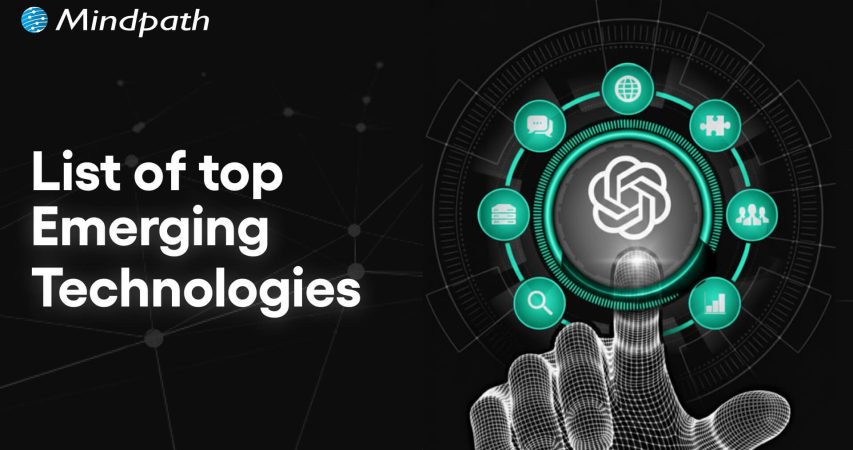
Emerging Technologies That Will Redefine the Digital World

Join our Newsletter!

Featured Posts

Support Is One Click Away

Home

Emerging Technologies That Will Redefine the Digital World

Emerging Technologies

Emerging Technologies That Will Redefine the Digital World

Have you ever wondered which technologies will shape the future of our digital world? With constant innovation, the digital landscape is evolving at a rapid pace. From artificial intelligence to blockchain, the possibilities are endless. So, what’s next? In this blog, we will explore the game-changing technologies that are set to transform the way we live, work, and interact online. 

Technologies have an important role in shaping our environment, propelling development, and opening up new opportunities. They have an impact on many aspects of our life, from increasing efficiency to developing creative solutions. As digital developments continue to expand, adopting the proper technology is crucial for remaining competitive, increasing productivity, and changing how we connect and engage. Understanding their relevance enables us to navigate the future with confidence and agility. 

So, let’s dig in to explore these technologies! 

Technologies That Will Redefine the Digital World

1. Robotics

Robotics is driving a new generation of automation, enabling organizations to operate more quickly, precisely, and efficiently. Companies like Toyota and Tesla utilize robots in factories to do activities such as assembly and welding, which increases production speed and quality. In healthcare, robots aid in operations and patient rehabilitation, making treatments safer and more exact. 

While robots offer several advantages, they come with certain obstacles. Robots can be costly, need educated operators, and may cause job losses. Ethical concerns concerning the function of robots in society are equally relevant. To maximize the benefits of robots, businesses should carefully analyze their requirements, engage in training, and develop a balanced approach that blends technology and human talents. 

2. Cybersecurity Innovations

Cybersecurity innovations are crucial for ensuring secure digital growth, allowing online businesses to prosper and new technology to advance safely. They defend against threats and decrease attacks on important IT systems, protecting important assets on several levels. Top organizations such as Microsoft and Google make huge investments in cybersecurity to protect their digital infrastructure. They have successfully countered hacking efforts from groups all around the world by taking preventive actions, averting significant financial losses and maintaining their reputations. Quantum cryptography, zero-trust architecture, and AI-driven intrusion detection systems are among the most recent cybersecurity developments. Artificial intelligence and blockchain technologies are rapidly being employed to boost cybersecurity, and this trend is projected to continue. 

3. Real-time Analytics

Real-time analytics provides firms with a competitive advantage since it allows them to handle and evaluate data in real time. This instant access to insights allows for immediate decision-making, which is critical in fast-paced industries such as banking, retail, and logistics. Real-time analytics, for example, helps detect fraud in banking, tailor shopping experiences in retail, and enhance supply chain management in logistics. 

Leading organizations such as Uber and Amazon use real-time data to improve customer happiness and optimize operations. However, implementing real-time analytics necessitates a robust infrastructure capable of handling enormous volumes of data with minimal latency. To succeed, firms should focus on areas where immediate insights have the most impact and invest in the necessary tools and talent. 

4. Secure Computation

Secure computation is essential as digital communication and data exchange increase. This technology helps enterprises to safely analyze and use sensitive data, respecting privacy while providing important insights. Despite its advantages, implementing secure computing is difficult due to high costs, specialized skills, and rigorous performance requirements. As data quantities grow, safe computation needs a strong infrastructure capable of effectively managing complicated encryption procedures. Emerging technologies, like optical accelerators, are helping to solve these challenges by increasing processing speed and lowering prices, making safe computation more accessible. Investing in secure computation allows firms to develop trust, satisfy regulatory standards, and harness data-driven insights while protecting privacy.  

5. Satellite Communications

Low Earth Orbit (LEO) satellite communications are gaining popularity as space becomes more accessible and economically practical. With reduced latency, LEO satellites enable businesses to redefine how they communicate with people and devices around the world. 

LEO technology promises to provide internet with global coverage, enabling applications requiring quick, dependable data transport. It also supports direct satellite connections for tiny IoT devices, providing economical worldwide coverage without the need for SIM cards or telecom companies. Furthermore, LEO satellites can eventually deliver voice and data services straight to unmodified 4G devices, extending connection to remote places. As LEO is still a developing sector with continual developments, firms should approach early adoption with caution, weighing the technology’s potential against its changing nature. 

6. Digital Humans

Digital people are AI-powered virtual or physical representations that mimic human traits such as personality, knowledge, and conduct. These include realistic robots, virtual avatars of pop singers, and even chatbots. Depending on the application, digital people can be completely AI-driven or supplemented with human contributions. 

While digital people have promised applications in customer service, entertainment, and healthcare, they also pose considerable obstacles. Risks include ethical considerations, the likelihood of perpetuating prejudices or preconceptions, abuse, a lack of rules, and cultural sensitivity. Businesses interested in digital people should carefully evaluate these social and ethical considerations in order to make appropriate and successful use of this developing technology. 

Lead the Way in Technology with Mindpath

In the fast-changing technological world today, one needs innovation, expertise, and strategic planning to be ahead. Mindpath empowers your business to lead in this by offering cutting-edge IT services that are tailor-made for you. Our team works hard to ensure you leverage new technologies, optimize your processes, and drive growth to be competitive and successful in a changing digital world. Here are the services we offer:  

1. Modernization

Bring your business up to speed with legacy system upgrades, process optimization, and state-of-the-art technologies. We provide modernization services to help you keep up with the ever-changing world of business.  

2. Digitization

Get proper visibility online through our all-rounded Web Development and App solutions. We give you the tools and strategies to help your business remain relevant and competitive across the digital space.  

3. Innovation Hub

Our Innovation Hub is where creativity meets implementation. We are an innovative, collaborative space for ideas, project development, and making things happen. From an initial concept to the final execution, we will guide you through your innovation journey.  

4. Custom Chatbot Development

Take user experience to another level with our bespoke chatbot solutions. Our intelligent, conversational chatbots will smooth interactions and great insights that improve customer engagement and support.  

5. Artificial Intelligence Development

Leverage AI to unlock new insights to do what really matters, automate processes, and predict trends. Tailored AI solutions will let you drive efficiency and foster innovation while lining them up with your business goals.  

6. Staff Augmentation

Make use of our skilled professionals in aiding you to achieve your project objectives—short- or long-term. Experts integrate into your team to raise your business to the next level with exceptional results. 

Wrapping Note!

The technologies highlighted in this blog are not just shaping the future—they are already transforming the present. From robotics driving automation to the promise of secure computation safeguarding privacy, these innovations are creating new possibilities across industries. As businesses continue to explore and implement these technologies, the key to success will be adopting them thoughtfully and strategically. 

By embracing advancements like real-time analytics, LEO satellite communications, and digital humans, organizations can enhance their operations, improve customer experiences, and stay ahead of the competition. At Mindpath, we understand the importance of staying at the forefront of these technological shifts. Our tailored solutions are designed to help you leverage these emerging technologies, optimize your processes, and drive growth. 

Ready to transform your business with cutting-edge technologies?

Partner with Mindpath today and leverage our expertise in emerging technologies to elevate your business.

Related Post

Explore the 5 benefits of React JS for web development, including performance, SEO, and scalability, with insights, case studies, and best practices for your projects.
Discover how hyperautomation can transform your business by boosting efficiency, productivity, and ROI. Learn how Mindpath can help.
Discover the ultimate guide to hiring Node.js developers in London. Learn about the skills, benefits, and cost factors involved in finding the right talent for your project.

Related Post

Cloud Disaster Recovery

Have you ever wondered what would happen to your business if a disaster struck and you lost access to critical data or systems? Whether it’s a hardware failure, cyberattack, or even a natural disaster, the impact can be devastating. But what if there was a way to ensure that your business could quickly recover and keep running smoothly? That’s where Cloud Disaster Recovery comes in. In this blog, we will explore how this powerful solution can safeguard your data and help your business bounce back faster than ever. Let’s dive in! 

What Is Cloud Disaster Recovery?

Cloud Disaster Recovery (Cloud DR) is a dependable method for organizations to backup and recover essential data and systems in the event of an unforeseen catastrophe. It entails keeping copies of apps, information, and resources in a secure cloud setting. When disaster strikes, such as a hardware breakdown or a cyberattack, organizations can swiftly recover their data and restart operations. Cloud DR also includes capabilities like automation, which make the recovery process faster and more efficient. It is adaptable, letting businesses scale their storage and recovery requirements as they develop, assuring ongoing protection and minimal downtime. 

Why is Cloud Disaster Recovery Important?

Cloud Disaster Recovery is vital because it enables organizations to remain safe and recover rapidly when unforeseen difficulties arise, such as system outages, cyberattacks, or natural catastrophes. Losing data or access to vital systems can result in delays, financial losses, and reputational damage. Businesses can use Cloud DR to swiftly recover their data and resume operations without taking extensive interruptions. It guarantees that essential information is always secure and ready for use. It also saves time and money by automating the recovery process and offering a flexible option to scale with the company’s demands. This makes it a wise and dependable option for being prepared.

Advantages of Cloud Disaster Recovery

1. Flexible Scaling

Traditional disaster recovery systems frequently rely on physical data centers, which can be expensive and limited in flexibility. Businesses must purchase servers, storage devices, and networking equipment while also maintaining the complete system for recovery operations. This method not only requires a significant initial expenditure, but it also fails to respond rapidly to changing needs. Cloud Disaster Recovery addresses this issue by providing flexible and scalable solutions. Businesses can employ resources on demand through services such as public cloud alternatives or Disaster Recovery as a Service (DRaaS). This means customers can adjust the capacity they require, like storage or processing power, immediately through user-friendly websites. This strategy saves money by removing the need for costly physical infrastructure and maintenance. It also enables organizations to adapt rapidly to expansion or unanticipated events, ensuring that they have the necessary resources when they need them. Businesses who migrate to cloud disaster recovery benefit from a cost-effective and adaptive solution to preserve their data and systems while focusing on their core activities. 

2. Fast Recovery

Cloud-based disaster recovery guarantees faster and easier recovery operations, allowing organizations to minimize downtime. One of the primary benefits is the usage of virtual machines (VMs), which allow you to verify workload availability without impacting everyday operations. This allows firms to routinely review their recovery plans and ensure they are prepared to respond in the event of an emergency. The cloud also provides high-speed bandwidth and enhanced disc performance that can be customized to meet certain recovery time objectives (RTOs). These customizable solutions let firms recover vital systems and data more effectively. Unlike traditional techniques, which rely on physical resources, cloud services allow faster access to the tools and backups required for recovery. Cloud disaster recovery minimizes the time required to restart regular operations after an interruption by combining simplicity of testing, customizable choices, and quicker data retrieval. This guarantees that firms remain robust, retain loyal customers, and reduce financial and operational losses. 

3. No Location Limits

Cloud Disaster Recovery (Cloud DR) has the benefit of being independent of a specific physical location. Unlike traditional disaster recovery solutions, which rely on local or remote data centers, Cloud DR enables enterprises to store backups in data centers located anywhere in the world. This avoids the possibility of losing access to important data and systems if a calamity strikes the principal site of the organization’s equipment. Businesses can utilize Cloud DR to pick backup facilities in various geographic areas, ensuring that their data is secured from local threats such as floods, fires, and power outages. This flexibility enables businesses to develop a disaster recovery strategy that meets their specific demands while avoiding any disruptions caused by physical location limits. Additionally, the cloud’s global reach enables organizations to expand and modify their recovery solutions to individual requirements, without being constrained by on-premises equipment. This gives greater protection and business continuity, regardless of where the calamity occurs. 

4. Geo-Redundant Backup

Geo-redundancy in cloud disaster recovery improves data security and availability by utilizing a cloud provider’s worldwide network of data centers. These data centers are dispersed across numerous areas, allowing firms to store disaster recovery resources in various places. This regional spread serves as a safety net against local calamities such as earthquakes, floods, and power outages that can affect a particular region. Businesses that deploy disaster recovery resources in several areas can ensure that if one data center fails, backup systems in other places will continue to function. This not only improves the dependability of disaster recovery plans, but it also minimizes the likelihood of downtime and data loss. Geo-redundancy also offers shorter recovery times by allowing firms to retrieve their data from neighboring regions if one location faces issues. This worldwide approach to data security is especially useful for enterprises that operate in numerous locations, as it provides a resilient and scalable solution for protecting essential data and maintaining uninterrupted operations in the face of regional interruptions. 

5. Usage-Based Pricing

The cloud disaster recovery pay-as-you-go model gives companies a cost-effective method to set up recovery facilities without having to pay large upfront fees. Unlike traditional managed co-location providers, which sometimes demand long-term contracts, cloud services allow businesses to pay only for the resources they utilize. This means that organizations might avoid making large initial expenditures and instead see catastrophe recovery costs as continuous, flexible expenses. With this strategy, corporations can adjust their payments depending on their real needs, adding or subtracting resources as needed. This allows organizations to grow their disaster recovery solutions without worrying about paying for wasted capacity. Pay-per-use alternatives assist firms in maintaining a cost-effective and adaptive data security strategy by converting substantial capital expenditures into affordable operational costs. 

Also Read: Cloud Computing Attacks: A Comprehensive Guide for Prevention

Cloud Computing Services at Mindpath

Mindpath provides flexible and dependable cloud computing services to match your company requirements. Our cloud solutions provide safe data storage and access from anywhere. We have you covered for disaster recovery, data storage, and scalable computing power. Our pay-as-you-go strategy allows you to pay for just the resources you use, making it both cost-effective and flexible. This allows you to scale up or down as needed, without incurring significant upfront expenditures. Our cloud services are supported by a worldwide network of data centers, which guarantees excellent availability and security. Fast recovery options allow you to swiftly get back on track if something goes wrong.  

Final Note!

Cloud Disaster Recovery is a crucial option for organizations seeking to secure data and reduce downtime in the event of unforeseen interruptions. Businesses can safeguard their operations while controlling costs by utilizing flexible scalability, rapid recovery, geo-redundancy, and usage-based pricing. The cloud provides unrivalled flexibility, speed, and global reach, making it the best option for modern disaster recovery. Mindpath offers dependable and scalable cloud computing services to help you stay safe, adaptive, and prepared for any emergency. With our pay-as-you-go strategy, you can focus on your core business while we handle catastrophe recovery, ensuring that your data and systems are always secure and accessible.  

Ready to protect your business with reliable cloud solutions?

Partner with Mindpath today and discover how our flexible, cost-effective cloud computing services can keep you secure and run smoothly.

Learn how Cloud Disaster Recovery safeguards your business with flexible, cost-effective solutions for fast recovery and data protection.
Image showing a person working on a laptop.

Want to know about the potential conversational AI use cases? You have reached the right place; let’s dive deep and understand the top use cases of conversational AI.

The advancement of the human race seen in recent times is mindboggling. At the spearhead of the pioneering force of development are the advances in technology made by man. With the rapid pace of development, humans realize the need to create artificial intelligence at par with human intelligence.

Especially after the massive disruption caused by the pandemic, we search for artificial intelligence applications capable enough to take up a significant chunk of manually completed tasks. The pandemic and subsequent social distancing have made us trust machines to complete specific tasks that can be hazardous to our health. Artificial intelligence is an important factor in machines replacing manual labor at most places.

With the rise in artificial intelligence applications, the AI-human relationship is evolving to make it more interactive and fruitful. One core technology that lies at making the use of AI more satisfying for humans is conversational AI. Conversational AI is a set of technologies that help a computer register, process and understand human language. Conversational AI renders a more human touch to AI applications by giving human-AI interactions a more conversational flow.

In this way, conversational AI makes it convenient for people to use complex machines. Conversational AI increases machines’ efficiency by helping them understand the user’s needs in a better way.

Understanding Conversational AI Use Cases

Conversational AI is one of the most promising sectors of Artificial intelligence, with its market share growing from $4.2 billion in 2019 to $15.7 billion by 2024. It is only natural for conversational AI use cases to increase in the next few years. As the accessibility of computers and intelligent devices increases, conversational AI use cases also improve. Conversational AI is used in both the commercial and domestic sectors today. Here are the few conversational AI use cases that highlight the revolution that conversational AI truly is.

IT and Data Security Services

One of the primary conversational AI use cases is found in the IT sector and data security. IT companies are using chatbots as the primary interface of customer support services. The chatbots help customers in accessing support services at any time. These chatbots are programmed to address the fundamental issues faced by a customer and offer troubleshooting solutions. If the customer’s type of concern is of higher complexity, it gets forwarded to the IT support executive. Having a chatbot in the IT services helps filter out the customer requests according to the complexity and priority of the concerns.

–  Using a chatbot in the customer support chain helps resolve issues, increase the staff’s productivity, and better incident management.

–  The chatbots also provide more data security to the customers as they are not exposed to a third party.

–  Chatbots are used in the IT service support sector, troubleshooting, and customer information sector.

Sales Management

Conversational AI platforms like chatbots and virtual assistants are used to handle the different processes involved in sales. In this way, chatbots and virtual assistants help in improving the sales management of an organization. Chatbots can be integrated into warehouse systems, databases, and CRM systems to simplify and streamline. Large-scale manufacturing companies use virtual assistants to schedule despatch of product shipments. Chatbots also help in maintaining sales databases. Chatbots can also assist lead management. Moreover, chatbots help in checking the lead status and fill in the lead details for sales executives.

Marketing and Promotions

Use cases for AI in conversational marketing are in every industry if appropriately observed. Every successful company takes its marketing strategy seriously. Companies are now using technology to support their marketing goals. One of these technologies is conversational AI. Companies are using different online platforms like websites and social media for marketing. The chatbots integrated into these platforms are excellent examples of conversational AI use cases. Chatbots help in gathering customer insights and potential leads from online platforms. Demographics and data insights lay the foundation of the marketing strategy for companies. Conversational AI applications provide crucial data to the marketing teams so that they can create efficient strategies.

Chatbots interact with potential customers to gather good leads. For highly interested potential customers, chatbots help in scheduling demos and meetings. Chatbots observe a visitor’s website activity to recommend products that can be relevant to them. There are many more ways in which conversational AI supports marketing activity and customer acquisition.

Internal Virtual Assistant

Apart from helping a company interact with its customers, a chatbot can also help an organization establish channels of internal communication. This helps in improving the coordination between the different teams of an organization. Internal virtual assistants and intranet chatbots can help set up meetings with the staff, sending out reminders to everyone involved, and improving internal communication in general.

Employees can do small tasks like applying for leaves, approving leaves, and staying informed on internal updates with intranet chatbots’ help. Chatbots can also help in the organization of documents and making them accessible to employees when needed. This decreases the hassle of working and allows an employee to become self-reliant in the workflow.

Furthermore, chatbots can keep the employees in the loop for recent developments, perform simple tasks for them and improve the company’s workflow in general.

Retail Industry Operations

In 2020, the retail industry was in for a revamp to embrace the new normal. As retail became tech-empowered, it also served as a strong example of conversational AI use cases.  The use of chatbots and other conversational AI forms act as virtual shopping assistants for people who want to shop from home. Even inside a store, chatbots help the customers in exploring the inventory for their chosen product. Intelligent chatbots help customers find suitable product recommendations according to their preferences and needs. In e-commerce websites, chatbots help in adding products to the cart and checking out with them. Even in offline stores, conversational AI helps customers make payments and checkout without human interactions.

Bottom Line

Conversational AI plays a vital role in carrying out operations in almost all sectors. The above-mentioned are a few of the use cases of Conversational AI in today’s era. If a user wants to learn more about conversational AI under a conversational AI tutorial, he/she cannot forego the use cases of conversational AI in different fields. With the adoption of conversational AI chatbots for your business, you can take your business to the next level of growth.

Want to know more about conversational AI? Reach our experts at eBotify and they will explain to you the concepts of conversational AI and chatbots.

Want to know about the potential conversational AI use cases? You have reached the right place;
The cost of hiring a ReactJS developer in New Jersey varies based on several factors, including experience level, project complexity, and location. Developers charge different rates depending on their expertise, with junior developers costing less than senior professionals. Additionally, project costs can range from a few thousand dollars for simple applications to tens of thousands for complex enterprise solutions. Understanding these costs can help you budget effectively and find the right developer for your needs. Below is a breakdown of ReactJS developer costs in New Jersey.

1. Hourly Rates by Experience Level

Hourly rates for ReactJS developers depend on their expertise. Junior developers charge between $12 and $40 per hour, making them ideal for basic projects. Mid-level developers charge $40 to $80 per hour and are suitable for more complex applications and API integrations. Senior developers with extensive experience in large-scale projects can cost $80 to $150+ per hour. The higher the experience level, the higher the rate, but also the greater the efficiency and quality of work.

2. Cost for Simple ReactJS Projects

For small-scale applications, prototypes, or basic websites, hiring a ReactJS developer in New Jersey can cost between $5,000 and $15,000. These projects often involve standard UI development, minimal backend integration, and basic features. If you need a simple yet effective React-based solution, hiring a junior or mid-level developer may be the most cost-effective approach. However, ensuring quality requires choosing a developer with at least some hands-on experience.

3. Cost for Complex ReactJS Applications

If your project requires advanced functionalities, API integrations, database management, and optimized performance, expect to pay anywhere from $20,000 to $60,000 or more. These applications often need mid-level to senior developers who can write scalable, maintainable code and handle challenging development tasks. Costs also increase if you require additional services like UX/UI design, third-party tool integrations, or real-time features.

4. Factors That Affect the Cost

The total cost of hiring a ReactJS developer isn’t just about hourly rates; it also depends on factors like project timeline, required skill set, and location. Developers in major cities may charge higher rates, and if your project demands full-stack development, additional frameworks, or post-launch support, the cost will rise. To optimize your budget, clearly define project needs and hire the right developer with the necessary expertise.

Looking for skilled ReactJS developers in New Jersey? Mindpath offers expert ReactJS development services tailored to your project needs. Whether you need a simple web app or a complex enterprise solution, our experienced developers deliver high-quality, scalable, and cost-effective solutions. Hire top ReactJS talent today and bring your vision to life with Mindpath’s expertise.
Contact us now to get started!

Discover the ultimate guide to hiring Node.js developers in London. Learn about the skills, benefits, and cost factors involved in finding the right talent for your project.