

Choosing the Right ReactJS Development Company for Your Business

Join our Newsletter!

Featured Posts

Support Is One Click Away

Home

Choosing the Right ReactJS Development Company for Your Business

AI in e-commerce

Choosing the Right ReactJS Development Company for Your Business

React, a JavaScript library originally created by Facebook, is extremely common for developing interactive and fast user interfaces. It has a component-based architecture and provides developers with flexibility to release smooth, scalable and high-performing web applications. It aims at developing interactive web app parts, specifically SPAs, in which content keeps changing dynamically without page reloads. Because of these advantages, numerous companies are counting on React to boost their online experience. 

But choosing a suitable React development company is as important as the technology itself. The ideal team can ensure that your business goals are achieved with accuracy and speed. This blog will take you through the benefits of opting for the correct partner for your React requirements and what to search for in a ReactJS development firm. So, let’s explore! 

Advantages of Partnering with a React Development Company

Partnering with an appropriate ReactJS development company can offer many benefits and it is very important to know what they bring to the table and how they work. Here are a few benefits you should know before making your choice: 

1. Customized ReactJS Solutions

A dependable ReactJS development company understands that every business has requirements. By offering customized solutions, they guarantee that the final product aligns with your goals. They can adjust features, improve functionality, and design a user-friendly interface to match your business requirements. With customizable ReactJS development services, the company guarantees your web application is not just practical but optimized to support your growth and success. This personalized attention can help in building a product that meets your exact requirements, fostering competence and improving user experience.  

2. Faster and Smarter Development

Utilizing ReactJS services can help to speed up the whole development process, so, an expert team follows a clear and organized method that improves how quickly and smoothly the work gets done. With automation and collaboration support tools, they can create your project faster without sacrificing quality. They usually follow agile practices, which include breaking the work into smaller pieces, getting feedback, and adjusting accordingly. This way, your application is delivered in a short time, with fewer bugs, and better results. 

3. Ongoing Support after Development 

Reliable ReactJS development companies do not consider their work finished once a project goes live; a good company provides continued assistance and support to ensure the website or application runs smoothly. This means troubleshooting and resolving bugs, implementing minor changes, and providing ongoing maintenance. With good ReactJS services, you receive regular maintenance to ensure your application is performing well and updated. If anything goes wrong, the team will be able to fix it with ease. This type of support fosters trust and ensures that your business remains stable in the long term by keeping your digital solution up to date and trouble-free.  

4. Strong Emphasis on Quality

Quality is also a priority for companies when developing web applications. A React development firm with experienced teams follows rigorous testing practices to ensure everything is in order. They test the code, design, and features throughout the project stages. This identifies errors early, corrects them prior to the final delivery and makes the final product smooth, dependable, and ready for actual users. By focusing on quality, ReactJS development agencies ensure that applications delivered are of high standards and work effectively. 

Now that you have an idea about the benefits, let us learn what factors to consider while choosing ReactJS development agency: 

Key Considerations While Choosing ReactJS Development Company

While choosing a ReactJS development agency, you must pay attention to a few things. Each company has its own way of working and it’s crucial to know what makes one stand out from the rest. Following are some of the important considerations you must look for: 

1. Skilled Team with Strong Background

When selecting a team for your ReactJS application development, it is essential to look at their previous records. A team with good experience and expertise will easily be able to deal with complex tasks. They must have developed various types of web or mobile applications for different companies which indicates that they know what fits best in a situation. Experienced teams can identify and fix problems in less time and develop better apps suitable for your needs. 

2. Wide Range of ReactJS Services

It is crucial to select a team that provides a complete spectrum of ReactJS development services. This includes custom ReactJS application development, UI/UX design, and React Native mobile app development. The team should also be able to take care of API integration, backend development, and performance optimization. Also look for those who provide migration services to bring your current system up to date and offer ongoing maintenance and support to make sure your app is running smoothly in the long run. 

3. Evaluate Portfolio and Reviews

Browsing through past experience and client feedback of a React development company speaks volumes about their potential and clients’ satisfaction. You can find feedback on pages such as Clutch, GoodFirms, and Trustpilot. Testimonials depict whether the team effectively communicates, overcomes challenges, and provides quality output. Good feedback along with a quality portfolio indicates that the team is competent and enjoys a good reputation, due to which you can trust them with your project to be done effectively. 

4. Understand Their Development Approach

One should always know the development process of the team to ensure it suits your business needs. The majority of the developers use agile practices, and these allow them to easily incorporate changes and remain flexible during the project. It means they are able to adapt to any problem that arises. A well-planned process guarantees that the final product is as per your goal and is aligned with your expectation, particularly for ReactJS development, where adaptability and productivity are the backbone to delivering high-quality output within time. 

Ready to Build Smarter with the Right ReactJS Partner?

Selecting the appropriate React development firm can literally make all the difference in the performance of your application and the success it brings to your business. From customization and speed to quality and maintenance support, every aspect is a crucial consideration for ensuring your success. Investing time to consider experience, services, and working methodologies will guide you to the best team.

At Mindpath, we provide professional ReactJS development services with years of experience and innovation underpinning our work. If you need to hire ReactJS developers who know your needs inside out and can provide you with efficient and scalable solutions, we’re here to assist you in growing. 

Get in touch with us! 

Need a reliable ReactJS development company? Work with Mindpath to create impactful and scalable applications that deliver concrete business outcomes.

Related Post

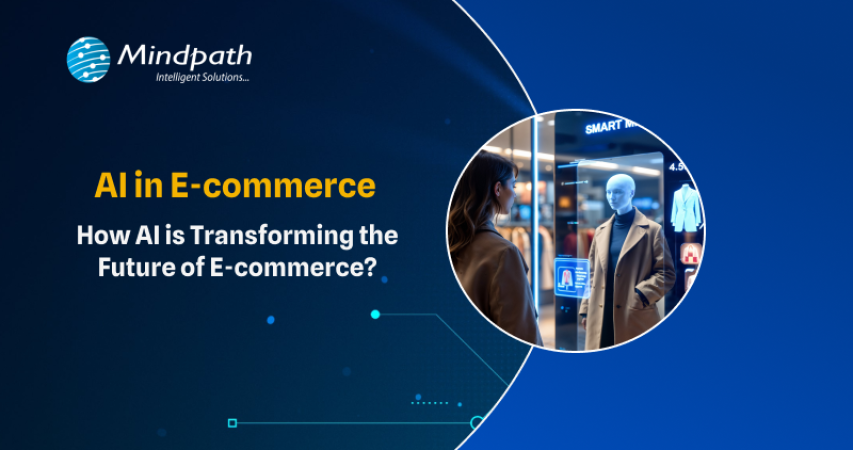
AI drives hyperpersonalization with smarter recommendations, chatbots, and tailored marketing to boost customer experience and growth.

Related Post

ReactJS and AI

Have you ever wondered how you can make your React applications even smarter? What if you could combine the power of Artificial Intelligence with React to create more intuitive and dynamic user experiences? In this blog, we’ll explore how integrating AI with React can take your front-end development to the next level, making your apps smarter, faster, and more engaging.  

Combining React with Artificial Intelligence (AI) is transforming front-end development. When combined with AI, React, which is recognized for its speed and flexibility in creating user interfaces, improves application intelligence. This connection allows developers to create dynamic, data-driven experiences that anticipate user desires, automate procedures, and offer personalized interactions. As AI continues to alter sectors, incorporating its capabilities into React apps is crucial for remaining competitive in creating smart, intuitive, and adaptable frontend solutions. 

Let’s dive in to explore the benefits of combining React and AI for front-end development! 

Benefits of Combining React and AI For Front-end Development

1. Real-Time Decision Making

The combination of React with AI enables frontend apps to make intelligent judgements instantaneously, directly within the user interface. This capacity is especially valuable in situations when prompt and precise replies are required. For example, an e-commerce platform can identify and respond to suspicious activity while the user is still interacting with it, assuring real-time security. Similarly, an application can analyze user emotions via text or graphics and tailor its replies or propose actions based on the user’s requirements.  This connection enhances application intelligence by allowing them to interpret data, analyze trends, and deliver answers in real time. Users benefit from a seamless experience in which choices are made automatically in the background, improving security, engagement, and personalization without disrupting the flow of interaction. 

2. Visual and Text Recognition

Integrating AI with React enables frontend apps to recognize images and respond to voice instructions, resulting in a more engaging and intuitive user experience. AI-powered technologies incorporated directly into React components enable apps to seamlessly analyze photos and understand spoken language, resulting in smoother and more engaging interactions. For example, a user can upload a photo, and the system can recognize objects, words, or patterns in the image, delivering quick insights or actions depending on the input. Similarly, users can employ voice commands to explore the program, run searches, and operate other features while remaining hands-free. These features are essential for accessibility, since they allow people with impairments to engage with the software easily. This combination not only improves usability, but it also creates new opportunities for applications in fields such as e-commerce, healthcare, and education. Visual and speech recognition driven by AI and React improves how customers interact with digital platforms, making the experience richer, smarter, and more inclusive.   

3. Predicting User Behavior

Combining AI with React enables apps to anticipate user needs and make proactive suggestions, making the experience smoother and more engaging. By analyzing user behavior and trends, AI systems can forecast future actions or preferences, providing relevant material or actions before the user ever requests them. 

For example, an e-commerce website can provide things based on a user’s browsing history, whereas a media app can suggest movies or music depending on their likes. With React components constantly changing in real time, these ideas show smoothly inside the interface, ensuring that customers receive timely and personalized advice. This predictive feature improves user happiness by reducing effort and providing just what the customer requires. It turns programs into intuitive tools that seem one step ahead, resulting in a smooth, intelligent, and highly engaging experience. 

4. Smart Form Handling

Frontend application forms get smarter and more adaptable when AI is integrated with React. These forms can analyze user input patterns and dynamically modify their structure to make appropriate suggestions or simplify data entry. AI algorithms work in the background, learning from past user inputs to provide intelligent auto suggestions while reducing repetitive typing. 

For example, if a user repeatedly submits the same information, such as an address or email, the form might anticipate, and auto-fill fields based on previous entries. Forms can be modified in real time by rearranging parts or offering context-specific alternatives to improve the user experience. This clever handling of forms not only saves time but also enhances accuracy and user satisfaction. By reducing the effort required to input data, applications become more user-friendly and efficient, making the overall interaction smoother and more enjoyable.

5. Personalized Experiences

When React and AI work together, frontend apps can deliver highly personalized experiences that adjust to each user’s preferences and behavior. AI analyses user interactions in real time, learning their preferences, dislikes, and behaviors. This information is then utilized to dynamically customize the content, layout, and interface, ensuring that each user’s trip is unique and entertaining. 

For example, an e-commerce platform can provide items depending on a user’s browsing history or previous purchases. Similarly, a news app can prioritize articles about topics that the user frequently reads. With React components that update in real time, these personalized modifications display quickly, improving the user experience without interruptions. 

Dynamic personalization not only improves user happiness but also enhances engagement by offering material and features that seem tailored to them. This clever flexibility converts programs into engaging, user-centric platforms that keep users returning for more. 

Also Read: Step By Step Guide To Choose React Development Company

How Can Mindpath Help?

Mindpath leverages the power of React and AI to create intelligent, user-friendly frontend apps. Our team of professionals develops solutions that are tailored to your users’ demands, making your app more engaging and effective. We can help you include real-time decision-making, visual and speech recognition, smart forms, and personalized experiences into your application. Whether you want to forecast user activities, give fast suggestions, or build dynamic designs, we’ll make your app stand out. Mindpath is a dependable partner who knows the newest technologies and works to develop front-end solutions that actually connect with your target audience. 

Final Thought!

Integrating AI with React elevates frontend development, enabling smarter, more intuitive applications. By combining React’s flexibility with AI’s capabilities, you can enhance user experiences with real-time decision-making, visual and voice recognition, predictive behavior, and dynamic personalization. At Mindpath, we harness the power of these technologies to create intelligent, user-friendly applications tailored to your needs. With our expertise in React and AI, we help you build engaging, efficient, and personalized solutions that connect with your audience and drive success. 

Ready to elevate your front-end development?

Partner with Mindpath to create intelligent, AI-powered React applications that engage and delight your users.

Learn how combining React and AI enhances front-end development, offering smarter, personalized user experiences and dynamic features.
Generative AI Use Cases
Have you ever wondered how generative AI is reshaping various industries right before our eyes? How is it enhancing creativity in art and design? What role does it play in streamlining business operations? In this blog, we’ll explore fascinating use cases of generative AI across different sectors.   Generative AI is a sort of artificial intelligence that is intended to generate fresh and unique content, such as images, writing, or music, without being constrained by precise rules. Instead of just obeying predefined instructions, generative AI learns from enormous volumes of data and applies this knowledge to develop solutions that are both creative and humanlike. It can develop material based on patterns that it recognizes, making it more adaptable and inventive than standard AI.  The significance of generative AI is enormous since it is altering several sectors. From automating content production to accelerating software development, these technologies make tasks quicker and more creative.   So, let’s dive in to explore the generative AI use cases in diverse industries! 

Generative AI Use Cases Across Different Industries

1. Finance And Trading

Generative AI is revolutionizing the financial and manufacturing industries by increasing efficiency and optimizing operations. In finance, it creates algorithmic trading strategies by analyzing past market data and executing exact trades.

It also offers predictive market analysis, which assists specialists in forecasting trends, as well as high-frequency trading by developing rapid algorithms for swift order execution. It also enhances risk management and fraud detection by monitoring transactions for unusual trends, therefore safeguarding customers from identity theft. In manufacturing, generative AI improves efficiency by finding bottlenecks and lowering costs. It provides predictive maintenance by anticipating equipment breakdowns and reducing downtime.

AI also improves supply chain management by analyzing logistics and inventory data to ensure timely delivery and optimal resource utilization 

2. Healthcare

Generative AI is transforming the healthcare industry by improving diagnostics, medication development, and personalized treatment strategies. In medical imaging, AI aids in the creation of synthetic MRI, CT, and X-ray pictures, allowing for more precise diagnosis and treatment planning. It improves image quality and detail, allowing medical experts to more accurately spot abnormalities. 

Generative AI speeds up drug discovery by optimizing chemical structures and anticipating medication interactions, allowing researchers to better understand potential adverse effects. It also creates customized drug delivery systems to guarantee that drugs reach their intended targets with minimal adverse effects. 

Furthermore, generative AI promotes personalized medicine by analyzing genetic data to find genetic markers, allowing healthcare practitioners to customize treatment programs for patients. By anticipating therapy responses based on previous patient data, AI enables clinicians to optimize methods for better results and recommend patient-specific medicine compositions. 

3. Gaming and Virtual Reality

Generative AI is transforming the gaming and virtual reality landscape by making games more interesting and immersive. In gaming, AI contributes to the creation of engaging game material by analyzing how people play and what they enjoy, ensuring that each player’s experience is unique and suited to their tastes. AI also aids in the creation of enormous gaming worlds that change with each play session, providing players with fresh experiences.

Non-player characters (NPCs) in video games are becoming smarter, acting more like real people and responding to how players interact with them. This enhances the game experience and makes it seem more realistic. 

Furthermore, Artificial Intelligence may adapt game stories based on player decisions, resulting in a personalized storytelling experience that keeps players engaged. AI is used in virtual reality (VR) to build realistic and engaging worlds, making VR experiences more pleasurable, whether for gaming or teaching. AI even creates virtual landscapes and interactive features, resulting in spectacular and responsive VR content.

4. Cybersecurity

Generative AI is helping to strengthen cybersecurity by enhancing how we detect and avoid threats. It analyses large amounts of data, such as network traffic and user behavior, to swiftly identify potential security concerns. This implies that risks can be addressed before causing harm. 

Intrusion Detection Systems (IDS) driven by artificial intelligence (AI) monitor networks and systems for suspicious activity. They notify security professionals in real time if they discover something strange, therefore keeping systems safe.

Another key use of AI is behavioral analysis, which involves learning what normal behavior looks like. If it notices anything unexpected, such as abnormal patterns from a person or system, it might alert you to a potential problem.

Generative AI is also beneficial for detecting advanced dangers that are difficult to spot. It searches through previous data and network behavior to detect these clever attacks. AI can detect irregularities in network traffic, allowing organizations to respond to possible breaches before they get worse. AI can also assist identify insider threats, which are security dangers posed by persons within an organization. By analyzing how people interact and access information, it can detect odd behavior that may suggest a problem. 

5. Autonomous Vehicles

Generative AI is transforming autonomous vehicles by improving their safety and efficiency. AI uses real-time data from sensors and traffic to assist autonomous vehicles make speedy choices. It recognizes items such as pedestrians and other cars, assuring appropriate reactions. Adaptive cruise control systems adjust speed in response to traffic, whereas collision avoidance systems forecast and prevent accidents. 

AI also generates virtual surroundings for testing, allowing engineers to replicate various driving situations, including bad weather. This guarantees that vehicles perform reliably in real-world circumstances. Additionally, AI simulates interactions with pedestrians and bicycles, assisting vehicles in securely engaging with road users.  

6. Robotics

Generative AI is improving robotics by making them smarter and more adaptive. It lets robots learn from their environment and adapt to changes, allowing them to deal with unforeseen events. AI enables robots to interpret human motions and expressions, resulting in improved communication and collaboration. This means they can operate comfortably among others in common settings like factories or houses. 

In manufacturing, for example, generative AI optimizes how machines and people collaborate, increasing productivity by coordinating jobs and motions. This collaboration increases efficiency while also making it easier for robots to assist human workers.

7. Fashion Industry

Generative AI is transforming the fashion industry by enhancing the way designers and businesses produce, promote, and sell garments. AI helps designers produce original fashion ideas by analyzing trends and styles, making it easier for them to experiment with new looks. For marketing purposes, AI can generate blog entries and social media material that engage customers, keeping companies new and relevant. It also helps you write appealing advertisements for certain audiences. 

Additionally, generative AI assists companies in understanding what customers think of their products through sentiment analysis, predicting which things will be popular, and forecasting future trends. It can also power virtual fashion advisers who suggest clothing based on a person’s style and preferences, making shopping more personal.  

Generative AI Services at Mindpath

Mindpath uses the potential of generative AI to accelerate innovation and improve business operations. We create unique AI models that optimize workflows, enhance decision-making, and increase productivity in a variety of sectors.

Our artificial intelligence solutions automate content production for blogs, social media, and marketing materials, ensuring that your outputs are both engaging and relevant. We also use generative AI for intelligent data analysis, which allows organizations to foresee trends, comprehend attitudes among customers, and make intelligent choices.

Furthermore, our AI-powered virtual assistants improve client interactions by offering personalized advice and help, resulting in a better overall user experience. We also provide generative AI in design, which creates unique concepts for goods, marketing campaigns, and branding that stand out in a competitive market. 

Wrapping Notes

Generative AI is changing the way businesses function, increasing innovation and efficiency across several industries. Its potential ranges from increasing innovation in fashion to revolutionizing safety in autonomous vehicles. Businesses that adopt cutting-edge technology find new ways to improve operations, enhance consumer experiences, and stay ahead of market trends. Mindpath is devoted to using the potential of generative AI to provide organizations with bespoke solutions that drive growth, optimize operations, and generate creativity. The future has arrived, and with generative AI, the possibilities are endless. 

Wondering how generative AI can reshape your industry?

Mindpath specializes in AI-driven solutions that unlock new possibilities.

Explore top generative AI use cases transforming industries like finance, healthcare, fashion, and more, driving innovation, efficiency, and creativity across sectors.
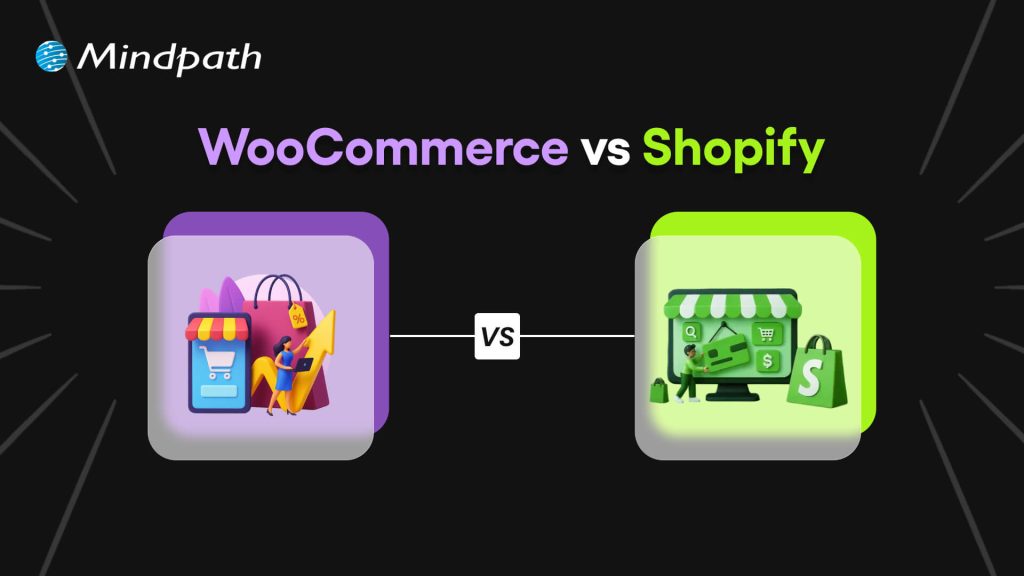
woocommerce vs shopify

In the e-commerce landscape, businesses need to make a number of critical decisions. In case you are planning to venture into the e-commerce space, it is imperative to choose the right platform. This decision can certainly influence the success of your business in the dynamic e-commerce arena. 

The platform that you choose for your e-commerce store can undoubtedly influence the overall performance and success of your business. The top names that are ruling the e-commerce platform setting are Shopify WooCommerce. You need to dive into the world of WooCommerce Shopify so that you can make a proper comparison between these platforms. You need to know how these e-commerce platforms differ from one another so that you can make the ideal selection.

Planning to grow your online business and make a real difference in sales and customer experience? At Mindpath, we provide expert web development services that create user-friendly online stores designed to boost conversions and engage your customers.

An Insight into Shopify

Shopify refers to a cloud-based e-commerce platform. It offers a diverse range of tools for business entities so that they can sell their offerings online as well as in person. It is undoubtedly considered to be one of the most popular platforms that empowers entrepreneurs and large brands to not only create but also manage their online store. It has a diverse range of features that you can capitalize on in order to give an edge to your business in the competitive space. 

You must get a holistic insight into Shopify and its features to understand its true capabilities as an e-commerce platform. One of its distinguishing features is related to the creation of a store. Businesses can also use their selling tools and payment processing features to streamline their practices and operations. 

An Insight into WooCommerce

WooCommerce is an open-source e-commerce plugin for WordPress. It is completely free for users. WooCommerce enables users to transform a WordPress website into an entirely functional online store. It offers a diverse range of tools so that you can add products and set up payment options for your target audience. 

A unique thing about WooCommerce is that it is ideal for experienced sellers in the e-commerce domain. You can extend its functionality with the help of a number of add-ons and themes. Businesses need to familiarize themselves with the core features of WooCommerce so that they can make use of the platform in an optimal manner. Its key features that you need to know about include the availability of a large library of themes and high extensibility.  

Must Read: AI in E-commerce

Difference Between WooCommerce and Shopify

Now that you have a basic understanding of Shopify and WooCommerce, it is time to look at them at a closer level. Businesses that plan to establish themselves on the online platform need to know the key differences between these platforms so that they can have clarity on WooCommerce vs Shopify. The insight into this area is crucial to choosing the suitable platform and thriving in the market. 

1. Cost

While talking about WooCommerce vs Shopify, one of the key differences between the two options revolves around their cost. WooCommerce and Shopify have entirely different pricing structures. WooCommerce is entirely free for users, so you do not have to pay anything to use it for your online business. Thus, it offers ample flexibility with variable costs for users. 

On the other hand, when it comes to Shopify, it has a subscription model for its users. WooCommerce vs Shopify pricing is a major point of difference that you need to take into consideration for your e-commerce business. The ultimate budget of businesses can play a catalytic role in choosing their ideal e-commerce option.  

2. User-Friendliness

The ease of use or user-friendliness is a key dimension that you need to bear in mind while selecting between WooCommerce and Shopify. You must keep in mind that both these e-commerce solutions offer a diverse user experience. As WooCommerce is an open-source plugin for WordPress, which is self-hosted, it requires manual setup. 

Every aspect has to be handled separately by businesses while using the plugin. Moreover, businesses should know that it requires ongoing management as well. When it comes to Shopify, it has an all-in-one dashboard that users can use for their needs.  Thus, users can have a hassle-free experience if they choose Shopify. 

Not sure which technologies will give your e-commerce business the best performance and scalability? Explore our blog tech stack for your web app success to learn how to choose the right tools for long-term growth.

3. Themes as well as Templates

While talking about shoplift vs WooCommerce, it is key to understand how they differ in terms of available themes and templates. WooCommerce offers a humongous library of premium as well as free WordPress themes. You can choose the specific theme that is ideal for your business. The good news for users is that there is an opportunity to customize the themes on WooCommerce. 

When it comes to Shopify, businesses can use professionally designed themes. Such themes can certainly give an edge to your business. But you have to bear in mind that there are limited options to customize the themes. You need to take into account WooCommerce vs Shopify themes while choosing the ideal option out of the two options.

4. Scalability

Scalability is an important dimension that every e-commerce business needs to prioritize. You need to make sure that your online store grows in a seamless manner as your business expands. Your store must be able to handle additional product offerings and additional users. WooCommerce serves as a highly flexible option for e-commerce businesses. 

However, in order to leverage the flexibility that it offers, businesses must be aware of how to use the available tools. Shopify undoubtedly simplifies the degree of flexibility by offering built-in tools for businesses. You can leverage these tools as they will handle most of the work for your business. 

5. Security

Security is undoubtedly a non-negotiable element you need to look at while understanding the difference between WooCommerce and Shopify. If you plan to use WooCommerce, you need to know that, since it is a self-hosted solution, the onus of security lies with you. Although it offers certain security features, most of the security depends on elements such as the hosting environment and plugins. 

Similarly, the manner in which businesses maintain their websites also influences the quality of security. On the other hand, Shopify offers robust security to e-commerce businesses. This specific platform has in place holistic security measures that can safeguard both customer and store-related data. 

Concerned about keeping your online store and customer data secure? Read our blog application security best practices for web and mobile apps to learn proven methods to protect your business.

6. Payment Gateway 

As a majority of online customers are making online payments, it is essential for e-commerce businesses to have in place a robust payment gateway mechanism. Both Shopify and WooCommerce offer a diverse range of payment gateway options that you need to be aware of. As WooCommerce is integrated with WordPress, it offers a high degree of flexibility when it comes to payment gateways. 

It is possible to integrate almost any gateway. But the particular process may require additional setup for businesses. When it comes to Shopify, it comes with built-in options. The built-in payment option offered by Shopify makes it simpler for businesses to accept payments from customers without requiring additional setup. Moreover, it supports international payments, thereby creating value for modern businesses. 

7. Customization

The difference between WooCommerce and Shopify arises when looking at the customization dimension. You can look at WooCommerce as a blank canvas. It offers high power to businesses to customize their online store based on their needs and requirements. On the other hand, Shopify keeps things simple for businesses. 

It offers limited customization ability as a business. Without having to do much customization, businesses can have a professional-looking online store. You can take advantage of the drag-and-drop editor to build your store. However, this feature limits the ability to customize for users. 

Looking for innovative ways to stand out in the crowded e-commerce space? Learn from our blog, augmented reality in e-commerce, and see how AR technology can transform your online store.

The table presented below gives an overview of the main differences between Shopify and WooCommerce. Businesses can certainly refer to it while making the selection between WooCommerce or Shopify.

Basis WooCommerce Shopify
Cost Free  Monthly subscription model 
User-friendliness Not beginner-friendly and requires manual setup Beginner-friendly and intuitive
Themes and Templates Offers a large library of WordPress themes and high customization ability Offers professionally developed themes and low customization ability
Scalability Flexible but requires good hosting and optimization Effortless scaling with business
Security Security level depends on hosting and manual updates Security is fully managed and comprehensive 
Payment Gateway Multiple payment gateways with no additional charge Shopify payments and external payments with applicable fees
Customization High customization Limited customization

Selecting Between WooCommerce and Shopify

It is crucial for businesses to remember that the ultimate choice of WooCommerce and Shopify depends on the goals as well as the needs of businesses. You need to keep in mind your budget and WooCommerce vs Shopify payments while choosing the ideal platform for your e-commerce business. You must remember that both platforms offer a unique set of advantages for businesses. 

As the pros and cons of each of these options vary, you need to carefully consider them while making your choice. WooCommerce empowers businesses to customize their online stores. On the other hand, Shopify offers a professional-looking store thanks to its drag-and-drop option. 

Struggling to make informed platform decisions for your e-commerce business? Explore our blog on the  importance of data-driven decision-making for businesses to learn how data insights can guide your choices.

Final Words

In the cut-throat competitive business space, it is mandatory to choose the ideal platform for e-commerce success. In order to make the right choice, you need to have clarity on your basic requirements. This insight can guide you to choose the best platform that perfectly meets your needs and expectations. 

Mindpath provides web development services that understand the need to choose the right platform for e-commerce businesses. Businesses can undoubtedly rely on our experts to make use of high-quality WooCommerce and Shopify solutions. These high-quality solutions can make sure that your business can thrive in the unpredictable e-commerce realm and gain an edge over its competitors. 

The ultimate eCommerce showdown: WooCommerce vs. Shopify! Explore their features, benefits, and which platform is right for your business.