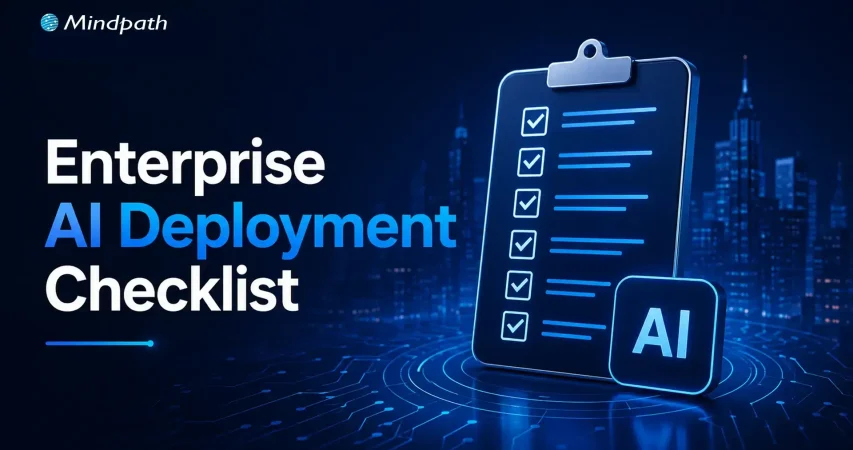
What happens when an enterprise AI system reaches production before the business is truly ready? Small gaps in data, security, infrastructure, or ownership can quickly turn into costly problems. An enterprise AI deployment checklist helps teams catch these gaps early and create a smoother path to production.
Key Takeaways
- 01Define clear business goals, ownership, and success measures before starting enterprise AI deployment.
- 02Validate data quality, infrastructure, access controls, and production requirements before moving AI systems into production.
- 03Build security, governance, compliance, monitoring, and rollback controls into the deployment process.
- 04Track technical performance, operational costs, and business value to measure AI success after deployment.
- 05Standardize deployment practices to scale AI securely across teams, systems, and business workflows.
Enterprise AI deployment needs careful planning because production systems must support real users, business workflows, sensitive information, and changing demands. A structured checklist brings these moving parts together and gives teams a practical way to review readiness before launch. In this blog, we explore the key areas every enterprise should review before deploying AI. Let’s keep reading further!
Why Enterprise AI Needs a Deployment Checklist?
Enterprise AI systems influence business decisions, workflows, customer experiences, and sensitive data. A deployment checklist gives teams a clear process for reviewing critical requirements before launch, helping them identify gaps that could affect performance, security, compliance, or business outcomes.
It also creates consistency across AI projects by giving technical and business teams shared expectations. As deployments become more complex, a checklist makes responsibilities clearer, reduces avoidable errors, and helps organizations establish a stronger foundation for reliable and scalable AI adoption.
An AI deployment checklist is important because it helps teams:
- Reduce deployment risks by identifying technical and operational gaps early.
- Strengthen security by reviewing access, data protection, and control requirements.
- Improve consistency by following a standard process across AI deployments.
- Clarify ownership by assigning responsibilities before the system reaches production.
- Support compliance by documenting governance and regulatory requirements.
- Measure readiness by validating performance, infrastructure, and business requirements.
- Prepare for scale by creating processes that can support future AI deployments.
Enterprise AI Deployment Readiness Checklist
A clear enterprise AI roadmap gives teams direction as they move toward an important stage of AI adoption. The following checklist brings together the key areas that deserve attention before moving forward.
1. Preparing the Business Case and Objectives
Before starting AI implementation, enterprises need a clear reason for investing in the technology. Defining the expected outcome, business owner, target users, and success measures helps teams stay focused and gives every stakeholder a shared understanding of what the deployment should achieve.
- Define the business problem the AI solution is expected to address.
- Assign clear ownership across business, technical, and operational teams.
- Set measurable outcomes that show whether the deployment is successful.
- Identify key stakeholders who influence adoption, approval, and ongoing use.
- Establish ROI targets based on expected business value and costs.
2. Assessing Data and Infrastructure Readiness
Strong data and reliable infrastructure create the foundation for successful AI implementation. Before deployment, teams should confirm that production data is accurate, accessible, protected, and ready for use. They should also verify that the technical environment can support expected workloads, integrations, and future requirements.
- Validate data quality for accuracy, completeness, consistency, and relevance.
- Check pipeline reliability to ensure data reaches AI systems consistently.
- Review access controls and limit data access to authorized users and systems.
- Apply data masking where sensitive or confidential information requires protection.
- Confirm versioning and infrastructure for models, data, compute resources, and production platforms.
3. Designing Security, Governance, and Compliance
A strong AI Deployment Checklist should cover the controls that keep enterprise AI secure, accountable, and compliant. Before launch, teams need clear ownership, defined policies, and safeguards that continue throughout the AI lifecycle. These measures help reduce exposure while supporting responsible and controlled AI use.
- Assign ownership for the AI system, data, security, and ongoing decisions.
- Define lifecycle controls for development, approval, deployment, updates, and retirement.
- Maintain audit trails to track important system activity, changes, and decisions.
- Apply responsible AI practices covering privacy, fairness, transparency, and model behavior.
- Align with requirements from applicable regulations and internal enterprise policies.
4. Building a Repeatable Deployment Process
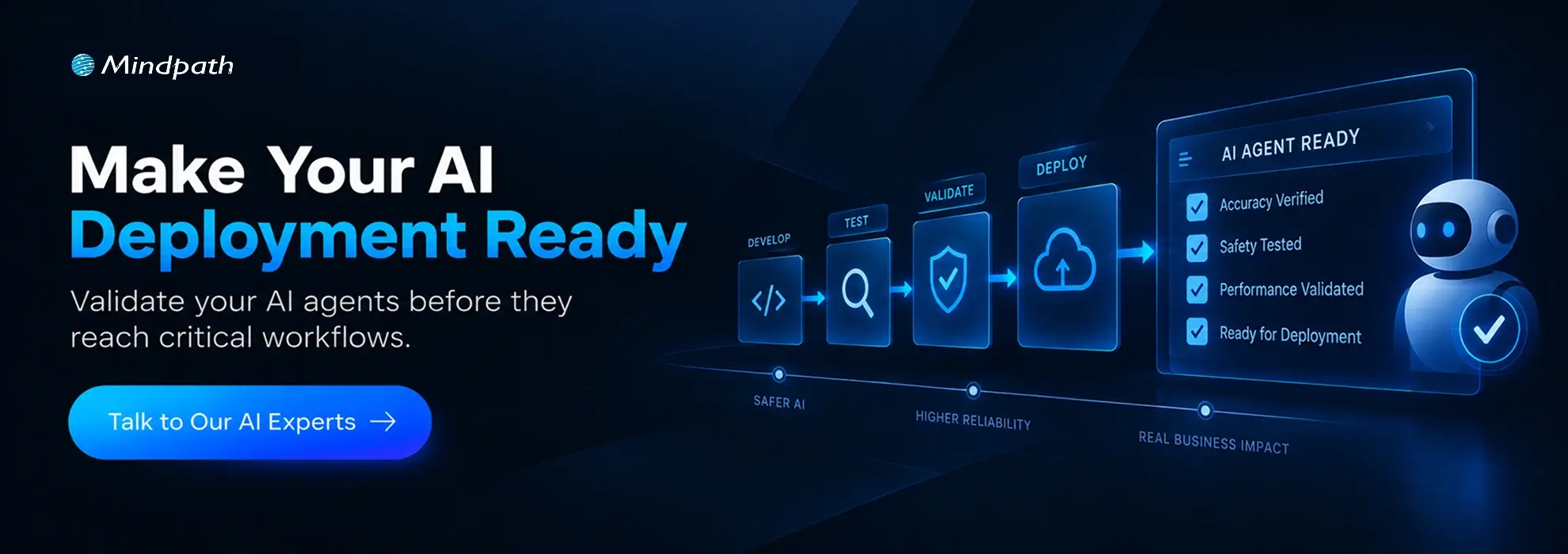
A structured AI rollout process helps teams move from testing to production with fewer surprises. Instead of relying on individual judgment at every stage, organizations can use consistent checks to validate readiness, monitor performance, and respond quickly when something goes wrong after launch.
- Validate model readiness against agreed performance, quality, and reliability requirements.
- Complete release testing across workflows, integrations, security, and expected production conditions.
- Set monitoring and alerts for performance changes, errors, usage, and unusual behavior.
- Define rollback procedures so teams can quickly restore a stable version when required.
- Document release approvals to reduce human error and maintain accountability throughout deployment.
5. Measuring Performance, Cost, and Business Value
An AI system should continue proving its value after deployment. Teams need to track technical performance, operational costs, and business outcomes together to understand what is working and where improvements are needed. Regular reviews help keep AI investments aligned with changing business priorities and expected ROI.
- Track technical performance through accuracy, response quality, latency, reliability, and error rates.
- Monitor operational costs including infrastructure, model usage, maintenance, and support expenses.
- Measure business outcomes against the objectives and baseline established before deployment.
- Set review schedules to identify performance gaps, rising costs, or changing business needs.
- Optimize continuously by improving models, workflows, infrastructure, and resource usage based on results.
6. Scaling AI Across the Enterprise
As AI adoption grows, organizations need a consistent approach for expanding successful solutions across teams and workflows. An AI Deployment Checklist helps maintain common standards while new use cases are introduced, ensuring integrations, governance, user readiness, and performance remain aligned as adoption increases.
- Integrate existing systems with enterprise applications, APIs, data platforms, and business workflows.
- Enable teams through practical training, clear responsibilities, and ongoing technical support.
- Extend governance with consistent approval, security, monitoring, and lifecycle practices across deployments.
- Standardize deployment processes so teams can replicate successful AI solutions efficiently.
- Improve continuously using user feedback, performance data, business results, and changing requirements.
Common Enterprise AI Deployment Mistakes to Avoid
Enterprise AI deployments can lose momentum when teams focus heavily on the technology but overlook preparation and ongoing management. Recognizing common mistakes early helps organizations address weak points before they affect users, operations, security, or business outcomes.
1. Starting without clear objectives
Teams may deploy AI without defining what success should look like. This makes business impact difficult to measure and justify.
2. Ignoring data readiness
Poor quality or inconsistent data can affect AI performance from the beginning. Teams should validate data before moving into production.
3. Leaving ownership unclear
AI projects can stall when no one is accountable for key decisions or issues. Clear business and technical ownership keeps deployment responsibilities defined.
4. Skipping security and governance
Missing controls can expose sensitive data and create compliance risks. Security and governance should be addressed before the system goes live.
5. Neglecting post-launch monitoring
AI performance can change as data, users, and business conditions change. Regular monitoring helps teams identify problems and improve the system over time.
Ready to Make Your Enterprise AI Deployment More Reliable?
Enterprise AI deployment becomes easier to manage when every critical area is reviewed before launch. From business objectives and data readiness to security, governance, monitoring, and scalability, a structured checklist helps teams reduce risks and create a repeatable path toward reliable AI adoption. It also keeps technology decisions connected to measurable business outcomes.
Mindpath helps enterprises turn AI initiatives into secure, scalable, and production-ready solutions through our expert AI development services. Our team supports businesses across AI strategy, development, integration, deployment, and ongoing optimization. By combining technical expertise with business-focused planning, Mindpath helps organizations move from AI ideas to solutions that deliver practical value. Contact us to discuss your enterprise AI requirements.