The future of data and analytics has been unfolding faster than ever. So, it has become an utmost responsibility of the organizations to keep pace with each changing trend. The global data analytics market size is also expanding and is expected to reach USD 402.70 billion by 2032. Today, organizations are relying on real-time insights to make smarter decisions and maintain a competitive advantage. So, as we move closer to the next phase of digital transformation, it is essential to analyze the present and future directions for better approaches.
A shift from descriptive reporting to predictive analytics has already reshaped businesses. Looking ahead, data and analytics trends are going to approach deeper automation and effective integrations. Let us explore such impactful developments that are going to make your organization futuristic in 2026 and beyond.
Looking to turn your business data into actionable insights with AI? Explore Mindpath’s AI Data Analytics Services to uncover trends, improve decision-making, and drive measurable business growth.
What are Some of the Empowering Data Analytics Trends 2026?
Data analytics has shifted from a support function to a strategic business driver. Previously, analytics efforts only prioritized traditional reporting. But today, modern systems are offering forward-looking insights. Let us explore some of the most important data and analytics trends shaping the future.
1. The Growing Demand for Big Data Analytics
The efforts of exporting data for a month and analyzing it continuously have fallen out of the trend. In the near future, big data analytics will effectively prioritize data freshness with the ultimate goal of real-time analysis. This can help your business make better decisions while increasing its competitiveness.
As we move through data analytics trends of 2026, real-time analytics are becoming the default expectations for more industries. Further, organizations understand how to balance cost and latency with the usage of combined streaming and cached metrics layers. This helps in offering fresh enough data where it matters the most.
2. The Influential Demand of GenAI and RAG
We are going to enter into a transformative era in big data analytics, as three closely related abilities: GenAI, retrieval-augmented generation, and agents. They have gained massive traction in recent years. GenAI has already showcased its potential in data analytics trends 2025, and it is going to strengthen its pace in the upcoming years as well. GenAI pushes the boundaries of traditional data analysis and enables users to generate synthetic datasets and automate content building.
Further, this innovation opens up new capabilities for predictive analytics and data visualization, which were previously limited by the scope of datasets that were gathered manually.
RAG and AI agents, on the other hand, are going to leverage a unique set of opportunities and challenges as well. They can enhance AI models by augmenting them with real-time data retrieval or the ability to automate tasks with the use of tools.
As per the current trends in data analytics, we are going to watch GenAI and RAG shift from ad-hoc prototypes to standardized enterprise patterns.
Looking to see how data and analytics turn into practical AI-driven outcomes for enterprises? Explore generative AI applications to learn how organizations apply AI at scale.
3. Analytics Platforms will Handle Large Sets of Data
With the usage of cloud technology, elements like storage requirements and processing power can be infinite. Now, you don’t need to be tense about getting extra machines or physical storage, as you can use cloud storage to scale.
Further, with cloud data handling, many stakeholders can access the data simultaneously without facing any slowdowns or lags. So, unless you are adopting the right security elements, the data can be handled from anywhere and at any time.
4. The Rapid Usage of Real-time and Proactive Analytics
Nowadays, no one is appealing to the static and backward-looking reports. Latest trends in data analytics for business organizations are all about proactive alerts and real-time decision-making. Your systems should be able to detect the surface anomalies and predict outcomes. This can trigger better actions.
Organizations that can act on real-time insights are 1.6% more likely to gain double-digit annual revenue growth, as per McKinsey. So, predictive analytics is no longer optional; it should be your competitive necessity as per the data and analytics trends.
5. Democratization and Decentralization of the Data
For many years, business analysts had to leverage the efficiency of in-house data scientists when they wanted to extract and analyze data. But, things are going to be different as per data analytics trends 2026, with services and tools that enable non-technical audiences to assess data.
We are going to see more emphasis on analytics engineering. Plus, you can also experience the high demand for a visual approach. Modern business intelligence tools like Mode, Tableau, and Looker are all for visual exploration, dashboards, and best practices. In 2026, Gen-AI-enabled assistants are going to accelerate the shifts even faster.
Want to see how data-driven insights power smarter interactions in business? Discover about conversational AI to learn how analytics and AI combine to transform customer engagement.
6. The Transformation of Business Intelligence
Business intelligence is changing beyond traditional and tightly coupled dashboards towards headless analytics. So, in such a model, metrics are defined once in a governed semantic layer and can be served anywhere, like chatbots, dashboards, spreadsheets, etc.
Platforms like Looker, Power BI, and ThoughtSpot are going to magnify such a shift with natural language querying and AI-enabled analysis. The significant future of data analytics can enable quick enterprise adoption and fewer conflicting KPIs. Further, the analytics can seamlessly reach your users in the tools where they already work.
7. It will Be Easy to Process Data Variety
With a large volume of datasets, it might be challenging for you to manage all these in different formats. Moreover, you might lag behind in consistency, and manual work can give rise to a series of mistakes. This is where futuristic tools can be your ultimate savior.
Data and analytics trends are going to heighten the usage of tools like Fivetran that come with 160+ data connectors, from marketing analytics to ops analytics. So, you can gather data from hundreds of sources to generate reliable data pipelines.
Moreover, Snowflake has partnered with services like Qubole to create ML and AI capabilities in its data platform.
8. No-Code and Low-Code Implementation
As per the reports, around 77% of Asia Pacific employers are reported to find it difficult to hire reliable tech professionals. This has accelerated the adoption of no-code and low-code data integration tools. These are going to become a fundamental part of the data modernization strategy of 2026.
Modern platforms like Airbyte Cloud, Fivetran, and Microsoft Fabric enable business technologists to generate connectors and simple pipelines with less coding. As per Gartner, around 75% of new data integration flows will be generated by non-technical users in 2026.
Curious how predictive analytics and data trends influence executive decisions? Learn about data-driven decision making to learn how organizations leverage insights for growth.
9. An Incredible Shift in Responsible AI and Ethics
AI and machine learning have become integral aspects of big data analytics. So, it is critical for businesses to adopt responsible and ethical data practices. Several guidelines and risk-management frameworks have emerged globally for suitable AI usage. This can define accountability for models while monitoring performance and fairness metrics.
So, eminent companies are implementing AI governance frameworks that involve regular bias audits and diverse review boards. Further, as per data and analytic trends, organizations will invest more in training programs that can help their data teams understand the ethical implementations. Further, they can understand the clear guidelines for data gathering and usage while ensuring transparency.
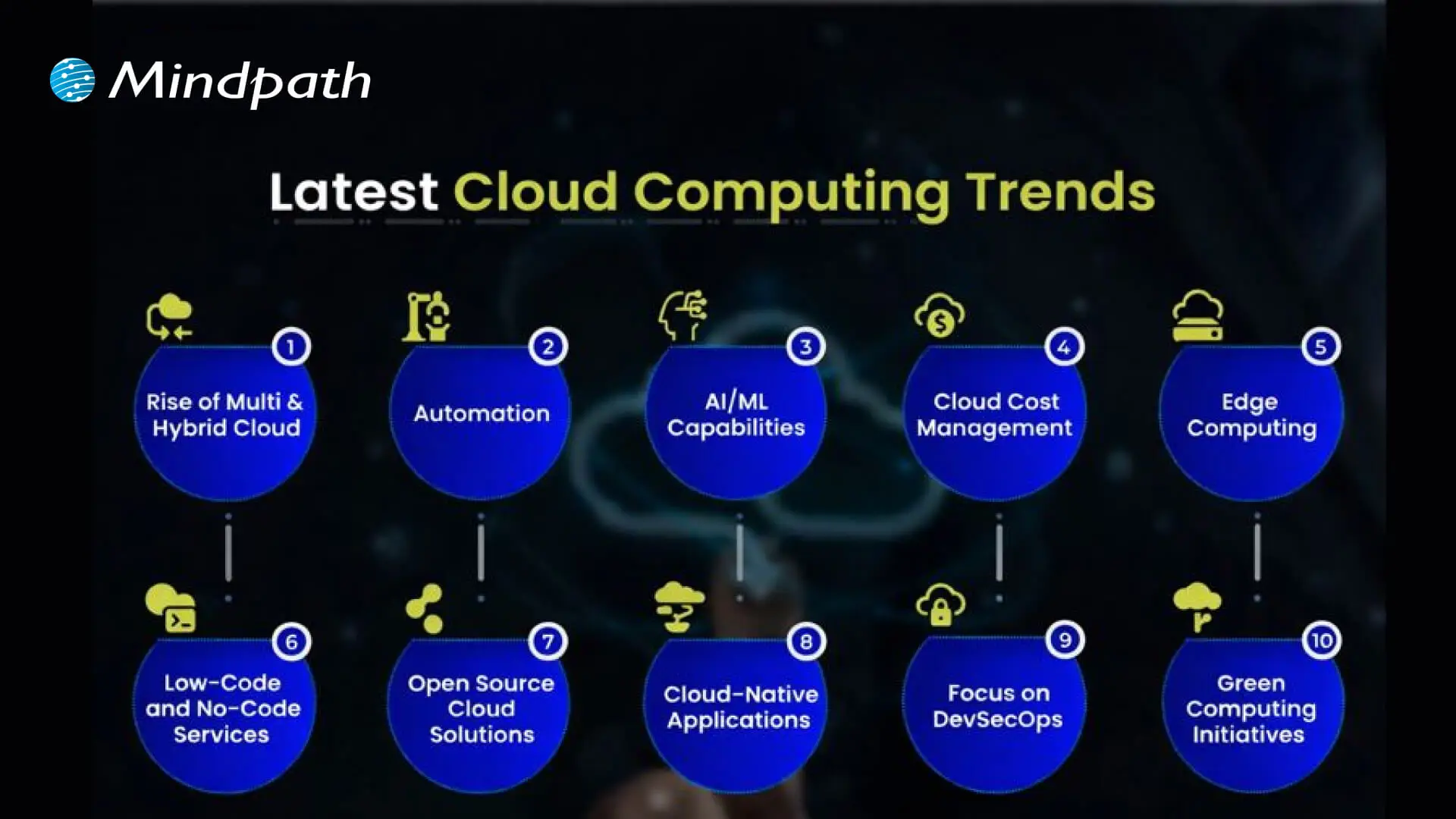
10. Multi-Cloud and Hybrid Strategies
Most of the organizations are no longer betting on an individual cloud provider. Now, businesses need to adopt multi-cloud architectures and hybrid models for potential operations. As per the surveys, around four out of five companies use two or more IaaS/PaaS providers.
However, it is necessary to remember that multi-cloud environments might challenge you with architectural defaults. So, you must manage them properly. Leaders are now investing in cloud-agnostic architectures and data visualization.
Planning to choose the right cloud strategy for scalable data and analytics workloads? Check out multi-cloud vs. hybrid cloud to learn which approach supports future-ready analytics.
The Future of Data Analytics Beyond 2026
The future of data analytics trends 2026 extends beyond technology and tools. It showcases a diversifying shift in how organizations operate and compete.
1. Talking about long-term expectations, users are going to use analytics for continuous decision-making abilities.
2. Moreover, it is going to represent a better collaboration between humans and AI.
3. The whole ecosystem will be integrative while keeping your outcomes result-oriented.
Final Words
Data and analytics trends are reshaping how your business will operate and innovate in the future. As the data analytics trends of 2026 unfold, organizations must move beyond traditional aspects and adopt intelligent and automated capabilities. Latest trends in data analytics allow leaders to effectively prepare for the future and define their decision-making approaches.
At Mindpath, modern data and analytics solutions help organizations get the full potential of advanced analytics. This enables you to gain smarter strategies while improving performance and long-term digital values.