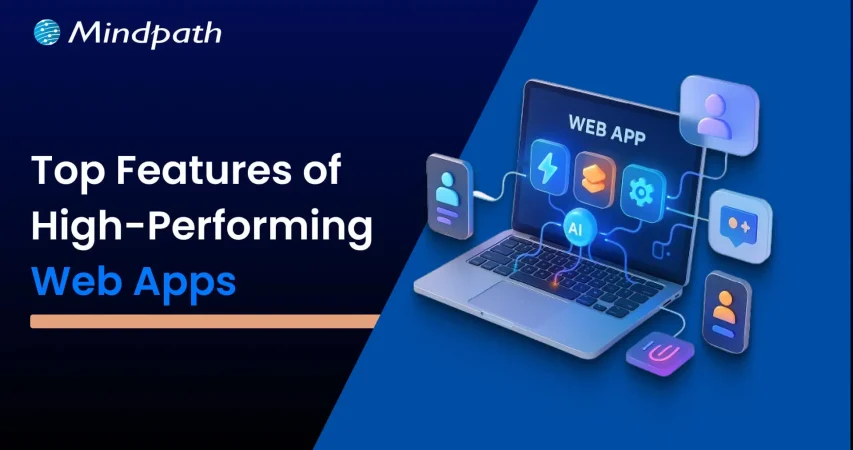
Top 10 Features Every High-Performing Web App Must Have in 2026

Join our Newsletter!

Featured Posts

Support Is One Click Away

Home

Top 10 Features Every High-Performing Web App Must Have in 2026

Web apps features

Top 10 Features Every High-Performing Web App Must Have in 2026

When you think about building something successful online, it’s not just the design or speed that matters. The real benefits come from the web app features that make your platform unique and the experience of your users engaging. Expectations continue to rise with the apps of today, especially as users expect their apps to be seamless, responsive, and can be able to solve problems. Isn’t it true that the users quickly leave if things feel complicated or outdated? So, that is why features play such a big role in shaping your user satisfaction.

Now imagine being in a competitive landscape in 2026 that will have elevated digital expectations. Users will certainly not be satisfied with a mediocre user experience; they will expect innovation and personalization with every click. Don’t you agree that a web app should not only function but also excite its users? Things like intelligent integrations, security, and ease of navigation won’t just be optional; rather, they’ll become baseline expectations. Let’s take a look at the top 10 features that reflect a true high-performing web app in this fast-changing world.

Building a high-performing web app requires the right expertise. Our web app development services at Mindpath ensure businesses create robust, feature-rich, and future-ready applications.

A Quick Understanding of Web Application

A web application is software that runs in a web browser, connecting users to interactive online services. While desktop applications require installation, web apps don’t need to be installed, so they’ll work on any device with internet access. Web apps combine software functionality with the ease of being on the web, which allows them to be fast, easy to use and scalable.

Web apps are powerful business tools that can drive revenue and customer engagement. They can facilitate transactions, communications, and data management. Businesses have built-in assurance that web applications are secure and can perform reliably. Companies today use web applications to automate or streamline tasks and provide a personalized service. Web applications offer the flexibility and functionality to support modern technologies, create competitive advantages in limited timeframes, and provide value to customers and businesses.

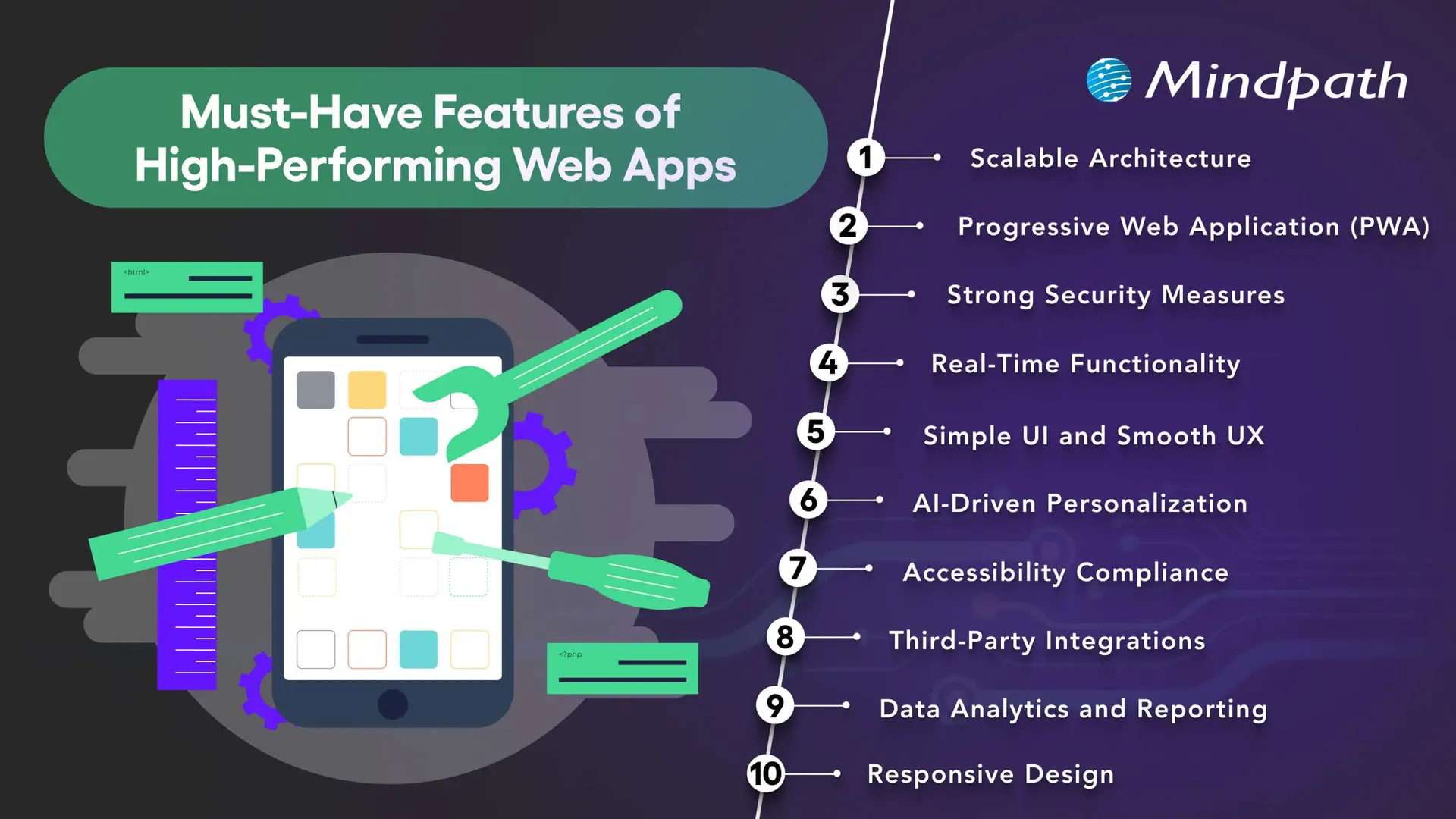
10 Must-Have Features of High-Performing Web Apps

To deliver speed, security, and usability, high-performing web applications rely on the right web app features. Nowadays, web and app development is always changing, and these features are the key to ensuring sustained success and satisfaction for users.

10 Must-Have Features of High-Performing Web Apps

1. Scalable Architecture

Growth is a keystone for any company, and scalability is what allows your web application to accommodate that growth smoothly. Proper use of cloud hosting services, load balancing, and microservices allows it to manage the increase in traffic without performance issues. Furthermore, having scaled and designed your application to work well in large increments means you will not have to completely rebuild your system as demand rises. This is one of the essential features of successful web app development.

2. Progressive Web Application (PWA)

PWAs are the perfect blend of web and mobile experiences wrapped up in one platform. They consult faster, work offline through service workers, and provide app-like usability without the hassle of installation. Research shows the PWA market is growing at a rapid pace, with a healthy number of adoptions across all industries for you to find yourself chasing. Digital solutions via a PWA will be one of the top features of web apps in 2026.

3. Strong Security Measures

Security is never optional in our current online world. Features such as SSL encryption, multi-factor authentication, and continuous vulnerability assessment secure private data. Users want an application that they know they can trust to keep their personal and financial information safe. With web application development, security should be the foundation, not an afterthought!

4. Real-Time Functionality

Real-time updates make applications more engaging and exciting for users. Whether these components come by the way of a live chat, instant notifications, or live data streaming, users enjoy being connected without the potential delay. Businesses reap the advantages of more efficient communication systems and a greatly improved customer support system. This is just one of the many standard web app features users pretty much expect now.

5. Simple UI and Smooth UX

A clean interface and seamless navigation encourage apps to be more enjoyable as well as productive. A user is more likely to be happy using an app when there is an intuitive design with predictable layouts, immediate access to feature menus and categories, and effortless navigation. Well-consulted user experience reduces tension and frustration through session length, increases retention and creates a lasting positive experience. This is why simple and intuitively designed UX is up there with the essential features of successful web app design.

6. AI-Driven Personalization

Artificial Intelligence is effectively powering personalization in web applications today. AI looks at data about users, makes content recommendations, predicts behavior, and enhances the accuracy of searches. As a result, interactions are smarter, which increases user satisfaction and retention. Therefore, we can consider AI-based personalized experiences to be exceedingly valuable in the web app ecosystem and are establishing themselves as one of the best web app features.

7. Accessibility Compliance

Achieving accessibility guarantees inclusivity among all users, including users with disabilities. Accessibility requires features like keyboard navigation, text-to-speech, high-contrast designs, etc. Accessibility makes sense because it helps all users online. Additionally, creating accessible websites, apps, and systems based on WCAG standards is the right thing to do and creates goodwill and trust across a larger audience. Accessibility is now one of the core features of successful web app development.

8. Third-Party Integrations

Modern web apps must be compatible with other tools. Payment gateways, analytics tools, and social media APIs are just a few examples of third-party integrations that greatly reduce the burden of burdensome workflows and subsequently speed things up. Third-party integrations enhance versatility and create a better user experience. Needlessly, for website application development, third-party integrations are vital in furnishing genuine value.

9. Data Analytics and Reporting

Analytics gives businesses actionable insights into user actions. They can monitor user behavior through dashboards, heatmaps, and customized reports to observe how users interact with the application. Leveraging that information can get a business closer to improving its services, maximizing its marketing, and strengthening performance. That’s why reporting is one of the most impactful web app features today.

10. Responsive Design

Responsive design is not optional, given that the majority of users are accessing the Internet with their mobile devices. A web app must be responsive across desktops, tablets, and smartphones. Responsive design means lower bounce rates, improved SEO, and better engagement. It is one of the top features of web apps that continues to be relevant in the long game for success.

How to Develop a Web Application?

A web application is a direct bilingual service and bridge from your business to users in the interactive space; it supports developing seamless interactions, dependable functionality, and useful user experiences.

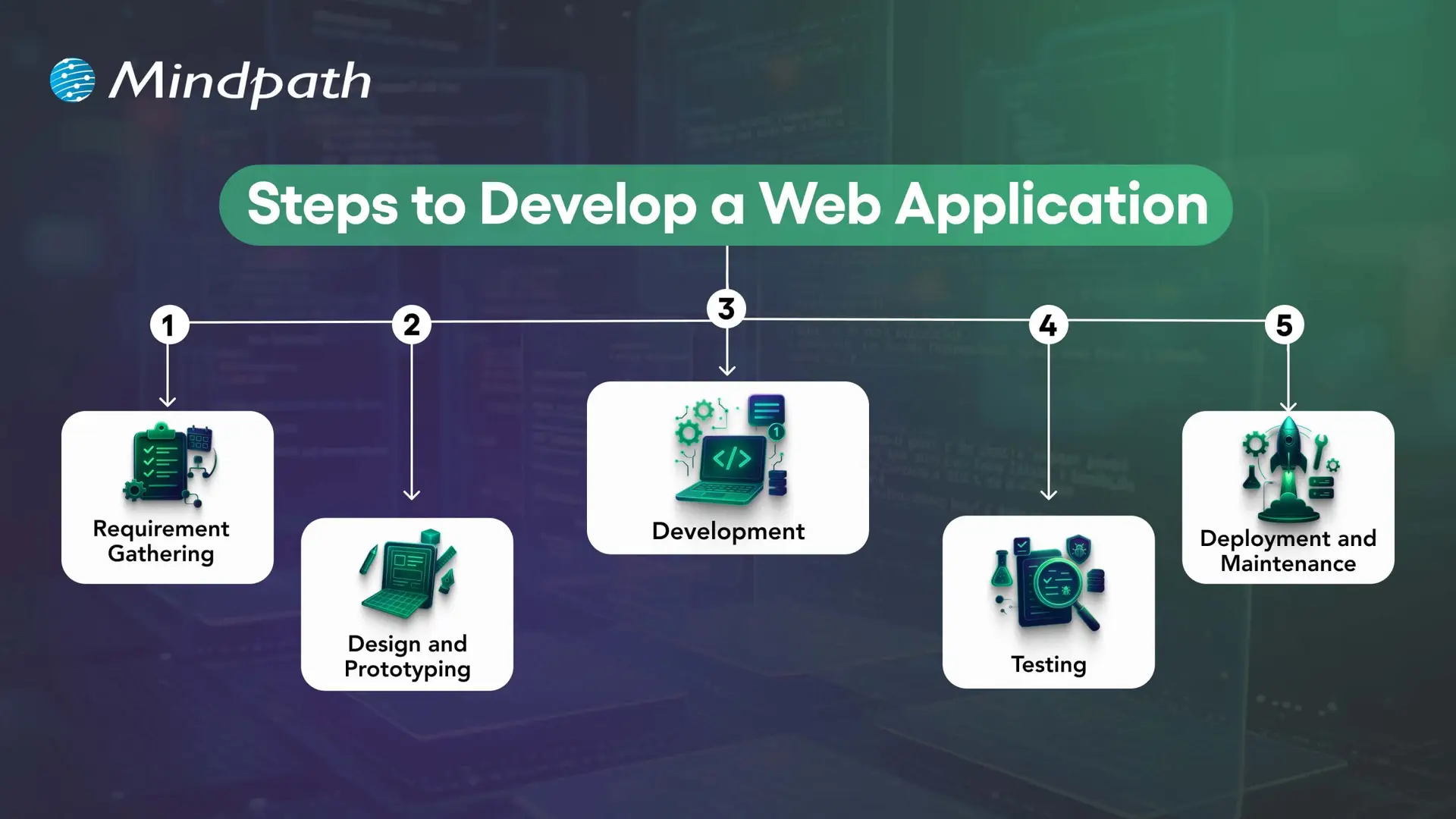
Steps to Develop a Web Application

1. Requirement Gathering and Planning

This phase analyzes the purpose of the application and the problem trying to be solved. The product objectives are informed by market research, planning the workflows, and a listing of web app features to ensure that the project begins with direction and clarity.

2. Design and Prototyping

The process of wireframing, mock-ups, and prototypes allows for the visualization of the layout, user flow, and interface design. This will be further supplemented with rigorous planning around the database and system architecture. This will ultimately provide a basis for functional and performance forms.

3. Development

Frontend development emphasizes crafting interactive and user-friendly interfaces. Backend development manages business logic, APIs, and data maintenance, and provides the groundwork for developing the functionalities of web applications.

4. Testing

Unit and integration testing assure both that the individual pieces work and that they work together. User Acceptance Testing ensures that the application meets the expectations of the user, while also performing reliable activities.

5. Deployment and Maintenance

The application will be deployed to the server and accessible to users, with ongoing monitoring, and promoted to production and changes. Maintenance will consist of bug fixes, upgrades, and implementation of new web app features based on changes in business needs.

Want to Create a Future-Ready Web Application?

In 2026, the success of any web application will depend on the strength of its web app features. Scalability, security, personalization, and responsive design are no longer optional but critical. Businesses that embrace these essential elements will be able to deliver seamless experiences, engage users effectively, and stay ahead in a competitive digital environment.

At Mindpath, we specialize in web application development tailored to your business goals. Our expertise ensures applications are secure, scalable, and built with the right web app features for long-term success. With a focus on innovation and usability, we deliver solutions that empower businesses to engage customers better and unlock real growth. Connect with us today to get started.

Related Post

How much does hiring a ReactJS developer cost? Learn about factors affecting rates, and how to find the best talent within your budget.
Master state management in React with this in-depth guide. Learn about local state, global state, and third-party libraries.

Related Post

generative AI trends

The technology world is growing at a quicker pace and 2026 is already proving to be a big year for innovation. Among the most discussed advancements, there are some exciting generative AI trends that are transforming how we produce content, design products and engage with digital tools. From smart video production to sophisticated code composition, generative AI is no longer a notion but is actually transforming the way things are reshaping in the real world.

Generative AI is applied across majority of industries today to facilitate work, enhance individual experiences, and assist individuals in generating more innovative ideas. In 2026, we are seeing a quick surge in adoption in healthcare, marketing, education and entertainment fields. Businesses are also embracing these tools to lead in innovation and customer experience. Intriguing, isn’t it?

Are you interested to know about some generative AI trends for 2026? Well, we have got you covered. This blog will walk you through top gen AI trends shaping 2026 and how they’re influencing the future of technology.

Want to integrate generative AI into your workflows for competitive advantage? At Mindpath, our AI Development Services deliver tailored, scalable AI solutions for your business.

Demystifying Generative AI: The Next-Gen Innovation

Generative AI is an intelligent technology that has the ability to assist in the development of new contents, images, videos or even computer code. It learns from what already exists and then applies what it has learned to create something new. For companies, this means they can utilize AI to create content, create products, or even assist with customers’ questions. It’s similar to having a super useful assistant who always learns and becomes proficient at various tasks. 

Generative AI is assisting companies in so many easy and intelligent ways. It saves time by performing daily tasks such as writing, designing, or responding to messages. So, teams can concentrate on more important things. It also assists organizations in making quicker decisions by getting data interpreted quickly. Customers receive better and more personalized service, which makes them satisfied. Additionally, it helps in creating new ideas and saving costs by doing work faster. Since the market is expanding very quickly, a Statista study approximates that generative AI will reach approximately $66.89 billion in 2026 and increase to $442.07 billion by 2031, demonstrating the growing importance of GenAI for business in driving efficiency, innovation, and customer engagement.

Also Read: Top AI Trends 

Now let us have a look at the generative AI trends for 2026:

Top Generative AI Trends to Look for in 2026

GenAI trends are progressing rapidly in 2026, revolutionizing the way we work and innovate. These trends are enhancing tools to be smarter, quicker, and more useful. Here are the leading GenAI trends that are shaping the future this year: 

1. Hyper-Personalization with GenAI

One of the key current trends in artificial intelligence is hyper-personalization. GenAI helps create content and messages that match each person’s unique needs and interests. It looks at large amounts of data to understand what someone likes, then gives them a more personal and meaningful experience. This makes communication more effective and helps build stronger connections. Hyper-personalization is becoming more important for better results, improved engagement, and customer satisfaction across many different industries. 

2. Multimodal Generative AI

AI is now getting better at understanding many types of information at once, like pictures, text, speech, and even video. This is called multimodal AI. For example, some tools can turn spoken words into text or show pictures based on what you write. New models like GPT-4V and LLaVa are making this possible. They help people talk to AI in smarter ways, using both words and visuals. This makes AI more useful and helpful in many different tasks. 

3. Conversational AI

Conversational AI is getting much better at having real conversations with people. Thanks to new tools like GPT, it can understand what you say, remember past chats, and reply in a way that feels natural. It’s like talking to someone who really listens and gives helpful answers. In 2026, this kind of AI can handle longer and more detailed chats, making it great for customer support, virtual helpers, and more. It feels less like a robot and more like a real helper. 

4. AI-Powered Apps and Services

One of the top ai industry trends is how apps and services are becoming much smarter by adding AI features. These AI-powered tools help people do their work faster and in a more personalized way. For example, writing apps learn your unique style to suggest better words and ideas, while health apps can offer treatment advice based on your personal health data. Shopping apps can recommend products you might like. In 2026, many industries use AI inside their software to make experiences easier, smarter, and more helpful for users every day. 

If you’re planning to integrate generative AI into your business strategy. Check out generative AI use cases to learn how companies are leveraging this technology to boost innovation and gain a competitive edge.

5. AI Boosting Creativity

AI is making creativity easier and more exciting for everyone. Tools like Dall-E can turn simple ideas into pictures, music, animations, and sounds, helping artists and creators bring their visions to life quickly. These AI tools keep getting better, allowing people to explore new ways to create art and express themselves. This technology is changing how creative work happens, giving both professionals and hobbyists fresh opportunities to make unique and interesting content in many different fields. 

6. AI Helping in Scientific Research

Generative AI predictions show that AI is making big changes in scientific research. It helps by quickly summarizing long and complex research papers, especially in medicine and pharma. This means researchers can understand important information faster without reading everything. These AI tools save time and make it easier to find key facts, helping scientists work better and faster. This leads to smarter decisions and faster progress in creating new treatments and improving healthcare for patients. 

7. Open Source and Generative AI

Open source is playing a big role in the growth of generative AI. It lets many people from different places work together to improve AI tools and make them better. This teamwork helps find and fix problems faster while making sure AI is fair and trustworthy. Open-source projects also share knowledge and resources, making AI development more open and honest. According to the McKinsey generative AI report, companies that see AI as key to their success are over 40% more likely to use open-source AI tools. In the tech industry, 72% of companies use open-source AI models, showing how important this approach is for advancing AI. 

8. Human in the Generative AI Loop

In 2026, a growing trend is people working closely with AI, called Human-in-the-Loop. This means humans help guide and check AI to make sure it follows rules and fits real-life needs. This teamwork makes AI results more accurate and reliable. By combining human skills with AI’s power, companies can get smart and creative results while keeping control over what the AI produces. This helps AI work better for many different uses. 

Looking to leverage generative AI for smarter, more adaptive app solutions? Explore our blog on Generative AI in App Development highlights practical applications, transformative benefits, and strategies to stay ahead in the digital landscape.

Ready to Embrace GenAI Trends for 2026?

The generative AI trends of 2026 are already changing how we create, communicate, and solve problems. From boosting creativity to transforming research and business services, these trends are making technology smarter and more helpful than ever. As industries keep exploring AI’s possibilities, it’s clear that generative AI will keep shaping the future in exciting and meaningful ways. 

If you’re looking to stay ahead in this fast-changing landscape, Mindpath’s GenAI solutions are here to help. Our expert team builds powerful and easy-to-use AI development services tailored to your business needs. Whether it’s integrating generative AI tools or developing custom applications, Mindpath ensures you get innovative, ethical, and result-driven AI experiences that truly make a difference. 

Recruit Computer Programmers in 2024

Looking to hire a computer programmer in 2024 but feeling overwhelmed by the process? Wondering how to find the perfect fit for your team amidst the sea of talent? Don’t worry! In this blog we will learn about the simple steps to recruit a computer programmer in 2024. 

A computer programmer writes and fixes code for software and apps. They utilize specialized programming languages to write instructions that computers follow to do things. This means they create the applications and programs we use every day, ranging from social networking apps to corporate tools. Programmers frequently work alone or in collaboration with other technical specialists, such as software developers and engineers. Their job includes not only developing code, but also identifying and resolving any issues that may arise, ensuring that everything functions well. 

As technology grows more integrated into our daily lives, talented programmers are in high demand in many sectors. Hiring a computer programmer is vital because they help in developing and updating the software that keeps our digital world working smoothly. Without them, many of the tools and apps we use would not exist or function correctly. 

So, let’s dig in to explore the simple steps to recruit a computer programmer! 

Steps to Recruit Computer Programmers

1. Define Your Requirements

Before you start looking for a computer programmer, you should know exactly what you’re looking for. Determine which programming languages the programmer should be familiar with, such as Java, Python, or JavaScript, based on the requirements of your project. Consider what technologies and tools they should be familiar with, especially if you’re creating anything specific such as a website. Decide if you need someone with extensive knowledge to take on leadership responsibilities or someone with a few years of experience to undertake routine tasks. Consider the personal abilities you value, such as being an effective communicator or team player. Knowing these details can assist you in finding the ideal programmer for your requirements. 

2. Estimate Your Cost

Before you begin looking for a computer programmer, you must first determine your budget. The cost of employing a programmer varies greatly depending on their degree of expertise, location, and the unique abilities they bring to the table. For example, a highly experienced programmer or one with specialized abilities may command a greater wage than someone with less experience or more generic skills. Setting a budget ahead of time not only helps you identify a programmer that fits inside your budget, but it also ensures that you are realistic about your financial situation. 

3. Clear Job Description

When recruiting a computer programmer, it’s essential to have a clear job description. This allows potential applicants to understand exactly what you’re looking for, ensuring that you recruit the right kind of individuals. Begin by using plain and straightforward language. Avoid using technical terms or sophisticated terminology that may mislead candidates. Clearly outline the position, including the activities and responsibilities that the programmer will be handling. Be precise about the technologies and programming languages they’ll be using. 

Include a list of the required qualifications and skills, such as years of experience and any specific background needs. Do not forget to add the soft skills essential to you, such as teamwork or communication. This manner, you’ll attract individuals that not only have the necessary technical talents but also fit in with your company’s culture. 

4. Conduct Interview

Conducting interviews helps you get to know the individuals and assess their abilities. Enquire about their programming background, problem-solving skills, and communication style. You might also assign them a coding challenge to put their abilities to the test.  

Interviews can be conducted via video, phone, or in person, and should include both technical and behavioral topics. The technical section evaluates coding abilities, whereas the behavioral section examines communication and team fit. Involve other team members in the selection process to verify the candidate is a good fit for the team. 

5. Evaluate Skills

A computer programmer’s communication abilities are critical to the success of any project. They must properly communicate their ideas and work successfully with team members. During the employment process, these soft skills should be assessed. To assess a candidate’s ability to break down technical nuances, ask them to describe a complicated programming concept in easy words. Additionally, assess their responsiveness and clarity in responding to your enquiries. 

Good communication skills include the ability to listen and deliver constructive feedback. Pay attention to how they connect with others; this might provide insight into their teamwork and problem-solving ability. Ensuring that a programmer can explain their ideas and collaborate well with your team will considerably improve the overall success of your projects. 

6. Propose an Offer

Once you’ve identified the best computer programmers for your project, make an official offer. To minimize misunderstandings, clearly state the project scope, timing, and budget. Be precise about what to expect and how the project will be managed. Discuss your communication expectations properly. This covers preferred modes of communication, frequency of updates, and response time frames. If your staff are in separate time zones, make rules to manage possible obstacles, such as overlapping working hours or dealing with urgent concerns. Include any additional terms or conditions, such as confidentiality agreements or specific targets. This guarantees that both parties are on the same page and contributes to a strong basis for a successful working relationship. 

7. Onboarding the hire

To ensure a seamless start to your collaboration, you must efficiently onboard your new hire. Once the hiring procedure is complete, it’s time to put your new computer programmer’s skills into action. Begin by giving them full access to systems and tools. Introduce them to the immediate staff and make sure they understand their roles and duties. Begin the project by outlining the initial tasks and setting expectations for delivery. This will allow your new team member to integrate fast and contribute to the project’s success from the beginning. 

Ready to hire top computer programmers? 

Connect with Mindpath to find the perfect fit for your project and start achieving your goals today! 

Hire Computer Programmers at Mindpath

At Mindpath, recruiting computer programmers is a simple and advantageous procedure that ensures your project’s success. We start by knowing your specific needs and goals to connect you with the right personnel. Our objective is to make the hiring process as simple and efficient as possible, offering ongoing help from beginning to end.  Here’s how we make hiring easier: 

1. Discuss Your Needs

Reach out to us to discuss your project requirements. We’ll work with you to create a detailed plan that outlines the project scope, timeline, and budget. 

2. Find the Right Programmer

Based on your needs, we’ll recommend skilled programmers who are well-suited for your project. You’ll have the opportunity to interview and select the ones who fit best with your vision. 

3. Start the Project

Once you’ve chosen your programmer, we’ll kick off the project with a clear plan and timeline. We’ll keep you informed with regular updates and seek your feedback to ensure everything is on track. 

4. Get Ongoing Support

We’ll continue to assist you throughout the process and beyond, addressing any issues promptly and ensuring your goals are met. 

Wrapping Note!

Recruiting an appropriate computer programmer is an essential stage in achieving your project’s objectives and assuring success. By following the simple but effective steps outlined—defining your requirements, estimating costs, creating a clear job description, conducting thorough interviews, evaluating skills, proposing a well-defined offer, and effectively onboarding—you can streamline the hiring process and find a programmer who perfectly fits your needs. 

Mindpath simplifies the process by providing specialized help at every stage. We offer a seamless and productive recruiting process by knowing your project needs and finding and integrating the perfect programmer. Our aim is to give continuing support and resolve any concerns, ensuring that your project not only meets, but exceeds, your expectations. 

Looking for dedicated programmers?

Mindpath makes hiring easy and efficient. Contact us now to get started and elevate your project with the best! 

AI in Website development

Curious about how artificial intelligence is reshaping the world of website development? How is AI automating routine tasks, enhancing user experiences, and streamlining design processes? What new possibilities does AI open up for creating dynamic and interactive websites? You are in the right place! In this blog, we will explore the impact of AI in website development and how it can be beneficial for your business. 

Artificial intelligence (AI) is a technology that enables computers to do intelligent things. AI allows computers to “see” and interpret images and words, such as reading a paper or recognizing a voice. They can also analyze data, provide helpful recommendations, and do a variety of other jobs. For example, AI can interpret a text from images or documents and convert it into meaningful data that organizations can use.  

Artificial intelligence (AI) is increasingly becoming the best option for website development. AI helps construct smarter, more effective websites by automating activities, personalizing user experiences, and analyzing data. From chatbots that help visitors to tools that adapt to user preferences, AI provides creative solutions that improve both functioning and consumer happiness. 

So, now let’s dig in to explore more about the impact of AI in website development! 

Benefits of AI in Website Development

1. Improved Communication

AI improves website development by increasing communication and trust. AI-powered chatbots and virtual assistants offer 24/7 customer service, answering questions and assisting consumers. This ongoing assistance boosts users’ trust and overall satisfaction with the website. Furthermore, AI handles many interactions with clients, reducing the effort of assistance employees and allowing them to focus on more complicated issues. 

2. SEO Strategies

AI substantially enhances SEO by analyzing search engine algorithms to determine which aspects influence rankings. It finds relevant keywords and recommends ways to improve your site’s exposure. AI systems can additionally track your website’s performance in real time, evaluate competitor’s strategies, and make targeted SEO improvements. By automating these operations, AI enables you to remain ahead of the competition, adjust swiftly to algorithm changes, and successfully increase natural traffic to your site. 

3. Reduce Human Errors

Artificial intelligence significantly decreases human error by automating many operations, making the development process more precise and efficient. For example, AI can automate testing methods to quickly uncover defects and performance issues that human testers may miss. This not only accelerates the development cycle but also guarantees that issues are identified and resolved sooner. Furthermore, AI can constantly monitor and analyze program performance, discovering abnormalities and recommending remedies before they become serious issues. By managing repetitive and error-prone operations, AI contributes to higher quality standards, improves software reliability, and minimizes the chance of expensive errors. 

4. Improved User Experience

AI improves the user experience and engagement by personalizing interactions to individual preferences. By analyzing visitor behavior and preferences, AI can customize content, suggestions, and user interfaces to each individual’s interests. This implies that consumers see the most appropriate material and offers, increasing their engagement and satisfaction. AI is also useful in developing dynamic and adaptable experiences. For example, it may change website layouts in real time based on user interactions or provide personalized product suggestions. This customization not only improves the site’s usability, but it also encourages users to stay longer and return more frequently. 

5. Enhancing Responsive Design

AI can improve responsive design by ensuring that websites perform seamlessly on a variety of devices and screen sizes. It enables developers to construct layouts that adapt to multiple screen sizes and dynamically modify information to match user preferences and device capabilities. This ensures that consumers have a reliable and engaging experience regardless of whether they are using a smartphone, tablet, or desktop. AI makes it easier to maintain high-quality design across all devices, hence increasing usability and accessibility. 

Want a website that stands out? 

Let Mindpath’s AI solutions transform your site into a dynamic, engaging experience.

Use Cases of AI in Website Development

1. Artificial Design Intelligence (ADI)

Artificial Design Intelligence (ADI) automates the process of creating e-commerce websites. It creates comprehensive websites, including everything from their appearance to their structure and content. ADI can design a website that exactly meets your needs and preferences by asking users a few basic questions and utilizing the vast quantity of data it has gathered. Whether you want a smooth, modern design or something more conventional, ADI can easily adapt to your needs and provide a website that matches your vision. 

2. Site Performance and Security Testing

Testing website code requires a lot of hands-on labor. Programmers must monitor test results, alter test settings, find appropriate test cases, and log changes with each test run. AI can speed up this process by automating basic testing and monitoring, reducing manual labor. This enables programmers to concentrate on solving more complicated challenges and enhancing site security. AI’s effectiveness in managing these duties ensures that websites are extensively evaluated for vulnerabilities and performance concerns, resulting in a more dependable and secure online presence. 

3. Real-Time Content Customization

To keep consumers interested, firms need to go beyond basic interaction and emails. Today’s customers desire information that is personal and relevant, indicating that a company understands their requirements. AI-powered dynamic content personalization enables this, even for a big number of clients. By analyzing data from many sources, AI can determine where each client is on their journey, learn their preferences, and customize marketing messages to their individual interests. This method promotes meaningful connections while increasing the chances of client retention and satisfaction. 

4. Code Optimization Assistants

Coding assistants are tools that allow programmers to create code more effectively by minimising the amount of typing required. Coding assistants do easier, repetitive duties, while professional software engineers handle innovative and complex ones. These tools can quickly produce common code snippets and functions, allowing programmers to focus on the more complex elements of their projects. Coding assistants help both experienced and inexperienced developers produce creative solutions by managing regular parts and streamlining the coding process. 

Website Development Services at Mindpath Powered by AI!

Mindpath uses the power of artificial intelligence to transform website development. Our advanced AI services are intended to improve every element of the process, from creating visually appealing and useful designs to assuring optimal performance and security. To accelerate development and create excellent user experiences, we provide AI-driven solutions like automated testing, dynamic content personalization, and intelligent coding assistance. Here are some of our services: 

1. Artificial intelligence

Our AI services improve website development by combining predictive analytics and machine learning to improve user experiences and expedite procedures. We automate complicated activities, give data-driven insights, and assist you in making strategic decisions, converting raw data into usable information to propel your website’s success. 

2. Business Intelligence

Our website development services transform data into meaningful insights that guide design and functionality decisions. We provide advanced data visualization, interactive dashboards, and performance analysis to help you plan your website strategy and increase its efficacy. 

3. Conversational AI

We utilize intelligent chatbots and virtual assistants to increase user engagement on your website. These solutions offer immediate assistance, manage regular chores, and employ natural language processing to create seamless, engaging experiences that increase user happiness. 

End Note

Artificial intelligence is more than just a trend; it is a game changer in website development. AI enables the creation of dynamic and engaging websites by automating regular operations, personalizing user interactions, and improving design processes. AI is transforming the way we develop and operate websites, from boosting communication with smart chatbots to optimizing SEO techniques and reducing human error. At Mindpath, we use AI to create smarter, more successful websites that match your specific goals and propel your organization ahead. 

Curious about AI’s impact on website development?

Partner with Mindpath to see how our advanced AI tools can boost your site’s performance and user engagement.