
Transform Your Ecommerce Business with React’s Dynamic Capabilities

Join our Newsletter!

Featured Posts

Support Is One Click Away

Home

Transform Your Ecommerce Business with React’s Dynamic Capabilities

ecommerce with React

Transform Your Ecommerce Business with React’s Dynamic Capabilities

Are you wondering how to make your ecommerce website stand out in today’s competitive market? What if you could build a site that’s fast, interactive, and dynamic delivering a seamless shopping experience every time? With React, you can do just that! This powerful JavaScript library is the secret behind many successful ecommerce platforms, helping businesses create user-friendly and feature-rich online stores.   React is a strong tool for creating modern, user-friendly websites, making it ideal for ecommerce applications. It facilitates the creation of quick, engaging, and highly responsive websites that improve the online purchasing experience. Many leading ecommerce organizations rely on React for features like rapid page loading, fluid navigation, and personalized interfaces. Its adaptability and effectiveness also enable developers to create scalable websites that evolve with your company’s demands.   Let’s dive in to explore why React is useful for ecommerce! 

Benefits of React for Dynamic Ecommerce

1. Server-Side Rendering

React’s Server-Side Rendering (SSR) capability speeds up ecommerce websites. Rather than waiting for the browser to load everything, SSR processes website material on the server before sending it to the user’s device. This ensures that websites load rapidly, even for those with poor Internet connections. For ecommerce, speed is crucial. Shoppers will not wait long for pages to load before leaving and shopping elsewhere. With React’s SSR, your online store loads almost instantaneously, keeping customers interested and improving their buying experience. Fast page loading will also help your website rank better in search engines like Google, which loves sites that provide speedy results. This can increase traffic to your ecommerce site, providing you with a competitive advantage. 

2. State Efficiency

React makes it simple to manage dynamic data on e-commerce websites. React guarantees that everything, including product inventories, shopping cart changes, and user login credentials, is updated in real time. This keeps your website fresh, accurate, and responsive to customers. In ecommerce, customers demand seamless interactions, such as viewing an updated cart instantly after adding an item or verifying product availability without refreshing the page. Whatever the size or complexity of your site, React’s state management manages these modifications effectively. React delivers a smooth shopping experience by keeping everything in sync, which helps you retain customers and increase revenue. It guarantees that your ecommerce platform remains current and user-friendly even as your business expands. 

3. Strong React Support

React is maintained by a large and active community, making it dependable and simple to maintain for ecommerce sites. If you run into any problems, you can easily discover answers using tutorials, forums, and professional help from developers all around the world. This ensures that your ecommerce site remains operational and effective without interruptions. React is open source, so you can customize and expand it to meet your own business needs. Whether you’re adding complex features, integrating new technologies, or extending your platform as your business expands, React makes it easy to adapt. React’s continual updates and contributor support ensure that your ecommerce website is always up to date, safe, and capable of providing the greatest shopping experience for your clients. 

4. Optimized Performance

React’s virtual Document Object Model (DOM) is a key feature that enhances website performance by reducing unnecessary re-renders. Instead of updating the entire page every time something changes, React only updates the parts of the page that are affected. This leads to faster rendering times and a more efficient site overall. For ecommerce websites, this translates to quicker load times and smoother user interactions. Whether customers are browsing products, adding items to their cart, or checking out, the site responds instantly without delays. The result is a seamless and enjoyable shopping experience that keeps visitors engaged and encourages them to complete purchases. React’s optimization features also help with scaling your ecommerce platform. As your product catalog or user base grows, React ensures your site continues to perform efficiently, providing a fast, consistent experience even during peak traffic times. 

5. Reusable Components

React makes website administration easier by separating it into smaller, reusable components. Each component can be changed individually, so if you alter something, such as a product detail or a promotion banner, it will update across all pages that use it. This is really useful for e-commerce websites. Instead of individually changing each product or promotion across many pages, you can make a single update, and it will be reflected everywhere. Whether you’re changing pricing, adding new goods, or upgrading sales banners, React keeps your business consistent and up to date with minimal effort. This reusable solution also saves time and eliminates mistakes, especially as your site expands and new components are introduced. It enables you to effortlessly grow your e-commerce platform, making it easier and more efficient experience for both developers and customers. 

Also Read: The Complete Guide to Hiring React Developers – MindPathTech

React Services at Mindpath

Our skilled React.js developers at Mindpath have the necessary abilities and expertise to construct contemporary, engaging user interfaces that increase user engagement and satisfaction. Whether you want to create a web application from scratch, upgrade an existing one, or quickly get your product to market, Mindpath is here to help with cost-effective solutions, quick development timeframes, and dependable support.  

Wrapping Note!

React is a powerful tool that can transform your ecommerce platform, making it faster, more interactive, and user-friendly. With benefits like server-side rendering, efficient state management, and reusable components, React helps you deliver a seamless shopping experience that keeps customers engaged. Its strong community support and optimized performance ensure your ecommerce site stays reliable and scalable as your business grows. At Mindpath, our experienced React developers are ready to help you build or enhance your ecommerce site, delivering custom solutions that meet your unique needs. 

Ready to elevate your ecommerce platform with React?

Partner with Mindpath today for expert development services and create a dynamic, high-performance online store!

Related Post

Discover top GenAI tools revolutionizing AI development. Enhance creativity, automate tasks, and streamline processes for your business success!
Discover the benefits of a multi-cloud strategy for modern enterprises, including improved security, flexibility, cost savings, and risk management.
How much does hiring a ReactJS developer cost? Learn about factors affecting rates, and how to find the best talent within your budget.

Related Post

Augmented IT Staff Onboarding

Are you ready to take your IT team to the next level? Imagine having skilled professionals join your organization seamlessly, enhancing productivity and innovation. But how do you ensure that their integration is smooth and effective? In this blog, we’ll explore the best practices for onboarding augmented IT staff, helping you create a welcoming environment that sets them up for success.  

Staff augmentation refers to the process by which companies hire highly skilled workers on a temporary basis to complement their workforce on information technology-based projects. This model gives businesses an avenue through which to outsource extra talents as and when necessary while still staying in control of the team and the projects. Compared to project outsourcing, whereby a company hires another business to handle an entire project, staff augmentation involves the hiring of individual experts to work with the in-house team on projects. This approach is particularly helpful for businesses with projects that change frequently, thus enabling them to adapt quickly to various needs by hiring temporary experts. Staff augmentation provides flexibility in that a business can manage its temporary workers directly while meeting the demands of the projects efficiently. 

Let’s dive into the best practices for onboarding augmented IT staff, helping you create a welcoming environment that sets them up for success! 

How to Integrate IT Augmented Staff

1. Understanding Your Team’s Needs

The first step in integrating IT augmented workforce is determining what your team genuinely needs. This begins with an assessment of your team members’ present skills and abilities, as well as the identification of any gaps that can jeopardize the success of your project. By carefully examining where your team lacks specialized knowledge, you can readily identify which areas might benefit from outside assistance. This might range from technical expertise to specialized understanding in certain areas of development, design, or IT infrastructure. 

Once you have a firm knowledge of these gaps, consider how the newly expanded personnel will fit into the existing team. Consider not just the specific abilities they will offer, but also how they will fit into the current tasks and the broader team environment. For example, if your team is working on a complicated software project and you detect a dearth of front-end development capabilities, employing IT specialists with a strong history in front-end technologies will successfully bridge that gap. 

In addition to talents, you should grasp your team’s work style and culture. Augmented employees that can adjust to your team’s workflow and communication style will integrate more quickly, resulting in better cooperation. When the new staff’s competencies are aligned with your project goals, it helps to establish a cohesive, high-performing team where everyone can successfully contribute to the same aims. 

2. Choosing the Right IT Staff

After determining the capabilities your team requires, the next essential action to take is to select the appropriate IT staff augmentation. It is not enough to just hire specialists with the necessary technical competence; you must also ensure that they can seamlessly integrate into your team and contribute productively.  Begin by seeking applicants with a track record of effective collaboration in comparable jobs. Strong communication skills are vital because they enable new employees to integrate quickly, convey ideas openly, and collaborate effectively with the current team. Cultural compatibility is another important issue. The more closely the new recruits connect with your team’s work environment and beliefs, the simpler it will be for everyone to interact and create a good, cohesive workplace.   To make the optimal decision, do extensive interviews and assessments. These should not just encompass technical abilities, but also include soft skills like problem-solving, flexibility, and collaboration. These characteristics are essential for ensuring that new hires can handle problems and adapt to your team’s workflow without affecting production. Furthermore, assembling a team with varied experiences and viewpoints might result in unique ideas. A diverse set of experiences and perspectives promotes a culture of creativity and continual growth, which can help both the team and the project as a whole. 

3. Onboarding and Training

Once you’ve decided on the ideal IT augmentation personnel, the following step is to guarantee a seamless onboarding and training process. This is essential to bringing new team members up to speed on the team’s goals, workflow, and expectations. A well-planned onboarding process offers the structure and resources required for effective integration, enabling new employees to immediately become productive and contribute to the team’s success. 

Effective onboarding entails more than simply describing job duties. It’s about introducing new employees to the corporate culture and helping them grasp the values and dynamics that motivate your team. This fosters a sense of belonging and strengthens ties with current team members, which is crucial for effective cooperation.  

 During the onboarding process, good communication is essential. Ensure that new personnel understand what is expected of them and offer regular feedback to help them. Support should not end after the first few days; regular coaching, check-ins, and training opportunities help new employees thrive in their responsibilities. By fostering open communication and providing the appropriate assistance, you foster a climate in which the augmented staff can thrive, resulting in a more unified and efficient team. 

Staff Augmentation Services at Mindpath

At Mindpath, we deliver the best IT staff augmentation solutions in the USA, allowing companies to scale and succeed. It is indeed our mission to integrate skilled professionals seamlessly into your team in ways that increase your capability and ensure that you can effectively deliver your project goals. Be it lending a helping hand for a specific project, having the right expertise on modernizing your technology, or being on the lookout for ways to design robust software systems, Mindpath has the right solutions for you. Here are some of our services:    

1. Dedicated Development Teams

We can provide you with experienced developers, integral parts of your team, to help with supplementary expertise and faster projects’ timeframes. Our developers blend in perfectly, ensuring smooth collaboration and delivery of results.    

2. Legacy Modernization

We can upgrade and modernize your old technology so that it can work with the best standards of today. We provide services such as an assessment of your existing systems, technology upgrade, data migration, and performance enhancements.    

3. Architectural Consultation

We consult on the design of robust and scalable software systems. Whether you are kicking off a new project or looking to better existing systems, we will help you build a solid ground and choose the best-suited technology for your needs.  

Final Thoughts!

Incorporating augmented IT workers into your organization can be a game changer, allowing you to swiftly address skill shortages, fulfil project objectives, and increase team efficiency. By assessing your team’s needs, carefully choosing the right specialists, and offering a comprehensive onboarding and training procedure, you provide the groundwork for seamless and effective integration. 

At Mindpath, we recognize the value of having the right people in place. Our staff augmentation services are designed to help you expand successfully while keeping control of your projects. Whether you want specialized development teams, legacy modernization, or architectural consultancy, Mindpath has the experience and solutions to take your IT capabilities to the next level. 

Looking to boost your team’s capabilities with expert IT professionals?

Mindpath offers seamless staff augmentation solutions tailored to your project needs.

Discover best practices for onboarding augmented IT staff, from identifying team needs to seamless integration, ensuring success.
Augmented reality in ecommerce

The e-commerce model has led to the transformation of how business operations are conducted in the 21st century. This novel concept has expanded the boundaries for businesses. E-commerce businesses are in a position to exploit a broad range of advanced technologies. A new technology that has been redefining the e-commerce landscape is augmented reality.

Augmented reality in e-commerce has the potential to enhance the online shopping experience of customers. This is possible since AR commerce blends digital products with the real-world environment of customers. Thus, augmented reality allows customers to view as well as interact with virtual products before making the purchase. It is the perfect time to learn how the augmented reality process is revolutionising the e-commerce setting. 

Want to prepare your online store for the growing demand for immersive and interactive shopping experiences? Connect with Mindpath to discover how you can bring advanced AR capabilities into your business.

What is Augmented Reality?

Before exploring the impact of augmented reality in e-commerce, you need to know what is augmented reality. Augmented reality refers to the technology that is capable of overlaying digital information on how a user views the real world in real time. This advanced technology enhances their reality by adding computer-generated elements to it. 

Within a short span of time, augmented reality has gained massive popularity. This is because it can merge the physical and digital worlds, thereby creating an interactive experience for users. You can have such a surreal experience either through a smartphone, AR glasses, or a tablet.  

Is your e-commerce business ready for the next phase of digital innovation? Explore digital transformation for businesses to discover how AR fits into modern growth strategies.

How E-commerce Businesses are Using Augmented Reality?

Although the AR technology is in its infancy, its application in the e-commerce space has been surging. Many e-commerce businesses have been leveraging the technology in diverse ways to shape the experiences of their customers. 

1. Virtual Try-Ons

While purchasing apparel, people usually prefer to try on the garments. You do not need to physically try on apparel thanks to the use of Augmented reality in e-commerce. This is because you can try it out virtually before deciding whether to buy it or not. Therefore, the augmented reality technology helps online shoppers comprehend what they are purchasing and how the items will look on them. 

2. Interactive User Manuals

An interactive user manual is considered to be a great application of AR in e-commerce. This is especially useful when customers buy a product that has a learning curve before it can be used easily. Such manuals can be a great help for users as they can refer to them to understand how the product works. Interactive user manuals are capable of responding to the actions of users. Moreover, they can offer on-page contextual support while using a website or software. 

3. Preview Placement

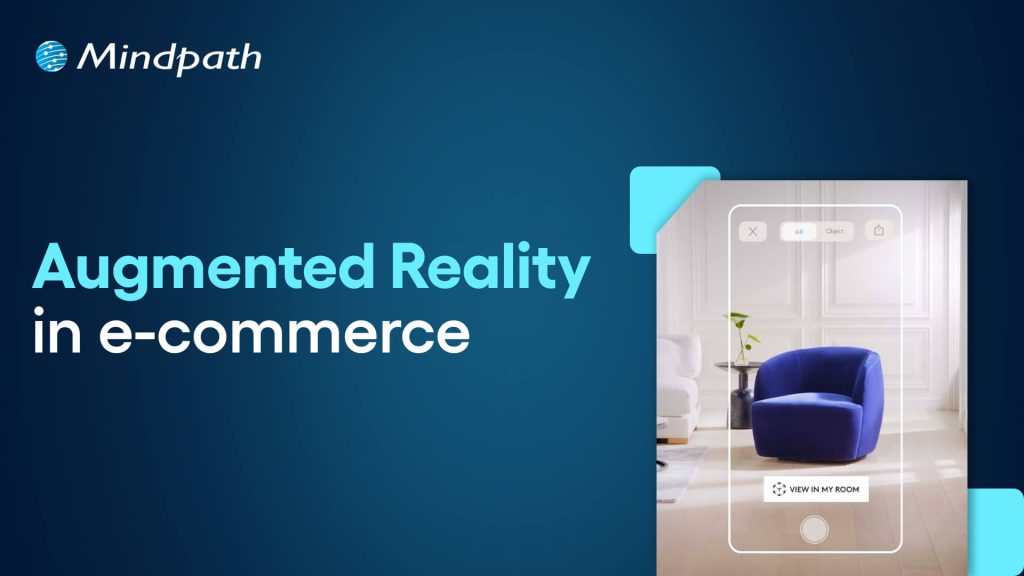
The preview placement gives customers a view in real-time of what a product will look like in their own environment. This can be extremely helpful when you decide to buy furniture or a television set for your home. Many brands have started using AR in order to help their customers visualize how their products will fit in the homes of customers. It has undoubtedly simplified the overall shopping experience for modern customers. 

4. Social Media Filters

There was a time when social media filters were used by online users just for fun. However, a number of brands have started leveraging social media filters to showcase their products. Many brands have already come to realize that the novelty factor relating to AT filters has the potential to boost customer engagement. Such strategic use of AR by brands has been wowing customers today. 

How do businesses measure the real impact of AR on conversions and engagement? Explore the importance of data-driven decision-making for Businesses to discover how insights optimize e-commerce performance.

Benefits of Augmented Reality for Businesses

The proper use of AR by e-commerce businesses can give rise to immense value for them. The capabilities of Augmented Reality can give an edge to modern businesses while they create value for their customers. 

1. Better Customer Engagement 

You need to bear in mind that augmented reality technology is highly interactive in nature. Thus, it can make it easier for customers to get hooked on the sites of online businesses. The longer they stay on the site, the higher the chances for them to make a purchase. Even if they do not make a purchase, it will create an opportunity for them to build a relationship with the brand. Thus, the quality of customer engagement can improve. 

2. Reaching Out to New Customers

In the highly competitive e-commerce landscape, businesses need to constantly look for new customers. The use of Augmented Reality can certainly give you an edge as a business. In the noisy world, it can serve as a suitable tool that can help grab the attention of your potential customers. You can create a highly engaging AR campaign in order to make your business seen and heard by online users. 

3. Reduced Returns

When businesses use AR technology, they not only empower themselves but also empower their customers. As customers have a lot of information, when businesses use AR, the possibility of product returns drops considerably. The application of AR makes it possible for customers to get a glimpse of how certain products will look in their personal space. So they can be more sure while making their purchase decisions. 

4. Possible Challenges That May Arise

The rising number of augmented reality examples shows that the future of AR in e-commerce is full of new possibilities. However, it is crucial for businesses to bear in mind that they may face a number of challenges while adopting AR technology. The insight can help them prepare themselves to use the novel technology in a strategic manner.

Wondering how artificial intelligence complements augmented reality in online shopping? Explore AI in e-commerce to discover how intelligent technologies personalize experiences and increase conversions.

5. High-Quality 3D Models

A common technological challenge that businesses may encounter is related to achieving high-quality 3D models. Businesses must keep in mind that the models need to be realistic in nature in order to boost customer engagement and experience. However, in the technical sense, it may not be an easy task to achieve. In order to reduce this kind of complexity, it is advisable for businesses to use robust tools. 

6. Balancing Efficiency and Cost

It is very important to bear in mind that generating 3D assets can be a costly affair. In fact, the costs may range between a few hundred and several thousand dollars per product. In order to strike a balance between cost and efficiency, businesses can consider leveraging cloud infrastructure. 

7. Seamless Integration with Workflow

Another challenge that may arise in the path of businesses revolves around the integration of AR technology with the existing workflow.  Complexities may arise when online retailers try to integrate 3D assets into their current product catalogue. It is vital to remember that this specific process needs to be smooth and streamlined. It must also be scalable to enhance overall customer satisfaction. 

It is essential for online retailers to effectively address these challenges. By addressing these obstacles and bottlenecks, they can leverage AR technology to the fullest and offer a highly engaging experience to their target audience. 

Planning to deliver AR experiences through mobile commerce apps? Discover mobile app development technologies to explore tools that power interactive shopping journeys.

Final Words

Augmented Reality has emerged as a breath of fresh air in the prevailing e-commerce landscape. The novel technology has been gaining high momentum as it creates a plethora of benefits for businesses in the form of better customer engagement, the ability to reach out to new customers, and reduced returns.

Mindpath’s innovative services relating to augmented reality can create immense value for modern businesses. Our experts will ensure that your businesses can boost customer engagement by leveraging augmented reality technology. You can capitalise on the real potential of AR technology and witness your business reach new heights.  

Discover how Augmented Reality (AR) is transforming e-commerce with immersive shopping experiences, boosting engagement, and improving sales.
Generative AI in Manufacturing

Have you ever wondered how manufacturing could become faster, smarter, and more innovative? Imagine a factory where machines design better products, optimize processes, and predict issues before they happen. Sounds futuristic, right? In this blog, we will explore the use cases of GenAI in Manufacturing! 

Generative artificial intelligence (generative AI) is a form of AI capable of producing new content and ideas, such as conversations, stories, images, videos, and music. AI technologies aim to replicate human intelligence in nontraditional computer tasks such as image identification, natural language processing (NLP), and translation. Generative AI represents the next phase in artificial intelligence. You can teach it to understand human language, programming languages, art, chemistry, biology, or any other complicated topic. It leverages previously trained data to tackle new issues.  

Generative AI is emerging as a game changer in manufacturing, providing solutions that go beyond typical automation. It enables organizations to build smarter products, optimize operations, and minimize waste, all while lowering costs and saving time. Generative AI is propelling the industrial industry towards a more sustainable and competitive future by allowing for speedier innovation and more efficiency. 

Let’s dive in to explore more about Generative AI use cases in Manufacturing! 

Generative AI Use Cases in Manufacturing

1. Enhancing Quality Control

Generative AI is revolutionizing manufacturing quality control by allowing for proactive issue discovery and solutions. Traditional approaches frequently fail to detect subtle equipment faults, relying mainly on personal observation and knowledge. Generative AI closes this gap by providing improved capabilities that simplify the process. 

Manufacturing gear is equipped with sensors that collect operating data on a regular basis. Generative AI systems analyze this data in real time, detecting even little abnormalities that can indicate a problem. This proactive strategy enables manufacturers to solve issues before they worsen, decreasing downtime and minimizing costly disruptions. Generative AI promotes smooth manufacturing processes and consistent product quality by giving real-time warnings and intelligent insight. Its capacity to self-monitor and immediately report faults makes it a vital tool for ensuring operational excellence in production. 

2. Improving Customer Support

Generative AI is changing the way manufacturers interact with their customers by offering seamless, human-like service. It can respond to customer questions, provide product details, and provide help around-the-clock, serving as a virtual agent to guarantee that clients always get timely assistance. By taking over basic requests, generative AI frees up human customer support teams to focus on more difficult duties. This increases efficiency and productivity while still ensuring high-quality client encounters. 

Generative AI also analyses massive volumes of client data, including comments, preferences, and purchase history. Using this information, it can tailor suggestions, improve user experiences, and anticipate possible problems. With its capacity to learn from each encounter, generative AI constantly improves its replies, making customer service more precise and personalized over time. This not only improves customer satisfaction but also strengthens connections and loyalty. 

3. Streamlining Knowledge Management

In manufacturing, expansion frequently results in fragmented systems and procedures, making it difficult for personnel to access the information they want. Generative AI, such as ChatGPT-powered workplace knowledge bots, provides a solution for improving efficiency and facilitating access to vital information. These AI-powered bots can swiftly search through large databases, such as product manuals and corporate procedures, to deliver exact responses to employee queries. By centralizing information, they save time searching and allow staff to focus on more important activities. 

Generative AI also adjusts and learns from new data, ensuring that the information it gives is always relevant and up to date. Furthermore, it can extract insights from historical systems even when documentation is lacking, allowing manufacturers to conserve and leverage their collected expertise.  This sophisticated knowledge management leads to faster decision-making, smoother operations, and a culture of continuous improvement, all of which are essential components of success in the competitive manufacturing business. 

4. Advancing Product Design

Generative AI is revolutionizing product design by utilizing machine learning to investigate infinite design options. Engineers begin by establishing specific objectives, such as increasing efficiency, lowering weight, optimizing materials, or satisfying performance standards. Artificial intelligence then creates a diverse set of design possibilities, including unorthodox solutions that might not be evident to human designers. The AI refines its results via iterative learning, always improving until it finds the most effective design. This method allows for speedier innovation, resulting in goods that are not only cost-effective and high performing, but also distinctive and adapted to individual requirements. Generative AI enables manufacturers to push the frontiers of innovation and usefulness, establishing them as industry leaders while drastically reducing product development time and costs. 

5. Optimizing Machine Operations

Generative AI is revolutionizing machine automation in manufacturing by analyzing massive volumes of operational and performance data to optimize operations. Machines equipped with sensors collect data on anything from equipment health to supply chain efficiency, which is then used to train AI models that increase performance. 

One important use is estimating Overall Equipment Effectiveness (OEE), an essential indicator for evaluating the effectiveness of industrial processes. OEE is calculated using three factors: availability, performance, and quality, which are impacted by measures such as run time, downtime, speed, and output. Generative AI models analyze real-time sensor data to improve the accuracy of OEE estimates and discover abnormalities that can indicate difficulties, such as unexpected downtime or quality concerns. By constantly learning from operational data, these AI solutions improve machine performance, decrease waste, and assure smoother, more effective production processes. As generative AI evolves, its role in business optimization will expand, creating more chances for improvement in industrial operations. 

Also Read: GenAI in Retail & E-Commerce

AI Development Services at Mindpath

Mindpath provides experienced Generative AI development services to assist your organization innovate and enhance productivity. Our team employs powerful AI models to develop solutions that can revolutionize the way you design goods, manage operations, and communicate with customers. Our generative AI systems can help you automate processes, improve customer service, and optimize product designs. We collaborate closely with you to understand your company objectives and create AI-powered solutions that address your particular requirements. With Mindpath’s Generative AI services, you can explore new ideas, increase productivity, and remain ahead of the competition. 

Final Thought!

Generative AI is definitely reshaping the future of manufacturing by providing strong solutions for optimizing processes, improving quality control, and driving innovation. From improved product design to automated customer service, cutting-edge technology is assisting manufacturers in streamlining operations, lowering costs, and increasing productivity. Businesses that integrate generative AI into their operations can not only remain competitive but also lead the route for the industry’s future. 

At Mindpath, we are dedicated to achieving the full potential of generative AI to help your company discover new opportunities. With our bespoke AI development services, we enable businesses to innovate, optimize, and prosper in an ever-changing environment. Let us assist you in transforming your production processes and propelling your organization to new heights. 

Ready to transform your manufacturing processes with Generative AI?

Partner with Mindpath today to explore customized AI solutions that drive innovation and efficiency!

Discover how Generative AI is revolutionizing manufacturing with smarter designs, enhanced operations, quality control, and customer support.