Hire Skilled ReactJS Developers in New Jersey for Your Next Project

Join our Newsletter!

Featured Posts

Support Is One Click Away

Home

Hire Skilled ReactJS Developers in New Jersey for Your Next Project

Hire Skilled ReactJS Developers in New Jersey for Your Next Project

Are you searching for skilled ReactJS developers in New Jersey to build a high-performance web application? Do you need experts who can create fast, scalable, and interactive user interfaces? Finding the right talent can be challenging, but with the right team, your project can thrive.

In today’s fast-paced digital surroundings, a dynamic and flexible web application is essential for business success. ReactJS, which is recognized for its quickness and versatility, has become the ideal tool for developing modern web applications. If you’re seeking talented ReactJS developers in New Jersey, hiring the right professionals can make all the difference. Experienced ReactJS developers, with their knowledge in generating high-performance applications, can assist you in developing scalable, user-friendly, and creative digital solutions customized to your company’s demands.

Let’s explore how hiring top ReactJS developers in New Jersey can bring your vision to life!

Steps to Hire ReactJS Developers in New Jersey

1. Define Your Project Requirements

The first step in hiring a ReactJS developer in New Jersey is to outline your project’s needs explicitly. Determine the scope of your project, including essential features, functions, and projected timetable. Understanding your requirements can assist you in determining the suitable experience level—whether a junior, mid-level, or senior developer is most suited. Consider the React frameworks and technologies unique to your project, such as Redux for state management, Material-UI for UI components, or Next.js for server-side rendering. Outlining these technical criteria can make your hiring process more efficient since you will be able to filter individuals who are knowledgeable about the essential technologies. Proper planning also ensures that you hire a developer who can deliver exactly what your project demands, reducing the risk of misalignment. By defining your needs upfront, you set a strong foundation for finding the right ReactJS talent in New Jersey.

2. Source Qualified Candidates

Once you’ve determined your project’s requirements, the following step is to aggressively seek skilled ReactJS developers in NJ. Use several hiring channels to improve your chances of discovering the perfect candidate. Online employment platforms such as LinkedIn, Indeed, and Glassdoor provide a vast pool of individuals with ReactJS experience. You may also look at specialized tech employment sites like AngelList or Toptal for highly competent developers. Furthermore, use your professional network to request references from colleagues or industry contacts. Another useful technique is to join local tech meetings and events in New Jersey, where you can meet experienced developers and find possible candidates in person. Engaging with different sourcing methods ensures that you reach top-tier talent who may not be actively searching for jobs but are open to new opportunities. A diverse sourcing approach increases the likelihood of finding the ideal developer for your project.

3. Screen Candidates Based on Skills and Experience

After sourcing individuals, the next stage is to test them for technical proficiency, experience, and problem-solving ability. Begin by reading their credentials and portfolios to determine their experience with ReactJS, JavaScript, HTML, CSS, and front-end frameworks. Pay particular attention to their prior projects and see if they have worked on applications comparable to yours. Conduct a technical evaluation to determine their practical coding abilities. This can be an online coding test, or a take-home project centered on React development. Ask specific questions during the first screening to assess their comprehension of React’s key principles, state management (Redux or Context API), component lifecycle, and recommended practices. By thoroughly evaluating each candidate’s skills and hands-on experience, you can filter out unqualified applicants and focus on those who have the necessary expertise to contribute effectively to your project’s success.

4. Conduct a Thorough Interview Process

A systematic interview process is essential for finding the ideal ReactJS developer. Begin with an initial phone screen to confirm the candidate’s qualifications, background, and interest in the position. If they pass the screening, they will proceed to a technical interview where they will exhibit their problem-solving abilities and ReactJS expertise. During this step, ask detailed questions about their expertise with React Hooks, Redux, testing frameworks like Jest, and deployment methods. You can also offer a live coding session to test their ability to develop clean, efficient code. After assessing technical capabilities, do a behavioral interview to identify soft skills like communication, teamwork, and flexibility. Understanding how they collaborate with others and handle challenges is essential for ensuring they fit well within your team. A well-structured interview process helps you identify not only technically skilled developers but also those who align with your company culture.

5. Make the Hiring Decision and Finalize Terms

After you’ve interviewed candidates and evaluated their talents, it’s time to make your final recruiting choice. Compare their technical knowledge, problem-solving methodology, and capacity to collaborate with your team. Consider their ReactJS experience, previous project success, and adaptability to new technologies. After you’ve chosen the best applicant, discuss compensation, benefits, and work arrangements (remote or on-site). To minimize future misunderstandings, be transparent when addressing employment requirements, contract conditions, and any additional benefits. Once everything has been agreed upon, create an onboarding procedure that involves providing access to project tools, scheduling team meetings, and establishing starting duties. A smooth onboarding experience helps new hires integrate quickly and contribute effectively. By carefully evaluating and finalizing the hiring process, you ensure a successful partnership with a skilled ReactJS developer who can drive your project forward.

Looking for expert ReactJS developers in New Jersey to bring your vision to life? At Mindpath we provide highly skilled ReactJS professionals who specialize in building scalable, high-performance web applications tailored to your business needs. Whether you need a dedicated developer or a full development team, we have the expertise to deliver top-notch solutions.
Let’s turn your ideas into reality! Contact Mindpath today. to hire the best ReactJS developers and take your project to the next level.

Related Post

Discover how Retail IT Outsourcing helps retailers save costs, enhance customer service, and stay competitive in today’s fast-paced market.
Explore the impact of Generative AI in retail and e-commerce, enhancing customer experiences, streamlining operations, and driving engagement.

Related Post

hospital management system

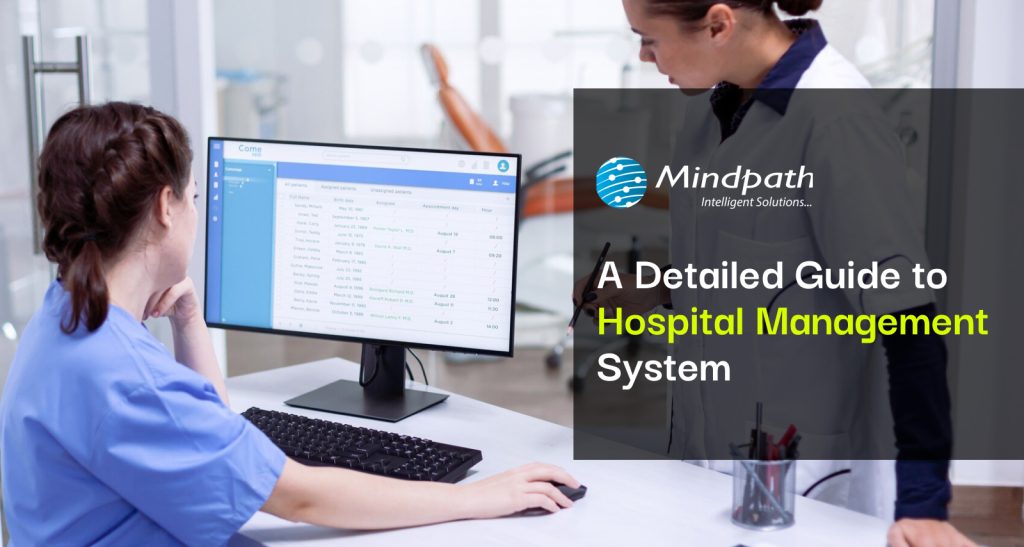
How do hospitals maintain and keep everything running smoothly? Starting from patient records to important surgery schedules, billing and staff coordination, each and everything is well maintained and smooth, isn’t it? Are you curious to know what’s behind this? Well, it’s Hospital Management System (HMS) which does the magic in handling hospital operations smoothly.  

Are you confused about what does it mean and why is it essential for modern hospitals? Don’t worry, we have got you covered! This blog will walk you through everything you need to know about HMS. So, let’s dive in to learn! 

Is your Hospital Management System keeping up with today’s healthcare demands? Mindpath provides Healthcare Software Development Services that help healthcare organizations build smarter systems and deliver better patient outcomes.

What is a Hospital Management System?

A hospital management system (HMS) is a type of software that helps hospitals manage everything effortlessly. It allows the doctors, nurses and other staff of a hospital to collect, store and share patient data in a secure and organized way. With the help of this system, the medical teams can easily get access to records such as X-rays, prescriptions and other important documents of patients.  

In most of the hospitals, doctors, nurses and the staff spend a lot of their time doing paperwork which can slow down things and also impact the patient’s overall experience. HMS can help in reducing the workload by handling many tasks automatically. It can bring all the necessary information and tools into one place which can help hospitals run their daily operations more proficiently with less delays. 

As per Market Research Future (MRFR) analysis, the global Hospital Management Software Market was valued at USD 29.33 billion in 2024. It is projected to reach USD 54.20 billion by 2034, growing at a rate of 6.33% annually between 2025 and 2034. This growth shows the increasing demand for smarter, more connected healthcare systems. 

Must Read: Types of Healthcare Software 

Now that you have a clear idea about what HMS is, there is a major question that arises: 

What is the Function of HMS?

When a hospital begins implementing HMS, numerous day-to-day activities are simplified and streamlined. An HMS assists personnel in focusing more on patients and less on documentation. Let us discuss some important functions that make this system so valuable: 

1. Scheduling Appointments

HMS facilitates patients to schedule appointments easily and doctors’ schedule efficiently which can eliminate confusion and lengthy waiting times. 

2. Patient Data Management

It stores all the patient records including medical history, test results as well treatment details which can help doctors and nurses to quickly access the right information when needed. 

3. Handling Billing and Invoice

It makes the billing process faster and more accurate by handling everything, from bill generation to payment tracking as well as insurance processing. 

4. Inventory Management

Hospitals can keep track of medicines, equipments and supplies which helps in avoiding shortages and guarantees everything is available on time. 

5. Reporting and Analytics

The system provides useful reports on hospital performance and operations, which helps in planning and improving services.  

6. Communication

It facilitates easier communication between doctors, nurses and patients to remain connected and exchange crucial updates, resulting in improved coordination and care. 

7. Integration with Other Systems

Hospital management software can easily integrate with other systems such as electronic medical records so that everything is integrated into one place with a complete view of every patient’s care experience. 

Struggling to improve efficiency and patient outcomes in hospital operations? Discover how AI in healthcare is transforming hospital management with intelligent automation and data-driven insights.

Let us learn about some of the key benefits if you’re looking for more information about hospital management system: 

Key Benefits of Hospital Management System

A good hospital management software system can make a huge difference in how smoothly a hospital runs. It assists both staff and the patients by improving the quality of care and simplifying daily tasks. Here are some major benefits of you can expect: 

1. Cost Effectiveness

With everything automated and systematized, hospitals are able to cut down on paperwork, labor costs, and wastage of supplies. It also aids in improved planning and utilization of resources such as medicines and equipment. This reduces unnecessary costs and makes the operations more cost-effective, enabling the hospital to utilize its budget where it’s actually needed. 

2. Better Patient Experience

Patients are able to schedule appointments with minimal waits, receive follow-up reminders, and view their reports online. It makes them feel more in charge of their treatment and less anxious. It makes everything easier, from arrival to discharge, which results in a more pleasant, efficient hospital stay for each patient. 

3. Safe and Secure System

Patient data is stored securely and shared only to permitted staff members. This protects information from abuse or loss. A secure system ensures trust between patients and the hospital, and ensures appropriate processing of sensitive information  while keeping the hospital in line with privacy and security regulations. 

4. Easy to Access Data

All medical information such as treatment history, test reports, and medications are kept in one place. Doctors, nurses, and medical staff are able to access this info quickly from various departments. This streamlines treatment and prevents the need to repeat tests or inquire about the same information from patients repeatedly. 

5. Reduces Manual Errors

The system maintains accurate and up-to-date information, preventing staff from making mistakes such as providing the wrong medication or omitting important steps. Access to information in real time eliminates confusion, enhances coordination, and ensures that doctors adhere to the proper treatment protocols based on the most current and comprehensive patient information. 

6. Speed Up Patient Care Process

When doctors and staff have quick access to patient records and reports, they can make faster decisions. Automated tasks like test scheduling and report delivery save time. This helps patients get the care they need without delays, which is especially important in emergency or critical care situations. 

Curious how AI is transforming industries and healthcare? Explore Generative AI use cases across diverse sectors and see how it’s reshaping healthcare platforms.

Ready to Upgrade Your Healthcare System?

A hospital management system can really make a difference in how a hospital operates. From enhancing patient care to accelerating operations and minimizing mistakes, HMS makes hospitals more efficient, well-organized, and responsive. Be it scheduling appointments, record management, or cost-cutting, HMS makes everything more efficient and reliable for patients and staff alike. 

At Mindpath, we specialize in delivering modern healthcare software development services that make hospital processes faster and smarter. Whether you’re planning a full hospital management system project or need a custom solution for specific tasks, we’re here to help. 

As a trusted healthcare app development company, we focus on building secure, user-friendly, and high-performing digital solutions. Our team understands the needs of healthcare and creates tools that support doctors, staff, and patients every step of the way. 

healthcare software development services

Ever Wondered how technology is really influencing the healthcare sector? From electronic health records and telemedicine to mobile health apps, today healthcare software development plays a great role in changing the way patients receive and providers provide treatment.  

But what exactly are healthcare software development services, and why are they crucial for modern medicine? In this blog we will explore healthcare software development services and how these cutting-edge solutions are going to shape the future of healthcare, improve patient outcomes, and smooth operations. 

What is Healthcare Software?    

Healthcare software development is the process of developing individualistic computer programs designed for hospitals, clinics, and all other types of healthcare organizations. These programs assist in enhancing how healthcare providers render care by making processes more effective, accurate, and oriented towards patients. Healthcare software creates a complete digital system within a healthcare organization.  

This allows medical professionals to offer better and more accurate clinical services. To doctors, this represents an easy way to do follow-ups and monitor the health of their patients, schedule appointments, and get access to medical reports, all from the comfort of managing staff. To patients, it offers online appointment booking, live chat with doctors, sharing of medical reports, and receiving health advice.   

These software solutions come with various benefits associated with the improvement in patient care, efficiency, and reduction in medical errors. They can digitize the traditional paper-based systems and take care that patient care is performed quicker and much more safely. Healthcare software is further creating new sectors, such as patient engagement, clinical robotics, and telehealth, driving a lot of startups to bring ideas into life. 

 Types of Healthcare Software Development Services  

Types of Healthcare Software Development Services - infographic

1. Electronic Health Record (EHR) Software   

EHR software is being used by hospitals and clinics like any CRM, but with a healthcare tune. It contains all the relevant information concerning every patient, among them what medicines they use, the various doctors’ advice, and the medical processes that they have gone through. Many EHRs incorporate mechanisms for billing, collection, and even a patient portal that allows patients to view consultation history, medical records, and prescriptions. There are two types of EHR software: the electronic patient record, which is used in hospitals for management purposes concerning a patient internally, and the electronic medical record, which keeps track of information like medications, past and future procedures, and how well the patient is recovering. 

2. Medical Database Software   

Medical database software can be called a huge library of information about medicine, not according to the profiles of patients but according to diseases. This tool aids doctors in looking through cases like one that is being treated and thus making informed decisions about its cure. It is also used for learning by allowing doctors to know more about certain diseases. For example, a dermatologist using medical database software can view all the patients diagnosed with Atopic Dermatitis, compare their symptoms, treatments, and recovery plans, and find the best approach for their current patients. 

3. Health Tracking Apps 

Health-tracking apps are part of the fast-growing industry called mHealth, which stands for “mobile health.” This industry, valued at $37 billion globally for 2019 alone, allows users to trace and manage their health from their smartphones. Some of the popular health monitoring apps include fitness apps such as 8fit, diet apps such as Fitatu Calorie. For instance, sleeping patterns are monitored by the FitBit wristband, while the Oura Ring is responsible for monitoring several health metrics. Others include glucometers for testing blood sugar levels and, of course, thermometers in general—for instance, tracking menstrual cycles like the Kindara app. All these tools work together to give users a better understanding of their health and wellness. 

4. E-prescribing Software 

The e-prescribing software is becoming a tool that every doctor must have, with countries all over the world rapidly adopting electronic prescriptions. Such software allows doctors to easily manage all prescriptions for all patients by tracking, renewing, and canceling them as need be. It is also connected to national drug reference databases that help in picking up the right medications and making sure there is no error. Examples include MediTab and ScriptSure, two software programs designed to ease e-prescribing and improve the capabilities of health professionals to deliver accurate and effective care. 

5. Appointment Scheduling (booking) Software 

Appointment scheduling software is designed to assist hospitals, clinics, and medical practices in managing their appointments online. This normally allows the provision of a user-friendly platform through which patients can easily book appointments via an app or website without calling up the office. This type of software normally features email notifications and automatically sends reminders to doctors and patients about upcoming appointments. It accommodates multiple doctors’ schedules, cancellations, or rescheduling of appointments, and does much more to provide appointment trend data that helps in bringing efficiency to the practice. Additionally, AI chatbots are integrated into these systems to enhance the booking experience. These chatbots can handle appointment scheduling, provide immediate responses to patient inquiries, and assist with rescheduling or cancellations. 

Looking to boost your healthcare operations with top-tier software solutions?

At Mindpath, we deliver cutting-edge, customized healthcare software to empower efficiency and elevate patient care.

Why Are Healthcare Practitioners Going Digital? 

Health practitioners use digital technologies greatly because of the great advantages they present in improving patient care and practice management. Digital healthcare solutions help doctors in the management of patient information. Therefore, record-keeping becomes more accurate and efficient while diminishing the burdens of paperwork.  

Healthcare IT has been one of the fast-growing markets and is expected to grow further. From $303.4 billion in 2022, this is projected to rise as high as $974.5 billion by 2027 with a good annual growth rate. The market is expected to grow to $728.63 billion by 2029 and even further to $1,069.13 billion by 2032. Healthcare provider solutions take up about 38% of the market, such as those in Electronic Health Records. On the other hand, IT services form 52% of the market, including online payments and cybersecurity. Growth is fueled by new technologies, increased spending by consumers, and government initiatives; however, challenges persist, with the most important ones being related to cybersecurity risks. It has the maximum market share in North America due to its better and advanced infrastructure. The European region is predicted to grow fast with government help and support, adoption of AI soon. Some major players in this field are GE Healthcare and Philips, which are carrying the industry forward. 

Leading Healthcare Software Development Services at Mindpath 

Mindpath offers a full cycle of healthcare software development services that meet all the needs of healthcare providers, patients, and all those concerned. Our offered solutions work toward better patient care while easing operations. Here are the services we provide: 

Leading Healthcare Software Development Services at Mindpath - infographic format

1. Healthcare Software Development Consultation: 

We assist in planning and designing your healthcare software project from an idea to detailed planning. Our advice ensures you will have a clear roadmap for developing effective healthcare solutions.  

2. Healthcare Software Development: 

We develop various healthcare IT software solutions, including Electronic Health Record (EHR) software, practice management systems, patient portals, among others. The solutions are secure, scalable, and well-built according to the industry regulations to ensure better patient care and efficiency. 

3. UI/UX Development: 

We design easy-to-use interfaces that will be convenient and pleasant for the eye. We focus on bringing your healthcare software both functionality and user experience. 

4. AI Chatbot for Healthcare: 

Our AI chatbots for healthcare answer questions, provide appointment scheduling, and disseminate medical information. They help improve interaction with patients and relieve some workload from the health staff. 

5. Modernization of Healthcare Software: 

Legacy system upgrade and migration to state-of-the-art platforms, enrichment of new functionalities, and updating of old technologies to manage your software and keep it relevant. 

6. Maintenance & Support: 

Ongoing support and maintenance are available to make sure that your healthcare software keeps running smoothly and aligns with your changing needs. 

Conclusion  

The huge effects of rapid growth in technology reshaping healthcare to become more effective, accessible, and patient-centered are undeniable. It is evident from the adoption of electronic health records and e-prescribing software at the end of the spectrum to health-tracking apps and AI-driven tools that are revolutionizing how healthcare providers care for patients and their practices.  

Such innovations not only improve the quality of care provided to patients but also the administrative flow, hence making healthcare very responsive and effective. Adopting the newest technology is crucial for healthcare organizations to keep ahead of these trends as the sector continues to change. This is where a holistic approach to healthcare software development is necessary. Healthcare providers may enhance patient outcomes, streamline operations, and more adeptly navigate the digital terrain by incorporating cutting-edge software solutions.  

At Mindpath, we are dedicated to supporting healthcare providers through every step of this transformation. From development and consultation to UI/UX design and modernization—our services cover a large area of needs, all meant to make sure you can drive positive change in healthcare through digital technology. Be it building new systems, updating existing ones, or ensuring ongoing support, Mindpath makes sure that your healthcare software is of the highest quality and effectiveness. 

Are you curious about how cutting-edge medical software might transform your business?

At Mindpath, we develop solutions that improve patient care and expedite operations.

Explore how healthcare software development enhances patient care and operations. Discover services like EHR, medical databases, and more. Transform your practice today!
Multimodal Generative AI

Have you ever wondered how AI can generate text, images, and even music? What if a single AI model could understand and create across multiple formats? This is where Multimodal Generative AI steps in. In this blog, we’ll dive into the fascinating world of Multimodal Generative AI and explore how it’s shaping the future of AI. 

What is Multimodal Generative AI?

Multimodal generative AI is an advanced form of AI that can comprehend and generate several types of data, including text, images, audio, and video. These systems can combine and analyze several types of input to process data from multiple sources and produce new content. Multimodal AI combines various sources of data to accomplish more complicated tasks and call for a greater understanding of the data. Although there is a lot of potential for this technology in fields like accessibility, education, and content creation, there are also issues to be resolved, like preserving accuracy and relevance and handling ethical concerns about privacy and authenticity. 

Benefits of Multimodal Generative AI

1. Improves Accessibility

Through the creation of various kinds of content, these systems improve accessibility and facilitate information access for all. By ensuring that people with different abilities can interact with content in ways that best meet their requirements, they contribute to promoting inclusion and understanding on various platforms. By offering substitute formats, these systems seek to remove obstacles and make the user experience more inclusive for all users.  

2. Creates High-Quality Content

Multimodal generative AI can lead to more complex and intelligent content by mixing several forms of data. It can include text, graphics, audio, and other components to provide interesting content. This skill enables the creation of a wide range of instructional materials or media that deepen comprehension and spark users’ interests. For everyone, it makes for a more engaging and educational experience by combining different forms. This method not only grabs the interest of individuals but also accommodates various learning styles, which makes it simpler for people to understand difficult ideas and concepts. This results in more effective and richer content that appeals to a larger audience.  

3. Boosts User Experience

Multimodal generative AI can adapt content in user interfaces to the context and the demands of the user. When voice isn’t possible, it can provide visual explanations to make sure customers receive information most conveniently. It also improves interactive experiences, like video games, by producing lifelike people and language that react differently to human input. 

Because of its versatility, technology becomes more user-friendly and accessible and creates a more engaging experience. Multimodal generative AI can offer tailored suggestions by comprehending the context, which raises customer satisfaction and facilitates more seamless, pleasurable interactions with digital material. 

4. Combines Data Effectively

These systems are capable of smoothly fusing data from many sources to deliver a more thorough and coherent knowledge of intricate circumstances. Their ability to integrate text, audio, and visual data improves analysis and decision-making. This capacity is especially useful for security, since it can improve threat identification and monitoring by combining textual, auditory, and visual analysis. 

These algorithms can find patterns and relationships by combining several kinds of data that would not be apparent when looking at a single source. By using a holistic strategy, organizations can improve their ability to respond to possible hazards and improve operational safety and efficiency.  

5. Improves Understanding and Insights

These models can get a better knowledge of both content and context than single-mode AI systems by combining many sources of data, such as text, pictures, and sound. With the capacity to understand both verbal and non-verbal aspects of a user’s question, this feature makes replies in applications such as virtual assistants more accurate and relevant. 

These systems improve communication and engagement by considering several factors, giving users a more efficient and natural experience. This enhanced comprehension leads to deeper interaction and more significant conversations, which eventually boosts the efficiency of AI applications as a whole. 

6. Drives Creative Marketing and Advertising

By combining consumer data from several sources to create personalized advertising material, multimodal generative AI can enhance marketing initiatives. These technologies can offer customized advertising materials that engage consumers on several sensory levels by analyzing interactions across various forms. Using this strategy, companies can generate ads that are more relevant and engaging for their target demographic, which improves consumer engagement and boosts the efficiency of marketing efforts.  

Use - Cases of Multimodal Generative AI

1. Human-Computer Interaction

Multimodal AI enables more natural and intuitive human-computer interactions by processing inputs from several sources, including voice, gestures, and facial expressions. This feature facilitates more seamless communication and allows customers to interact with technology in a more comfortable and familiar way. Multimodal AI improves user experiences and opens technology to a larger audience by comprehending various input formats. 

2. Healthcare

Multimodal models are essential for medical image analysis in the healthcare sector because they integrate data from several sources, including written reports, medical scans, and patient records. The capacity of medical professionals to diagnose patients accurately and create efficient treatment programs is improved by this integration. These technologies eventually enhance patient care and results by offering a greater understanding of a patient’s state. 

3. Multimedia Content Creation

Multimodal AI can generate multimedia material by mixing data from a variety of sources, such as text descriptions, audio recordings, and visual references. This feature makes the process of creating content more efficient and enables the automatic production of interesting and rich content. These systems improve efficiency and creativity by combining several modalities, which makes it simpler to create varied content that meets the tastes of various audiences.  

4. Sensory Integration Devices

Multimodal artificial intelligence (AI) improves augmented reality, virtual reality, and assistive technology user experiences by combining touch, visual, and audio inputs into one device. These gadgets build settings that are more interactive and immersive by merging many sensory inputs. This integration allows for a more thorough and pleasurable experience across a variety of apps while also improving user engagement and accessibility to technology. 

Multimodal artificial intelligence (AI) Services at Mindpath

Our AI development services help organizations better understand their requirements and make decisions by utilizing text, photos, audio, and other inputs. Our ability to integrate data from several sources gives us a full understanding of your initiatives and objectives. Our AI models make interactions more relevant and engaging by producing personalized information and responses based on your unique needs. By utilizing a variety of input methods, technology is made easier to use and more pleasurable for the user overall.  

Our services also provide valuable insights that assist businesses in making better decisions, leading to more effective strategies. At Mindpath, our aim is to harness the power of multimodal AI to empower your business and improve outcomes through innovative solutions. 

Final Thoughts

Multimodal generative AI is transforming the way humans engage with technology and consume content. It improves user experiences across a range of industries, increases accessibility, and fosters creativity by mixing diverse sources of data effortlessly. This technology has enormous potential to change industries and improve our daily lives as it develops further. At Mindpath, we’re thrilled to take the lead in applying multimodal AI to develop cutting-edge solutions that enable companies and improve user engagement. Unlock countless opportunities for development and innovation by embracing the AI of the future with us. 

Ready to unlock the potential of your projects?

At Mindpath, we harness the power of advanced AI solutions to elevate your business.

Discover how Multimodal Generative AI enhance creativity, accessibility, and user experiences across industries.