Cost-Effective Solutions: Enhancing Your Workforce with IT Staff Augmentation

Join our Newsletter!

Featured Posts

Support Is One Click Away

Home

Cost-Effective Solutions: Enhancing Your Workforce with IT Staff Augmentation

IT Staff Augmentation

Cost-Effective Solutions: Enhancing Your Workforce with IT Staff Augmentation

Are you looking for ways to cut costs while maintaining a high-performing IT team? You’re not alone! Many organizations are exploring innovative solutions to optimize their budgets without sacrificing quality. One effective strategy is IT staff augmentation. But what exactly does that mean, and how can it help your organization save money? In this blog, we will explore how organizations can optimize costs with IT staff augmentation. So, let’s dive in! 

What is IT Staff Augmentation?

Staff augmentation refers to hiring outside specialists to cover vacancies or skill shortages within an organization. Using this method enables businesses to modify their staff according to the demands of a project. Businesses can minimize the long-term expenses associated with permanent recruitment by using augmented employees to help with certain projects instead of recruiting full-time employees. 

Staff augmentation is a great way to cut IT expenses. Companies save money on things like office space, taxes, and benefits because augmented personnel are not full-time employees. This facilitates cost prediction and budget management. Staff augmentation also provides access to a larger talent pool. Specialized talents can be found by businesses fast, saving them the time and trouble of extensive hiring procedures for permanent employees.  

Benefits of Cost Optimization Through IT Staff Augmentation

Benefits of Cost Optimization through IT Staff Augmentation

1. Flexibility

IT staff augmentation provides firms with a high level of flexibility. It enables them to rapidly modify their personnel in response to shifting market demands. Without having to commit to hiring full-time labor, organizations can readily increase or decrease their headcount as project demands change. This keeps them sensitive and flexible in a hectic setting. 

Additionally, its adaptability enables companies to investigate novel prospects. They can swiftly recruit the right individuals to capitalize on any emerging trends in the industry. Their capacity to adapt enables them to manage expenses and successfully maintain their competitive and creative edge.  

2. Reducing Overstaffing

The ability of IT staff augmentation to prevent overstaffing is one of its main benefits for businesses. During difficult economic circumstances, companies can recruit an excessive number of full-time employees using typical employment practices. If the workload lessens, this might result in needless expenses. 

Businesses can adjust the size of their workforce according to what they actually need right now by using IT staff augmentation. They can easily cut back on the number of temporary employees in the event of a sharp decline in demand, saving money by not having to pay for idle personnel or layoffs. Because of this flexibility, companies can lower financial risks and better control their expenses. This strategy also frees up organizations to concentrate on their primary business without having to worry about overworking their workforce.  

3. Access to Talent Pool

Staff augmentation enables businesses to bring in professionals with specialized talents that their existing staff could not possibly possess. This is especially helpful for tasks requiring specialized expertise or cutting-edge technology. 

Businesses can accomplish tasks more quickly and with greater quality by using a larger talent pool without incurring the long-term expenses of employing full-time professionals. Additionally, it keeps the business informed of the newest developments and fashions, enabling them to maintain their competitive edge. 

4. Cost Efficient

Hiring specialists through staff augmentation may save firms a significant amount of money. Companies may hire professionals just when necessary for certain projects, saving time and money by not having to go through the laborious and expensive process of employing full-time personnel. 

This saves companies money on things like long-term salary, benefits, training, and onboarding. They only pay for the work completed on the project, which keeps expenses reasonable and stable. It’s a wise approach to acquire the necessary skills without committing to a full-time job, enabling businesses to make better use of their cash. 

Steps to Optimize Costs with IT Staff Augmentation

Steps to Optimize Costs with IT Staff Augmentation

1. Define Your Needs

Before recruiting additional workers, you should have a comprehensive understanding of the project’s goals and expectations. Hiring the best candidates who can live up to those standards and produce the outcomes you want is made simpler as a consequence. 

Establishing clear objectives aids in directing the group and maintains focus on the most important things. It clears up any misunderstandings and guarantees that the new personnel and the organization are on the same page right away. Project execution runs more smoothly and has a better likelihood of success when objectives are clear. 

2. Choose the Correct Agency

Choosing a reputable IT staffing provider is essential for successful staff augmentation. Companies can feel confident as they can employ the best personnel by collaborating with a partner who has a strong track record and extensive industry knowledge. Reputable agencies are aware of the unique requirements of your company and project, enabling them to pair you with qualified individuals who will work well together. 

The ideal partner will do more than just fill jobs; they will also offer continuing assistance, guaranteeing open lines of communication and a positive working rapport between the business and the additional employees. In the long term, this saves money and time by lowering the chance of hiring mismatches and improving project performance. Efficiently accomplishing corporate objectives can be greatly enhanced by investing in the appropriate personnel partner.

3. Tracking Performance

Regularly tracking the performance of augmented staff allows organizations to find areas for development and ensure that project objectives are met. Companies that monitor progress are better able to promptly resolve problems and offer assistance as required, facilitating the seamless integration of new personnel with the team. 

Businesses can also track performance and make necessary modifications to improve the project’s overall efficacy. This strategy improves teamwork, increases output, and makes sure the group stays on course to reach goals.

4. Assess Long-Term Requirements

Staff augmentation is frequently utilized for temporary initiatives, but companies should think about if any of the enhanced jobs may turn into permanent positions in the event that more work becomes necessary. Companies are able to adapt swiftly to changes in the business and retain top staff due to this flexibility. 

Organizations can plan and determine if it makes sense to convert temporary roles into full-time employment by assessing long-term requirements. This proactive strategy guarantees that companies always have a competitive advantage and are ready for changes in the market or future expansion

IT Staff Augmentation Services at Mindpath

At Mindpath, we deliver the best IT staff augmentation solutions, allowing companies to scale and succeed. It is indeed our mission to integrate skilled professionals seamlessly into your team in ways that increase your capability and ensure that you can effectively deliver your project goals. Be it lending a helping hand for a specific project, having the right expertise on modernizing your technology, or being on the lookout for ways to design robust software systems, Mindpath has the right solutions for you. Here are some of our services:   

  1. Dedicated Development Teams: We can provide you with experienced developers, integral parts of your team, to help with supplementary expertise and faster projects’ timeframes. Our developers blend in perfectly, ensuring smooth collaboration and delivery of results.  
  2. Legacy Modernization: We can upgrade and modernize your old technology so that it can work with the best standards of today. We provide services such as an assessment of your existing systems, technology upgrade, data migration, and performance enhancements. 
  3. Architectural Consultation: We consult on the design of robust and scalable software systems. Whether you are kicking off a new project or looking to better existing systems, we will help you build a solid ground and choose the best-suited technology for your needs.

End Note

IT staff augmentation is a wise tactic for cutting expenses while retaining qualified personnel in a company environment that is changing quickly. Employing specialized expertise allows businesses to better manage costs, minimize overstaffing, and react swiftly to project demands. 
To maximize the benefits of staff augmentation, it’s essential to establish precise objectives, select the best partner, keep an eye on output, and evaluate long-term requirements. Mindpath provides customized IT staff augmentation solutions, including architectural consultancy, specialized development teams, and legacy modernization. Allow us to assist you in developing your skills and successfully completing your project’s objectives.

Ready to optimize your IT capabilities and achieve your project goals?

At Mindpath, we provide top-tier IT staff augmentation solutions tailored to your unique needs.

Related Post

Discover key DevOps challenges and effective solutions to streamline development and operations, and boost deployment efficiency.
Discover why hiring a freelance full-stack developer in 2024 can boost your project’s efficiency, quality, and cost-effectiveness. Learn more with Mindpath!

Related Post

React Roadmap

React is one of the most powerful and useful JavaScript libraries that developers around the world are using to build amazing web applications. ReactJS allows developers to create fast, interactive user interfaces for websites and apps, and has even improved their workflows. When you have the intention to progress your skills or improve your existing projects, a React roadmap can help you navigate what to learn next. Rather than blindly choosing where to begin and what is most important, a roadmap allows you to advance in your learning with confidence and real intent.

React trends in 2026 are expanding forward with new capabilities such as server components, rendering methods, and development tools, to make learning React more valuable for new and expert users. Seeing how to use your time wisely and knowing what you may look at for a specific reason helps to save you time, but also helps to make modern applications. In this blog, you will discover a step-by-step process of learning, which can simplify mastering and using React in a project. Let’s get started!

If you’re planning to leverage React in your next project, our ReactJS development services can help you in creating modern, scalable web applications meeting your business goals.

Need for React Roadmap

It’s essential to have a clear learning plan when starting with React. A ReactJS roadmap for beginners allows you to learn complex subjects such as JSX, components, state, and hooks by breaking these subjects down into smaller, more manageable pieces. Having step-by-step tasks gives you a foundation and keeps a focus on what matters. Instead of doing random tutorials every day, you have a learning path that makes sense and keeps your learning organized and flowing.

With new features and developments coming in the future of React, it’s good to be prepared. Having a React developer roadmap can give you a path of what you can learn and when you can learn it. This can help you eliminate confusion and wasted time. Roadmaps can often have actual projects where you actually perform them as a learning experience. This kind of experience will only help you to grow and develop your learning experience and skills, but it will also keep you motivated because you are able to see your progress clearly on your journey!

Planning to improve user engagement and deliver smoother interactions on your platform? Learn how the benefits of ReactJS development services help businesses create more responsive apps.

Key Concepts to Master Before Learning ReactJS

Before diving into React, it’s helpful to understand some core web development concepts that make learning smoother and more effective. These basics form the starting point of any React roadmap and give you the confidence to build with React efficiently.

Key Concepts to Master Before Learning ReactJS

1. JavaScript Basics

It is important for you to understand variables, functions, arrays, and objects in JavaScript. These are the building blocks for the logic and data in React.

2. Understanding the DOM

It is important for you to understand what the browser is doing in terms of displaying things and changing things via the DOM. React uses the DOM structure to show on the screen and make changes to it easily and efficiently.

3. Version Control with Git

It is important for you to understand how to track and manage your changes in your projects, via version control, specifically with Git. It is a vital part of a real-world React application, especially when working with a team.

4. HTML and CSS

Learning the fundamentals of HTML for structuring web pages and CSS for styling them is important. Understanding layouts related to flexbox or grids is necessary for developing responsive user interfaces in React. 

Curious to identify which technology aligns best with your development team’s strengths? Read about the practical implications of choosing React vs Vue for your business projects.

ReactJS Roadmap 2026

To become a skilled React developer in 2026, it’s important to follow a clear and practical learning path. This React tutorial, based on the latest ReactJS roadmap 2026, will guide you through the key topics to focus on at each stage of your journey.

ReactJS Roadmap

1. Setup & Basics

Start by setting up your environment with tools like Node.js and npm to begin working with React. Learn how JSX works and how it allows writing HTML-like code inside JavaScript, which is essential in any React roadmap.

2. React Components

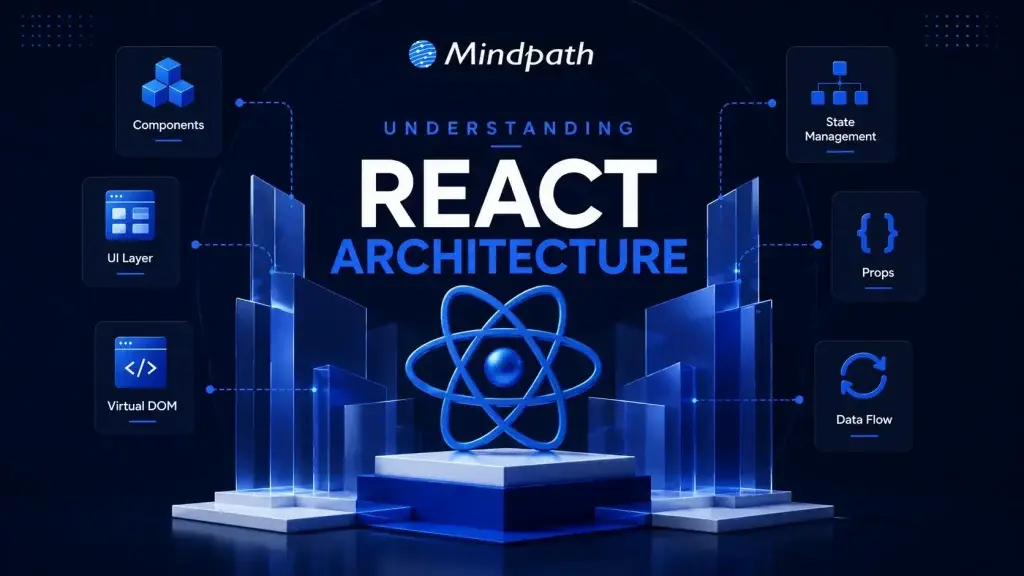
Understand the structure and role of components, which form the UI of any React application. Functional components, props, and state are core parts of this architecture, making them a key focus in the front-end roadmap.

3. React Hooks

Hooks let you use features like state and lifecycle in functional components without writing classes. Mastering built-in hooks such as useState, useEffect, and useContext is crucial in any modern React Roadmap.

4. Routing

Routing allows smooth navigation between pages in single-page applications using tools like React Router. It enhances user experience by loading components based on the URL, as commonly seen in apps.

5. State Management

State holds the data that drives your UI and updates the app when changes. Techniques like React Context API and Redux help manage local and global states effectively within your project.

Also Read: Techniques to Optimize ReactJS Performance

6. Event Handling

React handles user actions such as clicks, form submissions, and scrolls through event handlers. Learning how to work with these events improves interactivity and responsiveness in your application.

7. Advanced & Custom Hooks

Explore patterns like component composition, higher-order components, and custom hooks to reuse complex logic. These advanced topics align with current React trends and best practices.

8. React Animations

Animations create smooth transitions and improve the user experience using tools like Framer Motion or React Spring. These libraries offer a flexible way to add motion to your interface.

9. React Frameworks

Explore frameworks built on top of React, such as Next.js and Gatsby, that enhance app performance and SEO. These tools are often mentioned in ReactJS blogs for speeding up development.

10. Projects

Apply what you learn by building real-world applications that solve problems and test your skills. Project-based learning is a major part of the React tutorial approach and strengthens your understanding of concepts in the JavaScript roadmap.

Looking for ways to improve user engagement and overall app performance? Read the top reasons to choose ReactJS for app development and see why it’s preferred by many leading businesses.

Ready to Start Your React Journey?

Following a structured React roadmap helps you learn React with purpose and confidence. This blog covered everything from the basics to advanced tools and trends that matter in 2026. By focusing on key concepts, building projects, and staying updated, you’ll be better prepared to grow as a skilled React developer in today’s fast-moving web world.

This React roadmap is just the beginning. At Mindpath, we bring these React concepts to life through modern and scalable solutions built by expert developers. Our ReactJS development services align perfectly with what you’ve explored in this blog, delivering clean architecture, smart component reuse, and performance-focused interfaces that work seamlessly across devices. Let us help you turn learning into real results through expert-driven development.

Modernizing legacy systems

In the prevailing digital economy, business entities cannot rely on outdated or obsolete systems. In fact, such systems can act as major handicaps in their path and impede their ability to achieve their business goals and objectives. This is why it is crucial for contemporary businesses to prioritize legacy system modernization.

In the prevailing business world, the practice relating to modernizing legacy systems has been gaining high momentum. About 72% business executives state that their legacy systems hold them back, leading to lower business productivity. Let us explore how legacy system modernization can create value for modern businesses. 

Are you looking to update your outdated systems but unsure how to start? Contact us, and we will help you modernize with the right strategy according to your business needs.

What are Legacy Systems?

Before looking at the benefits of modernizing legacy systems to revolutionize their operations, it is essential to get familiar with legacy systems. So it is crucial to know the answer to the question: What are legacy systems? In the computing realm, legacy systems refer to old technologies, methods, or computer systems. So they are basically outdated systems that are still in use regardless of their obsolete nature. 

In the fast-paced digital world, the use of such systems gives rise to a host of challenges and bottlenecks for business entities, such as the hindrance of innovation, a rise in costs, and restricted growth of the business. In order to address these challenges, it is a must for businesses to focus on the modernization of legacy systems.

Also Read: Digital Transformation for Businesses

Need to Modernize Legacy Systems

Modernizing legacy systems matters for business organizations since it serves as a catalyst and minimizes inefficiencies. The prioritization of legacy modernization is critical for modern organizations. It can serve as the ultimate pathway that can facilitate the scaling and integration of new digital technologies. 

In the competitive business landscape, embracing modernization of legacy systems is of high strategic importance. This practice can lead to cost savings for firms. Moreover, it can also improve the operational efficiency of entities and give them an edge over their competitors and rivals. Thus, by modernizing obsolete and old systems, business entities have the opportunity to grow and flourish in the dynamic and competitive business landscape. 

Curious how small businesses can leverage the latest tech to grow smarter and faster? Explore emerging technologies for small businesses to discover tools and solutions that can transform your operations and boost efficiency.

Top Benefits of Modernizing Legacy Systems

Organizations need to familiarize themselves with the top benefits that can arise on their path by modernizing their legacy systems. This strategic move has the potential to equip businesses across diverse industries to sustainably carry out their operations and excel in their respective domains. If you are wondering, what are the benefits of modernization? The answer is presented below. Some of the key benefits of modernization include: 

1. Better Productivity

All businesses intend to operate in a productive and efficient manner. The use of legacy systems may act as a major hurdle in their path, as it may restrict their productivity and efficiency. This is where modernization comes into the picture. Through modernization of legacy systems, businesses have the opportunity to improve their efficiency and effectiveness and streamline their operations. Furthermore, this decision can also enable businesses to optimally use their valuable time and gain a competitive edge in the market.

2. Reduced Cost in the Long-Term

Modernization of legacy systems can help firms reduce their costs in the long run. Regular updating of legacy systems may require a lot of money, and thus, the financial stability of businesses may be adversely affected. A smarter decision that your business can make involves transitioning to new systems through modernization. It can act as a pathway that can help your business save costs. You must remember that modern systems, especially the ones that run on the cloud, are much cheaper for businesses to run. 

3. Minimization of IT Complexity

One of the main challenges that arises from using legacy systems revolves around complex IT aspects. As technology or systems become obsolete, it becomes a daunting task to patch loopholes and errors. Every single update may require extra time and additional effort. If businesses replace legacy systems through modernization, they can definitely eliminate such complexity. Moreover, IT teams will be empowered to manage their operations by leveraging new and efficient systems, methods, or technologies.  

4. Improved User Experience

Legacy systems not only create challenges for business teams, but they also have a negative impact on the experience of users. Thus, in order to improve the overall experience of users, businesses must focus on modernizing legacy systems. It can certainly have a positive impact on user experience and improve their loyalty towards a business. On the other hand, poor quality of experience can drive users away from businesses. 

Looking to elevate your user interactions with smarter solutions? Discover the latest trends in conversational AI chatbots and see how businesses are using them to deliver seamless and engaging customer experiences.

5. Better Quality of Security

In the digital world, security is undoubtedly one of the main priorities of a majority of businesses. The use of legacy systems can increase the vulnerability of businesses in the volatile cyberspace. Malicious actors such as online hackers or cybercriminals may be able to breach the cybersecurity layer in legacy systems due to their obsolete nature. 

Thus, it is essential for businesses to focus on modernizing their legacy systems. By doing so, there is an opportunity for businesses to strengthen their cybersecurity resilience as well as their cybersecurity posture. The use of modern and updated systems has the potential to minimize the cybersecurity risks that arise in the path of businesses.  

6. Better Integration with Modern Tools and Technology

The modernization of legacy systems enables businesses to adopt new digital technologies in a seamless manner. Legacy systems may give rise to several challenges and obstructions. However, that is not the case when it comes to modern systems. Therefore, there is a possibility to integrate a diverse range of tools such as customer relationship management software, enterprise resource planning systems, payment systems, and many more by modernising the legacy system of your business.  

7. Better Flexibility

The modernization of legacy systems promotes flexibility as well as scalability for businesses. As your business expands in the future, you can easily expand modern systems without any trouble. On the other hand, the businesses that rely on legacy systems may face numerous obstacles in their path when their business grows. Due to the obsolete or outdated nature of their systems, they may not be able to handle a larger dataset or a larger number of users. As a result, their efficiency may be affected, and they may not be able to flexibly carry out their business operations.

8. Improved Workflow

Businesses operating in diverse industries and sectors can improve their workflows by modernizing their legacy systems. This practice can allow them to leverage the latest digital technologies and smooth their processes and operations. Moreover, they can be in a position to reduce their costs associated with downtime. Thus, you can surely see the positive change in the processes, practices, and operations of your business. 

Want to stay ahead with workflows that leverage modern tools and integrations? Discover the game‑changing SaaS trends helping businesses build flexible, efficient systems that align with workflow modernization.

Final Words

It is a fundamental necessity for contemporary business entities to prioritize the modernization of their legacy systems. This decision can certainly empower your business to thrive in the competitive business arena. Some of the top benefits that may arise in the path of your business include better productivity, lower cost, minimization of IT complexity, improved user experience, and a higher level of security. The other benefits that may also arise for your business include improved integration with modern tools and technology, better flexibility, and improved workflow. 

We at Mindpath intend to replace your legacy systems with updated ones through modernization. The experts will ensure that your business can derive optimum value from this transition, and it can reach new heights. 

Unlock the benefits of modernizing legacy systems, from increased productivity to growth, with Mindpath’s expert solutions.
Data and Analytics Trends

Have you ever wondered how data is shaping the future? As businesses continue to rely on insights to make smarter decisions, the world of data and analytics is evolving at lightning speed. What trends will dominate in 2025? How will they transform industries and influence everyday life?  

Data and analytics trends are significant because they enable firms to make better decisions. Companies that use cutting-edge tools and techniques can better understand their customers, enhance their goods, and identify new growth prospects. These patterns also make it simpler to anticipate future issues and handle them more quickly. In today’s rapidly changing world, being updated on data and analytics trends provides organizations a significant edge, allowing them to remain ahead of the competition and prosper in the long run. 

Let’s explore the top data and analytics innovations to watch out for in the coming year! 

Data And Analytics Trends In 2025

1. AI and ML Transform Data Analytics

Artificial Intelligence and machine learning are altering the way organizations utilize data. These modern technologies assist in automating monotonous operations, analyzing vast volumes of data, and identifying trends that people might overlook. This allows businesses such as healthcare, retail, banking, and telecommunications to work more efficiently, solve issues faster, and make better judgements. One significant advantage of machine learning is its capacity to analyze data in real time, detecting unexpected patterns or problems and alerting teams to action. This saves time and helps to avoid larger complications. 

Self-driving automobiles provide an excellent illustration of AI and machine learning in action. These devices utilize complex algorithms and cameras to accurately detect objects and ensure safe navigation. This technology has the huge potential to make self-driving cars generally accepted, opening the door for safer and more intelligent transportation systems. It demonstrates how powerful AI and ML can be in determining the future of many sectors.  

2. Empowering Everyone with Data Democratization

Data is no longer only for specialists; it has become a significant resource for everyone in an organization. Businesses are attempting to make data more accessible and usable, especially for those without technological expertise. This trend, known as data democratization, means that more employees can benefit from insights and apply them to better decision-making. Companies do this by simplifying how data is organized, providing user-friendly tools, and training people on how to utilize data successfully. Generative AI technologies aid in the discovery of insights, while data fabric tools link systems and data mesh organize data by business sector. Employees also have access to self-service resources such as data visualization dashboards, learning knowledge bases, and concept testing tools.  

3. DataOps for Better Analytics

DataOps, which stands for Data Operations, is transforming how businesses manage and use their data. It simplifies the whole data management process, resulting in faster and higher-quality data analysis. By automating operations and cultivating a collaborative culture, DataOps ensures that data flows swiftly and consistently, making it simpler to extract useful insights. Companies use DataOps to create organized pipelines for collecting, processing, and securely delivering data from source to destination. These pipelines accelerate data transfer while ensuring security and compliance with laws. This enables firms to develop higher-quality analytics, resulting in more informed choices and faster problem-solving. 

For example, an important food store used DataOps to optimize its data flow. By integrating its systems with a unified data platform, the firm synchronized data throughout its entire infrastructure, allowing for real-time monitoring and more efficient operations. This not only increased productivity but also guaranteed that all levels of the organization had access to reliable, actionable data. As more firms use DataOps, they are seeing its potential to turn data management into a competitive advantage, driving innovation and expansion. 

4. Prioritizing Data Governance

As data becomes more fundamental to corporate activities, protecting its security, integrity, and compliance is essential. This is when data governance becomes crucial. It entails developing policies and processes for data access, sharing, privacy, and compliance with legislation. Data that is both dependable and of high quality is essential in analytics. Without adequate governance, firms risk using inconsistent or incorrect data, which can result in bad judgements. By setting explicit standards, businesses can guarantee that their data is accurate, consistent, and secure.  

Data governance is essential for firms that manage vast volumes of data from numerous sources, particularly sensitive information. For example, a telecoms corporation used a robust governance structure to increase data protection and administration. They improved data control by establishing consistent rules and processes, while also preserving compliance and protecting it from danger. 

5. Hybrid Cloud Gains Momentum

Hybrid cloud computing is gaining popularity because it combines the benefits of both cloud and on-premises technology. It enables organizations to select the appropriate resources for their services, applications, and data management, resulting in increased flexibility and performance.  For data analytics, hybrid cloud computing assures that enterprises can access their data at any time and from any location. It also allows for seamless integration of cloud and on-premises applications, eliminating data silos and offering more accurate, complete insights. City Plumbing Suppliers is an excellent example of a hybrid strategy, which they implemented during their cloud migration. By upgrading their old platform and combining it with cloud-based infrastructure, they could benefit from both on-premises and cloud environments. This enabled the organization to increase performance, expand better, and provide more complex services. 

6. Edge Analytics Takes the Spotlight

As the Internet of Things (IoT) and edge computing evolve, processing and analyzing data near to its source has emerged as an important trend in data analytics. This change improves data management and reduces operating expenses by allowing for faster and more efficient analysis. Edge analytics minimizes latency in IoT systems, resulting in faster decision-making. This is especially significant in real-time applications, where early detection of problems can help prevent equipment failures, decrease downtime, and save money. 

One excellent example of edge analytics in action is predictive maintenance for industrial firms. These systems monitor equipment by collecting data from sensors positioned around the facility. When the system identifies any odd behavior, it promptly warns operators, allowing them to take action before a problem happens. This ensures smoother operations and cost savings. 

How Mindpath Can Help?

Mindpath can help your company capitalize on the most recent data and analytics developments. We have the experience to help you use              Artificial Intelligence and machine learning to improve data analysis, make data available to everyone in your organization, and ensure your data is safe and well-managed. We can help you adopt DataOps to accelerate data processing and increase insight quality. We also help organizations build up data governance policies to ensure that their data is accurate, safe, and consistent with legislation. If you’re looking for hybrid cloud solutions or edge analytics, Mindpath can help you integrate these technologies into your organization to improve performance, make faster decisions, and save money. 

Wrapping Note!

The future of data and analytics is fast changing, with significant technologies like Artificial Intelligence and machine learning, data democratization, DataOps, data governance, hybrid cloud computing, and edge analytics expected to affect sectors by 2025. These advancements will enable firms to get deeper insights, make better decisions, and remain ahead of the competition. As businesses seek to maximize the benefits of these innovations, it is crucial to have the necessary tools and knowledge to apply them successfully. Mindpath is here to help you navigate these disruptive trends, providing the resources and tools you need to optimize your data management, make better decisions, and drive commercial success. 

Ready to stay ahead with the latest data and analytics trends?

Let Mindpath help you leverage AI, DataOps, and more to transform your business.

Discover the top data and analytics trends for 2025, from AI and ML to hybrid cloud and edge analytics and learn how Mindpath can help.