Augmented Analytics – The Next Big Leap in Business Intelligence 

Home

Augmented Analytics – The Next Big Leap in Business Intelligence 

Augmented Analytics – The Next Big Leap in Business Intelligence 

Join our Newsletter!

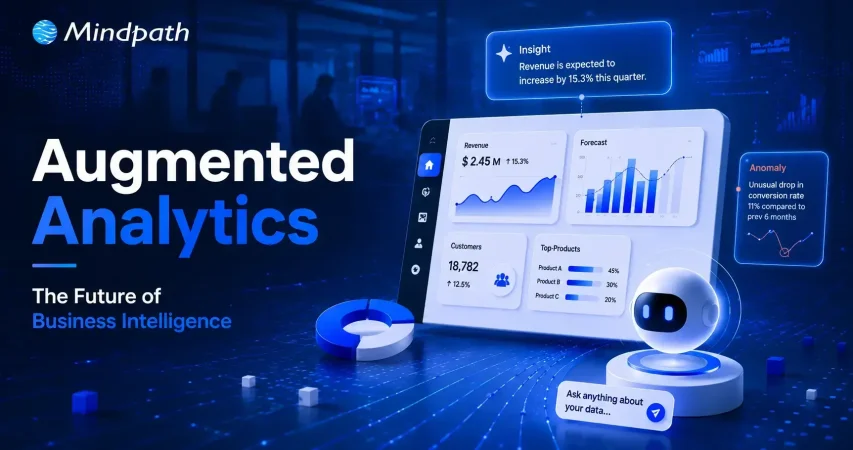
Augmented Analytics 

 In today’s world, businesses produce more data than ever. However, even the best teams often still find it hard to make decisions based on that data. This is where augmented analytics comes in. It combines artificial intelligence and machine learning with traditional business intelligence. This translates into smarter, faster and more accurate analysis for all.

Then, why is this change important for contemporary businesses? Traditional BI tools were developed with the analyst in mind. Augmented analytics is about to alter all this. It enables every team member to be able to explore the data themselves. No coding, no complex queries, no delay in reporting. The potential for productivity, direction, and development is huge. This blog examines what augmented data analytics really represents, why it’s so relevant today and how it’s changing the future of AI.

Ready to turn your business data into smarter decisions and real growth opportunities? Mindpath offers AI development services to help you build intelligent analytics solutions that deliver meaningful insights.

What is Augmented Analytics?

Augmented analytics is the use of artificial intelligence, machine learning, and natural language processing to automate data preparation and insight generation. It removes technical barriers for everyday business users. Anyone can now explore data, spot trends, and draw conclusions. This is the foundation of modern advanced data analytics.

Simply put, augmented data analytics enhances human intelligence. It does not replace analysts. Instead, it empowers them to work smarter and faster. Non-technical users can ask questions in plain language and get instant answers. Decisions become quicker, more accurate, and rooted in real data. That shift changes everything for businesses today.

How Augmented Analytics Works?

Augmented analytics starts by automatically cleaning and connecting data from multiple sources. From there, users simply ask questions in plain language and get instant answers.The driving force behind this is AI-Powered Analytics, which leverages machine learning to inspect the data and identify patterns, trends, and irregularities without any manual intervention.

Afterwards, the machine converts complicated insights into straightforward, graphical descriptions that are comprehensible to everyone. Also, it keeps on learning from user interaction and enhancing its recommendations. Thus, the final outcome is rapid, intelligent, and highly-tailored insights produced in a matter of minutes instead of days.

Key Benefits of Augmented Analytics for Businesses

Smart data analytics is transforming how businesses understand and act on their data. Here are the major benefits of augmented analytics that are driving this transformation across industries today.

1. Accelerated Time-to-Insight

Preparing data manually often took several days. However, augmented analytics by automating the entire workflow removes delays and delivers on-the-spot insights precisely when companies most rely on them.

2. Democratization of Data

It is unrealistic to expect all the team members to be fluent in the language of data science. Thanks to natural language queries, practically any member of the team can type out their questions in simple English and receive instant factual answers.

3. Enhanced Decision-Making

Making decisions based on old reports leads to a reactive business that will eventually lose the race. What AI in analytics offers is the capability of uncovering hidden patterns and unusual events, which ultimately results in more intelligent and preemptive decisions.

4. Improved Productivity

Preparing data is undeniably the largest part of the time data teams spend. Augmented analytics, by automating these processes, liberates analysts from routine tasks so that they can concentrate on strategic planning and creative work.

5. Reduced Analytical Bias

Because of human nature each interpretation can be different and therefore from some level subjective. Machines, on the other hand, follow strict rules and do not deviate. Therefore, when they are used to analyze the data, it becomes more consistent and trustable.

6. Advanced Forecasting and Modeling

The ability to forecast is at the core of any business planning. Business executives leveraging AI-driven predictions can be highly confident about their supply chain, inventory, and financial decisions.

7. Cost Savings

The role of augmented analytics in business intelligence goes beyond insights. It simplifies the whole analytics process, thus reducing labor and operational costs across different departments.

Real-World Augmented Analytics Examples

Augmented analytics is already making a measurable impact across industries worldwide. Here are some real-world examples of how businesses are putting it to work today.

1. Sales Pipeline Risk Detection

Losing a deal late in the cycle is costly and often avoidable. AI analyzes deal velocity and engagement patterns in real time, giving sales leaders early warnings before opportunities slip away.

2. Employee Attrition Prediction

HR teams in large enterprises can now get ahead of talent loss before it happens. AI analyzes employee behavior and tenure patterns to flag individuals most at risk of leaving the organization.

3. Smarter Demand Forecasting

Supply chain disruptions often stem from poor demand visibility. Using augmented analytics tools, logistics and retail businesses continuously adjust forecasts based on real-time signals and external market data.

4. Intelligent Inventory Management

Overstocking and stockouts both hurt retail profitability. AI analyzes customer buying patterns automatically and adjusts stock levels, helping retailers reduce waste and meet demand more consistently.

5. Predictive Equipment Maintenance

Unplanned downtime is one of the biggest cost drivers in manufacturing. AI monitors equipment data continuously and predicts potential failures before they occur, keeping production schedules on track.

6. Real-Time Fraud Detection

Financial institutions process thousands of transactions every single day. AI scans that data in real time, flagging suspicious patterns instantly and significantly strengthening fraud prevention capabilities.

Is Your Business Ready to Embrace Augmented Analytics?

The use of data by enterprises is rapidly evolving and Augmented Analytics have become a reality. Those organizations that invest in them early will be able to make more informed decisions, get ahead of the competition and be more agile effectively.

Mindpath offers AI development services to assist companies in discovering the real potential of their data. We develop smart and robust solutions customized to your objectives. Contact us now and we will guide you through the new beginnings.

Frequently Asked Questions

1. Is Augmented Analytics only useful for large enterprises?

Not at all. Businesses of every size can benefit. Small and mid-sized companies often see the biggest impact because they have fewer dedicated analysts. Augmented analytics fills that gap without requiring a large data team.

2. How is Augmented Analytics different from traditional business intelligence?

Traditional BI shows what happened. Augmented analytics explains why it happened and predicts what comes next. The difference is automation and intelligence. It removes the need for manual analysis and delivers faster, deeper insights automatically.

3. Do employees need technical training to use these tools?

Minimal training is needed. Most augmented analytics platforms are built for everyday business users. Natural language querying means anyone can ask questions and get answers without knowing SQL, coding, or data modeling.

4. How long does it take to see real results after implementation?

Results can appear within weeks, not months. Once the system connects to existing data sources, it begins surfacing insights almost immediately. The timeline depends on data quality and the complexity of the business environment.

5. What industries benefit the most from augmented analytics today?

Finance, retail, healthcare, manufacturing, and marketing are seeing the strongest results. However, any data-driven industry gains value from it. The more data a business generates, the greater the impact augmented analytics delivers.

Related Post

low code development

In the past, when we would build software, we would talk about long timelines, large budgets and complex code. But things have shifted, and businesses are demanding faster results, meaning teams need to leverage simpler tools to build applications without completely relying on developers. This dramatic change would not be possible without low-code development. Low code provides a more intelligent way for people to develop applications through visual, straightforward logic and less coding. The hope is that this will translate into shorter timeframes, lower costs, and faster teams. Doesn’t that sound exciting?

So, many companies are using these platforms to build apps for websites, mobiles, and internal use that can be launched without waiting months. Are you interested in finding out more about this technology? Great, because this blog is going to teach you everything you need to know about low-code development! 

Want to modernize your business applications without long development cycles or heavy coding? Contact us to get the needed expertise from Mindpath to turn your low-code strategy into results.

What is Low-Code Development?

Low-code development refers to the simplest and fastest way to build software. Instead of writing long lines of code, developers can now use visual tools to create apps by just clicking, dragging and choosing from ready-made features that are available. This method can help in saving a lot of time and making the whole process easier, even for teams without deep coding experience.  

It provides developers with a very flexible and user-friendly space to build anything starting from small tools to full business apps. It has many features like drag-and-drop editors, built-in templates and easy-to-use interfaces, which make it possible for low-code platforms to design and launch apps quickly. This can contribute in businesses growing faster, working more efficiently and getting better results from their software projects.

Must Read: Low-Code vs. No-Code Development

Don’t know what is a low-code platform? Let’s learn about that too!

A low-code platform is a tool that helps people build software without writing a lot of code. It uses a simple visual interface where users can drag and drop elements to create apps. This makes it much easier for both developers and non-technical users to build digital solutions. These platforms come with ready-made features like templates, forms, and automation tools. They reduce the need for complex coding and speed up the development process.  

An interesting study according to Fortune Business Insights reveals that the global low-code development platform market size was valued at USD 28.75 billion in 2024. It is expected to grow to USD 264.40 billion by 2032, showing a strong CAGR of 32.2% during the forecast period. This rapid growth highlights how more businesses are turning to low-code development platforms for faster and smarter software development. 

Low Code Development Platform Market

Benefits of Low-Code

Low-code is shaping how organizations approach application and software development. By streamlining the process and reducing the need for manual coding, they offer practical advantages for both technical and business teams. Here are some of the key benefits: 

1. Speeds Up App Delivery

Low-code tools come with drag-and-drop features and built-in parts, so building apps is much quicker. Both tech teams and non-tech users can build apps quickly with the help of these pre-built components. This means businesses can launch apps in weeks, not months. 

2. Boosts Team Productivity

With low-code, business teams can build their own apps without always needing help from developers. This means less waiting around and more work getting done. It’s a great way to turn ideas into real solutions quickly. 

3. Makes Updates Simple

Low-code apps are easier to manage and update because they use pre-built parts that work well together. Changes can be made without breaking existing features, which means the business can stay up to date without major disruptions. 

4. Reduces Development Costs

Since low-code tools require less coding, businesses don’t need to hire large teams of developers. Projects take less time to complete, which saves both time and money. This makes it a cost-effective choice, especially when building multiple apps. 

5. Improves Business Agility

Low-code helps businesses respond quickly to changes in the market. When a new tool or feature is needed, it can be built and launched without delay. This keeps companies flexible and ahead of the competition. 

6. Enhances Decision Making

Low-code apps connect with real-time data, giving teams fast access to the insights they need. This allows business leaders to make informed decisions more quickly. Having accurate information often leads to stronger results. 

7. Enable the Use of New Technologies

Low-code makes it easier to add modern features like AI and automation into applications. These advanced tools can be integrated without needing complex coding skills. It helps businesses stay up-to-date and competitive in a fast-moving digital world. 

Curious how low-code platforms are integrating cutting-edge technologies like artificial intelligence to build smarter apps? Explore the latest AI trends to see how your business can leverage automation and intelligence for more innovative solutions.

Now let us have a quick look at the features of low-code: 

Key Features of Low-Code Development

Low-code stands out because of the powerful features it brings to the table. These features make it easier to build, customize, and manage applications with less effort. Let’s take a look at what makes low-code so efficient and user-friendly: 

1. Simple Drag-and-Drop Design

The drag-and-drop feature is one of the most useful parts of low-code. It lets users add buttons, fields, and other elements by simply placing them on the screen. This is helpful for both business users and developers who want to build apps quickly as it saves time and keeps things organized. 

2. Easy Visual Tools

Low-code platforms come with visual tools that help show how an app works in a way that everyone can understand. These tools use built-in blocks to represent processes and data clearly. Whether someone is a beginner or an experienced developer, the visual approach is helpful. It makes the development process simple and easy to follow. 

3. Ready-to-Use Templates

Many parts of an app are already built into the platform and can be reused. These pre-made modules make it faster to build new apps without starting from scratch. Teams can also save and share parts of their apps with others, which improves teamwork and speeds up future projects. 

4. Model-Based Development

Model-based development helps users create apps faster by using visual flows and logic. It allows business teams to build what they need by following models they already understand. This makes the process smoother, especially for those who are not expert coders. A good low-code platform supports this method, so users can focus on logic, not code. 

5. Cross-Platform Accessibility

Low-code makes it easy to build apps that work on different devices like phones, tablets, and desktops. This means teams can use the app from anywhere, whether in the office or on the move. It also helps companies stay connected with their teams. A flexible app is always more useful in today’s fast-paced work environment. 

Cross-platform apps are more powerful when they leverage AI to engage users intelligently. Check out these real-life AI chatbot examples to see how automation and smart interactions can enhance your app’s reach and performance.

Want to Boost Your Business Growth with Low-Code?

Low-code development is changing the way software is built by making it faster and easier. It helps teams create apps quickly using simple visual tools instead of writing complex code. This approach is helping businesses stay flexible and move ahead in a fast-changing world. 

At Mindpath, we offer powerful application development services using low-code platforms. Whether it’s for internal tools or customer-facing apps, our team makes development smooth and affordable. Let us help turn your ideas into working solutions faster than ever before. 

Frequently Asked Questions

1. Is low-code development suitable for building complex business applications?

Low-code development can support complex applications when combined with proper architecture and integrations. While it simplifies many processes, advanced use cases may still require custom coding. It works best for speeding up development while allowing flexibility where deeper technical control is needed.

2. How does low-code development impact the role of traditional developers?

Low-code development does not replace developers but changes their role. Developers focus more on complex logic, integrations, and system architecture, while simpler tasks are handled through visual tools. This improves efficiency and allows technical teams to concentrate on high-value work.

3. What should businesses consider before adopting a low-code platform?

Businesses should evaluate scalability, integration capabilities, security features, and vendor support. It is important to ensure the platform aligns with long-term goals and can handle future growth. Proper planning helps avoid limitations as application needs become more advanced.

4. Can low-code platforms integrate with existing business systems?

Yes, most low-code platforms are designed to integrate with existing systems such as databases, APIs, and third-party tools. This allows businesses to extend current workflows instead of replacing them, ensuring smoother transitions and better use of existing infrastructure.

5. How secure are applications built using low-code platforms?

Security depends on the platform and how it is implemented. Reputable low-code platforms include built-in security features like authentication, data protection, and compliance support. However, businesses must still follow best practices such as regular updates and access control to ensure strong protection.

hire node js developers

In this new age of technology, speed and performance are more important than ever. If you are creating an enterprise chat application, an e-commerce site or a custom dashboard, the right technology and right people behind it can be a game-changer. It’s the time to think smart, if you are aiming to stay ahead in the competitive market. Well, choosing to hire Node.js developer can help you build fast, scalable and reliable web applications that can match your business goals perfectly. 

Node.js is relied on by some of the world’s largest brands due to its event-based architecture and non-blocking I/O model. Node.js enables developers to support numerous connections at the same time, leading to extremely efficient backend systems. When you recruit Node.js developers, you’re hiring professionals with experience in optimizing performance while maintaining minimal development expenses. In this blog, we will look at the primary reasons why you should hire Node.js developers to be a great business decision for your growth and success. 

Looking to turn your ideas into high-performance web applications? Mindpath offers expert Node.js development services that are intended to transform your ideas into applications. 

Overview of Node.js

Node.js is an open-source platform that allows developers to execute JavaScript on the server, rather than just in the browser. It’s built upon Google’s V8 engine, which is very fast, so it can execute tasks efficiently. Node.js allows developers to utilize the same language to code the front and back ends of a website, which means that building stuff is easier and quicker.

What is so special about Node.js is how efficiently it can deal with lots of users simultaneously without lagging. This is perfect for real-time applications such as chats platforms or live streaming. It’s also simple to scale up your business, so even if your users increase, Node.js can keep up with it. And there are thousands of pre-built tools available through npm that make it easier for developers to create better apps without having to build them from scratch. 

With the increased demand for Node.js, hiring Node.js developers has also become essential.

Let’s find out what benefits Node.js developers can offer:  

Why Hire Node.js Developers?

Node.js is becoming a top choice for businesses that need swift and responsive web solutions and seasoned developers can unlock its full potential to create glitch-free, real-time applications. These are the reasons to hire Node.js programmers for your next project: 

top reasons to hire node js developers

1. Build Apps that Grow With your Business

One big reason to bring in Node.js developers is their skill in building apps that grow with your business. As more people use your app, it needs to handle lots of users at the same time without slowing down. Node.js developers know how to make that happen. They use smart ways to manage traffic and keep everything running smoothly. Whether you’re starting small or expecting fast growth, they build your app ready for the future. If your app needs to respond quickly, handle real-time updates, or manage lots of users, these developers can handle that expertly. 

2. Affordable Development with Great Results

Using tools that don’t cost extra helps keep your project budget friendly. Developers skilled in Node.js know how to make the most of this free technology to build reliable and fast apps. Their experience means they can deliver quality work without unnecessary expenses. This balance of cost and performance makes a big difference for businesses looking to grow without overspending. With their help, you get a well-built application that won’t drain your resources but still meets your needs perfectly. 

3. Creating Interactive and Real-Time Experiences

When you want apps like chat, games, or teamwork tools that work instantly, developers with Node.js skills are the right choice. They understand how to build systems that don’t slow down, even when many users are active at once. Their work makes sure your app can handle lots of requests without waiting around, so everything feels fast and smooth. This means users can enjoy real-time updates and seamless interactions. Having these developers means your app will stay quick and responsive, giving your users a great experience every time they use it. 

Also Read: Advantages of NodeJS

4. Expertise in NPM

A good Node.js development company can offer you node.js developers who are experts in using NPM (Node Package Manager), the built-in tool that helps add new features quickly. Instead of building everything from scratch, these developers can easily find and use ready-made packages to speed up the process. This means your app can get new functions faster and updates happen smoothly. Their experience with NPM helps save time and effort, so your project moves ahead without delays. Hiring them means your app gets built efficiently while still being flexible for future changes.  

5. Offer Full Stack Development

With Node.js development, you get developers who can build both the front-end and the back end of your web app. They use the same language, JavaScript, for everything, which makes the process faster and more organized. These developers know how to create what users see and also set up the systems that keep your app working in the background. This means you don’t need two separate teams. It saves time, avoids confusion, and helps your app run smoothly from start to end. It’s a simple and smart way to get full-stack development done right. 

6. Perfect Fit for Microservices Architecture

Node.js developers are great at building apps using microservices Architecture. These are small parts of an app that can work on their own but also connect with other parts when needed. This makes the whole app easier to build, change, and grow. If one part needs an update, they can fix just that part without touching everything else. It keeps things flexible and clean. With Node.js developers, your app becomes easier to manage and ready to scale as your business grows. It’s a smart way to handle complex web apps without making things messy. 

7. Easy Accessibility

Node.js developers are easy to find because Node.js is based on JavaScript, a language most developers already know. This means that they don’t need much training to get started on your project. They can jump in quickly and begin working without long delays. This makes the whole process faster and smoother for you. Whether you’re starting something new or growing an existing app, having developers who already understand the tools saves time and effort. It’s a simple and smart choice when you want things done efficiently and without hassle. 

Looking to build fast and scalable NodeJS applications? Read our blog on hiring expert NodeJS Developers for High-Performance Apps to see how experienced developers can deliver robust, high-performing solutions for your business.

Ready to Build Powerful Applications with Node.js Developers?

Choosing to hire Node.js developers is one of the smartest choices for creating fast, real-time, and scalable web apps. These developers bring the right mix of front-end and back-end skills to keep your application running smoothly while handling more users as you grow. Their ability to work with modern tools and create user-friendly, high-performing apps makes them the right fit for businesses of all sizes. 

At Mindpath, our Node.js development services are designed to turn complex ideas into smooth, high-performing applications. Our developers are skilled in using the latest tools like NPM, real-time capabilities, and scalable systems to support your business needs. We bring both technical skill and practical experience to deliver solutions that are efficient, reliable, and easy to manage. 

Hire Node.js developers at Mindpath to give your business a strong edge in the digital space. Our team works closely with you to understand your goals, then builds powerful web solutions that meet them. Whether you’re starting small or planning big, we’ve got the skills to grow with you. 

Frequently Asked Questions

1. When is the right time to hire Node.js developer for a project?

The right time is when the project requires fast performance, real-time features, or the ability to handle many users at once. Hiring early in the planning stage also helps in building a strong architecture and avoiding costly changes later.

2. What skills should be checked before deciding to hire Node.js developer?

It is important to look for experience in JavaScript, understanding of asynchronous programming, and knowledge of frameworks and tools like NPM. Familiarity with APIs, databases, and scalable architecture also ensures the developer can handle real-world application needs effectively.

3. Can Node.js developers work on existing applications or only new ones?

Node.js developers can work on both new and existing applications. They can improve performance, add new features, fix issues, or even migrate parts of an application to Node.js, depending on the business requirements and technical goals.

4. How do Node.js developers help improve application performance?

Node.js developers use non-blocking architecture and efficient coding practices to handle multiple requests at once. This helps reduce delays, improve response time, and ensure the application runs smoothly even when many users are active simultaneously.

5. Is hiring Node.js developers suitable for startups with limited budgets?

Yes, Node.js is cost-effective because it uses open-source tools and allows faster development. Hiring skilled developers helps startups build scalable and high-performing applications without needing large teams or high infrastructure costs, making it a practical choice for growing businesses.

Discover the transformative power of conversational AI chatbots. From cost savings to increased sales, learn how chatbots can drive growth.

Support Is One Click Away

Featured Posts

Related Post

Discover the ultimate guide to hiring Node.js developers in London. Learn about the skills, benefits, and cost factors involved in finding the right talent for your project.