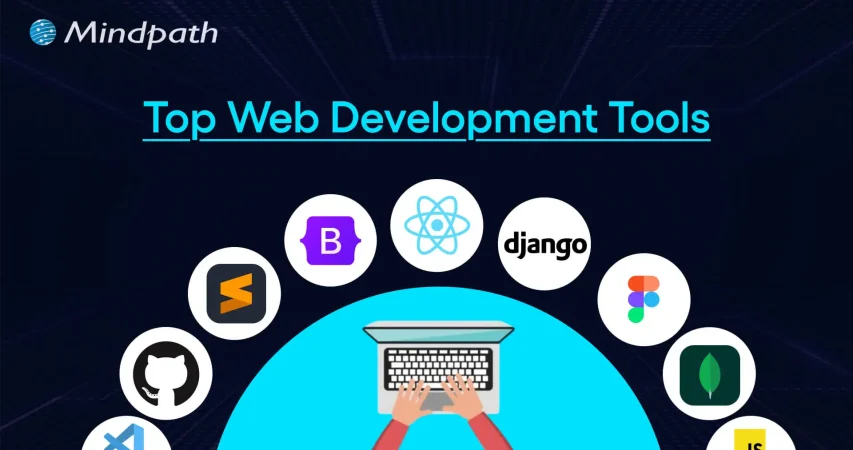
Top Web Development Tools for Business Success in 2026

Join our Newsletter!

Featured Posts

Support Is One Click Away

Home

Top Web Development Tools for Business Success in 2026

Web development tools

Top Web Development Tools for Business Success in 2026

In this competitive and evolving digital landscape of 2026, it has become crucial for businesses to stay ahead of the curve to make themselves competitive. Whether you are an established business that wants to scale operations or a startup launching new products, selecting the right web development tools can make or break your digital success. 

Modern web app development tools are designed to enhance user experience, streamline workflows, and allow developers to create a perfect website as well as an application. In this blog, you will explore the best web dev tools that can significantly shape your business success in 2026. We will cover everything from front-end frameworks to AI-powered Web development tools and understand their importance in web development.

Looking to implement the latest web development tools to enhance your digital presence? Mindpath’s web development services can help you with professional support and customized solutions.  

Importance of Modern Web Development Tools

We all know that the digital experience has become a primary touchpoint between customers and businesses. In 2026, users expect an intuitive interface, lightning-fast performance, and effortless integration. And all these things can be achieved by using the right web development tools. Here are the major benefits of using these tools: 

1. Increased Productivity

By efficiently automating multiple repetitive tasks and providing users with features such as code generation, these tools can reduce development time. As a result, developers can focus on problem-solving and innovation. 

2. Better Collaboration:

Web development tools are designed to facilitate seamless teamwork among designers, developers, clients, and other stakeholders. This helps ensure a coordinated and cohesive web development approach. 

3. Enable Scalability

Most web dev tools are designed for cloud integration and modular development. They help businesses to scale their website and apps easily based on growing demands while ensuring a consistent user experience and performance. 

4. Quality and Reliability

These tools come equipped with integrated testing and debugging tools. As a result, developers can easily detect and fix errors early, leading to more reliable and stable web applications. 

5. Enhanced Security

Tools like frameworks provide businesses with built-in security measures to protect web applications against threats like CSRF, XSS, and SQL injection. For example, the user authentication system of Django and the CSRF token protection feature of Laravel. 

6. Cross-Platform and Cross-Browser Compatibility

Modern tools support cross-platform and responsive design features out of the box. This helps ensure a smooth user experience across multiple devices and browsers. 

It can be said that web development tools are not just facilitators of design and coding. In fact, these are strategic assets that have the ability to transform how businesses approach web app development.  

Now that you understand the benefits, let’s talk about the web app development tools that are the source behind these benefits and are reshaping the development process. 

Top Web Development Tools to Consider in 2026

Below is the list of top tools for web development in 2026. All the tools are divided into different categories, spanning IDE, front-end, back-end, and more for an easy understanding. Have a look. 

Best Front-End Tools for Web Development

Let’s begin the list with web application development tools that play an important role as they shape what customers see on a website. These tools help furnish and decorate your website with the right elements. 

1. React

A product from Facebook, React is an ideal choice among developers to create complex and large-scale applications. It is based on a component-based architecture and facilitates code reusability, which is vital for long-term projects and large teams. React can handle various critical tasks such as static site generation, server-side rendering, APU routes, and more, leading to better SEO and amazing performance. 

2. Vue.js

It is one of the best tools for website development and is well-known for its gentle learning curve and progressive adoption. Vue is an ideal option for businesses looking for a smooth integration of a front-end framework into their existing projects. The tool can adapt to your unique project requirements. The speed of Vue.js helps create a smooth user experience during web browsing. 

3. AngularJS

Developed by Google, it offers a perfect solution for web development as well as testing. Some attractive features of AngularJS are its support for client-side Model-View-View-Model and Model-View-Controller architectures. Besides, it also offers two-way data binding, UI with HTML, and more. 

4. Svelte

If performance is your priority, then Svelte can be a game-changer for your project. It is an efficient compiler that converts code into efficient and small JavaScript bundles. That means the browser’s workload will be low, resulting in faster load times and a seamless user experience. 

5. Tailwind CSS

It helps developers to create custom UI elements without spending time on writing multiple CSS codes. This eliminates issues like breakages caused by CSS code changes. Its classes are optimized for responsiveness, making it easier to develop mobile-friendly layouts. 

Best Back-End Tools for Web Development

The back end is like the engine of your website or web apps, managing server logic, user authentication, and data. With the right back-end web development tools and technologies, you can ensure the scalability of your product. 

1. Python

It is one of the easiest back-end programming languages to use, offering simple syntax and support for multiple major languages such as Java, C, and more. Besides, it can help with data analytics and visualization. What’s more? It offers robust web frameworks such as Flask and Django. 

2. Node.js

For organizations creating real-time applications, microservices, and APIs, this back-end tool remains a top choice. Its non-blocking I/O and event-driven model make Node.js efficient at managing concurrent requests, which is crucial for developing data-intensive and modern web apps. 

3. PHP

It can be used with multiple CMSs such as Joomla, WordPress, and more. PHP can be embedded with CSS, HTML, and other front-end systems. It supports integration for various DBs like MS SQL Server, Oracle, and MYSQL. PHP is free to use and scalable. 

4. Express.js

It is one of the top-rated web development platforms created with Node.js and powered by Google V8 Engine. Using this, developers can create hybrid, multi-page, and single-page web apps. Express.js is popular for offering faster I/O, managing multiple servers, routes, and handling asynchronous requests smoothly. 

Best Integrated Development Environments

For developers to handle fast development and deployment of web apps and handle large codebases, IDE web development tools and technologies play a major role. Some of the best options are: 

1. Visual Studio Code

VS Code is an open-source and widely used IDE that allows developers to run and debug code. Developed by Windows, it supports multiple languages, including Python, PHP, and C++. Besides, it has built-in support for NodeJS, TypeScript, and JavaScript. Furthermore, it comes with IntelliSense to offer intelligent code recommendations. 

2. GitHub’s Atom

It is an open-source desktop editor and supports multi-cursor editing, cross-platform development, and offers built-in Git control. Atom is created using HTML, Less, JavaScript, and other web technologies. 

3. NetBeans

This is an excellent IDE for HTML5, CSS, PHP, and Java. The platform supports all major operating systems, such as Linux, Windows, Solaris, and Mac. NetBeans has a vast plugin support and facilitates code refactoring. Developers can use the FindBug tool to write clear code. 

4. Eclipse

This free IDE for Java development supports Maven and JUnit. Besides, it comes with the necessary tools for web, testing, data, and performance. Additionally, Eclipse supports multiple plugins, languages, code refactoring, and can automate syntax validation.  

5. PyCharm

It is an excellent IDE for web development projects based on Python. However, it also supports other major programming languages like Node.js, CSS, HTML, JavaScript, and more. Besides, PyCharm provides developers with out-of-the-box support for PyTorch, Gitm, FastAPI, Flask, Hugging Face, and more. It offers a detailed code analysis, an integrated unit tester, and a graphical debugger, reducing hassle for teams. 

6. WebStorm

Developed by JetBrains, it is designed for web development. It can smoothly handle client-side and server-side Node.js development. Apart from JavaScript, it also supports Vue, HTML, React Native, CSS, Angular, and React. The platform offers features like auto-completion, Spy.js tools, smart code insights, and more. 

Best Web App Testing and Debugging Tools

Delivering high-performing and bug-free web apps is crucial. The right testing tools can help ensure speed, quality, and compatibility across browsers and devices. Some of the best testing and debugging tools are: 

1. Selenium

Selenium is a top-choice tool for automated browser testing. The tool supports various frameworks and programming languages, helping developers create test scripts for regression testing, continuous integration, and functional validation.

2. Sentry

If you are looking for a tool for real-time error tracking, Sentry would be an ideal option. It helps developers detect and fix bugs before they can affect the user experience. The tool offers real-time alerts and detailed context, reducing the effort and time required to maintain a healthy web app. 

3. BrowserStack

It is a cloud-based web and app testing platform that enables teams to carry out cross-browser tests on real devices. It can also be integrated into other tools like Jenkins, Selenium, Firebase, Travis CI, Gitlab, and more. BrowserStack ensures compatibility and consistent performance across screen sizes, browser versions, and operating systems. 

4. Katalon Studio

It is an all-in-one testing solution that automates the process. It supports testing of web, desktop, API, and mobile applications. With effortless CI/CD integration, built-in templates, and smart analytics, Katalon Studio simplifies testing while accelerating quality assurance workflows. 

5. Lighthouse

It is an open-source website auditing tool by Google that evaluates web performance, SEO, and accessibility. After analyzing the components, it offers actionable insights to optimize site performance quality and user experience. 

By integrating these tools into the workflow, you can easily detect issues early and develop trust among users, offering reliable and seamless digital experiences. 

Website Optimization and Performance Tools

In 2026, performance optimization of web apps is no longer an optional thing; it is a major priority for creating user-friendly, responsive, and fast digital experiences. Here are some tools web developer utilizes to optimize load times, diagnose issues, and optimize overall performance. 

1. Google PageSpeed Insights

When talking about the best tools for website development, we can’t ignore this tool. It evaluates the content and structure of a website and offers effective suggestions to increase speed, Core Web Vitals, and mobile usability. It is an ideal tool for developers focused on performance and SEO. 

2. Webpack

This is a powerful module bundler that streamlines code optimization and asset management. Webpack supports modern JavaScript frameworks and increases load times by reducing redundant code.

3. GTmetrix

GTmetrix provides developers with in-depth reports on website load behaviour, highlighting issues along with optimization opportunities. With historical tracking, performance scores, and waterfall charts, it helps optimize every layer of web applications. 

Top-Rated AI Tools For Web Development

As AI is evolving rapidly, it is changing how developers handle web development projects, making them more efficient and productive. Using these, it is possible to leverage AI to build web apps and integrate AI into the web apps.  

1. GitHub Copilot

GitHub Copilot is a popular AI-powered coding assistance that provides users with real-time suggestions, code completion, and more. Created in partnership with OpenAI, it comes with a vast codebase that assists developers in writing code faster, increasing their productivity. It also streamlines the coding process. 

2. Lovable

This AI-powered platform lets users create web apps and websites utilizing text prompts. That means one can create websites without any coding experience. It can generate a complete code base to create landing pages, tools, authentication systems, and dashboards. However, users with coding experience can edit the generated code to customize features and designs. 

3. OpenAI Codex

Developed based on Codex-1, OpenAI Codex is designed specifically to simplify various software engineering tasks. For instance, software developers can use it to generate code or review pull requests. It can apply changes to your coding environment directly through its intelligent automation feature.

4. Wix ADI

Wix Artificial Design Intelligence has revamped the web design process. It can create customized websites automatically and quickly based on the inputs by users. First, it asks some questions to understand users’ preferences, and then, with the help of AI, it creates a fully functional website within a few minutes. 

5. Applitools

This tool utilizes visual AI and automates the testing process of web applications, helping developers ensure that apps are functioning properly across different browsers and devices. Its smart mechanism compares the visual elements of an app with the baseline images and detects discrepancies. 

These advanced AI-powered web development platforms simplify design, coding, and testing, making web app development smarter, more accessible, and faster. 

Top Web Development Trends to Watch Out For

Some top web development trends that may change the landscape in the future are: 

1. Gesture and voice-based interfaces

2. AI-assisted development and design

3. Integration of real-time personalization systems

4. Blockchain-based user authentication

5. Massive adoption of no-code/low-code platforms

6. Increasing popularity of Headless CMSs

7. More focus on Core Web Vitals and Web performance

Businesses that are ready to embrace these changes will be able to deliver an amazing digital experience, establishing a robust online presence. 

Building Your Path to Digital Success in 2026

In 2026, creating a perfect website is not just about focusing on beautiful UI; it’s also about ensuring scalability, speed, seamless user experience, and selecting the right web development technologies. Whether you are creating a real-time web application or a content-rich website, choosing the right combination of developer-first technologies and front-end frameworks will be the key to success. 

When it comes to creating world-class and high-performance websites, Mindpath stands out as a trusted web development company. With years of experience in this field, we combined modern design, long-term strategies, and top web development tools to offer you the solutions that can support your business growth. We have the expertise required to transform your unique digital vision into a reality. Are you planning to revamp your website or create a new one? Mindpath can be your reliable development partner in 2026

Related Post

Discover why hiring a freelance full-stack developer in 2024 can boost your project’s efficiency, quality, and cost-effectiveness. Learn more with Mindpath!

Related Post

AI programming languages

In today’s digital world, smart phones are able to recognize voices, answer your queries with virtual assistant and can even sort your photos by location or people. All these features may seem like magic but in reality, it’s the power of artificial intelligence. From chatbots to intelligent assistants, AI is revolutionizing the way we live, work and interact. But behind all these changes lies something as crucial as AI, and they are AI programming languages.

Studying these languages is crucial for technology professionals as well as anyone interested in seeing how the future is being designed. These languages can help developers create smart systems that will be able to understand, learn and react just like humans. In this guide, we will take you through everything that you need to know about programming languages for AI. So, let’s dig in! 

Planning to elevate your business and get a personalized AI solution? At Mindpath, we offer AI development services designed to deliver solutions tailored to your business needs.

What are AI Programming Languages?

Artificial intelligence programming languages refers to the tools that are used to create smart computer languages that can think and learn just like humans. These languages help developers to build systems that can understand speech, read data, and even help in autonomous driving. Each language comes with its own tools and libraries to carry out these tasks easily. 

In programming with artificial intelligence, it’s helpful to use languages that offer strong support for tasks like data analysis and machine learning. For example, Python is well-known because it has helpful libraries such as TensorFlow and PyTorch, R is also great when you are working with statistics and data. So, these languages make it easier to build AI systems that can work well and can contribute in solving real-world problems. 

Must Read: Benefits of AI 

List of Top AI Programming Languages

When you are building smart applications, the choice of programming language plays a major role in it. But with so many options out there, it is important to learn about each and decide which one can provide what benefits. The best AI programming languages can offer the features, libraries, and flexibility needed to handle tasks like machine learning, data processing, and automation. Let’s dive deep!

1. Python

Python is one of the top choices for developing smart systems due to the fact that it’s easy and beginner friendly. It’s widely used for training machine learning models, doing data analysis, and building AI tools like chatbots or image recognition apps. Being an AI coding language, Python has numerous strong libraries such as TensorFlow and PyTorch, which make complicated tasks manageable. It also enables rapid testing and development, which is useful in constructing and refining AI models. It is useful for AI in decision-making, where quick iteration on data models is crucial.

2. R

R is an excellent language to use when dealing with lots of data. It makes it easier for individuals to comprehend patterns, generate charts, and analyze results in an easy manner. It is employed by numerous scientists and developers to explore more into data and make intelligent predictions. R is also useful when creating and testing simple machine learning models. With its strong data-handling capabilities, R is particularly valuable for AI in business strategy, helping organizations analyze trends, optimize operations, and make data-driven decisions. R also has numerous tools that assist in making it simpler to verify and compare results. It gets along great with other programming languages as well, so it can be beneficial for other AI projects that require solid data analysis. 

3. Java

Java is a good option for large AI projects, particularly for businesses that require systems to function across different platforms. As an AI language, Java assists programmers in developing intelligent tools that are simple to maintain and expand. It accommodates machine learning, deep learning, and large data tasks through helpful tools and frameworks. Java is also reliable for maintaining things safe and clean, as it has the capability to delete unwanted data automatically.  

4. SQL

SQL is a helpful tool when working with a lot of structured data. It makes it easy to find, manage, and prepare data that can be used to train AI models. Since artificial intelligence needs good-quality data, SQL plays an important role in getting that data ready. It works well with other tools used in AI projects and is great for handling large datasets. As one of the trusted artificial intelligence languages, SQL is simple to use and supports many steps in the AI development process.

Curious to know how AI impacts your industry? Discover the top AI trends that drive innovation and shape the future of business.

5. Scala

Scala is a good choice for building strong AI applications, especially when dealing with big data. It can easily manage large sets of data and is made to work fast and smoothly. Scala also works well with popular tools like Apache Hadoop and Spark, which help developers build and run AI projects more easily. Since it supports multi-tasking and can run many processes at once, Scala is useful for complex AI work. It also works nicely with Java, making it even more flexible. 

6. Julia

Julia is an AI programming language known for its speed and ability to handle complex calculations. It’s great for deep data analysis and training advanced machine learning models. Julia has a user-friendly syntax which is better, making it easier to learn compared to some other languages. It also works well with languages like Python, C, and R, giving developers more flexibility. With powerful libraries, Julia is perfect for building efficient data models and neural networks. 

7. C++

C++ is a powerful language used for AI applications because it offers great performance and uses system resources efficiently. It’s great for running heavy tasks like deep neural networks quickly. Developers often choose C++ for its ability to handle complex jobs, including real-time processing and tasks like computer vision. Its speed and resource management are vital for building sophisticated systems that drive AI transforming the future of technology.

8. Haskell

Haskell is a language that focuses on writing clean and reliable code, making it ideal for AI research and building new algorithms. It is great for prototyping and teaching programming concepts. Many AI developers use Haskell for its strong typing and functional programming style, which ensures precision and reliability. Haskell is also used in roles like AI research, where its features help verify algorithms and improve safety, especially in important fields like healthcare and autonomous vehicles. 

 Important Note: Some programming languages are not the best choice for AI because they don’t have the right tools or are too slow for complex tasks. Here are a few languages that are generally avoided when building AI applications: 

  • PHP: It is mainly used for making websites and doesn’t have strong tools or libraries needed for artificial intelligence and machine learning work. 
  • Ruby: It is easy to read and write, but it runs slowly and doesn’t offer strong support for AI or machine learning tools, which makes it hard to use in real projects. 
  • C: It can be powerful, but it is too low-level for AI and needs manual memory management, which can lead to errors and unstable programs. 
  • Fortran: It is an older language that lacks modern features like dynamic memory and safety, which makes it risky and less useful for today’s AI development. 

Ready to adopt AI programming languages and transform the way websites are built? Read our blog on AI in web development to explore its impact on creating smarter, more dynamic sites.

Curious How AI Languages Are Powering Smarter Technology?

AI programming language is the key to building smart, efficient, and reliable applications. Whether it’s Python for ease, R for data analysis, or Java for large systems, each language has something unique to offer. While some languages lack the tools or speed for AI tasks, the right one can make AI development smoother and more powerful. Understanding these options helps both beginners and experts create systems that truly think, learn, and improve the way we interact with technology. 

At Mindpath, we specialize in Artificial Intelligence development, using the best programming languages like Python, Java, and more to create intelligent solutions that align with your business goals. From automating processes to enhancing user experiences and developing data-driven systems, our expert developers build AI applications tailored to deliver real-world results. 

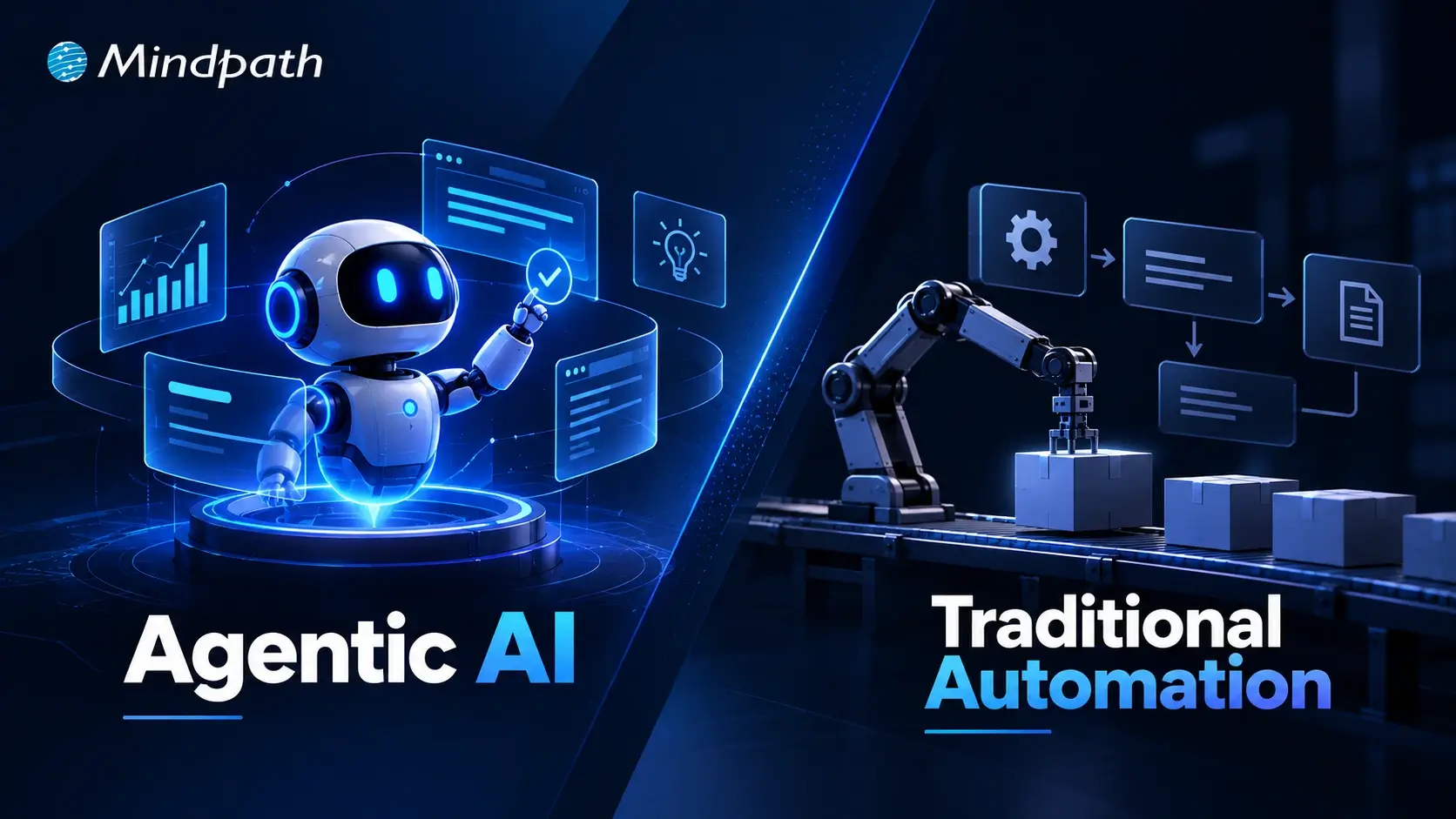
Agentic AI

Imagine a world where machines not only process information but also make decisions on their own. What if your devices could analyze data, assess options, and choose the best course of action, just like a human? Welcome to the fascinating realm of Agentic AI! In this blog, we’ll explore how this innovative technology empowers machines with decision-making abilities, transforming the way we interact with and utilize artificial intelligence. Let’s dive in! 

What is Agentic AI?

Agentic AI is a type of artificial intelligence that can operate autonomously to achieve certain objectives. Unlike ordinary AI, which merely follows predetermined instructions or responds to orders, agentic AI can think for itself, make decisions, and learn from its actions. This implies it can improve over time and become more efficient at performing jobs. One distinguishing aspect of agentic AI is the capacity to “chain” actions together. This implies that it can break down large, complex tasks into smaller parts and do them one at a time. For example, if you ask it to organize a project, it can determine the steps required to complete it rather than focusing just on one job at the moment. 

Different Types of Agents in Agentic AI

1. Dynamic Workflow Agents

Action agents are dynamic workflow agents in agentic AI. They are meant to complete tasks and make judgements fast in response to changing inputs. Unlike classical AI, action agents can adapt to changing settings, allowing them to do many jobs simultaneously. This adaptability allows them to be organized and productive in attaining their goals, making them helpful in a variety of industries. 

2. User Assistant Agents

User assistance agents are a sort of agentic AI created to aid people with their daily duties. These agents can handle a range of tasks, including maintaining schedules, answering queries, and sending reminders. User assistance agents help users remain organized and achieve their goals more effectively by learning their preferences and wants. Their capacity to learn and adapt to individual users makes them effective tools for increasing productivity and streamlining daily tasks.  

3. Generative Information Retrieval Agents

Generative information retrieval agents are a sort of agentic AI that focusses on supplying knowledge in unregulated contexts or on topics with loose restrictions. These agents can search through massive volumes of data and develop replies based on what they discover. They are meant to recognize context and generate meaningful replies, making them handy for researching a variety of topics. By providing insights and information more flexibly, generative information retrieval agents assist users in accessing knowledge that can’t be readily available through traditional sources.  

4. Prescriptive Knowledge Agent

Prescriptive knowledge agents are a type of agentic AI that offers direction and information in highly controlled settings or on certain themes. These agents are meant to adhere to set norms and standards, ensuring that the information they provide is correct and in compliance with legislation. They assist customers make intelligent choices by providing clear suggestions based on credible facts. Prescriptive knowledge agents play an important role in industries like healthcare, finance, and law because they adhere to norms and provide exact and trustworthy information that is necessary for safety and compliance. 

Advantages of Agentic AI

1. Enhanced Customer Support

AI-powered assistants and chatbots improve customer service by providing prompt and accurate replies to enquiries. These solutions can answer queries instantaneously, so clients don’t have to wait on hold or browse complex menus to receive the assistance they require. AI assistants improve the client experience by lowering wait times, resulting in increased levels of satisfaction. 

Furthermore, these AI systems can manage several enquiries at once, allowing firms to service a greater number of clients. This efficiency not only allows clients to acquire the information they need fast, but it also frees up human agents to work on more difficult situations. With 24/7 availability, AI-powered assistants ensure that clients can get help at any time, improving their entire experience. 

2. Reduced Operational Expenses

Businesses that automate common processes can considerably reduce their operational expenses. This technology streamlines operations, requiring fewer personnel to do repetitive tasks. Consequently, businesses can save money on employment and direct their financial resources towards more vital goals, such as strategic expansion and innovation. 

Businesses can use the funds saved from lower employment needs to invest in new initiatives, expand their services, or upgrade their technology. This move not only increases overall efficiency but also enables businesses to remain competitive in their field. Prioritizing investments in growth allows organizations to better position themselves for long-term success while being leaner and more cost-effective. 

3. Boosted Efficiency

Agentic AI can do jobs quicker than humans, resulting in a considerable increase in total productivity. With the capacity to process information and fulfill tasks rapidly, these intelligent systems shorten the time required for numerous processes. This speed enables organizations to complete more tasks in less time, allowing them to fulfill deadlines and better serve customers. 

Furthermore, by performing repetitive and time-consuming activities, agentic AI allows human employees to focus on more difficult and creative work. This combination of speed and better resource allocation leads to increased efficiency throughout the organization. So, the faster job completion and increased productivity enabled by agentic AI contribute to a more dynamic and competitive corporate environment.

4. More Informed Decision-Making

AI-powered assistants and chatbots significantly improve customer service by providing rapid solutions to inquiries. These solutions are meant to provide rapid answers to inquiries, reducing client wait times dramatically. Instead of being put on hold or waiting for an email answer, clients can get the information they need right now. 

This immediate assistance not only makes clients feel valued but also leads to increased satisfaction levels. When clients receive fast service, they are more likely to have a favorable experience with the company. Furthermore, AI assistants can handle numerous requests at once, allowing businesses to easily manage a higher volume of inquiries without sacrificing quality.

AI Development Services at Mindpath

At Mindpath, we use Artificial Intelligence to make our services smarter and more efficient. This technology helps us create intelligent systems that can make decisions and take actions on their own. With agentic AI, we can improve how we support our clients and deliver better results.  Our AI-powered tools can respond to questions quickly, automate routine tasks, and analyze data to help us make informed choices. This means we can serve our clients faster and with greater accuracy. By using agentic AI, Mindpath can focus on innovation and growth while providing excellent support to our customers. We are committed to leveraging this advanced technology to enhance our services and meet the needs of our clients effectively. 

Wrapping Note!

Agentic AI proposes a paradigm shift in the way we approach technology and decision-making. Agentic AI improves several elements of company operations, including customer service, efficiency, and cost management, by enabling computers to think, learn, and act independently. Mindpath embraces modern technologies to give our clients smarter solutions and better support. As we continue to investigate the possibilities of agentic AI, we are committed to using its powers to drive development and achieve remarkable outcomes. The future looks bright, with agentic AI at the forefront, allowing organizations to adapt, prosper, and compete in an increasingly competitive marketplace.   

Ready to elevate your business with cutting-edge AI solutions?

Partner with Mindpath today to discover how our agentic AI can transform your operations and enhance your customer experience!

Explore how Agentic AI empowers machines with decision-making abilities, enhancing efficiency, customer service, and operational effectiveness.
Generative AI in Finance

Have you ever wondered how technology is reshaping the world of finance? Imagine a future where financial decisions are driven by advanced algorithms, predictive insights, and automated solutions. What if you could tap into tools that not only enhance efficiency but also transform how businesses operate? In this blog, we’ll explore the fascinating world of generative AI and its incredible use cases in the finance sector. So, let’s dig in!  

What is Generative AI?

Generative artificial intelligence (generative AI) is a form of AI capable of producing new content and ideas, such as conversations, stories, images, videos, and music. AI technologies aim to replicate human intelligence in nontraditional computer tasks such as image identification, natural language processing (NLP), and translation. Generative AI represents the next phase in artificial intelligence. You can teach it to understand human language, programming languages, art, chemistry, biology, or any other complicated topic. It leverages previously trained data to tackle new issues. For example, it can acquire English vocabulary and compose a poem using the words it processes. Your organization can utilize generative AI for a variety of applications, including chatbots, media production, and product development and design. 

Generative AI is transforming the banking industry by utilizing cutting-edge technology to rapidly analyze massive volumes of data. It enables banks and financial organizations to provide personalized solutions for consumers, such as individualized investment strategies. This system can also detect fraud by identifying unique patterns in transactions, which protects our money. Businesses can employ generative AI to make more informed choices, save time, and improve customer service. 

Use Cases of Generative AI in Finance

1. Automating Accounting Tasks

Generative AI is making a significant impact on finance and accounting by assisting with daily activities. It can automatically gather and enter data, verify and match amounts in records, and organize various financial activities. Businesses can reduce manual effort and calculation errors by implementing automation. This implies that bookkeeping becomes faster and more precise, resulting in improved financial management overall. Companies that use generative AI can utilize less time on repetitive chores and instead focus on crucial decisions. 

2. Creating Financial Reports Easily

Generative AI makes it considerably easier to prepare financial reports by combining information from several sources and organizing it in an understandable manner. It can gather data from a variety of systems, including accounting software, sales databases, and market analysis tools, and compile it into a single complete report. This eliminates the need for firms to spend hours manually gathering and organizing data. 

This technology enables businesses to swiftly provide reliable reports for stakeholders, banks, regulators, and investors. Generative AI not only saves time, but it also decreases the possibility of mistakes that can happen when performing tasks manually. This guarantees that the information is trustworthy and provided in an organized, understandable style. 

3. Using Chatbots for Customer Help

Generative AI-powered chatbots and virtual assistants are transforming how organizations deliver customer service by providing personalized assistance tailored to each client’s individual demands. These chatbots can swiftly answer questions, give information, and walk users through procedures, making it simpler for consumers to receive the help they require. 

The primary function of chatbots in financial institutions is to enhance the user experience. They enable simple and effective interactions between the bank or financial provider and the consumer. For example, if a client has a concern about their account balance or needs assistance with a transaction, the chatbot may give immediate responses, eliminating the need for users to wait for a human representative. 

4. Assessing Credit Risk

Credit risk analysis is one area where generative AI is having a substantial influence. These clever algorithms can look at a variety of criteria, including a person’s credit history, financial documents, and key economic indices. By digesting this data, generative AI helps banks and financial institutions better determine borrowers’ creditworthiness. 

AI insights enable creditors to make better educated loan approval choices, establish acceptable interest rates, and calculate appropriate credit limits. For example, if a person has a good credit history and a steady income, the AI may propose that their loan application be approved at a reduced interest rate. In contrast, if the research identifies possible risk factors, it may advise greater prudence, such as increased interest rates or reduced loan limits. 

5. Spotting Fraud and Protecting Data

Fraud detection is one of generative AI’s most effective applications in finance and banking. These powerful algorithms can identify patterns of fraudulent activity in financial transactions, therefore reducing cybersecurity risks and improving overall data security. Suppose a transaction appears unexpected or does not reflect a customer’s regular spending patterns. AI can highlight it for additional research, allowing banks to respond rapidly to possible fraud. 

In addition to detecting fraud, generative AI is crucial for securing sensitive data. It employs powerful encryption techniques to protect financial information and continually analyses financial transactions for any suspicious activity. This implies that financial institutions can better secure their clients’ data and keep them safe from identity theft and other cyber threats. 

6. Personalized Financial Advice

Generative AI is changing the way individuals receive financial advice by providing personalized analysis and suggestions based on user data and behavior. By analyzing current data, such as spending patterns and financial objectives, AI can deliver insights tailored to everyone’s requirements. 

 For example, if a person wants to invest but has limited expertise, the AI can recommend the best investment possibilities depending on their risk tolerance and financial goals. Similarly, if a user wants to save for a certain purpose, the AI can suggest budgeting ways to assist them achieve that objective more effectively. This tailored approach not only improves customer happiness but also enables people to become more knowledgeable about their money. By receiving relevant advice on investments, savings, budgeting, and financial planning, customers can make better decisions that lead to improved financial health.  

Also Read: Generative AI for Business: Unlocking the Key to Unstoppable Success

Generative AI Services at Mindpath

At Mindpath, we provide a variety of generative AI services to help organizations’ succeed. Our team uses cutting-edge AI technology to provide personalized solutions that address your individual requirements. We can help you automate activities, provide meaningful reports, and improve customer service.  Our Artificial Intelligence services can assist businesses in streamlining processes, enhancing decision-making, and creating better client experiences. We recognize that each firm is unique, therefore we collaborate closely with you to understand your objectives and obstacles. Our goal is to create bespoke solutions that drive success and enable you to stay ahead in a competitive market. At Mindpath, we are dedicated to using generative AI to create new possibilities and drive development for your company. 

Final Thought!

In the rapidly evolving world of finance, generative AI is opening doors to efficiency, security, and personalized services that were previously out of reach. From automating complex tasks to providing targeted financial advice, the potential applications are transforming the industry in ways that benefit both businesses and customers. At Mindpath, we’re excited to support organizations as they harness these innovations. With our generative AI solutions, financial institutions can not only enhance their operations and service quality but also drive growth and innovation in a competitive landscape. Embracing generative AI with a trusted partner like Mindpath paves the way for a future where finance is smarter, more secure, and entirely customer focused. 

Ready to elevate your financial solutions with generative AI?

Partner with Mindpath to drive innovation, efficiency, and security.

Explore how generative AI is transforming finance with innovations in automation, fraud detection, and more for enhanced security.