

Why Custom EHR Software is a Game-Changer for Healthcare Providers

Join our Newsletter!

Featured Posts

Support Is One Click Away

Home

Why Custom EHR Software is a Game-Changer for Healthcare Providers

custom EHR software

Why Custom EHR Software is a Game-Changer for Healthcare Providers

Imagine if your healthcare practice had a system perfectly tailored to your needs. How much easier would your job be? What if managing patient information became seamless and efficient? How would that impact your day-to-day operations and patient care? Custom EHR (Electronic Health Records) software is the solution to this! Curious about how it can make a difference for you? In this blog, we will explore why custom EHR software is a game-changer for healthcare providers. So, let’s dig in! 

What is EHR Software Development?

EHR software development is a digital platform for managing patient health records. They allow authorized users, such as healthcare professionals, to immediately access patient information from anywhere. This implies that vital health data is always available when needed. Unlike paper records, which may be lost or destroyed, EHR systems protect and retain patient information. These systems keep a patient’s whole medical history in a single, easily accessible area, allowing healthcare practitioners to examine and handle data effectively. Furthermore, EHR records may be effortlessly exchanged across various healthcare providers, ensuring that patient information is always available when patients move between care settings. 

Benefits of EHR Software Development
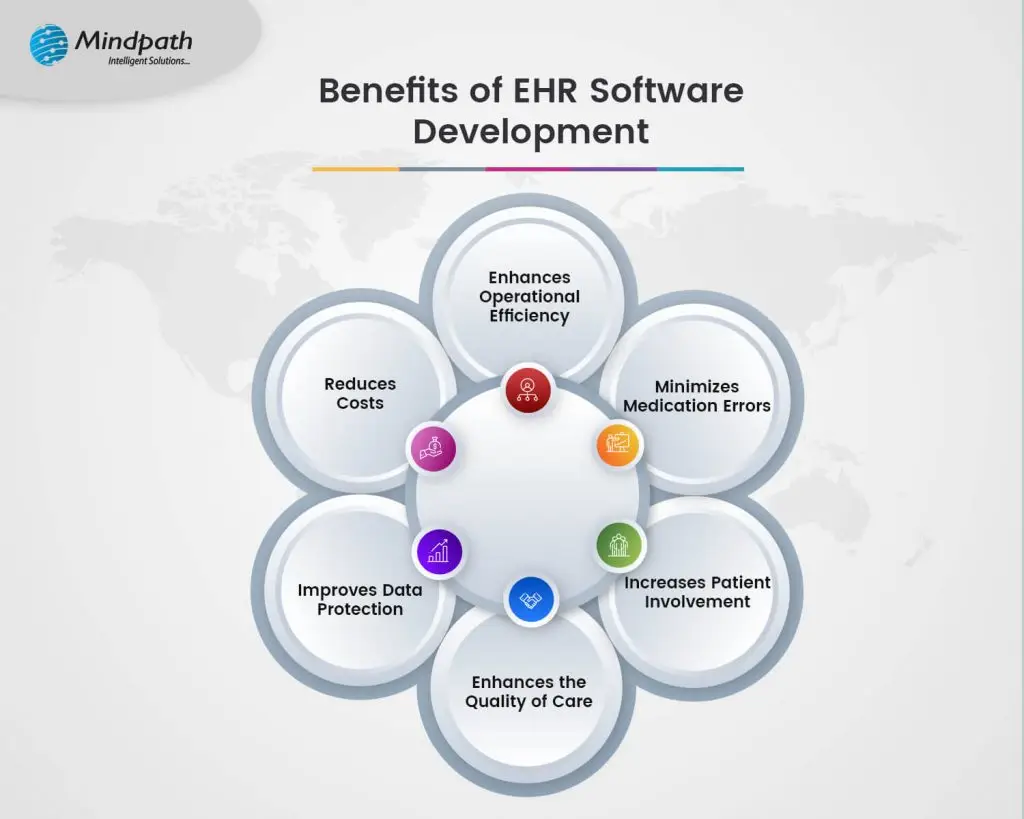
1. Enhances the Quality of Care

Electronic health records give swift and easy access to patient information, allowing healthcare practitioners to make more informed decisions about patient careThey can check for medication conflicts by keeping track of a patient’s prescriptions and allergies, which can help uncover possible problems with newly prescribed drugs. EHRs also improve emergency treatment by giving medical professionals immediate access to vital information, such as life-threatening allergies, allowing them to provide proper care even when patients are unable to communicate. Furthermore, EHRs emphasize safety hazards by alerting healthcare practitioners to potential issues, therefore preventing major issues and improving patient outcomes. 

2. Increases Patient Involvement

EHRs encourage individuals to get more active in their own healthcare by making things clearer and more transparent. Patients who can access their health information feel more in control and are more inclined to participate in their health decisions. This secure access to their medical information allows individuals to better interact with their physicians and make intelligent choices. EHR systems make it simpler for healthcare practitioners to establish long-term relationships with their patients, collaborating to manage complications and choose the best treatment options. This collaborative effort between patients and doctors results in improved health outcomes and a greater feeling of cooperation in care. 

3. Minimizes Medication Errors

EHR systems prevent medication errors by providing doctors with quick access to a patient’s medical history, including allergies and current prescriptions. This information assists doctors in not giving medications that may cause damage or combine badly with other prescriptions the patient is currently taking. With all this information at their fingertips, healthcare practitioners can provide safer and more accurate recommendations, thus enhancing patient safety. Furthermore, EHRs provide medication notifications and reminders to doctors, which helps to reduce errors. They also make it easier for doctors to prescribe drugs automatically, lowering the possibility of mistakes associated with manual prescriptions. Many of these errors are the result of communication issues, which EHR systems help in solving by making all relevant information plain and accessible, resulting in cost savings. 

4. Enhances Operational Efficiency

Electronic health records improve efficiency in healthcare organizations by streamlining numerous administrative activities, resulting in smoother operations and a positive return on investment. They simplify numerous regular tasks, allowing healthcare practitioners to better manage their workload and avoid common mistakes. EHRs automatically produce and deliver bills to patients, lowering the likelihood of lost or delayed payments. They also assist in detecting problems such as duplicate charges or inaccurate billing codes, ensuring that billing is accurate and efficient.

EHR systems also foster better communication between patients and healthcare professionals. They give patients easy access to their medical information and secure chat platforms where they can ask inquiries directly to their physicians. These enhancements assist healthcare practitioners in managing their workload more successfully, reducing human mistakes such as messy handwriting or misplaced papers, and improving overall organizational efficiency. 

5. Reduces Costs

EHR systems can save money in the long term, despite their initial cost. The reduced need for physical storage and processing of medical records is a significant cost-saving opportunity.

For example, digital storage and sharing of diagnostic images like CAT scans, X-rays, and MRIs is significantly more cost-effective and efficient than handling physical copies.

EHR systems also save money by decreasing the reliance on paper-based solutions. This not only saves money on printing and storage, but it also prevents problems like misplaced papers. Furthermore, EHRs decrease the time spent on administrative duties like manually entering data or processing paperwork, allowing medical professionals to focus more on patient care.

Another way EHRs can save money is by reducing medical mistakes and inefficiencies. For example, by enabling real-time access to patient information, EHRs assist in avoiding costly additional tests and unneeded treatments. EHRs also ease the billing process, minimizing mistakes and assuring timely payments, so improving healthcare providers’ overall financial health. These cost-saving techniques make EHR systems a long-term investment for healthcare organizations. 

6. Improves Data Protection

EHR systems improve data security by storing patient information in safe, encrypted forms that are only accessible to authorized individuals. Unlike paper records, which are easily lost, stolen, or destroyed, electronic health records (EHRs) offer a far safer method of managing sensitive health data. They also make it simple to safely share patient information across authorized healthcare practitioners, so improving team collaboration and lowering the risk of data breaches. Furthermore, EHR systems generate backups regularly and have data recovery plans in place to ensure patient information is always secure and accessible. This additional layer of protection ensures that patient records are not only protected from unauthorized access but also prevents data loss due to technological faults. 

EHR Software Development at Mindpath

Mindpath specializes in developing EHR software that enables healthcare practitioners to handle patient information more efficiently and securely. Our EHR solutions are intended to enhance how patient records stay organized and easily accessible, making healthcare more efficient and secure. We also create additional healthcare software, such as practice management systems that assist with scheduling and invoicing, as well as patient portals that allow patients to see their health information online. All of our products are designed to be safe, easy to use, and exceed industry standards, allowing healthcare professionals to focus on providing the best treatment possible while protecting patient data. 

End Note

In today’s fast-paced healthcare industry, having a dependable and efficient system, such as customized EHR software, is no longer a luxury; it is a requirement. Custom EHR solutions give healthcare providers the tools they need to provide better patient care, streamline operations, and improve data security. By implementing these solutions, healthcare providers not only increase efficiency and patient involvement, but also ensure a long-term, cost-effective solution adapted to their individual requirements. At Mindpath, we are dedicated to developing EHR software that meets the highest standards, allowing healthcare practitioners to offer great treatment while protecting patient information. 

Want to enhance your healthcare practice with a custom EHR system?

At Mindpath, we design secure and efficient solutions to meet your unique needs. 
Related Post

Discover the ultimate guide to hiring Node.js developers in London. Learn about the skills, benefits, and cost factors involved in finding the right talent for your project.
How much does hiring a ReactJS developer cost? Learn about factors affecting rates, and how to find the best talent within your budget.

Related Post

Recruiting a Node.js developer in California inecessitates a thorough assessment of technical knowledge, soft skills, market trends, and the recruiting process. With the state’s highly competitive technology economy, finding the appropriate personnel requires going beyond coding abilities. A good Node.js engineer should be familiar with backend frameworks, databases, and cloud technologies, as well as possess excellent communication and problem-solving skills. Understanding California’s employment market and creating an efficient recruiting procedure can also help you attract the top applicants. Here are some important aspects to consider when hiring a Node.js developer in California.

1. Technical Proficiency and Experience

When hiring a Node.js developer, make sure they are proficient in JavaScript, asynchronous programming, and Node.js frameworks such as Express.js or Nest.js. Knowledge of databases (MongoDB, PostgreSQL), RESTful APIs, and cloud services (AWS, Azure) is essential for developing scalable apps. Experience with unit testing, CI/CD pipelines, and version control (Git) contributes to a smoother development process. Additionally, match their experience level with the intricacy of your project to obtain the appropriate competence. Reviewing their previous projects and contributions to open-source repositories might help them evaluate their real-world coding abilities.

2. Soft Skills and Team Collaboration

A Node.js developer should be able to communicate effectively, work well in groups, and solve problems. They must work well with front-end developers, designers, and product managers to ensure that the project runs smoothly. Adaptability is also important, as the Node.js environment changes frequently with new upgrades and best practices. Look for applicants that can troubleshoot effectively, think critically, and perform well under deadlines. A developer with great soft skills can easily fit into your team and contribute to a healthy work atmosphere.

3. Understanding California's Market Trend

The California tech business is very competitive, with a growing demand for talented Node.js developers. Salaries vary according to experience, region, and sector, so analyzing market trends and pay packages is essential. Companies in large tech hubs such as San Francisco, Los Angeles, and San Diego frequently provide competitive bonuses to attract top people. Offering remote or hybrid work opportunities might also help your job commercial stand out. Understanding these variables allows you to establish an effective hiring strategy and attract the best developers for your company.

4. Interviewing and Hiring Process

A systematic interview method helps you hire the top Node.js developers. Begin with a technical test, such as coding challenges, whiteboarding activities, or homework projects, to measure their problem-solving abilities. Next, perform behavioral interviews to assess communication skills, collaboration, and flexibility. Reviewing their portfolio and GitHub contributions provides insight into their real-world development experience. Finally, base your compensation, perks, and job expectations on market research. A well-planned recruiting strategy can help you identify the best Node.js talent for your project.

Finding the right Node.js developer can be challenging but Mindpath makes it easy! Our experienced Node.js developers specialize in building scalable, high-performance applications tailored to your business needs. Whether you need backend development, API integration, or cloud-based solutions, we have the expertise to deliver.
Ready to build your next project with top Node.js talent? Partner with Mindpath today and bring your vision to life!

Discover the ultimate guide to hiring Node.js developers in London. Learn about the skills, benefits, and cost factors involved in finding the right talent for your project.
low code platforms

The application development space has undergone a revolutionary change recently. As the need for developing novel applications in the business world is on the rise, businesses are looking for effective ways to build their applications. This has undoubtedly magnified the popularity of low-code platforms. By leveraging such platforms, modern businesses have the opportunity to develop top-notch apps that can facilitate digital transformation.

The global Low-code development platform market is expected to touch USD 167 billion in the year 2030. It reflects that businesses are leveraging the concept of Low-code for digital transformation. Now is the perfect time for businesses to understand Low-code and no-code meaning so that they can advance towards digital transformation.

If you’re thinking about using low-code or no-code platforms, but want professional help with the problems and getting the most out of the benefits. Contact us to discuss how we can support your digital transformation journey.

An Understanding of Low-code or No-code Development

A common question that many people may have in their mind is – ‘What is Low-code or no-code development?’ Low-code or no-code development refers to the approach that intends to simplify the process of developing applications. By adopting such frameworks, app developers and businesses can reduce or entirely eliminate the reliance on conventional handwritten coding practices.

A Low-code platform provides a visual development setting that comes with drag-and-drop interfaces. Moreover, the existence of pre-built components helps application developers to create software applications with minimal coding. A no-code platform is a similar tool; however, it entirely eliminates the need for coding while developing apps. By choosing the best low-code and no-code platforms, businesses have the opportunity to accelerate digital transformation like never before.

Revolutionary Power of Low-Code Platforms

At present, low-code/no-code tools have been acting as the ultimate instrument that business entities can leverage for digital transformation. Low-code platforms are revolutionizing the space of application development by empowering businesses and developers with limited or no coding prowess. In order to understand the revolutionary nature of Low-code no-code development services, you need to look at their chief capabilities:

1. Efficient app-building process

The emergence of Low-code and no-code development concepts has been transformational since it has made the app development process highly efficient.  By utilizing Low-code or no-code tools, businesses can develop top-quality applications in a limited time, thereby fueling digital transformation. Moreover, by utilizing such tools, business owners with limited coding skills can develop advanced apps that can enhance the overall experience of their target customers.

2. Radical decline in development cost

Generally, the traditional development of a software application is a costly affair. However, thanks to Low-code and no-code platforms, it is possible for businesses to significantly curb their app development costs. By capitalizing on drag-and-drop interfaces as well as pre-built components, they can develop high-performing apps. Furthermore, there is no need for business enterprises to dedicate a separate team to develop apps.

Must Read: Low-Code vs No-Code

3. Fostering agility and speed

In the fast-paced digital space, businesses need to be agile so that they can stay ahead of their competitors. By prioritizing Low-code digital transformation, business entities can act in an agile and responsive manner. Low-code tools or no-code tools can act as ultimate game-changers that can help you integrate innovation into your business apps. Through prompt app development processes, you can develop quality apps within a limited period of time.

4. Simplified app development

The app development process is typically quite complex in nature. Businesses have to rely on professionals from technical backgrounds to create well-functioning and high-performing apps. Thanks to Low-code and no-code development, the app development process has become much simpler today. Even with limited coding skills, businesses can efficiently do prototyping, testing, and other complex tasks. As a result, businesses can move ahead in their digital transformation journey without having to rely on technical experts.

Wondering which digital transformation trends are driving the biggest impact in organizations today? Explore more insights on emerging digital transformation trends to stay ahead in your innovation journey.

Main Challenges Hindering the Adoption of Low-Code Development

It is true that the Low-code development approach has the potential to act as the pathway to digital transformation. However, businesses encounter a number of obstacles in their path that impede their ability to leverage this novel app development approach. Some of the most common challenges that hinder the adoption of Low-code development for businesses include:

1. Vendor Lock-in

A common concern revolves around vendor lock-in. Such a situation may arise if businesses become highly dependent on the vendors of Low-code platforms. Due to this challenge, it may become difficult or costly for businesses to switch between vendors of Low-code platforms.

2. Need for Governance

As Low-code or no-code platforms enable non-IT users to develop software applications, they give rise to governance concerns. Their limited insight into app development may give rise to issues like security vulnerabilities and data management. Similarly, other quality management issues may also arise. Thus, there is a need to deploy a foolproof governance framework so that such concerns can be effectively addressed.

3. Scalability Concerns

A key issue that may arise while progressing towards digital transformation with low-code development is related to scalability. Although such tools are useful for building apps, they may not be ideal for scaling them. As a result, by using these app development tools, the ability of businesses to flexibly design their apps may shrink significantly.

4. Limitations relating to customization

Generally, businesses try to customize their apps so that they can provide a unique experience to their target users. However, by using low-code or no-code tools, the ability to customize applications gets significantly restricted. Although such platforms can speed up app development, the ability of businesses to apply specific requirements may be affected. Thus, this challenge may discourage business firms from leveraging low-code or no-code platforms while developing their apps.

Curious how emerging web development trends are shaping digital transformation strategies? Discover key insights on current web development trends to enhance your low-code initiatives.

Future of Low-Code No-Code Development

The future of the low-code, no-code development model is full of possibilities and opportunities. This is because this innovative app development approach is poised to grow in the contemporary business world. As a greater number of business enterprises are moving towards digital transformation, there is a high possibility that the use of Low-code tools or no-code tools may increase in the future.

A broad range of factors may come into play and contribute to its bright future. Some of the chief factors are the need for an efficient development cycle and a high shortage of skilled developers. Similarly, the growing need to create apps that perfectly align with customer demands may play a catalytic role. To derive the optimum value from such novel tools, businesses need to have a holistic insight into their capabilities and weaknesses.

Ready to Accelerate Your Digital Transformation with Low-Code Solutions?

Low-code and no-code platforms are reshaping application development by enabling faster, cost-effective, and agile app creation. Businesses can simplify complex processes, innovate rapidly, and deliver high-performing applications that enhance customer experiences and drive digital transformation for businesses.

At Mindpath, we provide expert Low-code and no-code development services tailored to your business needs. Our team helps organizations overcome adoption challenges, build scalable applications, and leverage innovative solutions efficiently. Partner with us to unlock the full potential of Low-code platforms for digital transformation for businesses.

AI and AR

Ever thought, what if your device could not only display an enhanced reality but also predict your next move? How would industries change if machines could learn from real-world environments and respond intelligently in real-time? Could the combination of Artificial Intelligence (AI) and Augmented Reality (AR) completely reshape the way we interact with technology and each other? 

In this blog, we’ll explore how AI and AR are working together to unlock groundbreaking possibilities, transform industries, and shape the future of our digital world. So, let’s dig in! 

Overview of AI and AR

The term artificial intelligence (AI) refers to the ability of machines to think and learn like humans. AI recognizes patterns in data rather than being given step-by-step instructions, which allows it to improve over time. It drives advancements in technology such as facial recognition, voice assistants, and intelligent robots that learn from their mistakes and carry out tasks more effectively. 

Augmented Reality (AR) is a technology that combines digital data with the real world in real time. Unlike virtual reality, which provides a wholly simulated experience, augmented reality (AR) overlays digital images, sounds, or information on top of what you see in the world around you. It is frequently utilized with devices such as smartphones or special glasses, allowing users to engage with a combination of real and virtual components, making ordinary situations more dynamic and informative. 

Benefits of Combining AI and AR Technologies

1. Enhance User Experience

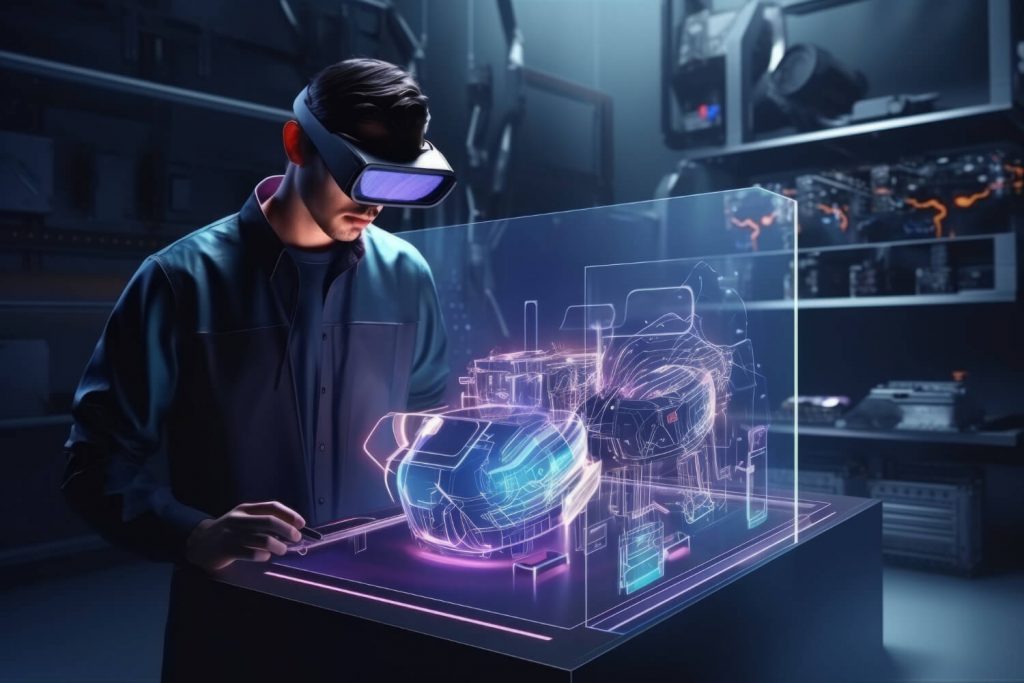
When working with advanced equipment, traditional paper manuals and 2D instructions can lead to confusion among personnel. However, by merging AI with augmented reality, customers may see crisp 3D graphics, receive real-time instruction, and receive quick alerts to possible concerns. This not only makes jobs easier to grasp, but it also enables workers to accomplish them faster and with fewer errors. The immersive experience also keeps people engaged, which boosts their confidence and overall productivity on the job. 

2. Strengthen Safety Measures

AI-powered AR provides users with real-time warnings and notifications to assist them avoid unexpected events and risks. It also offers immersive, interactive training and work instructions that are more comprehensive than standard paper manuals. AR increases workers’ awareness of possible hazards and ensures them adhere to safety measures more rigorously. This not only lowers the likelihood of mishaps, but also promotes a safer and more secure workplace. 

3. Minimize Mistakes

Using large, printed instructions can be exhausting and increase the possibility of errors. AI-enhanced augmented reality aids by offering clear, real-time visual instruction and automated adjustments. It functions as an “extra set of eyes,” ensuring that workers remain precise even when exhausted at the end of a shift. This assistance reduces mistakes, enhances job accuracy, and assures consistent performance, resulting in superior overall outcomes. 

4. Maximize Productivity

AI-enhanced augmented reality solutions increase productivity by making work processes more interesting and efficient. Immersive AR experiences, paired with real-time AI insights, enable users to understand complicated tasks faster and more accurately. This eliminates the need for subject matter experts to give ongoing assistance to new staff, therefore speeding up training and onboarding. Additionally, AR can streamline ordinary processes such as reporting and data collecting, saving workers time and allowing them to focus on more important duties. As a result, productivity increases, and overall workplace efficiency improves. 

5. Promote Sustainability

AI-enhanced AR work instructions give frontline workers exact instructions, guaranteeing tasks are executed precisely the first time. This lowers the possibility of mistakes, eliminates the need for rework, and avoids costly scrap, which assists to preserve resources and reduce waste. AR promotes more sustainable practices within your organization by reducing wasteful material consumption and increasing overall efficiency. Furthermore, the reduction in errors and rework means that fewer resources are spent rectifying mistakes, which strengthens your company’s commitment to environmental responsibility and sustainability. 

Curious how AI and AR can revolutionize your business?

Mindpath delivers cutting-edge solutions tailored to your needs.

Use Cases of AI in AR

1. Virtual Shopping Assistants

AI-powered AR applications add a new layer of involvement to online shopping by allowing users to try on simulated clothes and other accessories. This tool allows shoppers to see how goods will appear in real-time, making their shopping experience more personalized and enjoyable. Customers may make better-informed choices and have a more engaging and convenient shopping experience from home by seeing how different goods fit and appear without physically trying them on. 

2. Language Translation

AR applications powered by AI provide real-time translation of signs, menus, and text, making communication easier for travelers. These apps allow users to easily navigate new areas by overlaying translated text right onto their screen. This quick translation function improves travel experiences by reducing language barriers, allowing users to connect more confidently, grasp local information, and enjoy their vacation without worrying about misconceptions. 

3. AR Navigation

AI enhances AR navigation apps by merging real-time data, such as traffic conditions and nearby points of interest, with the user’s surroundings. This connection delivers up-to-date, clear instructions and notifications, allowing users to avoid delays, select the best routes, and easily explore nearby facilities. AI-powered AR simplifies and enhances the experience of navigating both familiar and unfamiliar regions by combining crucial navigation information with the actual environment. 

4. Industrial Maintenance

Combining AR and AI provides considerable benefits for industrial maintenance by sending real-time instructions and visual data directly to professionals. This system delivers interactive, step-by-step instructions and precise data overlays, allowing personnel to complete difficult maintenance chores accurately. AR improves decision-making and troubleshooting by using AI to analyze equipment status and identify possible difficulties. This decreases the chance of mistakes, shortens downtime, and increases overall efficiency, ensuring that machinery runs smoothly, and maintenance activities are handled quickly and effectively. 

5. Medical Imaging

AI-powered AR improves medical imaging by superimposing diagnostic data directly on a patient’s body during operation. This real-time integration allows medical practitioners to observe crucial data, such as anatomical structures and pathology, with higher accuracy. AR helps to enhance surgical results by offering visual context and direction, enabling for improved planning and execution of difficult medical techniques. 

How can Mindpath Help?

Mindpath can help you integrate AI and AR technology into your business. We provide solutions that improve user experience, safety, minimize mistakes, and increase productivity in a variety of sectors. Our team creates personalized AR apps for real-time advice, AI-powered insights, and seamless data integration. Whether you want enhanced navigation, virtual shopping assistants, or effective industrial maintenance solutions, Mindpath is here to provide clever, user-friendly technology that suits your individual requirements. 

End Note

As AI and AR technologies advance, their ability to disrupt industries and improve everyday lives is limitless. By seamlessly merging these advancements, we may explore new levels of interactivity, efficiency, and insights. From transforming how we purchase and navigate to enhancing safety and precision in industrial and medical domains, the collaboration of AI and AR is paving the way for a smarter, more connected future. Mindpath is pleased to be at the forefront of this technological transformation, providing bespoke solutions that leverage the power of AI and augmented reality to drive your success and creativity. Explore these options with us to see how we might help you design the future. 

Ready to Transform Your Business?

Discover how Mindpath’s AI and AR solutions can elevate your operations.

Discover how AI and AR combine to revolutionize industries, enhance user experiences, and drive innovation. Read to explore the impact.