A Business Guide to Hiring Top Node.js Developers in New York

Join our Newsletter!

Featured Posts

Support Is One Click Away

Home

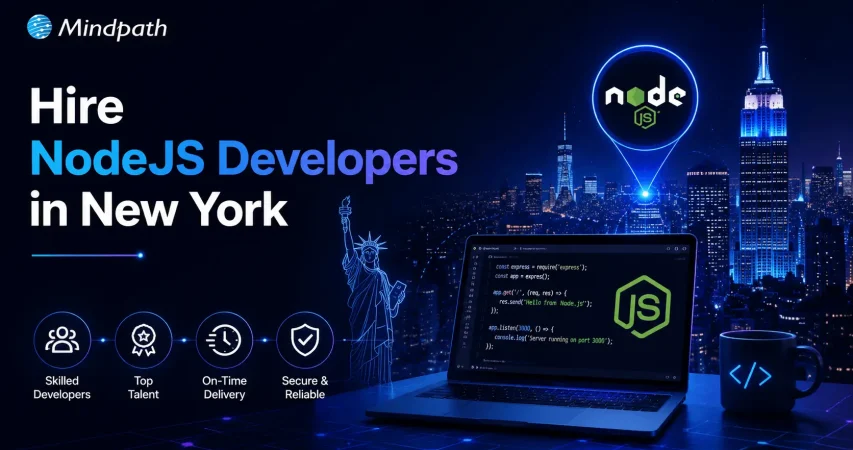
A Business Guide to Hiring Top Node.js Developers in New York

A Business Guide to Hiring Top Node.js Developers in New York

Are you looking to build a fast and scalable web application? Do you need expert NodeJS developers in New York to bring your ideas to life? Finding the right developers can be challenging, but with the right team, you can create high-performance applications that drive business success. But where can you find the best talent?

Hiring Node.js developers in New York is essential for businesses seeking scalable and high-performance applications. With its event-driven architecture and non-blocking I/O, Node.js enables fast and efficient development, making it a preferred choice for real-time applications, APIs, and enterprise solutions.

New York’s dynamic tech ecosystem offers access to highly skilled Node.js developers with expertise in modern frameworks and development best practices. Whether you’re building a startup or expanding an existing platform, choosing the right developers ensures seamless execution, optimized performance, and long-term success.

Let’s explore how you can hire top NodeJS developers to take your project to the next level!

Steps to Hire Node.js Developers in New York

Finding the right Node.js developer for your project in New York can be challenging, given the city’s competitive tech landscape. Whether you’re building a scalable web application, an API-driven platform, or a real-time service, hiring skilled Node.js developers ensure the success of your project. Follow these structured steps to streamline your hiring process and secure the best talent for your team.

1. Define the Job Requirements

Start by outlining a clear and detailed job description. Identify the key responsibilities and technical skills required, such as expertise in JavaScript, Node.js frameworks (Express.js, Nest.js), databases (MongoDB, PostgreSQL), and cloud services. Include soft skills like communication, problem-solving, and teamwork to ensure compatibility with your business culture. Additionally, specify the job type—whether onsite, remote, or hybrid—along with project goals and expected outcomes. A well-defined role attracts highly qualified Node.js developers in New York.

2. Structure a Hiring Process

Develop a structured hiring framework that enables you to evaluate candidates effectively. Start with resume screening to shortlist potential developers. Conduct technical assessments to gauge coding proficiency, followed by behavioral interviews to assess cultural fit. Consider assigning a test project that mirrors real-world development challenges. A well-organized hiring strategy ensures that you find a Node.js developer who meets your technical needs and aligns with your company’s values.

3. Source Qualified Candidates

To find the best Node.js developers, leverage multiple recruitment channels. Post job listings on platforms like LinkedIn, Indeed, and Glassdoor. Attend NYC-based tech meetups, conferences, and hackathons to network with developers. Partnering with a specialized Node.js development agency in New York can also provide access to pre-vetted professionals, saving time and effort. Utilizing diverse sourcing methods increases the chances of finding the right developer for your project.

4. Evaluate Technical Skills

Assess candidates by reviewing their portfolios and GitHub repositories. Examine past projects to check experience with Node.js, backend architectures, database management, and API integrations. Conduct coding tests to evaluate problem-solving abilities and efficiency. In addition to technical expertise, consider adaptability, communication, and teamwork skills. A thorough assessment ensures you select highly skilled and reliable Node.js developers in New York.

5. Conduct In-Depth Interviews

Implement a well-structured interview process that covers both technical and behavioral aspects. Begin with a screening call to discuss experience and expertise. Follow up with a technical interview, including questions on Node.js architecture, performance optimization, and database handling. Live coding sessions or case studies can help measure real-time problem-solving abilities. Team interviews further assess how well the candidate collaborates with others. A fast yet thorough interview process is crucial for securing top talent in the competitive New York tech market.

6. Finalize the Hiring Decision

Once interviews are complete, select the best candidate based on technical skills, problem-solving ability, and cultural fit. Conduct reference checks to validate past performance. Offer a competitive salary package in line with New York’s tech industry standards. Before onboarding, clearly define job expectations, workflows, and team structures. Providing a seamless onboarding experience helps new developers integrate quickly and contribute effectively. Hiring the right Node.js developer ensures the long-term success of your software development projects in New York. By following these steps, you can efficiently hire skilled Node.js developers in New York who bring expertise, innovation, and value to your business.

Factors to Consider While Hiring Expert Node.js Developers in New York

In today’s fast-paced digital world, businesses need skilled developers to build scalable and efficient applications. Factors to Consider while Hiring Expert Node.js Developers in New York include not just technical proficiency but also industry knowledge, problem-solving skills, and the ability to work within a team. Given New York’s competitive tech market, making the right hiring decisions is crucial for project success. Here’s what you need to consider:

1. Understanding of Scalable Architecture

Node.js is often used for building high-performance applications that require scalability. A great developer should understand microservices architecture, serverless computing, and cloud deployment strategies. This ensures that applications remain efficient as user demand grows.

2. Experience with Real-Time Applications

New York businesses, especially in finance and e-commerce, often require real-time features such as live chat, stock trading updates, or order tracking. Hiring a developer with experience in WebSockets, event-driven programming, and message queues ensures seamless real-time functionality.

3. Familiarity with DevOps and CI/CD

To maintain rapid development cycles, a Node.js developer should be comfortable with DevOps practices. Experience with Continuous Integration/Continuous Deployment (CI/CD) tools like Jenkins, GitHub Actions, or CircleCI helps streamline the software development process and improves reliability.

4. Security and Compliance Knowledge

With data security regulations such as GDPR and industry-specific compliance requirements in finance and healthcare, developers should be well-versed in security best practices. Understanding authentication mechanisms like OAuth, JWT, and secure API development is essential to protect user data.

5. Performance Optimization Skills

New York’s fast-moving tech industry demands applications that run efficiently. A skilled Node.js developer should know how to optimize code for speed, handle memory leaks, and implement caching strategies using Redis or similar technologies to enhance performance.

6. Problem-Solving and Debugging Expertise

Great developers don’t just write code—they solve problems. Strong debugging skills using tools like Chrome DevTools, Postman, or LogRocket can help identify and resolve issues quickly, reducing downtime and improving user experience.

7. API Development and Integration Abilities

Node.js is widely used for building RESTful and GraphQL APIs. A proficient developer should have experience designing scalable APIs and integrating third-party services, ensuring smooth communication between systems.

8. Adaptability to New Technologies

The tech landscape is always evolving, and top-tier developers continuously learn and adapt. Whether it’s adopting newer frameworks like Deno or incorporating AI-driven functionalities, hiring developers with a growth mindset ensures long-term success.

9. Effective Collaboration and Communication

A Node.js developer often works with front-end developers, designers, and project managers. Strong communication and teamwork skills ensure smooth coordination, helping projects stay on track and meet business objectives efficiently.

10. Understanding of Business Needs

Beyond technical expertise, a great developer understands the company’s vision and customer needs. Whether it’s an e-commerce platform requiring seamless transactions or a fintech app demanding high-level security, a developer who aligns with business goals contributes significantly to project success.

Key Skills to Prioritize When Hiring a Node.js Developer in New York

Finding a skilled Node.js developer requires assessing a blend of technical expertise and problem-solving abilities. Essential skills to look for when hiring a Node.js developer in New York include mastery of backend frameworks, database management, and API development. Additionally, strong debugging and performance optimization skills are necessary for building high-performing applications that can handle real-world demands.

1. Proficiency in Asynchronous Programming

Node.js is built on an event-driven, non-blocking I/O model, making asynchronous programming a fundamental skill. Developers should be comfortable working with callbacks, Promises, async/await, and event loops to ensure smooth execution of multiple tasks without blocking operations. Mastering these techniques helps improve application responsiveness, especially when dealing with real-time data processing or high-traffic applications.

2. Expertise in Backend Frameworks

A strong foundation in backend frameworks enhances the development process and ensures efficient server-side logic. Developers should be well-versed in frameworks like Express.js, NestJS, and Fastify, which simplify request handling, middleware integration, and API routing. Each framework offers unique advantages—Express.js is lightweight and flexible, NestJS provides a structured, modular architecture, and Fastify is optimized for performance. Choosing the right framework based on project requirements is key to scalable and maintainable development.

3. API Development and Integration

Modern web applications rely on robust APIs for seamless communication between the frontend and backend. Skilled Node.js developers should be able to design, develop, and integrate RESTful and GraphQL APIs while ensuring proper authentication, authorization, and validation. Implementing best practices such as rate limiting, caching, and API documentation using tools like Swagger improves efficiency and security. Developers should also be familiar with third-party API integrations for payment gateways, cloud services, and external databases.

4. Performance Optimization Techniques

Efficient performance management is critical for handling large-scale applications. Developers must be proficient in caching techniques (Redis, Memcached), load balancing, clustering, and stream processing to optimize application speed. Additionally, knowledge of event-driven architecture and WebSockets allows for real-time communication, making applications more dynamic. Writing optimized code, reducing redundant queries, and monitoring system performance using tools like New Relic or Prometheus contribute to better scalability and user experience.

5. Security Best Practices

With rising cybersecurity threats, securing a Node.js application is a top priority. Developers should be knowledgeable in preventing common vulnerabilities such as Cross-Site Scripting (XSS), SQL Injection, Cross-Site Request Forgery (CSRF), and data breaches. Implementing OAuth, JWT authentication, data encryption, and secure HTTP headers ensures robust protection. Regular security audits, dependency scanning using tools like Snyk, and best practices in access control further strengthen application security.

Breaking Down the Cost of Hiring Node.js Developers in New York

The cost of hiring Node.js developers in New York depends on experience, project complexity, and the hiring model. Whether you need a freelancer, an in-house developer, or a full-service agency, understanding pricing structures helps you make the best decision for your budget and project needs.

1. Hourly Rates Based on Experience

Junior Developers (0-2 years): Charge $12-$50 per hour for basic tasks like bug fixes and API integrations.

Mid-Level Developers (3-5 years): Earn $50-$100 per hour, handling backend development, databases, and performance optimization.

Senior Developers (5+ years): Command $80-$150+ per hour for complex system architecture and high-performance solutions.

While hiring locally ensures smoother collaboration, outsourcing to lower-cost regions can be a budget-friendly alternative.

2. Estimated Project-Based Pricing

Small Projects: Simple applications cost $12,000-$25,000.

Medium Projects: Custom apps with real-time features range from $25,000-$45,000.

Large-Scale Solutions: Enterprise-level applications often exceed $60,000.

A development agency typically charges between $72,000-$116,000 per year, providing full-cycle development with ongoing support.

3. Key Cost Influencers

Project Complexity: More advanced features require higher investment.

Hiring Model: Freelancers are cost-effective but lack ongoing support; in-house teams offer stability but add overhead costs; agencies provide expertise but at a premium.

Location: Hiring locally ensures real-time collaboration, while outsourcing lowers costs.

By weighing these factors, businesses can find a cost-effective yet skilled Node.js developer that aligns with their needs.

Hiring the right Node.js developers in New York is essential for building scalable, high-performance applications. With the city’s competitive tech landscape, businesses must follow a structured hiring process, evaluate technical expertise, and consider cost factors to secure top talent. Whether you’re developing a real-time application, API-driven platform, or enterprise solution, skilled Node.js developers ensure seamless execution, optimized performance, and long-term success. By making informed hiring decisions, you can build a strong development team that drives innovation and growth.

Looking for expert Node.js developers in New York? Mindpath offers top-tier development services tailored to your business needs, ensuring scalable, high-performance applications. Whether you need real-time solutions, API development, or enterprise-grade software, our skilled developers are ready to bring your vision to life.
Let’s build something great together—contact us today!

Related Post

Learn how to hire offshore developers with our comprehensive guide. Maximize your business growth by accessing skilled talent and streamlining your process.

Related Post

Devops vs devsecops

DevOps vs. DevSecOps is a topic that will often arise when companies look for better and faster software delivery. Businesses are looking to release applications and software faster than ever, but they are also mindful of the growing sophistication of security threats. So where can businesses find the balance of speed and safety? This is where the transition from DevOps to DevSecOps comes into play; the need for speed is balanced with more stringent security requirements.

In today’s fast-moving digital age, the speed of development plays an important role, but it’s hardly enough. In addition to wanting systems that develop software quickly, organizations want systems that will also withstand vulnerabilities at each stage. That is why there’s so much interest in DevSecOps. DevSecOps does not replace DevOps; it enhances it by using continuous security assessments and ongoing protection. A clear understanding of these differences allows businesses to make better choices that can balance innovation with resilience. So, keep reading further to know the difference between DevOps and DevSecOps in this blog.

Still unaware of how DevOps benefits your business? Get in touch with us to gain full insight into adopting DevOps services that makes your operations seamless.

What is DevOps?

DevOps brings together development and operations to deliver software faster and better-quality software. Its foundation is collaboration, automation, and continuous delivery. DevOps can help break down silos in an organization and execute on shared goals while realizing common objectives and reducing risk. It can also simplify processes, enable teams to become more efficient, and fulfill the goals of the technology department while keeping the goals of their customers and their company in mind.

Furthermore, it drives a cultural change that values accountability, empathy, and shared responsibility. With automation, fast iterations, and rapid feedback, businesses are able to deliver secure and reliable software. In addition to this, not only does the process encourage innovation and creativity, but it also gives businesses flexibility and resilience in a competitive marketplace.

Must Read: DevOps for Business

Here are some of the benefits of DevOps: 

1. Faster Delivery

Development cycles can go a lot quicker with automation and simplified processes. This enhanced delivery allows more frequent releases and decreases time to market.

2. Collaborative Teamwork

Development teams, operations, and other teams are all working toward common goals. Good team collaboration eliminates silos and improves project quality.

3. Smarter Efficiency

Automation eliminates repetitive tasks and optimizes workflows. Teams have the ability to save time and focus on activity that produces value, instead of spending time on manual processes.

4. Continuous Integration and Delivery (CI/CD)

Continuous integration and continuous delivery allow for reliable and consistent deployments. Your users can get new features and fixes fast and seamlessly.

5. Real-Time Insights

Monitoring tools enable instant visibility across the ecosystem. Teams can identify problems early, troubleshoot quickly, and improve performance.

These points explain how DevOps speeds up collaboration and delivery when comparing DevOps vs. DevSecOps, while DevSecOps extends an approach that has been inherently faster approach by adding stronger security practices.

Curious how automation and modern practices can improve your DevOps pipeline? Visit our blog on DevOps Trends to discover actionable insights and emerging innovations.

What is DevSecOps?

DevSecOps is the process of integrating security into every single aspect of software development. It unites development, security, and operations teams so they can plan, build, test, and release applications together. In return, DevSecOps allows for faster, more reliable processes, ensuring that the software has security built in from the beginning of development.

To better understand the three pillars of DevSecOps, simply think of collaboration, automation, and continuous security. Collaboration ensures that everyone is sharing the responsibility, automation introduces automated security checks into CI/CD pipelines, and continuous security ensures that monitoring is continuous. With the three pillars of DevSecOps, organizations are able to create dependable applications while implementing continuous security measures to defend them against constantly evolving threats.

Here are the benefits of DevSecOps:

Benefits of DevSecOps

1. Early Risk Detection

DevSecOps allows for the identification of vulnerabilities during the development phase rather than at the end of the development process. Finding and remediating risk early in this way saves time and expense and means that users receive secure applications.

2. Faster Release Cycles

As teams can impact security testing in their workflow, delays are prevented, human error is removed, and developers get new features into the hands of users sooner.

3. Stronger Compliance

DevSecOps processing can assist software teams in meeting compliance obligations with strict regulatory guidelines. Automated checks and secure development practices ensure that data continues to be protected, while developers can be assured that they meet industry standards.

4. Security-First Perspective

Treating security as a shared responsibility, teams practicing DevSecOps have developers, security professionals, and operations staff collaborating to manage risks actively and ensure they minimize incidents throughout the development period.

5. Safe Feature Delivery

With DevSecOps, teams can deliver new functionality faster while also guaranteeing that security practices are undertaken throughout the development period. This can be one of the key differences in terms of DevOps vs. DevSecOps: how features are delivered.

Aiming to enhance operational efficiency and reduce development risks? Check out our blog on DevOps Challenges and Solutions to discover proven approaches that improve performance, stability, and cross-team cooperation.

DevSecOps vs. DevOps: Key Differences

DevOps vs. DevSecOps reveals how software teams value speed, teamwork, and security. While DevOps emphasizes faster delivery, DevSecOps enhances that process, making security a priority at every step of the development process.

1. Security Focus

The primary distinction between DevOps vs DevSecOps is security. DevOps puts movement between development and operations to speed up the delivery of software, but its security processes are usually significant afterthoughts. DevSecOps has security processes established from start to finish and considers them a core capability. By treating security as a core capability, vulnerabilities are eliminated upstream, so they are remedied before deployment.

2. Collaboration Culture

DevOps emphasizes collaboration between development teams and operations teams to promote continuous integration and delivery. Security is often treated as an independent effort, which creates holes in the development process. DevSecOps emphasizes the work of the security team interacting directly with developers and operations teams in every phase of development. This develops a culture of security being everyone’s responsibility.

3. Timing of Security

Conventional DevOps teams often include security at the final phase of the development cycle. If bugs occur towards the end of the process, they can delay the project significantly. DevSecOps reinforces timing by introducing a shift-left strategy with security at the beginning of the development process to build secure and reliable applications.

4. Tools and Automation

In contrast, when discussing DevOps vs. DevSecOps tools, the distinction is clear. DevOps follows automated processes for build, test, and deploy; however, normally, the security tools are still standalone. With DevSecOps, you use drive-by automated security scans, code analysis, and continuous monitoring in the CI/CD pipeline. It allows teams to detect threats in real-time without having to slow their delivery pace.

5. Salary Comparison

There is a notable salary gap when looking at DevOps vs. DevSecOps salaries in the UK. DevOps Engineers generally earn from £65,000 to £92,500+ with a difference based on skills and location, while DevSecOps Engineers receive a greater salary, with salaries for senior roles exceeding £130,000+ a year, particularly for positions based in London.

Looking to optimize your CI/CD pipeline with smarter automation and streamlined processes? Visit our blog on DevOps Best Practices to discover the strategies high-performing teams use to achieve consistent, stable releases.

DevOps vs. DevSecOps: A Comparison Table

When exploring DevOps vs. DevSecOps, it’s clear that both approaches aim to improve software delivery but take different routes to get there. This table highlights the main distinctions, making it easier to see how DevSecOps builds on DevOps with an added focus on security.

Aspect DevOps DevSecOps
Core Goal Focused on speeding up development and deployment cycles. Balances speed with security to deliver safe, reliable software.
Team Culture Collaboration between development and operations teams. Shared responsibility among development, operations, and security teams.
Security Approach Security checks are introduced late in the release pipeline. Security is integrated into every stage of the development lifecycle.
Automation Uses CI/CD pipelines to automate builds, tests, and deployments. Extends CI/CD with automated security scanning and compliance checks.
Risk Handling Issues are often fixed after vulnerabilities are found in production. Risks are identified and mitigated early to prevent breaches.
Compliance Handled towards the end of development, often as a final step. Built into processes from the beginning, ensuring continuous compliance.
Toolset Relies on monitoring, deployment, and collaboration tools. Adds tools for code analysis, threat detection, and policy enforcement.
End Result Delivers applications quickly but may leave gaps in security. Produces faster releases that are also secure, compliant, and resilient.

Which approach will drive your business forward?

The comparison of DevOps vs. DevSecOps shows that while DevOps accelerates delivery, DevSecOps ensures that speed is not achieved at the cost of security. Businesses gain the ability to innovate quickly while reducing vulnerabilities. Choosing the right model depends on priorities, but integrating security early always results in stronger, more resilient software outcomes.

At Mindpath, we offer tailored DevOps services designed to improve speed, collaboration, and reliability across your software delivery cycle. By helping teams embrace automation, modern practices, and security-focused strategies, Mindpath ensures that businesses not only accelerate development but also deliver secure, high-performing applications that stand out in today’s competitive digital market.

Explore the key comparison between DevOps vs DevSecOps to find out which approach best enhances your development pipeline.
generative AI trends

The technology world is growing at a quicker pace and 2026 is already proving to be a big year for innovation. Among the most discussed advancements, there are some exciting generative AI trends that are transforming how we produce content, design products and engage with digital tools. From smart video production to sophisticated code composition, generative AI is no longer a notion but is actually transforming the way things are reshaping in the real world.

Generative AI is applied across majority of industries today to facilitate work, enhance individual experiences, and assist individuals in generating more innovative ideas. In 2026, we are seeing a quick surge in adoption in healthcare, marketing, education and entertainment fields. Businesses are also embracing these tools to lead in innovation and customer experience. Intriguing, isn’t it?

Are you interested to know about some generative AI trends for 2026? Well, we have got you covered. This blog will walk you through top gen AI trends shaping 2026 and how they’re influencing the future of technology.

Want to integrate generative AI into your workflows for competitive advantage? At Mindpath, our AI Development Services deliver tailored, scalable AI solutions for your business.

Demystifying Generative AI: The Next-Gen Innovation

Generative AI is an intelligent technology that has the ability to assist in the development of new contents, images, videos or even computer code. It learns from what already exists and then applies what it has learned to create something new. For companies, this means they can utilize AI to create content, create products, or even assist with customers’ questions. It’s similar to having a super useful assistant who always learns and becomes proficient at various tasks. 

Generative AI is assisting companies in so many easy and intelligent ways. It saves time by performing daily tasks such as writing, designing, or responding to messages. So, teams can concentrate on more important things. It also assists organizations in making quicker decisions by getting data interpreted quickly. Customers receive better and more personalized service, which makes them satisfied. Additionally, it helps in creating new ideas and saving costs by doing work faster. Since the market is expanding very quickly, a Statista study approximates that generative AI will reach approximately $66.89 billion in 2026 and increase to $442.07 billion by 2031, demonstrating the growing importance of GenAI for business in driving efficiency, innovation, and customer engagement.

Also Read: Top AI Trends 

Now let us have a look at the generative AI trends for 2026:

Top Generative AI Trends to Look for in 2026

GenAI trends are progressing rapidly in 2026, revolutionizing the way we work and innovate. These trends are enhancing tools to be smarter, quicker, and more useful. Here are the leading GenAI trends that are shaping the future this year: 

1. Hyper-Personalization with GenAI

One of the key current trends in artificial intelligence is hyper-personalization. GenAI helps create content and messages that match each person’s unique needs and interests. It looks at large amounts of data to understand what someone likes, then gives them a more personal and meaningful experience. This makes communication more effective and helps build stronger connections. Hyper-personalization is becoming more important for better results, improved engagement, and customer satisfaction across many different industries. 

2. Multimodal Generative AI

AI is now getting better at understanding many types of information at once, like pictures, text, speech, and even video. This is called multimodal AI. For example, some tools can turn spoken words into text or show pictures based on what you write. New models like GPT-4V and LLaVa are making this possible. They help people talk to AI in smarter ways, using both words and visuals. This makes AI more useful and helpful in many different tasks. 

3. Conversational AI

Conversational AI is getting much better at having real conversations with people. Thanks to new tools like GPT, it can understand what you say, remember past chats, and reply in a way that feels natural. It’s like talking to someone who really listens and gives helpful answers. In 2026, this kind of AI can handle longer and more detailed chats, making it great for customer support, virtual helpers, and more. It feels less like a robot and more like a real helper. 

4. AI-Powered Apps and Services

One of the top ai industry trends is how apps and services are becoming much smarter by adding AI features. These AI-powered tools help people do their work faster and in a more personalized way. For example, writing apps learn your unique style to suggest better words and ideas, while health apps can offer treatment advice based on your personal health data. Shopping apps can recommend products you might like. In 2026, many industries use AI inside their software to make experiences easier, smarter, and more helpful for users every day. 

If you’re planning to integrate generative AI into your business strategy. Check out generative AI use cases to learn how companies are leveraging this technology to boost innovation and gain a competitive edge.

5. AI Boosting Creativity

AI is making creativity easier and more exciting for everyone. Tools like Dall-E can turn simple ideas into pictures, music, animations, and sounds, helping artists and creators bring their visions to life quickly. These AI tools keep getting better, allowing people to explore new ways to create art and express themselves. This technology is changing how creative work happens, giving both professionals and hobbyists fresh opportunities to make unique and interesting content in many different fields. 

6. AI Helping in Scientific Research

Generative AI predictions show that AI is making big changes in scientific research. It helps by quickly summarizing long and complex research papers, especially in medicine and pharma. This means researchers can understand important information faster without reading everything. These AI tools save time and make it easier to find key facts, helping scientists work better and faster. This leads to smarter decisions and faster progress in creating new treatments and improving healthcare for patients. 

7. Open Source and Generative AI

Open source is playing a big role in the growth of generative AI. It lets many people from different places work together to improve AI tools and make them better. This teamwork helps find and fix problems faster while making sure AI is fair and trustworthy. Open-source projects also share knowledge and resources, making AI development more open and honest. According to the McKinsey generative AI report, companies that see AI as key to their success are over 40% more likely to use open-source AI tools. In the tech industry, 72% of companies use open-source AI models, showing how important this approach is for advancing AI. 

8. Human in the Generative AI Loop

In 2026, a growing trend is people working closely with AI, called Human-in-the-Loop. This means humans help guide and check AI to make sure it follows rules and fits real-life needs. This teamwork makes AI results more accurate and reliable. By combining human skills with AI’s power, companies can get smart and creative results while keeping control over what the AI produces. This helps AI work better for many different uses. 

Looking to leverage generative AI for smarter, more adaptive app solutions? Explore our blog on Generative AI in App Development highlights practical applications, transformative benefits, and strategies to stay ahead in the digital landscape.

Ready to Embrace GenAI Trends for 2026?

The generative AI trends of 2026 are already changing how we create, communicate, and solve problems. From boosting creativity to transforming research and business services, these trends are making technology smarter and more helpful than ever. As industries keep exploring AI’s possibilities, it’s clear that generative AI will keep shaping the future in exciting and meaningful ways. 

If you’re looking to stay ahead in this fast-changing landscape, Mindpath’s GenAI solutions are here to help. Our expert team builds powerful and easy-to-use AI development services tailored to your business needs. Whether it’s integrating generative AI tools or developing custom applications, Mindpath ensures you get innovative, ethical, and result-driven AI experiences that truly make a difference. 

MVP development

In the software development context, you must have come across the term MVP or minimum viable product. It is the simplest version of a product or application. MVP just has enough features so that initial users can test and provide their feedback. It is ideal for investors to look at the MVP of a product that is being pitched to them.

The importance of MVP development is vital in the prevailing business environment. Many startups fail today because they create products on the basis of assumptions. However, the best way to test those assumptions is by developing an MVP that the real users can see and use. It is the perfect time to learn about MVP and its relevance.

If you are looking to adopt MVP into your business, but don’t know where to start? Mindpath offers end-to-end MVP development services that help you validate ideas quickly while minimizing financial and technical risks.

An Insight into Minimum Viable Product

A Minimum Viable Product refers to the beta version of a new product that a business plans to create. It encompasses just enough features to capture the attention of early customers and collect feedback from them. The companies that adopt the MVP approach to collect as well as respond to user feedback are able to grow faster in the competitive market setting.

Businesses can use MVP in software development to test if customers are happy with their app before spending too much time and effort. As the needs and preferences of modern customers keep changing, it is fundamental for businesses to prioritize MVP development.

Benefits of Implementing MVP

You need to bear in mind that the concept of MVP product development comes from the lean startup methodology. It focuses on learning as well as building with scalability. When a business builds MVP, it is basically taking the first small step towards a new idea or product. This small step can enable businesses to understand the interest of the market in the product.

1. Gathering User Insights

Businesses can gain valuable insight from MVP development. It can teach them where to make improvements in their offering and scale back. Businesses can also add extra features in order to make their product or application more attractive and useful for the users.

2. Testing Business Idea

The key benefit of MVP is that it serves as a low-risk testing ground before businesses invest millions of dollars into a product. Startup businesses can validate their product through MVP development. It creates an opportunity to interact with customers and understand their needs.

3. Cost Efficiency

You need to remember that an MVP development company can help you in terms of cost-saving. Mature software products need years of development along with considerable investment. MVPs ensure that products are simple for coding as well as functionality, thereby reducing development cost. Once you start gaining customer feedback, you can start spending your money more wisely on the new product.

4. Assessing Market Demand

The MVP encompasses testing as well as analyzing the functionality of a product. Moreover, it helps in evaluating the market demand and helps in the acquisition of new customers in the market. It is vital for business organizations to understand the needs of their customers along with the existing solutions. The MVP approach empowers businesses to refine their offering and know whether their offering has a future in the market or not.

5. Securing Funding

Startups require funding in order to survive in the competitive market environment. MVP development for startups serves as a strategic method that can enable them to test the idea before reaching out to investors and other stakeholders. Such a systematic approach can help businesses to secure funds from investors who trust in their idea and Minimum Viable Product.

Cost of MVP Development

The role of MVP development is indispensable for businesses. So it is time to focus on the MVP development cost. Businesses may wonder – How much does MVP development cost? The answer to the question is not straightforward. The average cost relating to MVP development depends on a number of factors, such as the scope of the project and team composition. Similarly, contractual dynamics may also play an important role in impacting the cost of MVP development.

When it comes to MVP, the cost can be categorized into specific features as well as development phases. The common categories that you may come across include market research, prototyping, and MVP development. It is crucial to bear in mind that the research phase is conducted in parallel with prototyping.

Difference Between MVP, Prototype, and Proof of Concept

In order to get a holistic insight into MVP, you must understand how it is different from Prototype and Proof of Concept. A layman may think that these terms are interchangeable. However, that is not true. Each of the terms has a different meaning that businesses should be familiar with.

1. MVP

MVP refers to a launchable product version. It includes core features. The purpose of MVP development is to validate the market potential of a product and gain valuable feedback from users.

2. Prototype

Prototype refers to a preliminary model of a product. It can also be described as a mock-up that is designed to test the design concepts and technical feasibility. It also helps to assess the functionality of a product before its complete development.

3. Proof of Concept

Proof of Concept is a small experimental project. It is undertaken to demonstrate the feasibility or viability of a concept. It is mostly tested internally before further investment is made.

The main difference between these three terms has been presented in the table below:

Aspect MVP Prototype Proof of Concept
Purpose Market validation Technical exploration Feasibility testing
Complexity Functional product Non-functional model Basic technical demonstration
Audience Potential customers Internal stakeholders Technical team

Misconceptions Relating to MVP

There are a number of misconceptions that startups may have about MVP. It is essential to have proper clarity about MVP so that businesses can take advantage of the approach while developing their offering.

1. A common misconception is that MVP is an inferior quality product. However, in reality, an MVP is crafted in a strategic manner. It focuses on the product or software that can deliver core value while maintaining user experience.

2. Another common myth is related to the investment aspect. You may believe that MVP in web development requires no major investment. However, that is not true. Although MVPs are more cost-effective than the final product, they require resource allocation and technical implementation.

3. Businesses may have the idea that one MVP may be sufficient while developing a product. But the truth is that MVP development is an iterative process. Businesses must continuously incorporate the feedback of users so that the best version of the product can be made.

4. You may think that an MVP is a universal solution for all startups. However, this is a common misconception. Not all startups might be able to validate their product or idea through an MVP.

Ready to launch your MVP without delays? Visit our blog on hiring full-stack developers for MVP to learn how to find developers who can handle both front-end and back-end tasks with ease.

Final Words

In the current business landscape, the importance of MVP development cannot be negated. In order to sustain and survive in the complex business space, it is key for startups to develop a minimum viable product before investing completely in the actual product. It can empower businesses to refine their product or offering and create value for the end-users.

Businesses can take advantage of Mindpath’s minimum viable product development services. Our experts can help you develop your MVP in an efficient manner, and you can obtain relevant feedback to improve your offering. The MVP development process can play a strategic role, and it can give your business an edge.