Unleashing the Power of Headless CMS in Content Management

Join our Newsletter!

Featured Posts

Support Is One Click Away

Home

Unleashing the Power of Headless CMS in Content Management

Headless CMS

Unleashing the Power of Headless CMS in Content Management

The digital landscape always adopts unique approaches that engage audiences widely. So, accordingly, businesses are striving to offer exceptional online experiences to be prominent in the digital world. To achieve this, a systematic content-management system can play a critical role. However, traditional CMS systems might limit your performance while restricting your content delivery over multiple channels. 

This is where a headless CMS can be a desirable option to rely upon. As per the statistics, the estimated market of headless CMS software is going to touch USD 7,113.6 million by 2035. This is efficiently transforming the way businesses manage and distribute their content. 

What is a Headless CMS, and How Does It Work?

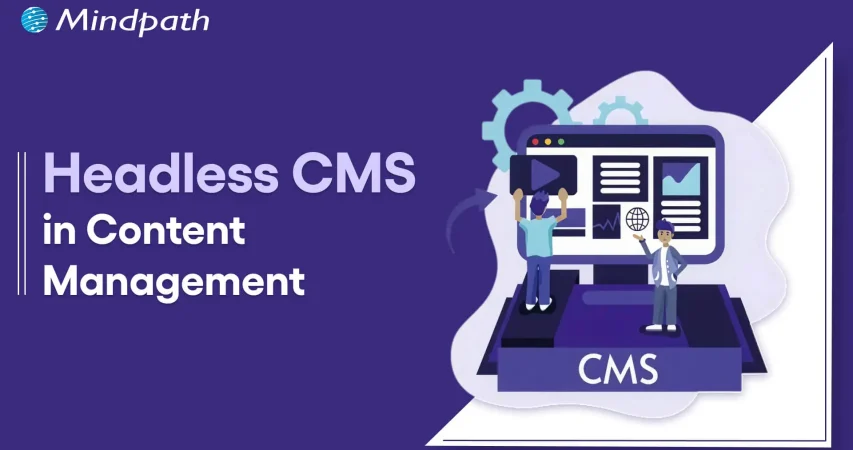
A headless CMS is known to be a content management system that generally decouples the backend from the front-end. Talking about the traditional CMS platforms, they were able to analyze how content is displayed. But a headless CMS allows developers to prefer their desired front-end technology, making the process more adaptable and versatile. 

A headless CMS uses APIs to deliver content and ace its way for making your customers’ experience more user-centric. Now, you are well aware of what is a headless CMS. Further, let us learn about its working capabilities. 

  • Through a headless CMS architecture, content developers can work within the backend, where they can seamlessly add, modify, or organize content as per their requirements. 
  • The backend is considered to be a repository or a database. So, instead of creating HTML pages, the headless CMS offers content through APIs. This allows your developers to fetch it and display it over multiple platforms. 
  • Accordingly, front-end developers can use JavaScript frameworks like Angular, React, or Vue.js to present the content in a more appealing way. This ensures your brand values have been implemented properly into the content. 

How a Headless Content Management System Can Be Beneficial for Your Business?

A headless content management system comes with a series of benefits that can escalate the versatility of your business in the digital landscape. 

1. Efficient Omnichannel Service

A headless content management system allows your team to channelize content seamlessly through different channels. No matter if you prefer IoT devices, a website, or a mobile app, your content will remain consistent. This is how your users will love the interactive experience while fueling your brand values. 

2. Enhanced Flexibility

Your business doesn’t have to work with pre-defined layouts, as a headless CMS will always help you perform uniquely. You can easily understand the power of your front-end technologies while allowing you to leverage your creativity and custom efforts. 

No matter if you want a personalized website or a mobile app with a unique interface, a headless CMS platform can offer you flexibility while bringing life to your vision. 

3. Offers Scalability and Keeps Your Business Future-Proof

Headless CMS offers scalability to your designs. With your business growth, you might discover new channels and technologies. So, a headless CMS makes it easier for integration. The decoupled architecture ensures your content can be efficiently distributed without disturbing your active work structure. 

So, no matter if you want to diversify your product line or want to reach new markets, headless CMS can completely support your growth. 

4. Better Market Delivery

With the backend and front-end separated in a headless CMS platform, it ensures your workflow is not disturbed. This allows your business to initiate rapid content updates, respond swiftly, and launch detailed campaigns faster as per the market demands. 

This valuable approach offers you a great significance in the competitive edge. With better turnaround times, your business can gather better opportunities while reacting to changing trends. 

5. Easy Customization

Businesses can easily personalize their content with the help of headless CMS options. This can be done to satisfy your users’ preferences and behavior. By delivering data-rich insights, you can easily target your audience segments for better reach. Further, this step can enhance your customer engagement while escalating their satisfaction rate. 

For your information, personalization always breeds loyalty, and a headless CMS always equips you with tools that tailor content as per individual user requirements. Moreover, it creates memorable experiences that give rise to long-term customer relationships. 

Where You Should Utilize a Headless CMS?

A headless CMS can be your ultimate solution for a series of scenarios, as given below. Discover where the headless CMS options can be your viable preference. 

1. Custom Front-end Development

If you require a unique and custom front-end experience, a headless CMS can allow your front-end developers to effectively discover their creativity. So, your user experience and designs are not limited to any pre-built templates. It allows you to generate a unique digital experience that can make your customers happy. 

2. Multi-platform Requirements

If you want your content delivery to be seamless through multiple platforms, a headless CMS architecture can be your suitable pick. It simplifies content distribution while keeping your user experience valuable over different channels. 

3. Content-first Integrations

There are many organizations that desire content marketing. So, a headless CMS can easily align your content creation with its delivery. Apart from this, it accesses your markets to acknowledge engagement while your development team can handle the technical aspects. 

4. E-commerce Applications

Headless CMS can be a suitable choice for your e-commerce platforms, where you need to endlessly update your content and products. Moreover, it allows you to initiate swift updates in your pricing, product listing, and promotional content. 

5. IoT Applications

Headless CMS can easily manage and offer content to a variety of connected devices in IoT applications. It includes healthcare devices, smart applications, and even manufacturing equipment. Further, headless CMS architecture ensures real-time updates and proper content distribution to these devices. 

6. Personal Web Application

Organizations that create custom web apps or websites with unique approaches and functionality requirements can adopt the values of Headless CMS. You can use APIs to access and display content as per your requirements, offering you greater flexibility in layout and designs. 

How to Implement Headless CMS with Best Practices?

Integrating a headless CMS is not random, as you need to adopt a better plan. 

1. Assess Your Requirements

In the initial phase, start by identifying your content delivery needs. This might include the type of content and the number of platforms you want to target.

2. Opt for the Right CMS

Prefer a headless CMS that fulfills your business motive. You can consider elements like ease of use, scalability, content modeling ease, etc. 

3. Data Migration

In the next step, you need to think about migrating your existing content to the headless CMS platform. This includes transferring all the content from your existing CMS platform to the new one. 

4. Content Modeling

Next, you need to think about content modeling that can match your business’s unique requirements. 

5. API Integration

There are many headless CMS platforms that offer APIs to access and further retrieve the content. So, you can develop APIs for your front-end apps. 

Conclusion

The digital landscape is changing in a blink. So, brands that can offer consistent and engaging content through multiple channels are more likely to survive in the market. So, a headless CMS platform can make your modern development teams unique by offering them the flexibility they desire. 

No matter if you want to extend your digital presence or just want to elevate your engagement rate, a headless CMS can provide you with a good foundation to be successful. Here, Mindpath can be your ultimate partner. This company can help you with the best CMS implementation while keeping you ahead with your unique innovations and dedicated content. 
Related Post

How much does hiring a ReactJS developer cost? Learn about factors affecting rates, and how to find the best talent within your budget.
Discover how hiring remote developers can drive startup success by tapping into global talent, enhancing productivity, and reducing costs.

Related Post

serverless architecture in cloud computing

Have you heard a lot about serverless architecture in cloud computing and are still unsure of what it is? If so, you’re not alone. Many developers, startups, and business owners wonder how this model works and how their approach to building and deploying apps will change with it. So, what is the hype about, and why is it catching everyone’s attention in 2026?

Serverless architecture in cloud computing is a smarter way of providing a scalable application without the hassle of server management. With serverless computing, you rely on the cloud provider to do all the provisioning, scaling, and maintenance, leaving you to deal with just the code and get features delivered faster. Since more companies are evolving into modern cloud solutions, serverless is becoming a common approach to delivering applications. In this blog, we will cover everything you need to know. So, let’s dig in!

Ready to transform your cloud infrastructure with serverless architecture? Connect with us, and our team will guide you from planning to deployment, ensuring maximum efficiency and scalability.

What is Serverless Architecture in Cloud Computing?

Serverless architecture in cloud computing is a modern way to bring software to market. Rather than having to manage a server’s infrastructure, developers develop and run applications without having to deal with the environment. The developer doesn’t need to worry about servers, updates, scaling, and instead just writes code and deploys. The cloud provider takes away all of the backend tasks, such as server provisioning, maintenance and scaling, making the team’s development as a whole faster without focusing on technology-driven software engineering.

In a serverless model, application code is decomposed into independent functions, commonly known as Function as a Service (FaaS). Each function performs a specific function with the ability to respond to events such as HTTP requests or file uploads. Once the application is deployed, the cloud provider executes the function when required. If no servers are available, the provider spins one up for you automatically. Developers do not take part in this process; it is handled for them on their behalf without the developers noticing.

Must Read: Cloud Computing Trends

Fundamental Concepts in Serverless Computing Architecture

To understand how serverless computing truly works, it’s important to grasp its core principles. Here are the fundamental concepts that define serverless architecture and how they support modern application development:

1. Cold Start

If a function hasn’t run in a while, it might take longer to start up. This is called a cold start.

2. Warm Execution

When a function runs quickly because it was recently used, it’s called a warm execution.

3. Invocation

Every time a serverless function runs, it’s called an invocation.

4. Duration

This is the total time a function takes to run from start to finish.

5. Orchestration

Orchestration means managing how different serverless functions work together in a sequence.

6. Function-as-a-Service (FaaS)

FaaS lets developers write small functions that run automatically when certain events happen.

7. Event

An event is what triggers a function to run, like an HTTP request or file upload.

8. Stateless

Serverless functions don’t remember anything from one run to the next.

Ever wondered how cloud apps grow without server management? Read our blog on Cloud-Native Development to see how it powers agile and resilient serverless architectures.

Advantages of Serverless Architecture

Serverless architecture helps businesses build and deploy apps faster with less infrastructure management. According to Grand View Research, the global serverless architecture market was valued at USD 9.42 billion in 2023 and is expected to grow at a 28.2% CAGR from 2024 to 2030. Here are some key advantages that make serverless a popular choice in cloud computing today:

1. Cost-Effective Usage Model

Serverless platforms charge only for actual function execution time. There are no costs for idle servers, making it highly economical, especially for applications that run on demand or infrequently.

2. Faster Time-to-Market

Cloud functions enable developers to build and deploy features quickly. This rapid development approach helps businesses stay agile and respond faster to market needs.

3. Auto Scaling Capabilities

Applications built on cloud functions can easily scale up or down based on real-time user demand. This automatic scaling ensures performance stays smooth during traffic spikes without any manual effort.

4. Simplified Backend Management

With serverless architecture in cloud computing, developers no longer need to manage servers, updates, or scaling. It allows teams to focus on development while the cloud provider handles operations behind the scenes.

5. Modular and Clean Code

Each function in a serverless setup performs a specific task, promoting modular design. This leads to easy maintenance, especially when working with components like a serverless database or microservices.

6. Ideal for Event-Based Solutions

Serverless architecture in cloud computing supports event-driven applications, making it perfect for real-time analytics, chatbots, IoT, and more. It allows seamless integration with tools that react instantly to user actions or data changes.

How do teams deploy serverless apps faster and more reliably? Explore our DevOps blog to learn how automation and collaboration make it possible.

Serverless Architecture Use Cases

Serverless architecture in cloud computing is changing the way developers build and manage applications. It’s perfect for handling tasks that run occasionally or need to scale quickly without manual setup. Here are some common and practical use cases:

1. Automated CI/CD Workflows

Serverless tools help speed up software delivery by automating tasks. For example, pushing code can trigger a function to build the app or run tests right away.

2. Scalable APIs

You can use serverless Lambda with tools like Amazon API Gateway to build RESTful APIs. These APIs grow with your traffic, so you never have to worry about performance limits.

3. Event-Driven Actions

Serverless architecture in cloud computing is ideal for user actions that trigger automated tasks. For example, when someone signs up, it can update a serverless database and send a welcome email using cloud functions.

4. Background Processing

Serverless functions are great for behind-the-scenes work like video processing or updating product details. These tasks run in the background without slowing down the main app.

5. Flexible Growth

With serverless architecture in cloud computing, teams can move parts of an app one step at a time. It’s easy to expand later by adding more functions or connecting to a serverless database.

6. Smarter Security Tasks

Cloud functions can check new containers for security risks or support safer login methods. They’re also useful for things like two-factor authentication and SSH key validation.

Securing serverless applications can be challenging, how is it done? Discover about DevSecOps to see how security is built into every stage of cloud development.

What is the Difference Between Serverless Architecture and Cloud Architecture?

While both serverless architecture and cloud architecture use cloud environments to run applications, they differ in how infrastructure is managed and how applications are built. Here’s a quick comparison to help you understand the key differences between the two:

Aspect Cloud Architecture Serverless Architecture
Definition A broad model where computing resources are delivered over the internet. A model where apps run without managing servers directly.
Infrastructure Management Developers may manage virtual machines or containers or use managed services. All server management is handled by the cloud provider.
Scalability Manual or auto-scaling needs to be configured. Automatically scales based on demand.
Cost May include fixed costs for allocated resources, even if unused. Pay only for the time and resources your code actually uses.
Development Focus Requires DevOps involvement for setup, monitoring, and updates. Developers focus only on writing and deploying code.
Flexibility Offers a range of service models like IaaS, PaaS, and SaaS with customizable resources. Designed for small, modular functions that respond to specific events.
Examples AWS (EC2, S3), Microsoft Azure (VMs), Google Cloud (Compute Engine) AWS Lambda, Azure Functions, Google Cloud Functions

Is Your Business Ready to Go Serverless in the Cloud?

Serverless architecture in cloud computing offers a powerful way to build fast, scalable, and cost-efficient applications. With no server maintenance to worry about, developers can focus fully on innovation. As businesses aim for agility and flexibility in 2026, serverless becomes the smart choice for modern app development and digital transformation.

At Mindpath, we offer expert cloud computing services tailored to your business goals. From setting up serverless frameworks to managing cloud resources and infrastructure, we help you scale with ease. Partner with us to streamline your operations and deliver high-performing cloud-based solutions with confidence.

Discover the benefits of serverless architecture, from cost savings to faster development, and learn how Mindpath can help your business thrive.
hiring ReactJS Developers in Canada
Hiring the right ReactJS developers in Canada requires evaluating both technical and soft skills to ensure a successful project. Developers must have a strong understanding of React fundamentals, JavaScript proficiency, frontend development expertise, and workflow management. Additionally, assessing problem-solving abilities, communication skills, and industry experience helps in selecting the best candidate. Understanding market trends and salary expectations in Canada also plays a crucial role in making an informed hiring decision. Below are four key factors to consider when hiring a ReactJS developer for your team.

1. Evaluate Core Technical Skills

A skilled ReactJS developer should have a solid grasp of React fundamentals like JSX, Virtual DOM, component lifecycle, and hooks. Proficiency in JavaScript (ES6+), state management libraries (Redux, Context API), and API integration is crucial. Candidates should also have experience with testing frameworks like Jest or Mocha to ensure code reliability. Performance optimization knowledge, including lazy loading, memoization, and efficient rendering, is an added advantage. Evaluating these core technical skills ensures you hire a developer who can build scalable and high-performance applications.

2. Assess Frontend Development Expertise

Beyond ReactJS, a strong developer should be proficient in HTML, CSS, and responsive design principles. Familiarity with CSS preprocessors like Sass or Less helps maintain structured and scalable stylesheets. Experience in UI/UX best practices ensures intuitive and visually appealing applications. Developers should also understand front-end performance optimization techniques such as code splitting and efficient asset loading. The ability to build cross-browser and mobile-friendly applications is essential. Ensuring expertise in these areas guarantees a seamless user experience and well-structured web applications.

3. Review Workflow, Collaboration, and Soft Skills

A good ReactJS developer must be proficient in Git for version control, understand npm or Yarn for package management, and work with build tools like Webpack or Parcel. Strong communication skills help in team collaboration, discussing technical challenges, and understanding project goals. Problem-solving ability is essential for debugging issues efficiently. Adaptability to new technologies and changing project requirements ensures long-term success. Reviewing these workflow and soft skills helps in selecting a candidate who can seamlessly integrate into your team and contribute effectively.

4. Consider Market Trends and Salary Expectations in Canada

Understanding the Canadian job market helps in setting realistic expectations when hiring ReactJS developers. Developers in cities like Toronto, Vancouver, and Montreal may have higher salary expectations than those in smaller cities. The average salary for a React developer in Canada ranges from CAD 80,000 to CAD 120,000, depending on experience. Staying updated on industry trends, emerging technologies, and hiring demands ensures you attract top talent. Considering these factors helps in making a competitive and well-informed hiring decision.

Need expert ReactJS developers in Canada? Mindpath, connects you with top-tier talent to build high-performance web applications. From front-end expertise to scalable React solutions, we ensure the right fit for your project. Partner with Mindpath today and hire the best ReactJS developers!  

Contact Us Now!

Discover the key factors influencing software development costs and how to optimize your budget. Learn how Mindpath can help.
Your Guide to Hiring Skilled Node.js Developers in NYC – Key Factors
Finding theright Node.js developer in New York requires more than just technical skills. You need professionals who understand industry challenges, adapt to new technologies, and collaborate effectively with your team. With New York’s competitive tech market, selecting the right candidate involves evaluating both technical expertise and soft skills, along with an understanding of local industry demands. Here are the key factors to consider when hiring expert Node.js developers in New York.

1. Technical expertise

Hiring a qualified Node.js developer necessitates assessing their JavaScript competency, backend framework knowledge, and database integration abilities. Node.js uses a non-blocking I/O mechanism, hence a solid grasp of asynchronous programming is required. Developers should be familiar with popular frameworks such as Express, NestJS, and Koa, which assist construct scalable apps. Additionally, knowledge with MongoDB, PostgreSQL, or MySQL is required for data persistence. The ability to develop RESTful APIs guarantees that frontend-backend communication flows smoothly. Testing frameworks such as Jest and Mocha increase code quality while reducing defects. Ensuring that your developer is knowledgeable in these technical areas will aid in the creation of dependable and high-performance apps.

2. Industry Experience

New York is home to strong businesses such as banking, journalism, and e-commerce, all of which have specific technological needs. A financial developer may be familiar with stringent security and compliance standards, but a media developer may be skilled with large-scale data and streaming apps. E-commerce developers recognize the value of scalability, payment integration, and user experience optimization. Hiring developers with appropriate industry expertise shortens the learning curve, accelerates the application of best practices, and increases project productivity. They can also provide insights that are consistent with corporate objectives, resulting in improved decision-making and a stronger end product.

3. Market Competitiveness

The demand for Node.js developers in New York is high, making it essential to offer competitive salaries and benefits. A well-researched compensation package should align with current industry standards to attract and retain top-tier talent. Aside from salaries, offering flexible work arrangements, career growth opportunities, and skill development programs can make your company stand out. With the rise of remote work, many developers now prioritize work-life balance and flexible schedules. Additionally, a strong company culture and exciting projects can be key selling points. A well-structured hiring approach ensures you secure the best Node.js developers, helping your business build scalable, high-performance applications while maintaining a motivated workforce.

4. Soft Skills and Team Collaboration

Technical abilities are necessary, but soft skills are as important in guaranteeing a developer’s success in a team setting. Strong communication abilities allow for smooth cooperation with designers, product managers, and other engineers. A competent developer should also have a problem-solving attitude, which will help them to detect and resolve difficulties fast. Adaptability is another important attribute, as technology moves quickly, and developers must be willing to learn new frameworks and respond to project changes. A team-oriented approach also assures that the developer can work well in collaborative contexts, successfully exchange ideas, and contribute to the overall project’s success.
At Mindpath we connect you with top-tier talent to build high-performance, scalable applications tailored to your business needs. Whether you’re in finance, e-commerce, or media, our experts ensure seamless development with cutting-edge technology. Get in touch with Mindpath now!
Discover the ultimate guide to hiring Node.js developers in London. Learn about the skills, benefits, and cost factors involved in finding the right talent for your project.