Home

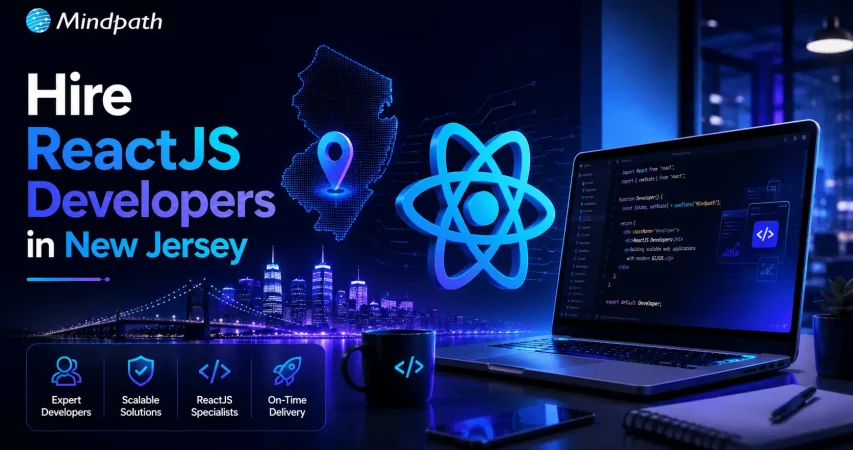
Hire Skilled ReactJS Developers in New Jersey for Your Next Project
Hire Skilled ReactJS Developers in New Jersey for Your Next Project
Lorem ipsum dolor sit amet, consectetur adipiscing elit. Ut elit tellus, luctus nec ullamcorper mattis, pulvinar dapibus leo.

Join our Newsletter!

Are you searching for skilled ReactJS developers in New Jersey to build a high-performance web application? Do you need experts who can create fast, scalable, and interactive user interfaces? Finding the right talent can be challenging, but with the right team, your project can thrive.

In today’s fast-paced digital surroundings, a dynamic and flexible web application is essential for business success. ReactJS, which is recognized for its quickness and versatility, has become the ideal tool for developing modern web applications. If you’re seeking talented ReactJS developers in New Jersey, hiring the right professionals can make all the difference. Experienced ReactJS developers, with their knowledge in generating high-performance applications, can assist you in developing scalable, user-friendly, and creative digital solutions customized to your company’s demands.

Let’s explore how hiring top ReactJS developers in New Jersey can bring your vision to life!

Steps to Hire ReactJS Developers in New Jersey
1. Define Your Project Requirements

The first step in hiring a ReactJS developer in New Jersey is to outline your project’s needs explicitly. Determine the scope of your project, including essential features, functions, and projected timetable. Understanding your requirements can assist you in determining the suitable experience level—whether a junior, mid-level, or senior developer is most suited. Consider the React frameworks and technologies unique to your project, such as Redux for state management, Material-UI for UI components, or Next.js for server-side rendering. Outlining these technical criteria can make your hiring process more efficient since you will be able to filter individuals who are knowledgeable about the essential technologies. Proper planning also ensures that you hire a developer who can deliver exactly what your project demands, reducing the risk of misalignment. By defining your needs upfront, you set a strong foundation for finding the right ReactJS talent in New Jersey.

2. Source Qualified Candidates

Once you’ve determined your project’s requirements, the following step is to aggressively seek skilled ReactJS developers in NJ. Use several hiring channels to improve your chances of discovering the perfect candidate. Online employment platforms such as LinkedIn, Indeed, and Glassdoor provide a vast pool of individuals with ReactJS experience. You may also look at specialized tech employment sites like AngelList or Toptal for highly competent developers. Furthermore, use your professional network to request references from colleagues or industry contacts. Another useful technique is to join local tech meetings and events in New Jersey, where you can meet experienced developers and find possible candidates in person. Engaging with different sourcing methods ensures that you reach top-tier talent who may not be actively searching for jobs but are open to new opportunities. A diverse sourcing approach increases the likelihood of finding the ideal developer for your project.

3. Screen Candidates Based on Skills and Experience

After sourcing individuals, the next stage is to test them for technical proficiency, experience, and problem-solving ability. Begin by reading their credentials and portfolios to determine their experience with ReactJS, JavaScript, HTML, CSS, and front-end frameworks. Pay particular attention to their prior projects and see if they have worked on applications comparable to yours. Conduct a technical evaluation to determine their practical coding abilities. This can be an online coding test, or a take-home project centered on React development. Ask specific questions during the first screening to assess their comprehension of React’s key principles, state management (Redux or Context API), component lifecycle, and recommended practices. By thoroughly evaluating each candidate’s skills and hands-on experience, you can filter out unqualified applicants and focus on those who have the necessary expertise to contribute effectively to your project’s success.

4. Conduct a Thorough Interview Process

A systematic interview process is essential for finding the ideal ReactJS developer. Begin with an initial phone screen to confirm the candidate’s qualifications, background, and interest in the position. If they pass the screening, they will proceed to a technical interview where they will exhibit their problem-solving abilities and ReactJS expertise. During this step, ask detailed questions about their expertise with React Hooks, Redux, testing frameworks like Jest, and deployment methods. You can also offer a live coding session to test their ability to develop clean, efficient code. After assessing technical capabilities, do a behavioral interview to identify soft skills like communication, teamwork, and flexibility. Understanding how they collaborate with others and handle challenges is essential for ensuring they fit well within your team. A well-structured interview process helps you identify not only technically skilled developers but also those who align with your company culture.

5. Make the Hiring Decision and Finalize Terms

After you’ve interviewed candidates and evaluated their talents, it’s time to make your final recruiting choice. Compare their technical knowledge, problem-solving methodology, and capacity to collaborate with your team. Consider their ReactJS experience, previous project success, and adaptability to new technologies. After you’ve chosen the best applicant, discuss compensation, benefits, and work arrangements (remote or on-site). To minimize future misunderstandings, be transparent when addressing employment requirements, contract conditions, and any additional benefits. Once everything has been agreed upon, create an onboarding procedure that involves providing access to project tools, scheduling team meetings, and establishing starting duties. A smooth onboarding experience helps new hires integrate quickly and contribute effectively. By carefully evaluating and finalizing the hiring process, you ensure a successful partnership with a skilled ReactJS developer who can drive your project forward.

Looking for expert ReactJS developers in New Jersey to bring your vision to life? At Mindpath we provide highly skilled ReactJS professionals who specialize in building scalable, high-performance web applications tailored to your business needs. Whether you need a dedicated developer or a full development team, we have the expertise to deliver top-notch solutions.
Let’s turn your ideas into reality! Contact Mindpath today. to hire the best ReactJS developers and take your project to the next level.

Support Is One Click Away

Featured Posts

Related Post

LLM - Powered App Development Cost

Imagine you’ve got an idea for a custom LLM-powered app. Maybe you want to automate customer support, build an AI assistant, or transform how your team works. But here’s what stops most entrepreneurs and business leaders cold: they don’t really know how much LLM-powered app development costs actually impact their budget. The price tag feels mysterious, unpredictable, and frankly, intimidating.

Key Takeaways

  • 01
    LLM app costs vary based on complexity, integrations, infrastructure, and scale.
  • 02
    SMBs can start AI projects with manageable budgets and phased investments.
  • 03
    API-based models offer faster deployment and lower upfront development costs.
  • 04
    RAG solutions improve AI performance without expensive model fine-tuning requirements.
  • 05
    Careful planning and cost optimization help maximize long-term AI value.

Good news: you’re definitely not alone. Hundreds of companies across the UK, US, Europe, Australia, and Canada wrestle with this exact question daily. They want real answers, not guesswork. They need clarity on what drives costs when building AI solutions. We’ve analyzed the numbers, industry benchmarks, and actual project data. Ready to cut through confusion? Everything unfolds in this blog.

Ready to build a custom LLM-powered application? Explore Mindpath’s AI development services to create scalable, intelligent solutions tailored to your business needs.

Why Can’t Businesses Ignore LLM-Powered App Development Anymore?

AI stopped being a trend years ago. Every competitor is moving forward with intelligent apps while you’re watching from the sidelines. Companies that skip LLM-powered app development risk becoming irrelevant faster than you’d think.

The payoff is real and measurable. Better customer service, faster workflows, and smarter operations aren’t theoretical anymore. Your team knows what needs fixing. AI solves it. LLM development pricing makes sense when the alternative is falling behind.

Here are the 5 reasons why AI integration is no longer negotiable:

1. Massive Productivity Gains

Your team does less tedious work today. Real-time returns show up immediately.

2. Enhanced Customer Retention

Support gets faster and smarter simultaneously. Customers notice better service instantly.

3. Hyper Efficiency in Workflows

Humans focus on strategic work instead. Automation handles repetitive stuff every day.

4. Rapid Market Growth

The AI space is expanding aggressively right now. Early movers have significant advantages.

5. Competitive Positioning in Your Industry

Your competitors are already building AI solutions. LLM-powered app development cost becomes minimal when you’re losing market share.

Key Factors Driving LLM-Powered App Development Costs

1. Model Architecture & Selection

API models keep your initial costs down. Custom models demand expensive computing power.

2. Data Preparation & Management

Building clean data takes real time. Proprietary knowledge needs special architecture setup.

3. System Integration & Infrastructure

Enterprise systems integration requires custom backend work. Self-hosted models need serious cloud infrastructure.

4. Regulatory Compliance & Security

Regulated industries need advanced protection standards.

5. Inference & Ongoing Maintenance

LLM token costs scale with user volume. Models need constant monitoring and optimization

LLM App Development Pricing for Different Business Scenarios

Every business is different, so your AI app development cost varies wildly depending on what you’re actually building. Let’s break down real pricing for the scenarios most companies face today.

1: Basic AI Chatbot or MVP

Build Cost: $20,000–$50,000 with a 2-4 month development timeline. Ideal for customer support, lead qualification, and knowledge retrieval. Running costs typically range from $50–$500 per month, while LLM Fine Tuning Cost remains minimal.

2: Mid-Level Business Assistant

Build Cost: $50,000–$150,000 with a 4–8 month implementation timeline. Includes custom dashboards, workflow automation, and business system integrations. Running costs generally range from $500–$5,000 per month.

3: Complex Enterprise AI

Build Cost: $150,000–$500,000+ with development timelines exceeding 9 months. Building LLM-powered applications at enterprise scale requires private infrastructure and compliance measures. Running costs can range from $5,000–$40,000+ per month.

How Much Should SMBs Budget for an LLM-Powered Application?

LLM-powered automation for SMBs is becoming more affordable and accessible than ever before. Understanding the expected budget helps businesses plan smarter investments and avoid unnecessary development expenses.

1. Proof of Concept & Business Analysis ($3,000 – $15,000)

Every successful AI project starts with validating the idea before full-scale development begins. This stage helps businesses identify valuable use cases, assess feasibility, and reduce the risk of costly changes later.

2. Data Preparation & Ingestion ($5,000 – $30,000)

AI systems perform only as well as the data they receive. Preparing, cleaning, and organizing business documents ensures the model can deliver accurate and relevant responses.

3. Application & Integration Development ($5,000 – $40,000)

This phase focuses on building the user experience and connecting AI with existing business systems. It often includes interfaces, workflows, databases, and Retrieval-Augmented Generation (RAG) capabilities.

4. API Usage Costs ($200 – $2,000/month)

Many SMBs choose cloud-based AI models because they eliminate large infrastructure investments. Costs increase with application usage, making scalability easier to manage during growth.

5. Infrastructure for Self-Hosted Deployments ($3,000 – $15,000/month)

Businesses requiring complete control over data may choose private model hosting environments. This approach increases the LLM-Powered App Development Cost but provides stronger privacy, security, and customization options.

6. Vector Database Hosting ($500 – $5,000/month)

Vector databases allow AI applications to search and retrieve business knowledge efficiently. They play a critical role in improving response accuracy and delivering context-aware answers.

7. AI Gateway & Observability ($0 – $300/month)

Monitoring tools help organizations track model performance, usage patterns, and operational expenses. Early visibility into system behavior prevents unexpected costs and improves reliability.

8. Maintenance & Updates ($1,000 – $5,000/month)

AI applications require continuous optimization to maintain performance as business needs evolve. Regular updates, prompt improvements, and data management ensure long-term value from the investment.

API vs Self-Hosting: Which Option Delivers Better Long-Term Value?

The initial development budget is only part of the investment. Businesses must also evaluate ongoing operational expenses, scalability requirements, security needs, and long-term maintenance costs before choosing an AI deployment strategy.

The right choice depends on how frequently the application is used, the level of data privacy required, and the organization’s growth plans. Understanding both approaches helps businesses avoid unexpected costs as their AI adoption expands.

Factor API-Based Models Self-Hosted Models
Upfront Cost Low initial spend High setup cost
Monthly Cost Usage-based pricing Fixed infrastructure cost
Deployment Time Weeks to launch Months to deploy
Data Privacy Shared environment Full data control
Maintenance Provider managed In-house management
Best For SMBs, startups Large enterprises

How to Reduce LLM-Powered App Development Costs?

Building an LLM-powered application does not always require a large budget. With the right strategy, businesses can reduce development expenses while still creating a reliable and scalable AI solution. Here are some practical ways to control costs:

1. Start with an MVP

Validate ideas early before investing heavily in full development.

2. Use API-Based Models

Reduce infrastructure costs with ready-to-use cloud AI services.

3. Implement RAG First

Improve responses using business data without expensive model training.

4. Reuse Existing Data

Leverage current business information to reduce preparation expenses significantly.

5. Prioritize High-Impact Use Cases

Focus resources on projects delivering maximum business value first.

6. Scale Infrastructure Gradually

Expand resources only when application demand and usage increase.

7. Optimize Prompts Regularly

Improve output quality while lowering token consumption and costs.

8. Partner with Experts

Avoid costly mistakes through experienced AI development guidance.

Ready to Build an AI Solution That Fits Your Budget?

Understanding the budget to build LLM-powered app in 2026 helps businesses make smarter technology investments. From development and infrastructure to maintenance and scaling, knowing the cost factors allows you to plan effectively and build AI solutions that support long-term business growth.

At Mindpath, we provide AI development services tailored to your business goals and budget. Our team helps organizations build scalable LLM-powered applications, from MVPs to enterprise solutions, with the right strategy, technology, and support for successful implementation.

Frequently Asked Questions

Generative AI Use Cases
Have you ever wondered how generative AI is reshaping various industries right before our eyes? How is it enhancing creativity in art and design? What role does it play in streamlining business operations? In this blog, we’ll explore fascinating use cases of generative AI across different sectors.   Generative AI is a sort of artificial intelligence that is intended to generate fresh and unique content, such as images, writing, or music, without being constrained by precise rules. Instead of just obeying predefined instructions, generative AI learns from enormous volumes of data and applies this knowledge to develop solutions that are both creative and humanlike. It can develop material based on patterns that it recognizes, making it more adaptable and inventive than standard AI.  The significance of generative AI is enormous since it is altering several sectors. From automating content production to accelerating software development, these technologies make tasks quicker and more creative.   So, let’s dive in to explore the generative AI use cases in diverse industries! 

Generative AI Use Cases Across Different Industries

1. Finance And Trading

Generative AI is revolutionizing the financial and manufacturing industries by increasing efficiency and optimizing operations. In finance, it creates algorithmic trading strategies by analyzing past market data and executing exact trades.

It also offers predictive market analysis, which assists specialists in forecasting trends, as well as high-frequency trading by developing rapid algorithms for swift order execution. It also enhances risk management and fraud detection by monitoring transactions for unusual trends, therefore safeguarding customers from identity theft. In manufacturing, generative AI improves efficiency by finding bottlenecks and lowering costs. It provides predictive maintenance by anticipating equipment breakdowns and reducing downtime.

AI also improves supply chain management by analyzing logistics and inventory data to ensure timely delivery and optimal resource utilization 

2. Healthcare

Generative AI is transforming the healthcare industry by improving diagnostics, medication development, and personalized treatment strategies. In medical imaging, AI aids in the creation of synthetic MRI, CT, and X-ray pictures, allowing for more precise diagnosis and treatment planning. It improves image quality and detail, allowing medical experts to more accurately spot abnormalities. 

Generative AI speeds up drug discovery by optimizing chemical structures and anticipating medication interactions, allowing researchers to better understand potential adverse effects. It also creates customized drug delivery systems to guarantee that drugs reach their intended targets with minimal adverse effects. 

Furthermore, generative AI promotes personalized medicine by analyzing genetic data to find genetic markers, allowing healthcare practitioners to customize treatment programs for patients. By anticipating therapy responses based on previous patient data, AI enables clinicians to optimize methods for better results and recommend patient-specific medicine compositions. 

3. Gaming and Virtual Reality

Generative AI is transforming the gaming and virtual reality landscape by making games more interesting and immersive. In gaming, AI contributes to the creation of engaging game material by analyzing how people play and what they enjoy, ensuring that each player’s experience is unique and suited to their tastes. AI also aids in the creation of enormous gaming worlds that change with each play session, providing players with fresh experiences.

Non-player characters (NPCs) in video games are becoming smarter, acting more like real people and responding to how players interact with them. This enhances the game experience and makes it seem more realistic. 

Furthermore, Artificial Intelligence may adapt game stories based on player decisions, resulting in a personalized storytelling experience that keeps players engaged. AI is used in virtual reality (VR) to build realistic and engaging worlds, making VR experiences more pleasurable, whether for gaming or teaching. AI even creates virtual landscapes and interactive features, resulting in spectacular and responsive VR content.

4. Cybersecurity

Generative AI is helping to strengthen cybersecurity by enhancing how we detect and avoid threats. It analyses large amounts of data, such as network traffic and user behavior, to swiftly identify potential security concerns. This implies that risks can be addressed before causing harm. 

Intrusion Detection Systems (IDS) driven by artificial intelligence (AI) monitor networks and systems for suspicious activity. They notify security professionals in real time if they discover something strange, therefore keeping systems safe.

Another key use of AI is behavioral analysis, which involves learning what normal behavior looks like. If it notices anything unexpected, such as abnormal patterns from a person or system, it might alert you to a potential problem.

Generative AI is also beneficial for detecting advanced dangers that are difficult to spot. It searches through previous data and network behavior to detect these clever attacks. AI can detect irregularities in network traffic, allowing organizations to respond to possible breaches before they get worse. AI can also assist identify insider threats, which are security dangers posed by persons within an organization. By analyzing how people interact and access information, it can detect odd behavior that may suggest a problem. 

5. Autonomous Vehicles

Generative AI is transforming autonomous vehicles by improving their safety and efficiency. AI uses real-time data from sensors and traffic to assist autonomous vehicles make speedy choices. It recognizes items such as pedestrians and other cars, assuring appropriate reactions. Adaptive cruise control systems adjust speed in response to traffic, whereas collision avoidance systems forecast and prevent accidents. 

AI also generates virtual surroundings for testing, allowing engineers to replicate various driving situations, including bad weather. This guarantees that vehicles perform reliably in real-world circumstances. Additionally, AI simulates interactions with pedestrians and bicycles, assisting vehicles in securely engaging with road users.  

6. Robotics

Generative AI is improving robotics by making them smarter and more adaptive. It lets robots learn from their environment and adapt to changes, allowing them to deal with unforeseen events. AI enables robots to interpret human motions and expressions, resulting in improved communication and collaboration. This means they can operate comfortably among others in common settings like factories or houses. 

In manufacturing, for example, generative AI optimizes how machines and people collaborate, increasing productivity by coordinating jobs and motions. This collaboration increases efficiency while also making it easier for robots to assist human workers.

7. Fashion Industry

Generative AI is transforming the fashion industry by enhancing the way designers and businesses produce, promote, and sell garments. AI helps designers produce original fashion ideas by analyzing trends and styles, making it easier for them to experiment with new looks. For marketing purposes, AI can generate blog entries and social media material that engage customers, keeping companies new and relevant. It also helps you write appealing advertisements for certain audiences. 

Additionally, generative AI assists companies in understanding what customers think of their products through sentiment analysis, predicting which things will be popular, and forecasting future trends. It can also power virtual fashion advisers who suggest clothing based on a person’s style and preferences, making shopping more personal.  

Generative AI Services at Mindpath

Mindpath uses the potential of generative AI to accelerate innovation and improve business operations. We create unique AI models that optimize workflows, enhance decision-making, and increase productivity in a variety of sectors.

Our artificial intelligence solutions automate content production for blogs, social media, and marketing materials, ensuring that your outputs are both engaging and relevant. We also use generative AI for intelligent data analysis, which allows organizations to foresee trends, comprehend attitudes among customers, and make intelligent choices.

Furthermore, our AI-powered virtual assistants improve client interactions by offering personalized advice and help, resulting in a better overall user experience. We also provide generative AI in design, which creates unique concepts for goods, marketing campaigns, and branding that stand out in a competitive market. 

Wrapping Notes

Generative AI is changing the way businesses function, increasing innovation and efficiency across several industries. Its potential ranges from increasing innovation in fashion to revolutionizing safety in autonomous vehicles. Businesses that adopt cutting-edge technology find new ways to improve operations, enhance consumer experiences, and stay ahead of market trends. Mindpath is devoted to using the potential of generative AI to provide organizations with bespoke solutions that drive growth, optimize operations, and generate creativity. The future has arrived, and with generative AI, the possibilities are endless. 

Wondering how generative AI can reshape your industry?

Mindpath specializes in AI-driven solutions that unlock new possibilities.

Explore top generative AI use cases transforming industries like finance, healthcare, fashion, and more, driving innovation, efficiency, and creativity across sectors.
Frontend trends

Frontend technologies are enabling digital experiences and shaping today’s user experiences. Programmers are constantly experimenting with new techniques and technologies to create faster, responsive, and interactive websites. But have you ever wondered how do these technologies affect performance, scalability and user experience?

Developers experiment with technologies to improve performance, look and feel, and cross-device user experience. In a more competitive environment, there is greater focus on best programming practices and technology selection in front-end design. Want to know how the best solutions are building the future of UX and developer choices? In this blog, we will explore evolving frontend landscape in detail. So, keep reading further!

Planning to upgrade your frontend with a modern framework that delivers speed and flexibility? Our ReactJS development services at Mindpath help you craft seamless user experiences that scale with your growth.

Understanding the Importance of Frontend Technologies in 2026

Frontend development technologies are frameworks, tools and languages like HTML, CSS, JavaScript, React, and Tailwind. They build the user interface of web applications. They define structure, design, responsiveness, and interactivity. These technologies play a key role in digital product experiences.

They matter more in 2026 because expectations of digital products are increasing for all businesses. They’re essential for businesses to deliver responsive and performant websites. Here’s why frontend technologies matter for websites.

1. Fast Performance Expectations

Instant loading and seamless interactions are expected always. New tools eliminate lag and improve performance.

2. AI in the Development Process

AI assists with development, testing and UI design. Coding becomes quicker and less tedious.

3. PWAs and Voice Interfaces

Progressive web apps provide app-like capabilities in the browser. Voice interfaces make it easier and accessible.

4. Evolving Frameworks and TypeScript

Frameworks like React and Tailwind keep improving. TypeScript makes code safer and cleaner.

5. Frontend Meets Backend

New frameworks combine the UI and server. This moves frontends closer towards full-stack programming.

6. Security and Specialization

Security ensures data and input safety online. Developers specialize in areas such as animation and performance.

Top 20 Frontend Web Technologies List in 2026

A frontend technologies list in the year 2026 undoubtedly represents the tools that are shaping modern web experiences across the industries. These technologies enable developers to create fast, responsive, and very interactive user interfaces that cater to the digital needs of today.

1. JavaScript

JavaScript enables interactive and dynamic features on web pages. It is used to create forms, animations, and shopping carts. It is still one of the most important Front end development technologies today.

2. React

React is a JavaScript library for creating interactive user interfaces. It uses reusable components to simplify development. It was developed by Facebook and is now popular for building large-scale web apps.

3. Angular

Angular is a robust framework for JavaScript development supported by Google. It adopts a modular, component-based approach for developing applications. It is popularly used for developing single-page applications.

4. Vue

Vue is a progressive JavaScript framework for developing user interfaces. It has a straightforward, component-based structure like React and Angular. It is popular for creating responsive single-page apps.

Must Read: Angular vs React vs Vue 

5. CSS (Cascading Style Sheets)

CSS is responsible for rendering the HTML structure and giving websites a particular design. Mainly, it decorates websites with colors, spacing and responsiveness. Besides, it is possible to use CSS for animating and enhancing user experience.

6. HTML (HyperText Markup Language)

HTML is the main code behind web pages. It produces elements such as titles, buttons, forms, and sections. It is the foundation of web content.

7. React Native

React Native is a framework to build mobile apps for iOS and Android with a single code base. It is a framework based on React and provides almost native performance. It makes mobile development across platforms easier and faster.

8. Tailwind CSS

Tailwind CSS is a utility-first CSS framework. The styling of elements is therefore remain restricted to the class attribute in HTML. It is especially helpful for quick development of user interfaces with reusable themes and styles.

9. Flutter

Flutter is a framework developed by Google to create mobile and web applications using Dart. It offers a wide range of pre-built widgets for building responsive user interfaces. Furthermore, it enables a single codebase for multiple platforms.

10. Headless CMS

Headless CMS separates content from the presentation layer. It shares data through APIs making it suitable for any platform. It also resolves issues related to team collaboration.

11. GraphQL

GraphQL is a language for querying APIs. It only loads necessary data, which makes it quicker in getting the data you really need. Due to this feature, it has become quite popular in web applications for handling data.

12. Progressive Web Apps (PWA)

PWA generates app-like functionalities through a combination of web technologies. They are fast, capable of working offline, and can be installed. Since adaptability is one of the characteristics, many companies are opting for PWAs.

13. Web3 Apps

Web3 apps connect users with decentralized platforms through modern web interfaces. Developers use tools like Web3.js and ethers.js to build secure blockchain-based experiences. These solutions are shaping the future of web frontend technologies.

14. Next.js

Next.js is a powerful React framework for building fast and SEO-friendly websites. It supports static generation and server-side rendering. It helps businesses create scalable and high-performance web experiences.

15. TypeScript

TypeScript is a typed programming language that is a superset of JavaScript. It enables developers to find and fix bugs earlier. For this reason, it’s one of the most popular frontend developer technologies for large-scale applications.

16. Gatsby

Gatsby is a framework for building fast websites. It offers performance optimizations such as code-splitting and optimization of images. It’s suitable for content-driven and responsive websites.

17. Astro

Astro is a fresh framework for developing quick and adaptable websites. It generates very simple pages but still supports interactive components whenever needed. This leads to better speed and performance.

18. Micro Frontends

Micro frontends break large applications into smaller independent parts. Different teams can manage separate features more efficiently. This structure improves scalability and development flexibility.

19. Monorepo

Monorepo means one repository covering multiple projects. It is a very efficient way of sharing code, teamwork and managing projects. It’s especially suitable for projects that consist of multiple related apps.

20. Three.js

Three.js is a JavaScript library for rendering 3D graphics and animations for the web. It enables the development of immersive experiences within web browsers. It is one of the new frontend development technologies, used to create new digital design, game and visualization projects.

How to Choose the Right Frontend Technology for Your Project in 2026?

Selecting the right frontend development technologies can directly influence how smoothly your project grows and performs over time. The following are the essential factors that can guide better decisions for building efficient and future-ready digital products in 2026.

  • Match the technology with your project size, features, and long-term business goals.
  • Focus on speed, SEO, and user experience to support better performance and visibility.
  • Choose tools that fit your team’s skills to reduce learning time and improve productivity.
  • Review rendering methods and performance capabilities for smoother digital experiences.
  • Consider community support, hiring availability, and ecosystem strength for future growth.
  • Select technologies that align with modern trends like AI, TypeScript, and scalable architecture.

Ready to Build Smarter Digital Experiences in 2026?

Frontend development technologies continue to redefine how modern businesses create meaningful digital products. The right choices improve performance, support growth, and help brands deliver smoother user experiences while staying prepared for future industry shifts.

At Mindpath, we provide ReactJS development services that help businesses create responsive, scalable, and user-focused digital platforms. Our team builds practical technology strategies that support long-term success through modern development expertise.

Frequently Asked Questions

1. Which frontend technology works best for long-term business growth in 2026?

The right choice depends on project goals, scalability needs, team expertise, and performance priorities. React, Angular, Vue, and newer frameworks all serve different purposes based on business size and digital expectations.

2. Why are frontend development technologies changing so quickly today?

User expectations, AI integration, faster devices, and search engine standards continue pushing frontend tools to evolve. Businesses need modern solutions that improve speed, engagement, and adaptability in a highly competitive digital space.

3. Is TypeScript really necessary for modern frontend projects?

TypeScript has become highly valuable for larger applications because it reduces coding errors, improves maintainability, and supports better collaboration. For growing projects, it often creates more stability than using JavaScript alone.

4. How can businesses balance performance and design when choosing frontend tools?

Strong frontend decisions focus on both speed and user experience. The best technologies support responsive design, faster loading, and interactive features without sacrificing scalability or future upgrades.

5. Are newer frameworks better than established front-end technologies?

Newer frameworks often offer performance advantages, but established tools provide larger ecosystems and stronger community support. The better option depends on project complexity, hiring needs, and long-term maintenance goals.