




Unlocking Business Potential: Integrating ReactJS with Cutting-Edge Technologies

Join our Newsletter!

Featured Posts

Support Is One Click Away

Home

Unlocking Business Potential: Integrating ReactJS with Cutting-Edge Technologies

ReactJS

Unlocking Business Potential: Integrating ReactJS with Cutting-Edge Technologies

Are you ready to unlock the full potential of your business? Imagine combining the power of ReactJS with other cutting-edge technologies to boost your growth and enhance your digital presence. In this blog, we will explore how integrating ReactJS with other tools can transform your business operations, improve user experiences, and drive long-term success.  

In today’s fast-paced digital environment, businesses must use the correct technologies to remain competitive and provide the greatest customer service. Integrating ReactJS into your applications is an essential step towards doing this. Businesses can utilize ReactJS when combined with other technologies to develop quicker, more responsive websites and apps that are easier to maintain and grow. This connection improves performance, enriches user experiences, and enables organizations to remain adaptable in an ever-changing market. 

Curious to see how this synergy can work for you? Let’s dive in and discover the possibilities! 

Integrating ReactJS with Other Technologies
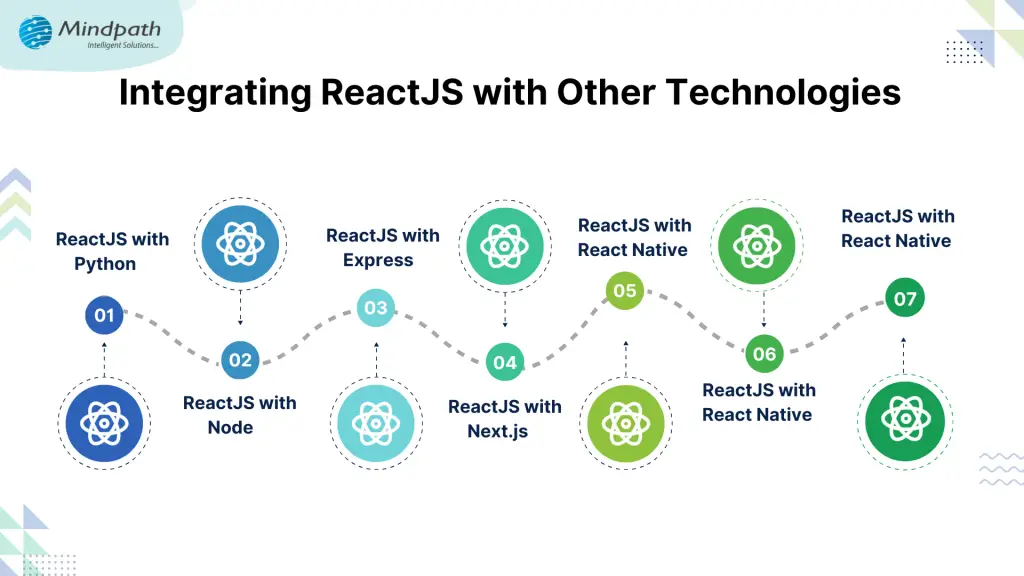
1. ReactJS with Python

Combining ReactJS and Python provides a robust platform for developing full-stack apps. ReactJS is well-known for its dynamic and interactive user interfaces, but Python excels at sophisticated server-side activities and data processes. Businesses that use Python for backend operations can power ReactJS apps more effectively, particularly when dealing with massive quantities of data or real-time processing. 

One of the primary benefits of combining ReactJS with Python is the speed with which data can be handled. Python is perfect for applications that must manage complicated data, such as single-page apps that require speedy and precise data retrieval. Many well-known firms have profited from this combo. Spotify, for example, employs ReactJS for its front end and Python for data processing on the back end. Similarly, Instagram uses ReactJS and Python to manage millions of user interactions while ensuring seamless performance.  

2. ReactJS with Node

By combining ReactJS and Node.js, developers can construct full-stack JavaScript apps that use the same language on both the client and server sides. This integration simplifies and speeds up the development process by requiring developers to focus on only one language throughout the stack. One of the primary advantages of mixing ReactJS and Node.js is the ability to create real-time apps. Node.js is recognized for its event-driven architecture, which makes it ideal for real-time data handling. When combined with ReactJS’ interactive, dynamic user interfaces, it provides users with a smooth and responsive experience. 

Major organizations such as LinkedIn and Uber use this mix for their platforms. LinkedIn employs ReactJS and Node.js to provide a quick, real-time user experience, whereas Uber depends on ReactJS for the front end and Node.js to manage real-time location updates and ride requests, providing smooth communication and a unified experience for users. 

3. ReactJS with Express

Combining ReactJS with Express provides a solid basis for building full-stack JavaScript apps, easing both front-end and back-end development. This combination increases the development workflow and overall efficiency by managing dynamic user interfaces on the client side with ReactJS and server side with Express. 

One distinguishing aspect of ReactJS and Express is their ability to efficiently manage asynchronous tasks. Both technologies are excellent at managing asynchronous data queries, making them suitable for creating dynamic, data-driven single-page applications (SPAs). This leads to a quicker, smoother user experience with continuous updates and interactions, eliminating the need for frequent page reloads. 

When combined, ReactJS and Express offer a powerful solution for building fast, scalable, and efficient web applications, where both the front-end and back-end work in perfect harmony to deliver an optimal user experience. 

4. ReactJS with Next.js

Combining ReactJS and Next.js provides significant advantages for developing modern online apps that are quick, scalable, and SEO friendly. Next.js allows React developers to construct server-rendered apps that not only reduce load speeds but also improve search engine optimization (SEO), guaranteeing that your website ranks higher and performs better. 

One of the primary benefits of combining Next.js and ReactJS is Server-Side Rendering (SSR). SSR enables React apps to be pre-rendered on the server before being delivered to clients, resulting in quicker load times and improved SEO performance. Next.js now supports Static Site Generation (SSG), which allows you to create static pages ahead of time. This strategy is appropriate for dynamic websites that need to be fast and optimized while still giving an outstanding user experience.  

5. ReactJS with React Native

Integrating ReactJS with React Native provides significant benefits for creating online and mobile applications in a single environment. This combination enables developers to construct cross-platform mobile apps with near-native performance while using the same codebase as for web app development. 

One significant advantage of utilizing ReactJS with React Native is the ability to reuse code between web and mobile platforms. This not only speeds up the development process but also assures consistency, saving time and effort in creating distinct apps for different platforms. React Native also offers a near-native mobile experience, with smooth and responsive performance on iOS and Android devices. 

6. ReactJS with Redux

Combining ReactJS and Redux provides an effective approach for handling complicated states in large-scale applications. Redux is an effective approach to manage the state of your project, making it easy to trace changes and assure consistency throughout the application. 

One of the primary advantages of integrating Redux with ReactJS is centralized state control. Redux lets you maintain the application’s state in one location, ensuring that updates are consistent throughout the program. This is especially useful for big web applications where handling states across numerous components can be onerous. Redux facilitates the predictable flow of data, making it easier to manage even the most complicated ReactJS applications. Another advantage is the ease of testing and debugging. Since Redux acts as a single source of truth for the application state, it becomes much easier to trace errors and identify problems, streamlining the debugging process and improving the reliability of your app.  

7. ReactJS with Java

Combining ReactJS and Java is a potent combination for developing enterprise-grade online apps, where the power of Java on the backend meets the flexibility of ReactJS on the frontend. This connectivity enables developers to build dynamic, scalable systems capable of handling complicated needs. 

One of the primary advantages of combining ReactJS with Java is having to have a robust backend powered by Java while utilizing ReactJS for a flexible and dynamic frontend. Java’s strong nature guarantees that the program scales effectively, while ReactJS allows for building responsive, user-friendly interfaces with seamless interactions. 

Furthermore, integrating ReactJS and Java provides cross-platform compatibility, allowing online apps to execute effortlessly across several platforms. This allows firms to reach a larger audience while maintaining fast performance and consistent functionality across devices. 

Also Read: 5 Key Benefits of React JS Development Services in 2024

Integrate ReactJS with Technologies at Mindpath

At Mindpath, we specialize in integrating ReactJS with various technologies to build powerful, scalable, and efficient web applications. By combining ReactJS with other tools and frameworks, we can deliver smooth, interactive user interfaces alongside strong, reliable backends.  Whether it’s ReactJS paired with Node.js for faster development, Express for efficient state management, or Python for handling complex data operations, we ensure that your application performs seamlessly across all platforms. Our expertise in integrating ReactJS with technologies like Redux, Next.js, and more allows us to create real-time, SEO-friendly, and mobile-optimized applications. 

Wrapping Note!

Integrating ReactJS with other advanced technologies is a game-changer for businesses aiming to enhance their digital presence, streamline operations, and deliver superior user experiences. By combining ReactJS with tools like Python, Node.js, Express, and Redux, businesses can create dynamic, fast, and scalable web applications that meet the demands of today’s competitive market. Whether you’re building complex data-driven platforms or developing mobile apps with seamless user experiences, ReactJS offers the flexibility and power to take your projects to the next level. At Mindpath, we are committed to harnessing the potential of ReactJS and other cutting-edge technologies to help your business thrive. Let us help you unlock new possibilities and achieve long-term success by integrating the best tools for your digital transformation journey. 

Ready to take your business to the next level?

Partner with Mindpath for seamless ReactJS integrations and cutting-edge technology solutions.

Related Post

Learn how Node.js powers real-time chat apps with speed, scalability, and WebSocket support. Discover Mindpath’s expert Node.js services.

Related Post

Web Scraping with Node.js
Web scraping is the process of utilizing a specialized program to mechanically collect information from websites. Instead of manually copying and pasting data, web scraping allows you to instantly gain pricing, photos, and news items from the internet. It operates by making requests to websites, capturing the necessary data, and organizing it in an understandable format. This is very useful when you need to collect a large amount of information from many pages.

How to Conduct Web Scrapping with NodeJS

1. Set Up a Node.js Project

Begin by creating a folder for your web scraping project. Inside the folder, initialize a new Node.js project. This will generate a package.json file, which contains your project details and dependencies. Create a main file (e.g., index.js) to write your scraping code. To confirm everything is working, add a simple script in your package.json to run your main file and test your Node.js setup.

2. Install Axios and Cheerio

Next, install the essential libraries for web scraping: Axios and Cheerio. Axios is used for fetching web pages, while Cheerio helps parse and extract data from the HTML. You can evaluate the target website to determine which libraries are best suited for your needs.

3. Download Your Target Website

Connect to the website you wish to scrape using Axios. This involves sending a request to the website’s URL to retrieve its HTML content. Since many websites try to block scraping, ensure you include a User-Agent header, making the request appear as though it’s coming from a legitimate web browser.

4. Examine The HTML Page

To extract the data, inspect the website’s HTML code. Right-click on an item and select “Inspect” to view the page’s HTML structure. Look for the tags and CSS classes that organize the data you want to scrape. This will help you determine the best approach for selecting the right elements.

5. Use Cheerio to Select HTML Elements

Once you have the HTML content, use Cheerio to extract the data. Cheerio lets you select HTML elements using CSS selectors, similar to how jQuery works. You can target elements by class, ID, or by nesting within other elements. This helps to narrow down the exact data you want to extract.

6. Extract Data from the Target Webpage

Now that you’ve selected the elements, the next step is to extract the data. Organize the extracted data into a structured format, such as an array or object. Clean up any irrelevant information and ensure the data is properly organized. If the page has multiple sections, repeat the process for each one, adjusting your selectors as needed. Once completed, you’ll have well-organized data ready for use.

Mindpath, provides web scraping services using Node.js
to help you obtain crucial information from websites. Node.js allows us to easily download and extract data from web pages. This procedure entails retrieving the website content and then
locating the specific data you want, such as text or photos.

Contact us today

Easily automate data collection with Node.js web scraping! Use Axios and Cheerio to extract structured data from websites quickly.
Hiring remote software developer

If you are in search of good remote software developers in New York, you might be aware of the challenges behind it. Due to the competitive landscape, it is hard to find an expert who can communicate well and integrate effortlessly into your team without any friction. So, companies in New York are essentially hiring remote software developers to scale faster and to access specialized skills while reducing operational costs. As the software development market size is going to touch 1.04 trillion by 2030, businesses are looking forward to unveiling something unique to lead the graph. 

In this blog, you can go through the expert-backed tips and the best practices to confidently assess the remote hiring process in New York. With the professional assets by your side, you can be assured of long-term business growth. 

Planning to turn your software idea into a powerful business solution? Mindpath offers custom software development services in New York tailored to your unique requirements.

Why Hiring a Remote Software Developer in New York Is So Essential

Talking about New York, it is a global tech hub. But competition for top talent is expensive and intense at the same time. So, you can hire a remote software developer to encourage your business and to remain competitive without compromising on skills or speed. 

There are some key elements present in New York that drive the demand for hiring remote software developers. This includes high local salaries that allow companies to prioritize remote options. Further, global talent pools also leverage niche expertise that suits the companies’ requirements. 

As a result, hiring a software engineer for remote roles has become a strategic decision rather than a temporary solution. 

Must Read: Remote Work Tools for Developers

Challenges of Hiring a Remote Software Engineer in New York

Hiring remote developers in New York can help you leverage the excellence of incredible talent. However, it has certain complications. 

1. Cultural and Communication Barriers

Considering people from different countries and backgrounds can strengthen your team, but it comes with some friction. What feels like significant and effective feedback to one developer might be blunt for another one. So, you must be clear about your expectations and communicate everything with clarity to ensure smoothness. 

There are some teams that even include short sessions to make new employees understand the basic rules of the company. 

2. Time Zone Disturbance

Coordinating across time zones might sound easier, but it is much more complex than expected. So, creating certain overlapping hours for real-time meetings majorly depends on async tools to keep things moving. So, it is necessary for remote software engineer jobs to understand the essential time zone and communicate with the right people. 

3. Onboarding and Training Difficulties

It is not possible for you to onboard remotely. However, your company should prioritize an intentional structure. You just can’t depend on casual conversations to bridge the gaps. You must stick to a documented process combined with scheduled check-ins. This ensures your new remote software engineer is feeling less isolated. 

Looking to reduce hiring costs while maintaining quality? Learn about the key benefits of hiring remote developers and how they help companies stay competitive.

What Skills Should You Look for in a Remote Software Engineer?

When you are assessing a software developer for remote roles, verifying only technical readiness is not enough. Remote working requires a proper balance of hard and soft skills to ensure productivity. 

Major Technical Skills

  • The developer should be proficient in leading programming languages. 
  • They should have proper experience in handling cloud platforms and APIs.
  • The experts possess coding best practices to make your company lead with innovations. 
  • They should be familiar with modern and advanced frameworks. 

Important Soft Skills

  • Talking about the soft skills, the remote software developer jobs include proper communication abilities. 
  • They should maintain self-discipline and timelines to complete a project on time. 
  • The experts should have a problem-solving mindset that can encourage innovations. 
  • Most importantly, they should have experience working independently without continuous supervision. 

These qualities are essential for success in remote software engineer jobs, especially when your team is operating in different time zones. 

Looking to hire the right remote developers for your projects? Check out most popular web programming languages to understand which technologies top developers use and how they impact project success.

Steps to Hire the Best Remote Software Developers in Town

If you are looking forward to hiring a remote software developer for the competitive network of New York, you must break the chain of the traditional hiring process and follow a structured approach as given below.

1. Define Your Project Requirements

Before you pile up your desk with multiple resumes, take a pause and clarify what you are actually looking for. Think of these one-off features that need to be completed within a month, or a long-term role. It is also essential to understand if you are looking for a single developer or a team for your remote Dev jobs

Being specific about your requirements can prevent you from interviewing candidates who are not meeting your expectations.

2. Be Specific About Your Job Descriptions

A good job description can define what expectations you are setting. As a series of companies in New York might be structuring their job description, you need to be unique. Outline the daily responsibilities and the skills that are non-negotiable. Further, it is efficient to list down the tools that the remote software developer should be acquainted with. 

For example, if your development criteria rely heavily on React and Node, just be open about it. It can save you and the application from future frustrations.

3. Source Your Candidates

Where you are sourcing your candidates speaks a lot about the kind of developer you will find. Freelance marketplaces can bring you a lot of choices quickly, but the quality might be missing. On the other hand, talent networks generally examine their candidates, but the price can be on the upper side. So, most of the companies rely on outsourcing agencies as everything fits perfectly with them as per the requirements. 

However, the decision completely depends on your priorities and needs. So, assess properly.

Want to combine remote hiring with global expertise? Check out offshore software development to understand how offshore teams support faster, flexible software delivery.

4. Go Through the Applications and Portfolios

A portfolio of the remote software developer can represent what they have built in the past and how it has influenced the business’s profile. Look, if their work has some resemblance to your project scopes and complexities. This is one of the most important steps you need to look for when hiring a remote software developer in New York.

5. Verify Technical Skills

Pair-programming sessions, coding challenges, and small paid projects can unveil if a candidate’s skills align with their claims. So, you can assess their technical knowledge through some quick and easy tests. But, do not overdo it, as it can hamper their confidence while making your company lose a true talent.

6. Evaluate Cultural Fit

Technical ability is just half the picture. You want someone who can communicate properly and can take feedback positively. This is very important for remote teams where communication is more essential than ever.

7. Onboard Efficiently

Hiring a remote software developer with a signed contract is not enough. It also depends on how you involve them in your team. Offer them the tools and make them acquainted with the documentation. Make clear introductions and make them feel like part of the team. 

Looking for experienced ReactJS developers to support remote projects in New York? Discover how to hire ReactJS developers in New York and build a high-performing development team.

Why Experience is Important When Hiring Remote Developers?

Not all developers thrive in remote settings. For better adaptability, you should hire a remote software developer with prior experience. 

  • Experienced remote professionals require less supervision.
  • They can communicate proactively while eliminating all the gaps.
  • They understand async workflows and offer consistent results without failing. 

Final Words

The demand for a remote software developer in New York is continuously growing due to agility and innovation. So, understanding the right techniques to hire remote developers can allow the New York companies to adopt world-class expertise without any geographical limits. However, your success depends on your expectations and a strong focus on collaboration and compliance. 

So, if your organization is aiming to build a remote development team, it is essential to partner with a technology company that understands engineering and delivery at the same time. This is where Mindpath comes into the picture. Mindpath offers custom software developments services which provide support your business by offering complete technology solutions while making your digital platforms scalable. Collaborate with skilled software developers here who can make your outcomes align with the business demands. 

Learn how to hire remote software developers in New York with expert tips on defining needs, skills, and onboarding for project success.
tech stack for web app success

Have you ever asked yourself what makes a web application run perfectly while another one continues to crash, raise issues, or slow down? The answer often relates to tech stack alternatives. Think of technology stack choices as the foundation and building blocks of your project. They can make your web application more robust or scalable, and easier or harder to maintain. So, how do you know which technologies should run your next big idea? It’s a decision that impacts the success of your project.

The options can seem endless, but if you understand your desired outcomes and the function of every piece of the technology stack, then this decision doesn’t need to feel too overwhelming. When you pick the right combination of tools, you could save yourself a lot of time and money. In this blog, we are going to explain the basics/fundamentals for web application tech stacks, highlight important considerations, and hopefully help you feel confident in regard to choosing the right technology stack for your web application project. So, let’s explore!

Planning to build a new web application? Mindpath’s web development services will help you in choosing the right tech stack and developing applications as per your business needs.

What is a Technology Stack?

A technology stack, or tech stack, is a combination of tools, frameworks, and programming languages that work together to build and run a web application. It serves as the base for your project. Each part of the stack reflects a specific function. Whether handling user actions or managing data behind the scenes, and effectively, they all need to work together if your application is going to function well.

Finding the right combination will have a significant effect on how your application performs and compounds. A prudent choice will allow you to build an organized, flexible, and scalable web application that you can easily maintain and grow as your needs change.

To understand how technology choices fit into the complete development journey, explore our detailed guide on the web application development process.

Key Factors to Consider While Choosing the Right Tech Stack

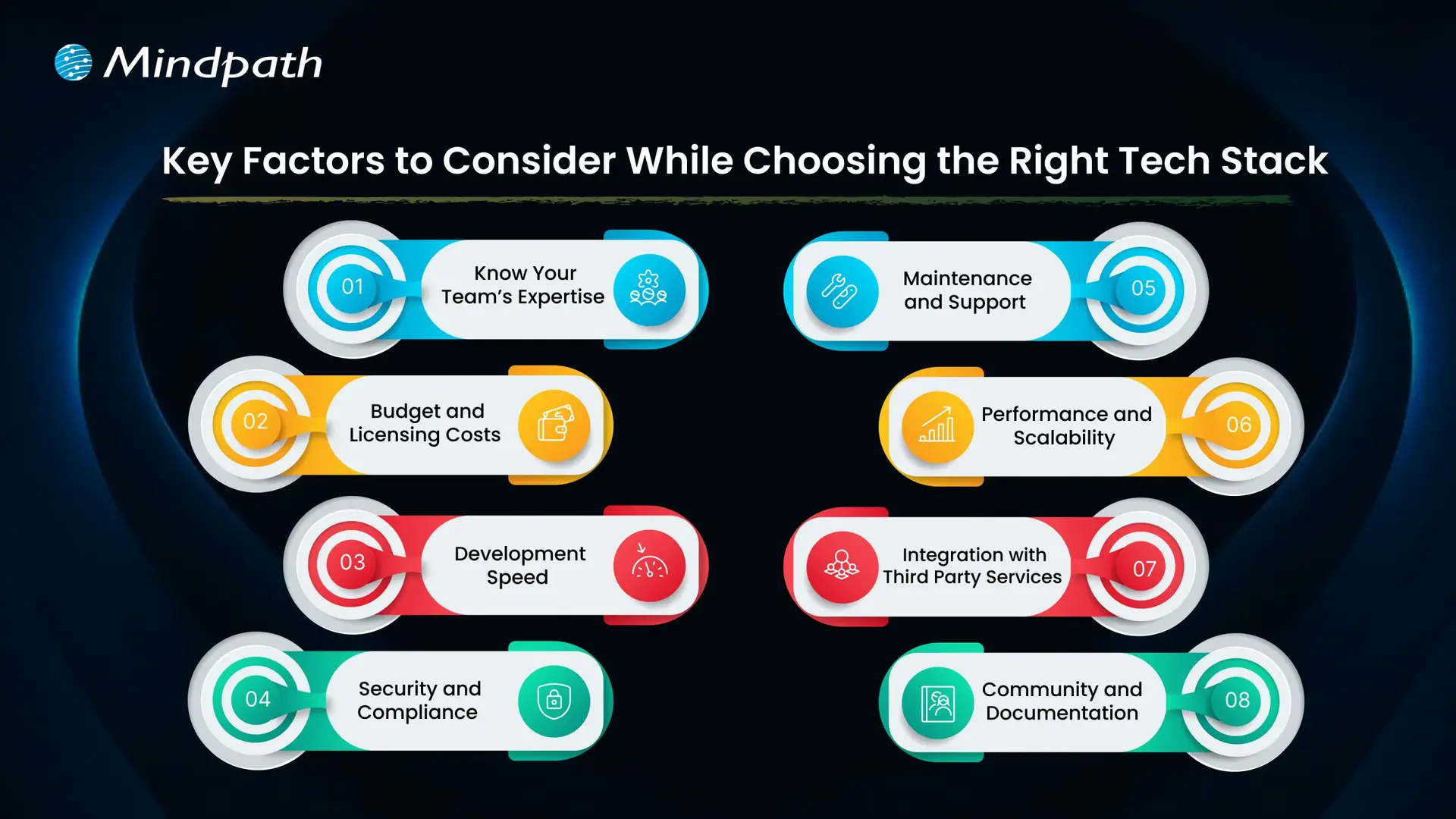
Choosing the right tech stack for web development is one of the most important things you’ll do to ensure the success of your project. The tools and technologies you decide to use will dictate how your application performs, scales, and is kept secure. Here are some key factors to keep in mind while selecting the best tech stack for web development.

Key Factors to Consider While Choosing the Right Tech Stack

1. Know Your Team’s Expertise

Look at what technologies your team already knows well. Using familiar tools can help you develop faster and avoid extra training costs. Make sure the tech stack matches your team’s size and experience to keep the project on track.

2. Budget and Licensing Costs

Think about any licensing fees for paid tools and compare them with free, open-source options. Remember to plan for costs related to maintenance, updates, and security. Also, include cloud service expenses that may grow as your project expands.

3. Development Speed

Getting your product ready fast can be a big advantage, especially for new businesses. Choosing proven frameworks and useful libraries can help your team build features quickly. This saves time and lets you focus on improving your web app for users.

4. Security and Compliance

Prioritizing security is essential, especially if your application handles sensitive data. Choose a tech stack that supports robust security features and aligns with industry regulations. This will help protect user information and maintain compliance as your project grows.

Must Read: Application Security Best Practices 

5. Maintenance and Support

Choose technologies that have strong community or vendor support so you can get help when needed. A reliable tech stack with regular updates will make it easier to fix issues and improve your application over time. This helps you avoid unexpected costs and keeps your project stable in the long run.

6. Performance and Scalability

Make sure your tech stack can handle the speed and load your application needs. If you expect real-time processing or heavy traffic, choose tools that keep response times fast. This helps your web app run smoothly as more users come on board.

7. Integration with Third-Party Services

Check that your tech stack works well with the third-party services your app needs. Good API compatibility makes it easier to connect features like payments, analytics, or social media. This saves time and helps your app deliver a smooth user experience.

8. Community and Documentation

Choose technologies with an active developer community and plenty of shared resources. Strong documentation makes it easier for your team to build, test, and maintain your web application. This support can save time and help solve issues more quickly.

Wondering how your tech stack fits into the bigger picture of web app development? Explore our comprehensive Web App Development Roadmap for 2026 to see how each decision impacts your project’s success.

Top 8 Tech Stack Examples

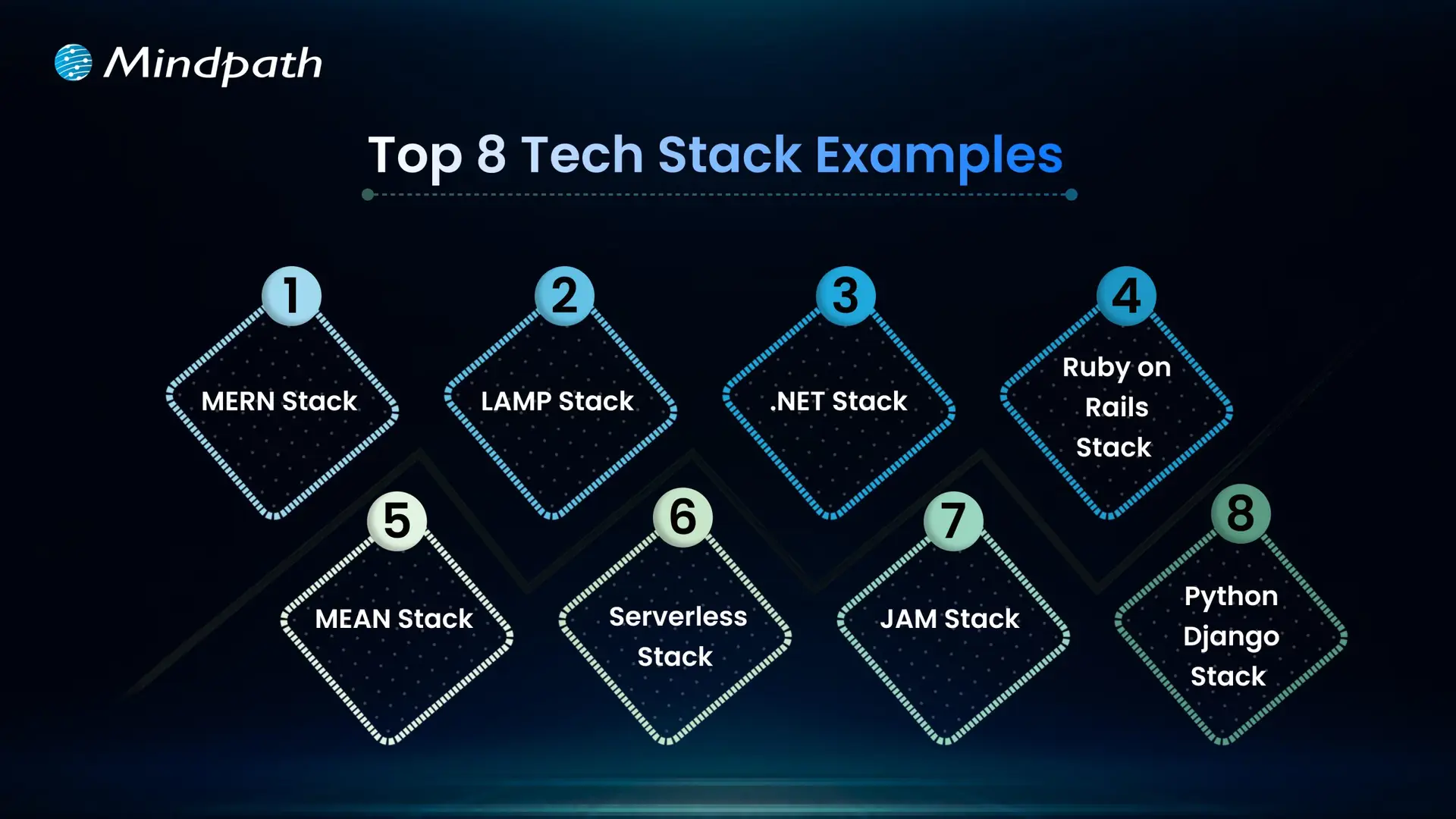
Exploring technology stack examples can help you see what works best for different types of projects. Here are some of the most popular examples to consider in 2026.

Top 8 Tech Stack Examples  

1. MERN Stack

MERN includes MongoDB, Express.js, React, and Node.js for flexible, dynamic sites. It’s widely chosen as a modern web application stack for responsive interfaces.

2. LAMP Stack

The LAMP stack combines Linux, Apache, MySQL, and PHP to build reliable, cost-effective websites. It is one of the oldest and most trusted web stacks in use today.

3. .NET Stack

The .NET stack is known for secure, large-scale enterprise applications. Many companies choose this web dev stack for its strong integration with Microsoft tools.

4. MEAN Stack

The MEAN stack uses JavaScript across MongoDB, Express.js, Angular, and Node.js. This tech stack for web development is popular for real-time and single-page apps.

5. Ruby on Rails Stack

Ruby on Rails offers a simple, clean approach for rapid web projects. This technology stack example is still a favorite for startups and MVPs.

6. Python-Django Stack

The Python-Django stack helps developers build powerful sites quickly. Many prefer this as a flexible web development stack with great community support.

7. JAM stack

JAM stack uses JavaScript, APIs, and Markup to deliver fast static sites. It is considered one of the best tech stacks for web development for content-heavy projects.

8. Serverless Stack

Serverless architecture removes the need to manage servers directly. It’s a growing example of a tech stack that cuts costs and improves scalability.

Not sure if your business really needs a custom web application? Discover the key signs that your business needs a custom web application that indicate it’s time to invest in a tailored solution for your needs.

Need Help Choosing the Right Tech Stack for Your Web Project?

Selecting the right tech stack for web development shapes how well your application performs, scales, and adapts over time. By knowing your goals, team strengths, and key factors like security, costs, and integrations, you can make informed choices that save you time and money. A thoughtful approach will help you build a reliable, future-ready web application that supports your business growth.

At Mindpath, we help you build secure, high-performing web applications with the best-fit tech stack for your needs. Our experts offer end-to-end web application development services, covering design, development, testing, and support. We make sure your solution stays flexible, scalable, and easy to maintain as your business grows. Let’s create a web app that works for you.