Hiring React Developers: The Ultimate Checklist for Success

Join our Newsletter!

Featured Posts

Support Is One Click Away

Home

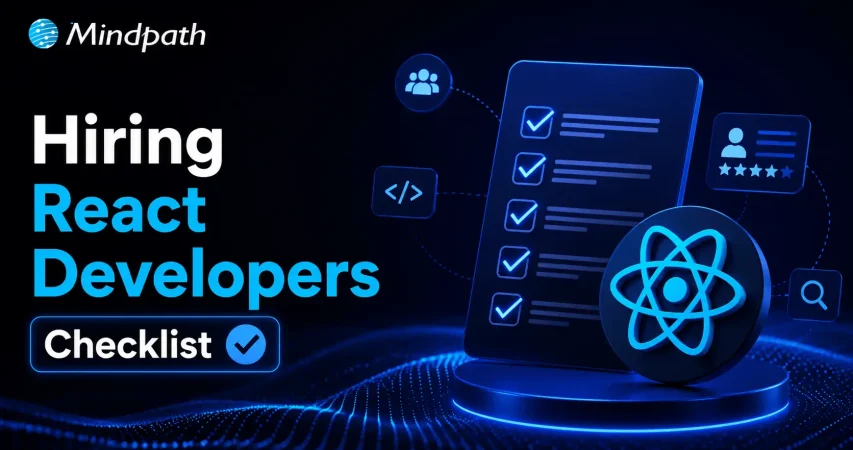
Hiring React Developers: The Ultimate Checklist for Success

Hiring React Developers

Hiring React Developers: The Ultimate Checklist for Success

Are you ready to take your project to the next level with top-notch React developers? But how do you ensure you’re hiring the right talent? With so many factors to consider, finding the perfect React developer can be overwhelming. In this blog, we will explore the key considerations before hiring the perfect React developers which can be beneficial for your project.  

React is a popular technology for developing websites and web applications. It is a JavaScript library that assists developers in creating user interfaces, which are the components of a website or app that users interact with. React makes it easy to create and manage interactive components like buttons, forms, and menus. It enables developers to create these features in a modular manner, allowing them to reuse and change portions of their website without beginning from scratch. 

React developers are important because they specialize in designing dynamic and efficient user interfaces for websites and applications. Their proficiency with React, a popular JavaScript package, allows them to create highly interactive and responsive elements that improve the user experience. React developers can employ React’s modular architecture to quickly manage complicated data and ensure smooth performance, making applications easier to update and maintain. Their ability to work with other technologies and frameworks, like Flux and React Native, broadens their effect, allowing them to contribute to web and mobile projects. 

So, let’s dig in to explore the key considerations to make your hiring process smooth and successful! 

Key Considerations Before Hiring React Developers

1. Deep Knowledge of ReactJS Basics

When hiring React developers, make sure they have a thorough knowledge of React’s key features. They should be conversant with JSX, which allows them to seamlessly combine HTML with JavaScript to create components. It is also essential that they grasp the Virtual DOM, which is a technology that allows React to refresh web pages rapidly by handling changes effectively.  These abilities are vital because they allow developers to construct quick, dynamic websites and apps. Make sure the developer is familiar with these aspects in order to efficiently manage the demands of modern web development. 

2. Proficiency In HTML/CSS

When hiring a React developer, make sure they are familiar with HTML and CSS. They should be able to write HTML tags to structure web pages and use CSS to design them. Understanding concepts such as the box model and flexbox is essential for layout and design. 

They should also understand how to utilize a CSS reset to ensure that styles appear consistently across various browsers, as well as how to use media queries to make websites look appealing on all platforms, from phones to desktops. An excellent React developer must understand these fundamental front-end abilities in order to create well-designed and effective websites. 

3. Strong JavaScript Skills

A React developer must be proficient in JavaScript, as it is the fundamental language used in React. They must be able to generate reusable components, which are critical for developing efficient and maintainable user interfaces. Strong JavaScript skills also entail understanding how to manage application state, execute asynchronous processes, and interact with various front-end frameworks and tools. Mastery of these JavaScript foundations enable a React developer to create robust, engaging, and high-performance websites and apps. 

4. Expertise In Writing Clean Code

A React developer should excel at producing code that is straightforward and understandable. Well-organized and simple code not only speeds up development, but also makes it easier to detect and correct mistakes. Clear coding conventions guarantee that when the project is passed on to another developer or team, they can easily comprehend and work with the current codebase. This is essential for sustaining and expanding the project over time. Clean coding techniques also assist in reducing technical debt, improving team cooperation, and ensuring that future upgrades or alterations may be deployed efficiently without creating new issues. 

5. Experience With ReactJS Workflows

A React developer should be familiar with data structure frameworks and processes such as Flux or Redux. These technologies are essential for managing application state and complicated data relationships, particularly in large-scale or dynamic applications. Flux and Redux enable to simplify data flow and manage state changes and asynchronous updates. 

Understanding these routines is essential but developers must first master the fundamentals of React. A solid React foundation guarantees that they can successfully integrate and use these advanced tools. Mastery of data management libraries helps the developer’s ability to develop strong and scalable applications, as well as overall code quality and maintainability. 

6. Familiar With REST APIs

Many applications require frontend components to be integrated with external data sources, therefore React developers must be familiar with REST APIs. A REST API enables developers to link React apps to back-end systems and get or transmit data such as user information, goods, or content. Understanding how to communicate with APIs is essential for creating dynamic, data-driven apps. 

A React developer should be familiar with HTTP request methods such as GET, POST, PUT, and DELETE, which are often used in REST APIs. They should also understand how to handle answers, failures, and data formats like JSON. A strong understanding of REST APIs enables developers to effectively connect their React code to other services and databases, resulting in a seamless user experience. 

7. Experienced With Unit Testing and Tools

Experience with unit testing, Git, GitHub, and other React developer tools is essential for effective development. Many firms use Git and GitHub to store and maintain their work, therefore React engineers must be familiar with these technologies. Daily development tasks include change tracking, branching, code merging, and resolving merge conflicts. 

Unit testing also guarantees that each component of the code functions as intended, which aids in the early detection of errors and the maintenance of code quality. Developers that are familiar with unit testing technologies such as Jest or Mocha can validate their work more effectively, resulting in more dependable and stable apps. Together, these technologies serve to shorten the development process and promote communication, resulting in more efficient project workflows and higher-quality output. 

Hire ReactJS Developers at Mindpath

At Mindpath, we make it simple to engage experienced ReactJS developers for your project. Our method is straightforward, ensuring that you receive the greatest personnel and outcomes. From understanding your requirements to providing ongoing assistance, we are with you every step of the way. This is how it works: 

1. Requirements Gathering

Start by contacting us to discuss your project’s goals and needs. We’ll review your requirements and create a detailed plan that includes our approach, timeline, and estimated cost. 

2. Shortlist The Right Talent

We carefully select ReactJS developers who are a perfect match for your project. You can interview and choose the developers who best fit your needs. 

3. Project Kick-off

Once your team is ready, we kick off the project with a clear plan and timeline. Our team stays in close contact, providing regular updates and making sure everything aligns with your vision. 

4. Ongoing Support

We continue to support you throughout the development process and even after the project is done, ensuring that all your goals are met, and the project runs smoothly. 

Wrapping Up!

Finding the right React developers is essential for creating dynamic and efficient apps. Skilled developers specialize in React.js, JavaScript, HTML/CSS, and the tools required for seamless integration and performance. Mindpath ensures that you have access to the best React expertise, resulting in clean code, scalable architecture, and optimized user experience. With the correct Mindpath team, your project is positioned for success, guaranteeing that web applications match the highest modern development standards. 
Ready to elevate your project with expert React developers?

Mindpath brings top-tier talent to deliver high-performing, scalable solutions.

Related Post

Discover the latest DevOps trends to enhance collaboration, streamline processes, and drive business success.
Explore emerging technologies like robotics, AI, and cybersecurity innovations and driving future success for businesses.
Discover how integrating AI into web development can enhance user experience, improve efficiency, and drive innovation.

Related Post

Web design trends

In 2026, website design is all about going beyond the conventional approach. Web designers are now exploring more options, embracing a combination of user-centric, authentic, and bold web design trends. Well, the goal is to craft a website that is not just beautiful, but also interactive, human-centric, and memorable. 

As technology advances and expectations of users evolve, staying ahead of new trends in web design is crucial for businesses to stand out. Whether you are optimizing your local business site or creating a new one, these top web design trends in 2026 will surely trigger ideas and enhance your digital experience. Keep reading to explore some leading web design trends that are set to define modern websites with Mindpath. 

If you are looking to implement these latest modern web design trends in your business, you require expertise. Mindpath offers web development service that helps you stay ahead of your competitors and deliver a website tailored to your business needs by turning your ideas into reality.

Focus On Smart Design For A Smarter Web

In 2026, web design will no longer be a choice between personality and performance. It will be a combination of both. Designers are leveraging design systems and frameworks that offer super-fast load times without affecting brand storytelling and visual impact. 

This shift has created a new era where creative expression and technical precision go hand in hand. Websites are getting smarter, emotionally resonant and leaner, resulting in a digital experience where design creates a lasting impression and functionality drives engagement. 

Wondering who can bring these design trends to life? Discover our website design company blog to see how the right team can turn trends into impactful websites.

Let’s talk about the trends that businesses need to focus on to achieve designs that deliver. 

21 Web Design Trends to Consider in 2026

Trends in web design are driven by advanced technologies and a desire to develop sites that are highly functional, interactive, memorable, and have elements to showcase a brand’s identity authentically. From sustainable designs to hyper-personalized interfaces, here are 21 web design trends to consider. 

1. Expressive Fonts and Maximalist Typography

Typography is a major visual element in every website. Businesses can expect to see layered, bold, and oversized text that will be the centerpiece of a web page. Besides, web designers are now creating playful, custom typefaces along with high-contrast pairings for a powerful statement. 

2. Micro Animations/ Interactions

Small details can make a huge impact. Micro interactions can help reinforce actions and guide users. For example, button ripples, hover effects, form feedback, or loading indicators. These are subtle yet powerful and can enhance the overall user experience.  

3. Experimental Navigation

Are you still using dropdown and hamburger menu designs? Well, it’s time to take a break. 2026’s trending web designs focus on scroll-as-navigation, gesture-based, and radial navigation styles, increasing engagement. 

4. Brutalist Designs with Some Modern Twists

A reaction template-driven, overly polished designs, brutalism is back, but with a modern twist. This modern style features unpolished, raw elements, bold typography, subtle animations, and pops of color. This design can be an ideal way to add a unique attitude and authenticity to websites. 

5. Illustration-led Web Design

This is gaining popularity among web designers in 2026 for conceptual clarity, quick load times, as well as brand originality. Utilizing illustrations offers a visually engaging alternative to heavy images, making them an excellent choice for service-based websites. 

Also Read: Web Development Technologies

6. Immersive Scrolling

Most websites are now becoming cinematic due to the integration of scroll-triggered animations. As users move down pages, elements zoom or fade in, crafting a narrative-like or dynamic user journey. With this, you can make a simple scrolling into an immersive experience. 

7. Dark Mode and Custom Palettes

Dark mode has become a standard design, but designers are tweaking it to add more effects. You can now see custom dark mode and palettes that utilize rich grays along with muted tones, offering a more branded and sophisticated experience while reducing strain on the eyes. 

8. Monochromatic Design

It is a simple yet powerful visual approach that utilizes a single base color and its different tones, tints, and shades throughout websites. Such designs emphasize cohesion, elegance, and simplicity. The distraction factors will be less as it creates a unified aesthetic. 

9. Hyper-Personalized Interfaces

Inclusion of machine learning and AI in web design has enabled a new level of customization. Websites will adapt their layout and content to every user, providing them with dynamic content and tailored recommendations based on their browsing history.   

10. Sustainable Web Design Trends

In 2026, the focus will be more on developing environmentally-friendly websites. While designing and developing websites, developers would prioritize eco-friendly hosting providers, accessibility, and streamlined code. These things help lower carbon emissions related to the internet. 

Curious how AI is transforming modern web experiences? Explore our AI in Web Development blog to learn how smart features enhance usability and performance.

11. Sci-Fi Gaming and Futuristic UI Aesthetics

Website interfaces inspired by sci-fi films and games are getting popular.  How about HUD-style overlays, neon glows, glitchy transitions, etc.? These designs can create high-tech and bold digital experiences. 

12. Bento Grid Layouts

Influenced by the elegance of the Japanese bento box, this design utilizes a modular grid of boxes. These layouts offer an efficient and clean way to organize information in a structured way. These website layout ideas are an ideal option for complex content websites and portfolios. 

13. Neumorphism Web Design Trends

It combines flat and skeuomorphism design using minimal contrast and soft shadows for a monochromatic and clean look. It suits web apps but requires proper handling of UX to avoid usability problems. 

14. Power of White Space in Web Design

Emphasizing negative space in a web design can enhance focus and clarity by balancing content with open, clean areas. Strategic use of typography and spacing boosts readability, creates an intuitive experience, and guides user attention. You can consider Apple.com as an example. 

15. Custom Mouse and Cursors Interactions

Custom cursors can play a major role in branding. Designers use them to instill interactive flair and personality, with responsive shapes, sparkly trails, brand logos, and more. It may look simple, but it works well in making a website look unique. 

Must Read: Web Development vs Software Development

16. 3D Elements

Another popular modern web design that can make your site look stunning is the use of 3D elements. From interactive product demonstrations to full-screen 3D backgrounds, these elements add realism and depth, making your site more immersive and captivating. 

17. Smart and Dynamic Videos

Videos on websites are becoming ambient design elements. They are generally looped seamlessly, silent, and optimized for faster performance. By using videos on homepages, you can make the website engaging without reducing the site’s speed. 

18. Gamified Designs

When talking about 2026’s web design trends, we can’t ignore these designs. These designs add game-like elements to websites, like challenges, rewards, or points, enticing visitors to spend more time on websites. 

19. Combining Photos with Graphical Elements

Web designers are getting creative by combining photography with beautiful graphical overlays. For instance, elements like arrows, doodles, or collage elements can add a unique layer of creativity. 

20. Detailed Footers in Web Design Trends

Enhanced footers are now redefining web design and development trends. A footer has evolved from a basic contact section into a content-rich, dynamic section, playing a crucial role in brand storytelling. Check out the website of 360gardalife for inspiration. 

21. Collage-Like Scrapbook Layouts

These layouts create an asymmetrical, layered, and handcrafted feel. These designs mimic a scrapbook with text and images scattered in a compelling way. With it, you can add an artistic, human touch while avoiding those rigid grid systems. 

Planning a new web application for your business? Discover our Web App Development Roadmap blog to understand each stage and avoid common pitfalls.

Top Modern Website Design Examples

Are you searching for the best web design inspiration? Well, here are some modern website design examples you should check out. 

1. Stripe

Utilizes minimal UI, geometric shapes, and interactive visuals to craft a conversion-focused and sleek website.

2. Apple

The design combines 3D product previews, cinematic storytelling, seamless transitions, etc., for better user engagement. 

3. Spotify

Combines animated CTAs, dark mode, and bold colors to provide users with an immersive and personalized music discovery platform.

4. Mantis Pro

A perfect combination of high-contrast visuals, bold fonts and amazing layouts while emphasizing speed and performance. 

5. Datel

Includes layers, visuals, scroll animations, and modern typography that clearly highlight the brand’s product innovation and tech-forward approach. 

6. Velux

The design has interactive sliders, soft gradients, and natural imagery that help the brand support its vision, i.e., promoting sustainability.

These cool website designs clearly showcase how their functionality and design can be combined to craft memorable user experiences. 

Looking to make your website more engaging and user-friendly? Read about UI/UX Design Trends to learn what design elements boost interaction and retention.

Website Design Trends- More Innovations in the Future

Whether you are creating a new website or planning to revamp the existing one, here are some future-forward website design trends that you should consider. 

1. Voice User Interface

Voice search and commands integration streamline navigation and offer users hands-free browsing, enhancing accessibility.

2. AI-Powered Design

Various AI tools personalize content, optimize UX, and automate layouts, making a website faster, and smarter.  

3. IoT

Websites connected with smart devices can offer real-time data, personalized automation and remote-control features. 

4. Accessibility-First Design

Focus on inclusive designs to ensure easy access for every user, including people with disabilities, through keyboard navigation, alt text, and readable fonts. 

5. Minimalistic Design

The best web design utilizes strategic whitespace, focused content, and a clean layout to enhance readability, mobile performance while reducing load time

6. Integration of Blockchain

This will ensure enhanced security and transparency for identity verification and transactions on modern websites. 

7. 3D Visuals

3D elements add visual depth, interactivity, and realism, especially for immersive storytelling and product showcases. 

Apart from these web design trends, collaboration between developers and designers is vital. This will help you ensure that your new website is not just visually great, but also secure, high-performing and stable. 

Looking for the right team to bring your web ideas to life? Read our Website Development Company blog to see what to look for before hiring.

Create Web Designs that Move your Business Forward

The future of web design is an exciting combination of purpose, interactivity, sustainability, and authenticity. By incorporating these 21 web design trends 2026, businesses can craft a website that will not just look incredible, but also create an effective and engaging experience. 

For businesses looking to translate trending website designs into a visually appealing and high-performing website, partnering with an expert is crucial. This is where they can count on Mindpath. We offer web development services that integrate advanced technologies, a customer-centric approach, bespoke web design solutions, and follows the latest web development trends to create websites that every business needs. Let us craft digital experiences for businesses that engage, inspire, as well as convert. 

role of vector database in ai application

Have you ever thought to yourself about how AI can interpret images, voices, or texts so accurately? Well, it is due to the rapid growth of the role of vector databases in AI applications. Standard databases do a good job of storing structured data, while much of AI work involves dealing with complex and unstructured information. Vector databases provide methods for storing and comparing information which allow machines to recognize patterns, context, and meaning much faster and with higher accuracy.

As AI systems become more intelligent, the demand for methods to support thinking beyond the simple data is also increasing. Vector databases provide that opportunity for AI to correlate information, learn from it, and generate more impactful results. They are quickly becoming the framework of modern AI innovation. In this blog, we will take a look at the power of vector databases in AI applications and why they are a necessary future element of intelligent systems.

Looking for a way to enhance personalization with the help of AI in your apps using a vector database? Explore Mindpath’s AI development services, which provide expert guidance and knowledge on how to maximize the value of the vector database to elevate your AI capabilities.

What is a Vector Database for AI?

A vector database is a specific type of database that enables storing and searching for data represented as vectors. Vectors are sets of numbers that represent the meaning or features of data such as text, images, and audio. Instead of searching for exact matches of data, a vector database searches for similar items, based on the context, illuminating AI’s capacity to perform at a more intelligent level based on context.

In basic terms, it works like the brain of AI systems that require memory and comparison. A vector database in AI enables quick and accurate data searches among very large and complex datasets. They are often used in applications such as chatbots, recommendation engines, and image searches where the response time and clearly related results mean everything.

Curious how AI chatbots can boost engagement and revenue? Discover AI Chatbot examples to learn how vector database-driven intelligence improves customer interactions.

How Does a Vector Database Work?

Vector databases assist artificial intelligence to comprehend and look through data in terms of meaning rather than precise words. Data is stored as numbers that illustrate what the data depicts. This helps AI connect ideas, find similarities, and give more accurate and useful results.

1. Creating vector embeddings

AI models process raw data to create vectors, which are sets of numbers that represent the meaning of the data. Vectors are mechanisms for AI to understand the connections among different data points.

2. Storing and indexing vectors

The vectors are kept within a vector database, which can be indexed with smart indexing methods, such as HNSW (Hierarchical Navigable Small World) or IVF (Inverted File Index). The role of vector databases in AI applications here is to store, group, and quickly find similar data when needed.

3. Performing similarity search

When the search begins, it will convert the query into a vector, which it begins to compare to other stored vectors. The database returns the closest elements based on meaning, so the AI can accurately and relevantly respond to the user.

Looking to optimize AI models without heavy computational costs? Explore Low-Rank Adaptation (LoRA) to discover techniques that improve vector database-powered AI efficiently.

Role of Vector Database in AI Application

The importance of the vector database for the AI application is becoming more necessary and prevalent as AI works with larger and more complicated data. Below are the main ways in which it helps and enhances the AI systems.

1. Smarter Search with Meaning

An AI application that utilizes a vector database can perform searches on meaning, rather than just a specific word. It finds things that are contextually similar in vector space; this is a lot more precise and much more human-like. This is incredibly useful, because the AI system can determine what users mean, not simply what they type.

2. Supporting Retrieval-Augmented Generation (RAG)

Vector databases provide large language models with access to current facts, knowledge, and data points from the public domain. The user’s inquiry is converted to a vector, which retrieves information from data similar to that represented in the user’s question. The information and materials retrieved help the AI provide responses that are elevated in relevance and made to be factually accurate.

3. Managing Complex Data Types

The role of vector database in AI application is to be able to manage unstructured data including images, text, and audio. A vector database does this by representing the unstructured data as numerical vectors that convey meaning. This allows AI to be able to compare unstructured data types more easily.

4. Enabling Fast Similarity Search

Vector databases leverage novel algorithms to identify similar items quickly, even among massive datasets. This capability is crucial for a number of artificial intelligence (AI) applications that depend on real-time results. The vector database in the AI application in this case is to return results quickly and still maintain precision.

 Also Read: AI Models

5. Improving Recommendations

Recommendation systems utilized vector databases to recommend similar attributes to items or products that users had liked before. AI uses patterns in the vectors and can customize content for each individual. This leads to a more meaningful and engaging experience for the user.

6. Powering Computer Vision

In computer vision, a vector database in AI helps identify and compare images or videos efficiently. It supports tasks like face recognition, image search, and visual content filtering. By finding visually similar vectors in AI systems it improves speed and accuracy.

7. Building AI Memory

The role of the vector database in AI applications is that it is a dependable memory mechanism for the AI agents. It strengthens the AI agent’s ability to store and retrieve information in support of reasoning and decision-making. Thus, vector capacity increases the multi-step capabilities of AI agents when solving complex tasks.

8. Hybrid and Refined Search

Vector databases have the ability to merge traditional filters like date or category with similarity search. This hybrid effort increases the precision and relevance of a search result. Users can quickly and clearly find exactly what they are looking for.

Wondering how AI systems focus on the most important information in complex datasets? Discover the Attention Mechanism to learn how it enhances AI performance in combination with vector databases.

Ready to Build Smarter AI Solutions with Vector Databases?

Vector databases are transforming how AI systems process and understand information. They enable faster searches, handle complex data, and make AI responses more meaningful and accurate. As technology continues to advance, the role of vector databases in AI applications will remain central to building intelligent and scalable solutions across industries.

At Mindpath, our AI development services combine the power of vector databases with advanced machine learning models to build smarter and more efficient systems. We help businesses create intelligent applications that learn, adapt, and deliver real results. Partner with us to design AI solutions that drive innovation and long-term success.

full-stack development for web projects 

Building a website today is about combining design, speed, and performance, all in one place. That’s where full-stack development for web projects plays a big role, as it encompasses everything from the look of a site to how it performs. As websites grow bigger and more complex, the full-stack development approach allows teams to work smarter rather than harder and deliver stronger solutions without any delay or confusion. This is why full-stack development is an increasingly popular way to develop truly distinct web projects.

By managing the front-end and back-end together, teams can react more quickly to updates and allow them to maintain their website without interruptions. In addition, it allows for greater control of the entire process, which leads to much better user experiences. Many companies are adopting this approach to develop websites that will grow and improve over time. Curious to know more? Well, in this blog, we will discuss how full-stack development is going to shape the future of web projects in detail.

Want to bring future-ready development to your business? Explore how Mindpath’s full-stack development services can help you stay ahead and provide end-to-end support.

Fundamentals of Full-Stack Development

Full-stack development means building both the front-end and the back-end of a website or app. The front part is what we interact with and see, such as buttons, images, menus, and links. The back part is what is going on behind the screen to make everything work: saving things, logging in, sending emails, etc. A full-stack developer knows how to build and manage both parts of a project, so it all works properly from beginning to end.

Companies want websites that are visually appealing, load quickly, and are easy to navigate. Most companies prefer hiring one full-stack developer rather than two separate developers (one for front-end and one for back-end) because this saves time and avoids paying for two separate developers. Full-stack developers can build complete web projects on their own. That’s why companies continue to search for strong full-stack developers that can do the full job and help make better websites quicker.

Planning to scale quickly? Learn why hiring a freelancer full-stack developer boosts your project.

Reasons Why Full-Stack Development is the Future of Web Projects

Full-stack development makes end-to-end web development more effective by combining both the visual design and the behind-the-scenes logic into one smooth process. As we move toward full-stack development in 2025, more businesses are choosing this method for its flexibility, speed, and complete control over web projects. Here are some key reasons why:

Top Reasons to choose full-stack development for web projects

1. Complete Technical Expertise

Full-stack development for web projects requires knowledge of both front-end and back-end technologies. Developers in this field work with HTML, CSS, and JavaScript for user interfaces and use tools like Node.js or Python for server-side logic. They also manage databases such as MySQL or MongoDB to store and retrieve data efficiently. This complete skill set makes full-stack development for businesses highly practical and reliable.

2. Optimized Development Efficiency

One of the key advantages of full-stack development for web projects is the ability to complete tasks faster without needing multiple specialized developers. It reduces development time, lowers project costs, and helps deliver results more quickly. Teams can avoid delays caused by handovers between front-end and back-end teams. That’s why many companies now prefer full-stack development to keep their projects on track and within budget.

3. High Project Flexibility

Developers skilled in full-stack development can switch between tasks easily based on what the project needs. They are comfortable using different tools and frameworks and can adjust to changes without slowing down progress. This flexibility is valuable when requirements evolve or when rapid updates are needed. It also supports the use of the best tech stack for web projects tailored to each client’s goals.

Also Read: Full-stack Development Benefits

4. Stronger Problem-Solving Capability

A full-stack developer understands how both the client-facing side and the server work together. This broad view helps in identifying issues quickly and finding effective solutions without back-and-forth between teams. It leads to fewer errors and a more stable final product. As a result, full-stack development for web projects brings stronger control and problem-solving to the entire build process.

5. Improved Team Communication

Fewer handoffs mean fewer communication gaps between developers and project managers. In full-stack development for web projects, one person or a small team handles most of the workflow, which keeps messaging clear and consistent. This improves team collaboration and speeds up approvals and fixes. It also supports better planning throughout the stages of full-stack web development.

6. Growing Market Demand

With digital needs growing, full-stack development has become one of the most valuable skills in the tech world. Companies are hiring developers who can handle everything from front-end to database, increasing demand across industries. It also offers room to grow in multiple areas, including project leadership and architecture, through understanding full-stack development trends. This rise is a direct result of businesses investing more in full-stack development for modern digital solutions.

Key Skills Required in a Full-Stack Web Project Team

A successful full-stack web project relies on more than just writing code. It needs the right mix of skills across the team, covering everything from design to database management for smooth and efficient web solutions. Let’s have a quick look at the skills:

1. Front-End Development

Developers need strong skills in HTML, CSS, and JavaScript to build the structure and style of web pages. Frameworks like React, Angular, or Vue.js help create dynamic and responsive user interfaces.

2. Back-End Development

Understanding server-side languages such as Node.js, Python, or Java is essential for creating logic and functionality. Frameworks like Express.js or Django support faster and more organized development.

Planning to build smarter web solutions? Discover how full-stack development with Node.js can streamline your digital growth.

3. Database Management

Developers should know how to use both SQL and NoSQL databases like MySQL, PostgreSQL, or MongoDB. Good database skills help manage, store, and retrieve data efficiently.

4. API Development

Designing RESTful APIs is important for connecting front-end and back-end systems. APIs must be secure, scalable, and easy to maintain in web projects.

5. DevOps and Deployment

Version control with Git and CI/CD tools helps automate code testing and deployment. Cloud platforms like AWS or Azure make it easier to launch and scale applications smoothly.

6. Soft Skills for Team Performance

Effective communication, adaptability, and time management help teams meet deadlines and solve problems together. These qualities support a smooth workflow in full-stack development for web projects.

Confused between full stack and traditional web development? Discover how smart businesses choose from full-stack vs traditional web development for the success of project. 

Full-Stack vs Front-End and Back-End: A Comparison Table

Understanding the difference between full-stack vs front-end and back-end roles helps in choosing the right approach for a web project. Below is a comparison table that highlights their core responsibilities and capabilities.

Full-Stack vs Front-End and Back-End A Comparison Table

Ready to Elevate Your Next Web Project with Full-Stack Development?

Full-stack development for web projects offers a balanced, future-ready approach that blends front-end creativity with back-end power. It simplifies workflows, speeds up launches, and ensures better user experiences. As digital needs continue to evolve, adopting full-stack practices gives businesses the edge to build smarter and scale faster with fewer roadblocks.

At Mindpath, we offer full-stack development services tailored to support your business growth. Our expert full-stack developers handle everything from user interface to server-side logic, ensuring smooth performance and cohesive functionality. With deep technical knowledge and a collaborative mindset, we deliver reliable, scalable, and efficient digital solutions that meet your unique project needs.