Key Features of Node.js for Backend Development

Join our Newsletter!

Featured Posts

Support Is One Click Away

Home

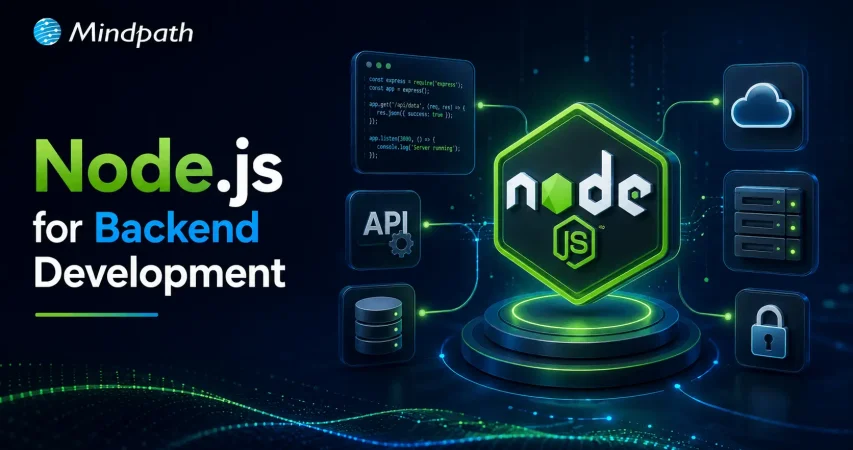
Key Features of Node.js for Backend Development

Top Node.js Features for Backend Development – A Complete Guide

Key Features of Node.js for Backend Development

Is Node.js still the best choice for backend development in 2025? With technology evolving rapidly, developers need efficient, scalable, and high-performance solutions. Node.js continues to power modern applications, but what makes it so relevant today? Let’s dive into the latest trends and see why Node.js remains a top choice for backend development this year!

1. JavaScript familiarity

If a developer is familiar with JavaScript on the front end, transitioning to backend programming using Node.js becomes considerably easier. Since they both speak the same language, there is no need to learn anything entirely new. This enables developers to work quicker and construct apps more seamlessly. It also saves time during training and avoids errors. Node.js allows frontend professionals to swiftly improve their abilities and handle full-stack development without a high learning curve.

2. Real-time applications

Node.js is ideal for real-time applications, due to frameworks such as Socket.IO. It enables immediate connection between users and servers, making services such as live chat, notifications, and real-time updates effortless. Node.js guarantees seamless and quick interactions across chat applications, online games, and collaboration tools. Users do not need to refresh their displays to receive new updates; everything happens immediately. This makes programs more interesting and responsive, which enhances the entire user experience.

3. High concurrency

Node.js is built to accommodate a large number of users simultaneously without slowing down. Its non-blocking I/O mechanism allows for the efficient processing of many requests without the need for queues. This makes it perfect for apps that experience high traffic, such as online gaming, streaming services, and real-time chat. Instead of generating a new thread for each user, Node.js handles connections efficiently, allowing applications to remain quick and responsive even when under heavy demand.

4. Microservices architecture

Node.js is ideal for creating microservices, which split a program into separate, independent services. Each service performs a specific purpose and operates independently, making development and upgrades easy. Since these services interact rapidly, applications remain adaptable and scalable. This method is ideal for complicated applications because it allows teams to work on separate portions without impacting the overall system. Businesses can utilize Node.js to create quick, maintainable, and extendable apps.

5. Lightweight and efficient

Node.js is lightweight and efficient, allowing it to operate quicker with less resources. Its compact footprint enables applications to complete tasks rapidly, making it excellent for dealing with large traffic without overwhelming the system. Node.js ensures that your app operates effectively even when it is heavily loaded by consuming less memory and CPU. This efficiency results in faster response times and better user experiences, all while keeping operating expenses down.

Ready to build fast, scalable, and efficient applications with Node.js? At Mindpath, we specialize in creating high-performance solutions using the power of Node.js. Whether you’re looking for real-time features, microservices, or high-concurrency handling, our expert team is here to help.
Contact us today to discuss how we can take your application to the next level with Node.js!

Related Post

Discover the ultimate guide to hiring Node.js developers in London. Learn about the skills, benefits, and cost factors involved in finding the right talent for your project.

Related Post

Drupal vs wordpress

At present, the debate of Drupal vs WordPress is more relevant than ever. WordPress is already powering a large number of websites all across the world. Gradually, Drupal has been strengthening its foothold in enterprise as well as government projects. This has given rise to an important question among businesses and professionals: Is Drupal better than WordPress, or is WordPress still the easier choice for users? 

The guide gives a comprehensive insight into both Drupal and WordPress. You need to get a holistic insight into these platforms so that you can choose the best solution that perfectly fits your needs.  An in-depth comparison between these novel platforms has been made, which can simplify your selection process and help identify the right CMS for your needs in 2025.

Want to build a CMS in your online presence that is flexible, user-friendly, and reliable? Our WordPress development services help you with custom solutions focused on delivering a secure and future-proof CMS tailored to your business needs.

WordPress at a Glance

In the year 2025, WordPress certainly remains the world’s most popular web content management system. Within a short span of time, WordPress has been powering over 40% of the web. The platform is known for its ease of use, along with a massive plugin library. The availability of flexible full-site editing tools makes WordPress perfect for professionals as well as small and medium-sized entities. 

Some of the unique attributes of WordPress that make it a useful CMS solution are the availability of a plethora of themes coupled with robust SEO plugin support. The existence of a thriving developer community allows users to get the optimum value by choosing WordPress.

An Insight into Drupal

Drupal has emerged as a powerful enterprise-grade CMS tool. You can use the free open-source web CMS for the purpose of building websites and web applications. Drupal has gained immense trust among government agencies and large organizations within a short period of time.

Drupal is known for its security and flexibility. Moreover, it is capable of handling a large volume of content and complex user workflows. These characteristics make Drupal a world-class CMS platform that is suitable to meet the needs of content-heavy platforms. It is time to dive deeper and look at the differences, as now you have clarity about Drupal WordPress

Comparison Between WordPress and Drupal

Are you wondering – Is Drupal similar to WordPress? The answer is Yes! However, even though WordPress Drupal are web content management systems, they have a number of differences. If you are planning on developing a website or web application, you need to have clarity on Drupal vs WordPress. Some of the main differences between WordPress and Drupal include

1. Ease of Use

When it comes to ease of use, WordPress is undoubtedly the clear winner in the year 2025. WordPress offers unmatched accessibility for beginners. Moreover, it can be scaled to handle complex projects. Some of the key features of WordPress include its Full Site Editing as well as the Gutenberg block editor. These elements make it easy for beginners to not only design but also publish pages without having to rely on coding. Furthermore, thousands of pre-built themes and plugins are available, which allow users to launch a site within a few hours.

However, Drupal has a steeper learning curve. You need to remember that its interface is less intuitive for non-developers. Moreover, configuring its modules requires technical knowledge. Experienced developers can leverage the tool, and it can offer them great flexibility and control.

2. Security

There exist differences between Drupal and WordPress when it comes to security. Security is undoubtedly one of the best features of Drupal. Drupal continues to be the ultimate CMS tool that is preferred by government websites and enterprise organizations. It not only offers a dedicated security team but also detailed advisories for minimizing vulnerabilities.

Even though WordPress can be considered to be secure at its core, it faces a greater risk. This is mainly because of its massive plugin ecosystem. Vulnerabilities may often arise from third-party plugins as well as outdated themes. Thus, in terms of security, Drupal is the clear winner out of the two CMS solutions. 

3. Performance

While making a comparison between Drupal or WordPress, the former shines when it comes to performance. Drupal delivers exceptional performance thanks to its advanced caching as well as API-first design. Moreover, its optimized architecture ensures that users can derive optimum value from the CMS tool. The entities that handle millions of pageviews can certainly rely on Drupal without having to sacrifice speed and efficiency. 

Over the years, the performance delivered by WordPress has improved. The improvement has been mainly because of the modern PHP versions coupled with block-based design. Similarly, the headless options have also contributed to improved performance. Users can derive immense value if they pair WordPress with strong hosting and caching layers. This can certainly help WordPress to scale well. However, users must bear in mind that the CMS tool typically requires more plugins as well as third-party optimizations.

4. Cost

A common question that one may have is: What is the cost of using CMS tools? The core software is free in the case of WordPress. Moreover, several themes as well as lug-ins are free or low-cost. Furthermore, the development costs are lower because of the availability of a large talent pool.  

The Drupal software is free. However, users need to remember that the development as well as maintenance costs are higher. Currently, skilled and talented Drupal developers are in short supply in the labor market. This automatically makes Drupal development more costly in comparison to WordPress. It is important that users bear in mind while choosing between WordPress and Drupal. 

5. Flexibility

Flexibility is another important dimension that you must take into consideration while comparing WordPress and Drupal. WordPress definitely serves as a more flexible tool for everyday users. However, Drupal is better in terms of flexibility if you are working on highly structured and enterprise-level sites. These CMS tools adopt a different approach, which influences their overall flexibility. 

WordPress mainly thrives on its plugin and theme ecosystem. These elements make it flexible for individuals as well as small businesses. However, Drupal excels in areas such as complex workflow as well as content modeling. The fact that it focuses on granular user permissions and enterprise-grade content management enables developers to tailor Drupal to meet their complex needs. 

6. SEO Capabilities

SEO is indispensable in 2025, and both CMS tools offer solid, strong SEO options. WordPress is known to have popular SEO plugins such as Rank Math as well as Yoast. They provide beginner-friendly tools along with AI-driven optimization tips for users. Another benefit in the case of WordPress revolves around the presence of mobile-first templates.

When it comes to Drupal, it lacks plug-and-play tools. However, it offers granular control over SEO, including URL structure and metadata. These are other features as well relating to multilingual optimization, as well as structured content management. These features are highly appealing to enterprise SEO teams who are in search of precision.

WordPress vs Drupal: A Quick Comparison

Now that you have gone through the various comparison factors to understand the differences between Drupal and WordPress, let’s have a look at the quick comparison table. The table below gives an overview of the differences between WordPress and Drupal. 

Features WordPress Drupal
Ease of Use User-friendly  Ideal for Experienced developers
Security Low Security High security 
Performance Efficient performance for small and mid-sized sites High performance for enterprise-scale sites 
Cost Less Expensive More Expensive 
Flexibility High flexibility for everyday users Ideal for highly structured websites 
SEO Capability Better for quick SEO optimization Better for advanced SEO strategies 

Which Is Better, WordPress or Drupal?

The answer regarding which is better – Drupal or WordPress depends on your specific needs as a user. Whether you are a professional or a business entity, you need to know – WordPress versus Drupal. The insight can certainly help you choose between the two robust CMS platforms. 

WordPress is better for users who are looking for a user-friendly CMS tool. It can act as an easy-to-use CMS solution that will allow fast setup. The rich plugin options that are available make it ideal for blogs and the marketing sites of small and medium-sized enterprises. 

On the other hand, Drupal is a top content management system for handling enterprise projects. You can choose the solution if you are looking for top-grade security, a custom workflow, and excellent multilingual support. At present, both WordPress and Drupal have established themselves as amazing CMS solutions for businesses and professionals.   

Final Words

When it comes to WordPress versus Drupal, you need to bear in mind that there is no one-size-fits-all solution. WordPress has been dominating the market for ease of use, as well as affordability. It is the ideal choice for blogs and small and medium-sized businesses. However, Drupal is built for high complexity. It offers unmatched security along with enterprise-level content management.

If you want to leverage WordPress to the fullest, you must certainly choose our WordPress development services. The experts at Mindpath ensure that you get immense value from the novel CMS solution. Whether you are a business owner or a professional, you must consider leveraging these solutions to witness your website flourish.

Generative AI for business

What if your business could automate creative tasks, generate innovative product designs, or even personalize customer interactions without manual effort? How are companies across different industries already harnessing the power of Generative AI to solve challenges and improve efficiency? Could Generative AI be the key to unlocking new levels of innovation and growth for your business? In this blog, we will explore the use cases of Generative AI that is shaping the future of business operations. 

Generative artificial intelligence (generative AI) is a form of AI capable of producing new content and ideas, such as conversations, stories, images, videos, and music. AI technologies aim to replicate human intelligence in nontraditional computer tasks such as image identification, natural language processing (NLP), and translation. Generative AI represents the next phase in artificial intelligence. You can teach it to understand human language, programming languages, art, chemistry, biology, or any other complicated topic. It leverages previously trained data to tackle new issues. For example, it can acquire English vocabulary and compose a poem using the words it processes. Your organization can utilize generative AI for a variety of applications, including chatbots, media production, and product development and design.   

So, let’s explore the use cases of Generative AI! 

Use Cases of Generative AI

1. Cybersecurity And Fraud Prevention

Many cybersecurity organizations are leveraging generative AI to improve their solutions for detecting suspicious activity on consumer networks and systems. These AI systems can accurately anticipate acts of fraud by analyzing transaction patterns and user behaviors. 

This technology enables firms to respond swiftly to possible attacks, which improves their entire security posture. Generative AI continually learns from fresh data, adjusting to evolving risks and assisting security teams in staying one step ahead of hackers. As cyber threats get more complex, using AI for fraud detection and cybersecurity is becoming increasingly important for businesses looking to secure their assets and retain customer trust.  

2. Drug Discovery

Generative AI is revolutionizing drug development by modelling complicated molecules and predicting their interactions faster than existing approaches. This technique has the potential to greatly speed up the development of new drugs. 

It enables pharmaceutical firms to forecast drug interactions, reuse current drugs, and develop personalized treatments based on a patient’s genetic profile. Furthermore, new AI-powered platforms are being developed to focus on healthcare and improve drug discovery procedures. Many in the biotech and pharmaceutical sectors think that generative AI will transform how new drugs are found and created, opening the path for speedier and more effective therapies. 

3. Marketing Assistance

Many experts feel that marketing support is one of generative AI’s primary capabilities. This technology can generate personalized marketing materials, analyze consumer data, and help with content production. It simplifies processes like content creation and social media administration, allowing marketing professionals to focus on more essential operations while saving time and money. 

Generative AI can also conduct market analysis by examining product feedback and forecasting client difficulties before they occur. Understanding client feedback is essential for product firms; they must know what their consumers like or dislike, predict developing trends, and recognize regional preferences. 

4. Coding Assistants

One of the most popular uses for generative AI is as a coding assistant. This technique can produce simple software code, freeing programmers to concentrate on more sophisticated tasks. 

Coding assistants help programmers stay focused by delivering solutions right in the code rather than requiring them to look for answers online. By leaving a remark, developers may let the AI finish their work, allowing them to keep their “flow state” and remain productive. Generative AI is particularly beneficial in web development since it can generate website code rapidly and effectively, decreasing the time and cost of upgrades. Even people with less technical knowledge may utilize technologies such as ChatGPT to create and implement code on their websites, making the development process more accessible. 

5. Digital Assistants

Many big IT businesses are supporting generative AI digital assistants, also known as copilots, despite some CIOs’ concerns about the return on investment. These assistants can search for information inside the organization, prepare papers and PowerPoint presentations, and summaries email threads and video conversations. They can also produce supply chain documentation, such as supplier quote requests. 

Some videoconferencing programs now include transcription and summary features, while independent applications can do similar duties. Grammarly, for example, may help you repair faults in grammar, spelling, and punctuation. Digital assistants can also be adapted to individual needs. For example, if a corporation routinely acquires delicate chemical or biological components, generative AI can add appropriate handling instructions to the purchase order. 

6. Business Process Enhancement

Generative AI is proving to be very effective in improving business processes within organizations. Companies are increasingly utilizing this technology to boost efficiency in workflows that are vital to their operations and customized for their respective sectors. In industries such as banking and insurance, some organizations are using generative AI to assist underwriters in appraising prospective clients.  

This method allows underwriters to work more effectively and conduct faster, more accurate risk evaluations, which is essential for the success of fintech businesses that rely on prompt funding decisions. Generative AI successfully empowers professionals, allowing them to focus on more strategic duties and increasing overall productivity. 

7. Advanced Chatbots

While simple chatbots that recognize words and phrases have been available for a while, modern chatbots powered by generative AI can conduct more lifelike conversations and handle a broader variety of client demands. Generative AI for language and AI agents is gaining popularity as a top emerging technology. These smart chatbots are intended to handle client enquiries more efficiently, resulting in considerable cost savings for enterprises. 

Although there are worries about inaccuracy, particularly in how they process requests, the impact of minor errors is frequently minimal. This enables businesses to improve customer service while successfully controlling related risks, making sophisticated chatbots an important tool in customer care. 

Generative AI Services at Mindpath

Mindpath offers generative AI services to help organizations improve their operations and promote innovation. We create compelling content, analyze massive datasets for important insights, and provide intelligent chatbots for effective customer care. We also priorities personalizing client experiences based on individual preferences and automating repetitive chores to free up your team’s time. By utilizing our generative AI solutions, you may enhance your business processes, save time, and remain competitive in today’s fast-paced marketplace. 

Final Note

Generative AI is changing the way organizations function by offering creative solutions that increase efficiency, creativity, and consumer relationships. By automating monotonous operations, personalizing experiences, and providing strong analytical tools, generative AI allows organizations to focus on strategic goals and achieve higher success. As businesses across sectors continue to use the possibilities of this technology, they are not only tackling present difficulties but also opening new avenues for development and innovation. Embracing generative AI might be the key to being competitive in today’s quickly changing industry. At Mindpath, we are dedicated to assisting your company in fully utilizing generative AI, ensuring that you remain at the forefront of your industry. 

Is your business ready to embrace the power of generative AI?

Mindpath offers tailored AI services to help you stay ahead in your industry.

Discover how Generative AI for business is revolutionizing efficiency, driving innovation, and enhancing customer experiences.
AI and Cloud Computing
Ever wondered how combining AI with cloud computing can transform your business? What if you could harness these technologies to boost efficiency, security, and innovation? Curious? In this blog, we will explore the powerful synergy of AI and cloud computing, uncovering the key benefits, best practices, and how Mindpath’s solutions can drive your success.  Artificial Intelligence and cloud computing are very much interlinked, not least because cloud companies were among the first to make significant use of AI to research ways of improving their services. AI works well through making enlightened decisions based on the rules laid down within an IT system. This means cloud providers can easily automate lots of activities inside their big data centers: management of services, detection of errors by watching patterns, cyberattacks, and fraud. These AI capabilities can enable cloud companies to efficiently deliver services to thousands or millions of customers at this enormous scale. Cloud providers automate systems for delivering IT services and software applications efficiently and at low cost using Artificial Intelligence. Artificial intelligence sets up, manages, and optimizes large cloud systems. As more businesses want to use AI, especially new tools like generative AI, cloud companies are ready to support them.   Let us dive deep to explore the benefits of Artificial Intelligence in cloud computing, some best practices as well as how Mindpath can help accelerate AI in cloud computing! 

Benefits of AI in Cloud Computing

1. Scalability

AI enhances scalability by automating a variety of processes, allowing cloud providers to operate huge data centers with flexible scalability that would be difficult to achieve if everything was manually managed. This implies that cloud providers may easily scale capacity up or down to meet demand, all without requiring human interaction. Cloud users across various industries, including marketing, shipping, and healthcare, benefit from this efficiency too. AI enables these organizations to easily scale up their operations with fewer workers, making it simpler to handle rising workloads or extend services as needed. This enables firms to expand and adapt more quickly and efficiently. 

2. Improved Security

AI plays an important role in improving security by constantly monitoring networks and users inside a well-designed data security architecture. It looks for changes that might suggest a concern, such as possible threats or unusual conduct. Unlike humans, AI can quickly and completely analyze massive volumes of network data, discovering problems faster and more efficiently.

3. Enhanced Productivity and Efficiency

AI excels at dealing with complex or time-consuming activities that humans struggle with. Businesses may use AI-powered systems to do tasks such as document management, package sorting, invoice matching, and document summarization (such as legal briefs) far quicker and more accurately than people can. This increase in efficiency enables employees to focus on more difficult activities that need human judgment, creativity, and relationship-building, so increasing total productivity. 

4. Cost Effective

AI reduces expenses by completing complicated jobs faster and with fewer people engaged. This encompasses IT administration, data security, and commercial operations such as automated help desks. Customers may use AI to modify their cloud use based on their changing demands, which saves them money. Customers may grow more loyal when they see these savings, particularly to cloud providers who provide clear and transparent invoicing. When current customers utilize more cloud services, suppliers may make more money than if they were continuously recruiting and onboarding new consumers. 

5. Cloud Management

AI allows cloud services to run more efficiently at scale by automating numerous IT administration chores. For example, AI can handle service provisioning and scalability, detect and avoid errors, and protect against cyberattacks, all with minimum human intervention. Additionally, AI simplifies tracking service consumption and billing, as well as workload monitoring and management for clients, making these procedures more scalable and manageable. 

6. Personalization

AI’s powerful pattern recognition and observational capabilities help businesses, particularly cloud providers, to obtain a better understanding of their customers’ behavior and preferences. This enables organizations to provide more personalized services and suggestions, improving client happiness, retention, and income. 

Curious how AI can transform your cloud strategy?

With Mindpath’s expertise, we turn your vision into reality, optimizing your systems for exceptional results. 

Choose Mindpath for Accelerating AI in Cloud Computing

When it comes to integrating AI and cloud computing, Mindpath stands out as a top alternative for companies looking for ways to unlock the potential of these powerful technologies. Here’s why Mindpath is the best partner for boosting AI in cloud computing: 

1. Experience in AI and Cloud Integration

Mindpath has years of expertise in both AI and cloud technologies, allowing a smooth integration that leverages on the strengths of both domains. Our team excels at implementing powerful AI algorithms and machine learning models in cloud environments, hence improving performance and driving innovation.

2. Improved Security and Compliance

Security is a significant priority for Mindpath. We use strong cloud security methods to secure your data and AI models. From identity and access control to continuous monitoring, our security methods guarantee your cloud environment is secure and meets industry requirements.

3. Flexible Solutions for Growth

Your demands will change as the company expands. Mindpath’s AI and cloud solutions are designed to expand with your company, allowing you to modify resources and capabilities as needed. This scalability enables you to manage larger workloads and grow your operations while maintaining performance.

4. Established Track Record

Mindpath has a proven track record of successfully completing AI and cloud projects. Our case studies and customer testimonials show our ability to deliver major gains in efficiency, productivity, and creativity for firms across various sectors.

End Note

As AI and cloud computing grow, their synergy transforms company operations, resulting in unparalleled levels of efficiency, security, and creativity. Embracing this strong mix enables businesses to effortlessly grow operations, increase efficiency, and cut costs, all while providing personalized experiences to customers. At Mindpath, we recognize the enormous potential of combining AI with cloud technologies. Our knowledge guarantees that you not only make use of AI’s full potential but also apply them safely and effectively in the cloud. Partnering with us allows you to seize new chances for growth and stay ahead in an increasingly competitive market. 

Ready to see AI and cloud computing revolutionize your business?

At Mindpath, we specialize in turning complex challenges into innovative solutions, driving efficiency and growth.