AI in Website Development: Understanding Its Benefits and Use Cases

Join our Newsletter!

Featured Posts

Support Is One Click Away

Home

AI in Website Development: Understanding Its Benefits and Use Cases

AI in Website development

AI in Website Development: Understanding Its Benefits and Use Cases

Curious about how artificial intelligence is reshaping the world of website development? How is AI automating routine tasks, enhancing user experiences, and streamlining design processes? What new possibilities does AI open up for creating dynamic and interactive websites? You are in the right place! In this blog, we will explore the impact of AI in website development and how it can be beneficial for your business. 

Artificial intelligence (AI) is a technology that enables computers to do intelligent things. AI allows computers to “see” and interpret images and words, such as reading a paper or recognizing a voice. They can also analyze data, provide helpful recommendations, and do a variety of other jobs. For example, AI can interpret a text from images or documents and convert it into meaningful data that organizations can use.  

Artificial intelligence (AI) is increasingly becoming the best option for website development. AI helps construct smarter, more effective websites by automating activities, personalizing user experiences, and analyzing data. From chatbots that help visitors to tools that adapt to user preferences, AI provides creative solutions that improve both functioning and consumer happiness. 

So, now let’s dig in to explore more about the impact of AI in website development! 

Benefits of AI in Website Development

1. Improved Communication

AI improves website development by increasing communication and trust. AI-powered chatbots and virtual assistants offer 24/7 customer service, answering questions and assisting consumers. This ongoing assistance boosts users’ trust and overall satisfaction with the website. Furthermore, AI handles many interactions with clients, reducing the effort of assistance employees and allowing them to focus on more complicated issues. 

2. SEO Strategies

AI substantially enhances SEO by analyzing search engine algorithms to determine which aspects influence rankings. It finds relevant keywords and recommends ways to improve your site’s exposure. AI systems can additionally track your website’s performance in real time, evaluate competitor’s strategies, and make targeted SEO improvements. By automating these operations, AI enables you to remain ahead of the competition, adjust swiftly to algorithm changes, and successfully increase natural traffic to your site. 

3. Reduce Human Errors

Artificial intelligence significantly decreases human error by automating many operations, making the development process more precise and efficient. For example, AI can automate testing methods to quickly uncover defects and performance issues that human testers may miss. This not only accelerates the development cycle but also guarantees that issues are identified and resolved sooner. Furthermore, AI can constantly monitor and analyze program performance, discovering abnormalities and recommending remedies before they become serious issues. By managing repetitive and error-prone operations, AI contributes to higher quality standards, improves software reliability, and minimizes the chance of expensive errors. 

4. Improved User Experience

AI improves the user experience and engagement by personalizing interactions to individual preferences. By analyzing visitor behavior and preferences, AI can customize content, suggestions, and user interfaces to each individual’s interests. This implies that consumers see the most appropriate material and offers, increasing their engagement and satisfaction. AI is also useful in developing dynamic and adaptable experiences. For example, it may change website layouts in real time based on user interactions or provide personalized product suggestions. This customization not only improves the site’s usability, but it also encourages users to stay longer and return more frequently. 

5. Enhancing Responsive Design

AI can improve responsive design by ensuring that websites perform seamlessly on a variety of devices and screen sizes. It enables developers to construct layouts that adapt to multiple screen sizes and dynamically modify information to match user preferences and device capabilities. This ensures that consumers have a reliable and engaging experience regardless of whether they are using a smartphone, tablet, or desktop. AI makes it easier to maintain high-quality design across all devices, hence increasing usability and accessibility. 

Want a website that stands out? 

Let Mindpath’s AI solutions transform your site into a dynamic, engaging experience.

Use Cases of AI in Website Development

1. Artificial Design Intelligence (ADI)

Artificial Design Intelligence (ADI) automates the process of creating e-commerce websites. It creates comprehensive websites, including everything from their appearance to their structure and content. ADI can design a website that exactly meets your needs and preferences by asking users a few basic questions and utilizing the vast quantity of data it has gathered. Whether you want a smooth, modern design or something more conventional, ADI can easily adapt to your needs and provide a website that matches your vision. 

2. Site Performance and Security Testing

Testing website code requires a lot of hands-on labor. Programmers must monitor test results, alter test settings, find appropriate test cases, and log changes with each test run. AI can speed up this process by automating basic testing and monitoring, reducing manual labor. This enables programmers to concentrate on solving more complicated challenges and enhancing site security. AI’s effectiveness in managing these duties ensures that websites are extensively evaluated for vulnerabilities and performance concerns, resulting in a more dependable and secure online presence. 

3. Real-Time Content Customization

To keep consumers interested, firms need to go beyond basic interaction and emails. Today’s customers desire information that is personal and relevant, indicating that a company understands their requirements. AI-powered dynamic content personalization enables this, even for a big number of clients. By analyzing data from many sources, AI can determine where each client is on their journey, learn their preferences, and customize marketing messages to their individual interests. This method promotes meaningful connections while increasing the chances of client retention and satisfaction. 

4. Code Optimization Assistants

Coding assistants are tools that allow programmers to create code more effectively by minimising the amount of typing required. Coding assistants do easier, repetitive duties, while professional software engineers handle innovative and complex ones. These tools can quickly produce common code snippets and functions, allowing programmers to focus on the more complex elements of their projects. Coding assistants help both experienced and inexperienced developers produce creative solutions by managing regular parts and streamlining the coding process. 

Website Development Services at Mindpath Powered by AI!

Mindpath uses the power of artificial intelligence to transform website development. Our advanced AI services are intended to improve every element of the process, from creating visually appealing and useful designs to assuring optimal performance and security. To accelerate development and create excellent user experiences, we provide AI-driven solutions like automated testing, dynamic content personalization, and intelligent coding assistance. Here are some of our services: 

1. Artificial intelligence

Our AI services improve website development by combining predictive analytics and machine learning to improve user experiences and expedite procedures. We automate complicated activities, give data-driven insights, and assist you in making strategic decisions, converting raw data into usable information to propel your website’s success. 

2. Business Intelligence

Our website development services transform data into meaningful insights that guide design and functionality decisions. We provide advanced data visualization, interactive dashboards, and performance analysis to help you plan your website strategy and increase its efficacy. 

3. Conversational AI

We utilize intelligent chatbots and virtual assistants to increase user engagement on your website. These solutions offer immediate assistance, manage regular chores, and employ natural language processing to create seamless, engaging experiences that increase user happiness. 

End Note

Artificial intelligence is more than just a trend; it is a game changer in website development. AI enables the creation of dynamic and engaging websites by automating regular operations, personalizing user interactions, and improving design processes. AI is transforming the way we develop and operate websites, from boosting communication with smart chatbots to optimizing SEO techniques and reducing human error. At Mindpath, we use AI to create smarter, more successful websites that match your specific goals and propel your organization ahead. 

Curious about AI’s impact on website development?

Partner with Mindpath to see how our advanced AI tools can boost your site’s performance and user engagement.

Related Post

Explore emerging technologies like robotics, AI, and cybersecurity innovations and driving future success for businesses.
Discover the benefits of a multi-cloud strategy for modern enterprises, including improved security, flexibility, cost savings, and risk management.

Related Post

The Complete Guide to Hiring Expert Node.js Developers in London
Hiring the right developer for your project is crucial, especially when it comes to complex web applications. If you’re looking for a solution that is scalable, high-performance, and capable of handling real-time data, Node.js might be the technology you need. But how do you ensure you’re hiring the best Node.js developers for your needs in a competitive tech hub like London? In this comprehensive guide, we’ll walk you through the essential aspects of hiring Node.js developers in London, what to look for in a candidate, and why London is an ideal place to find top-tier talent.

Why Hire Node.js Developers in London?

When it comes to building fast, scalable web applications, Node.js is one of the best frameworks available. Leveraging its ability to handle real-time data, build microservices, and manage high-performance APIs, many businesses are turning to Node.js developers to bring their vision to life. However, finding the right developers can be tricky. That’s where London comes in—a vibrant hub of innovation and tech talent.

Hiring Node.js developers in London gives you access to some of the most skilled professionals in the industry. These developers have a deep understanding of JavaScript and backend technologies, making them adept at creating modern, robust applications. Let’s dive into the benefits and considerations when hiring Node.js developers in this thriving city.

Key Benefits of Hiring Node.js Developers in London

1. Scalability and Performance

Node.js is known for its scalability and ability to handle large amounts of traffic. By hiring Node.js developers in London, you ensure your application is built to scale seamlessly. Whether your project involves real-time communications, an online marketplace, or a streaming service, Node.js can handle numerous requests simultaneously, making it ideal for high-performance apps. London’s developers are adept at building lightweight, fast, and scalable systems capable of supporting thousands of concurrent users without affecting performance. This makes it an excellent choice for businesses anticipating rapid growth or dealing with high user interaction.

2. Cost-Effectiveness

While London is known for its high living costs, it offers a wealth of skilled professionals at competitive rates. Node.js developers in London are highly efficient, and their expertise helps reduce development costs. Since Node.js operates on a single-threaded event loop, it reduces the need for additional servers, thus lowering infrastructure costs. Moreover, London-based developers are experienced in building scalable solutions, saving your company from costly redesigns or performance issues down the road.

3. Faster Development Cycles

One of the biggest advantages of Node.js is its speed. Because it allows developers to work on both the frontend and backend with JavaScript, development cycles are streamlined. Node.js also has a non-blocking architecture, which allows developers to build apps that process multiple requests at the same time without delay. This is especially beneficial for companies that need to get products to market quickly and react to changing business conditions.

4. Access to a Diverse Talent Pool

London boasts a large and diverse community of developers skilled in Node.js. The city’s reputation as a tech hub means that you can easily find developers with the right set of skills to meet your project requirements. Whether you need a single expert or an entire development team, London’s talent pool offers flexibility in terms of experience and specialization. Additionally, developers in London are well-versed in modern development practices like microservices, cloud computing, and API development, enabling them to tackle a variety of complex projects.

5. Expertise in Emerging Trends

London-based Node.js developers are often at the forefront of emerging technology trends. The city’s vibrant tech ecosystem ensures that developers are continuously learning and adapting to new tools and frameworks. Whether it’s serverless architecture, real-time applications, or the integration of microservices, London developers have firsthand experience in utilizing the latest technologies to build innovative solutions. Their deep knowledge of industry best practices ensures that your application will be developed with modern techniques, making it future proof.

Factors to Consider While Hiring Node.js Developers in London

When you start the hiring process, it’s crucial to know what to look for in a Node.js developer to ensure you find the right fit for your project. Experience, technical skills, problem-solving abilities, and familiarity with modern development tools all play a key role in making the right choice. Additionally, understanding the local job market and legal considerations can help streamline the process. Here are some of the key factors to consider while hiring Node.js developers in London to ensure you hire the best talent for your business needs.

1. Strong JavaScript Foundation

Since Node.js is built on JavaScript, your developers must have a deep understanding of the language. Developers should be proficient in core JavaScript concepts like closures, promises, asynchronous programming, and event loops. A strong foundation in JavaScript will ensure that your project runs smoothly and that the code is efficient and easy to maintain.

2. Experience with Popular Node.js Frameworks

Node.js frameworks like Express.js, Koa.js, and NestJS simplify the development process and make it faster. These frameworks offer tools to build scalable and efficient applications with minimal effort. Developers with experience using these frameworks will be able to deliver high-quality results in less time. When hiring, ensure the developer is comfortable with at least one of these frameworks to ensure efficiency.

3. Database Management Skills

Node.js developers should have experience working with databases such as MongoDB, MySQL, and PostgreSQL. Knowledge of both SQL and NoSQL databases is essential for building scalable and efficient applications. Developers should be able to design, query, and manage databases to store, retrieve, and manipulate data securely and efficiently.

4. Asynchronous Programming Expertise

Asynchronous programming is a key component of Node.js development. Node.js is non-blocking, meaning that it can process multiple requests simultaneously without delay. Developers need to be well-versed in callbacks, promises, and async/await to handle concurrent processes effectively. This is particularly important for real-time applications that need to respond quickly under heavy traffic loads.

5. Collaborative and Adaptable

In addition to technical skills, collaboration is essential. Node.js developers need to work well with other team members, including designers, front-end developers, and stakeholders. The ability to communicate effectively and adapt to changing requirements will ensure that your project stays on track and meets deadlines.

What Skills to Look for While Hiring Node.js Developers in London

Finding the right Node.js developer requires a deep understanding of the technical expertise needed for building high-performance applications. A skilled developer should have strong proficiency in JavaScript, experience with Node.js frameworks, and knowledge of database management and API development. Additionally, familiarity with performance optimization and security best practices is essential. Here are the critical skills to look for while hiring Node.js developers in London to ensure you select the best candidate for your project.

1. JavaScript Fundamentals: A solid understanding of JavaScript fundamentals, such as closures, scopes, and asynchronous programming, is essential for any Node.js developer. Mastery of these concepts will lead to clean, efficient code and optimal application performance.

2. Experience with Node.js Frameworks: Developers should have hands-on experience with popular Node.js frameworks such as Express, Koa, and NestJS. These frameworks help streamline the development process and offer tools for building scalable, secure applications.

3. Database Management: Node.js developers must be proficient in managing databases such as MongoDB, PostgreSQL, and MySQL. A strong grasp of data storage and retrieval methods is essential for building high-performance applications.

4. API Development: Node.js developers should have expertise in designing and implementing RESTful APIs. This is essential for integrating different parts of your application and enabling communication with external services.

5. Asynchronous Programming: Developers need to be familiar with asynchronous programming patterns like callbacks, promises, and async/await. This is vital for managing concurrent processes and ensuring the responsiveness of your application, especially under heavy traffic conditions.

6. Security Best Practices: Ensuring the security of your application is paramount. Developers should be well-versed in security best practices, such as input validation, data sanitization, and secure coding techniques to protect against vulnerabilities like SQL injection and cross-site scripting.

7. Version Control: Proficiency in Git is essential for managing code changes and collaborating with other developers. Node.js developers should be familiar with Git workflows to ensure smooth project development.

How Much Does It Cost to Hire Node.js Developers in London?

The cost of hiring Node.js developers in London can vary significantly based on their experience, the complexity of your project, and the company size. Here’s a breakdown of what you can expect:

1. Experience Level

Junior Developers: Junior developers with limited experience typically charge £30-£70 per hour. They are well-suited for handling simpler tasks but may need guidance on more complex issues.

Senior Developers: Experienced developers with advanced skills and expertise charge £70-£150 per hour. They are capable of managing complex projects, leading teams, and solving technical challenges, which justifies their higher rates.

2. Project Complexity

The complexity of your project also plays a key role in determining the cost. If your project requires advanced knowledge in areas like cloud computing, microservices, or real-time systems, you’ll need developers with specialized skills, which can increase rates.

3. Company Size and Location

Larger companies based in central London typically offer higher hourly rates, ranging from £70 to £150. Smaller startups or companies located in suburban areas may offer lower rates, often between £30 to £70 per hour, depending on their budget and project scale.

Wrapping Note!

Hiring skilled Node.js developers in London can significantly enhance the performance, scalability, and reliability of your web applications. With a rich talent pool, competitive pricing, and expertise in the latest technologies, London offers a great environment for finding developers who can bring your ideas to life. By considering factors such as experience, technical skills, and project requirements, you can ensure that you hire the right developers for your next big project.

Ready to take your project to the next level? Hire skilled Node.js developers At Mindpath in London and bring your vision to life with high-performance, scalable applications.

Contact us today to build a future-ready solution tailored to your needs!

Discover the ultimate guide to hiring Node.js developers in London. Learn about the skills, benefits, and cost factors involved in finding the right talent for your project.
Devops vs devsecops

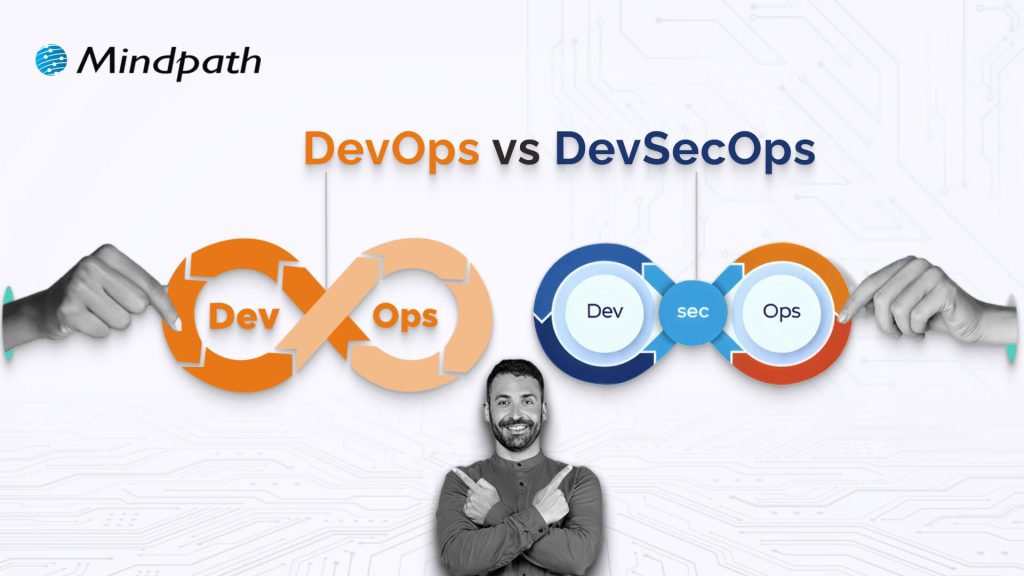
DevOps vs. DevSecOps is a topic that will often arise when companies look for better and faster software delivery. Businesses are looking to release applications and software faster than ever, but they are also mindful of the growing sophistication of security threats. So where can businesses find the balance of speed and safety? This is where the transition from DevOps to DevSecOps comes into play; the need for speed is balanced with more stringent security requirements.

In today’s fast-moving digital age, the speed of development plays an important role, but it’s hardly enough. In addition to wanting systems that develop software quickly, organizations want systems that will also withstand vulnerabilities at each stage. That is why there’s so much interest in DevSecOps. DevSecOps does not replace DevOps; it enhances it by using continuous security assessments and ongoing protection. A clear understanding of these differences allows businesses to make better choices that can balance innovation with resilience. So, keep reading further to know the difference between DevOps and DevSecOps in this blog.

Still unaware of how DevOps benefits your business? Get in touch with us to gain full insight into adopting DevOps services that makes your operations seamless.

What is DevOps?

DevOps brings together development and operations to deliver software faster and better-quality software. Its foundation is collaboration, automation, and continuous delivery. DevOps can help break down silos in an organization and execute on shared goals while realizing common objectives and reducing risk. It can also simplify processes, enable teams to become more efficient, and fulfill the goals of the technology department while keeping the goals of their customers and their company in mind.

Furthermore, it drives a cultural change that values accountability, empathy, and shared responsibility. With automation, fast iterations, and rapid feedback, businesses are able to deliver secure and reliable software. In addition to this, not only does the process encourage innovation and creativity, but it also gives businesses flexibility and resilience in a competitive marketplace.

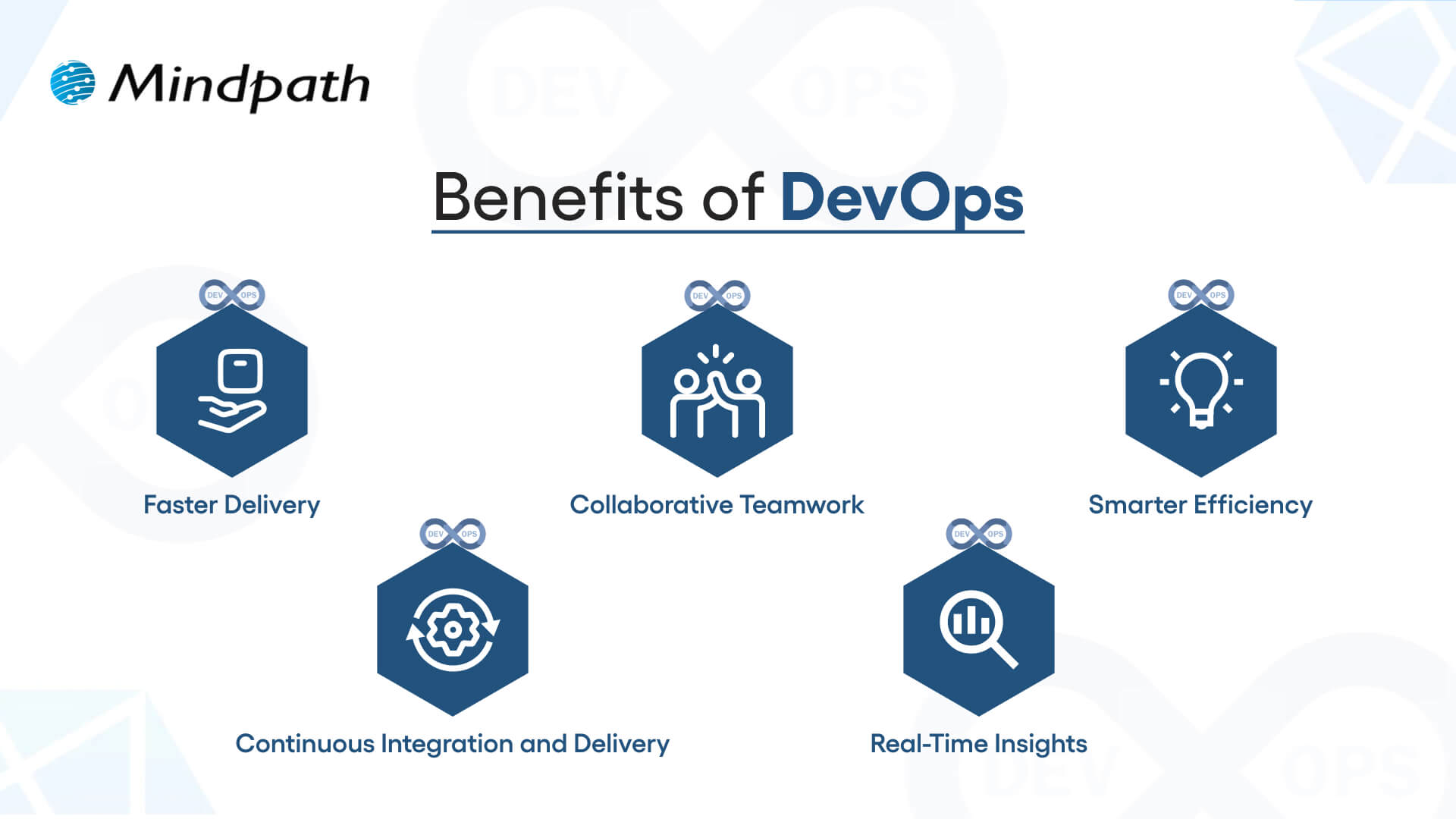
Here are some of the benefits of DevOps: 

1. Faster Delivery

Development cycles can go a lot quicker with automation and simplified processes. This enhanced delivery allows more frequent releases and decreases time to market.

2. Collaborative Teamwork

Development teams, operations, and other teams are all working toward common goals. Good team collaboration eliminates silos and improves project quality.

3. Smarter Efficiency

Automation eliminates repetitive tasks and optimizes workflows. Teams have the ability to save time and focus on activity that produces value, instead of spending time on manual processes.

4. Continuous Integration and Delivery (CI/CD)

Continuous integration and continuous delivery allow for reliable and consistent deployments. Your users can get new features and fixes fast and seamlessly.

5. Real-Time Insights

Monitoring tools enable instant visibility across the ecosystem. Teams can identify problems early, troubleshoot quickly, and improve performance.

These points explain how DevOps speeds up collaboration and delivery when comparing DevOps vs. DevSecOps, while DevSecOps extends an approach that has been inherently faster approach by adding stronger security practices.

What is DevSecOps?

DevSecOps is the process of integrating security into every single aspect of software development. It unites development, security, and operations teams so they can plan, build, test, and release applications together. In return, DevSecOps allows for faster, more reliable processes, ensuring that the software has security built in from the beginning of development.

To better understand the three pillars of DevSecOps, simply think of collaboration, automation, and continuous security. Collaboration ensures that everyone is sharing the responsibility, automation introduces automated security checks into CI/CD pipelines, and continuous security ensures that monitoring is continuous. With the three pillars of DevSecOps, organizations are able to create dependable applications while implementing continuous security measures to defend them against constantly evolving threats.

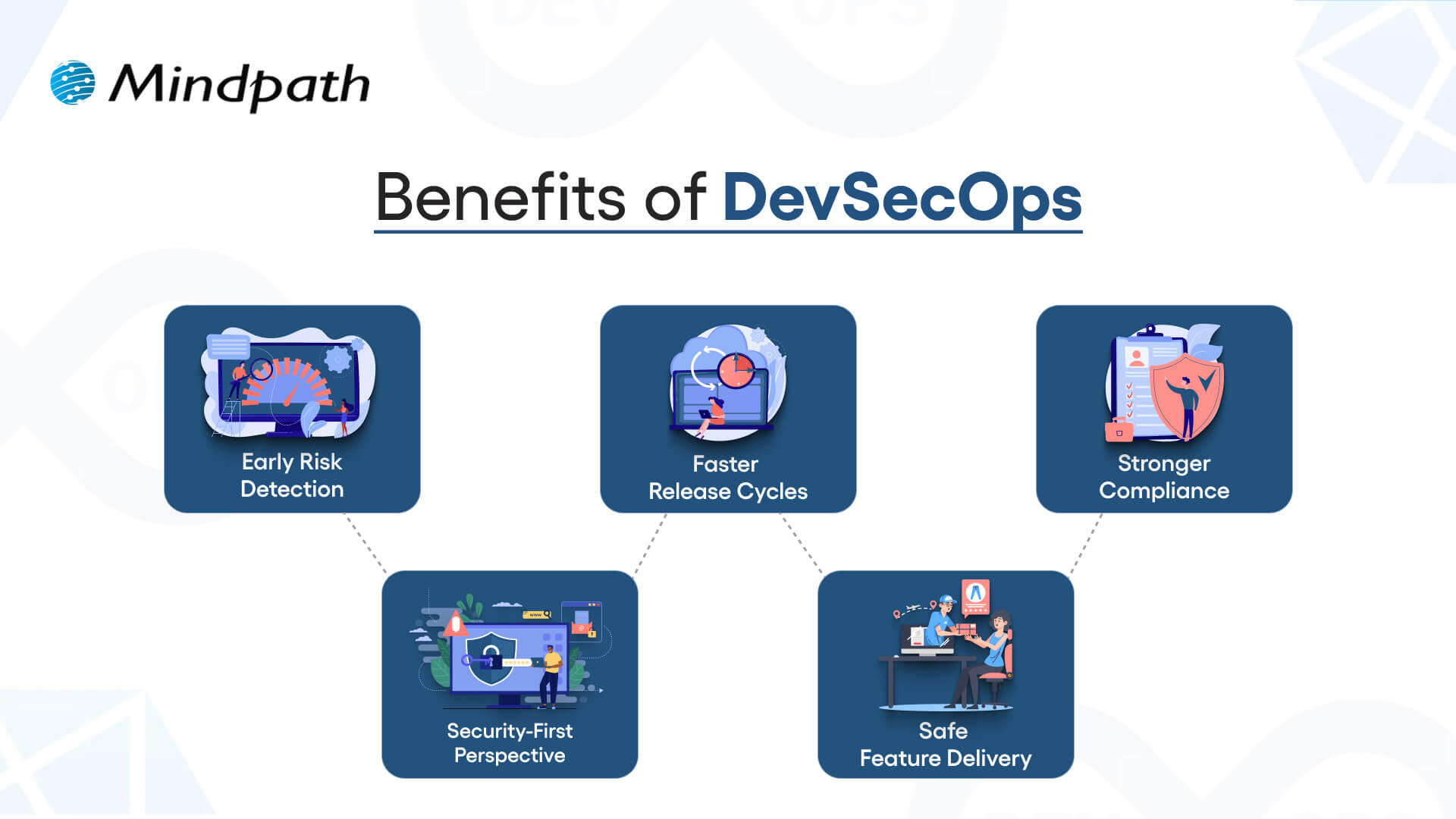
Here are the benefits of DevSecOps:

Benefits of DevSecOps

1. Early Risk Detection

DevSecOps allows for the identification of vulnerabilities during the development phase rather than at the end of the development process. Finding and remediating risk early in this way saves time and expense and means that users receive secure applications.

2. Faster Release Cycles

As teams can impact security testing in their workflow, delays are prevented, human error is removed, and developers get new features into the hands of users sooner.

3. Stronger Compliance

DevSecOps processing can assist software teams in meeting compliance obligations with strict regulatory guidelines. Automated checks and secure development practices ensure that data continues to be protected, while developers can be assured that they meet industry standards.

4. Security-First Perspective

Treating security as a shared responsibility, teams practicing DevSecOps have developers, security professionals, and operations staff collaborating to manage risks actively and ensure they minimize incidents throughout the development period.

5. Safe Feature Delivery

With DevSecOps, teams can deliver new functionality faster while also guaranteeing that security practices are undertaken throughout the development period. This can be one of the key differences in terms of DevOps vs. DevSecOps: how features are delivered.

DevSecOps vs. DevOps: Key Differences

DevOps vs. DevSecOps reveals how software teams value speed, teamwork, and security. While DevOps emphasizes faster delivery, DevSecOps enhances that process, making security a priority at every step of the development process.

1. Security Focus

The primary distinction between DevOps vs DevSecOps is security. DevOps puts movement between development and operations to speed up the delivery of software, but its security processes are usually significant afterthoughts. DevSecOps has security processes established from start to finish and considers them a core capability. By treating security as a core capability, vulnerabilities are eliminated upstream, so they are remedied before deployment.

2. Collaboration Culture

DevOps emphasizes collaboration between development teams and operations teams to promote continuous integration and delivery. Security is often treated as an independent effort, which creates holes in the development process. DevSecOps emphasizes the work of the security team interacting directly with developers and operations teams in every phase of development. This develops a culture of security being everyone’s responsibility.

3. Timing of Security

Conventional DevOps teams often include security at the final phase of the development cycle. If bugs occur towards the end of the process, they can delay the project significantly. DevSecOps reinforces timing by introducing a shift-left strategy with security at the beginning of the development process to build secure and reliable applications.

4. Tools and Automation

In contrast, when discussing DevOps vs. DevSecOps tools, the distinction is clear. DevOps follows automated processes for build, test, and deploy; however, normally, the security tools are still standalone. With DevSecOps, you use drive-by automated security scans, code analysis, and continuous monitoring in the CI/CD pipeline. It allows teams to detect threats in real-time without having to slow their delivery pace.

5. Salary Comparison

There is a notable salary gap when looking at DevOps vs. DevSecOps salaries in the UK. DevOps Engineers generally earn from £65,000 to £92,500+ with a difference based on skills and location, while DevSecOps Engineers receive a greater salary, with salaries for senior roles exceeding £130,000+ a year, particularly for positions based in London.

DevOps vs. DevSecOps: A Comparison Table

When exploring DevOps vs. DevSecOps, it’s clear that both approaches aim to improve software delivery but take different routes to get there. This table highlights the main distinctions, making it easier to see how DevSecOps builds on DevOps with an added focus on security.

Aspect DevOps DevSecOps
Core Goal Focused on speeding up development and deployment cycles. Balances speed with security to deliver safe, reliable software.
Team Culture Collaboration between development and operations teams. Shared responsibility among development, operations, and security teams.
Security Approach Security checks are introduced late in the release pipeline. Security is integrated into every stage of the development lifecycle.
Automation Uses CI/CD pipelines to automate builds, tests, and deployments. Extends CI/CD with automated security scanning and compliance checks.
Risk Handling Issues are often fixed after vulnerabilities are found in production. Risks are identified and mitigated early to prevent breaches.
Compliance Handled towards the end of development, often as a final step. Built into processes from the beginning, ensuring continuous compliance.
Toolset Relies on monitoring, deployment, and collaboration tools. Adds tools for code analysis, threat detection, and policy enforcement.
End Result Delivers applications quickly but may leave gaps in security. Produces faster releases that are also secure, compliant, and resilient.

Which approach will drive your business forward?

The comparison of DevOps vs. DevSecOps shows that while DevOps accelerates delivery, DevSecOps ensures that speed is not achieved at the cost of security. Businesses gain the ability to innovate quickly while reducing vulnerabilities. Choosing the right model depends on priorities, but integrating security early always results in stronger, more resilient software outcomes.

At Mindpath, we offer tailored DevOps services designed to improve speed, collaboration, and reliability across your software delivery cycle. By helping teams embrace automation, modern practices, and security-focused strategies, Mindpath ensures that businesses not only accelerate development but also deliver secure, high-performing applications that stand out in today’s competitive digital market.

Explore the key comparison between DevOps vs DevSecOps to find out which approach best enhances your development pipeline.
AI consultant

How can organizations navigate the dizzying speed of change in technology while being sure that they are creating action at every juncture? This is where the AI consultant comes in. The AI consultant is a facilitator who provides leaders with the ability to make decisions that create real change, instead of jumping from trend to trend with no direction other than the next trend. The role of AI consultant is all about actions that create a clear path forward. Isn’t it better to trust expertise that brings certainty to uncertainty?

Digital transformation then clearly becomes a much less daunting task. With appropriate direction, businesses can streamline processes, strengthen data-driven decisions, and increase customer experience.  Leaders can then invest in strategies that produce measurable results. No more guessing. Once each leader knows the target, transformation becomes an adventure where challenges can be tackled with purpose and growth can become scalable. In this blog, we will get into how an AI consultant can support companies pursuing digital transformation.

The expertise brought in by the AI consulting brings technical insights as well as strategic thinking. Mindpath’s AI Consulting Services help unlock new effectiveness and innovations in your business.

Why Do Businesses Need an AI Consultant?

An artificial intelligence consultant provides businesses with insight into how artificial intelligence can not only solve the problems they currently face but also improve operational effectiveness. They assess the company and what it needs and determine options for AI tools based on those needs, ensuring alignment through every stage of growth, operational efficiency, and an enhanced decision-making process going forward.

The consultant can also help address the gap between innovating AI technology and implementing that technology into the enterprise. They have both technical depth and strategic insight and offer organizations a roadmap to assist leaders in planning and applying solutions to achieve succinct outcomes. The prime focus is on measuring outcomes that create value, improve competitiveness, and position organizations for a digital transformation journey in the months and years ahead.

Must Read: Benefits of AI consulting

Responsibilities of an AI Consultant

By partnering with an AI consulting firm, businesses are able to work with experts who know how to make technology work for them. Their work includes strategy and planning as well as execution, ensuring AI solutions fit the overall business goals and create value that can be measured.

1. Finding the Right AI Opportunities

An AI consultant analyzes the existing processes of an organization to identify how artificial intelligence can offer measurable business value. They identify the use cases for an organization, including, but not limited to, automation, predictive insights, or improved customer experience, that can help to drive better results. This essentially creates the foundation for organizations to develop better opportunities from standard quotidian tasks that allow for AI business transformation.

2. Selecting the Right Tools and Platforms

An AI consulting service helps organizations determine the correct platforms and technology for their size, budget, and goals. For large enterprises, the consultant might recommend complex on-premises systems. For startups, a cloud solution might be the better choice. The right choice means that overall, AI adoption will go more smoothly, and you’re more likely to get better results from every project.

3. Training and Testing AI Models

The AI consultant regulates the building, training, and evaluation process before deployment. The AI consultant creates test cases for both accuracy and performance so that the solution sufficiently meets the business requirements. This process is crucial to the establishment of AI that can produce reliable and predictable results and information. This is also a part of AI consulting for business growth.

4. Preparing and Analyzing Data

All AI solutions require quality data, and this is why the AI consultant is so important. They clean, structure, and prepare datasets to make sure machine learning models can run reliably and accurately. Investing your data quality efforts in these specific steps provides the best foundation for solution scenarios like churn prediction or demand forecasting.

5. Monitoring and Improving AI Systems

Once deployed, AI systems require ongoing attention and refinement to remain effective. The AI consultant updates and operates the AI models, ensures the system scales, and deals with ethical implications. This continuing process facilitates flexible technology to adapt to the changing needs of the client’s business and ensures ongoing return on investment resulting from AI business transformation.

AI consulting is helping businesses in strategy making to become industry leaders. If you also want to know how, check out our blog: AI in business startegy

How Does an AI Consultant Drive Digital Transformation?

Understanding how AI consultants propel transformation is important for businesses that want to make better decisions and remain competitive. They can help organizations use AI in a more effective way and make sure that everything they do will lead to real change and long-lasting success.

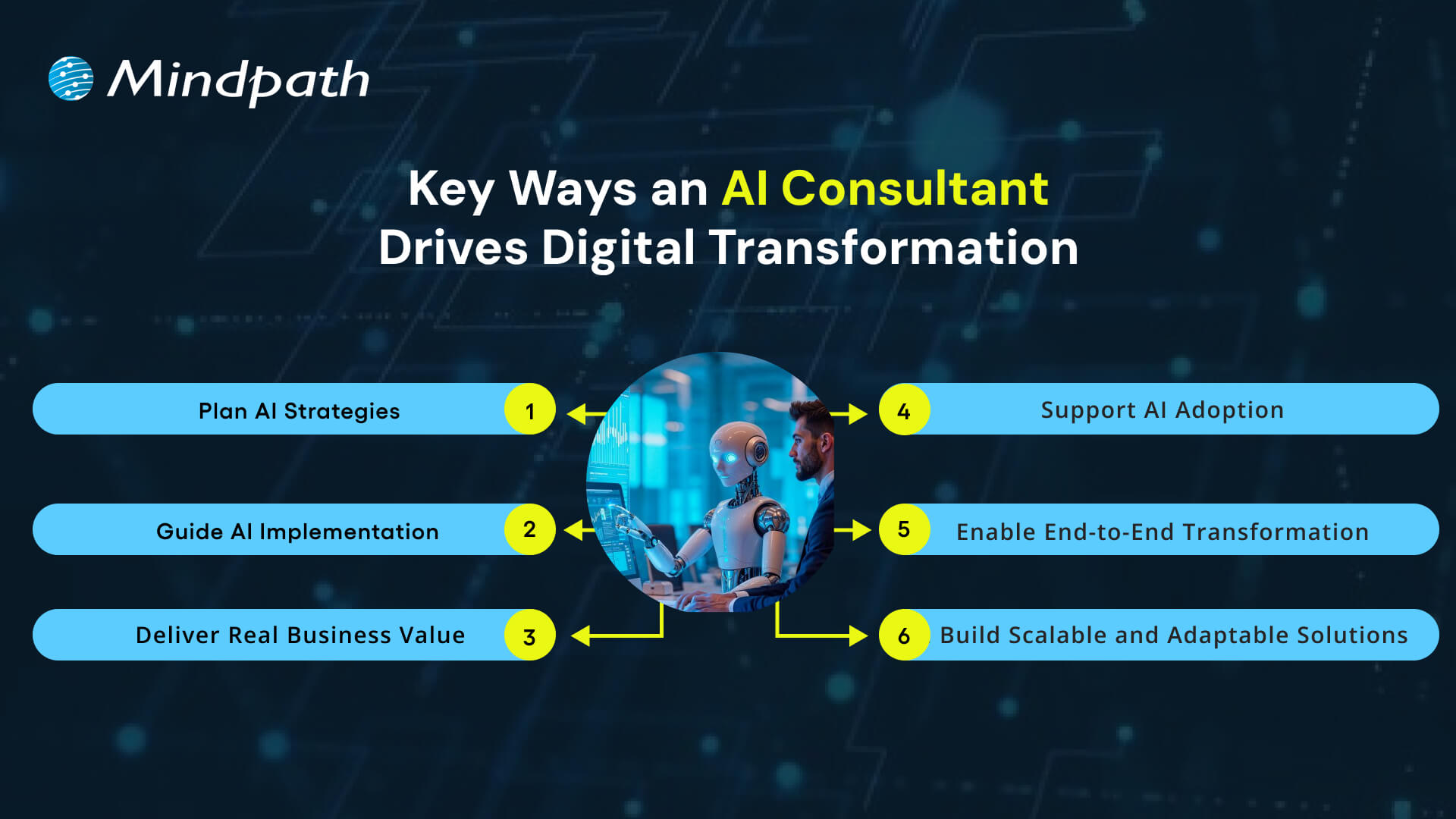
Key Ways an AI Consultant Drives Digital Transformation

1. Plan AI Strategies

An AI consultant assists organizations in synchronizing AI initiatives with fundamental business priorities while emphasizing outcomes over simply tools. They structure strategies that will connect data, technology, and business objectives into practical plans of action that ensure that digital transformation with AI delivers measurable outcomes throughout the organization.

2. Guide AI Implementation

Experts ensure teams apply AI technologies correctly in the right context, considering infrastructure, data, and practical implementation throughout the process. The increased exposure ensures reduced failed experiments, while returning greater proportions of success to AI projects.

3. Deliver Real Business Value

They emphasize outcomes that impact performance, not to simply automate. They work with experts to help companies develop smarter products, optimize workflows, and enhance the customer experience. All AI solutions are focused on achieving measurable outcomes and long-term benefits.

4. Support AI Adoption

Utilizing AI is much more than a technical shift; it’s an organizational change. They provide teams with tools to help them change their workflows, train them, and support their integration of AI tools into their regular workflows; all of which encourage a short adoption window, continued use of AI across the organization.

5. Enable End-to-End Transformation

Experts advocate total digital transformation through the alignment of people, processes, and technology, connecting leadership with technical and non-technical teams to maximize the impact of AI on transforming the future. The holistic nature of these AI consultant roles makes them central to any successful long-term transformation program.

6. Build Scalable and Adaptable Solutions

They will help provide assurance that these AI systems can be flexible and scalable to adapt to future needs when business requirements change. They monitor the AI systems are performing correctly and making iterative improvements as the businesses grow continuously. The continuous support allows organizations to realize the best potential of their AI systems over extended periods.

AI consulting is transforming the way modern businesses grow and compete in the market. Discover more on why organizations need AI consulting services to unlock growth and drive innovation in a rapidly changing market.

Want to Unlock the Full Potential of AI for Your Business?

Digital transformation is only effective when organizations thoughtfully and strategically leverage AI to transform processes, decisions, and experiences. An AI consultant partners with organizations to identify overall goals, align technology to deliver on those goals, build actionable plans, and deliver measurable results. With AI applied in a measured and thoughtful manner across all functions and operations, organizations can gain long-term growth, efficiency, and competitive advantage while using technology as a true driver and enabler of success.

We at Mindpath provide expert AI consulting services that guide businesses through planning, implementation, and scaling of AI solutions. Our team ensures every initiative aligns with strategic priorities, enabling measurable results and continuous improvement. By combining technical expertise with business insight, we empower organizations to leverage AI effectively and gain lasting value from their digital transformation efforts.