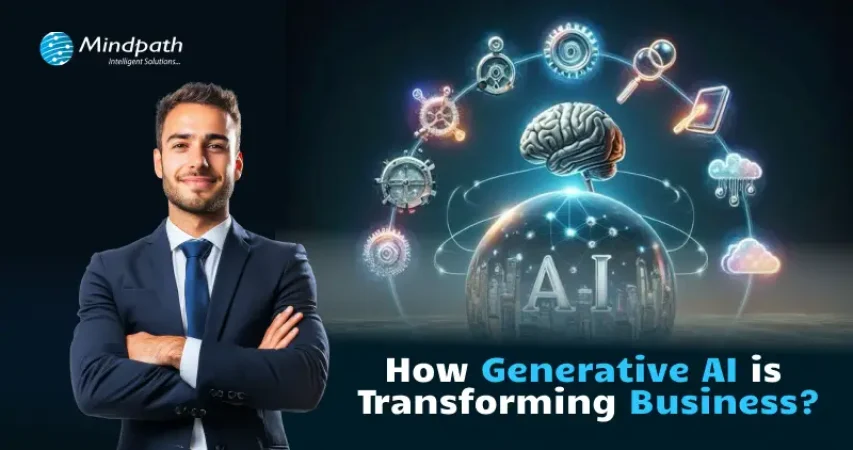
Generative AI Revolution: The Role of Generative AI in Transforming Business

Home

Generative AI Revolution: The Role of Generative AI in Transforming Business

Generative AI Revolution: The Role of Generative AI in Transforming Business

Join our Newsletter!

how generative AI is transforming business

The generative AI revolution is changing the business landscape. From design automation to optimized operations and improved client experience,  GenAI is enabling new opportunities across the spectrum of industries. Companies now leverage this technology to not only save uptime, but to innovate more rapidly, customize and provide service to their consumers more favorably, and remain competitive in an ever-expanding digital world.

Generative AI allows machines to learn patterns and create new output in a number of ways. Businesses are now adapting to this change and thinking about how they can move forward in a new way. It is gradually becoming a key part of business innovation and digital evolution. In this blog we will discuss the growing influence of GenAI and its role in transforming the modern business environment. To begin with, let us have an understanding of GenAI.

Looking for ideas to reshape your business with generative AI? Unlock smarter growth, faster innovation, and personalized customer experiences with our robuts and scalable AI development services.

What is Generative AI?

Generative AI is a form of artificial intelligence that can generate new things, such as text, images, music, or video, by learning from existing data. For example, if you give 1,000s of product descriptions from an online store, it will generate completely new and unique product descriptions for similar products, all by itself. GenAI does this by looking at patterns and learning about how things can be constructed so it can produce something new that looks very realistic.

This type of technology is spreading and evolving rapidly across the globe. A research from Statista shares that the market size of generative AI is expected to be US$66.89 billion in 2025, with annual growth of 36.99% every year, reaching a market size of US$442.07 billion by the year 2031. Among all countries, the United States is estimated to have the largest market size in 2025 at US$21.65 billion.

How Does Generative AI Work?

Generative AI uses neural networks to examine existing data to identify patterns and create new data that appears to be real. Most generative AI models utilize an unsupervised or semi-supervised learning process that is less of a hurdle, because it tends to require a broad array of unlabeled data. Consequently, it becomes much simpler for organizations to develop more powerful AI systems.

Generative AI examples can be seen in all businesses today. For example, Jasper is a tool that helps marketers create blog posts or advertising copy, and DALL·E creates images based on simple text descriptions. These foundation models make it possible to perform tasks like writing, designing, or summarizing in seconds, improving speed and creativity.

Want to stay ahead in the rapidly evolving world of GenAI? Explore the top Generative AI Trends shaping the future of development and strategy.

How is Generative AI Transforming Business?

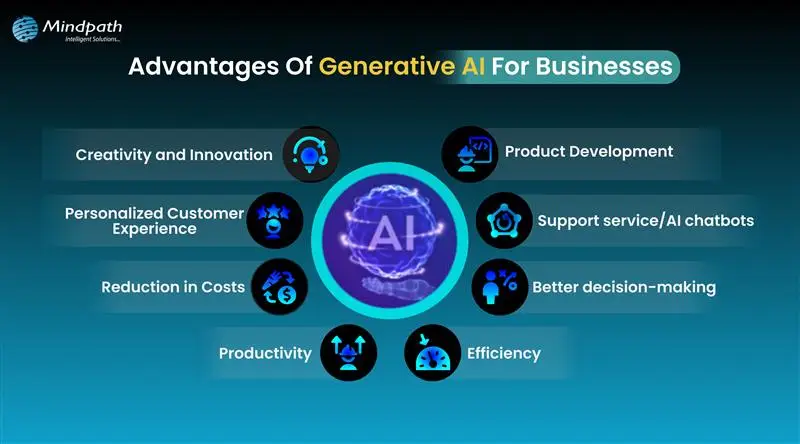
The generative AI revolution is changing the way companies operate, innovate, and treat their customers. With generative AI in business, tasks which took hours can now be completed in minutes, increasing speed and creativity for teams. Here’s the way it is changing the business world:
generative ai for business

1. Boost Creativity for Marketing and Innovation

GenAI is changing creative industries by bringing ideas to life faster by offering design concepts and fresh content ideas. This supports quicker campaign launches and product development. It also gives teams more time to focus on refining ideas or exploring new ones. As a result, human creativity grows while the creative process becomes faster and more effective.

2. Enhance Customer Support

The GenAI revolution is helping businesses improve customer service like never before. Instead of making customers wait for answers, generative AI can quickly find the right solution by pulling information from many sources. It also creates clear post-call summaries, making support faster, more accurate, and more personalized, leading to better customer satisfaction and trust.

3. Improve Sales Communication with Smart Insights

The economic potential of generative AI is clear in sales. It can write call summaries and follow-up emails, helping reps spend more time with customers. Sales managers can track how well AI-generated messages perform, like whether they speed up deals or increase order values. This leads to better sales processes and stronger customer communication.

Wondering how GenAI for business can be your key to success? Generative AI for business enhances innovation, and streamlines operations—thus empowers companies to stay competitive and get future-ready.

4. Boost Content Creation for Better Productivity

Generative AI helps businesses create high-quality content quickly by providing first drafts in just a few seconds. This allows teams to produce more sales messages, marketing content, and product documents in less time. As a result, companies can respond faster to customer needs while giving employees more time to focus on building stronger customer connections.

5. Create Personalized Customer Experiences

The role of AI in business growth and human empowerment is very clear when we think of how it can assist businesses in creating personalized customer journeys. By understanding their customer data, likes/dislikes, and behaviors, GenAI makes it easy for businesses to create personalized suggestions and relevant content. AI personalized customer experiences can truly bring better connections, embed customer loyalty, and create a better experience for everyone involved.

6. Speed Up Development with Smarter Coding

Generative AI applications can help developers save time by writing routine code and automating common tasks. The role of GenAI in app development brings unexpected benefits such as boosts productivity, reduces errors, and keeps projects on track. It also supports non-technical teams through no-code and low-code tools, making app creation easier for everyone, not just engineers, and allowing more people to contribute to digital solutions.

Also Read: Generative AI Use Cases across Industries 

Ready to Embrace the Generative AI Revolution in Your Business?

The generative AI revolution is creating exciting new possibilities across industries by helping businesses work faster, smarter, and more creatively. From personalized customer experiences to automated content and improved development, generative AI is no longer a future trend; it’s the present opportunity. Now is the time to explore how it can redefine the way your business operates and grows.

At Mindpath, we offer smart and scalable GenAI solutions that help businesses unlock real value. From custom AI applications to intelligent automation and personalized customer engagement tools, our AI development services help businesses fuel innovation, boost productivity, and empower teams. Let us help you stay ahead in this fast-changing digital world with cutting-edge generative AI services.

Frequently Asked Questions

1. How can businesses start using the generative AI revolution without major risks?

Businesses can begin with small pilot projects like content generation or customer support automation. This allows teams to test outcomes, understand value, and make improvements before scaling. Starting small helps reduce risks while building confidence in adopting generative AI solutions effectively.

2. What makes the generative AI revolution different from earlier AI technologies?

The generative AI revolution focuses on creating new content rather than just analyzing data. It can produce text, images, and code, making it more interactive and creative. This shift allows businesses to automate tasks while also improving innovation and decision-making processes.

3. How does generative AI support faster decision-making in businesses?

Generative AI can quickly analyze large volumes of data and generate useful insights or summaries. This helps decision-makers understand trends, identify opportunities, and respond faster. With quicker access to relevant information, businesses can act confidently and stay competitive in dynamic markets.

4. Can generative AI replace human creativity completely?

Generative AI supports creativity but does not replace human thinking. It helps generate ideas, drafts, and suggestions, but human input is still needed for refinement and strategy. The best results come when businesses combine AI capabilities with human creativity and expertise.

5. What challenges should businesses be aware of when adopting generative AI?

Businesses should consider data quality, security, and ethical concerns when using generative AI. Proper planning, monitoring, and clear guidelines are important to avoid risks. Understanding limitations and maintaining human oversight ensures that AI is used responsibly and effectively.

Related Post

Multimodal Generative AI

Have you ever wondered how AI can generate text, images, and even music? What if a single AI model could understand and create across multiple formats? This is where Multimodal Generative AI steps in. In this blog, we’ll dive into the fascinating world of Multimodal Generative AI and explore how it’s shaping the future of AI. 

What is Multimodal Generative AI?

Multimodal generative AI is an advanced form of AI that can comprehend and generate several types of data, including text, images, audio, and video. These systems can combine and analyze several types of input to process data from multiple sources and produce new content. Multimodal AI combines various sources of data to accomplish more complicated tasks and call for a greater understanding of the data. Although there is a lot of potential for this technology in fields like accessibility, education, and content creation, there are also issues to be resolved, like preserving accuracy and relevance and handling ethical concerns about privacy and authenticity. 

Benefits of Multimodal Generative AI

1. Improves Accessibility

Through the creation of various kinds of content, these systems improve accessibility and facilitate information access for all. By ensuring that people with different abilities can interact with content in ways that best meet their requirements, they contribute to promoting inclusion and understanding on various platforms. By offering substitute formats, these systems seek to remove obstacles and make the user experience more inclusive for all users.  

2. Creates High-Quality Content

Multimodal generative AI can lead to more complex and intelligent content by mixing several forms of data. It can include text, graphics, audio, and other components to provide interesting content. This skill enables the creation of a wide range of instructional materials or media that deepen comprehension and spark users’ interests. For everyone, it makes for a more engaging and educational experience by combining different forms. This method not only grabs the interest of individuals but also accommodates various learning styles, which makes it simpler for people to understand difficult ideas and concepts. This results in more effective and richer content that appeals to a larger audience.  

3. Boosts User Experience

Multimodal generative AI can adapt content in user interfaces to the context and the demands of the user. When voice isn’t possible, it can provide visual explanations to make sure customers receive information most conveniently. It also improves interactive experiences, like video games, by producing lifelike people and language that react differently to human input. 

Because of its versatility, technology becomes more user-friendly and accessible and creates a more engaging experience. Multimodal generative AI can offer tailored suggestions by comprehending the context, which raises customer satisfaction and facilitates more seamless, pleasurable interactions with digital material. 

4. Combines Data Effectively

These systems are capable of smoothly fusing data from many sources to deliver a more thorough and coherent knowledge of intricate circumstances. Their ability to integrate text, audio, and visual data improves analysis and decision-making. This capacity is especially useful for security, since it can improve threat identification and monitoring by combining textual, auditory, and visual analysis. 

These algorithms can find patterns and relationships by combining several kinds of data that would not be apparent when looking at a single source. By using a holistic strategy, organizations can improve their ability to respond to possible hazards and improve operational safety and efficiency.  

5. Improves Understanding and Insights

These models can get a better knowledge of both content and context than single-mode AI systems by combining many sources of data, such as text, pictures, and sound. With the capacity to understand both verbal and non-verbal aspects of a user’s question, this feature makes replies in applications such as virtual assistants more accurate and relevant. 

These systems improve communication and engagement by considering several factors, giving users a more efficient and natural experience. This enhanced comprehension leads to deeper interaction and more significant conversations, which eventually boosts the efficiency of AI applications as a whole. 

6. Drives Creative Marketing and Advertising

By combining consumer data from several sources to create personalized advertising material, multimodal generative AI can enhance marketing initiatives. These technologies can offer customized advertising materials that engage consumers on several sensory levels by analyzing interactions across various forms. Using this strategy, companies can generate ads that are more relevant and engaging for their target demographic, which improves consumer engagement and boosts the efficiency of marketing efforts.  

Use - Cases of Multimodal Generative AI

1. Human-Computer Interaction

Multimodal AI enables more natural and intuitive human-computer interactions by processing inputs from several sources, including voice, gestures, and facial expressions. This feature facilitates more seamless communication and allows customers to interact with technology in a more comfortable and familiar way. Multimodal AI improves user experiences and opens technology to a larger audience by comprehending various input formats. 

2. Healthcare

Multimodal models are essential for medical image analysis in the healthcare sector because they integrate data from several sources, including written reports, medical scans, and patient records. The capacity of medical professionals to diagnose patients accurately and create efficient treatment programs is improved by this integration. These technologies eventually enhance patient care and results by offering a greater understanding of a patient’s state. 

3. Multimedia Content Creation

Multimodal AI can generate multimedia material by mixing data from a variety of sources, such as text descriptions, audio recordings, and visual references. This feature makes the process of creating content more efficient and enables the automatic production of interesting and rich content. These systems improve efficiency and creativity by combining several modalities, which makes it simpler to create varied content that meets the tastes of various audiences.  

4. Sensory Integration Devices

Multimodal artificial intelligence (AI) improves augmented reality, virtual reality, and assistive technology user experiences by combining touch, visual, and audio inputs into one device. These gadgets build settings that are more interactive and immersive by merging many sensory inputs. This integration allows for a more thorough and pleasurable experience across a variety of apps while also improving user engagement and accessibility to technology. 

Multimodal artificial intelligence (AI) Services at Mindpath

Our AI development services help organizations better understand their requirements and make decisions by utilizing text, photos, audio, and other inputs. Our ability to integrate data from several sources gives us a full understanding of your initiatives and objectives. Our AI models make interactions more relevant and engaging by producing personalized information and responses based on your unique needs. By utilizing a variety of input methods, technology is made easier to use and more pleasurable for the user overall.  

Our services also provide valuable insights that assist businesses in making better decisions, leading to more effective strategies. At Mindpath, our aim is to harness the power of multimodal AI to empower your business and improve outcomes through innovative solutions. 

Final Thoughts

Multimodal generative AI is transforming the way humans engage with technology and consume content. It improves user experiences across a range of industries, increases accessibility, and fosters creativity by mixing diverse sources of data effortlessly. This technology has enormous potential to change industries and improve our daily lives as it develops further. At Mindpath, we’re thrilled to take the lead in applying multimodal AI to develop cutting-edge solutions that enable companies and improve user engagement. Unlock countless opportunities for development and innovation by embracing the AI of the future with us. 

Ready to unlock the potential of your projects?

At Mindpath, we harness the power of advanced AI solutions to elevate your business.

Discover how Multimodal Generative AI enhance creativity, accessibility, and user experiences across industries.
AI in healthcare

Can you imagine a scenario of walking into a hospital where doctors are assisted by intelligent machines which can predict diseases, suggest treatments and even monitor your health in real time? Sounds futuristic, doesn’t it? Have you ever pondered how artificial intelligence is transforming the future of healthcare? Well, that’s precisely where AI in healthcare stands out! Interested to know more about this unique combination of AI and healthcare? Let us learn more about it! 

Want to deploy AI solutions that drive smarter medical decisions and improve patient experiences? At Mindpath Tech, we provide healthcare software development services designed to make technology work seamlessly for your organization.

Role of AI in Healthcare

AI in healthcare refers to the use of artificial intelligence to assist doctors and nurses in hospitals and clinics. These programs look at a lot of medical data such as test results and scans and find patterns which can help in detecting health problems of patients early. They can even help in suggesting the best treatments based on each patient’s health history. Not only this, but AI is also used to carry out routine tasks like setting appointments or checking records, so that staffs can get more time to care for patients. 

The benefits of AI are being used in many parts of healthcare. It is helping doctors to read X-rays and scans so that health problems can be spotted earlier. Intelligent robots will assist doctors to perform surgery with ease. AI assists researchers in discovering new drugs at a quicker rate by analyzing vast amounts of information. Even patients can use AI-based apps to monitor their health and receive reminders about taking medications or adhering to treatment regimens. 

According to a Grandview’s Market Research Survey, the worldwide AI in healthcare market was valued at more than 26 billion dollars in 2024, and it’s expanding very quickly. Experts predict that it can expand by as much as 39% annually until 2030. Why? Because more clinics and hospitals want to work faster, make fewer errors, and help patients feel better sooner. 

AI in Healthcare - Market
Source: www.grandviewresearch.com

Benefits of AI in Healthcare

Hospitals nowadays are challenged with providing quicker and improved care with fewer resources. Technologies such as AI are assisting them in doing it more effectively. following are some advantages of AI in Healthcare that is important to know: 

Top Benefits of AI in Healthcare

1. Improving Team Coordination

AI for healthcare facilitates easier sharing of critical patient information among doctors and nurses. It consolidates everything into a single place to enable teams to communicate with each other easily and quickly. This translates to quicker decisions, improved treatments, and more efficient teamwork. AI for hospitals enables various departments to communicate with one another, which is crucial during emergencies. When everybody has the proper information at the right moment, patients receive their care on time without confusion or delays. 

2. Better Patient Follow-Up

AI assists hospitals in tracking patients and ensuring that they do not miss any important check-ups. By identifying potential health problems early, AI facilitates doctors to act early and administer the appropriate care. This ensures that patients are treated on time and follow-ups are handled more efficiently. Hospitals can track patients more efficiently with AI, resulting in improved long-term care and healthier patients. AI consulting services can guide hospitals in selecting the right tools and workflows for patient monitoring.

4. Boosting Healthcare Performance

AI in medical field enables healthcare systems to achieve significant objectives, referred to as the quadruple aim. The aims prioritize better patient care, low healthcare expenses, facilitation of medical staff, and enhanced overall health. Thanks to AI, hospitals can individualize care, minimize waiting times, and optimize the entire process. This results in improved patient outcomes, reduced expenses, and a healthier, less stressful medical team.  

5. Turning Data into Actionable Insights

Hospitals can use AI to gather and organize a lot of data from various sources. This enables doctors and nurses to make quick and easy decisions. By making all that information useful, medical teams are able to provide patients with more accurate and timely care. This streamlines the process, eliminates errors, and ensures that patients receive the proper treatment based on current information available. 

6. Improves Patient Outcomes

Patients receive faster and more precise treatment with the use of AI in healthcare. It assists doctors in identifying health issues earlier and making the correct decision on treatment without wasting time. This results in quicker admissions, reduced hospital stays, and improved recovery. Everything goes more smoothly, and patients are more comfortable. By making the care process more efficient, this technology promotes improved health outcomes and allows hospital staff to spend more time in taking care of patients. 

Looking to understand which programming languages are best for developing AI solutions? Explore our blog on AI Programming Languages to gain practical insights to get started.

Let us now look at some of the real-world AI in healthcare examples that show how this technology is being used to improve patient care, speed up diagnosis, and support medical teams in everyday hospital tasks: 

Real World AI in Healthcare Examples

These artificial intelligence examples in healthcare highlight how hospitals are using AI to improve diagnosis, speed up treatment, and support better decisions. Each example shows the positive impact of AI in daily medical practice: 

1. Faster MR Scans

AI accelerates MRI image acquisition, allowing radiology departments to manage more patients more effectively. AI enhances image quality, reduces scanning time, and increases patient comfort, particularly for patients who are anxious or experience pain during the test. 

2. Smarter CT scans 

AI helps ensure patients are correctly positioned for CT scans, reducing errors and improving image quality. It also enhances image reconstruction, supporting better diagnostics while helping radiology teams work more efficiently with consistent and clear results. 

3. Assist in Image Reading for Radiologists

AI assists radiologists by highlighting areas of interest in medical images and supporting segmentation tasks. This allows them to focus on deeper analysis and make quicker, more confident decisions, ultimately improving both workflow and patient care. 

4. Better Teamwork in Cancer Care

AI brings together data from radiology, pathology, genomics, and health records to give a clear view of a patient’s condition. This helps care teams make faster, more informed decisions to guide personalized treatment and improve outcomes. 

5. Guiding Doctors in Surgery

AI helps doctors during minimally invasive procedures by quickly analyzing CT images and sharing results across teams. It supports accurate planning and guidance, helping physicians work more efficiently and make timely decisions for better patient care. 

6. Simplifying Ultrasound Measurements

AI streamlines ultrasound by automating measurements, reducing manual effort and variability. It ensures fast, consistent results, allowing healthcare professionals to focus on clinical judgment while enhancing diagnostic accuracy and improving the experience for both patients and staff. 

7. Remote Cardiac Patient Monitoring

AI-powered analysis of remote ECG recordings enables early detection of heart rhythm disturbances like atrial fibrillation. This allows clinicians to provide faster, more efficient care, enhancing patient outcomes by offering timely and proactive cardiac treatment outside the hospital setting. 

Wondering how healthcare organizations can implement AI effectively and achieve better patient outcomes? Read our blog on the role of AI consultant explains how expert AI consulting can guide healthcare providers in overcoming challenges, and unlocking the full potential of advanced technologies.

Ready to Embrace the Future of Healthcare with AI?

AI is revolutionizing healthcare by simplifying operations, enhancing diagnosis accuracy, and facilitating quicker, more tailored treatment. By automating mundane tasks, AI enables healthcare workers to spend more time on patient care, leading to better overall outcomes. With its ability to process large volumes of data, AI also facilitates proactive interventions, minimizing errors and enhancing efficiency in hospitals globally.  

At Mindpath, we offer healthcare software development services with expertise in using the latest AI technology to develop innovative solutions for medical facilities. Our tailored AI-powered platforms enhance hospital efficiency, provide smooth patient care, and enable medical staff to make informed decisions with ease. Learn how Mindpath can assist in revolutionizing your healthcare practice with innovative solutions designed specifically for you. 

Frequently Asked Questions

1. Is AI in healthcare safe and reliable for patient treatment?

AI in healthcare is designed to support medical professionals, not replace them. When properly implemented and monitored, AI systems improve accuracy and reduce human errors. However, final medical decisions are always made by qualified doctors to ensure patient safety and ethical care standards.

2. How can small clinics benefit from AI in healthcare?

AI in healthcare is not limited to large hospitals. Small clinics can use AI for appointment scheduling, patient monitoring, medical record management, and diagnostic support. These tools help reduce administrative workload, improve efficiency, and deliver faster, more personalized care without requiring large infrastructure investments.

3. Does AI increase the cost of healthcare services?

While initial implementation may require investment, AI often reduces long-term operational costs. By automating routine tasks, minimizing diagnostic errors, and improving efficiency, healthcare providers can save resources. Over time, this can make services more affordable while maintaining high-quality patient care.

4. Can AI help in preventing diseases before they become serious?

Yes, AI systems can analyze patient history, lifestyle data, and test results to detect early warning signs. This enables doctors to take preventive measures sooner. Early detection reduces complications, supports proactive treatment, and improves overall health outcomes for patients.

5. How does AI impact patient privacy and data security?

Healthcare organizations use strict data protection measures when implementing AI systems. Advanced encryption, secure servers, and compliance with healthcare regulations help safeguard patient information. Proper governance and monitoring ensure that sensitive medical data remains confidential and protected from unauthorized access.

Support Is One Click Away

Featured Posts

Related Post

Discover the ultimate guide to hiring Node.js developers in London. Learn about the skills, benefits, and cost factors involved in finding the right talent for your project.
Discover how AI is transforming the world. Explore the top 10 benefits of artificial intelligence, from solving complex problems to enhancing customer experiences.